Card Crossings

A magic carpet takes us to a far away photo show, and a beach scene brings back old memories.

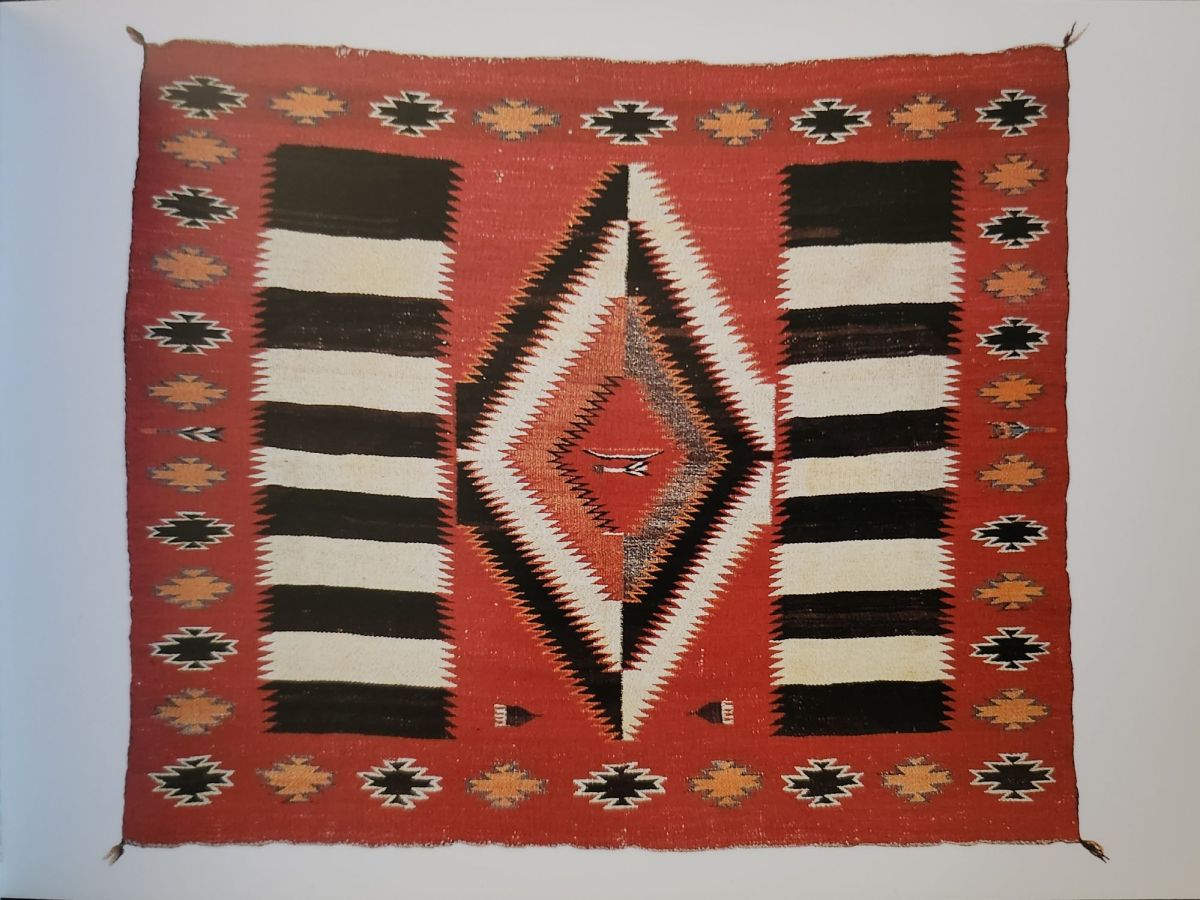
Nina found Mrs. Hanabusa in the common room sorting groceries into cloth bags. The postcard was still in Nina’s hand—a Navajo textile in geometric patterns, black and white against red wool.

“Let me help,” Nina said, taking two bags.

Mrs. Hanabusa glanced at the card. “From your friend? The one who went to Taipei?”

“She just arrived.” Nina turned the card over.

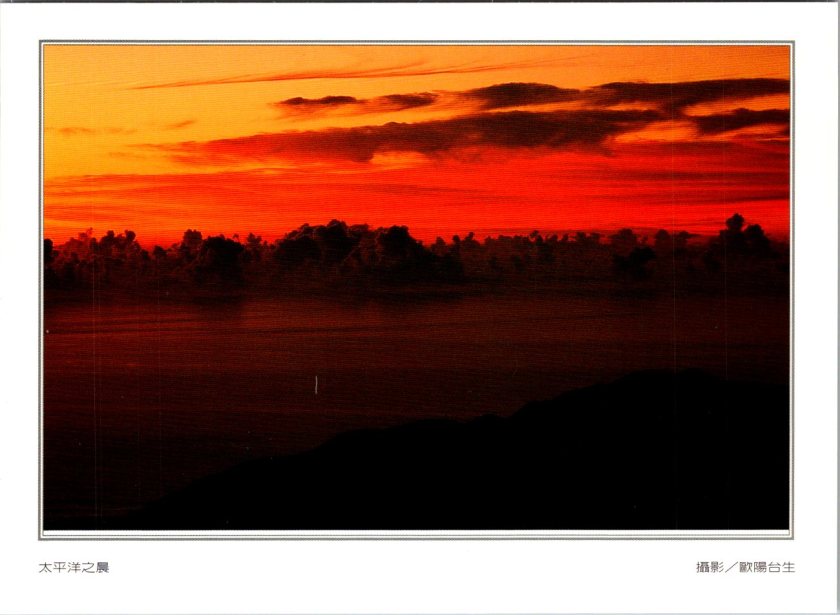
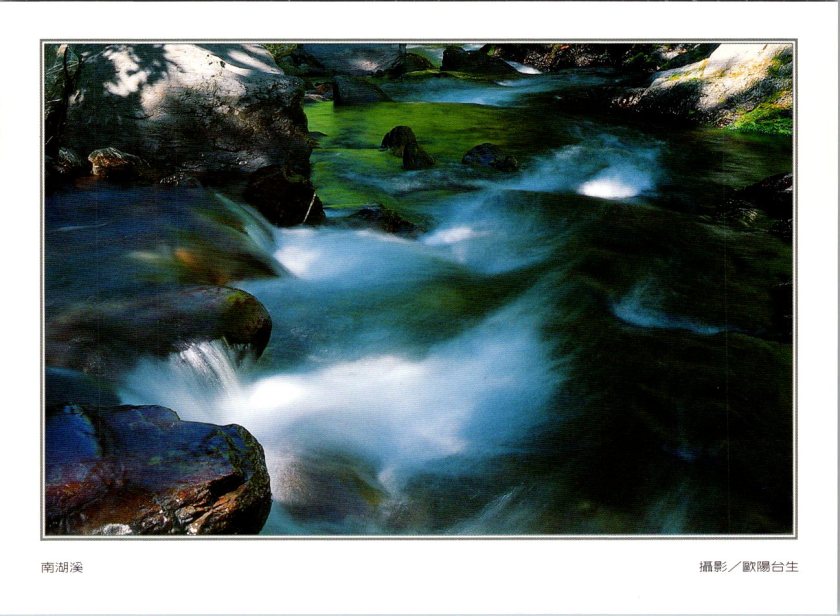
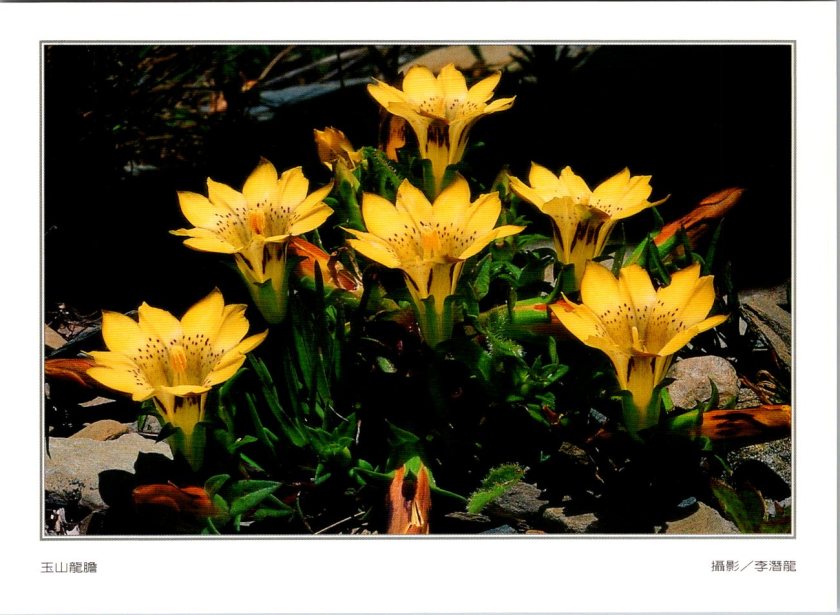
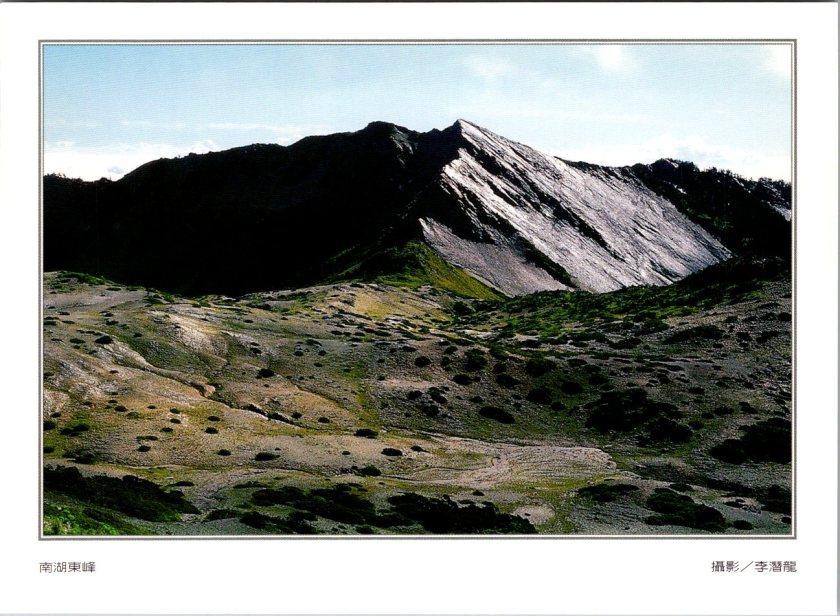
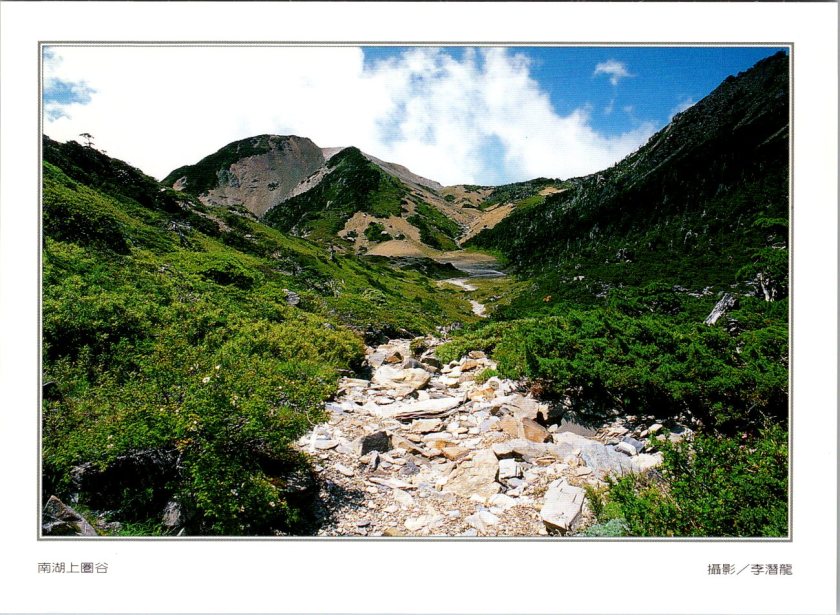
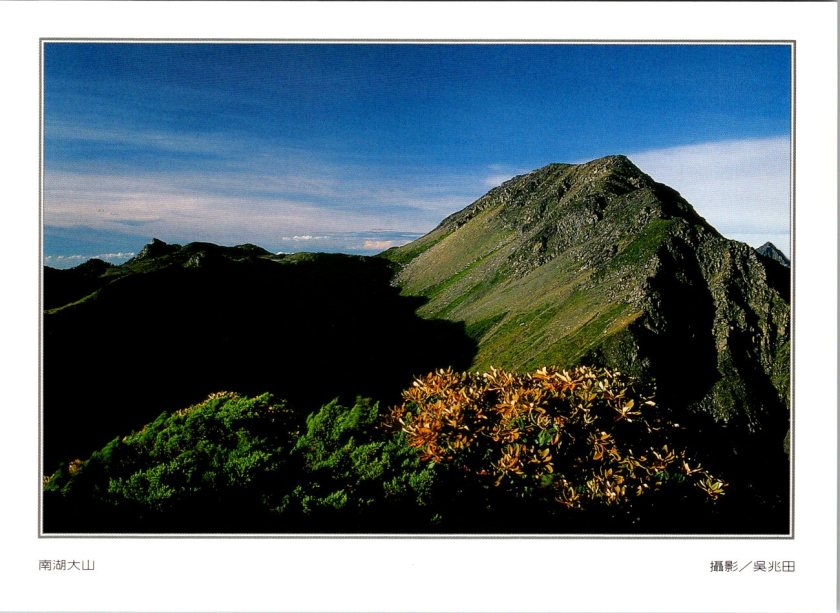
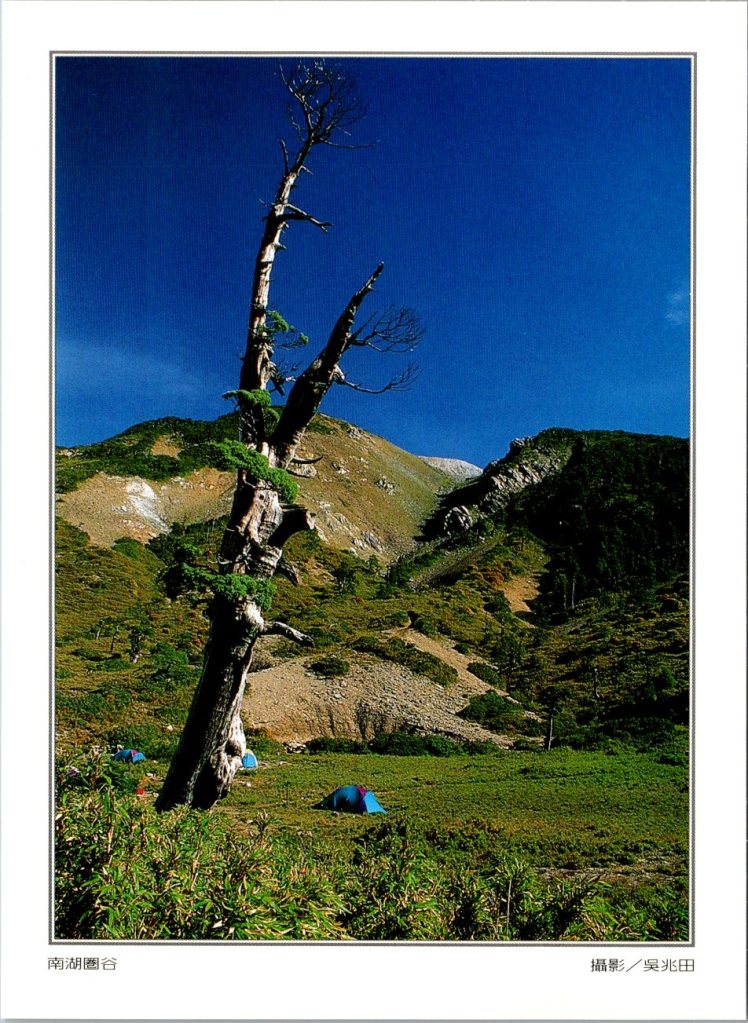
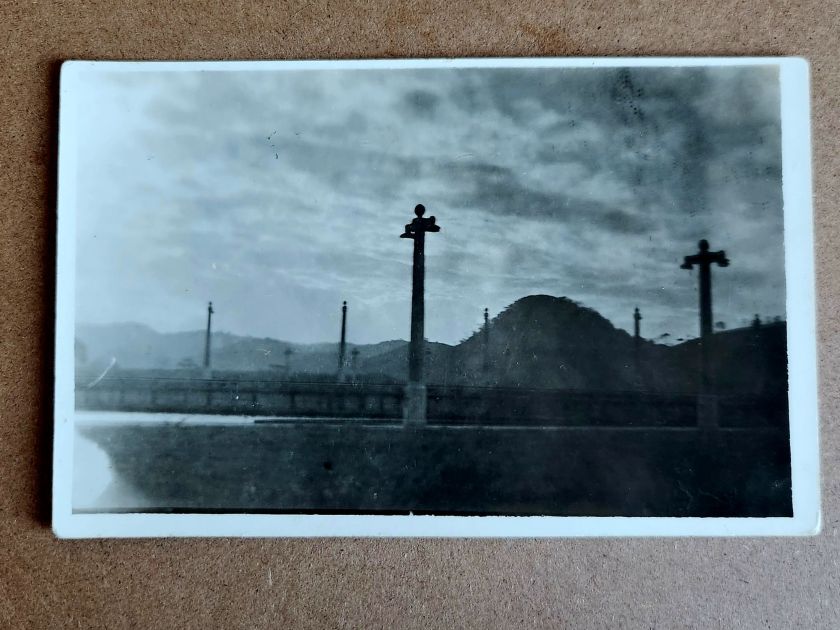
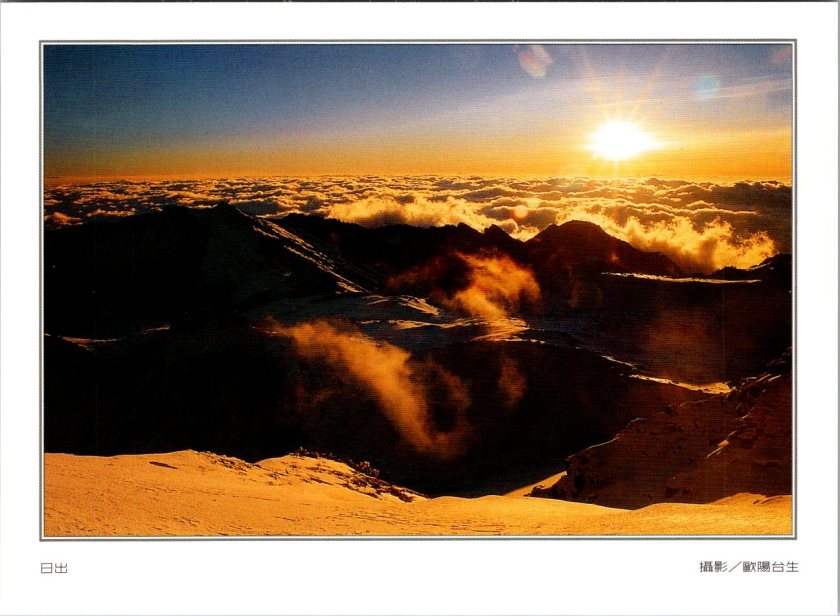
Made it. Everything moves faster here. First night was a photo exhibit on Mt Nunhu. Already miss the slow mornings. —N

Funny, Nina had received Nora’s text with images from the show that night, long before the postcard arrived in her mailbox here in Tucson.
They walked to Mrs. Hanabusa’s room. Nina set the bags on the small counter. Mrs. H studied the postcard, her finger tracing the pattern.

“My grandparents had one like this. Hung in their house on the flower farm.” She paused. “My grandmother found it at a trading post in the twenties. She said the geometry reminded her of Japanese family crests. Clean lines. She hung it in the room where they did arrangements.”

Mrs. H’s voice stayed quiet, remembering. “After the war, when we came back from the camps, the farm was gone. But a neighbor had saved some things. The rug was one of them. Grandmother cried when she saw it. I was small, maybe seven. I didn’t understand then what it meant to get something back.”

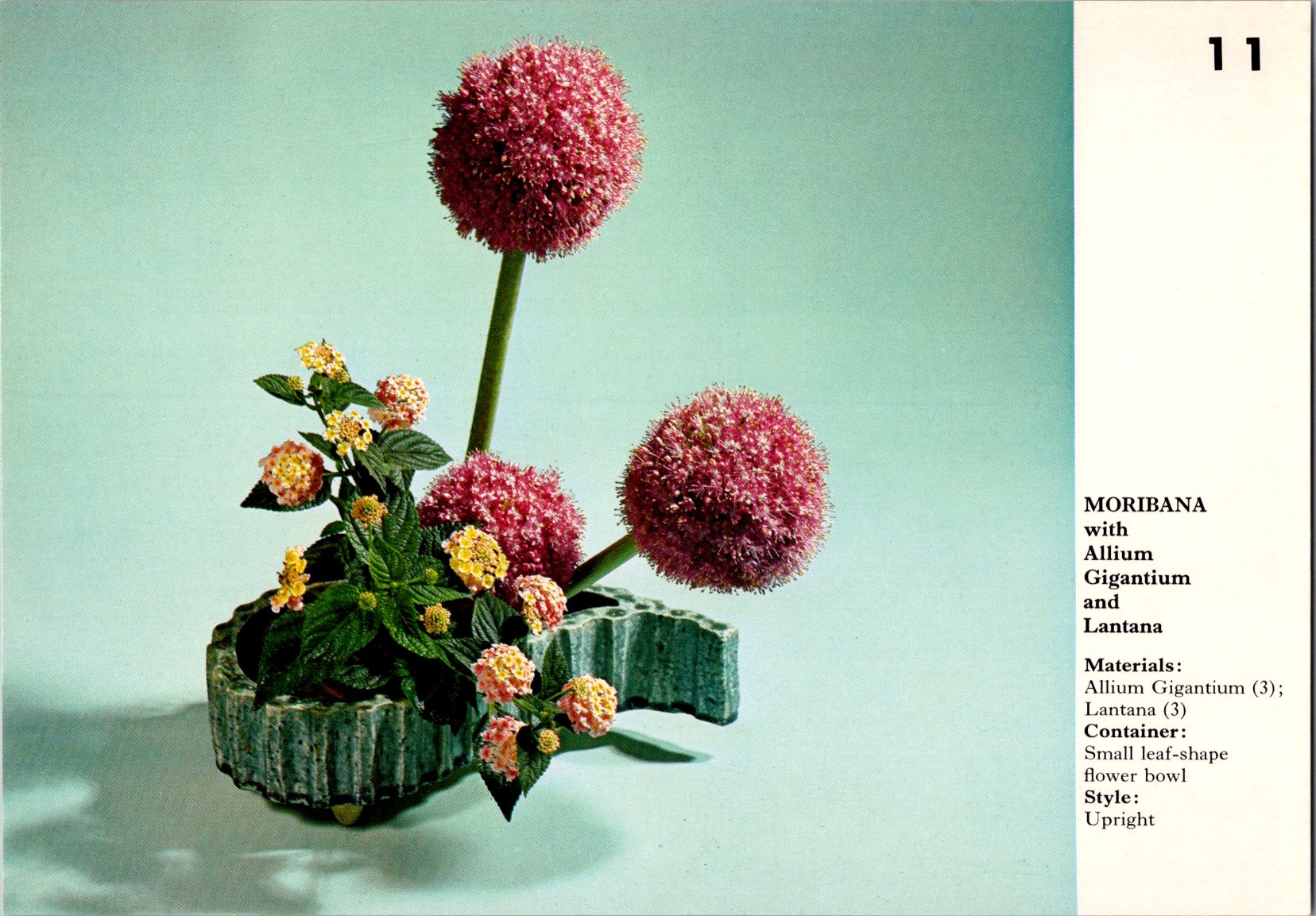
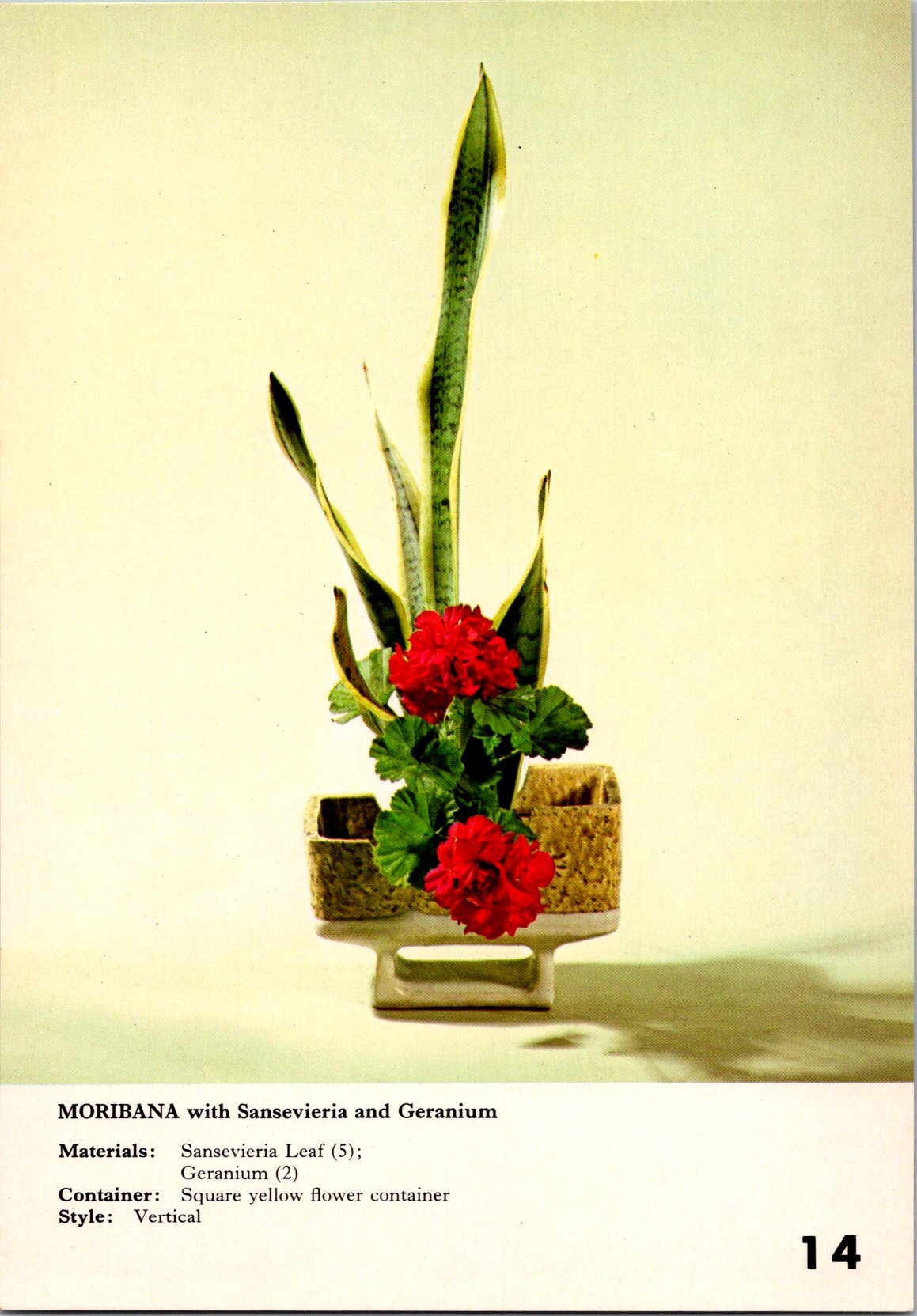
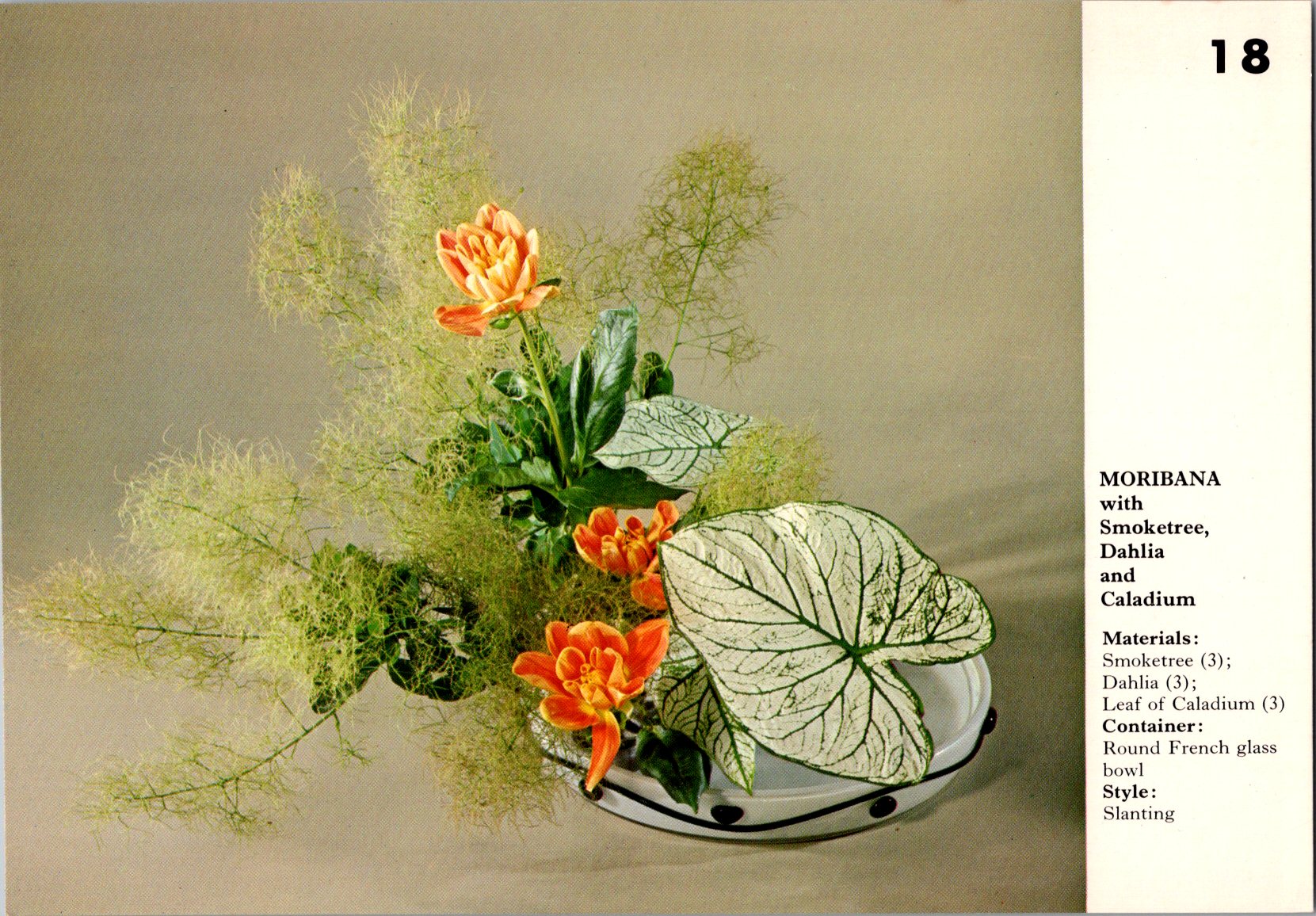
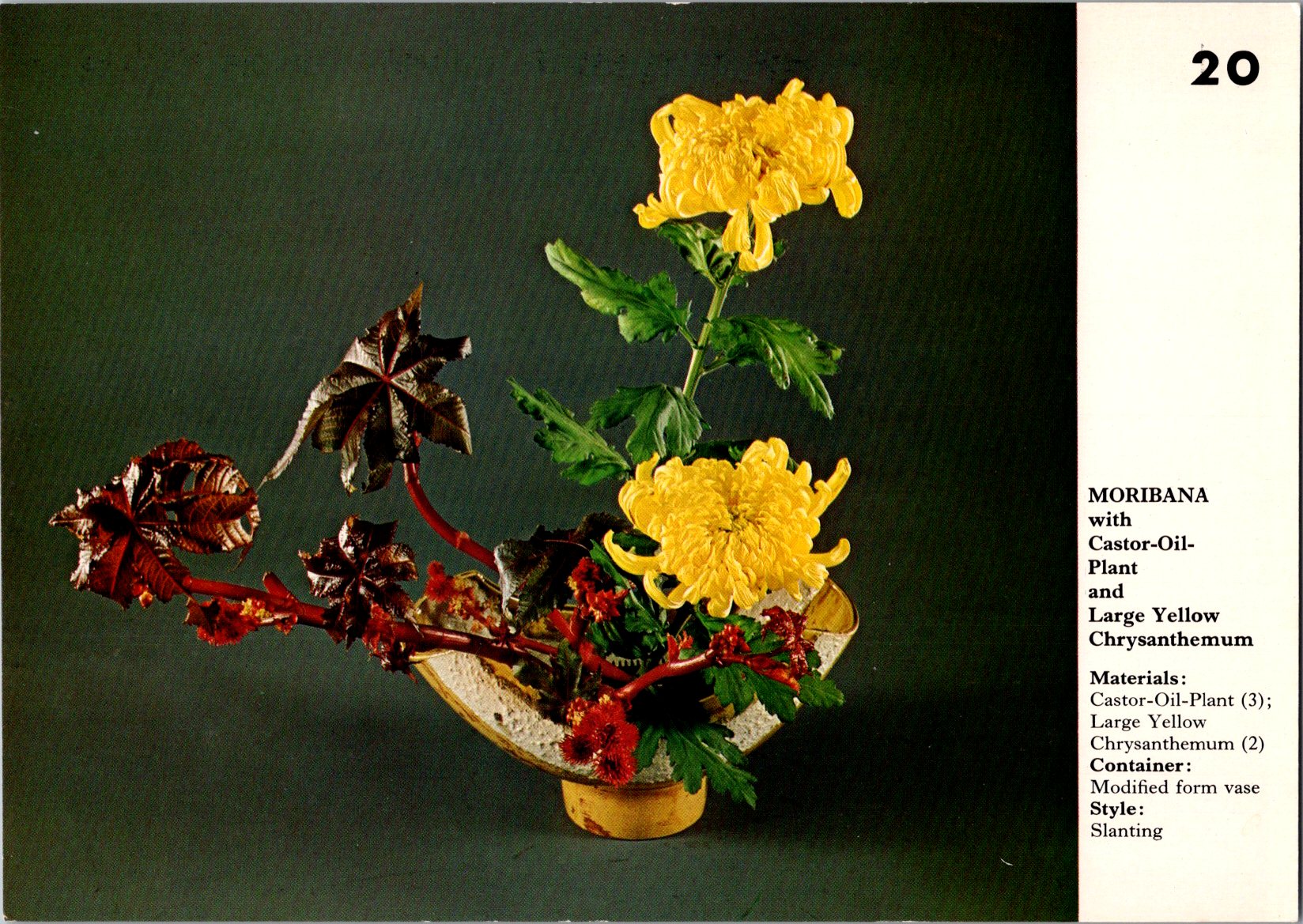
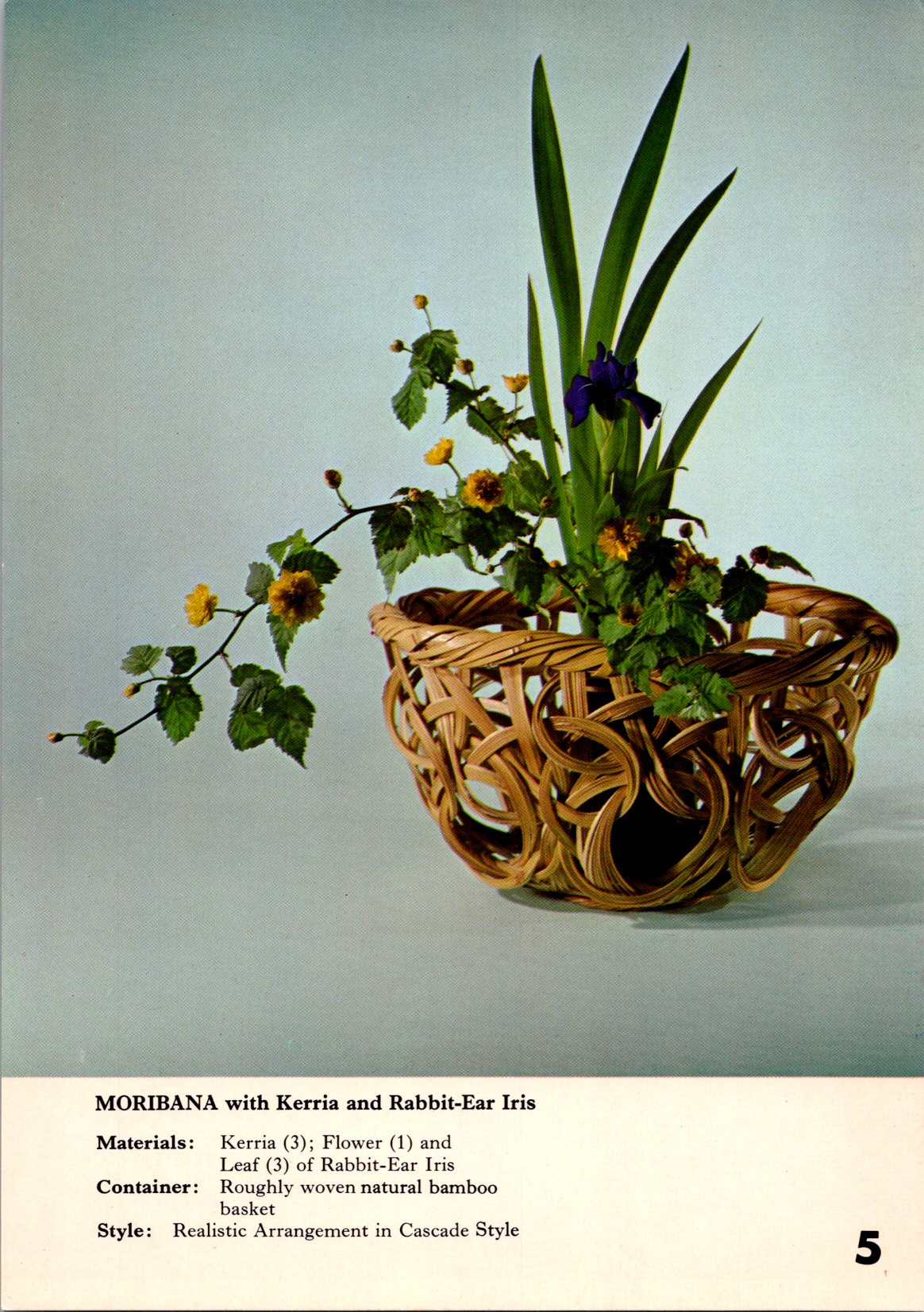
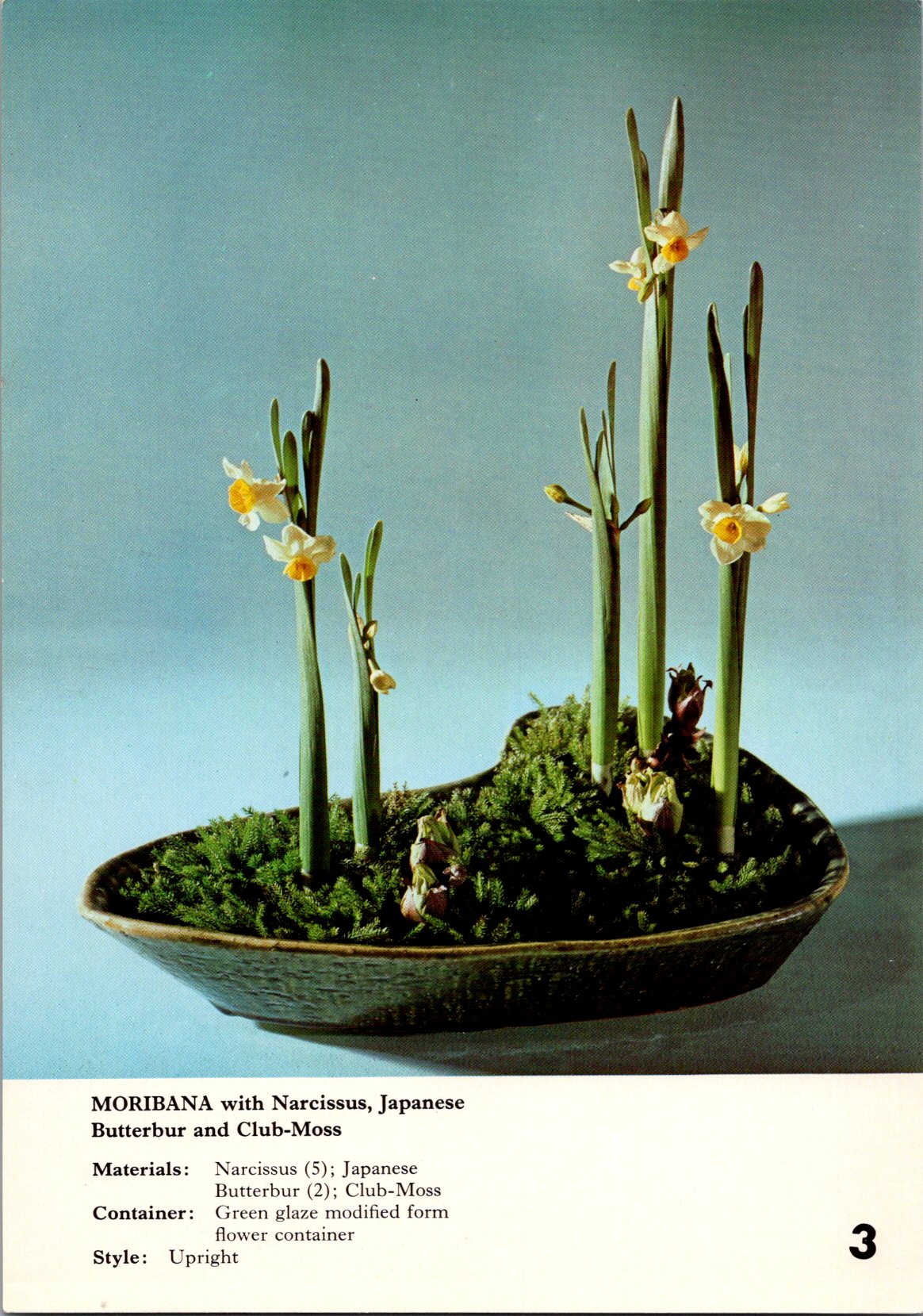
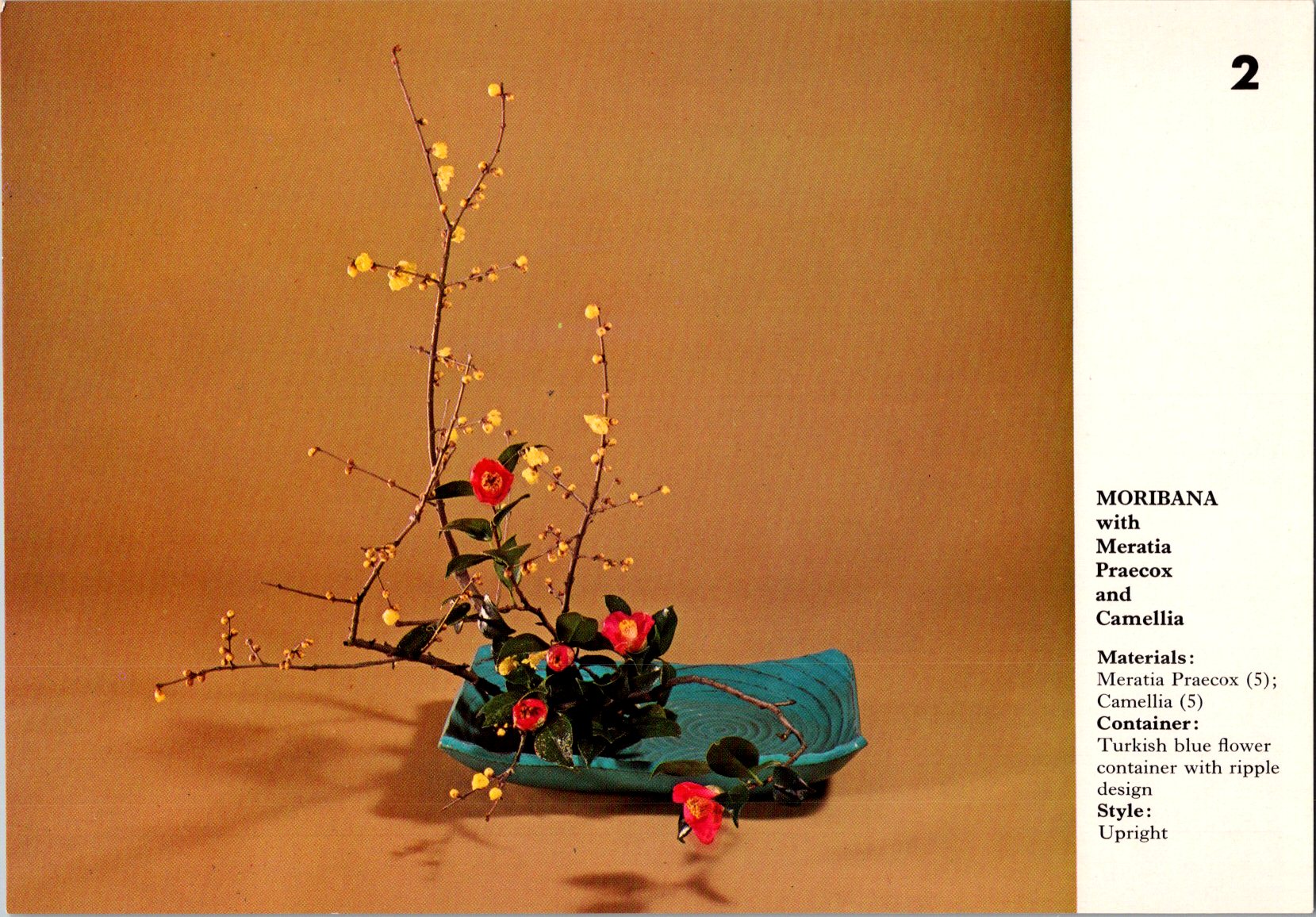
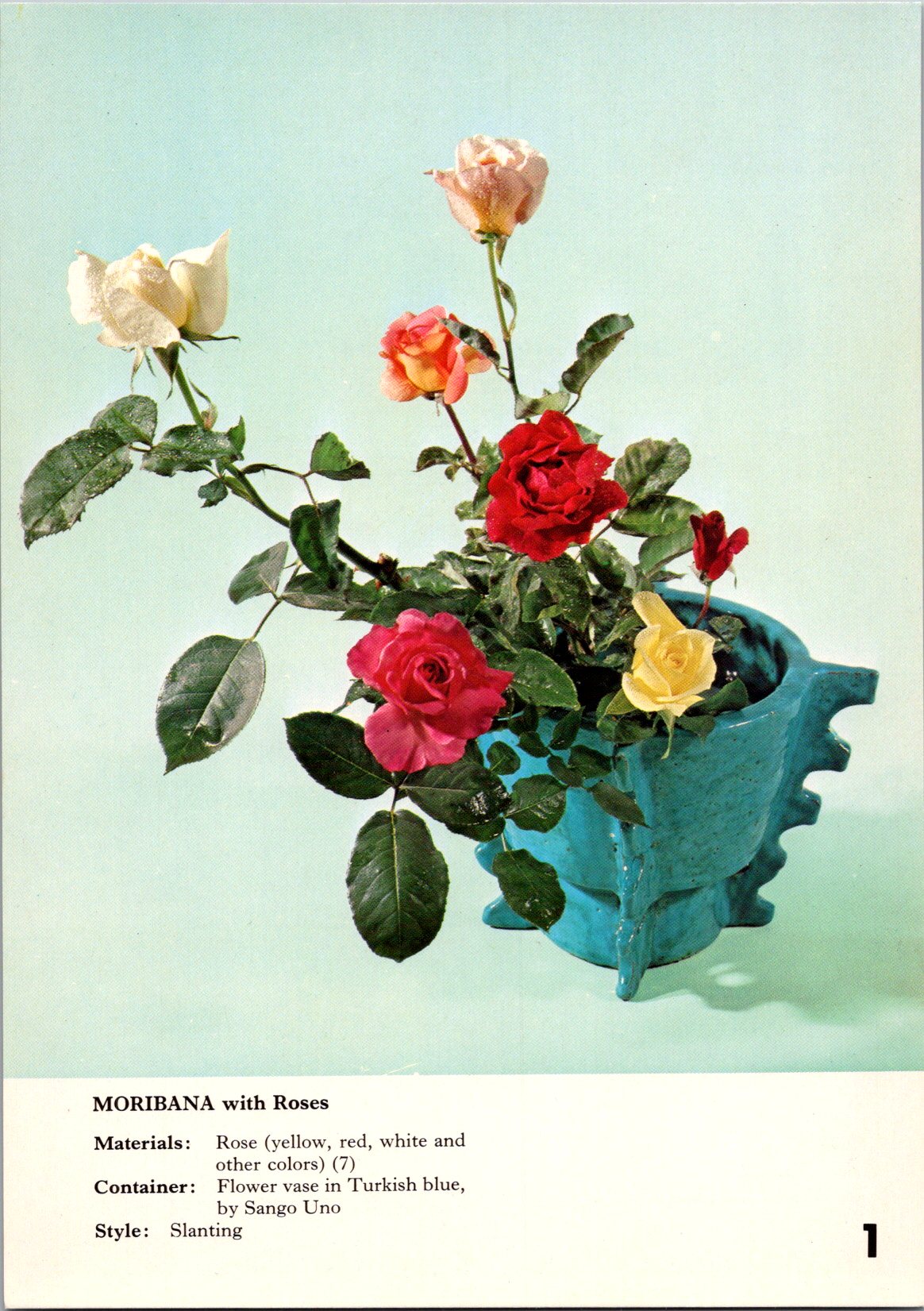
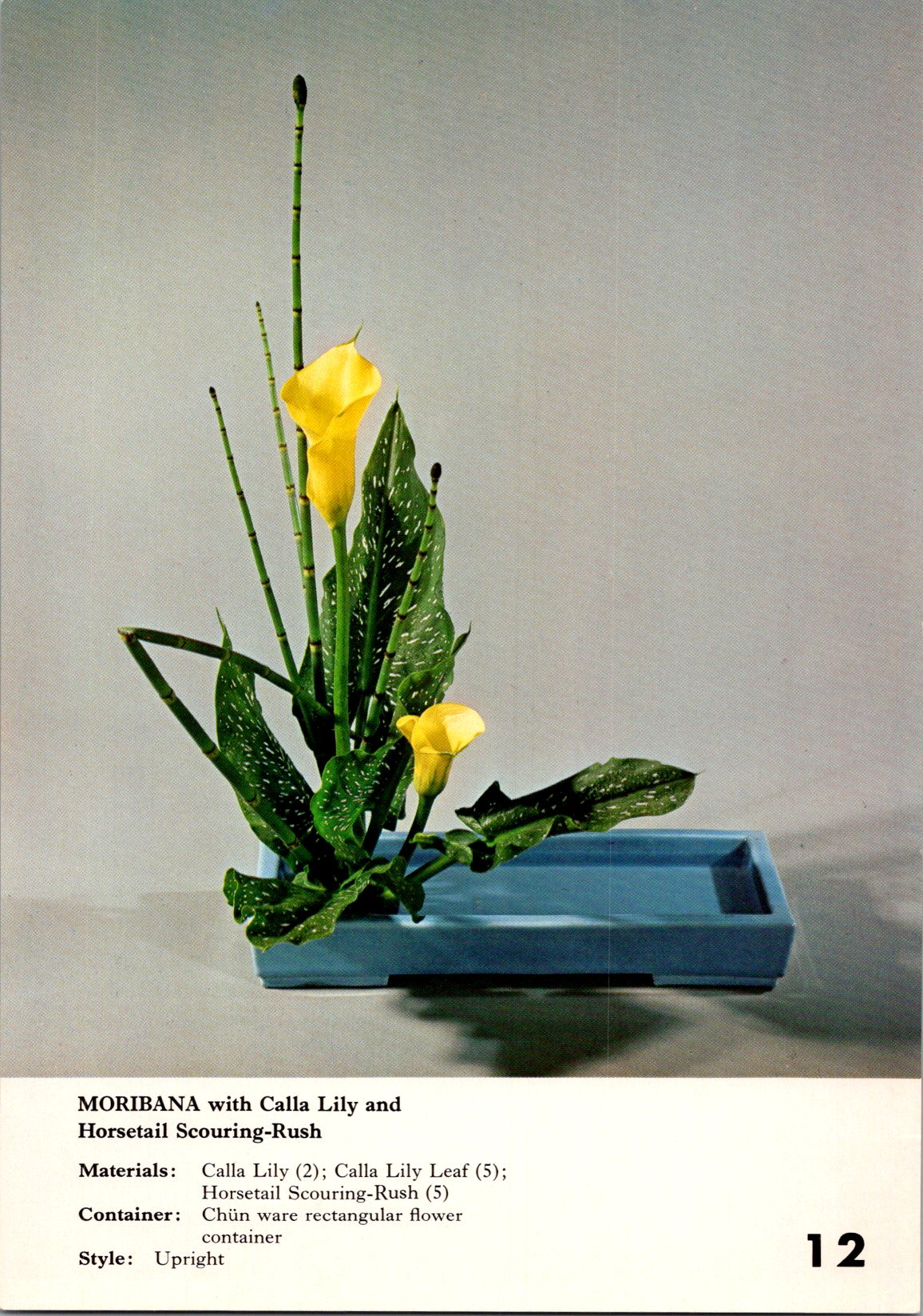
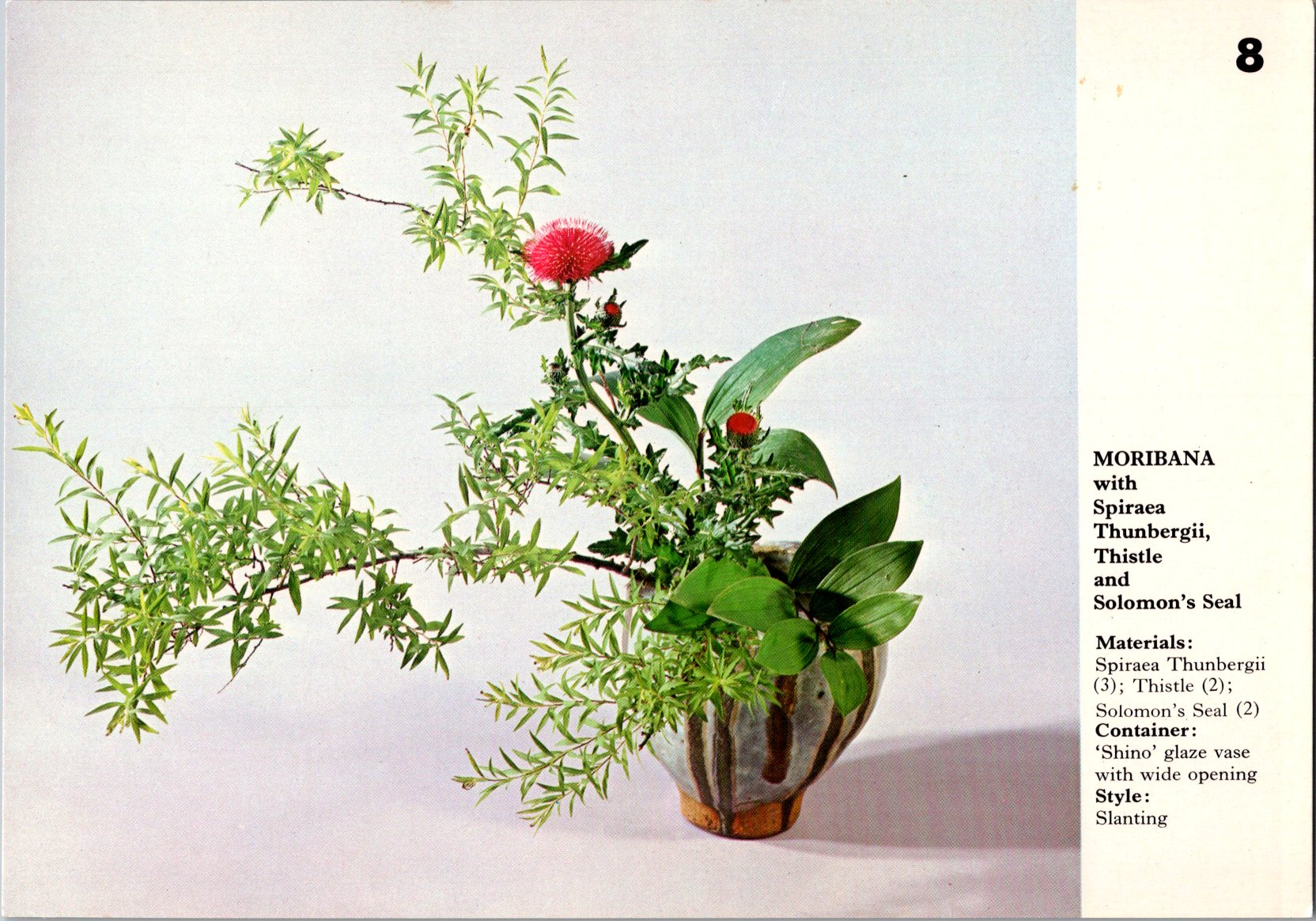
She opened a drawer, pulled out a small wooden box. Inside lay perhaps a dozen postcards, all showing Ikebana arrangements with low, horizontal compositions in shallow containers. Pink and red cosmos rising from a white porcelain vase. Allium gigantium’s perfect spheres balanced with small lantana blooms. A giant monstera leaf with a canna lily and a white chrysanthemum.

Mrs. Hanabusa handed Nina the stack of cards. She flipped through slowly, admiring each floral design.

“My sister sent these from Osaka. Our grandmother taught the traditional way. These are more like her arrangements, traditional but made new.”

Mrs. H pointed to the one with the iris. Nina looked closer. The composition was deliberate. Bold strokes against a spare background.

“Your friend will send you more postcards?”

“She promised,” Nina replied.

“Good,” Mrs. H smiled. “We get bored without friends.”

George had haunted thrift stores his whole life. Mostly he looked for tools—socket wrenches, levels, hand planes that still had their blades. Things he could use or restore.

Now he looked for postcards too.

The Goodwill in Red Wing had a basket of them near the register. Fifty cents each. He sorted through slowly. Tourist shots of the Badlands. A faded view of the State Capitol. Then he found a few good ones.

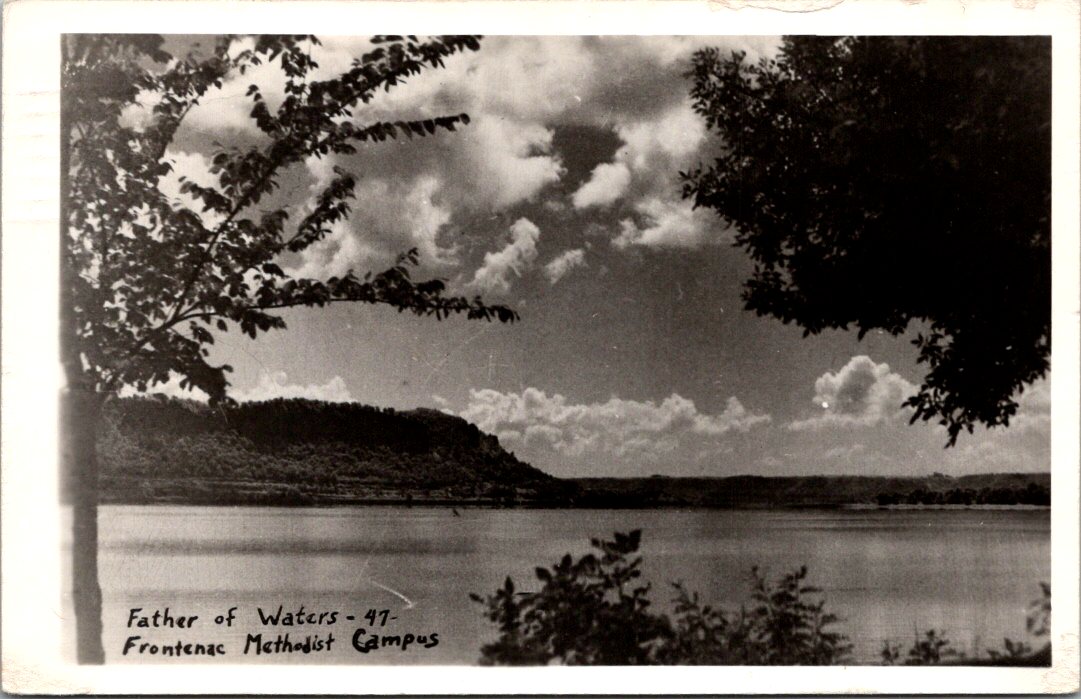
A real photo postcard showing Lake Pepin framed by trees—”Father of Waters” etched in careful script. The water stretched wide and calm, clouds massed above the bluffs.

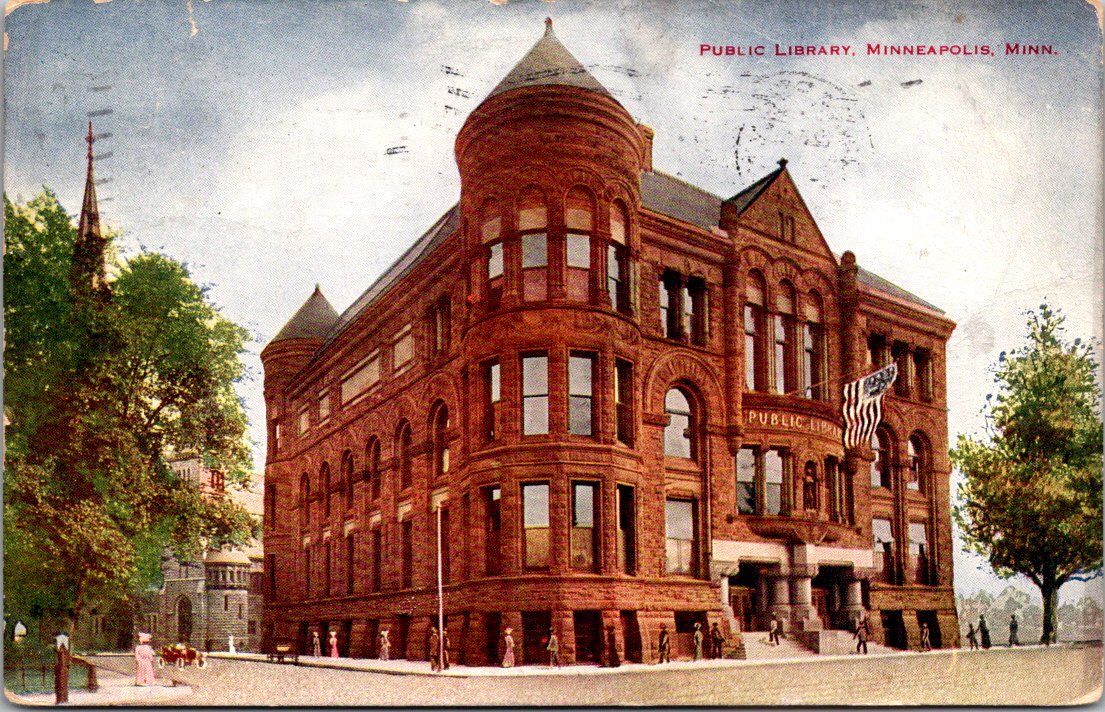
A color card of Minneapolis Public Library, the old red brick building with its round tower and arched windows. George remembered when they torn it down in 1951.

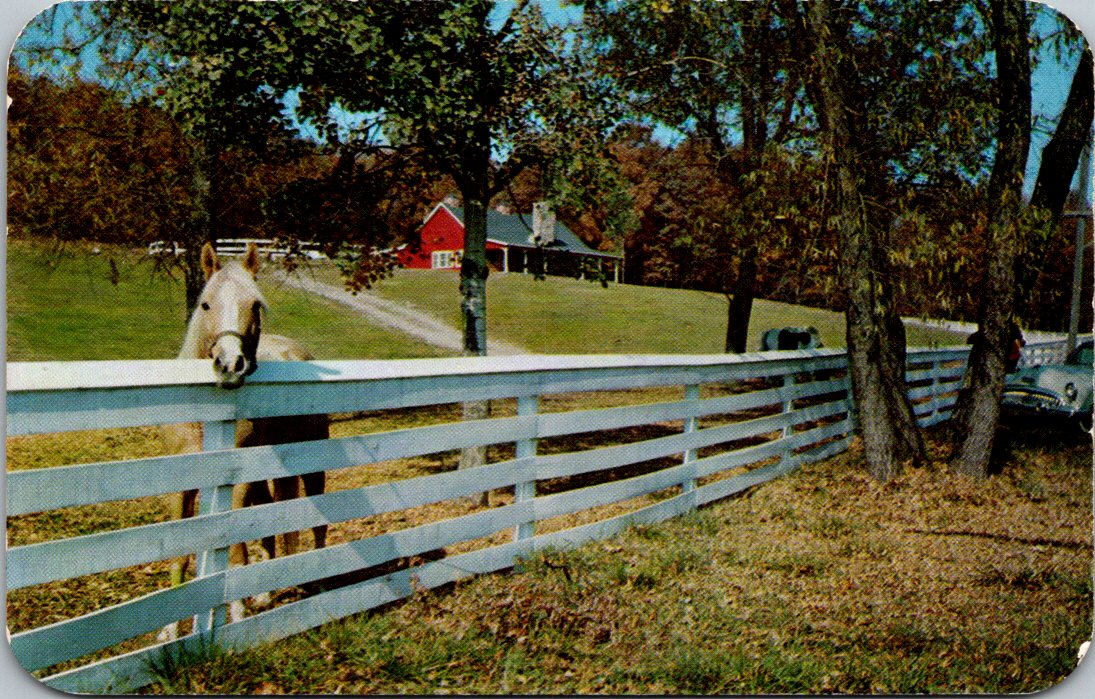
A chrome card showing a white horse leaning over a fence, red barn and farmhouse in the background.

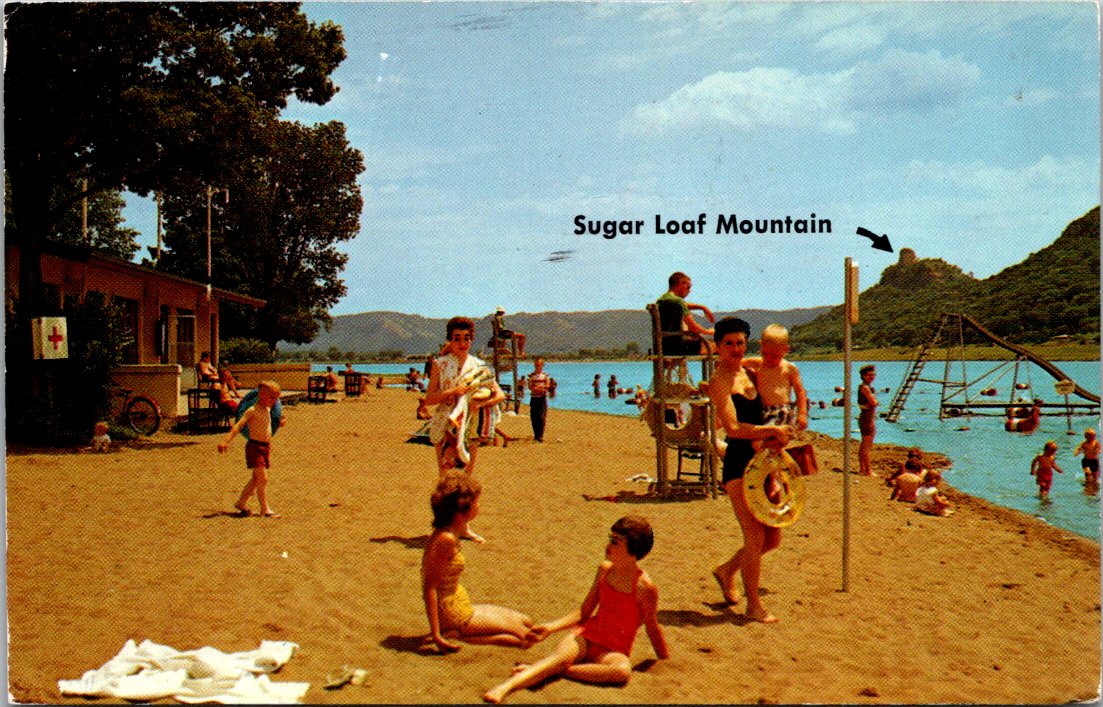
And then—George stopped. Sugar Loaf Mountain near Winona. A beach scene, families on the sand, kids on playground equipment, swimmers in the water. The mountain rising behind them.

He was transported to that very day. Their family had been right there, doing exactly that. The kids running between the beach and the playground. The particular blue of the water. How his wife had packed sandwiches that got sand in them and nobody cared.

George bought all four cards. Two dollars total. At home he examined them under the desk lamp before he got to thinking about each message.
He wrote to Emma:

Found this real photo from Lake Pepin. “Father of Waters” they called it. Your wanderlust comes honestly—this river goes all the way to the Gulf. Love, Grandpa

To Jack:

Get to the good old libraries while you can. This one is gone already! Love, Grandpa

To Lily:

See how the fence posts get smaller as they go back? That’s tricky to draw! Give it a try. Love, Grandpa

He paused at the fourth card, and let out a small sigh. Sugar Loaf Mountain, seems like another lifetime. Finally, he wrote:

This one is for you, kiddo. Reminds me of you and the guys and Mom. Fun times! Love, Dad

George added addresses and stamps. Put on his coat and walked to the mailbox, a short stretch of the legs that he now enjoyed. A chickadee called from the pine tree across the street—its clear two-note song cutting through the cold afternoon air.


wake up with wanderlust, too?

Though the story is fiction, vintage postcards are still a fun way to explore.
Browse the selection at our eBay store

People Past

Last week, buildings emerged and oil derricks erupted. Evidence accumulated, context implied. An unknown town takes shape and we surmise. Now, people stare across a century and time flies.

Seven adults carefully arranged on a rocky outcrop. Three men, four women. Two children in white dresses seated in front. Twins? Cousins? Someone operated the camera.

We see the composition and relational questions arise. Are they family? Kin? Friends on an outing? Do the poses suggest occasion, or documentation?

Evidence ends and story begins. We fill in by reading subtle cues in how they stand, who touches whom, which faces seem to fit together. Clues come quietly and mistakes, too. Always, we’re revealing ourselves.

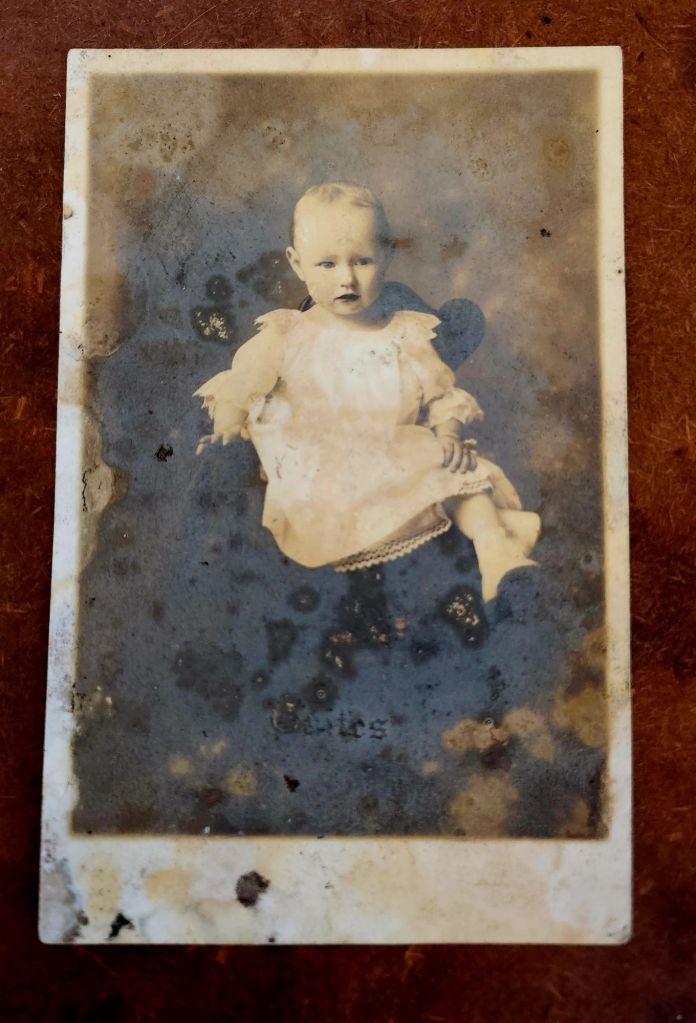
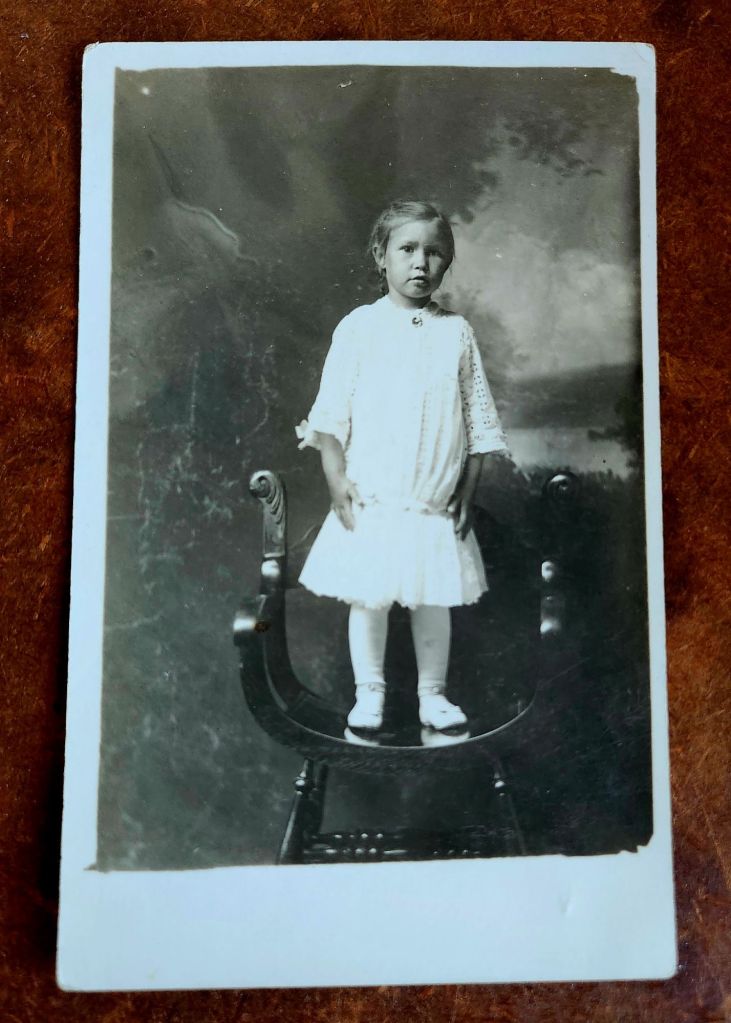
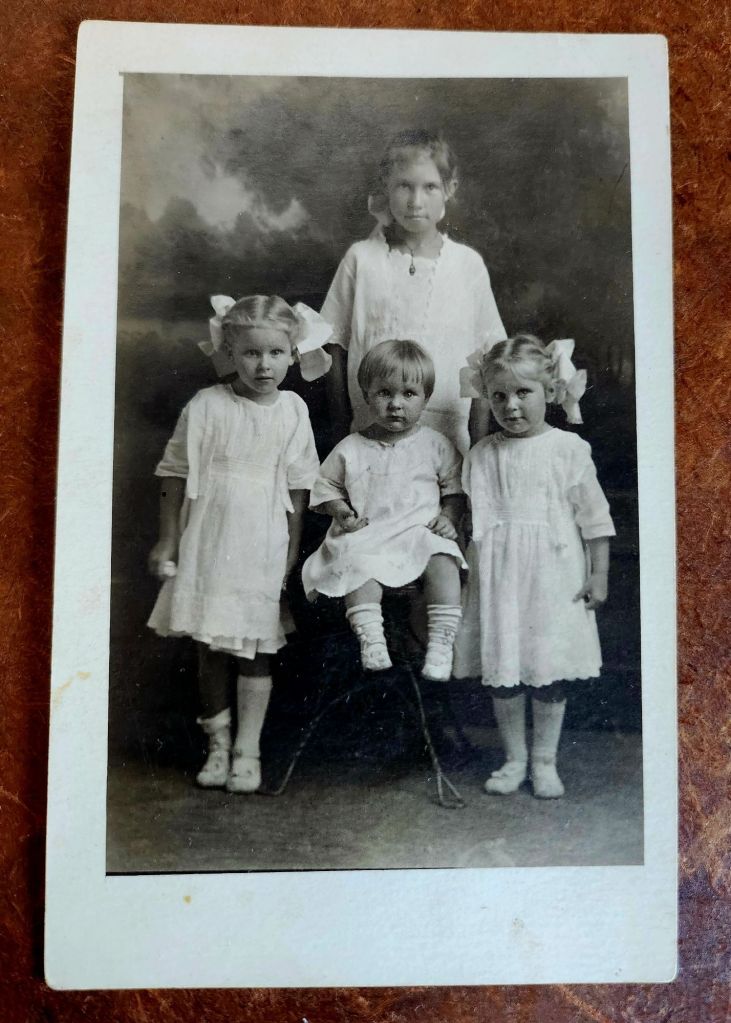
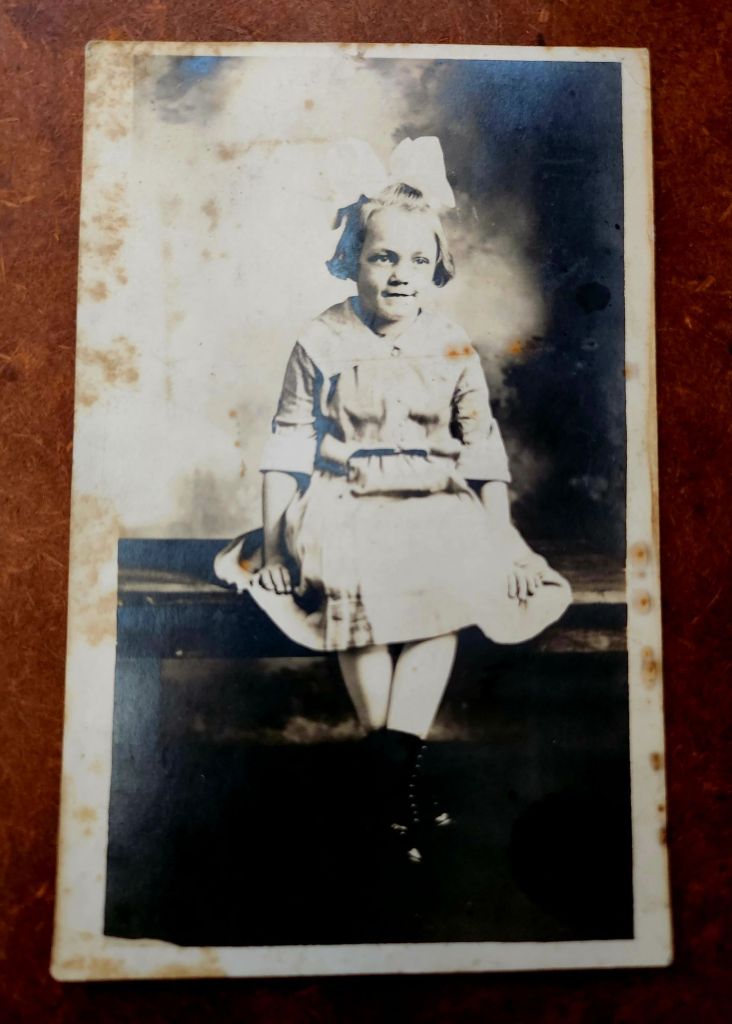
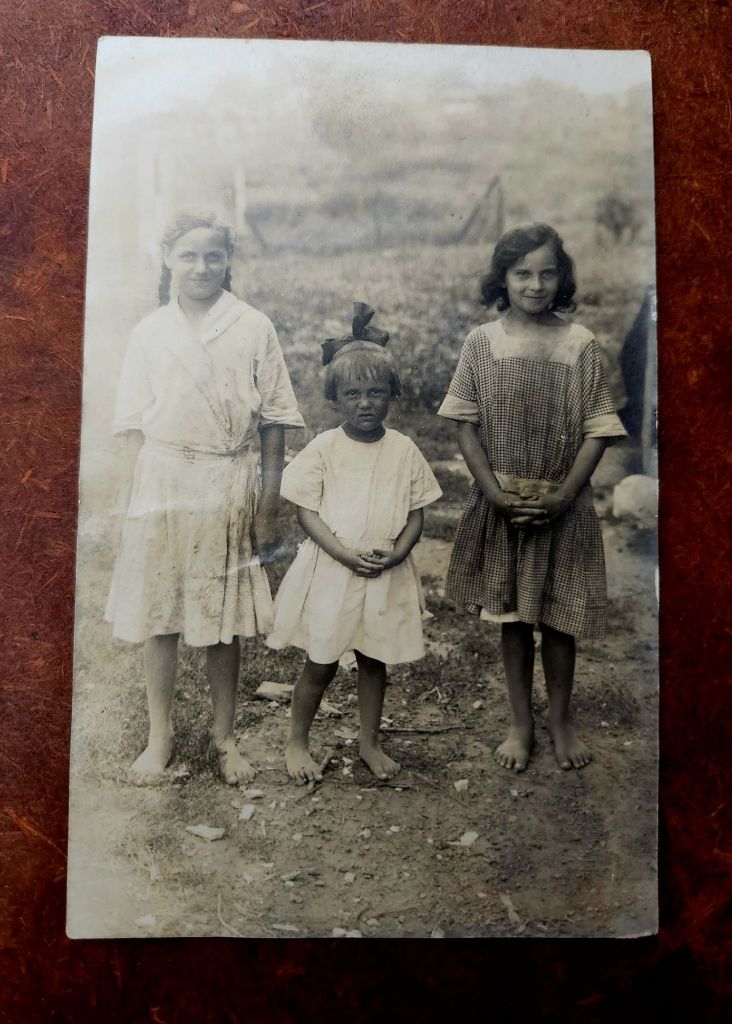
Here we see one girl, three moments, and years passing. The baby stares out with solemn intensity. Then she’s older, on a throne in white dress, commanding the frame. Finally she’s the eldest of four, and her protective gaze tells all.

The postcards show her time moving, roles shifting. She grows and gains presence. She becomes a big sister, then a bigger sister still.

The postcards show the sequence and the story intrudes. We can safely assume the scenario, the kinship, the birth order. But then we imagine her. She and her siblings stand as evidence. We provide the narrative.

Now nine men, perched around a large rock on uneven ground in a forest, maybe a park. Hats, a variety of ties, white shirts in sunlight. Ages range. Some engage the camera. Others look away.

Compare this to the first photograph. Similar outdoor setting and careful arrangement. Same paper stock, same photographic quality. Do any faces repeat? That man in the center looking off to the distance—could he be the man on the back left of the family group?

We squint. The shape of a jaw, the set of shoulders, the tilt of a head. Errors lead us toward other observations. Misreads become clues. We’re searching, and trying out plausible connections.

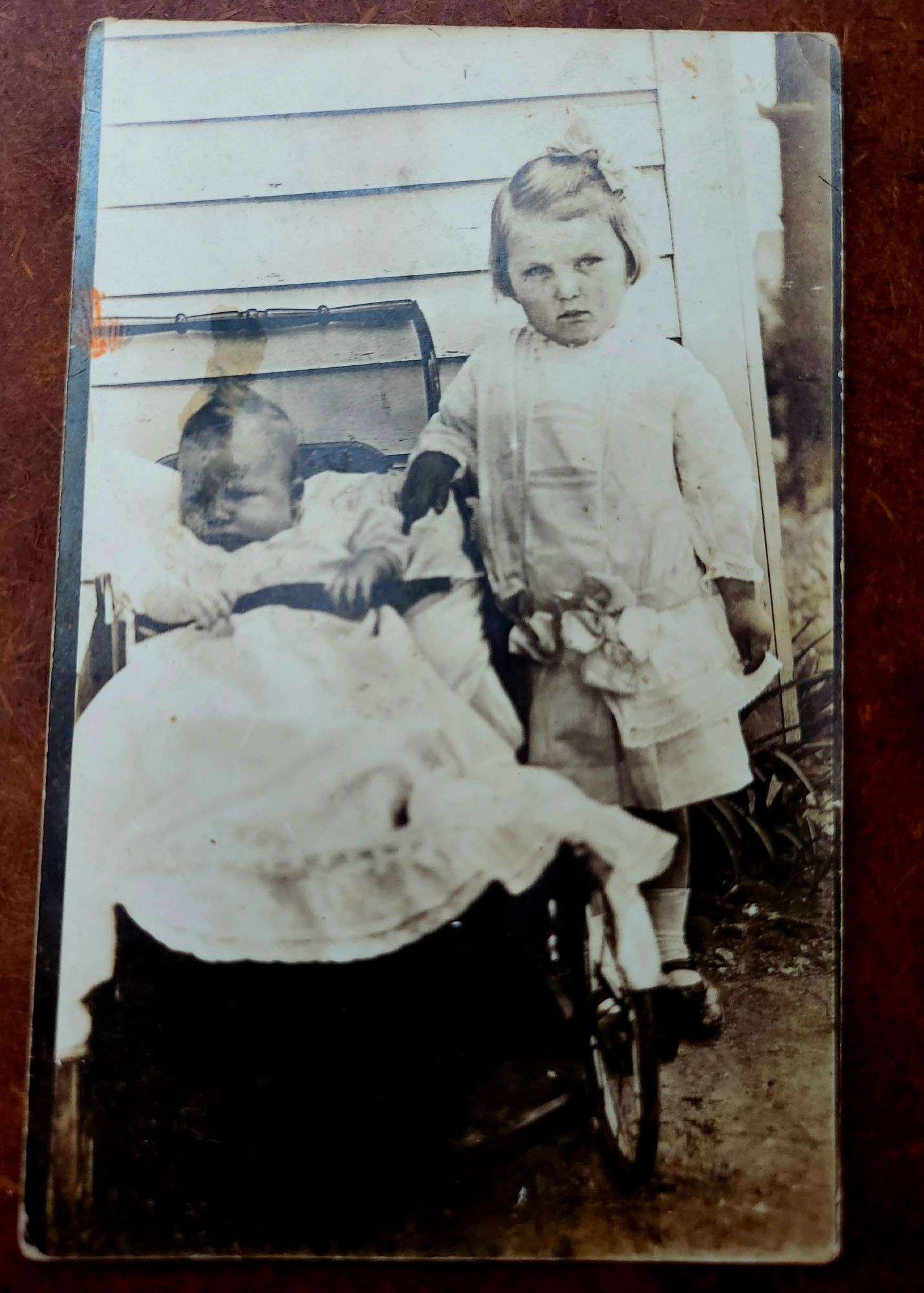
A different girl and a similar progression (maybe). The baby carriage can be dated within a range, 1915-1925. Fashions shift slowly in some places, rapidly in others, but period details do show. Those bows!

However, uncertainties hover. Is this the eldest girl growing up? Or, are we forcing connection where none exists? The bobbed hairstyles might give it away. Or they might mislead entirely.

A particular stare, a nose ridge, an anomaly at the jawline, and we are on the pursuit again. The faces echo. Three generations, or two. We assign roles: son, mother, daughter. Sisters?

The oval portrait shows four women arranged in a formal cluster. Elaborate hairstyles, high collars, cameo brooch visible on the seated figure. More prosperous, perhaps. Different family entirely, or different branch? Is she at the center the same as the older woman below? We cannot know.

In between the guesses, a different story emerges entirely. Our own families, and that we belonged. Or, that we confidently walked on. In either case, we are humming with history.

We’re deep in assumption now. Building genealogies from facial features, paper stock, and similar poses. The archives encourage it. These cards traveled together. Someone kept them together. The connections existed, however disassembled.

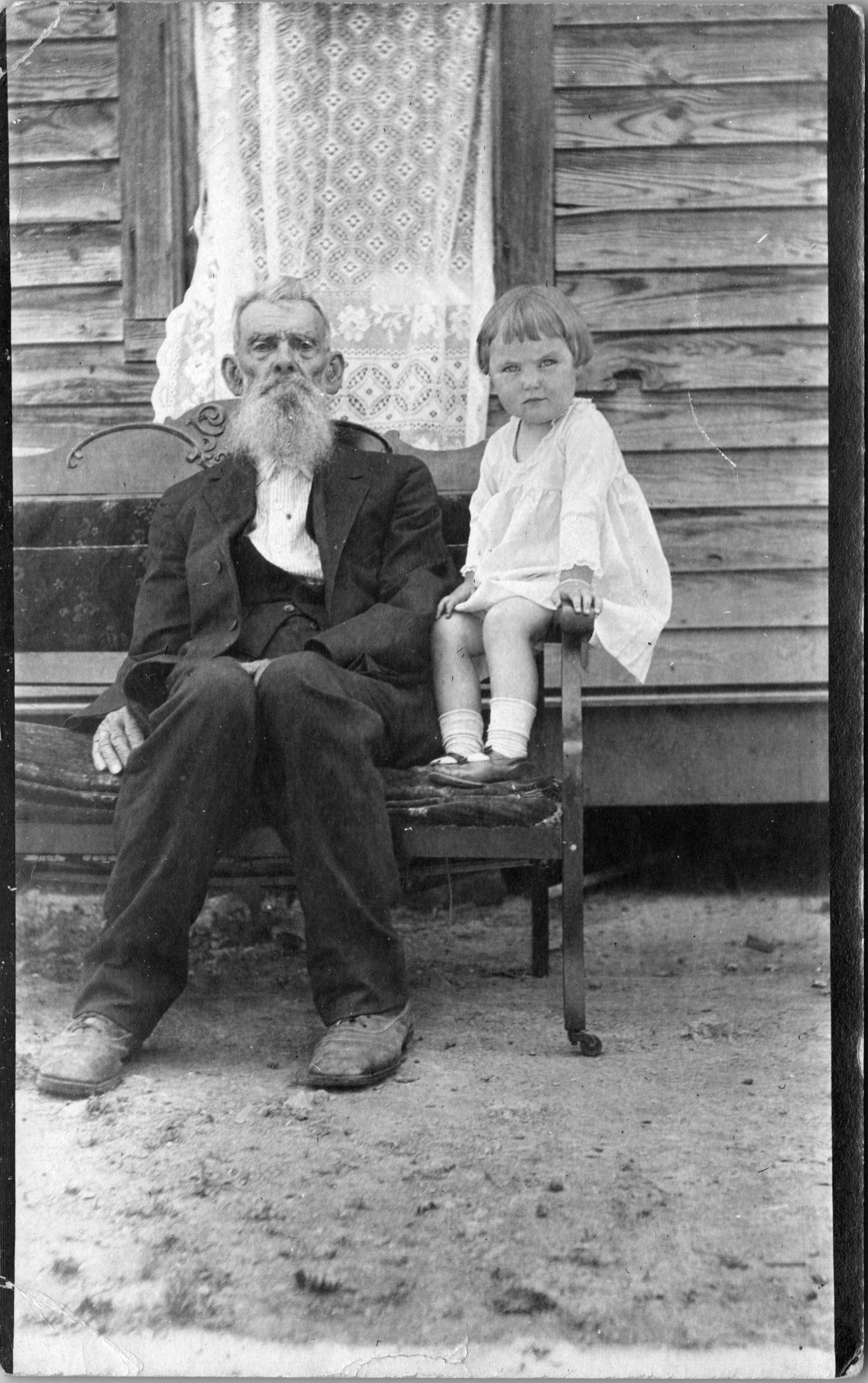
Another baby carriage, different from the first. And on the back of the card, handwriting: this is Irene with Willie’s baby, sent to Aunt Fannie. We know Irene from when she was four, seated with Uncle Rufus Dale, 84.

What satisfaction, when a storyline clings together. Names accumulate. Groups delineate. Relationships clarify. The archive speaks back, and the story begins to imitate fact.

The search becomes research. The archive rewards our attention and budding accuracy. But, who doesn’t love Aunt Fannie? Even if we’ve never seen her.

Now, here is Irene amid two new figures who appear to have a strong bond. Sisters? Friends?

As we might expect, there is more to reveal. Next week, we’ll look at pairings in quite a variety, and even more merry misleads. Then portraits, and finally, a grave.

Property Past

Tricky, sticky stories arise at the sight of buildings in the landscape. Evidence (or absence) of us along the way.

As landscapes, last week’s real photo postcards (RPPC) asked for nothing. Trees, frozen roads, animals burrowing in snow—they floated free of context. We could easily appreciate them without knowing where they might be.

Buildings are different. A structure says someone decided, planned, risked, and accomplished. They hauled materials, drove nails, painted trim. Buildings demand explanation in ways that hills might easily demure.

Reading postcards slowly reveals patterns. The undivided back means pre-1907. The real photo process suggests a local photographer, or maybe an itinerant professional documenting a place too remote to the reach of commercial postcard companies. Paper stock, indicia, stamps and cancellation, faded handwriting and previous labeling, even image placement and crop—these technical details narrow the place possibilities.

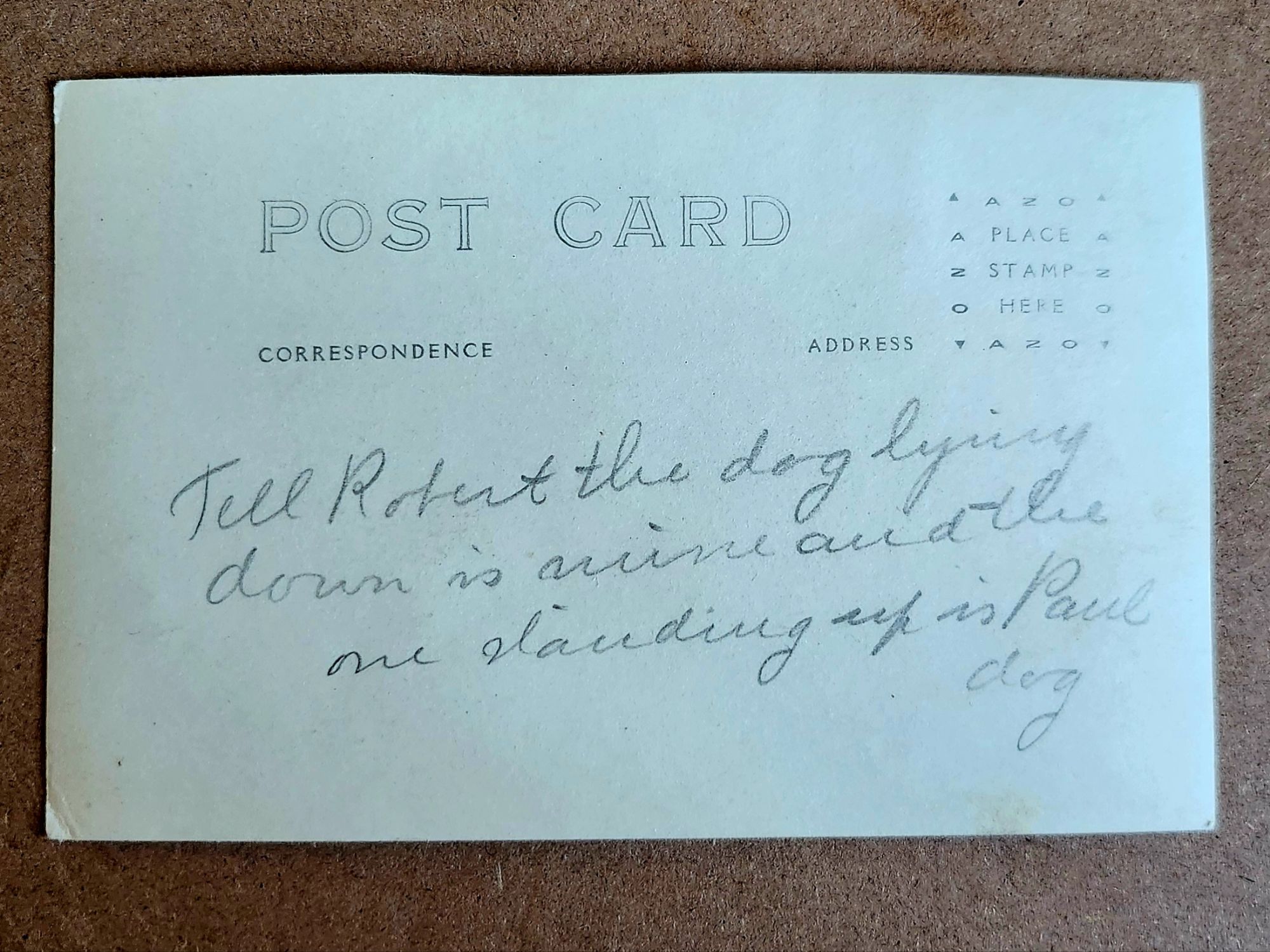
But they don’t yet answer another question: Who are Robert and Paul?

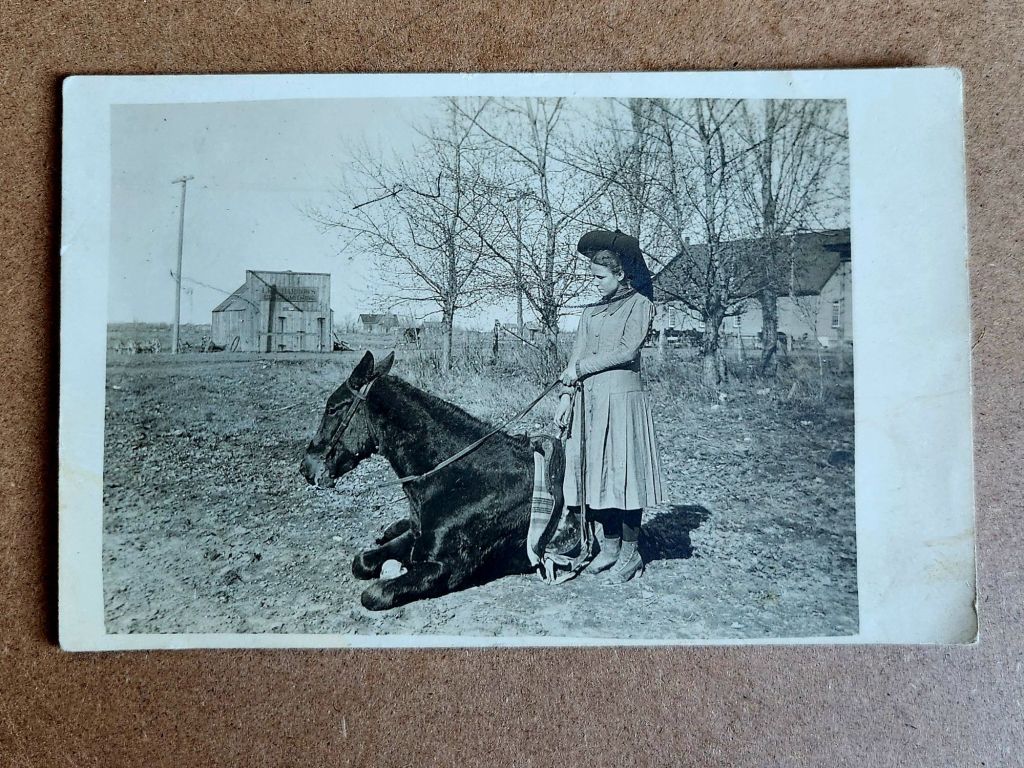
Tell Robert the dog lying down is mine and the one standing up is Paul dog

What We Might Know

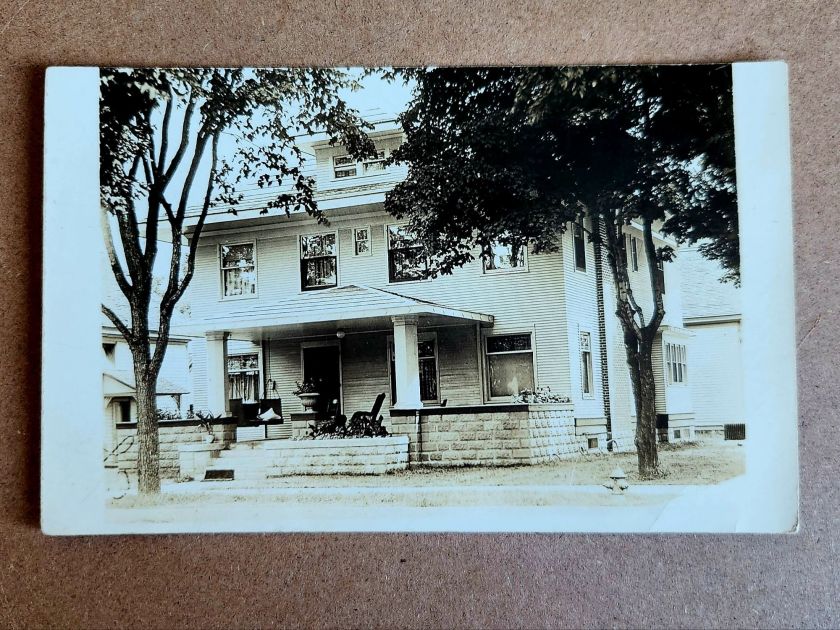
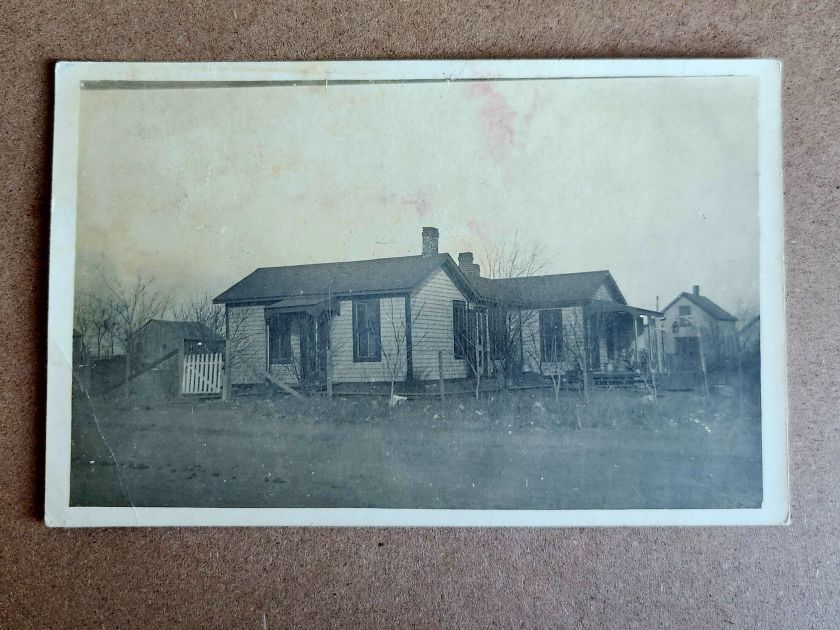
A two-story house with a generous porch is carefully centered in one photograph. Mature trees in the foreground. Curtains hang in the windows. Someone lived here and wanted to show their pride. Or, was it for sale?

The architectural details offer more clues. Clapboard siding, stone or brick foundation, decorative porch elements—not fancy, but intentional. It seems to be in a neighborhood with sidewalks. In an era between 1900-1920, somewhere in the Midwest or West judging by lot size. Also, a fire hydrant.

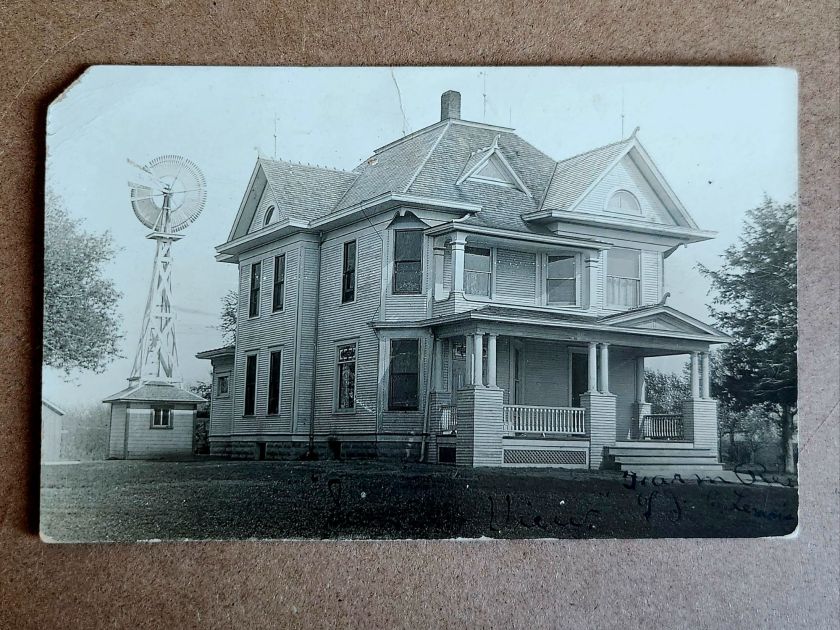
The windmill in another image dates itself. Windmills were an important utility and industry, and that style had a particular era. The house beneath it—elaborate Queen Anne with corner turret, ornamental shingles, and ornate columns—speaks to aspiration. Someone had big plans. This is visible evidence. When and where becomes roughly recognizable.

But, the people who stood on that porch remain absent and enigmatic. Who were they? What is happening here? A creative tension is mounting between the realm of evidence and the pull of story.

Sensing Stories

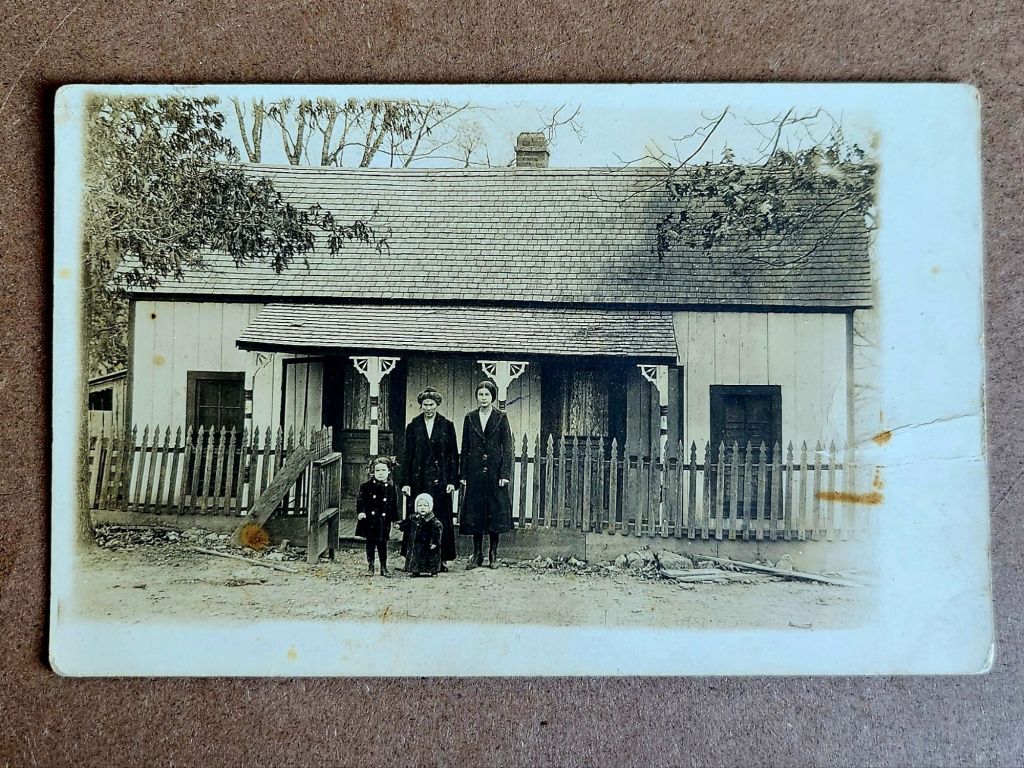
Two women stand in front of McMann Boarding House wearing identical striped dresses. The building is simple—board and batten, minimal trim, the kind of structure that goes up first and fast in a growing place.

The photograph has a vertical tear, the exposure is bad, and time has degraded it. But the sign remains legible: McMann Boarding House. Finally, a name.

Who was McMann? Who are these women? Employees? Vacationers? The photo is both casual and deliberately staged. What might the matching dresses mean? Pride? Subjugation?

Reading their faces, we fill in the narrative, almost immediately and sometimes inescapably. Relationships, motivations, futures take shape unbidden. This is exactly what we both invited and warned of last week—making it up. Always dangerous, sometimes worthwhile.

The impulse to story is nearly irresistible. A name on a building. Two women in matching dresses. The space around the postcard lights up. Are these their stories, or our own, or a magical projection that folds time?

When the Past Chats Back

Shuffling the stack, several cards in this collection start speaking to one another. Same photographic quality. Same paper stock. Similar landscape—flat, spare, newly broken. And most telling: similar structures in states of becoming.

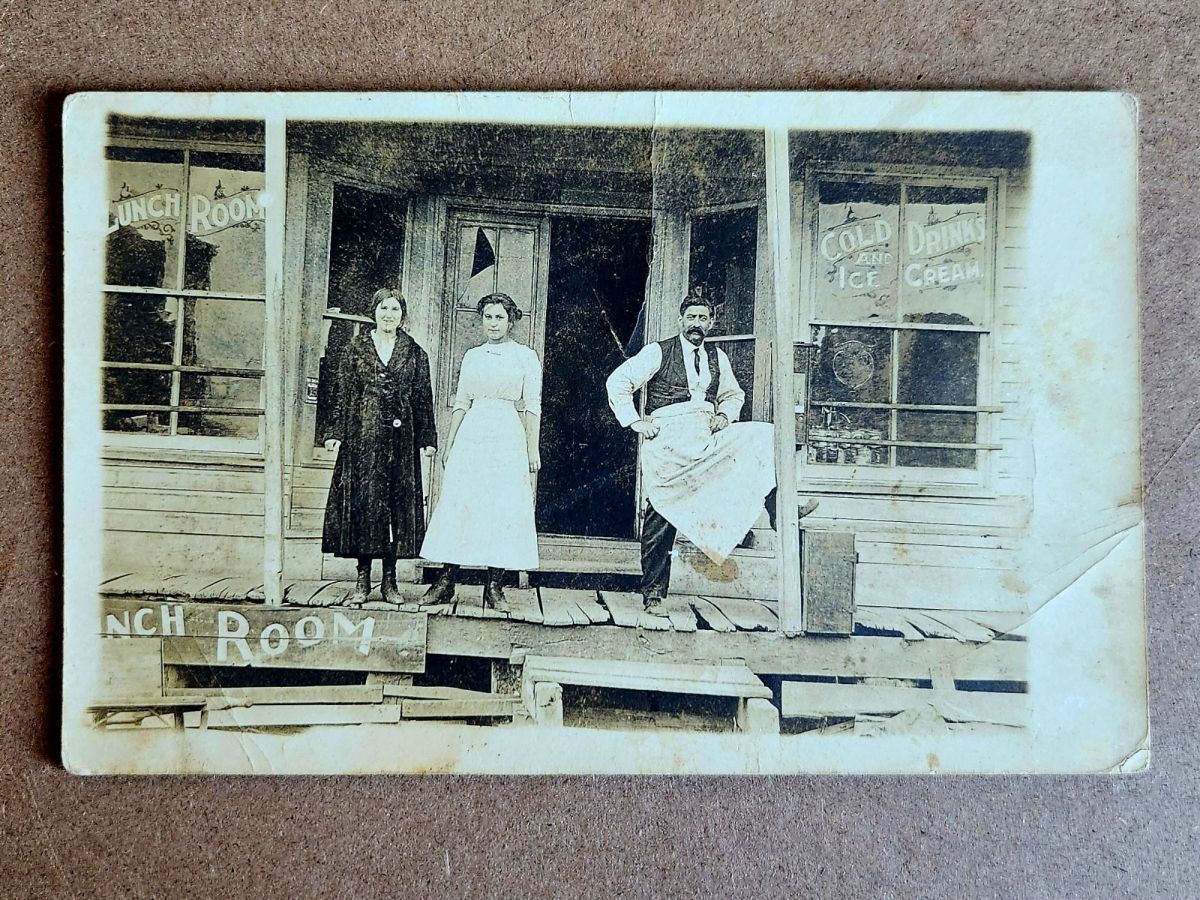
Laid out together, the pattern emerges. Houses with stone foundations and wraparound porches. An elaborate Queen Anne with a windmill. McMann Boarding House with its two women in matching stripes. A lunch room with an immaculately vernacular grand porch. Best-dressed proprietors standing proud. A girl and her horse, bare buildings behind her. A picnic under the canopy of a large tree.

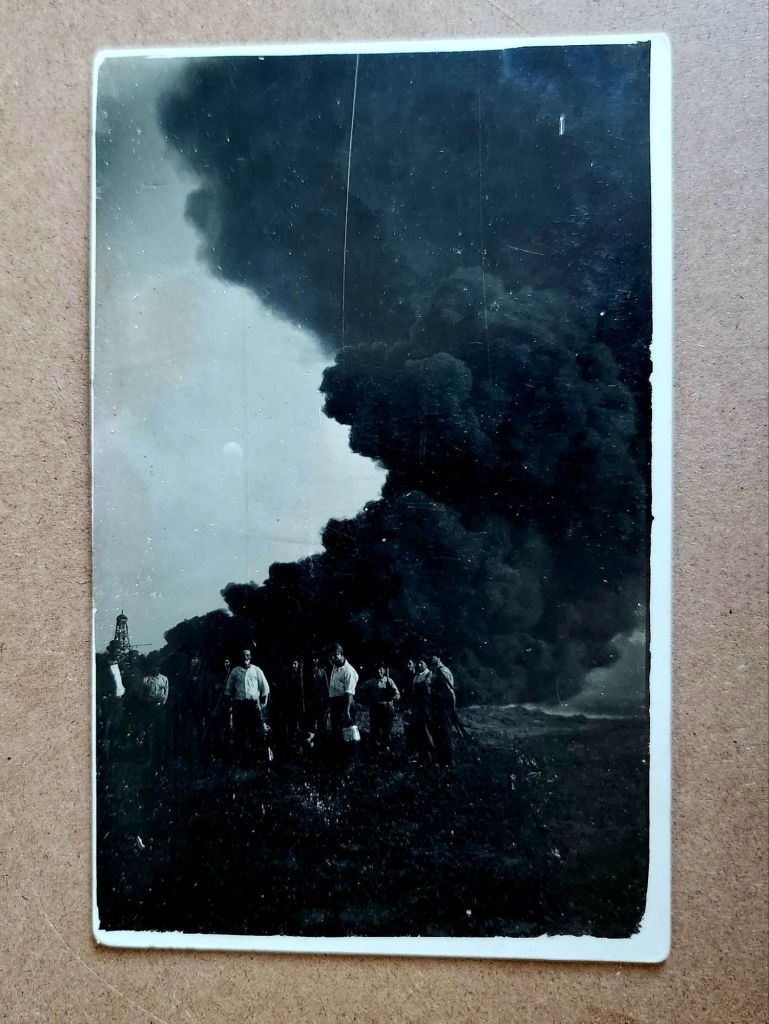
Also, a massive plume of black smoke billowing skyward, an oil derrick to the left, eight or nine men grinning toward the camera. The photograph stops everything cold. They struck liquid gold. A triumph worth documenting. Fine lines of the plumes etching through the darkest black.

These eleven images are a cluster from the same story—a town emerging around oil. Homesteaders and entrepreneurs arriving in a place that may have been open prairie five years earlier. Building homes, businesses, infrastructure for both industrial productivity and social life. Documenting the process with real photo postcards, for themselves or to send East. Their message: we have arrived safely and are in luck.

From Here to Now

This is a founding, the moment a place began and the stakes changed. These aren’t isolated buildings anymore and oddly they seem less like photos, too. We know there is a community taking shape and the evidentiary questions multiply. Who were they, by name? What brought them here? Did this place survive or vanish?

And harder, deeper, more consequential questions: Who lived here before? What animals and habitats were displaced? What did the derricks do? For them, and also to us.

Boom town logic. Extraction economy. Infrastructure dependencies and family injuries inherited. Cultural degradation, and environmental costs still being paid. This isn’t quaint history. This is the beginning of something we’re grappling with today.

Suddenly our imaginative stories contract and we now seek facts. The boarding house proprietor’s daily life can be imagined, but not separated from a place built on oil speculation. The architectural ambition of that Queen Anne deserves appreciation, but it went up in a town that might have lasted ten years or a hundred, depending on the wells. The buildings aren’t innocent, and we are implicated.

More in Store

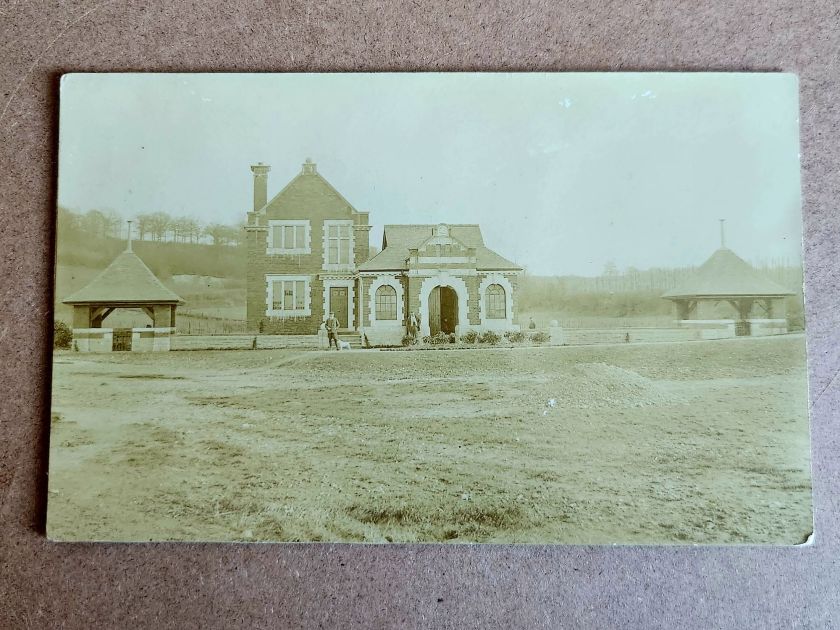
Another stack of postcards might be related to this cluster—similar age, similar style, possibly the same region, likely at later dates. And then a few unrelated ones, probably European based on the architecture.

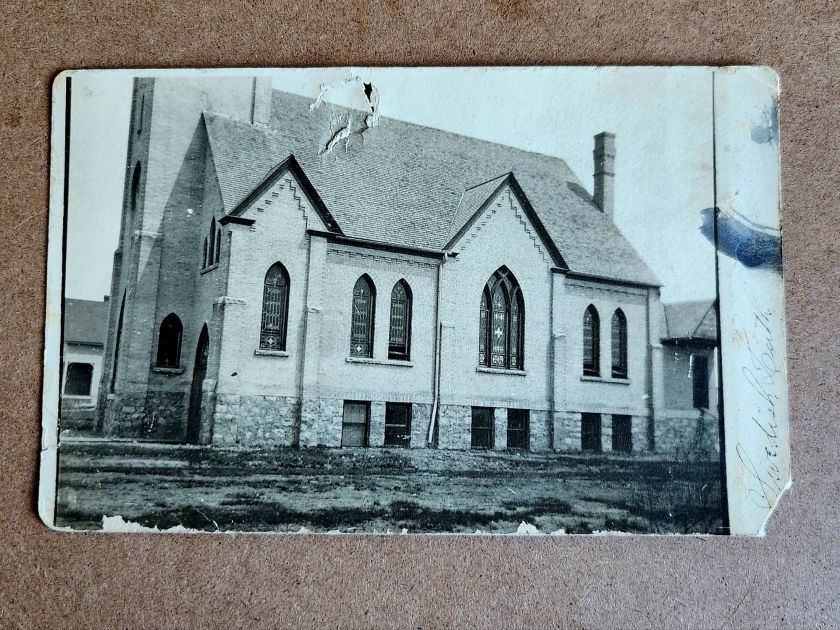
Not every fragment connects or resolves. Some buildings will remain singular, their stories unrecoverable. Churches and homes, beautiful structures, carefully photographed. Loved locally today as a memory or a ruin, perhaps.

Not everything needs a narrative. Some images can just be enigmatic. Evidence of care, of craftsmanship, of a moment someone thought worth preserving. These evocative details lead to fiction, which makes its own case for history and the preservation of minute detail.

But this cluster won’t let go. They connect to another stack, and soon we’ll know more. Next week we’ll meet the people themselves, looking back at us.

Still in the Ring

Here we go! The Posted Past heads into the fall season with rare cards, a new gallery, and a social mission to trade loneliness for connection.

featured postcard~
rare novelty card still holds a mystery

An early 20th century novelty postcard featuring humorous photography and personal correspondence from Missouri.

Front of the card: The photograph shows a young Black man in white shirt, suspenders, and dark trousers, grinning while holding a large broken umbrella overhead in a playful pose. Below reads the humorous caption “A little disfigured, but still in the ring”—typical novelty humor from the postcard craze era. A black border frames the photograph on cream cardstock.

Back details: The reverse bears “Carbon Photo Series No. 513” identifying the commercial publisher’s series. Addressed to Miss Grace Skillman in Pleasant Hill, Missouri, with a green 1-cent Franklin stamp and clear 1908 postmark. The handwritten message describes an exhausting early morning wait in Lee’s Summit for “Brother and Frank,” and promising a longer letter that evening.

“Still in L.S. haven’t slept but about ten minutes. My eyes looks like two burnt holes in a blanket. Brother and Frank hasn’t come yet. I will wait till 7.30 and then go home. Will write tonight. Just finished my breakfast. I will eat if not sleep. I got here ten till five.

Condition and Appeal: The sepia-toned image displays characteristic early photography with some age spots, and a nicked corner. The image and reverse side remain in good condition with clear photography and legible handwriting. The “Carbon Photo Series” indicates premium production using carbon-based printing methods prized for superior image quality and archival stability. Grace Andre Skillman was born in Pleasant Hill in 1889, making her nineteen when she received this card. The message and the lack of formal salutation and signature suggest this is casual ongoing family correspondence. As a result, the author of the postcard remains a mystery.

Vintage novelty postcards are increasingly collectible, especially numbered commercial series with documented recipients. Collectors of African-Americana may find the image appealing and relatively rare. The combination of carbon printing technology, humorous subject matter, and personal correspondence is of interest to collectors of vintage photography, postcard enthusiasts, genealogy researchers, and those focused on early 20th century American social history and communication.

Introducing~
The Posted Past Art Card Gallery

A selection of Larry L’Ecuyer’s watercolor landscapes are on display in our Online Art Card Gallery. Fitting as our first show. Enjoy!

Watercolor postcard showing a serene lake scene with mountains in the background and tall grasses in the foreground
Countdown to a Lakeside Getaway, 2025, Larry L’Ecuyer, watercolor on postcard

NEWS & UPDATES~
art card call for submissions is open

The World’s Smallest Artist Retreat (our P.O. Box) is awaiting your art card submission. Follow one rule to join the next open show. Details here!

Art card kits now in stock

Our Art Card Kits are perfectly-packaged as a fun, creative activity for you and a friend to complete in as little as an hour or made into a lovely afternoon.

The kit includes two postcard blanks, six vintage finds curated to the chosen theme, and a bundle of collage goodies for your whimsy. There is a free gift inside, too!

Once you’re done, surprise someone with an original art card in their mailbox. Or, send it back to us to include in the next online show. Either way, you’ll have cultivated a little joy in your garden.

Order your kit here 🙂

All of the Above

Words to heed and repeat, and a life’s work to regard.

George Washington Carver Educational Postcard

This vintage educational postcard (likely printed in the mid-1960s) features quotations from agricultural scientist George Washington Carver (1864-1943), displayed on an exhibit at George Washington Carver National Monument. The card presents Carver’s thoughts on success, preparation, and nature alongside his portrait. Carver, born into slavery, became a prominent botanist and inventor who developed hundreds of uses for crops like peanuts and sweet potatoes while teaching at Tuskegee Institute for 47 years.

I love to think of nature as an unlimited broadcasting system, through which God speaks to us every hour, if we will only tune in. — George Washington Carver

The George Washington Carver National Monument, established in 1943 near Diamond, Missouri, was the first U.S. national monument dedicated to an African American. Located at Carver’s birthplace, it preserves his legacy and the 1881 Moses Carver house where he lived as a child. The National Park Service now manages the 240-acre nature preserve and historic site.

To Read More:

• National Park Service – George Washington Carver National Monument: https://www.nps.gov/gwca/

• Tuskegee University Archives – George Washington Carver Collection: https://www.tuskegee.edu/

• Smithsonian National Museum of American History – George Washington Carver: https://americanhistory.si.edu/

• Library of Congress – George Washington Carver: https://www.loc.gov/

• Iowa State University – George Washington Carver Papers: https://www.library.iastate.edu/

Call for Submissions Open Now!

The summer slow-down is coming to a close, and The Posted Past is launching into a new phase as a social enterprise. On Wednesdays, you’ll still receive a weekly wander through postcard history, along with a new focus on rare cards, and a regular review of the art cards we receive at the World’s Smallest Artist Retreat (our P.O. Box). More inspiration as our circle expands. Wisdom, wisecracks, and butterfly wings. See you in September… next week!

Silent Stare from Last Century
The news these days deserves a long silent stare. Here is one from a horse. A century or more later… still no.

[Note: Summer focus is on detailed captions. New essays return in September!]

A vintage real photo postcard shows a dappled gray horse standing in a farmyard setting. The well-built animal is wearing a halter and is positioned in profile to show its conformation. A person in a hat and dark clothing stands beside the horse, likely the owner or handler. The American rural backdrop includes wooden farm buildings and bare winter trees. The ground is packed earth typical of a working farm. The photograph has the characteristic appearance of an early 20th century image, with some evidence of a stylized border in the exposure. The postcard is in excellent condition front and back, unposted with no writing, and an AZO indicia dating the item between 1904 and 1918. The subject matter and production method suggest this is a unique image and object, with no known duplicate.

Hats Are No Joke

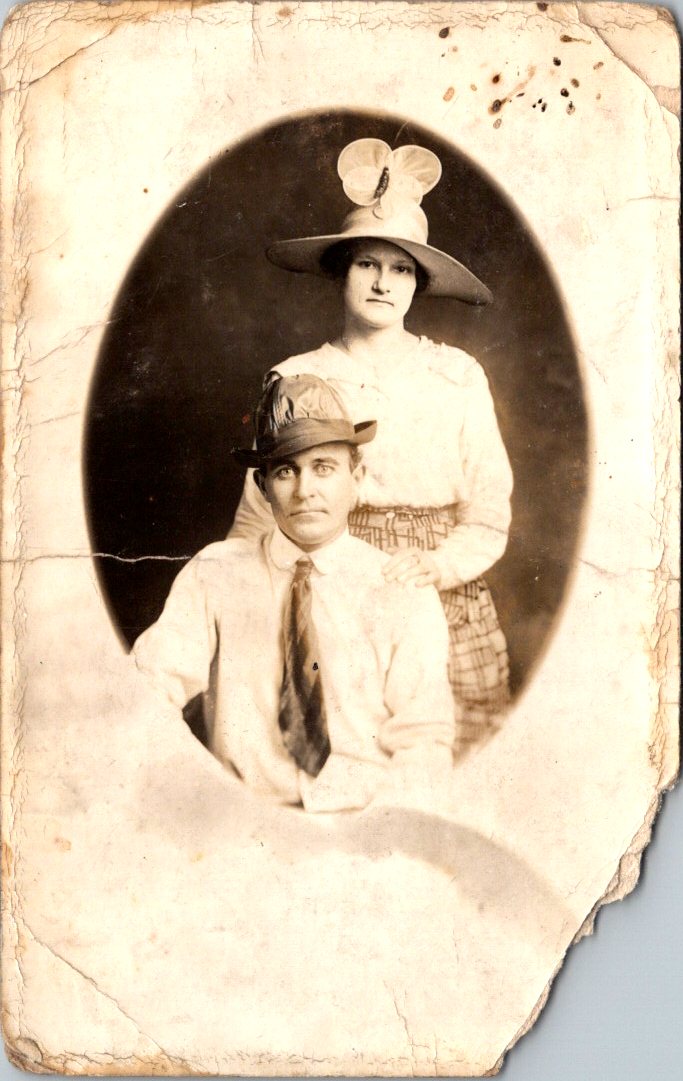
Is this a portrait of the couple or their hats? Feathers in the band. Fascinator with a wide brim. Stories behind their eyes and more clues in their clothes. The real photo postcard went unsent. Pasted inside an album once, and then lost for 100 years.

A sepia-toned oval portrait photograph from around 1910 showing a couple in formal attire. The woman stands behind the seated man, wearing a wide-brimmed hat decorated with a large bow or fabric flower. She’s dressed in a light-colored blouse with puffy sleeves and a geometric patterned skirt with a button at the waist. The man sits in front wearing a white long-sleeved collared shirt, striped tie, and a small hat with multiple feathers in the brim. Both subjects have neutral expressions typical of formal photography from this era. The real photo postcard shows significant age-related damage, with cracked and yellowed edges, stains, and deterioration around the borders, characteristic of an early 20th-century item previously collected in an album.

Navarro in the Lava Field

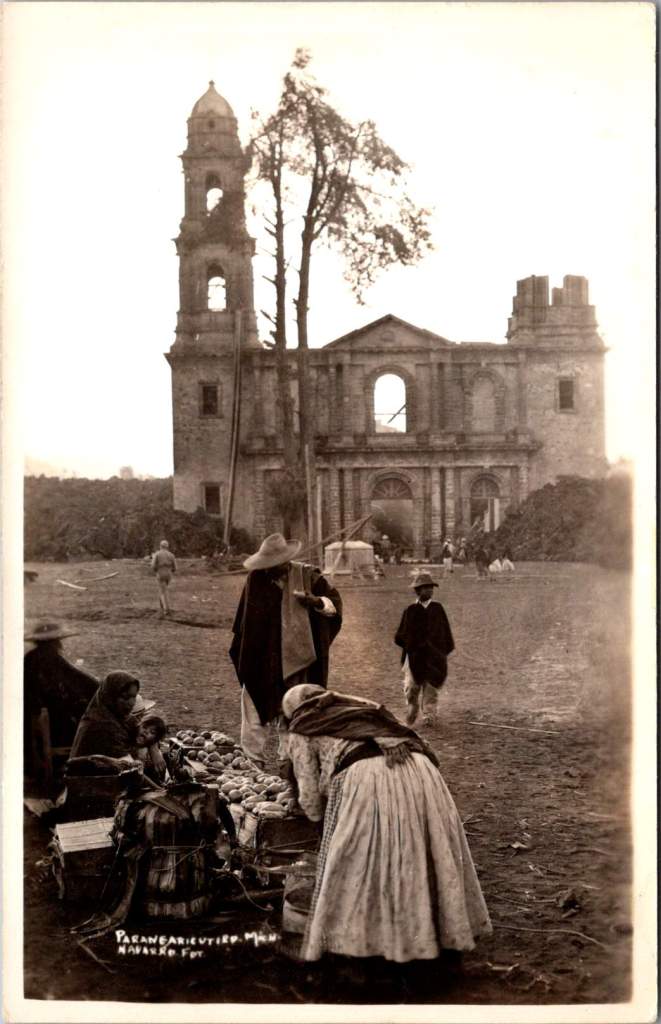
In February 1943, a photographer enigmatically known only as ‘Navarro’ documented Parícutin’s volcanic destruction of a Michoacán village and church, creating powerful postcards that circulated worldwide at the time and are highly collectible now. Then, Navarro vanished from history.

Parícutin erupted from Dionisio Pulido’s cornfield on February 20, 1943, becoming the first comprehensively documented volcanic birth in human history.

The response was immediate and international. Despite World War II, the Parícutin volcanic plumes commanded global coverage. The geological disruptions of fire and lava inspired scientific awe. Life Magazine dispatched photographers. Newsreels carried footage worldwide. Airlines altered flight paths for passenger viewing. By 1947, Hollywood used the still-active volcano as backdrop for the movie Captain from Castile, employing thousands of locals as extras.

In the extensive archives documenting Parícutin volcano’s nine-year life cycle, one name appears and vanishes: Navarro. His postcard images capture the most significant moment in the volcano’s terrifying story—when lava reached the 400-year-old church of San Juan Parangaricutiro. Despite meticulous record-keeping around this geological event, Navarro himself remains a mystery.

His photographs have more than survived. When story of the events at Parícutin are retold, one always finds a Navarro image. The photographer does appear in one other place: Folder 7 in Box 9 of the William F. Foshag archives.

The Day Lava Reached the Church

Navarro’s postcards document a sequence unfolding over a few crucial days in early 1943. For the year prior, the Purépecha community of San Juan Parangaricutiro had watched lava flows advance on their small village while praying their homes, farms, and colonial church would be spared.

Despite their pleas and processions, the lava flow had accelerated beyond divine intervention. President Lázaro Cárdenas and local priests convinced most residents to evacuate, carrying sacred objects and any moveable materials to the nearby town of Uruapan. One rare slice of film shows men removing clay tiles from a building roof.

When the lava reached the church, Navarro was there to document the destruction. Black lava creeping around the church’s perimeter. Intense heat causing wooden elements to combust. Steady accumulation of cooled volcanic rock against the baroque stone façade, contrasting human craftsmanship with geological force.

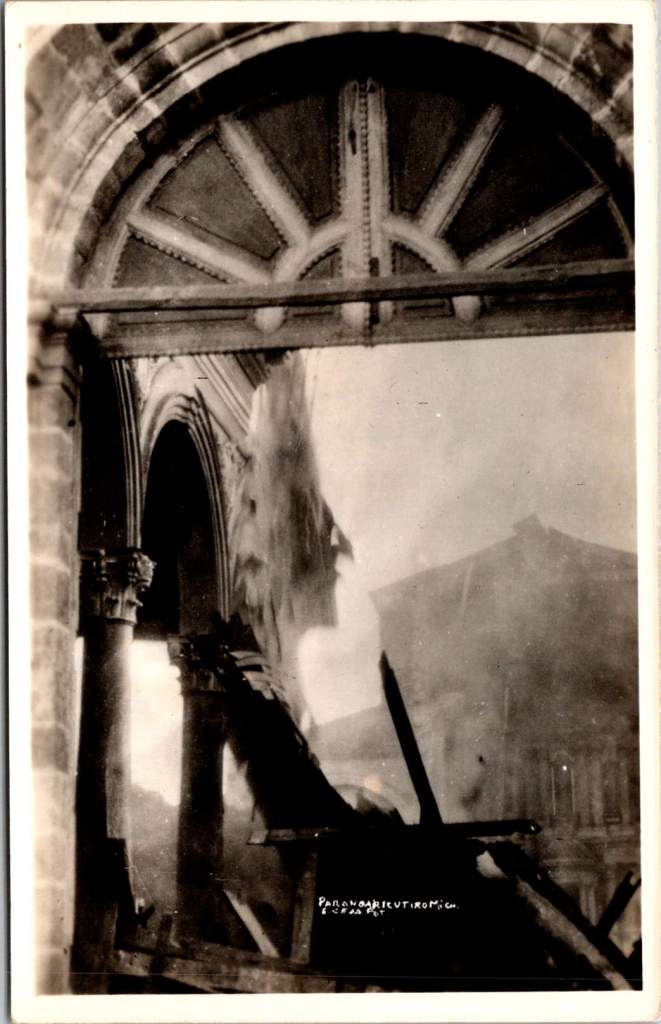
Two striking images captures the church’s wooden elements on fire—ornate arched stonework and columns holding the structure up while everything else is consumed. Extending the mystery further, these two images bear exactly the same mark and style of the others, but a different name is entirely obscured. Perhaps it makes sense, Navarro and another photographer would go together. Better than alone.

Foshag and the Official Record

William Frederick Foshag of the Smithsonian Institution’s National Museum led Parícutin’s scientific research and systematic documentation. A respected mineralogist and curator, Foshag had already spent his career studying volcanic minerals and processes. When Parícutin erupted, he was uniquely positioned to lead the most comprehensive study of a volcano’s complete life cycle.

Foshag arrived within weeks of the initial eruption and remained involved until the volcano’s dormancy in 1952. Working with Mexican geologist Dr. Jenaro González Reyna, he established a research station documenting every phase of development. Their collaboration produced detailed maps, temperature measurements, chemical analyses, and thousands of photographs fundamental to volcanic research today.

Navarro’s church sequence suggests either remarkable intuition, access to local knowledge, or information coming from scientific observers. The Purépecha community, drawing on generations of volcanic experience, provided crucial insights about timing and the landscape. Navarro’s ability to be there for the church’s final moments indicates he was plugged in.

Foshag’s archives reveal an extensive network of colleagues contributing to this documentation. Box 9, Folder 7 bears Navarro’s name alongside numerous other photographers, artists, and local and international contacts. It seems Foshag recognized the value of different perspectives in creating a complete record.

The official scientific documentation benefited from all the independent photography produced at the time. Their paths very likely crossed with many others at work during critical days when the lava and ash threatened San Juan Parangaricutiro.

Kodak in Mexico

The real photo postcard industry supporting photographers like Navarro was sophisticated. Entrepreneurs traveled with complete darkroom setups in automobiles, developing film and producing finished postcards within hours. They sold to tourists, sent copies to newspapers, and maintained distribution networks across Mexico and the United States.

By 1943, Kodak had established a robust business providing both cameras and materials throughout Mexico. Navarro’s postcards bear the EKC (Eastman Kodak Company) indicia and are marked Kodak Mexicana, LTD. Navarro had access to standardized, high-quality photographic paper specifically designed for postcard production. This infrastructure allowed photographers to work with consistent materials as they traveled to remote locations.

This commercial system created a parallel archive to official scientific record, prioritizing dramatic visual impact and human interest. While Foshag documented systematic geological processes, Navarro captured moments resonating with public imagination: the church under siege, displaced communities, civilization meeting unstoppable natural forces.

The quality and consistency in images suggests professional training and equipment. His compositions demonstrate understanding of the landscape and evoke pathos. Combined with his access to Kodak’s professional-grade materials, we may assume Navarro was more than a concerned observer.

History’s Mysteries

Navarro’s fade from historical records reflects broader patterns in how scientific events get remembered. Official histories preserve institutional participants while quietly forgetting the names and stories of independent contributors. This is notable with Parícutin, where local Purépecha knowledge proved crucial to understanding volcanic behavior, yet indigenous voices were largely excluded from formal documentation.

Still, Navarro gives us another chance to go there ourselves for a glimpse of those extraordinary hours. His postcards circulated broadly through the popular means of the era—family correspondence, tourist collections, commercial distributors—and are highly collectible today.

As researchers study Foshag’s extensive archives, Navarro’s name remains a tantalizing fragment—present enough to suggest significance, absent enough to resist interpretation. His postcards survive in collections across North America, carrying their maker’s vision but not his story.

This persistence of mystery tells us something about how we remember extraordinary events. While institutions preserve official records with careful attribution, the broader network of individual contributors often dissolves into anonymity. Navarro represents countless others who showed up when history was being made, pointed cameras at crucial moments, contributed to our understanding of the world, and then vanished back into the crowd.

The photographs of the church’s destruction remain powerful because they capture something beyond ecological process—the moment when human scale met geological time and a community’s sacred center became a monument to forces beyond human control. Navarro was there to see it, and that’s a chance for us to remember the event and to admire him.

This essay was inspired by Elena, Maria, and Sandy – with gratitude.

To Read More

Paricutín | Volcano, Mexico, & Eruption | Britannica
https://www.britannica.com/place/Paricutin

Paricutin – Lake Patzcuaro website
http://www.lakepatzcuaro.org/Paricutin-Volcano.html

How Volcanoes Work – the eruption of Paricutin, Mexico
https://volcanoes.sdsu.edu/Paricutin.html

The eruption of Parícutin volcano on a farmer’s cornfield, 1943 – Rare Historical Photos
https://rarehistoricalphotos.com/paricutin-volcano-eruption-photographs/

Paricutín, the volcano that fascinated the world, still captures imaginations
https://mexiconewsdaily.com/mexico-living/paricutin-still-captures-imaginations/

Parícutin: The Birth of a Volcano | Smithsonian National Museum of Natural History
https://naturalhistory.si.edu/education/teaching-resources/earth-science/paricutin-birth-volcano

What It Was Like To See A Volcano Being Born – Atlas Obscura
https://www.atlasobscura.com/articles/what-it-was-like-to-see-a-volcano-being-born

Garcia, Rafael, Photographs of Paricutin Volcano, 1943-1944 | Smithsonian Institution Archives
https://siarchives.si.edu/collections/fbr_item_modsi666

Michoacán: From kingdom to Colony to Sovereign State (1324-2015) — Indigenous Mexico
https://www.indigenousmexico.org/articles/michoacan-from-kingdom-to-colony-to-sovereign-state-1324-2015

Island Time Travel

Native Hawaiian wisdom, mainland capitalism, an LDS mission, and the birth of Pacific tourism. At the center, a banyan tree that has watched Hawaii transform for 120 years. This 1921 real photo postcard reveals the complexities of cultural exchange, migration, and travel over time.

In the photograph we are looking at today, the Moana Hotel rises like a palace from Waikiki Beach, its elegant wings stretching toward Diamond Head. A wooden pier extends into the Pacific. The building’s Victorian details hint at mainland American grandeur transplanted to the tropics. The “First Lady of Waikiki” opened as the territory’s first luxury resort, transforming a landscape once dotted with taro ponds and royal summer homes into the birthplace of Pacific tourism.

Built by wealthy landowner Walter Chamberlain Peacock and designed by architect Oliver G. Traphagen, the Moana opened on March 11, 1901, with 75 rooms featuring Hawaii’s first electric elevator and the unique amenity of private bathrooms. The first guests were a group of Shriners, who paid $1.50 per night—about $50 today—to experience what was then a very remote luxury destination.

Three years later, Jared Smith, Director of the Department of Agriculture Experiment Station, planted what seemed like a simple landscaping choice in the hotel’s courtyard: a young Indian banyan tree, nearly seven feet tall and about seven years old when planted. In the image, the tree is seventeen years old and already creating the shaded sanctuary that is the hotel’s heart even today.

As we flip the postcard over, another dimension is revealed. On November 29, 1921, a simple message sent to Mabel Moss in Longanoxie, Kansas with the usual greetings. But this isn’t a holiday for Aunt Olive. Her return address, “Route 4 – Box 46,” tells its own story of how communities were connecting between ancient and modern, sacred and commercial.

A Mormon Pioneer’s Island Home

Aunt Olive likely lived in Laie, thirty-five miles north of the Moana Hotel, where the Mormon Church had established its Pacific sanctuary. Her Route 4 address would have been served by one of the Rural Free Delivery routes radiating out from Honolulu—a detail that places her among the settlers who were building new communities beyond the city’s tourist corridor.

The Mormon settlement at Laie represented a unique form of cultural encounter. Beginning in 1865, when Church president Brigham Young received permission from King Kamehameha V to establish an agricultural colony, the Latter-Day Saints purchased 6,000 acres of traditional land—a pie-shaped division that provided for sustainable living. The Mormon community tried to honor Hawaiian land practices, giving each family a loi (water garden) to cultivate kalo (taro), the traditional sustenance crop.

The Hawaii Temple, dedicated in 1919, was the first Mormon temple outside continental North America. Built with crushed local lava and coral, its structure embodied the meeting of mainland pioneer culture and Pacific Island materials. Polynesian Saints from across the Pacific were gathering in Laie to receive temple ordinances, creating a multicultural religious community where Hawaiian, Samoan, Maori, and haole (white) families lived side by side.

The LDS approach to missionary work emphasizes learning local languages and customs—not merely as conversion strategy, but as theological principle. One of the early missionaries mastered Hawaiian so thoroughly that he produced the first non-English translation of the Book of Mormon in 1855. The missionaries married into Hawaiian families, adopted local foods and farming methods, and incorporated Polynesian cultural elements into their worship. Even as they openly sought converts, they also saw themselves as students of Hawaiian wisdom.

Paradise Shared

Captured in our image are at least a few conflicting visions of paradise. The Moana Hotel itself represents economic prosperity through the commodification of tropical beauty. Its guests paid premium rates to experience “the ultimate playground,” complete with hula shows and exotic imagery designed for mainland consumption. By the time of this photo, the hotel’s success had already inspired expansion; wings added in 1918 doubled its capacity.

However, the hotel was built where Hawaiian royalty had once gathered, in a place that embodied the Native Hawaiian principles, very different than Western concepts of land as commodity, beauty as product, and culture as entertainment. Look again at the Banyan tree. Where tourists saw scenery, Native Hawaiians understood kino lau—the gods manifested in every plant, animal, and natural feature. But, Hawaiian language had been banned in schools since 1896, and traditional practices were actively discouraged as territorial authorities promoted “Americanization.”

The Mormon community at Laie offered a third way that, despite its evangelical aims, required genuine cultural engagement. Unlike tourists who consumed Hawaiian imagery, or territorial officials who suppressed Hawaiian practices, Mormon missionaries made learning local ways a theological priority. They understood that successful evangelism required fluency not just in Hawaiian language, but in Hawaiian concepts of kinship, land, and spirituality.

This approach created communities that were simultaneously foreign settlements and island adaptations—places where pioneer traditions mixed with Polynesian extended family structures, where American church hymns were sung in native dialects, and where temple architecture incorporated local materials and building techniques.

Time Travel

The tensions that were at work in 1921 continue today, but so do the possibilities for meaningful cultural exchange. Today’s mālama Hawaii movement invites travelers to participate in coral restoration, native forest planting, and beach cleanups. Visitors can learn about places like Waimea Valley, where ancient cultural sites are preserved alongside environmental restoration. The principle of pono—righteous action—guides travelers to maintain respectful distances from endangered monk seals and sea turtles, to support Native Hawaiian-owned businesses, and to understand that they are guests in a living culture, not a theme park.

The island time we seek now isn’t the vacation fantasy of escape from responsibility, but the deeper rhythm of understanding our place within larger cycles of care and connection. When we travel with curiosity rather than conquest, we discover that the most valuable treasures are the stories and perspectives we gather. Over time, we come to know that every place on Earth is someone’s sacred ground.

In Hawaiian tradition, banyan trees serve as gathering places for spirits, bridges between the physical and spiritual worlds. Perhaps this ancient wisdom explains why the Moana Hotel’s banyan courtyard remains a place of peace amid Waikiki’s transformation—a living reminder that some forms of growth honor rather than diminish what came before.


To Read More

A Buffalo Soldier Mystery

A lone Buffalo Soldier on horseback captures a moment of dignity in African American military history.

Real Photo Postcards (RPPCs) offer tangible connections to history, yet they often emerge from a family photo album or shoebox collection entirely without context. Piecing together their stories requires careful observation and historical research, picking up valuable clues along the way.

Today’s case is an image of a lone Buffalo Soldier on horseback, printed sometime between 1904 and 1918. This postcard captures a moment of dignity in African American military history. The soldier sits tall in the saddle, wearing a formal military dress cap (rather than the campaign hat often associated with frontier service) and a meticulously maintained uniform. The setting—featuring a substantial brick building and cement sidewalk—suggests an established military installation rather than a frontier outpost.

The man is likely from the 9th or 10th Cavalry, and two military posts stand out: Fort Robinson in Nebraska and Fort Myer in Virginia, both important locations in Buffalo Soldier history.

Western Bastion

From 1887 to 1898, Fort Robinson served as Regimental Headquarters for Buffalo Soldier cavalry and infantry units. The 9th Cavalry Regiment made its headquarters there beginning in 1887, serving with distinction and boasting ten Medal of Honor winners from the Indian Wars. The Buffalo Soldiers at Fort Robinson earned a reputation for discipline and effectiveness that would later influence their assignments to more prestigious postings.

The 10th Cavalry Regiment maintained a significant presence at Fort Robinson during the early 1900s. The substantial brick buildings and newly constructed cement sidewalks visible in the photograph align with Fort Robinson’s infrastructure during this period, as the fort underwent significant modernization around this time. The formal dress uniform and cap in the photograph suggest this might have been a commissioned officer or a non-commissioned officer in a ceremonial or garrison role at the fort.

Nation’s Capital

Troop K of the 9th Cavalry served at Fort Myer in Virginia from May 25, 1891, to October 3, 1894, under the command of Major Guy Henry, a Medal of Honor recipient. This prestigious assignment bears a direct link to Fort Robinson. The selection of Troop K for this assignment was a recognition of the outstanding performance at Fort Robinson and other western posts.

The post at Fort Myer was the first time after the Civil War that an African American unit was stationed east of the Mississippi River near a major metropolitan area. The dignified formal pose and military dress cap would be consistent with a soldier stationed at this prestigious posting adjacent to Arlington Cemetery and Washington D.C., where ceremonial duties would have been part of their responsibilities. Both geographic and symbolic, the lauded post demonstrates how the Buffalo Soldiers earned respect through excellence despite pervasive racial prejudice.

While the AZO markings suggest a 1904-1918 printing date for this postcard, it’s possible the photograph itself was taken earlier. Many soldiers had formal portrait photographs taken to commemorate their service, which were later reproduced as postcards. If this soldier served at Fort Myer with Troop K (1891-1894), the image could have been reproduced on AZO stock years later. Alternatively, if the image dates to the 1904-1907 period, it likely shows a 10th Cavalry soldier at Fort Robinson. Without identifying marks or annotations, we can only speculate.

In either case, the photograph reveals a poignant moment during a complex era of American history. The soldier’s strong gaze suggest a person aware of his place in this important legacy. The Buffalo Soldiers’ contributions to American military history invite deeper study, recognition, and remembrance.

To Explore More

Buffalo Soldiers National Museum – https://buffalosoldiersmuseum.org/the-buffalo-soldiers/

The Proud Legacy of the Buffalo Soldiers – National Museum of African American History and Culture – https://nmaahc.si.edu/explore/stories/proud-legacy-buffalo-soldiers

National Archives: Exploring the Life and History of the “Buffalo Soldiers” – https://www.archives.gov/publications/record/1998/03/buffalo-soldiers.html

Buffalo Soldiers at Fort Myer Historical Marker – https://www.hmdb.org/m.asp?m=41108

Washington DC Chapter, 9th & 10th (Horse) Cavalry Association – http://www.buffalosoldiers-washington.com/Fort%20Myer.html