The beauty in gallows humor is how it strips away pretense. On days when everything feels like a steaming pile anyway, there’s dark comfort in knowing that at least we’re all finally honest about what’s being shoveled around.
This vintage postcard, simply titled “Training for Politics,” captures a brutal honesty that resonates well on days when the world stinks. A lone cowboy, shovel in hand, flinging horse manure (the raw material for politics). Of course we see the effort, but it’s also hard to miss the explosive spray of debris frozen mid-flight.
There’s something uniquely comforting about humor that doesn’t try to brighten our mood but instead acknowledges the absurdity of our circumstances. When we’re struggling, the last thing most of us want is forced positivity or silver linings. We want recognition that yes, this is indeed a pile, and yes, someone is actively shoveling more of it.
On the surface, it’s a simple visual gag – politics is bullsh*t. But dig deeper (pardon the pun), and you’ll find a more nuanced observation about the nature of political discourse and human coping mechanisms.
Dark humor serves as a pressure release valve for the soul. It’s the linguistic equivalent of opening a window in a foul-smelling room. It doesn’t solve the problem, but it makes it more bearable. When we can laugh at the darkness, we’re not surrendering to it – we’re claiming it, owning it, transforming it into something we can manage.
Someone looked at a man shoveling manure and saw not just the physical act but its perfect metaphorical parallel to politics. They recognized that sometimes the most profound truths come wrapped in the most pungent packages. That’s what gallows humor does – it finds the universal in the awful, the communal in the catastrophic.
This postcard’s enduring relevance speaks to another truth about dark humor: it ages well. While more wholesome jokes may grow stale, gallows humor often becomes more poignant with time. Perhaps because human suffering, like political maneuvering, remains remarkably consistent across generations. The tools may change, but the essential nature of the job remains the same.
In our current era of carefully curated social media positivity and inspirational quote overdose, there’s something refreshingly honest about this image. It doesn’t try to inspire or uplift. It simply says, “Here’s what’s happening, and it stinks.” Sometimes, that acknowledgment is more comforting than a thousand motivational posters.
For those of us having one of those days – when the pile is knee deep – this anonymous cowboy becomes an unlikely patron saint of perseverance. Not because he’s rising above his circumstances or transforming them into something beautiful, but because he’s right there in the muck, doing what needs to be done, probably muttering colorful commentary under his breath.
The image reminds us that sometimes the healthiest response to life’s challenges isn’t to seek the bright side but to acknowledge the darkness with a wry smile and a few choice words. There’s solidarity in shared cynicism, comfort in the collective cry. It’s the silent nod between people who recognize that while we can’t always clean up the mess, we can at least make a postcard about it. If nothing else, it gives future generations something to laugh darkly about while dealing with their own problems.
It’s no good to make light of serious situations, but it helps to find the light-heartedness within them. Even if it’s just the glint of sun off a well-worn shovel.
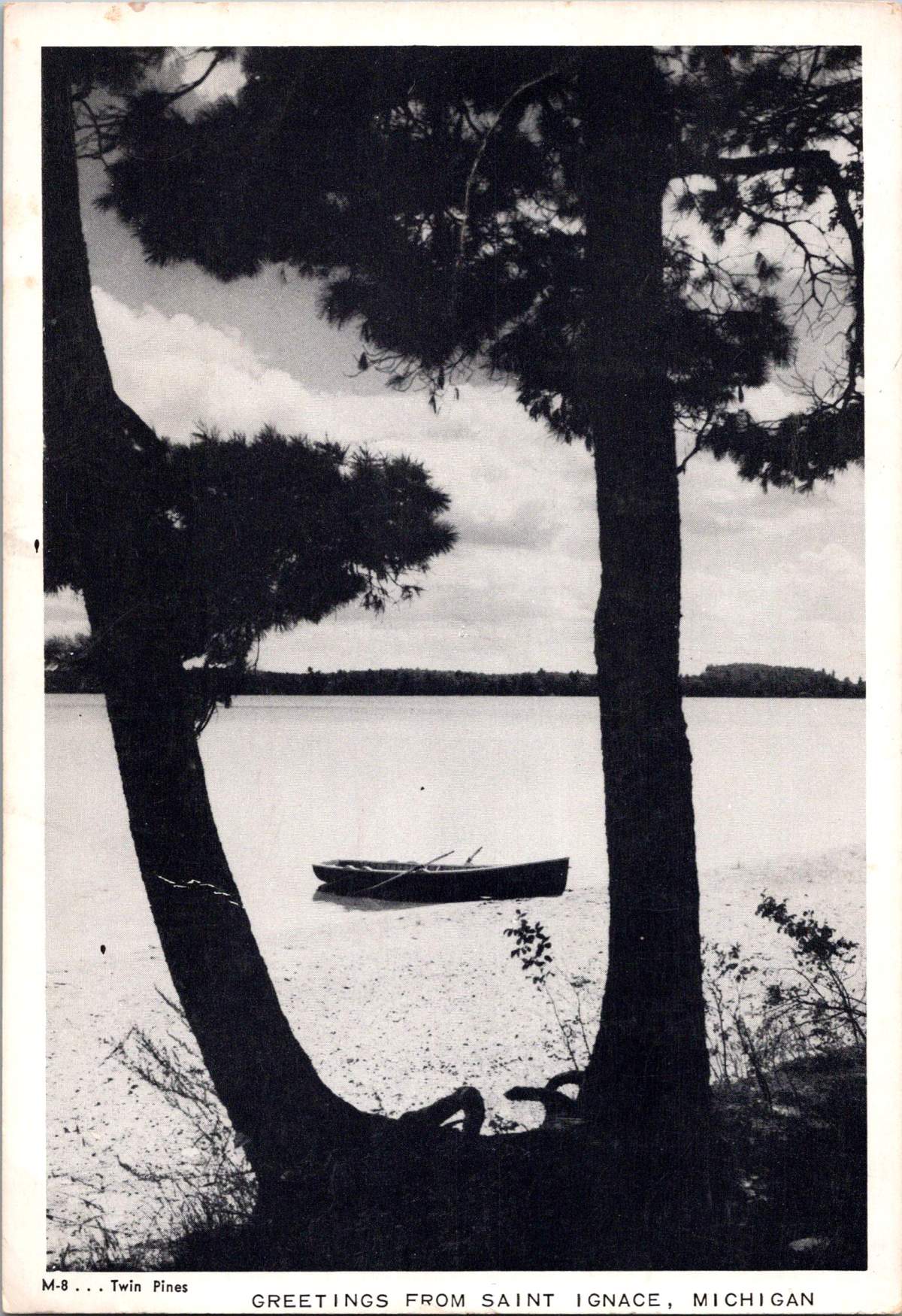
As the morning mist rises from the placid waters of Lake Huron, a solitary canoe rests on the sandy shore, framed by the silhouettes of towering pines. This scene, captured in a black and white photograph, speaks volumes about the timeless allure of summers spent in St. Ignace, Michigan.
These images, printed and shared as jumbo postcards, ignite a rainbow of memories in those who have experienced the magic of St. Ignace, or any summer escape. They help us remember those promising days filled with exploration, laughter, and the simple joys of nature.
Heartbeat of Summer
For many, summer is more than just a season—it’s a vital part of life’s rhythm. It’s a time when schedules loosen, adventures beckon, and memories are etched into our hearts. This is certainly true in St. Ignace, where the warm months transform the landscape and the community.
Founded in 1671 by French explorer and priest Father Jacques Marquette, St. Ignace is one of the oldest continuous settlements in Michigan. This small city, perched on the northern tip of Michigan’s Lower Peninsula, serves as a gateway to the rugged beauty of the Upper Peninsula. Connected by the mighty Mackinac Bridge, St. Ignace straddles two worlds—the familiar and the wild.
The importance of summer here cannot be overstated. As the last traces of winter melt away, the city comes alive. Tourism, a major industry in the area, kicks into high gear. Shops that stood quiet through the cold months throw open their doors, welcoming visitors in. Boats that were shrouded in protective covers all winter are lovingly prepared for a season on the water.
For families, summer in St. Ignace is a chance to break free from the constraints of everyday life. It’s an opportunity to trade screen time for green time, to swap the hum of air conditioning for the whisper of wind through trees. Here, summer isn’t just enjoyed—it’s celebrated.
Nature’s Vivid Canvas
While our vintage photographs may be in black and white, the reality of St. Ignace and Lake Huron in summer is anything but monochrome. Nature paints with a vibrant palette here, creating scenes that etch themselves into memory.
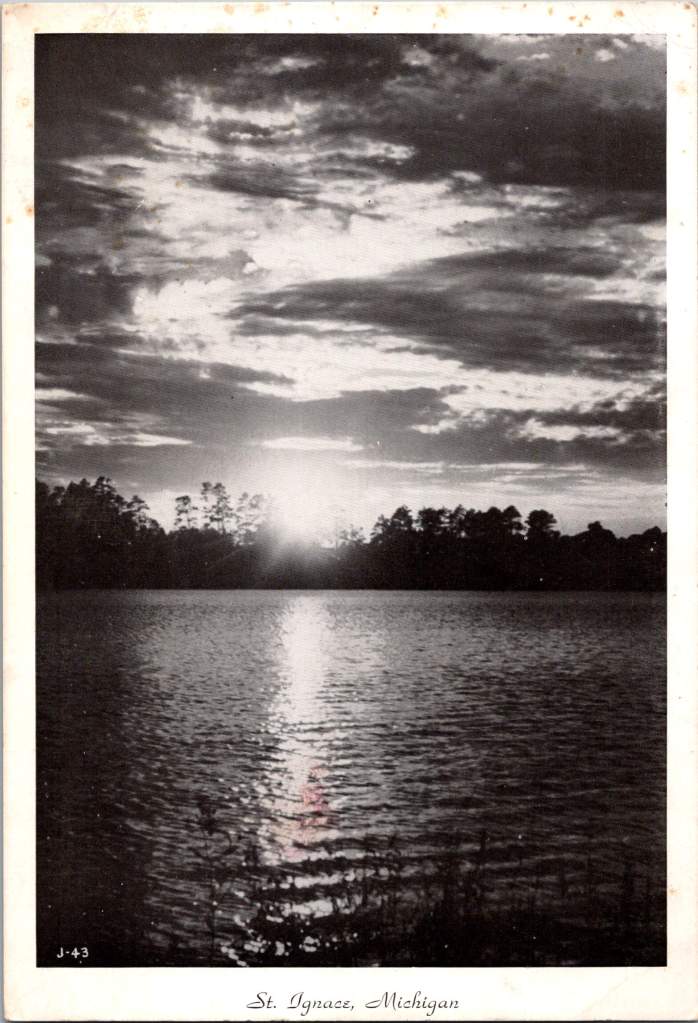
Picture yourself standing on the shore of Lake Huron as the sun dips below the horizon. The sky ignites in a spectacular array of oranges, pinks, and purples, their colors reflected in the lake’s surface. This daily show serves as nature’s reminder to pause and appreciate the beauty around us.
Lake Huron itself is a marvel of color and life. As the third-largest freshwater lake by surface area in the world, it covers an impressive 23,000 square miles. Its waters are remarkably clear, with visibility often exceeding 80 feet. This clarity reveals a underwater world teeming with life—over 80 species of fish call Lake Huron home, including the silvery flash of salmon and the speckled beauty of lake trout.
On land, the forests surrounding St. Ignace offer their own colorful display. In late spring and early summer, wildflowers dot the forest floor with splashes of yellow, purple, and white. As summer progresses, the deep greens of pine and spruce are complemented by the lighter shades of deciduous trees.
Even on overcast days, when the world seems cloaked in shades of gray, nature finds ways to surprise us with bursts of color. The vibrant red of a cardinal flitting between trees, the rich brown of a deer’s coat as it bounds through a clearing, or the pure white of a birch tree’s bark standing stark against darker pines—all serve as reminders of the vivid world around us.
Black and White Memories
There’s something poignant about viewing these summer scenes through the lens of black and white photography. These images, likely captured in the mid-20th century, serve as windows to a bygone era. They prompt us to reflect on summers past and the enduring appeal of this special place.
One such image shows a large boulder—known locally as “Lone Rock”—standing resolute in the shallows of Lake Huron. This natural landmark has been a favorite spot for generations of swimmers and a useful navigation point for boaters. In the photo, we can almost hear the laughter of children clambering over its sun-warmed surface or imagine a family picnicking in its shadow.
These black and white images make us yearn for those simpler times. They remind us of the importance of unplugging, of immersing ourselves in nature, and of creating memories that will sustain us through the colder, darker months. They challenge us to see beyond the surface, to find beauty in contrast and form, much as we must often do in life.
Rich History and Natural Wonders
St. Ignace and the surrounding area are steeped in history and natural marvels. The region has been home to Indigenous peoples, particularly the Ojibwe, for thousands of years. Their respect for and connection to the land and water continue to influence the area’s culture.
Lake Huron itself is a geological wonder. Formed over 10,000 years ago by glacial action, it is part of the largest group of freshwater lakes on Earth. The lake’s basin holds enough water to cover the entire state of Michigan in 14 feet of water.
One of Lake Huron’s most impressive features is Manitoulin Island—the largest freshwater island in the world. While it’s part of Ontario, Canada, its presence shapes the lake’s ecology and offers a tantalizing destination for those willing to venture further afield.
Closer to St. Ignace, the Straits of Mackinac offer their own allure. This narrow waterway connecting Lake Huron and Lake Michigan has been a crucial passage for centuries, first for Indigenous peoples in canoes, then for European fur traders, and now for massive freighters carrying goods across the Great Lakes.
Summer Traditions and Activities
Summer in St. Ignace is a time of tradition and adventure. Many families have been there for generations, staying in the same lakeside cabins or cottages year after year. These annual pilgrimages to the shores of Lake Huron are more than vacations—they’re a way of marking time, of connecting with loved ones, and of passing down a love for this special place to the next generation.
Boating is a way of life. From sleek sailboats to sturdy fishing vessels, the waters of Lake Huron are dotted with crafts of all sizes. Fishing is a popular pastime, with anglers trying their luck at catching walleye, perch, or the prized lake trout. For those new to fishing, local guides are always happy to share their knowledge and secret spots.
Beach activities are a daily staple of summer life. Families spread blankets on the sandy shores, building sandcastles, searching for pretty pebbles, or simply basking in the sun. The brave-hearted might venture into the chilly waters of Lake Huron for a swim—the lake’s average temperature in summer hovers around a brisk 65°F (18°C).
Hiking and camping in the nearby forests offer a chance to immerse oneself in nature. The North Country Trail, which passes through St. Ignace, provides hiking opportunities for all skill levels. More adventurous families might opt for a camping trip in Hiawatha National Forest, where the starry nights are as memorable as the sun-dappled days.
No summer in St. Ignace is complete without a trip to Mackinac Island. A short ferry ride away, this car-free island seems frozen in time. Horses and bicycles are the main forms of transportation, and the island’s famous fudge shops are a must-visit for anyone with a sweet tooth.
Bittersweet End of Summer
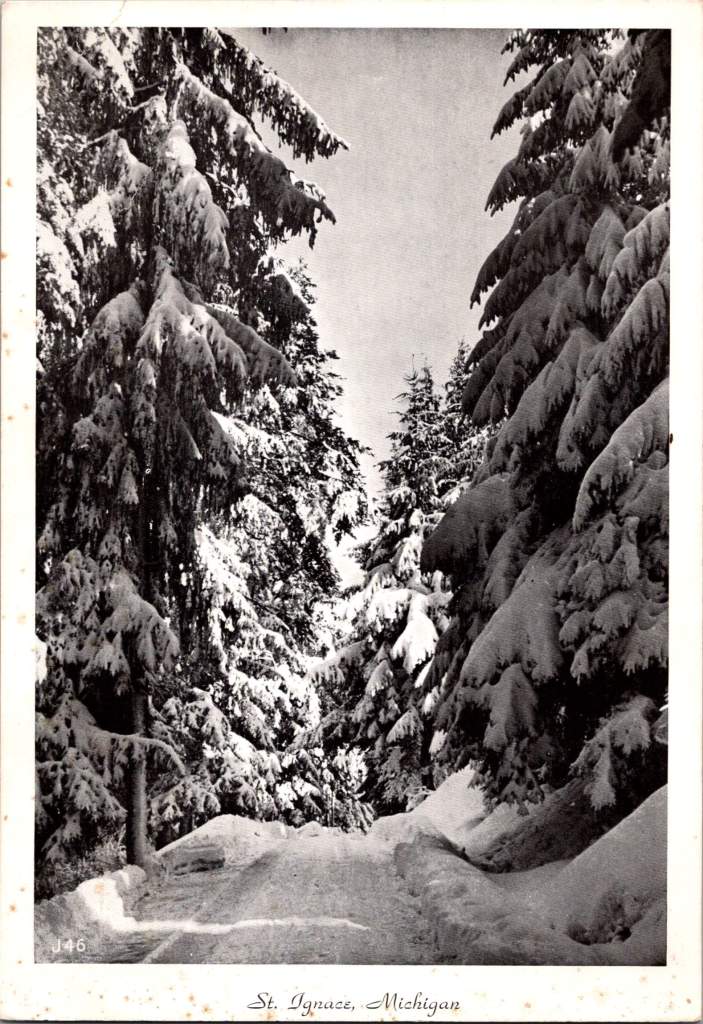
As August wanes and September approaches, a poignant mood settles over St. Ignace. Locals and longtime visitors recognize the signs—summer is drawing to a close. The sun sets a little earlier each evening, and a crispness creeps into the air. The lone winter scene in this postcard set predicts the coming cold.
But for now, the end of summer brings a flurry of activity to squeeze in one last adventure, one more swim, one final sunset. The Annual Labor Day Bridge Walk, where thousands of people walk the five-mile length of the Mackinac Bridge, serves as an unofficial farewell to summer.
Yet even as we bid goodbye to long, warm days and starry nights, there’s a sense of anticipation. For we know that Lake Huron and St. Ignace will be waiting for us next year, ready to once again provide the backdrop for cherished family memories.
In the end, it’s not just the natural beauty or the activities that make summers in St. Ignace so special. It’s the way this place allows us to connect—with nature, with each other, and with ourselves. As we look at these old black and white photographs, we’re reminded that while times may change, the essence of summer in St. Ignace remains the same. It’s a place where adventures are had, where memories are made, and where the spirit of summer lives on, vibrant and colorful in our hearts, and in black and white postcards.


 The Posted Past