Lucky Us

Romans advised that fortune favors the bold. In Sweden, luck never gives, it only lends. In the United States, the harder you work, the luckier you get. The Arabic proverb says, “Throw a lucky man into the sea and he’ll come up with a fish in his mouth.” A Brit might be lucky at cards, unlucky in love. In Japan, the day you decide to act is your lucky day. 

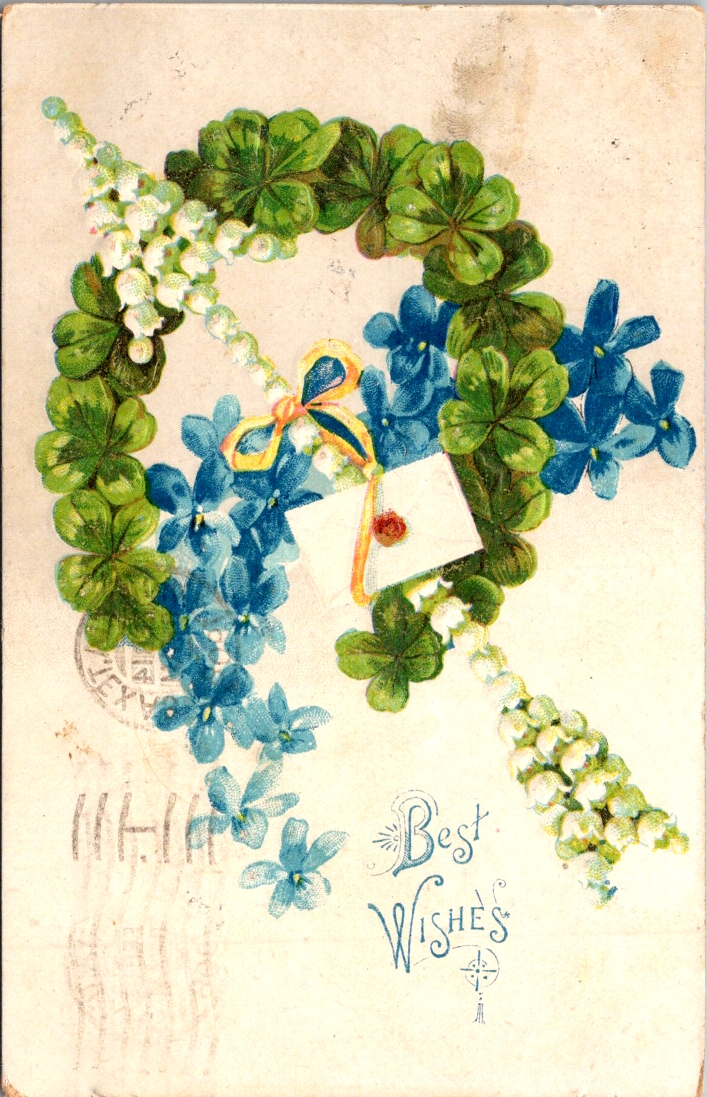
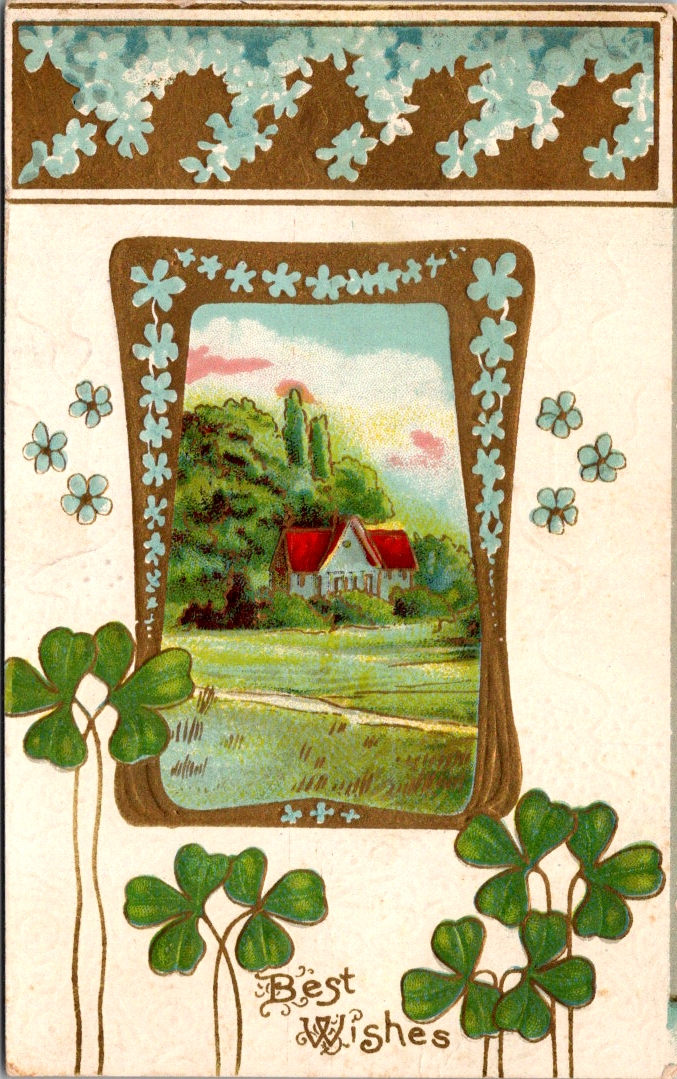
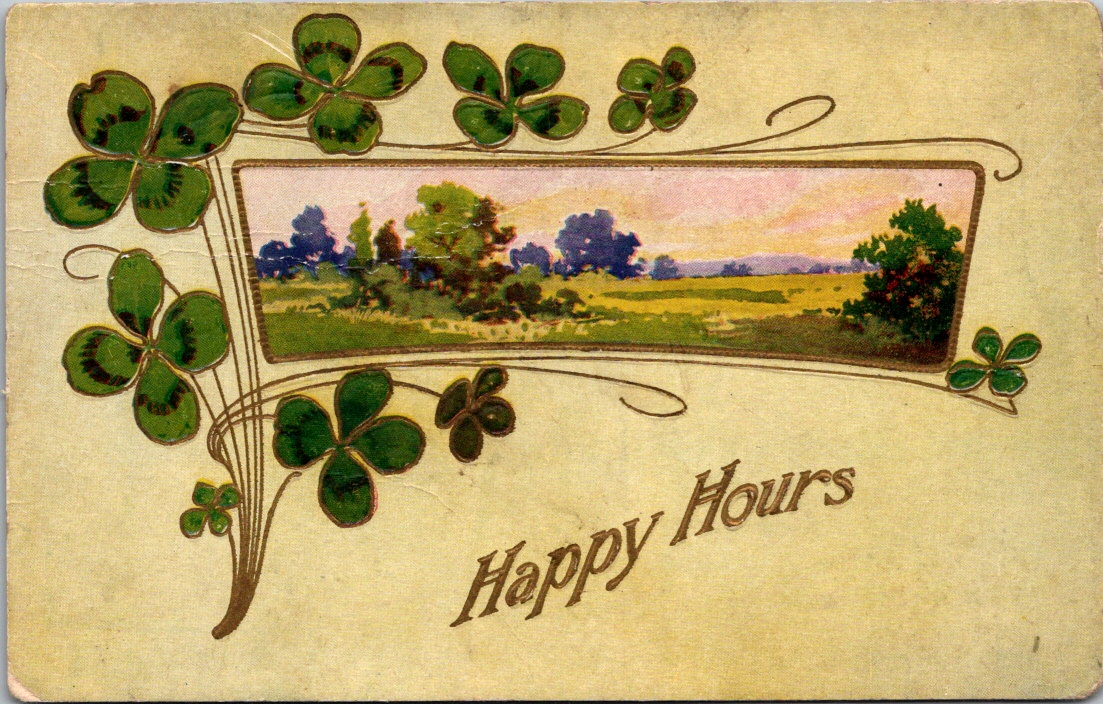
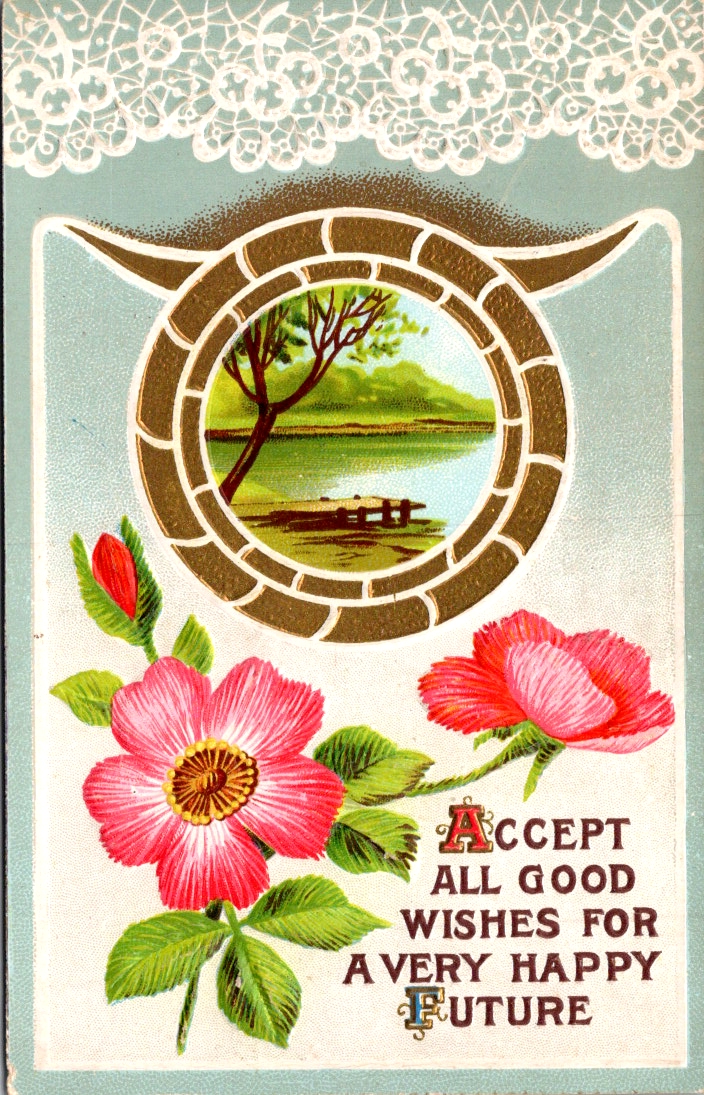
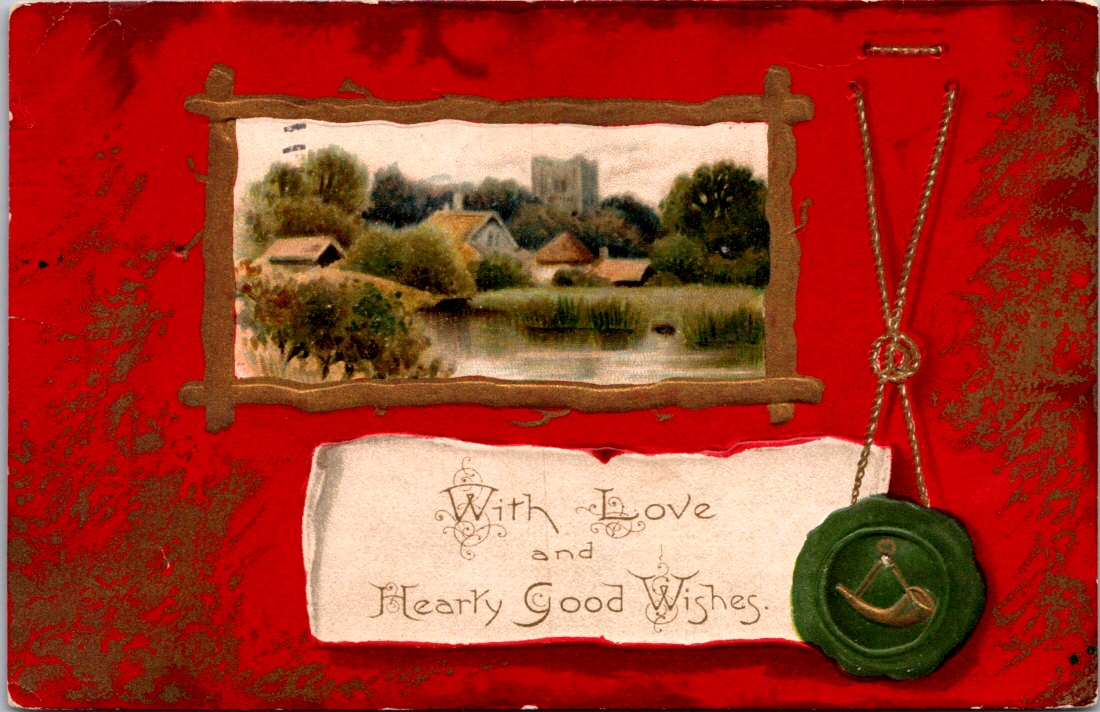
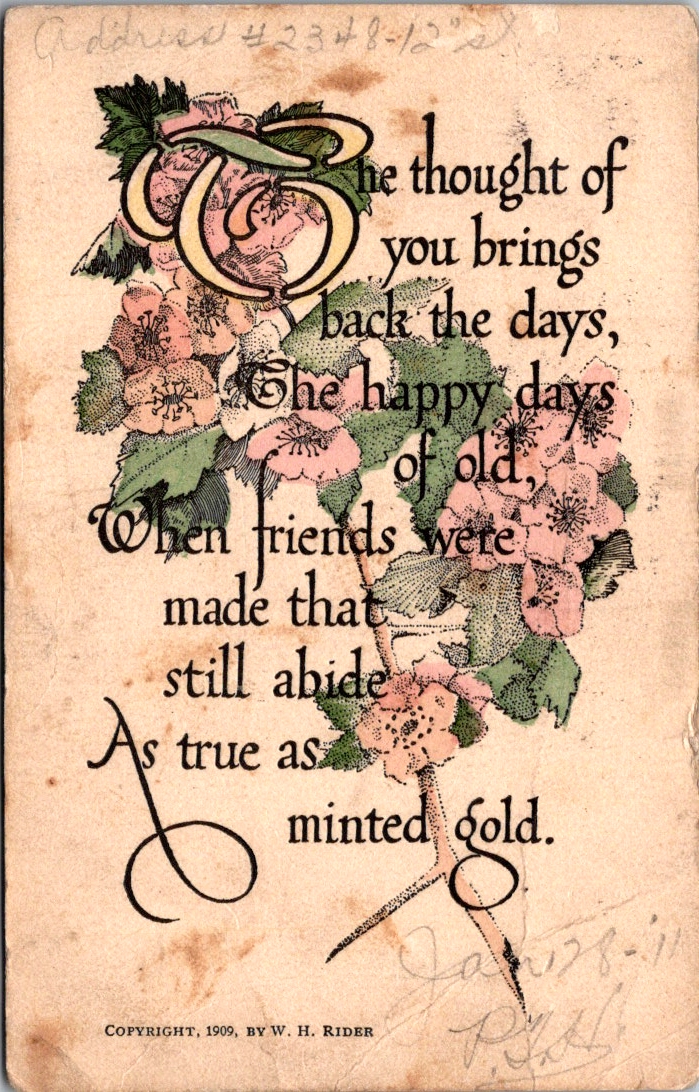
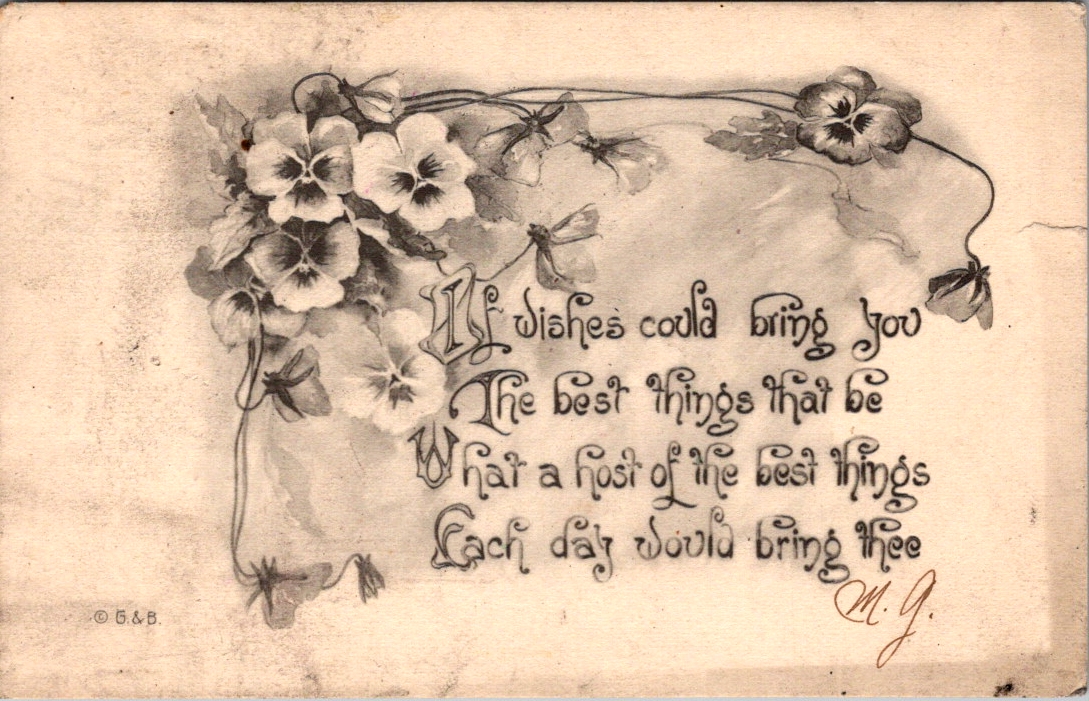
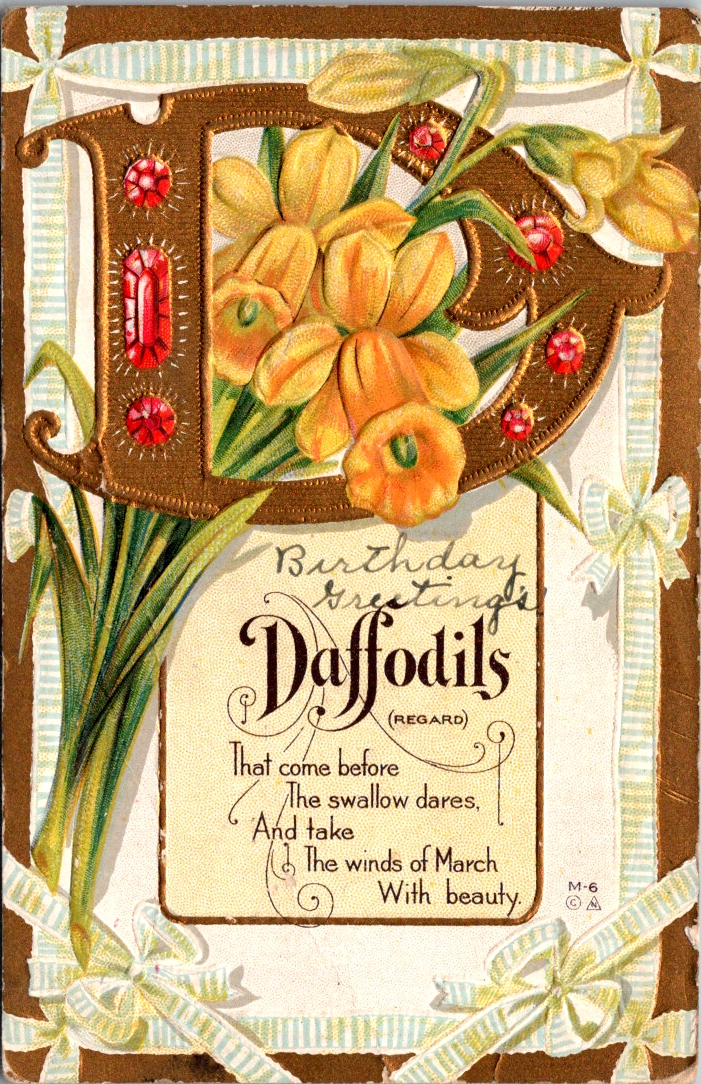
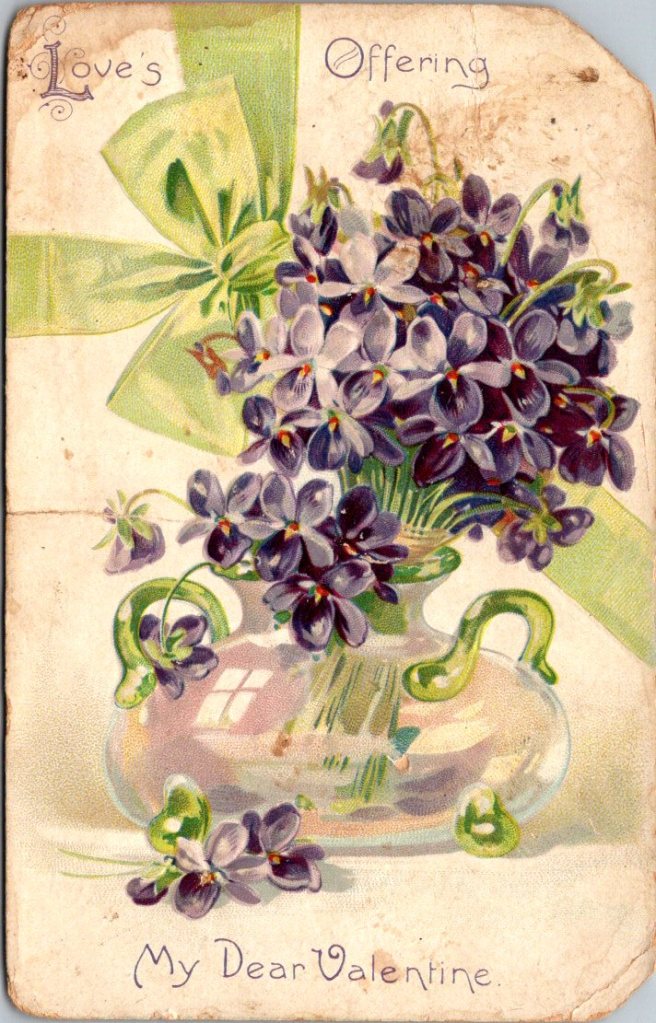
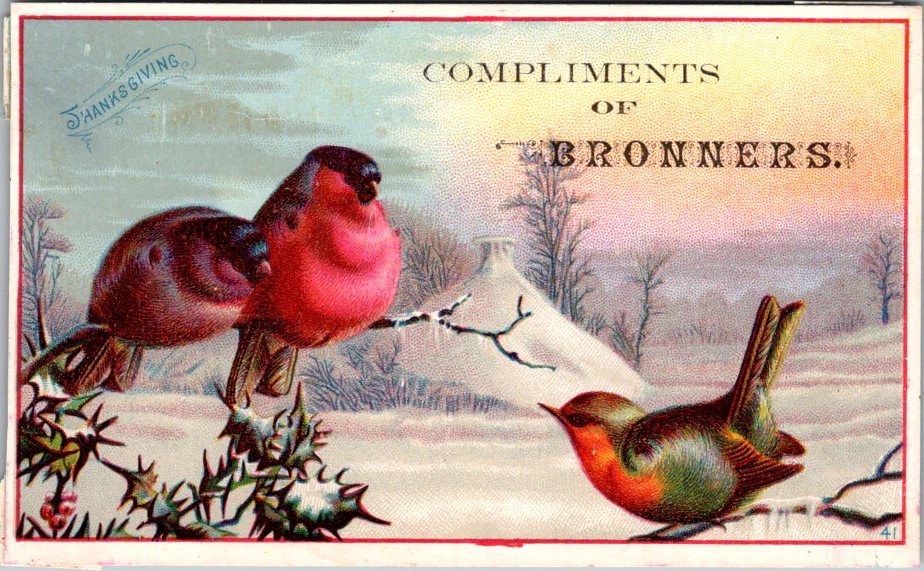
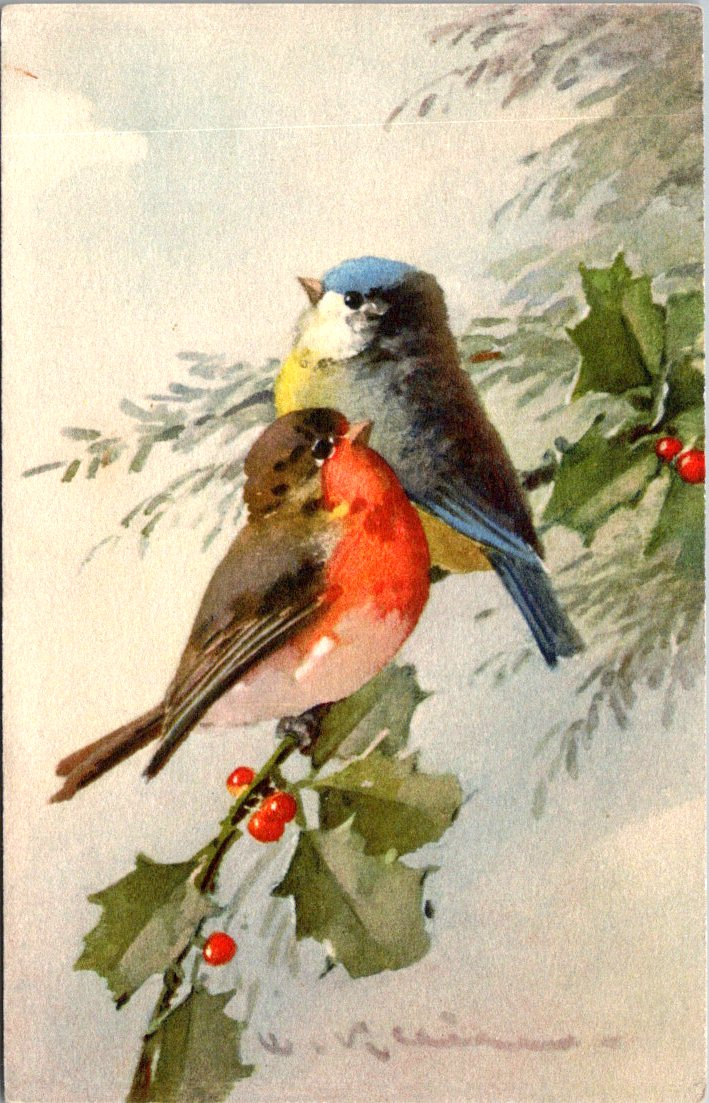
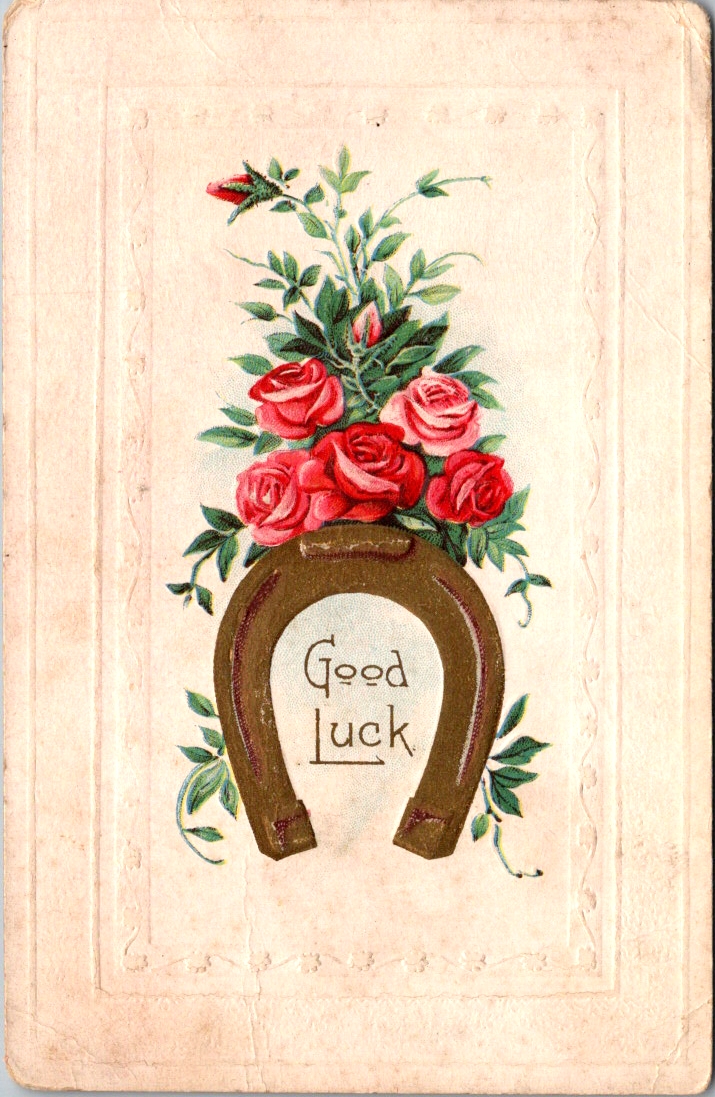
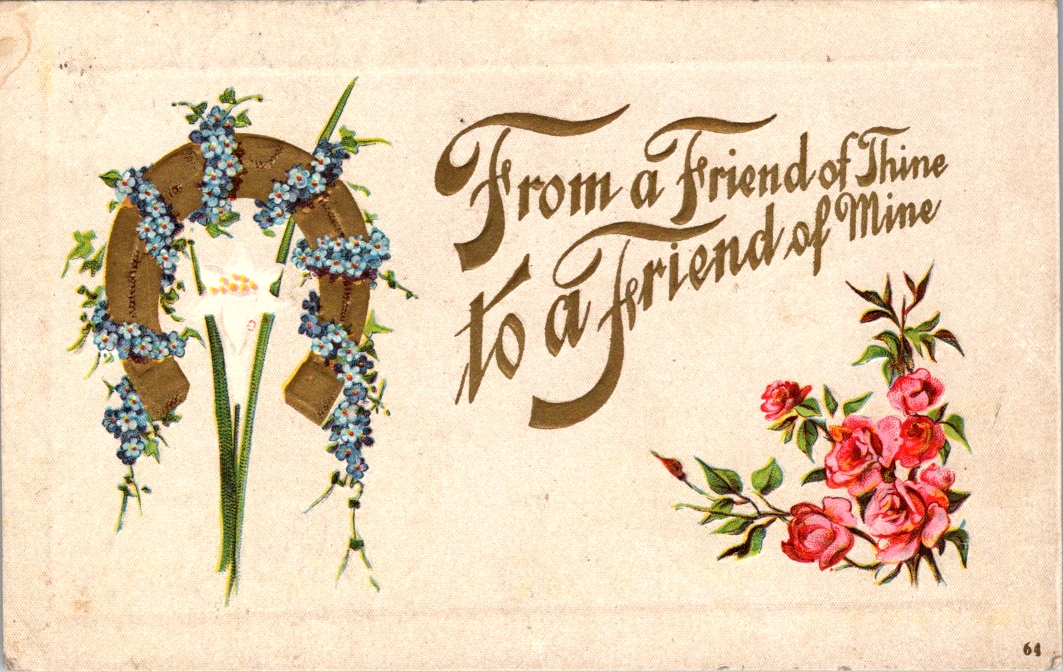
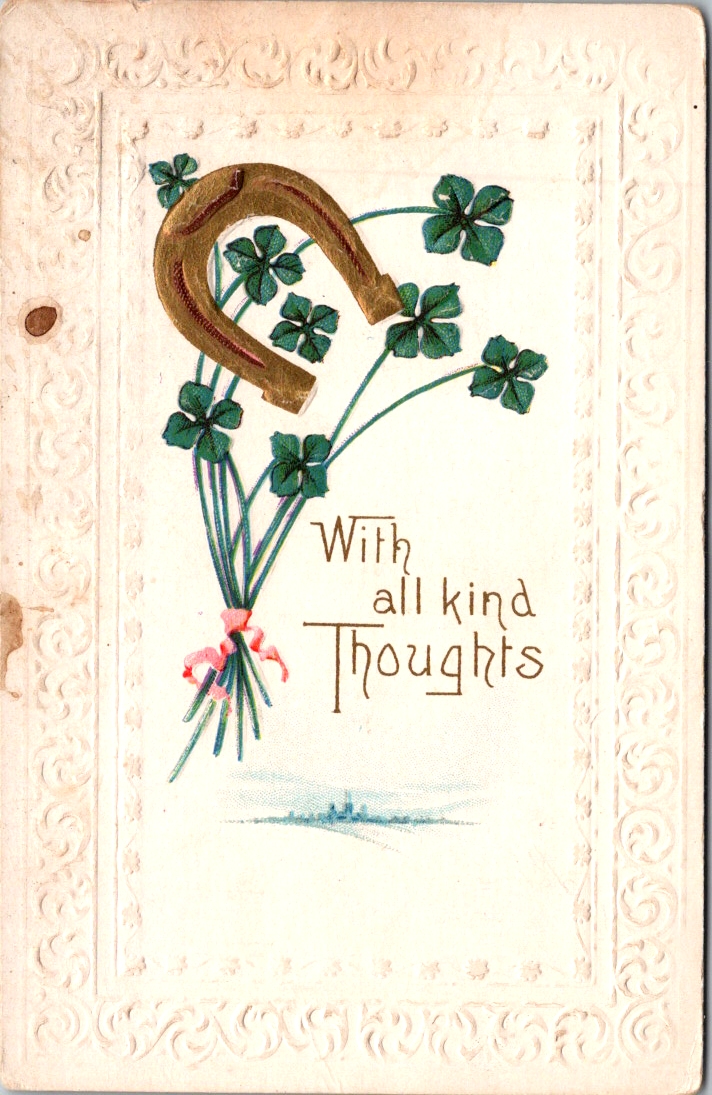
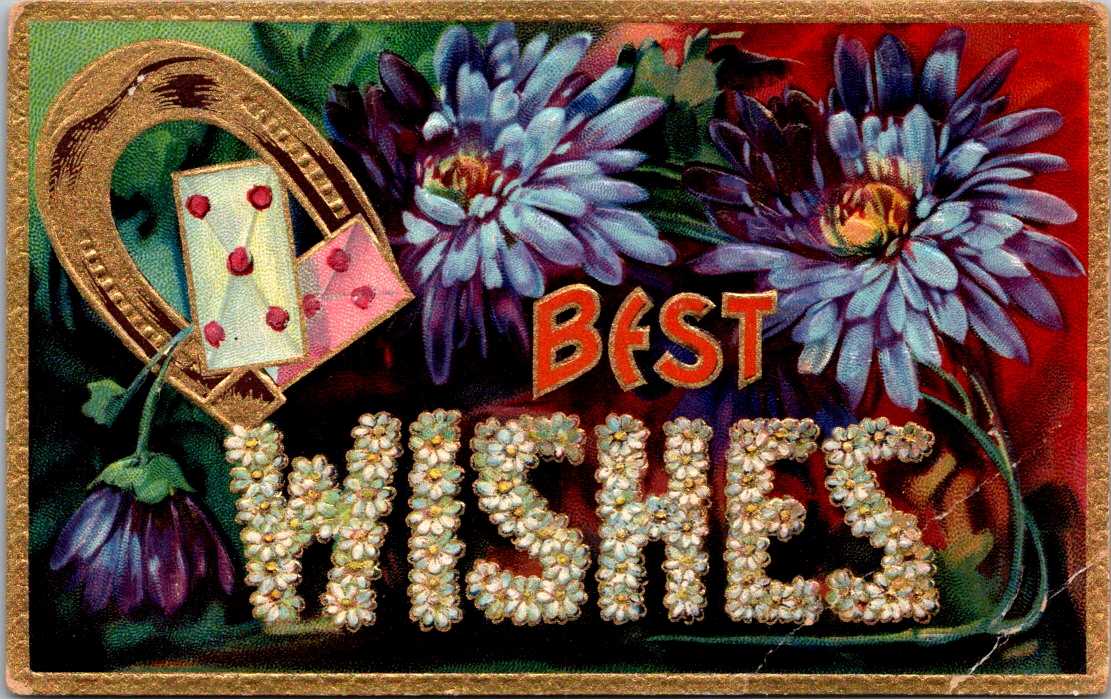
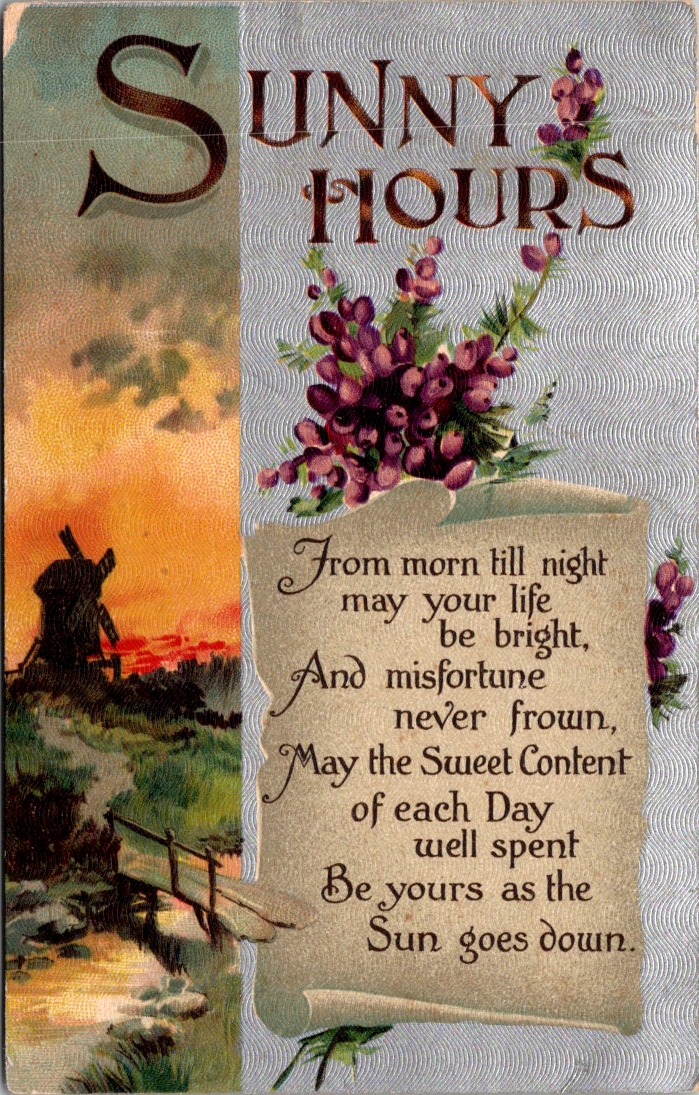
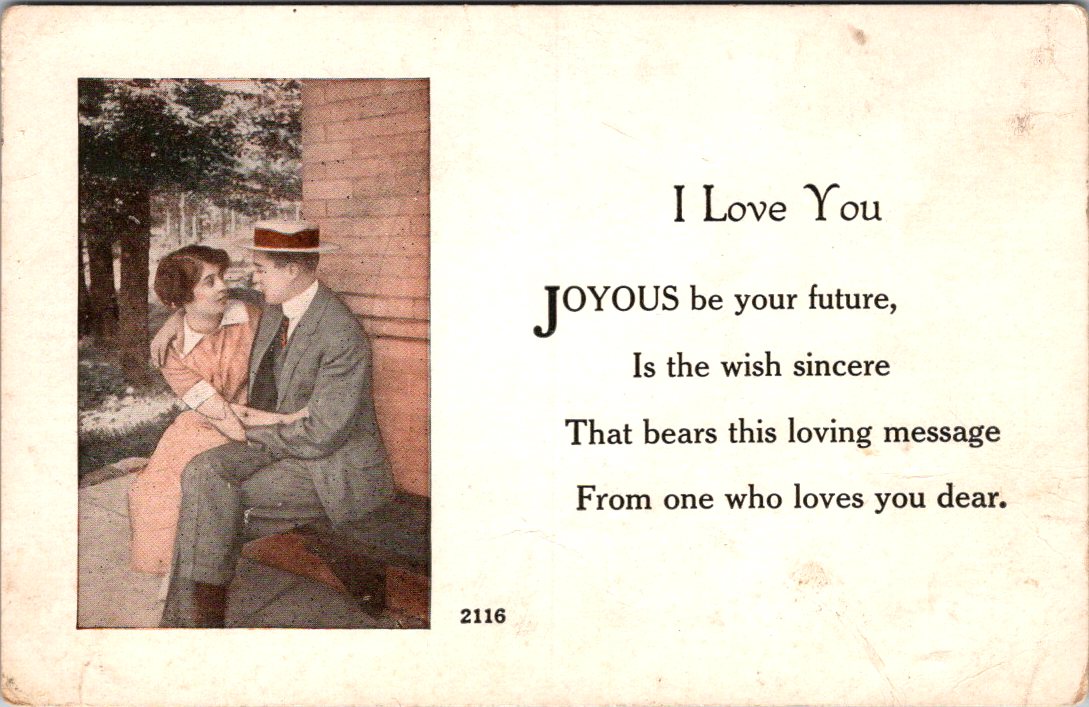
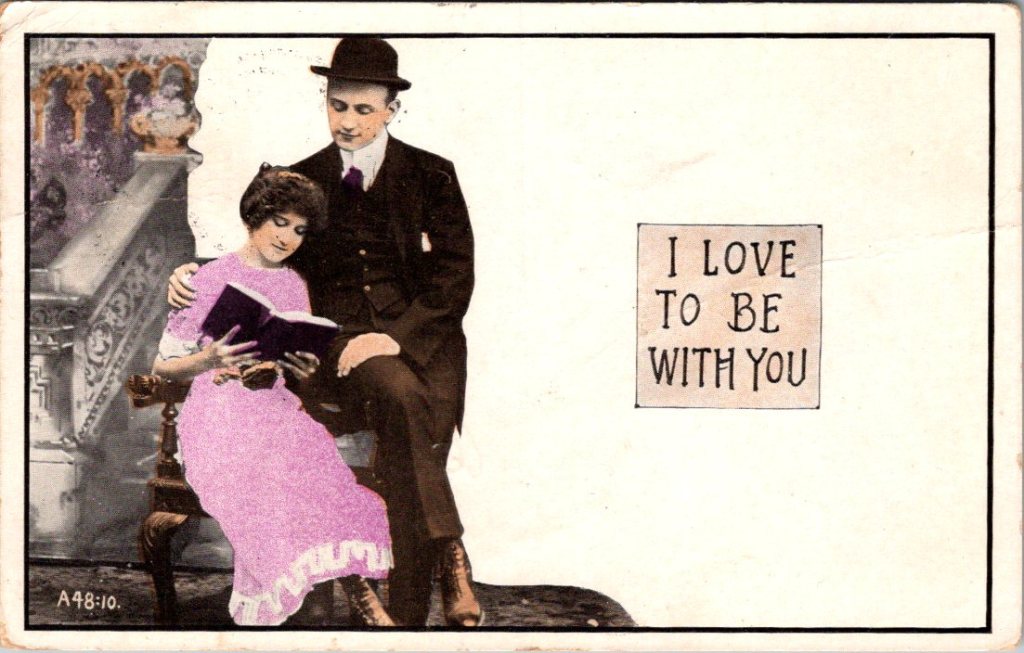
Edwardian postcards had a curious set of symbols to call forth fate and fortune. Horseshoes, shamrocks, roses, and playing cards. Small and slightly worn at the edges, these vintage greeting postcards have traveled more than a century carrying a providential wish.

Only one card in the collection actually says Good Luck. The rest offer best wishes, happy hours, and kind thoughts from me to you. As we’ll see, luck is borne of relationships (and circumstances) lifted by the charitable wish for health, wealth, and wisdom.

Some say that luck can be earned, but only a fool pursues it outright. We daydream about what fortunes may be in store, and sometimes ignore the simple sparkles that appear each day. We know, of course, that there are no free lunches. Yet, we are admonished to never look a gift horse in the mouth.

The bold assume they earned their lucky breaks. The humble suspect they’ve borrowed fortune temporarily. The superstitious are not entirely sure we should discuss it. Luck is where fate and intent find common cause, usually in the context of close friendships.
Old English had no luck. It used wyrd instead, which pointed to fate and destiny. Wyrd is the root of our word weird, which may indicate how people felt about fate. It was uncanny, inevitable, and perhaps divine. You didn’t pursue wyrd. You experienced it through awe and fear.

Somewhere around the 15th century, luk and gelucke drifted in from the Dutch and Low German. Luck was looser and more manual. Like weather, luck favored preparation and was possible to influence if you knew the right charms. The horseshoe went up above the door. The rock went in your pocket. If luck is not fate, if it is not fixed in advance, then perhaps you can do something about it. Perhaps it can be courted.
The lucky person is not the one who waits but the one who steps into the room. This is luck as a reward for courage, or at least for motion. Fate deals the cards, and we each have a hand to play.

Fortune favors the bold — fortes fortuna adiuvat
~ Terence, Roman playwright, around 151 BCE

Luck is what happens when preparation meets opportunity, and preparation is something you control. The solo pursuit of fortune is a genuine drive.

The harder I work, the luckier I get.
~ Samuel Goldwyn

But the shamrock gently disagrees. Four-leaf clovers are natural anomalies, not personal achievements. We can’t earn one, only discover it. Even if you can court luck, even if work and boldness can pull it toward you, it is never yours to fully command.

Luck never gives; it only lends.
~ Swedish proverb

Some people simply have it, inexplicably, in ways that have nothing to do with preparation or boldness or a rabbit’s foot.

Throw a lucky man into the sea, and he will come up with a fish in his mouth.
~ Arabic proverb

Some observe that luck is a finite resource and can be unwisely traded away. This may or may not be true, but as a matter of human priority it is clarifying. We each get chances to test our luck.

Lucky at cards, unlucky in love.
~ English proverb

The tension between fate and will, between earned luck and divine luck, is located in a moment of commitment. The lucky day is not the day something falls in your favor. It is the day you decide it might be worth the effort.

The day you decide to do it is your lucky day.
~ Japanese proverb
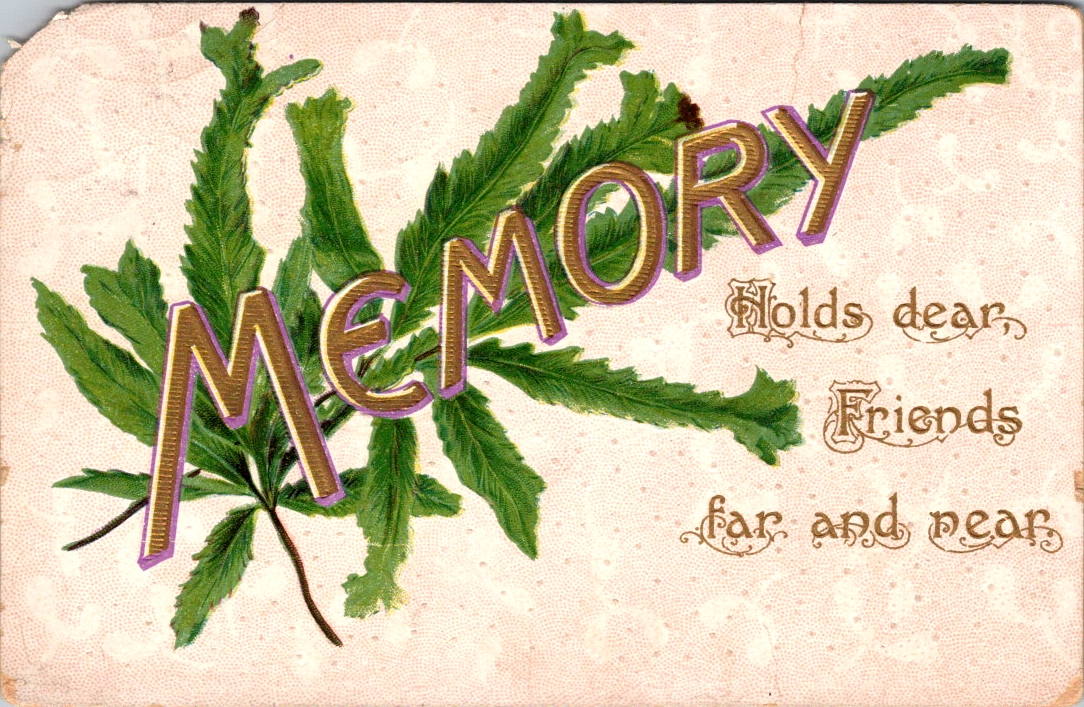
Whatever the senders intended and however the recipients replied, these cards demonstrate how providential language holds us together in anticipation of something wonderful just ahead. The possibility that things might go our way.

The symbols of luck nested together in relationship, in abundance, in the living world — a horseshoe wreathed in flowers, overflowing with roses, or flanked by shamrocks — is not an accident of Victorian design sensibility. It draws on the ancient wisdom that friends are the true source of life’s lucky breaks. Love does the work and luck gets the credit.
Moments We Miss

Valentine’s Day is over. The chocolates parceled out, consumed in a binge, or sweetly regifted. The cards are in a stack. Love trudges on.

Before we go, there is a word worth saying about silences and the quiet costs of delayed connections, and those missed entirely.

In May 2023, the Surgeon General issued an advisory that stopped me mid-scroll. Loneliness had reached epidemic levels in the United States. He was not describing the usual suspects—a widower, a loner, someone at the edge of class or condition. I had to admit, his warning rang a bell in my own heart. I was among a growing contingent of the ordinary, ambient, alarmingly average lonely. As a caregiver, days passed without anyone really seeing me, or me really wanting to be noticed.

The Surgeon General called it a public health crisis. He compared its effects on mortality to smoking fifteen cigarettes a day. Actual harm done.

Indeed, social isolation raises the risk of heart disease, stroke, dementia, and early death. The health research is not soft or sentimental. The body registers being unseen the same way it registers physical pain — same neural pathways, same hormonal alarm signals, same disrupted sleep, same compounding risks. We are living inside a paradox: more connected by technology than any humans in history, and perhaps lonelier than our ancestors.

In the golden age of the postcard — roughly 1900 to 1920 — Americans sent billions of them. A trip to the lake. A hello from the city. A heart, a name, a single line of longing, on full view to the mail carrier and anyone else who handled it along the way. The medium demanded brevity, levity, and a light touch.

That simple approach is worth noticing, because we tend to use the absence of time as our primary excuse for not reaching out. We sense there isn’t room in the average difficult day for a real conversation. So we wait. And the time doesn’t come. And the silence grows.
A postcard is a signal, not a report. It says: I haven’t forgotten. A brief message can make a big point. At times, the whispered delivery bears the full meaning.
The research on what makes people feel less alone points not to the depth of connection in any given moment, but to its consistency. There is comfort in the reliable sense that someone, somewhere, is holding you in mind. A brief, warm gesture, repeated, does more for that feeling than an overwrought or inconsistent one.

Simple gestures are not consolation prizes. They are the architecture of belonging.

Sadly true, is often easier to extend kindness to a stranger than to sustain the loving glow among the people you know best. A stranger on a difficult day can receive warmth without a complicated history. They don’t owe you a response and you likely won’t know how the gift was felt. You haven’t let them down in the small accumulated ways that life’s closeness allows.

The people we love most are the ones we are most likely to let drift or actively ignore. A peculiar paralysis comes with the familiar foibles, caring deeply, and feeling the gap widen.

So here is a gentle nudge, the week after the holiday, when the pressure is off and the expectations are low. Not because it’s February. Because it’s Wednesday, and someone who loves you needs to know. A postcard or a hug, a humble tug on the sleeve or a quiet walk. None of it asks or offers too much. A simple, “We are ok,” can be enough.


Mailbox Moments

Nina makes a long distance deal with a dear friend, and George finds a new use for old memories.

Nina arrived early at the coffee shop near campus in Tempe. The drive up from Tucson was faster than she expected. Nora slid into the booth at 9am sharp. “You’re glowing,” Nina said.

“Nerves.” Nora grinned. “Two years in Taipei, three weeks to learn Mandarin.”

They ordered. Nina nudged a package across the table. She’d wrapped the book of postcards the night before, Navajo Textiles, each page a detachable card with a different striking design. Almost too good to take apart.

Nora opened it and smiled. “These are perfect. They will remind me where I came from. And, we can keep them! I’ll send them back to you.”

She flipped through the cards. “My grandmother did this. Sent us postcards from every trip. Maybe that’s why I love to travel.”

“I want to hear all about it,” Nina said. “Something to look forward to in the mailbox.”

“Deal.”

They talked until Nora had to leave for meetings. Nina hugged her friend outside, watched her disappear into the parking garage. On the drive back to Tucson, she thought about when she might travel again. Someday.

In Minnesota, George came across a box of old stationery while cleaning out a drawer in the office. He’d been ignoring this stuff too long, but it had to be done. He was surprised to find a bunch of notecards and envelopes, postcards from their own travels, even some stamps. Jennie must have tucked them away years ago, then forgotten.

He shuffled through the stack, smiled, and thought about their grandchildren.

Emma, sixteen, newly licensed, texting him sunset photos. Jack, thirteen, reading everything, and his own library growing. Lily, nine, from whom he routinely received animal drawings in manila envelopes.

He wrote to Emma first:

Found this sunset and thought of you – keep your eyes on the horizon! Love, Grandpa

Then, to Jack:

You can find a library in every place. Hope you go some day, and your collection grows. Love, Grandpa

Finally, to Lily, though his hand was aching:

For my favorite artist: a cat to inspire your next drawing. Keep sending pictures. Love, Grandpa

He addressed the cards and peeled the Forever stamps from their yellowed backing. The afternoon sun was glinting off the glassy surface of the snow as George walked down the drive and out to the mailbox. These should get there before Christmas, he thought. Next he’d knock the icicles off the eves over the porch steps, then make dinner.


thoughtful gifts under $15

Though the story above is fiction, a book of postcards is still a great gift.
Browse the selection at our eBay store

Cardinal Directions

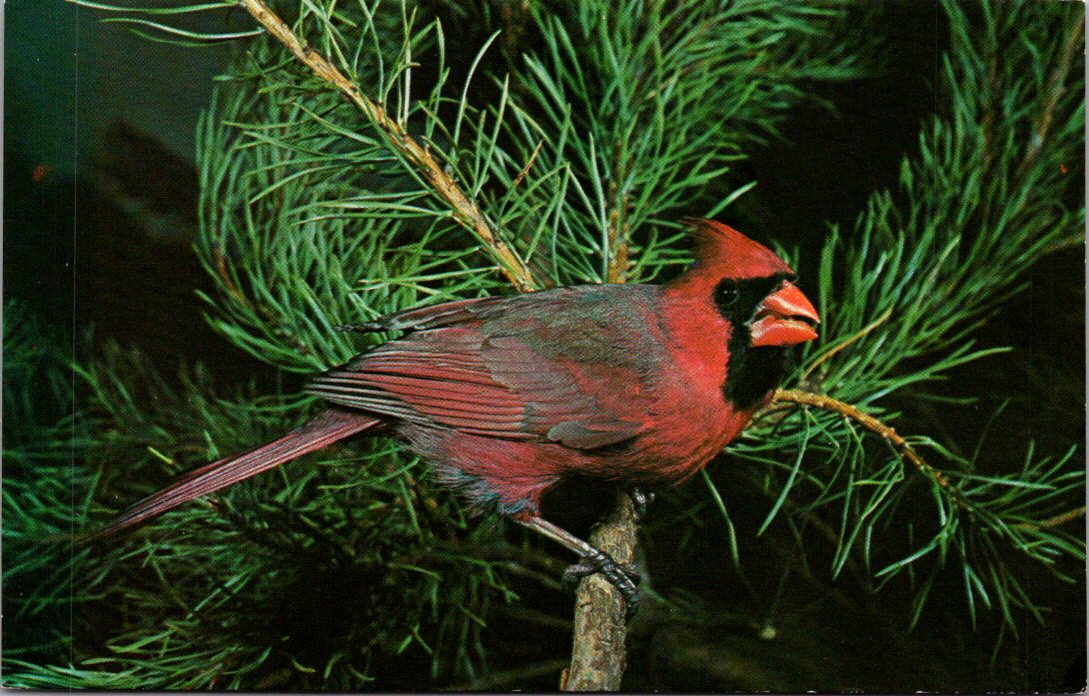
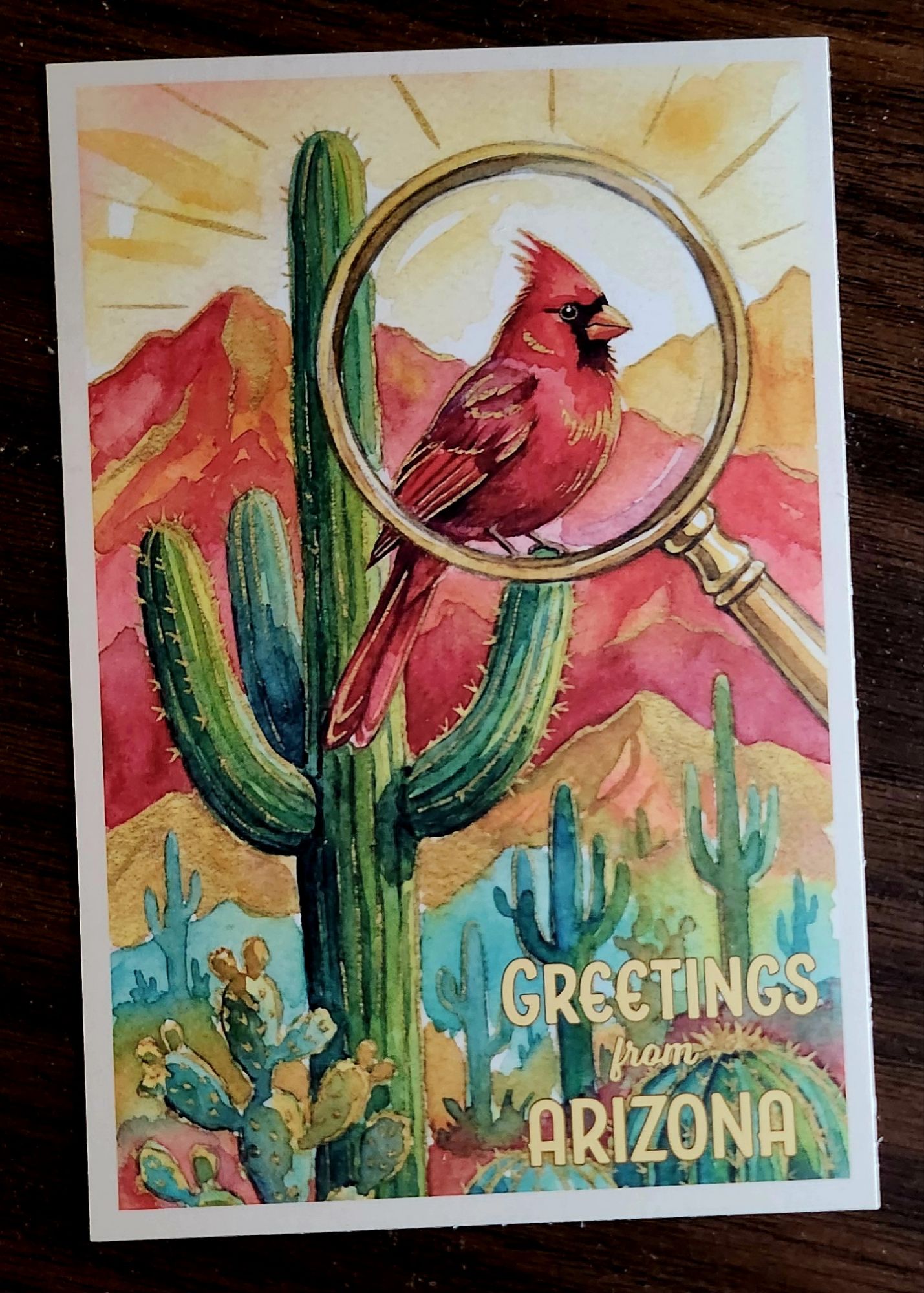
The Northern Cardinal’s migratory range is rather small. Unlike this postcard, sent from Nina in Tucson to Uncle George back home.


The postcard arrived on a Tuesday in December, slipped between the electric bill and a catalog he’d never seen before. George set it on the kitchen table while he made coffee, the red bird on its front catching the weak winter light through the window.

He’d lived seventy-three winters in Minnesota and he could remember nearly as many cardinals. One visited his mother’s feeder every winter morning. A pair of birds nested in the honeysuckle behind their first house, and a solitary male appeared each January at the cemetery where his wife rested.

The bird on the card was just ink and paper, a cheerful holiday visitor perched on a cactus. George smiled at all the memories. Standing at the kitchen window, watching that splash of red move through the frozen world.

He propped the card against the sugar bowl where he could see it while he drank his coffee. That small red bird sent from a warmer climate, it was good company.


Nina stepped onto her back patio in Tucson as the December sun softened toward an early evening. She was carrying her phone and the stack of work she was supposed to ignore. The hospice had been short-staffed for weeks, and even her days off felt heavy with other people’s grief. She sank into the patio chair and her eyes rested on the saguaro at the property line, its arms raised like a benediction against the pale sky. Then, an impossible red against the green ribs of the cactus, a cardinal turning its crested head to stare right at her.

She watched it hop from one arm to another, so vivid it seemed painted there, and suddenly thought of her uncle George. He’d be preparing for snow about now, making sure the feeder was stocked, the northern cardinals waiting through the bare branches. She’d bought that card weeks ago. She meant it to be funny, a little bit of desert sunshine for the cold country.

The bird tilted its head once more, then lifted away toward the neighbor’s tall gate. Nina set down her phone and went to find the card on the table inside. She’d send that postcard tonight. A small bright thing traveling north, carrying a moment of real rest and a reminder of the joys that appear in the landscape.

The connection between George and Nina, between Minnesota snow and Arizona sun, traces a geography that cardinals themselves understand.

The Northern Cardinal’s range stretches from southern Canada through the eastern United States and into Mexico, reaching west through Texas and into Arizona. Unlike many songbirds, cardinals don’t migrate. They remain year-round residents wherever they establish territory. A cardinal in Minneapolis endures the same winter as the people who watch it, while its southwestern cousins never know deep cold at all.

This winter persistence made cardinals natural companions to a tradition that took hold in late 19th century America: backyard bird feeding. As cities grew and winters seemed harsher, people began setting out suet and seed, transforming their yards into small refuges. The cardinal, bold and willing to visit feeders, became a regular presence at kitchen windows during the season when color disappeared from the world. That bit of red against white snow or dark evergreen wasn’t just beautiful—it was companionship. Nature’s daily offer of simple joy.

Holiday card publishers recognized this quiet bond. As postcards surged in popularity in the early 1900s, designers increasingly turned to the natural world for their winter imagery. American cards featured the birds people actually saw at feeders, perched on snow-laden branches, bright against winter skies. These cards created a secular holiday vocabulary, a way of marking the season that felt both celebratory and true to the world outside the window.

Nina was right. George had set out the feeders, with enough seed on hand to get through the cold months. He’d been to Jennie’s grave, and he’ll write back to Nina soon. Maybe visit Tucson. Maybe see a cardinal on a cactus.


CARDINAL CACTUS CARD on sale now!

Though the story above is fiction, the Cardinal Cactus postcard is real 🙂
Order your pack of ten from Etsy

Pack of 10 Postcards – Greetings from Arizona – Cardinal Cactus – $15

Postcard Road Trip

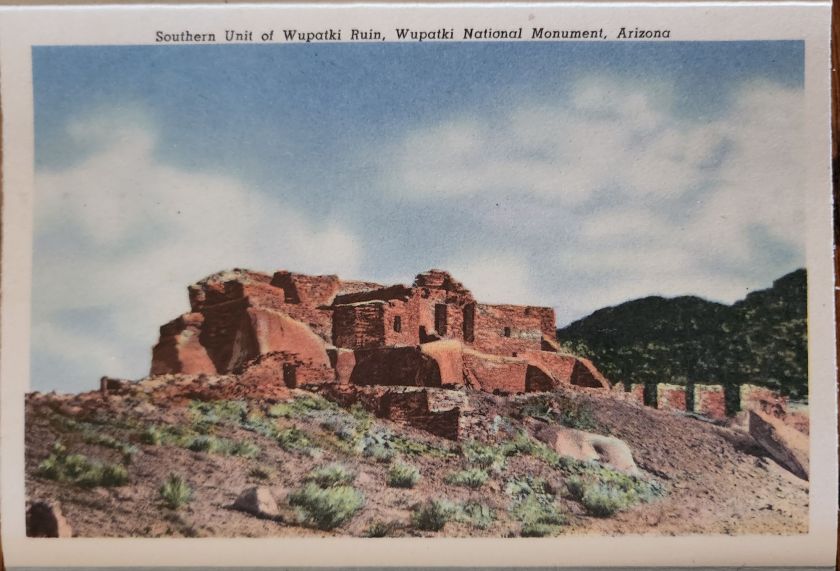
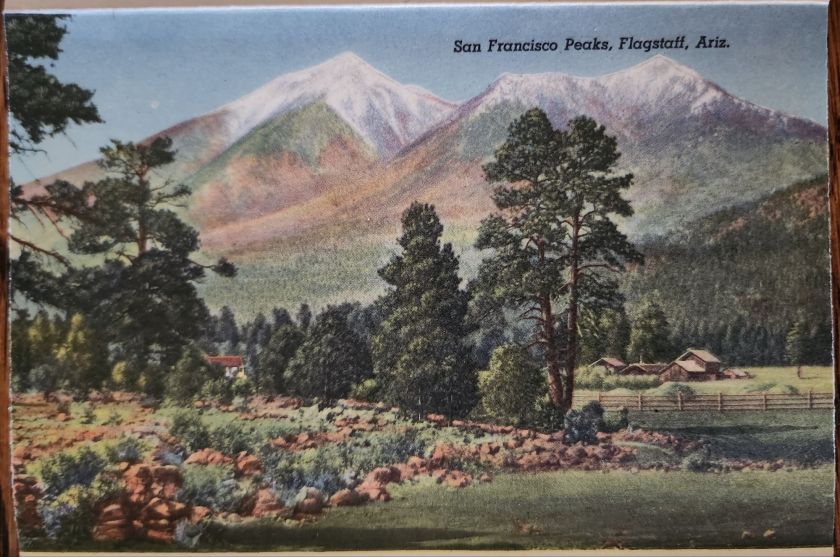
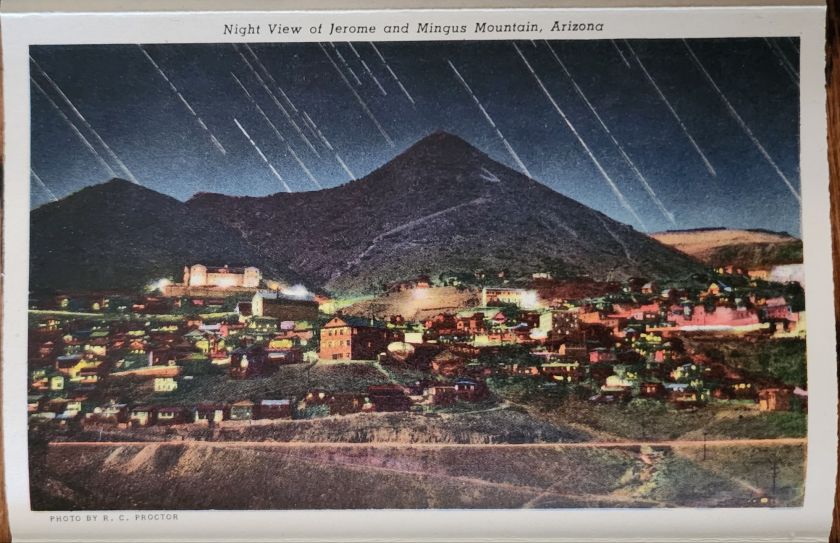
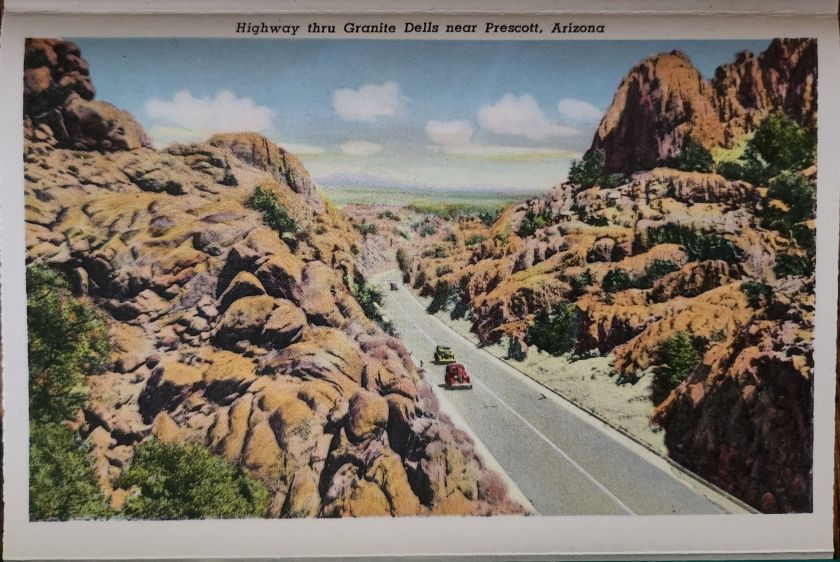
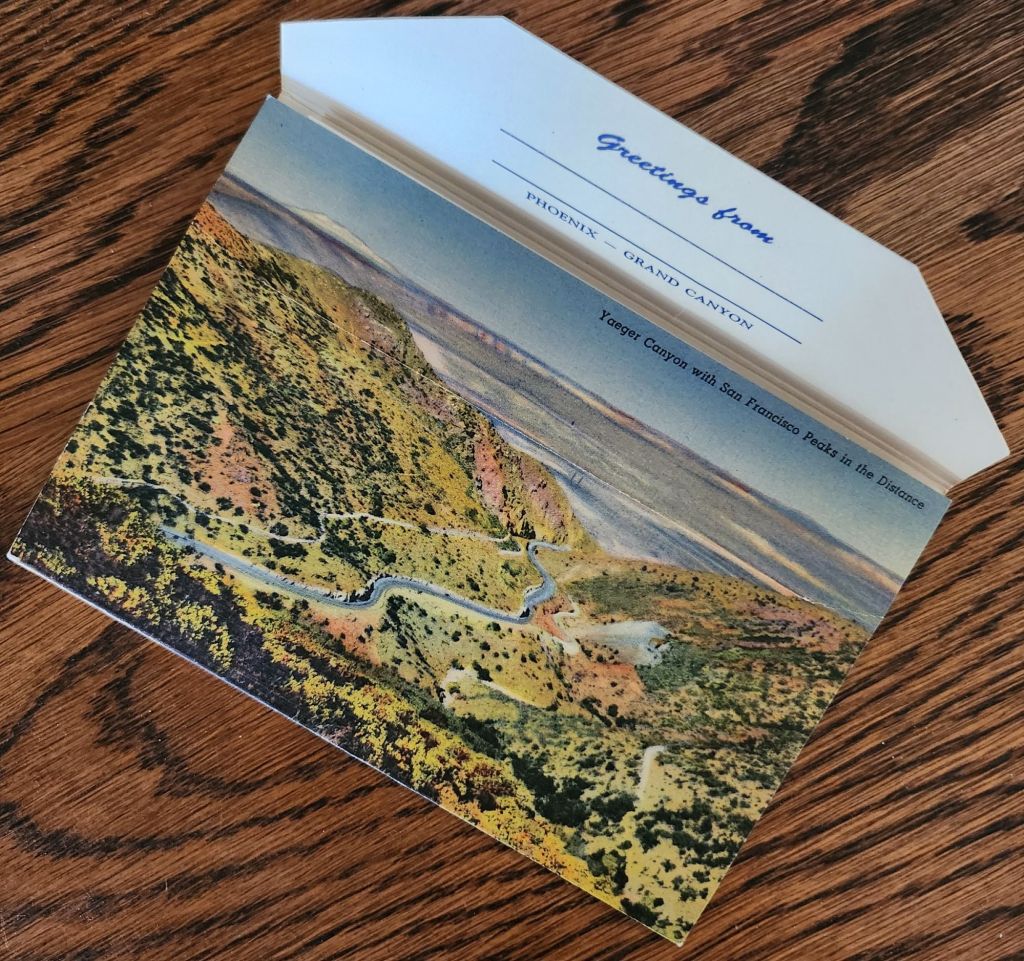
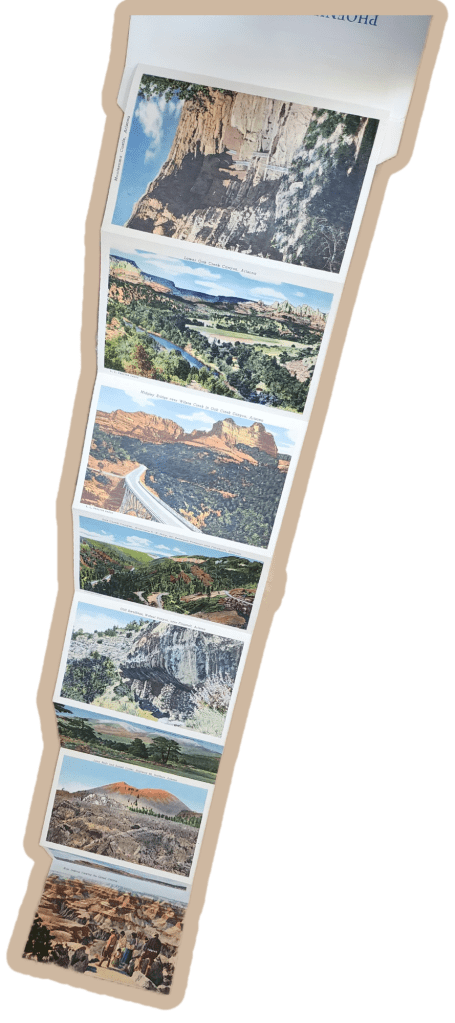
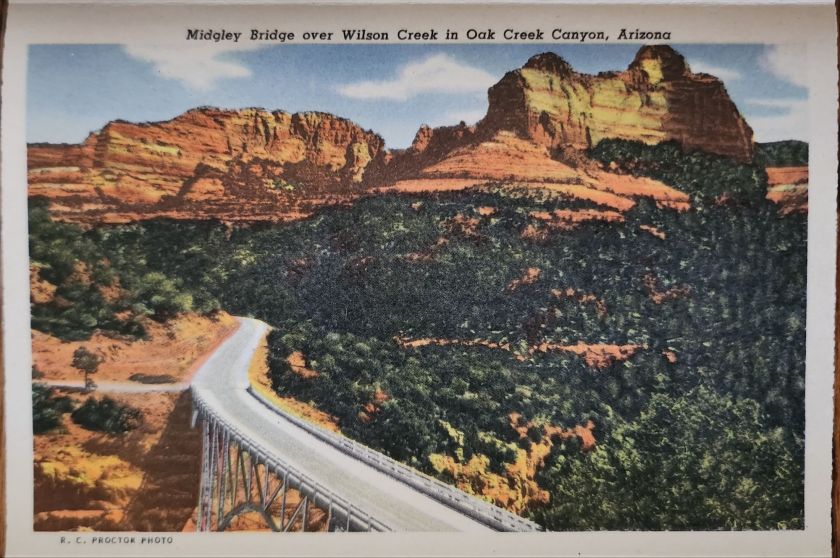
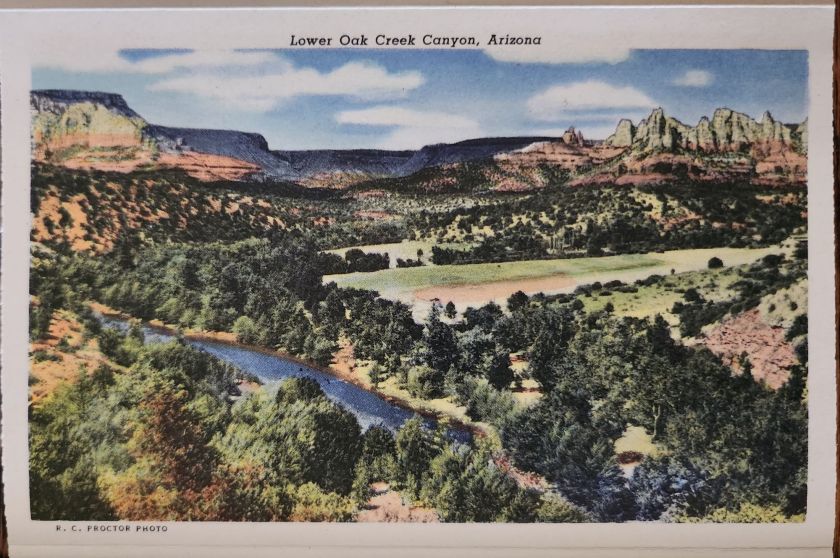
Mid-century postcards captured the wonder of American road trips in vivid color. This Phoenix to Grand Canyon collection reveals the story of car trips, roadside shops, and the natural landscape of Arizona.

Rural Route Arizona

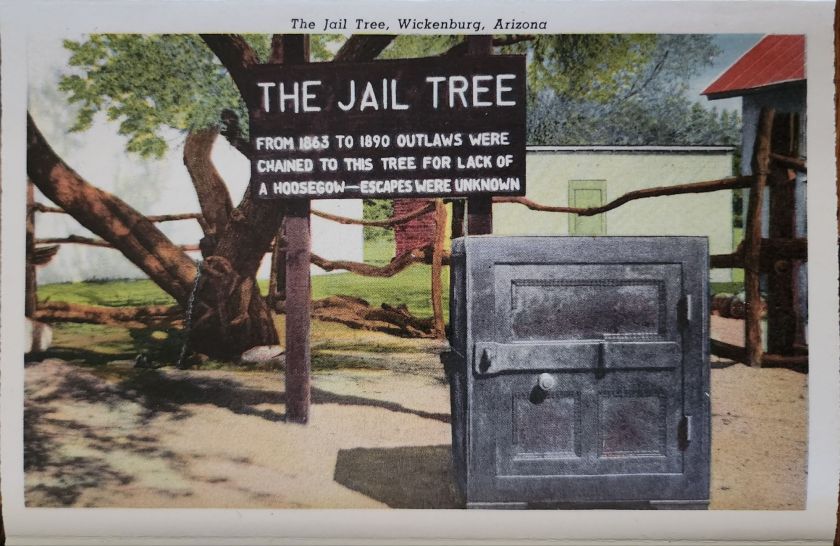
The Phoenix to Grand Canyon route via Oak Creek Canyon carved through America’s most scenic territory. In the 1940s and 1950s, this remained wild, undeveloped country. Starting in Phoenix, travelers navigated winding two-lane roads through Wickenburg, Yarnell, Prescott, Jerome, Clarkdale, Cottonwood, Flagstaff, and Williams.

Each stop pulsed with its own character. Jerome clung to mountainsides, mining copper. Prescott sprawled as a ranching center and former territorial capital. Wickenburg lured visitors with dude ranch culture. Williams crowned itself “Gateway to the Grand Canyon.” These weren’t pit stops but destinations, each welcoming tourist dollars from America’s growing car culture.

Postcard Economy

These postcards bear the stamp of Curt Teich & Co., a Chicago printing giant that drove America’s postcard industry from the 1930s through 1960s. German immigrant Curt Teich founded the company in 1898 and revolutionized postcard production. His linen postcards introduced soft textures and blazing colors.

Teich built an industrial empire through local connections. Photographers roamed America, documenting main streets and natural wonders. In Chicago, artists hand-colored black and white photographs, enhancing reality to seduce buyers and ultimately define a social aesthetic.

Behind every postcard rack stood a web of relationships, too. Hotel owners, gas station attendants, and gift shop operators ordered cards from Teich’s catalog or commissioned custom designs featuring their establishments. Postcards advertised businesses, provided affordable souvenirs, and satisfied the social duty to send word home.

Long-distance calls cost fortunes. Letter-writing devoured time. Postcards offered quick connection and proof of adventure. They were quick and easy evidence that the sender had escaped ordinary life for landscapes of impossible beauty. For travelers, buying and mailing postcards proved both pretty and practical.

The typical buyer belonged to America’s emerging middle class, newly mobile through car ownership and paid vacations. Families drove from California to see the Grand Canyon. Retirees took first cross-country trips. Young couples honeymooned across the Southwest. Many experienced the American West for the first time. Postcards helped them process and share encounters with the sublime.

Selecting, writing, and mailing postcards became part of American vacation ritual. Weather beautiful, wish you were here—heartfelt sentiments that bridge extraordinary experience and ordinary communication.

These postcards transcend tourist kitsch. They document a pivotal moment when the West was packaged and sold as leisure destination. Enhanced colors and idealized compositions reflect not just Arizona’s appearance, but how Americans wanted to see it—as endless possibility, natural wonder, and escape from urban routine.