Lucky Us

Romans advised that fortune favors the bold. In Sweden, luck never gives, it only lends. In the United States, the harder you work, the luckier you get. The Arabic proverb says, “Throw a lucky man into the sea and he’ll come up with a fish in his mouth.” A Brit might be lucky at cards, unlucky in love. In Japan, the day you decide to act is your lucky day. 

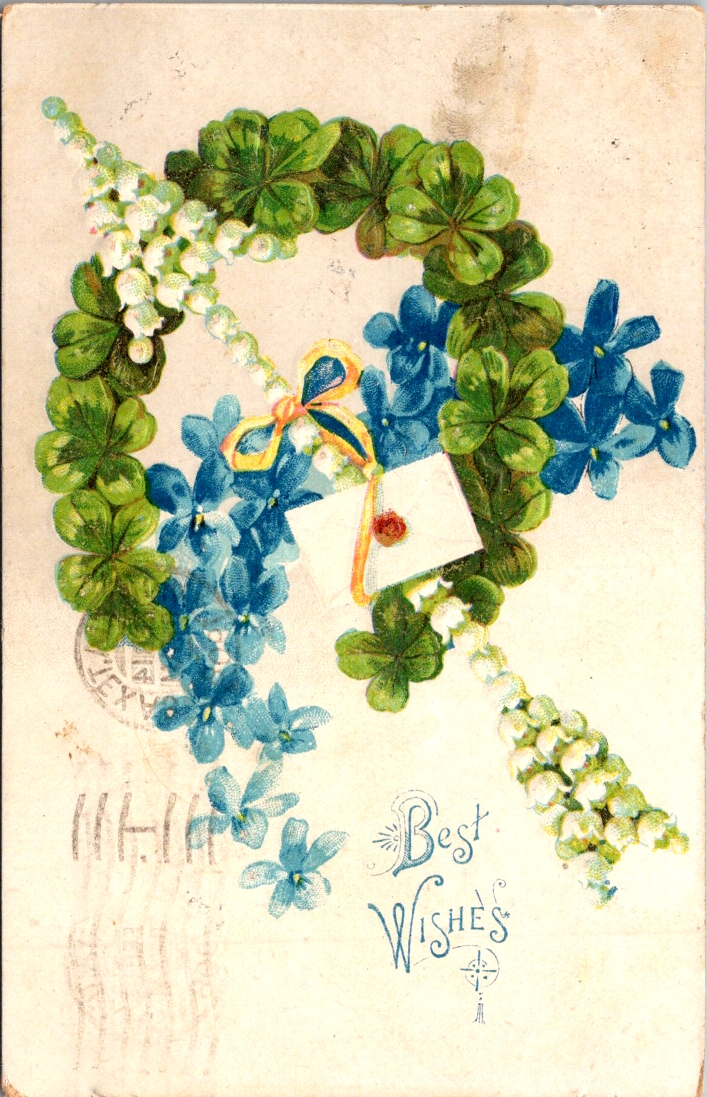
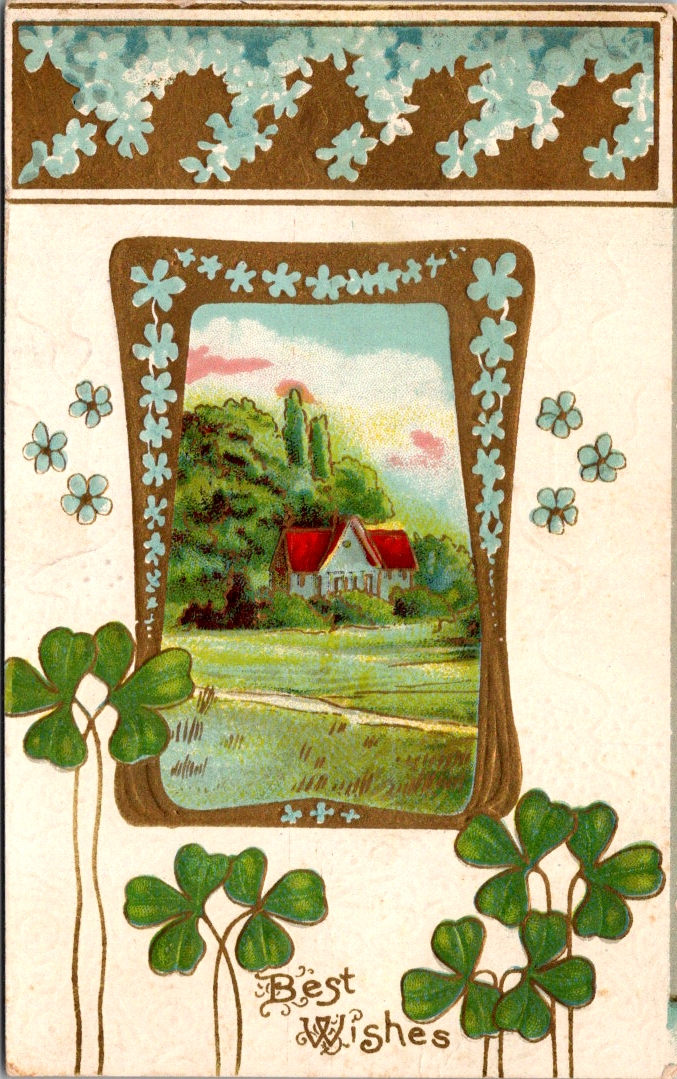
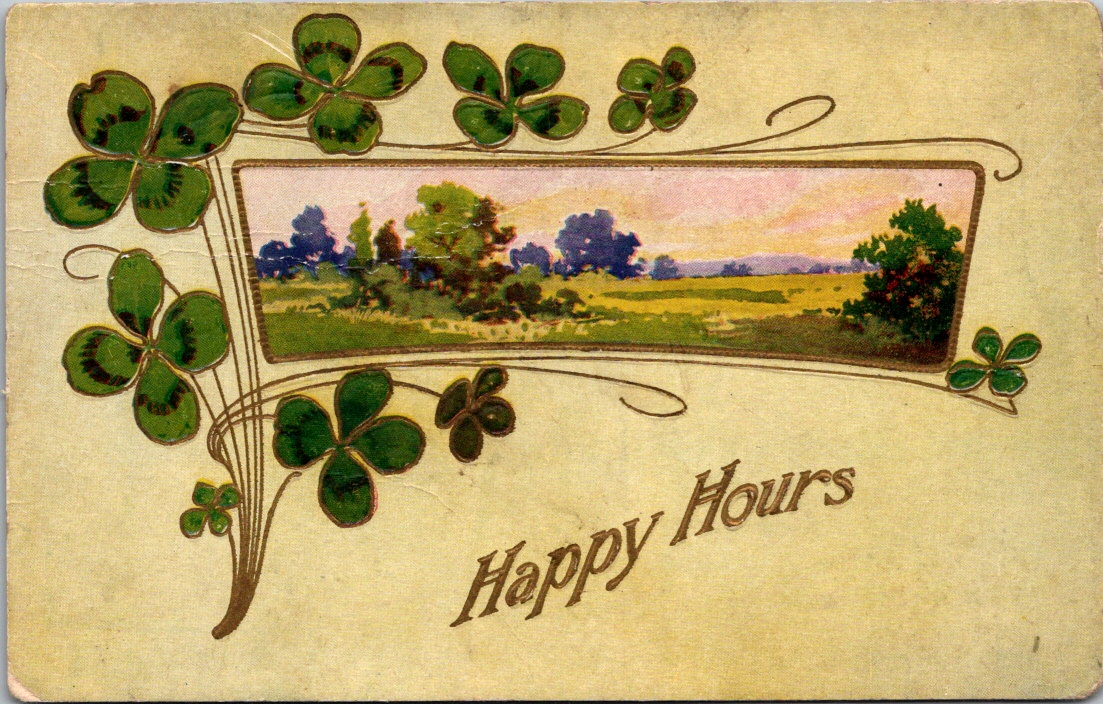
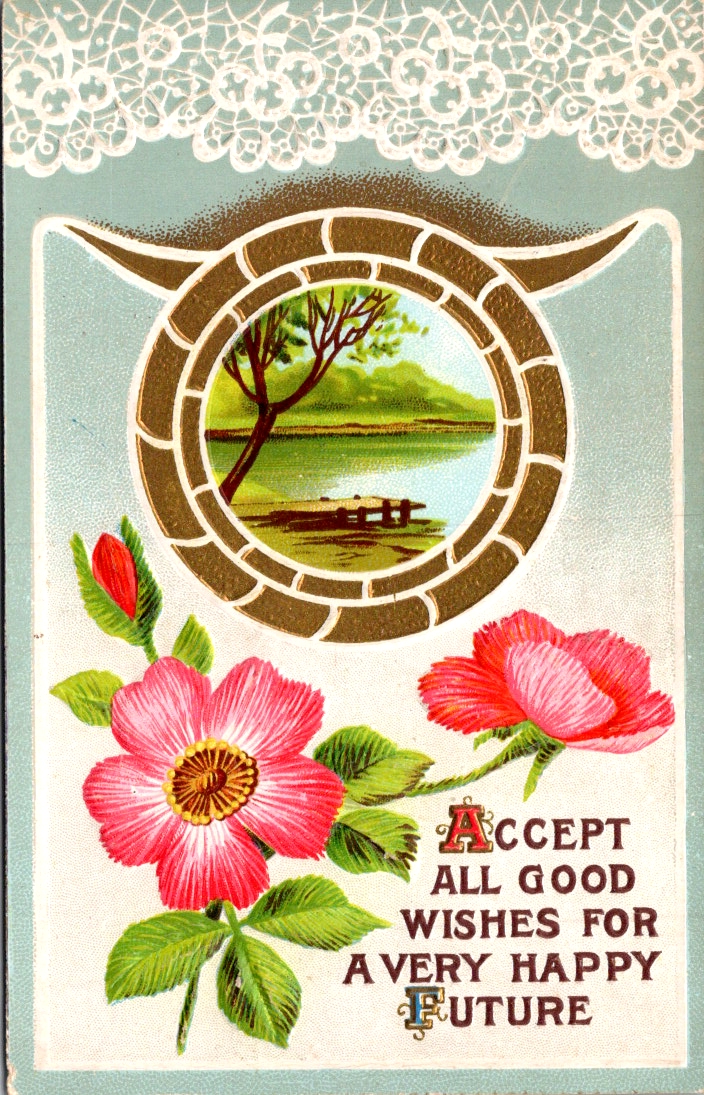
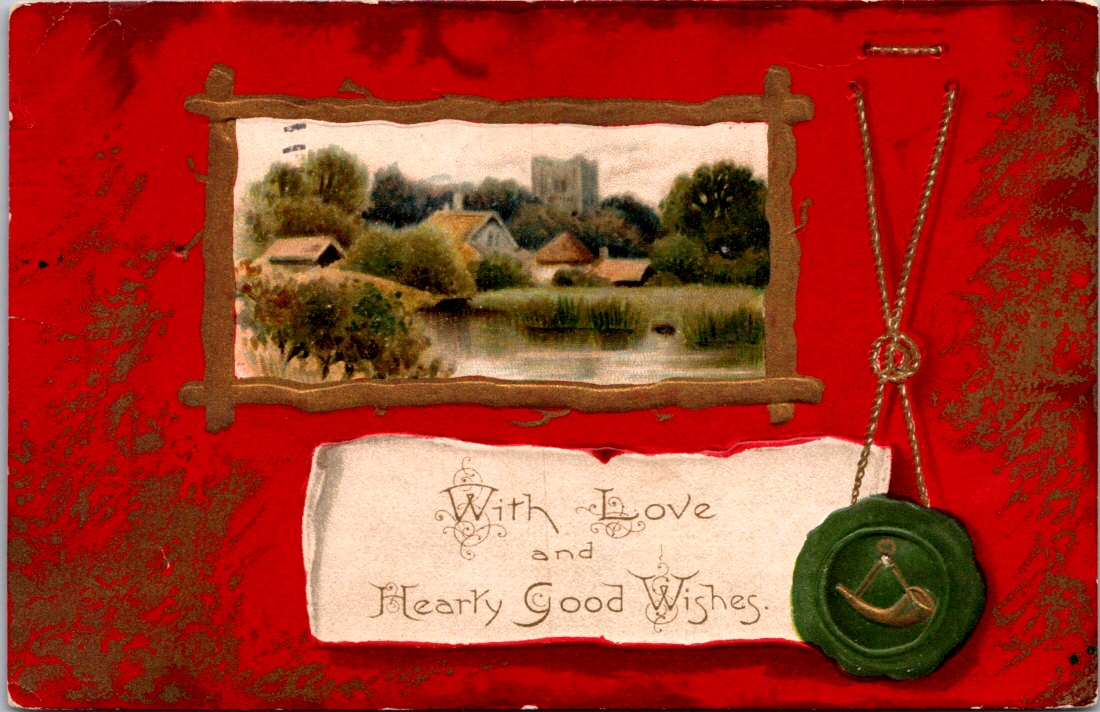
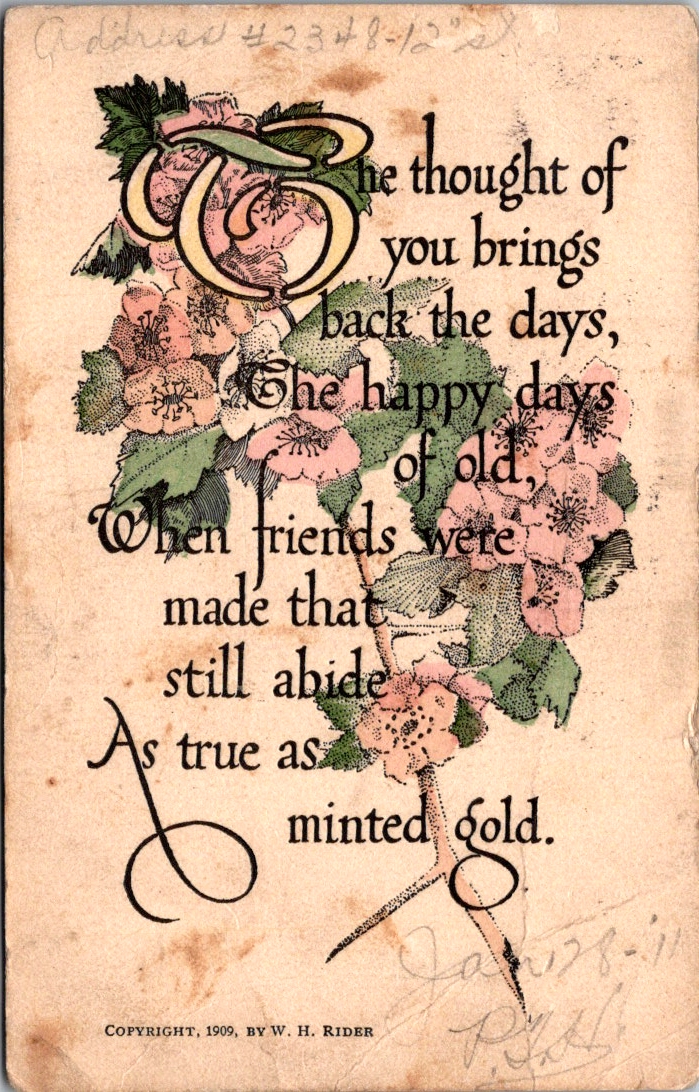
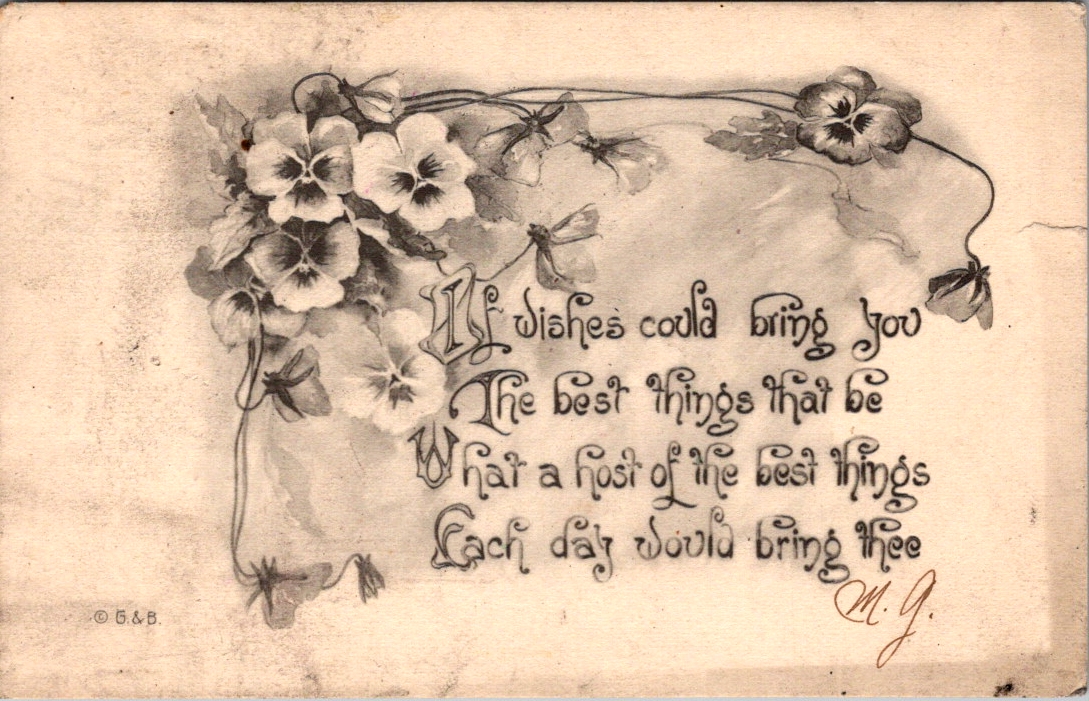
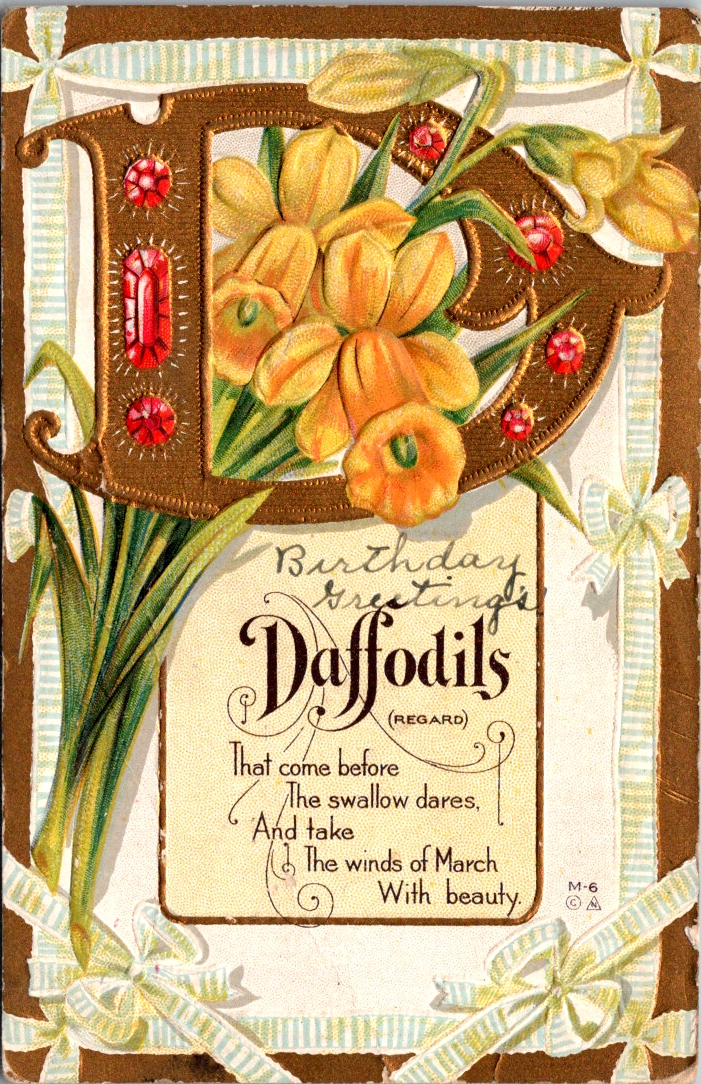
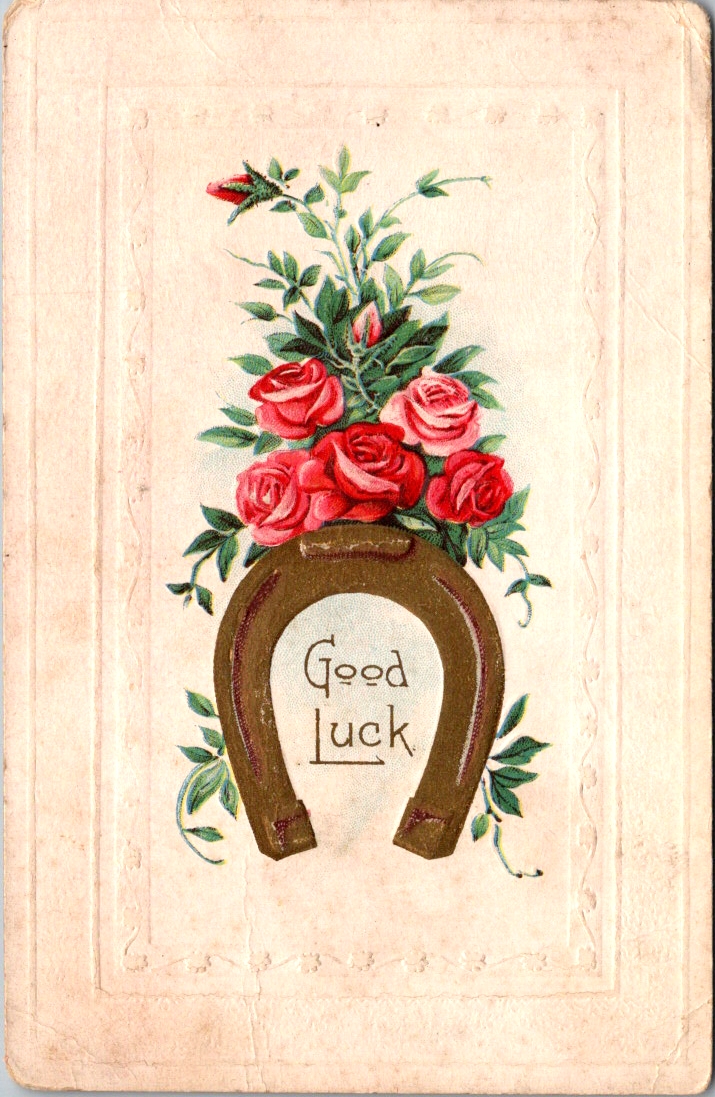
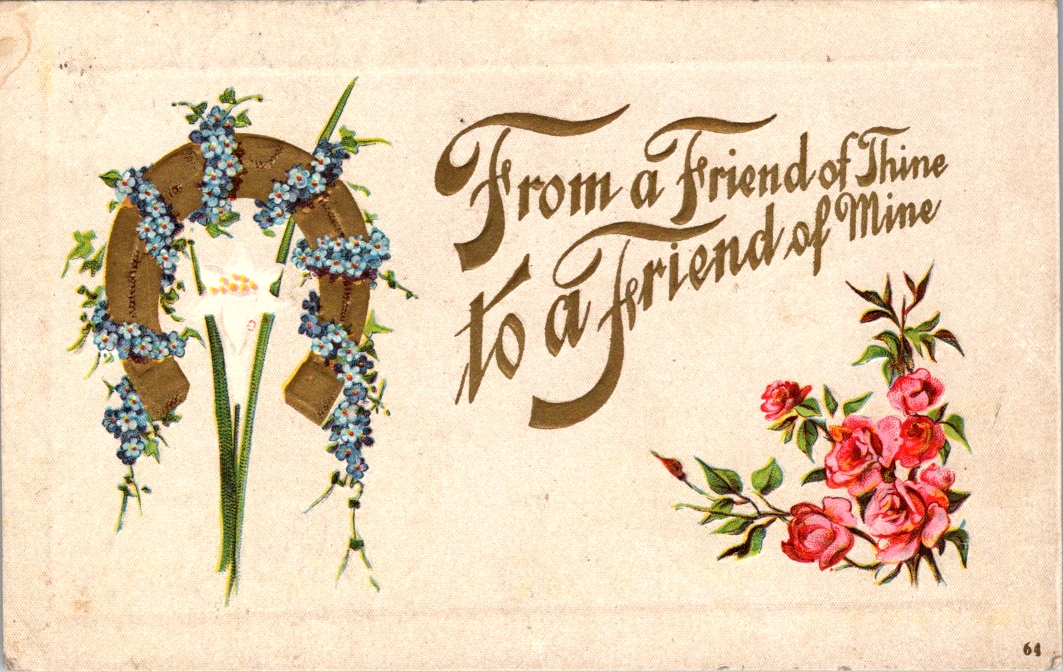
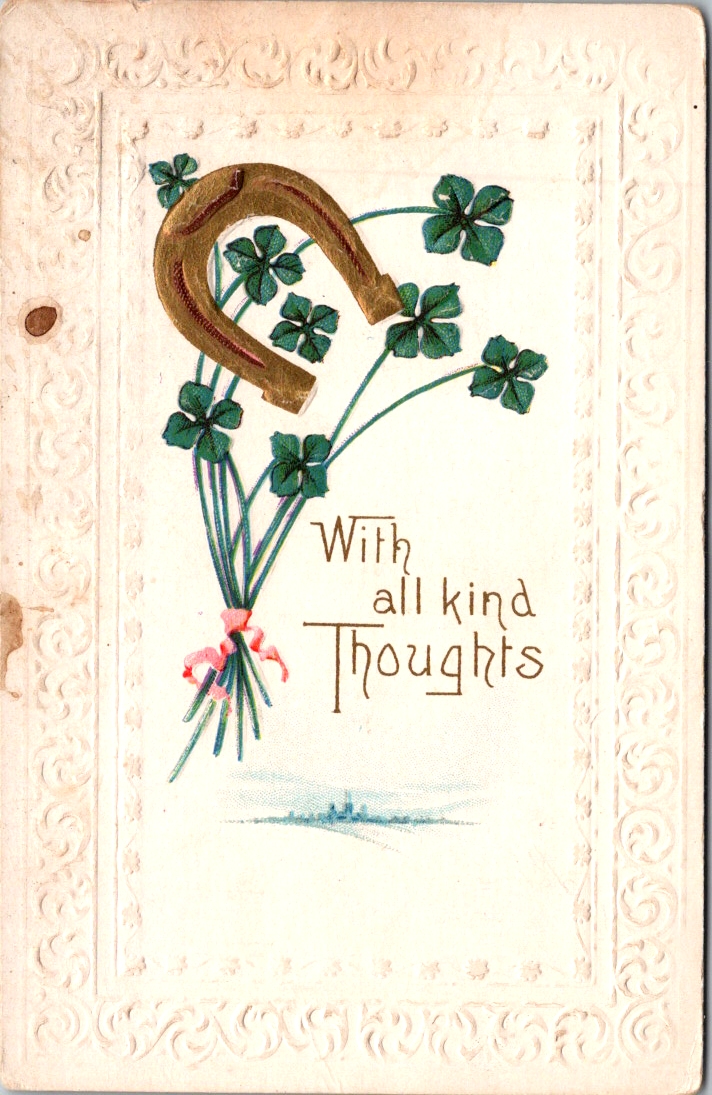
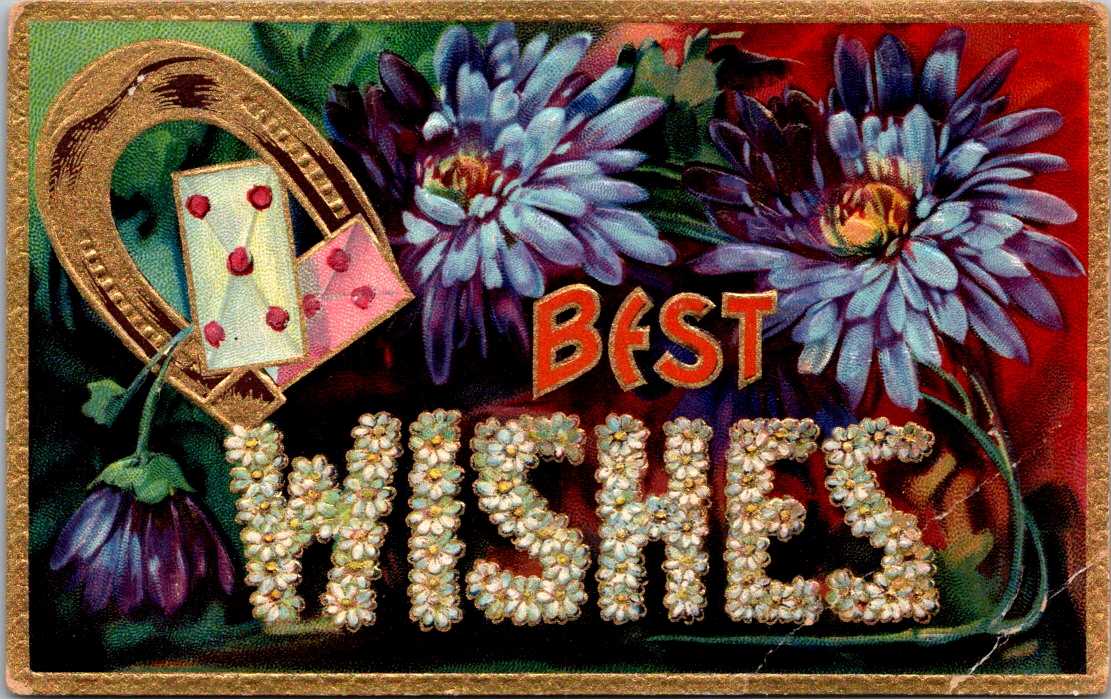
Edwardian postcards had a curious set of symbols to call forth fate and fortune. Horseshoes, shamrocks, roses, and playing cards. Small and slightly worn at the edges, these vintage greeting postcards have traveled more than a century carrying a providential wish.

Only one card in the collection actually says Good Luck. The rest offer best wishes, happy hours, and kind thoughts from me to you. As we’ll see, luck is borne of relationships (and circumstances) lifted by the charitable wish for health, wealth, and wisdom.

Some say that luck can be earned, but only a fool pursues it outright. We daydream about what fortunes may be in store, and sometimes ignore the simple sparkles that appear each day. We know, of course, that there are no free lunches. Yet, we are admonished to never look a gift horse in the mouth.

The bold assume they earned their lucky breaks. The humble suspect they’ve borrowed fortune temporarily. The superstitious are not entirely sure we should discuss it. Luck is where fate and intent find common cause, usually in the context of close friendships.
Old English had no luck. It used wyrd instead, which pointed to fate and destiny. Wyrd is the root of our word weird, which may indicate how people felt about fate. It was uncanny, inevitable, and perhaps divine. You didn’t pursue wyrd. You experienced it through awe and fear.

Somewhere around the 15th century, luk and gelucke drifted in from the Dutch and Low German. Luck was looser and more manual. Like weather, luck favored preparation and was possible to influence if you knew the right charms. The horseshoe went up above the door. The rock went in your pocket. If luck is not fate, if it is not fixed in advance, then perhaps you can do something about it. Perhaps it can be courted.
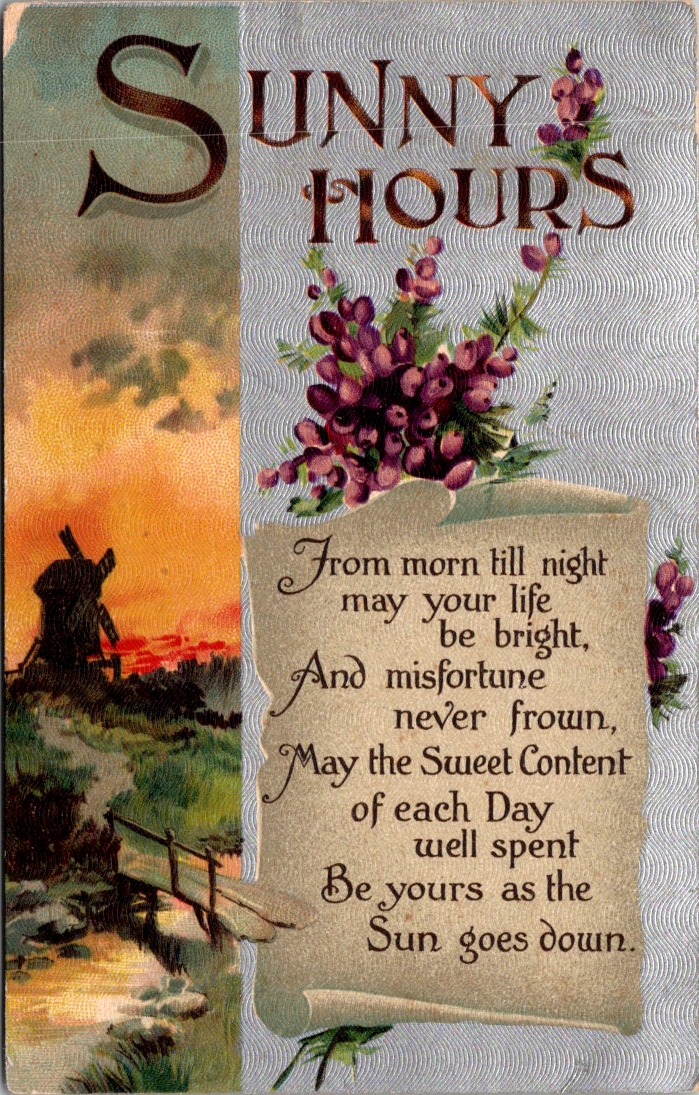
The lucky person is not the one who waits but the one who steps into the room. This is luck as a reward for courage, or at least for motion. Fate deals the cards, and we each have a hand to play.

Fortune favors the bold — fortes fortuna adiuvat
~ Terence, Roman playwright, around 151 BCE

Luck is what happens when preparation meets opportunity, and preparation is something you control. The solo pursuit of fortune is a genuine drive.

The harder I work, the luckier I get.
~ Samuel Goldwyn

But the shamrock gently disagrees. Four-leaf clovers are natural anomalies, not personal achievements. We can’t earn one, only discover it. Even if you can court luck, even if work and boldness can pull it toward you, it is never yours to fully command.

Luck never gives; it only lends.
~ Swedish proverb

Some people simply have it, inexplicably, in ways that have nothing to do with preparation or boldness or a rabbit’s foot.

Throw a lucky man into the sea, and he will come up with a fish in his mouth.
~ Arabic proverb

Some observe that luck is a finite resource and can be unwisely traded away. This may or may not be true, but as a matter of human priority it is clarifying. We each get chances to test our luck.

Lucky at cards, unlucky in love.
~ English proverb

The tension between fate and will, between earned luck and divine luck, is located in a moment of commitment. The lucky day is not the day something falls in your favor. It is the day you decide it might be worth the effort.

The day you decide to do it is your lucky day.
~ Japanese proverb
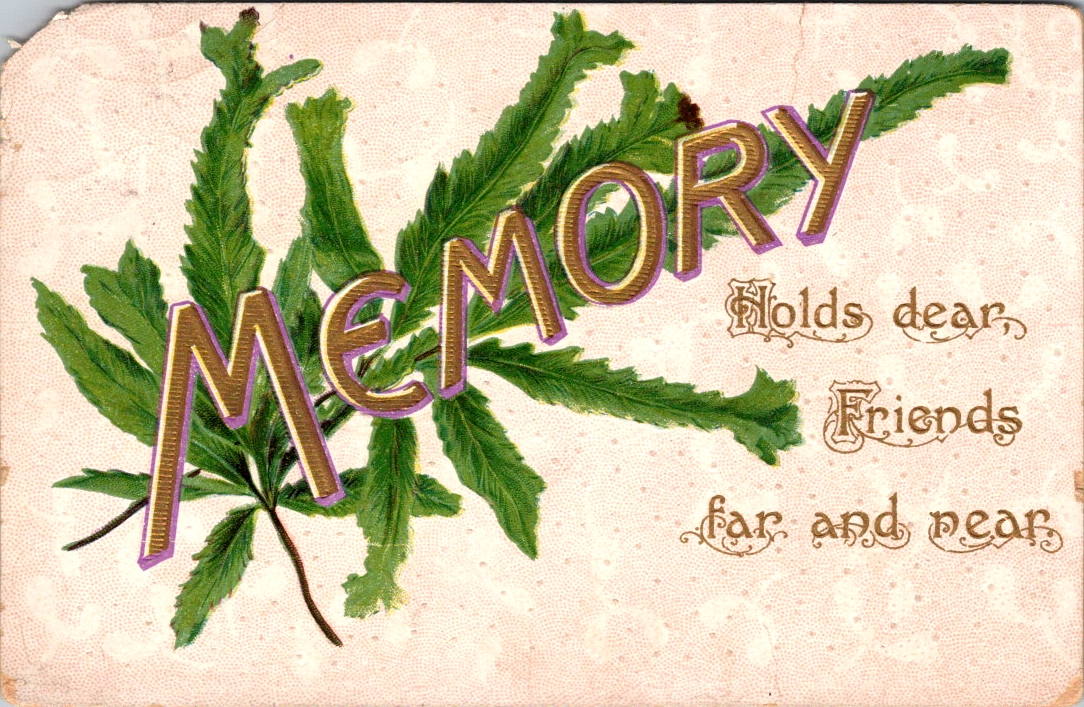
Whatever the senders intended and however the recipients replied, these cards demonstrate how providential language holds us together in anticipation of something wonderful just ahead. The possibility that things might go our way.

The symbols of luck nested together in relationship, in abundance, in the living world — a horseshoe wreathed in flowers, overflowing with roses, or flanked by shamrocks — is not an accident of Victorian design sensibility. It draws on the ancient wisdom that friends are the true source of life’s lucky breaks. Love does the work and luck gets the credit.
In the Middle of Things

Three postcards, yellowed with age, each capture a moment when someone paused in the middle of their story to reach out. Like a Venn diagram drawn in time, these missives overlap in that sacred space where human hearts seek connection across distances.

Through three preserved postcards from the early 1900s, we discover how every point of contact becomes a sacred center, a middle ground where hearts meet across distances both physical and emotional. Each yellowed card, with its carefully penned message, reminds us that we are all perpetually in the middle of things, reaching out across whatever distances separate us, making meaning in the spaces between hello and how are you?

The Only Town on the Map

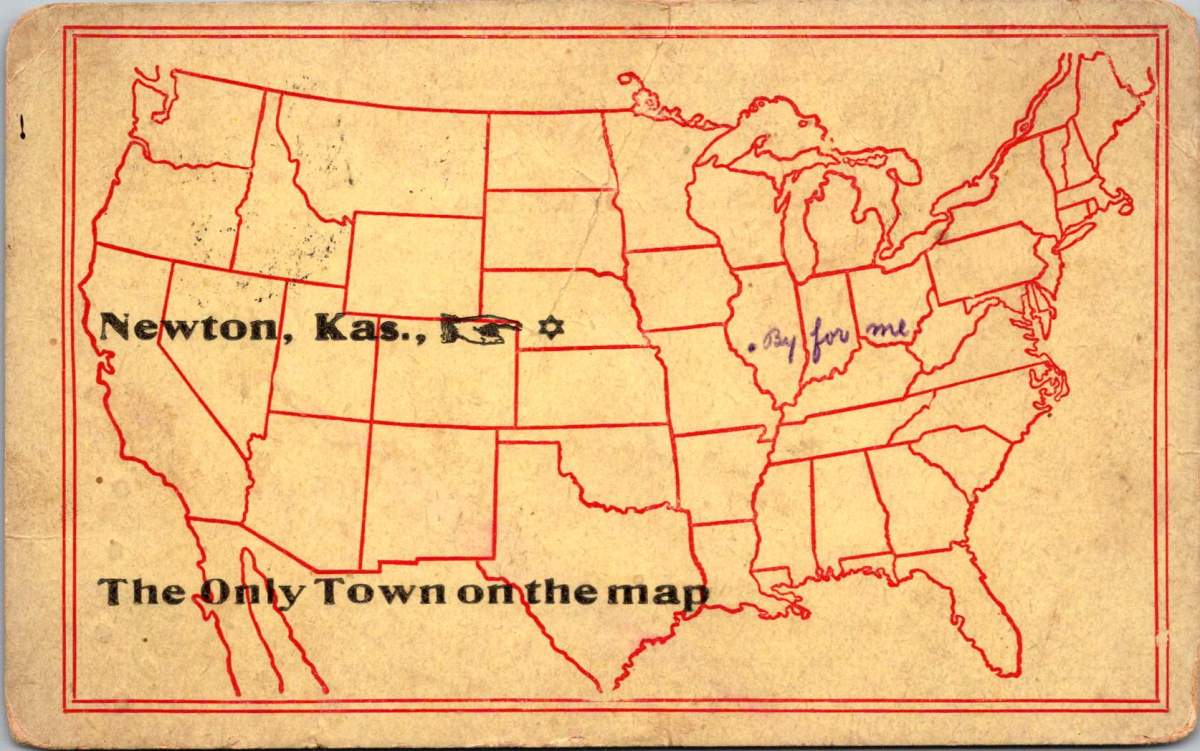
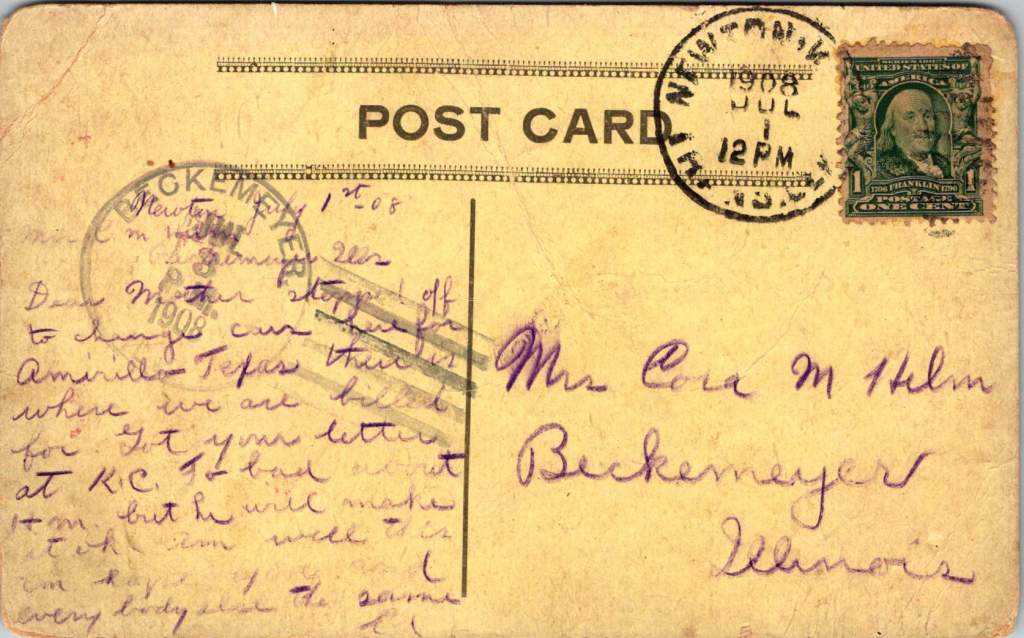
In Newton, Kansas, July 1908, Ed pauses between trains to write to his mother on playful postcard. A single dot on a stencil-drawn outline of the United States marks Newton as The Only Town on the map – a silly claim that also quietly captures a truth about human connection.

The humor lies in its absurdity – a blank continent save for this one dot in Kansas. Yet for Ed, in that moment, Newton truly is the center of everything, the pivot point between where he’s been and where he’s going.

Dear Mother, stopped off to change cars here for Amarillo Texas. There is where we are billed for. Got your letter at K.C. Too bad about him but he will make it ok. Am well this am, hope you and everybody else the same. Ed

He’s literally in the middle of the country, this railway town serving as his sacred center for just a few hours. There’s worry in his words about someone who’s unwell, balanced with reassurance about his own wellbeing. Even in transit, through immense uncertainty, he reaches for connection.

Long to Shake Your Hand Again

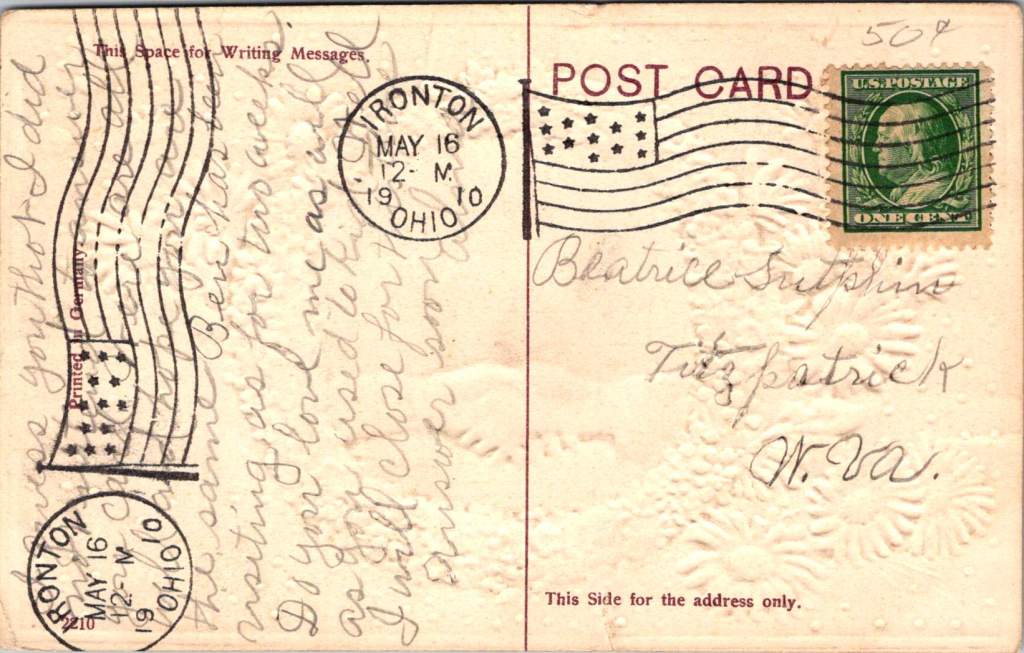
Two years later, in Ironton, Ohio, a young woman named Alma sends a card to Beatrice Sutphin in West Virginia. The card’s design speaks volumes: blue forget-me-nots and pink daisies frame a handshake, that polite, egalitarian gesture. Behind the clasped hands stretches a pastoral scene with water and a bridge – another symbol of connections that span distances.

“Do you love me as well as you used to, kid,” Alma writes, her playful tone reflecting the common courtesies of the day while masking a deeper yearning for reassurance. She’s navigating the creative tension of friendship across distance, using casual language and nudging humor to reach across the miles. The card itself becomes a bridge, a handshake in paper form.

The Path Through the Trees

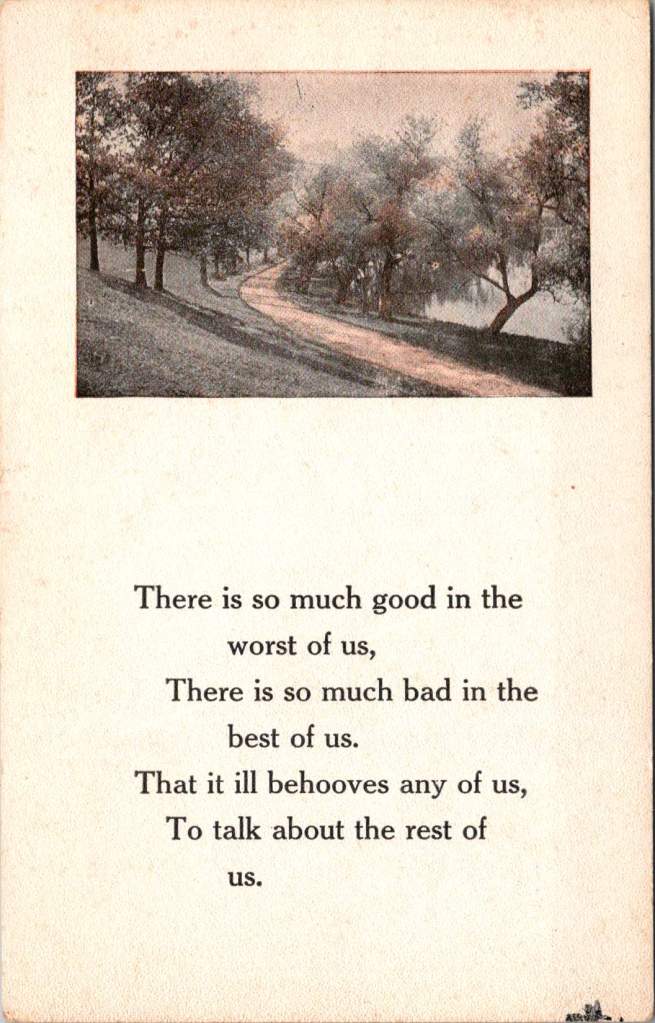
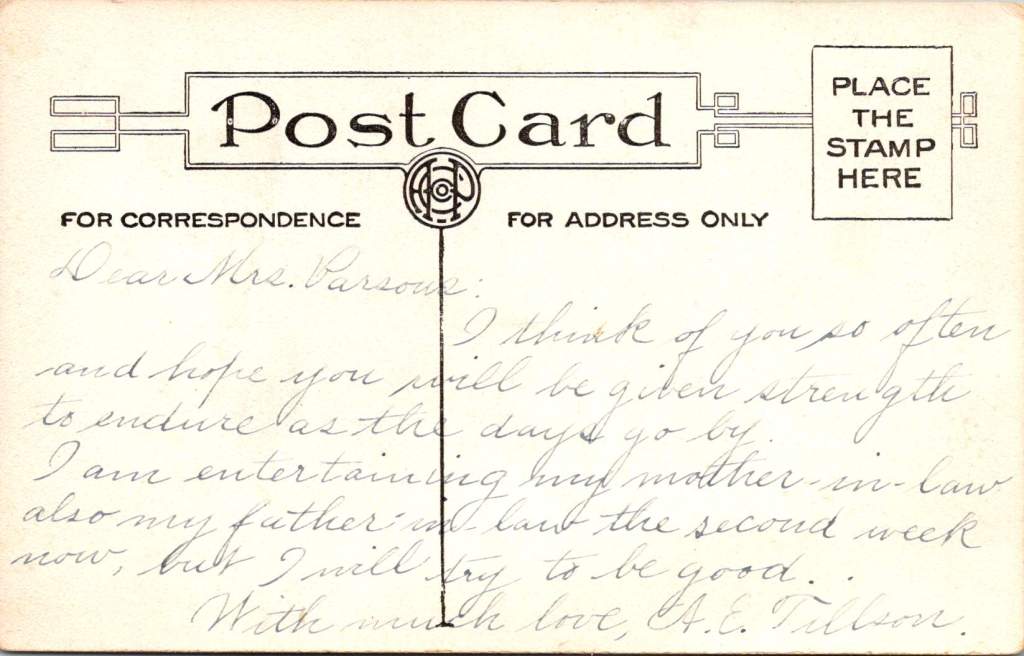
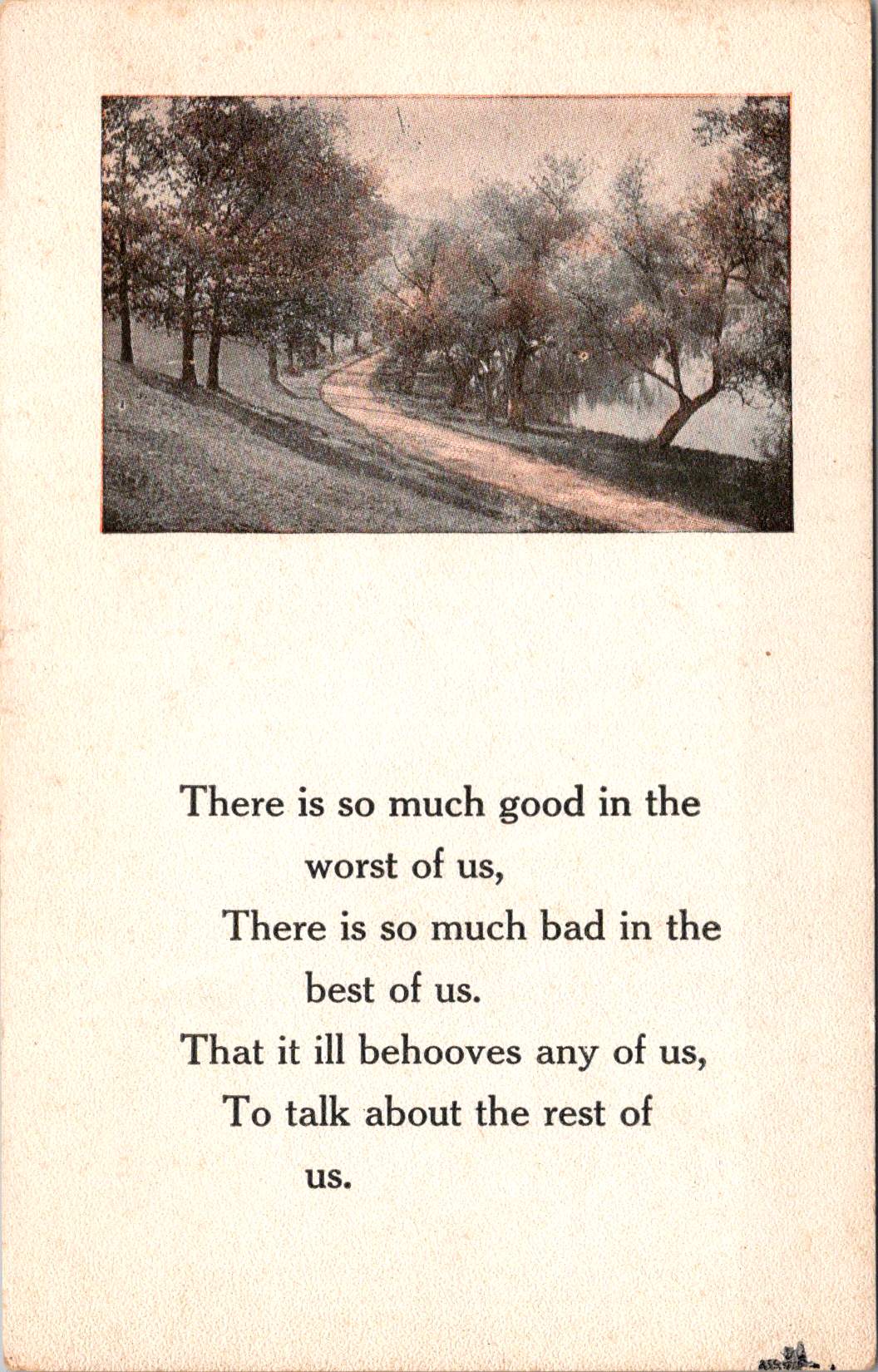
The third card, never mailed but carefully preserved, shows a winding path through trees, accompanied by verses about the complexity of human nature. A.E. Tillson writes to Mrs. Parsons with a note of formal sympathy, then adds a gentle joke about hosting in-laws. The message operates in that delicate middle ground between social obligation and genuine concern, between gravity and levity.

“I think of you so often,” she writes, “and hope you will be given strength to endure as the days go by.” Then, like a subtle change in musical key: “I am entertaining my mother-in-law and also my father-in-law for the second week now, but I will try to be good.”

All these years later, we are still inclined to gently inquire. Reading the messages between the lines, as they say. Do I sense a subtext here? What prevented her from sending this card? Why did she keep it long years on?

The Sacred Center

Something lies at the intersection of these three postcards, a sacred center they all circle around. It’s not serenity – each writer grapples with some form of creative tension. Ed worries about an unnamed “him” while trying to reassure his mother. Alma playfully demands affirmation of continuing friendship. A.E. Tillson balances sympathy with humor, formal phrases with personal asides.

The sacred center is the conversation itself – the eternal human drive to reach out, to connect, with even the most mundane facts. The center thrives on these noted perspectives, each writer offering their unique take, laden and layered with meaning though jotted out from a whistle stop.

These postcards are artifacts of appreciative inquiry in its most natural form. Each sender pauses in their own journey to ask: How are you? Are you well? Do you still care for me? Can I help you bear your burden? The questions themselves open up places where hearts meet and stories intertwine.

Some of us, like Ed in Newton, write from the middle of a physical journey. Others, like Alma, navigate the emotional journey of maintaining connections across distance. Still others, like A.E. Tillson, write from the complex shared ground of social obligations and genuine concerns, so often unspoken.

In Transit, In Place

Whatever the circumstance, we are always in the middle of things. There is always a before and after, always tension between where we’ve been and where we’re going, between who we were and who we hope to become. These postcards remind us that this center is not a void to be escaped but a sacred space packed with the very humble pieces of possibilities.

The verse on the unposted card speaks to this truth:

There is so much good in the worst of us, There is so much bad in the best of us, That it ill behooves any of us, To talk about the rest of us.

The middle is the best part – of our stories, of our journeys, of our complex relationships with others. As they say, if you’re not dead, it’s not over. The sacred center isn’t found in perfect serenity but in the creative tension of reaching out across whatever distances separate us, whether those distances are measured in railroad ties or handshakes.

These century-old postcards, with their careful penmanship and gentle inquiries, their jokes and worries and reassurances, remind us that the center holds not because it is static, but because it is constantly renewed through the sacred act of one person reaching out to another with a simple message. Here I am, in the middle of it all, thinking of you.