Here we go! The Posted Past heads into the fall season with rare cards, a new gallery, and a social mission to trade loneliness for connection.
featured postcard~ rare novelty card still holds a mystery
An early 20th century novelty postcard featuring humorous photography and personal correspondence from Missouri.
Front of the card: The photograph shows a young Black man in white shirt, suspenders, and dark trousers, grinning while holding a large broken umbrella overhead in a playful pose. Below reads the humorous caption “A little disfigured, but still in the ring”—typical novelty humor from the postcard craze era. A black border frames the photograph on cream cardstock.
Back details: The reverse bears “Carbon Photo Series No. 513” identifying the commercial publisher’s series. Addressed to Miss Grace Skillman in Pleasant Hill, Missouri, with a green 1-cent Franklin stamp and clear 1908 postmark. The handwritten message describes an exhausting early morning wait in Lee’s Summit for “Brother and Frank,” and promising a longer letter that evening.
“Still in L.S. haven’t slept but about ten minutes. My eyes looks like two burnt holes in a blanket. Brother and Frank hasn’t come yet. I will wait till 7.30 and then go home. Will write tonight. Just finished my breakfast. I will eat if not sleep. I got here ten till five.
Condition and Appeal: The sepia-toned image displays characteristic early photography with some age spots, and a nicked corner. The image and reverse side remain in good condition with clear photography and legible handwriting. The “Carbon Photo Series” indicates premium production using carbon-based printing methods prized for superior image quality and archival stability. Grace Andre Skillman was born in Pleasant Hill in 1889, making her nineteen when she received this card. The message and the lack of formal salutation and signature suggest this is casual ongoing family correspondence. As a result, the author of the postcard remains a mystery.
Vintage novelty postcards are increasingly collectible, especially numbered commercial series with documented recipients. Collectors of African-Americana may find the image appealing and relatively rare. The combination of carbon printing technology, humorous subject matter, and personal correspondence is of interest to collectors of vintage photography, postcard enthusiasts, genealogy researchers, and those focused on early 20th century American social history and communication.
Introducing~ The Posted Past Art Card Gallery
A selection of Larry L’Ecuyer’s watercolor landscapes are on display in our Online Art Card Gallery. Fitting as our first show. Enjoy!
Countdown to a Lakeside Getaway, 2025, Larry L’Ecuyer, watercolor on postcard
NEWS & UPDATES~ art card call for submissions is open
The World’s Smallest Artist Retreat (our P.O. Box) is awaiting your art card submission. Follow one rule to join the next open show. Details here!
Art card kits now in stock
Our Art Card Kits are perfectly-packaged as a fun, creative activity for you and a friend to complete in as little as an hour or made into a lovely afternoon.
The kit includes two postcard blanks, six vintage finds curated to the chosen theme, and a bundle of collage goodies for your whimsy. There is a free gift inside, too!
Once you’re done, surprise someone with an original art card in their mailbox. Or, send it back to us to include in the next online show. Either way, you’ll have cultivated a little joy in your garden.
During the 1918 pandemic, daily postcards were lifelines between farm and hospital for the Moss clan in Missouri. Their words remind us that love weaves a way between two worlds.
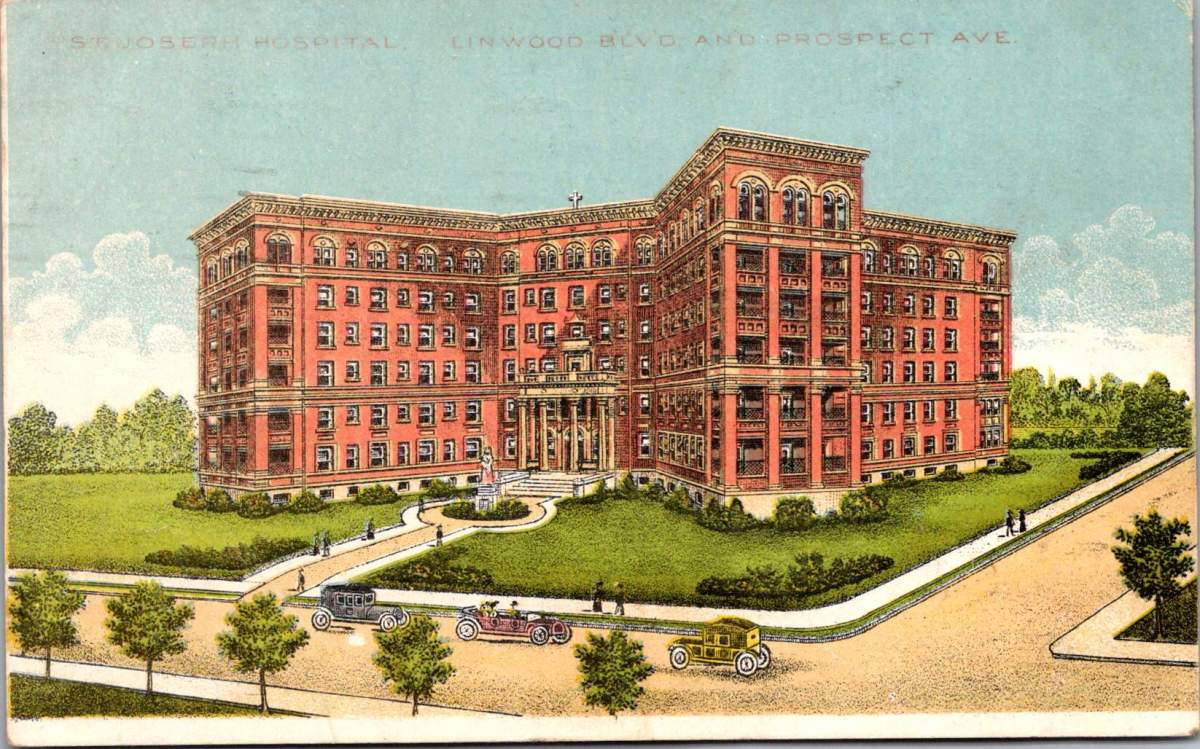
A postcard trembles in worried hands. On the front, St Joseph Hospital, Linwood & Prospect Streets in Kansas City, Missouri. Victorian landscaping, tree-shaded boulevards, a large, new hospital. It is a world of progress and prosperity frozen in glossy perfection.
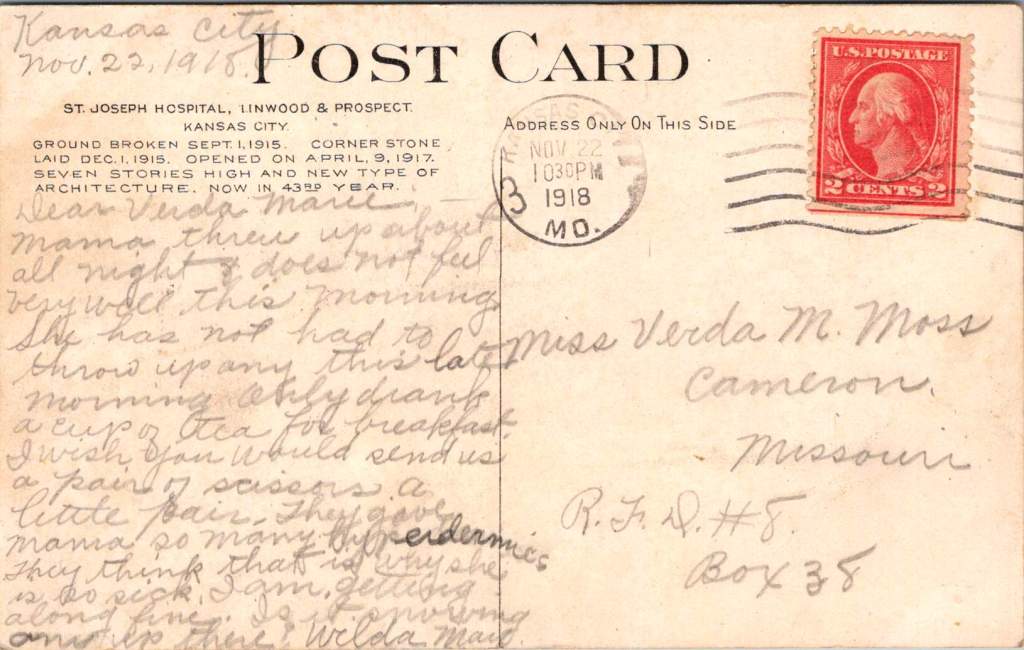
Turn the card over. Faded ink bleeds across cream paper. “Dear Verda Marie, Mama threw up all night and does not feel well this morning… only drank a cup of tea for breakfast.”
Two worlds exist on a single postcard. The front celebrates America’s gleaming cities and grand institutions. The back reveals a family torn apart by pandemic and war, working together and staying in touch every day.
The Spanish flu arrived in Missouri like a thief. It followed railroad lines and river valleys, spreading from military camps across the heartland. By September, Kansas City reported its first cases. By October, the city’s hospitals overflowed with the gravely sick and dying.
Mama Moss checked into University Hospital on Campbell Street, one of several small places on Hospital Hill, where Kansas City built its first medical facility in 1870. Now every building overflowed with sick and strapped families seeking any treatment that promised relief or protection.
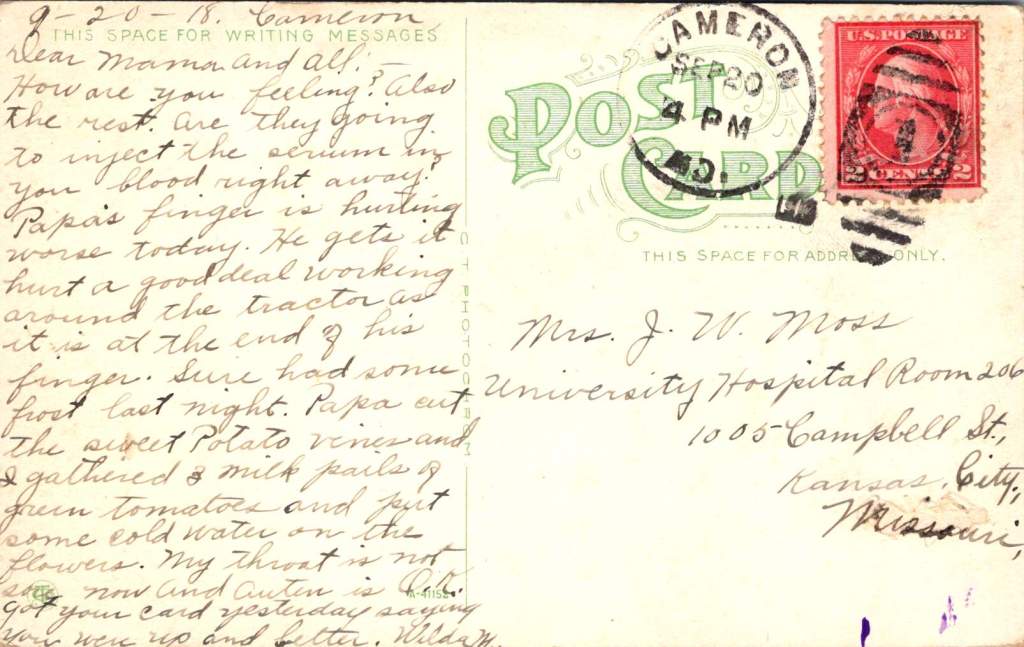
The postcards begin their daily journey between Cameron and Kansas City. Fifty miles of prairie separate farm from hospital, family from mother, routine from crisis. September 20th,Verda Marie writes from Cameron:
Dear Mama, and all. How are you feeling? And the rest. Are they going to inject the serum by your blood right away? Papa’s finger is hurting worse today. He gets it hurt a good deal working around the tractor.
The serum treatments represented medicine’s desperate gamble. Doctors extracted blood from recovered patients, believing their antibodies might save others. Transfusion methods were primitive—donor to patient through crude tubes, with minimal understanding of blood compatibility.
The front of her postcard shows Fourth Street looking west in Cameron—tree-lined and peaceful, houses with wraparound porches and manicured lawns. No hint of pandemic. No suggestion of families split between farm work and hospital vigils.
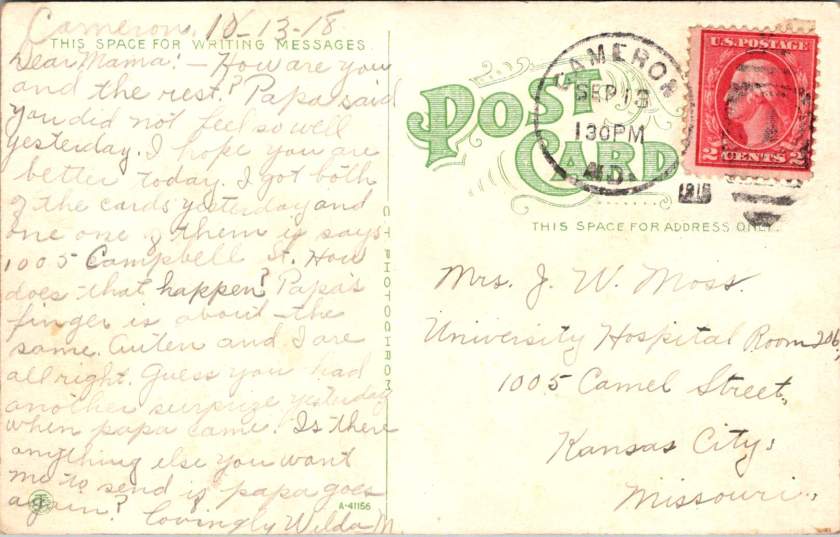
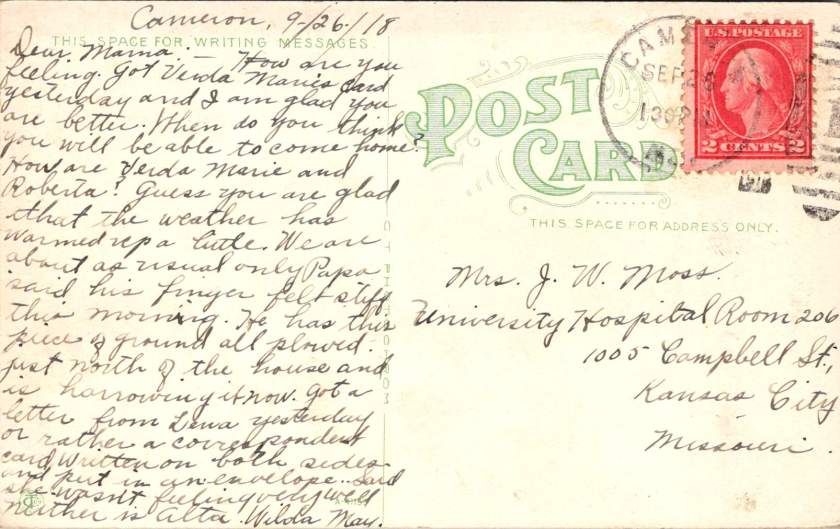
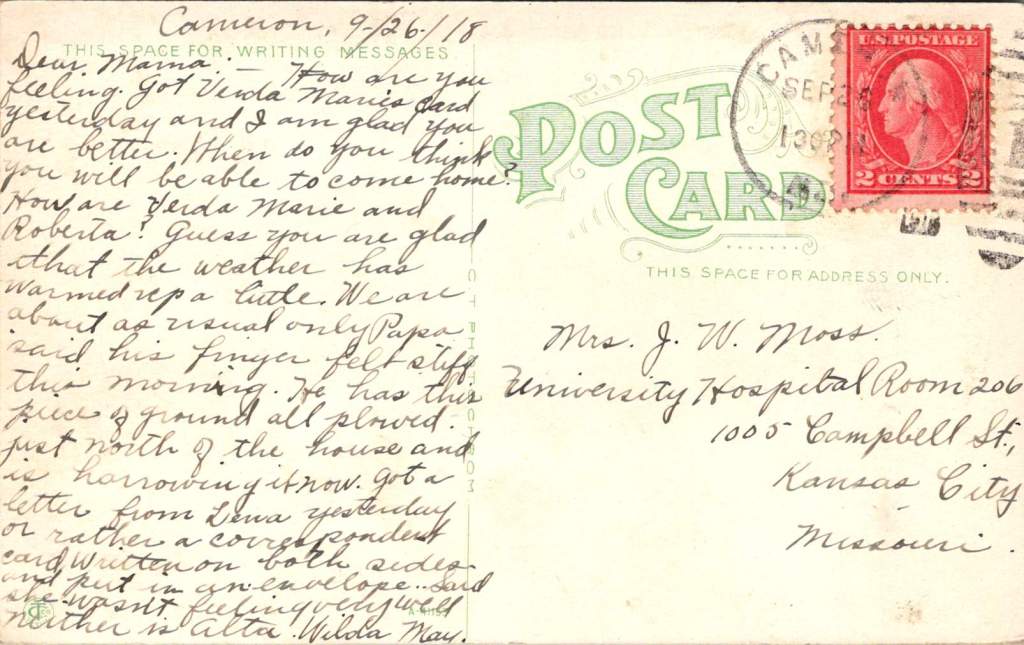
September 26, another postcard from daughter Wilda May in Cameron. Papa keeps working despite his damaged fingers. Farming cannot stop, even during plague, while war production and domestic demands for food are high. Families managed alone while the virus spread through communities like wildfire.
Dear Mama, got Verda Marie’s card yesterday. I am glad you are better. When do you think you will be able to come home? … Papa said his finger felt stiff this morning. He has this piece of ground plowed north of the house and is harrowing it now.
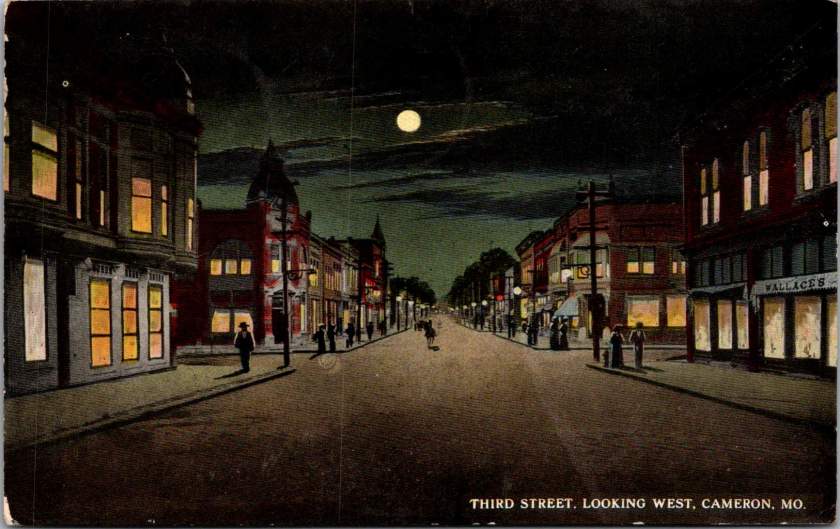
This card displays the Third Street business district looking East. The image suggests normalcy, prosperity, urban activity. The message tells a different story—injury, illness, fragmented family life.
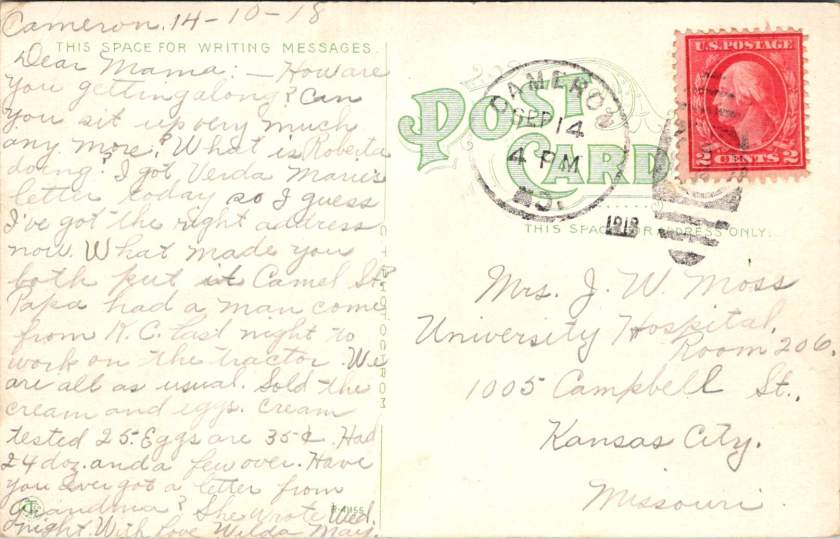
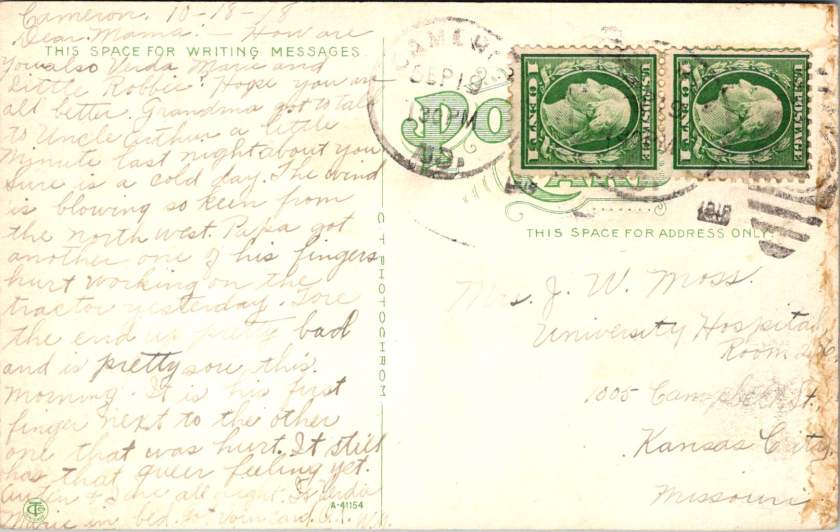
October 14th, from Cameron, Wilda May is writing to check in on Mama, Verda Marie, and little Roberta.
How are you getting along? Can you sit up very much any more? Papa had a man come from K.C. last night to work on the tractor. Sold the cream. Eggs are 35 cents. Had 24 dozen and a few left over.
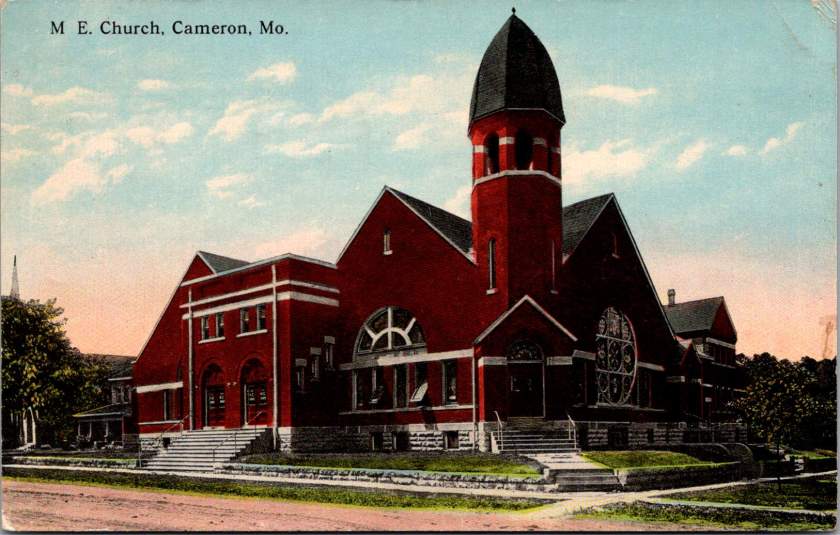
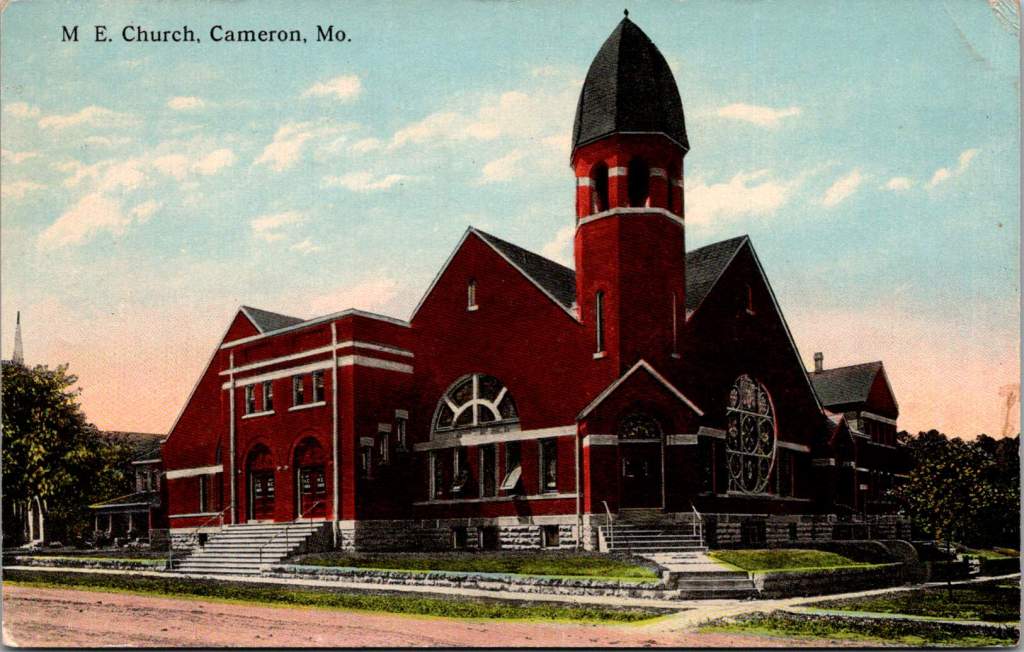
The dramatic red brick architecture of the M.E. Church is featured on the front. The bell tower, archways, and stained glass, no doubt concealing a community in a moment of great challenge.
November arrives with mixed signals. The Great War ends with armistice celebrations flooding city streets. Victory parades march through Kansas City while Hospital Hill counts mounting dead.
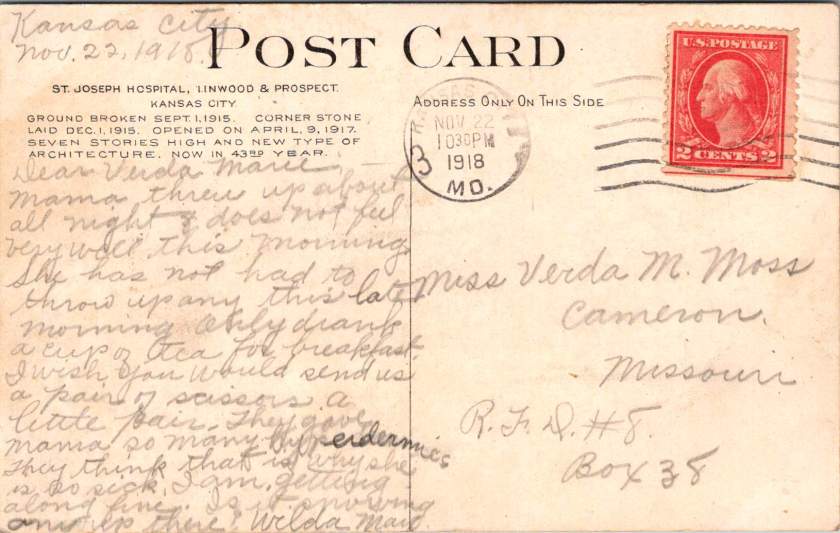
November 22nd, Wilda May is now in Kansas City and Verda Marie is back in Cameron. This is the card with St Joseph Hospital on the front and a report of Mama’s worsening condition on the back. Poignantly, a plea for simple materials.
I wish you would send us a pair of scissors, a little pair. They gave Mama so many hyperdermics (sic). They think that is why she is so sick.
The front shows St. Joseph Hospital—imposing, institutional, representing medical progress. The message reveals the grinding reality inside: nausea, sleepless nights, requests for basic supplies.
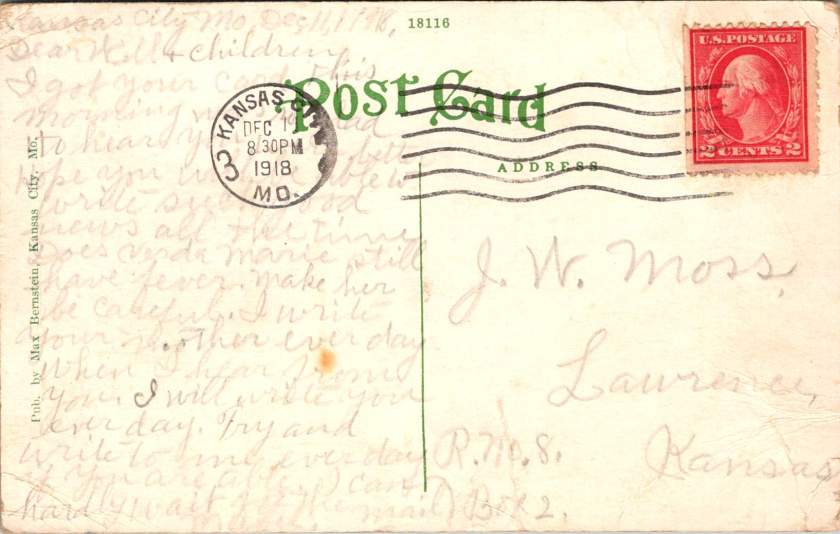
December 11, 1918. The last postcard in this series leaves Kansas City at 8:30 PM. Mabel Moss writes with exhaustion and desperate love.
Does Verda Marie still have a fever? Make her be careful. Write to your mother every day. I will write to you each day, too.
She repeats herself. Write every day. Every day, I will write to you.
These postcards have become more than communication. They serve as proof of life, wellness checks, emotional anchors in a world gone mad. Each delivery confirms another day fought forward, another family member still breathing.
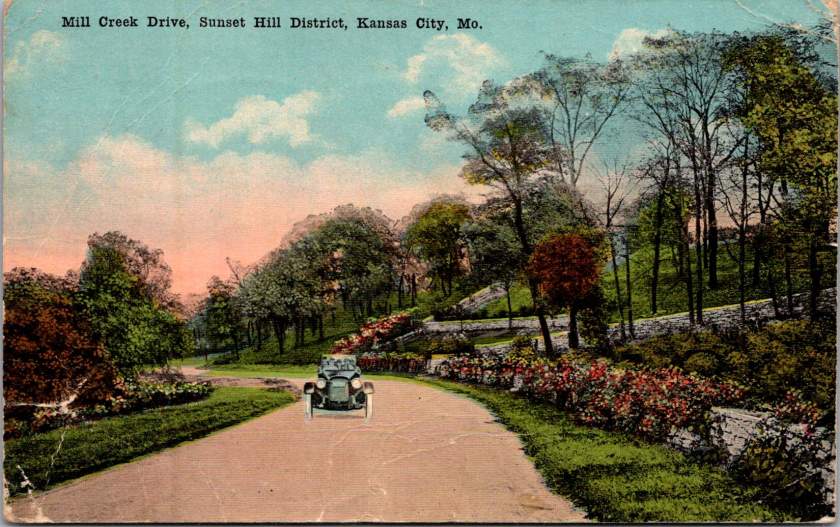
The front of the card features a swank soft top automobile on Mill Creek Drive, in the Sunset Hill district of Kansas City, Missouri. Lush foliage suggests it is a wonderful day to take in the fresh air.
Armistice brought celebration but not peace. Fighting continued in distant lands. The temporary ceasefire required renewal every thirty-six days. Victory was fragile, conditional, threatened by forces beyond control.
Also, influenza had no respect for borders. While diplomats negotiated peace terms, the 1918 pandemic waged its own relentless war. Families learned that health status changes cruelly and without warning. People woke well and died by nightfall.
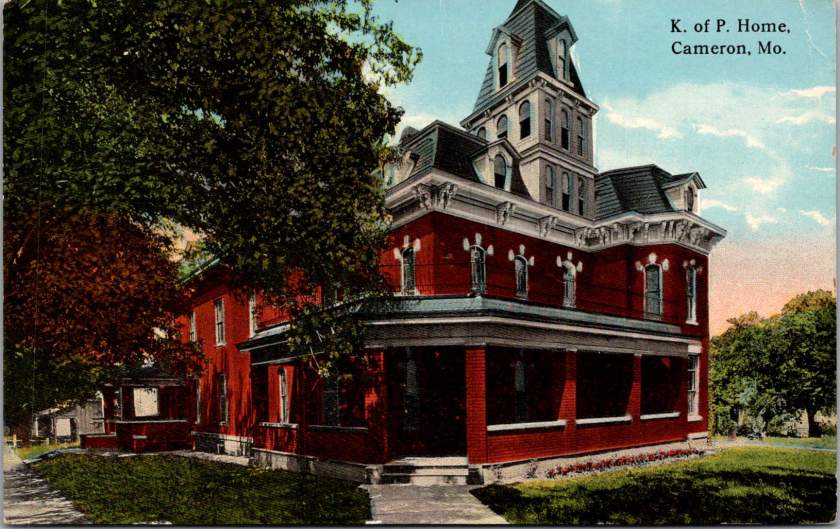
These postcards preserve this tension between public aspiration and private desperation, helping us journey back to history as it happened. The fronts of the postcards celebrate civic pride—hospitals, colleges, tree-lined streets, architectural monuments. Their backs tell different stories. Experimental medical treatments. Daily fears about fever and death. Constant threat of injury from dangerous farm equipment. The grinding reality of families separated by crisis, held together by handwritten words.
This contrast defines the American experience during a period of dual catastrophes. Communities built beautiful institutions while individuals struggled for survival and missed hard earned opportunities. Cities planned grand boulevards while families split between hospital rooms and farm chores. America as it aspired to be, and as it actually existed for the Moss clan.
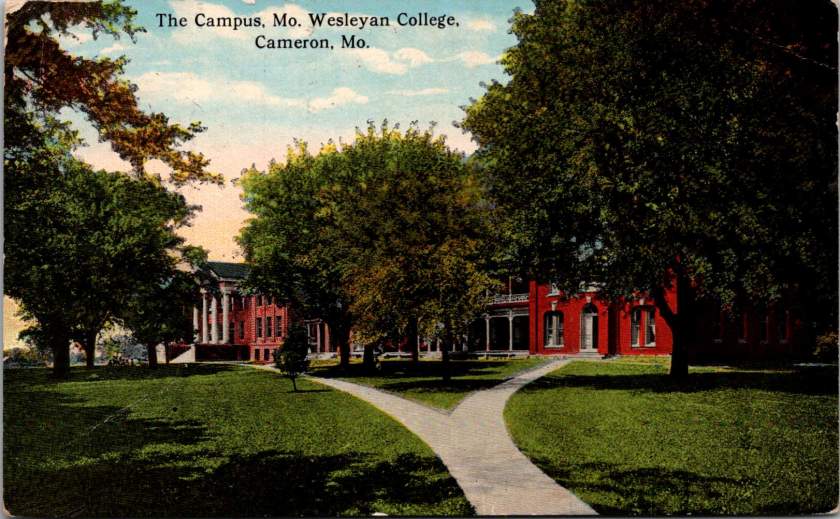
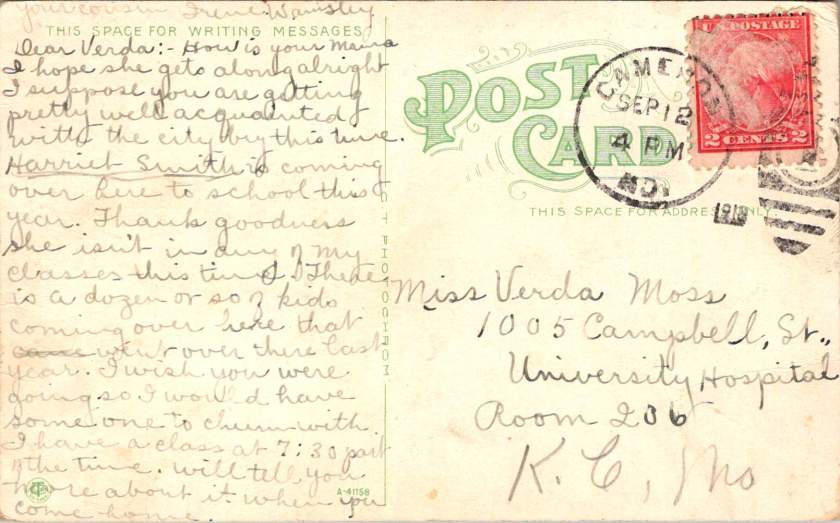
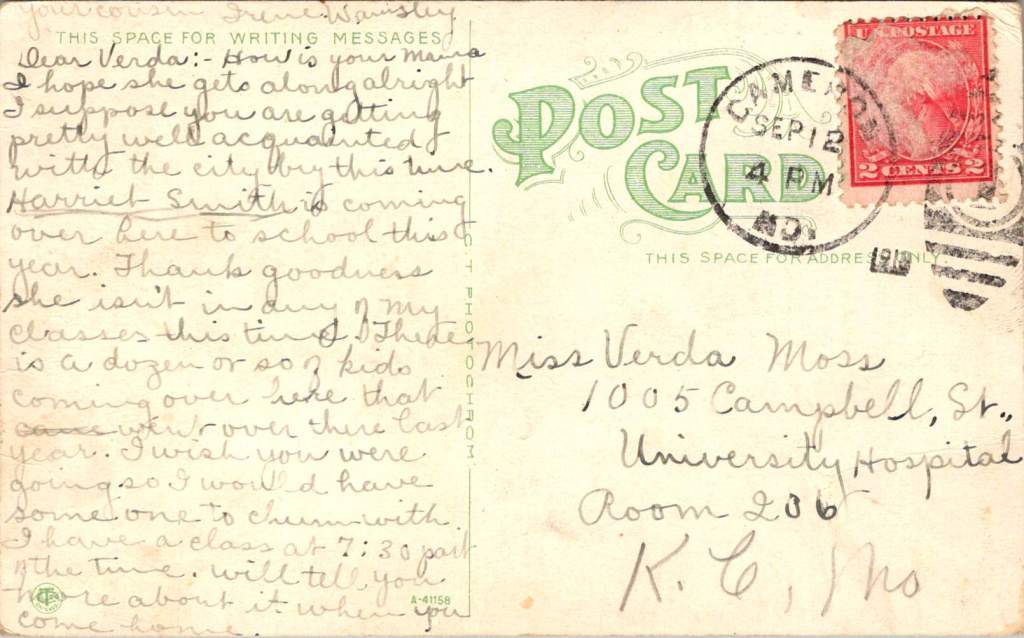
Just as her mother was getting sick, Verda Marie received a cheery postcard from a classmate with some gossip to share.
Harriet Smith is coming over here to school this year. Thank goodness she isn’t in any of my classes … I wish you were going so I would have someone to chum with…
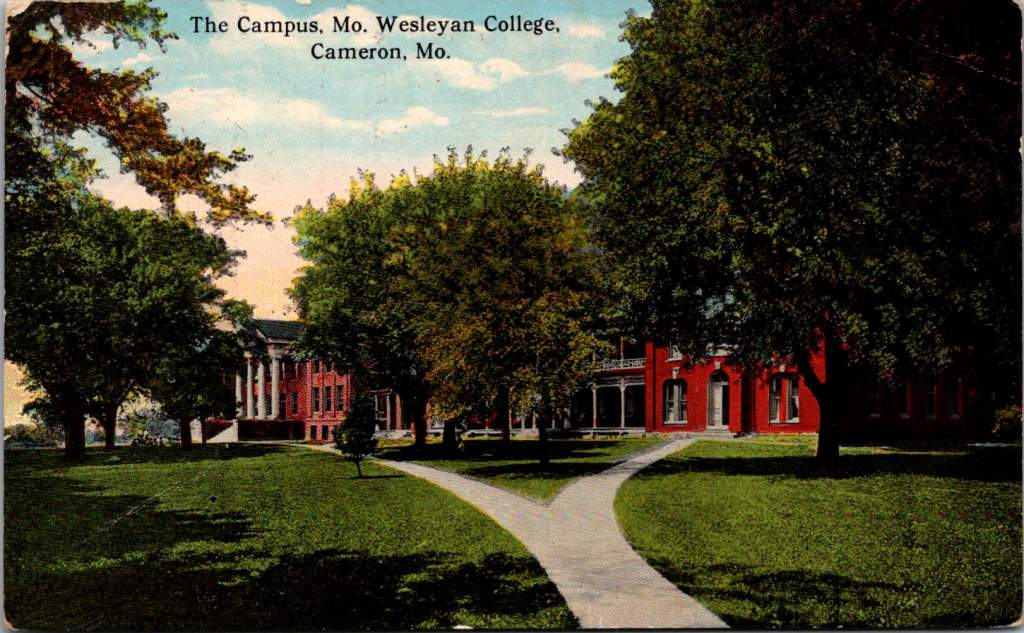
The postcard front featured Missouri Wesleyan College campus—red brick buildings set among autumn trees. The front speaks to knowledge, tradition, the future of young minds. We can read between the lines on the back. Verda Marie would not be in class that semester, sadly.
Like Lazarus rising from his tomb, the world emerged from pandemic death to discover life transformed. The 1920s roared with celebration and renewal, and time went on. Hospital Hill expanded into Kansas City’s premier medical district. The red brick buildings where Mama received her serum treatments evolved into modern towers serving new generations. A century later, technological and medical innovations advance but essential human needs persist, too: connection, communication, proof that loved ones survive another day.
These particular postcards survived in a family archive. Stories of courage, love, determination tucked away to find a century later. Each card represents a day won against the odds, a family bond that transcended distance and disease.
The Moss family’s story continues in everyone separated by illness, every community battling invisible enemies, every healthcare worker risking their life to save others. The beautiful facades combined with harrowing messages remind us that hope and suffering coexist, flipped back and forth in our hands, repeated in every generation.
Native Hawaiian wisdom, mainland capitalism, an LDS mission, and the birth of Pacific tourism. At the center, a banyan tree that has watched Hawaii transform for 120 years. This 1921 real photo postcard reveals the complexities of cultural exchange, migration, and travel over time.
In the photograph we are looking at today, the Moana Hotel rises like a palace from Waikiki Beach, its elegant wings stretching toward Diamond Head. A wooden pier extends into the Pacific. The building’s Victorian details hint at mainland American grandeur transplanted to the tropics. The “First Lady of Waikiki” opened as the territory’s first luxury resort, transforming a landscape once dotted with taro ponds and royal summer homes into the birthplace of Pacific tourism.
Built by wealthy landowner Walter Chamberlain Peacock and designed by architect Oliver G. Traphagen, the Moana opened on March 11, 1901, with 75 rooms featuring Hawaii’s first electric elevator and the unique amenity of private bathrooms. The first guests were a group of Shriners, who paid $1.50 per night—about $50 today—to experience what was then a very remote luxury destination.
Three years later, Jared Smith, Director of the Department of Agriculture Experiment Station, planted what seemed like a simple landscaping choice in the hotel’s courtyard: a young Indian banyan tree, nearly seven feet tall and about seven years old when planted. In the image, the tree is seventeen years old and already creating the shaded sanctuary that is the hotel’s heart even today.
As we flip the postcard over, another dimension is revealed. On November 29, 1921, a simple message sent to Mabel Moss in Longanoxie, Kansas with the usual greetings. But this isn’t a holiday for Aunt Olive. Her return address, “Route 4 – Box 46,” tells its own story of how communities were connecting between ancient and modern, sacred and commercial.
A Mormon Pioneer’s Island Home
Aunt Olive likely lived in Laie, thirty-five miles north of the Moana Hotel, where the Mormon Church had established its Pacific sanctuary. Her Route 4 address would have been served by one of the Rural Free Delivery routes radiating out from Honolulu—a detail that places her among the settlers who were building new communities beyond the city’s tourist corridor.
The Mormon settlement at Laie represented a unique form of cultural encounter. Beginning in 1865, when Church president Brigham Young received permission from King Kamehameha V to establish an agricultural colony, the Latter-Day Saints purchased 6,000 acres of traditional land—a pie-shaped division that provided for sustainable living. The Mormon community tried to honor Hawaiian land practices, giving each family a loi (water garden) to cultivate kalo (taro), the traditional sustenance crop.
The Hawaii Temple, dedicated in 1919, was the first Mormon temple outside continental North America. Built with crushed local lava and coral, its structure embodied the meeting of mainland pioneer culture and Pacific Island materials. Polynesian Saints from across the Pacific were gathering in Laie to receive temple ordinances, creating a multicultural religious community where Hawaiian, Samoan, Maori, and haole (white) families lived side by side.
The LDS approach to missionary work emphasizes learning local languages and customs—not merely as conversion strategy, but as theological principle. One of the early missionaries mastered Hawaiian so thoroughly that he produced the first non-English translation of the Book of Mormon in 1855. The missionaries married into Hawaiian families, adopted local foods and farming methods, and incorporated Polynesian cultural elements into their worship. Even as they openly sought converts, they also saw themselves as students of Hawaiian wisdom.
Paradise Shared
Captured in our image are at least a few conflicting visions of paradise. The Moana Hotel itself represents economic prosperity through the commodification of tropical beauty. Its guests paid premium rates to experience “the ultimate playground,” complete with hula shows and exotic imagery designed for mainland consumption. By the time of this photo, the hotel’s success had already inspired expansion; wings added in 1918 doubled its capacity.
However, the hotel was built where Hawaiian royalty had once gathered, in a place that embodied the Native Hawaiian principles, very different than Western concepts of land as commodity, beauty as product, and culture as entertainment. Look again at the Banyan tree. Where tourists saw scenery, Native Hawaiians understood kino lau—the gods manifested in every plant, animal, and natural feature. But, Hawaiian language had been banned in schools since 1896, and traditional practices were actively discouraged as territorial authorities promoted “Americanization.”
The Mormon community at Laie offered a third way that, despite its evangelical aims, required genuine cultural engagement. Unlike tourists who consumed Hawaiian imagery, or territorial officials who suppressed Hawaiian practices, Mormon missionaries made learning local ways a theological priority. They understood that successful evangelism required fluency not just in Hawaiian language, but in Hawaiian concepts of kinship, land, and spirituality.
This approach created communities that were simultaneously foreign settlements and island adaptations—places where pioneer traditions mixed with Polynesian extended family structures, where American church hymns were sung in native dialects, and where temple architecture incorporated local materials and building techniques.
Time Travel
The tensions that were at work in 1921 continue today, but so do the possibilities for meaningful cultural exchange. Today’s mālama Hawaii movement invites travelers to participate in coral restoration, native forest planting, and beach cleanups. Visitors can learn about places like Waimea Valley, where ancient cultural sites are preserved alongside environmental restoration. The principle of pono—righteous action—guides travelers to maintain respectful distances from endangered monk seals and sea turtles, to support Native Hawaiian-owned businesses, and to understand that they are guests in a living culture, not a theme park.
The island time we seek now isn’t the vacation fantasy of escape from responsibility, but the deeper rhythm of understanding our place within larger cycles of care and connection. When we travel with curiosity rather than conquest, we discover that the most valuable treasures are the stories and perspectives we gather. Over time, we come to know that every place on Earth is someone’s sacred ground.
In Hawaiian tradition, banyan trees serve as gathering places for spirits, bridges between the physical and spiritual worlds. Perhaps this ancient wisdom explains why the Moana Hotel’s banyan courtyard remains a place of peace amid Waikiki’s transformation—a living reminder that some forms of growth honor rather than diminish what came before.













 The Posted Past