We’ll get to the hearts and flowers. But first, this is awkward.
It’s February. Congratulations if you have accomplished anything this year.
I spent the morning sorting through Valentine’s greetings. Love is in the air, and rest assured there are albums full of gorgeous arrangements and heartfelt sentiments in the weeks ahead.
But first, I need to bring up something awkward. Not everyone loves this sweetheart’s holiday. For the lovelorn, it’s excruciating. For the grieving, a sad set of reminders. For the wicked, a chance to lance the joy bubbles in the air.
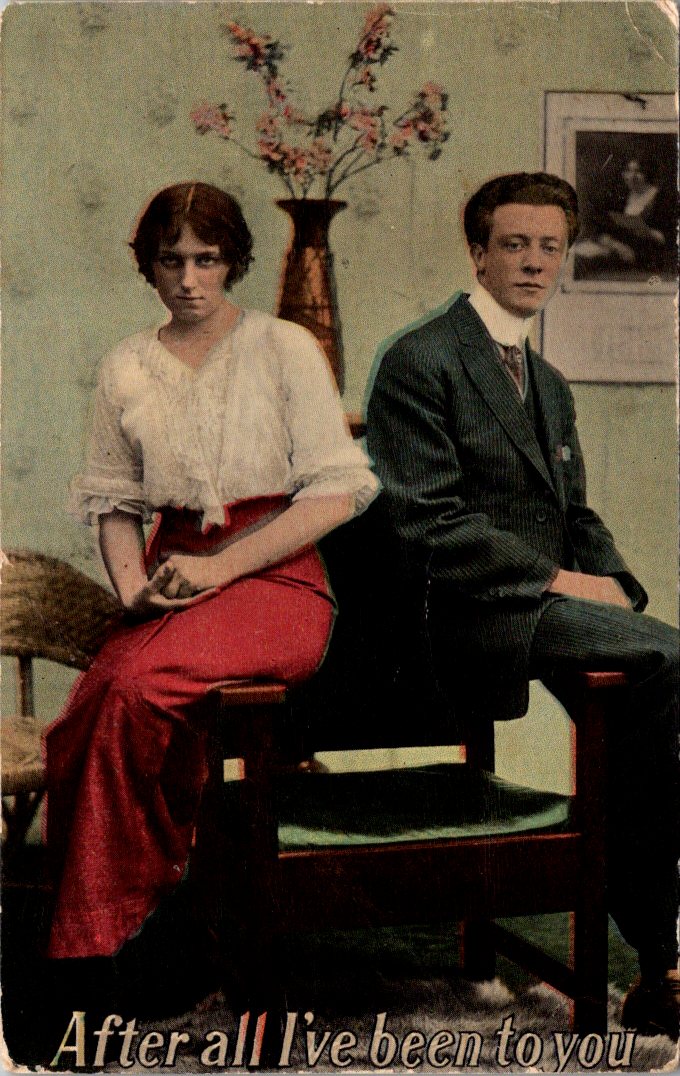
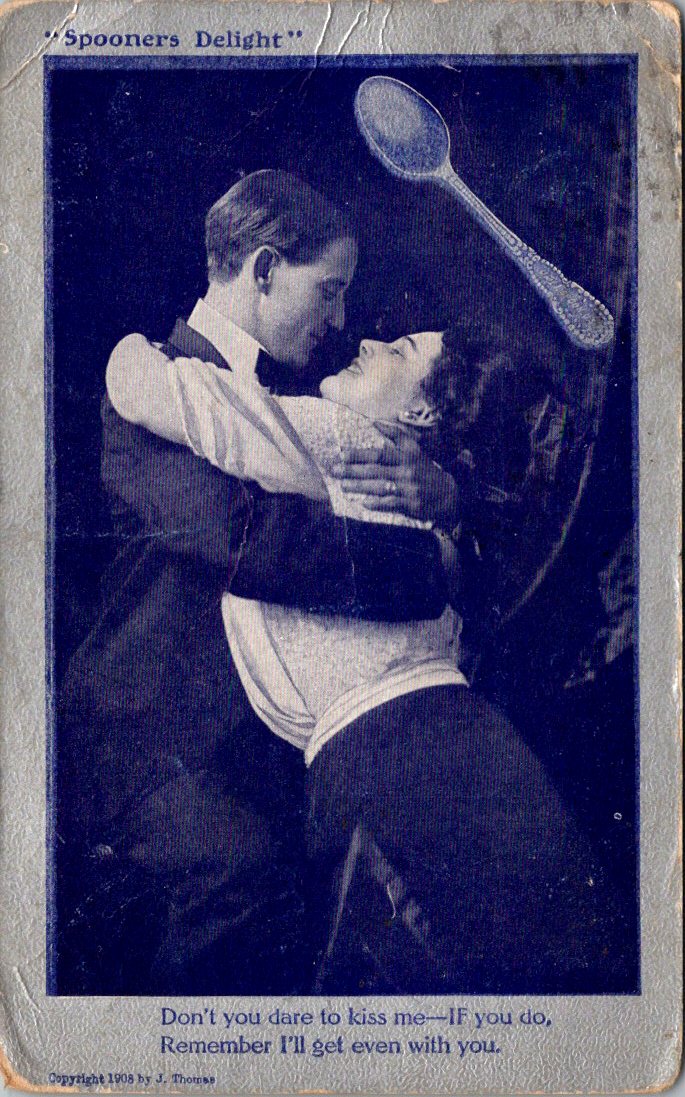
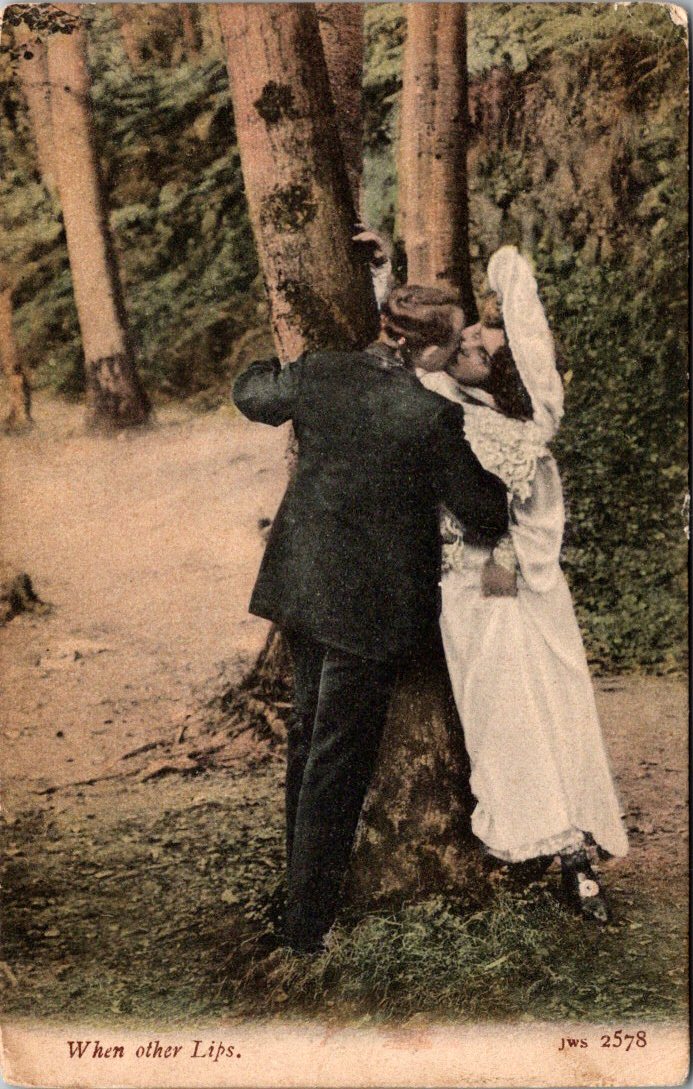
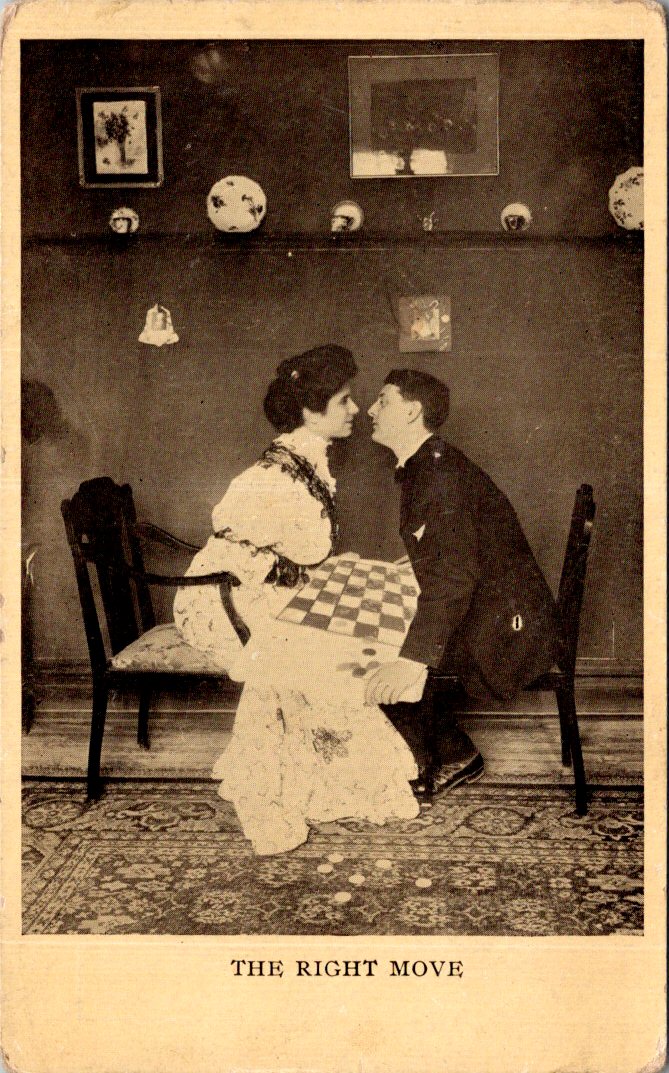
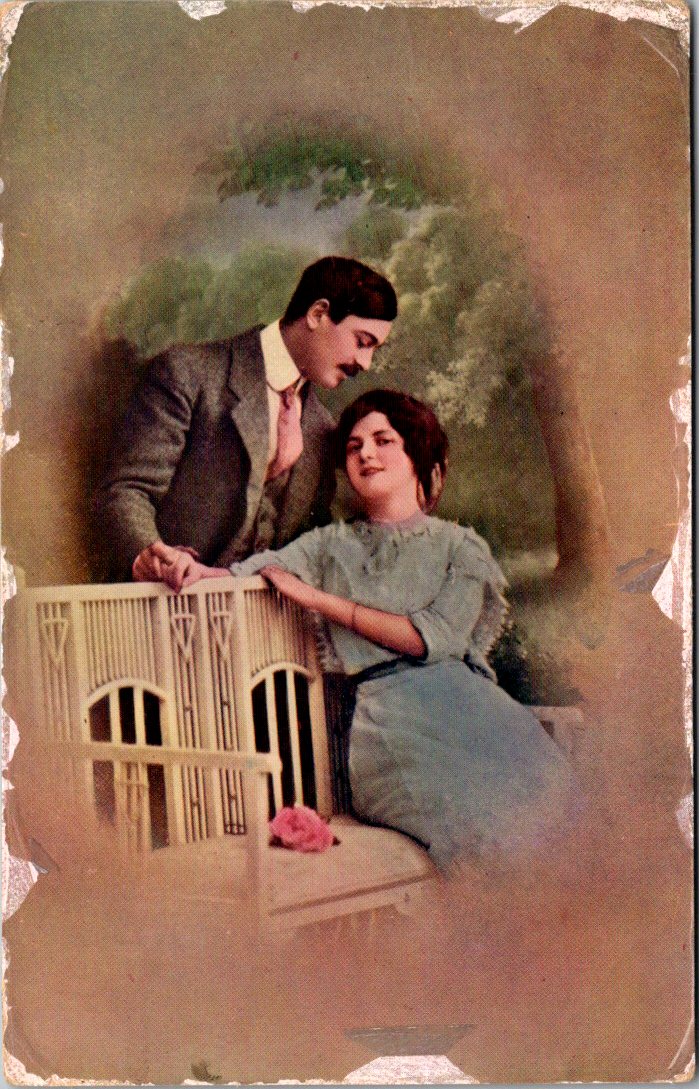
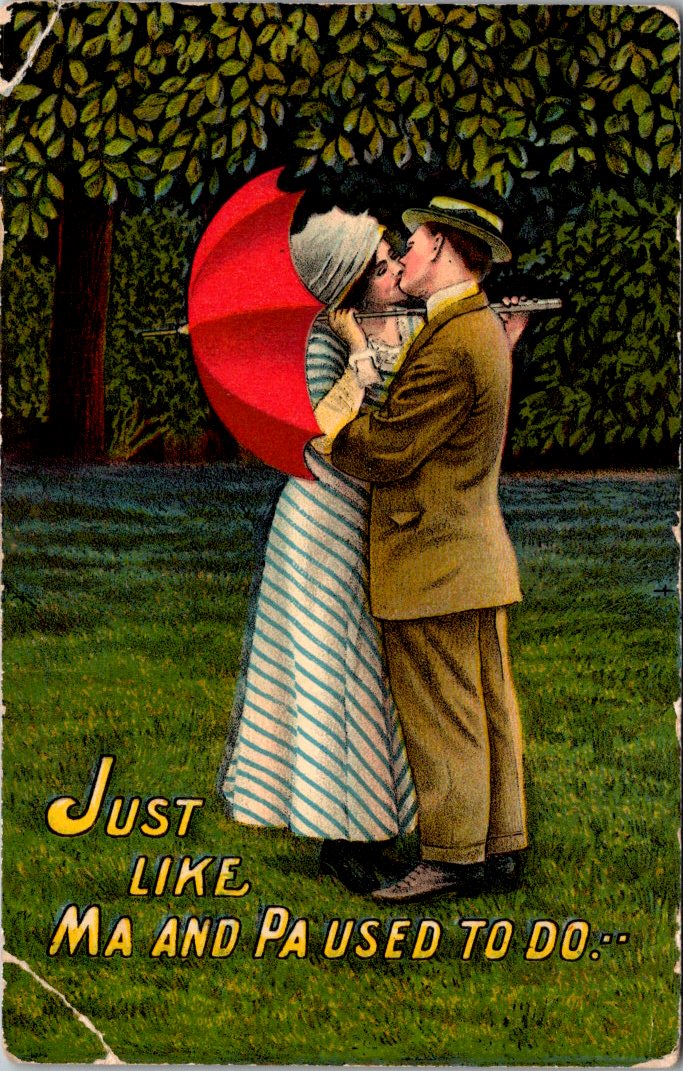
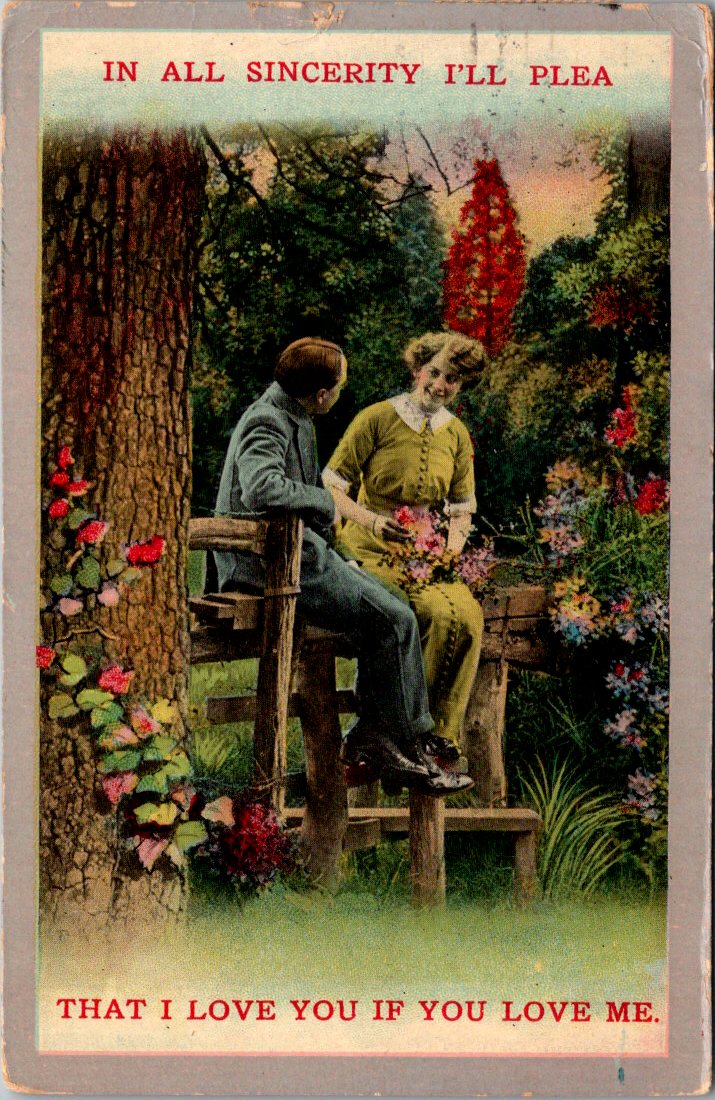
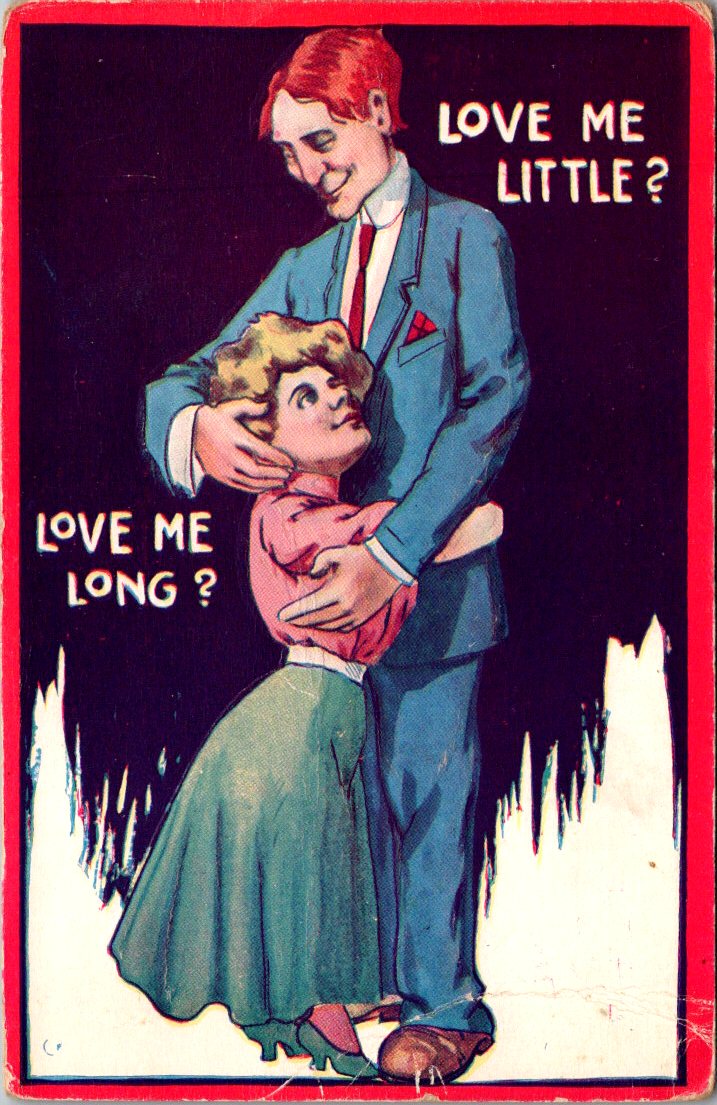
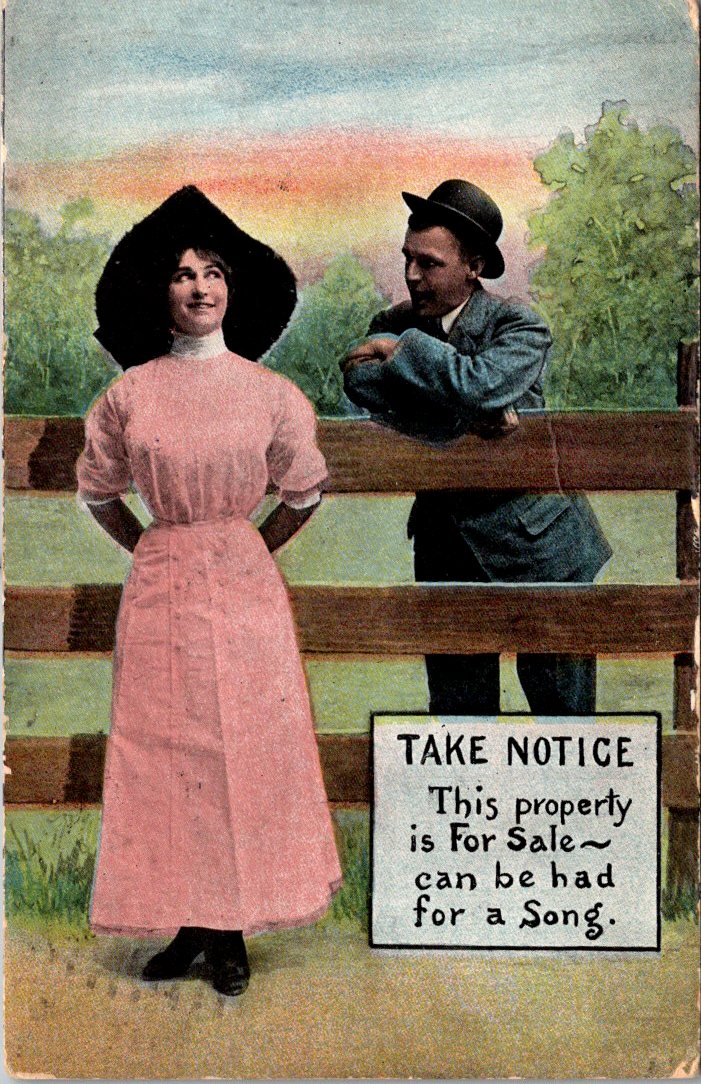
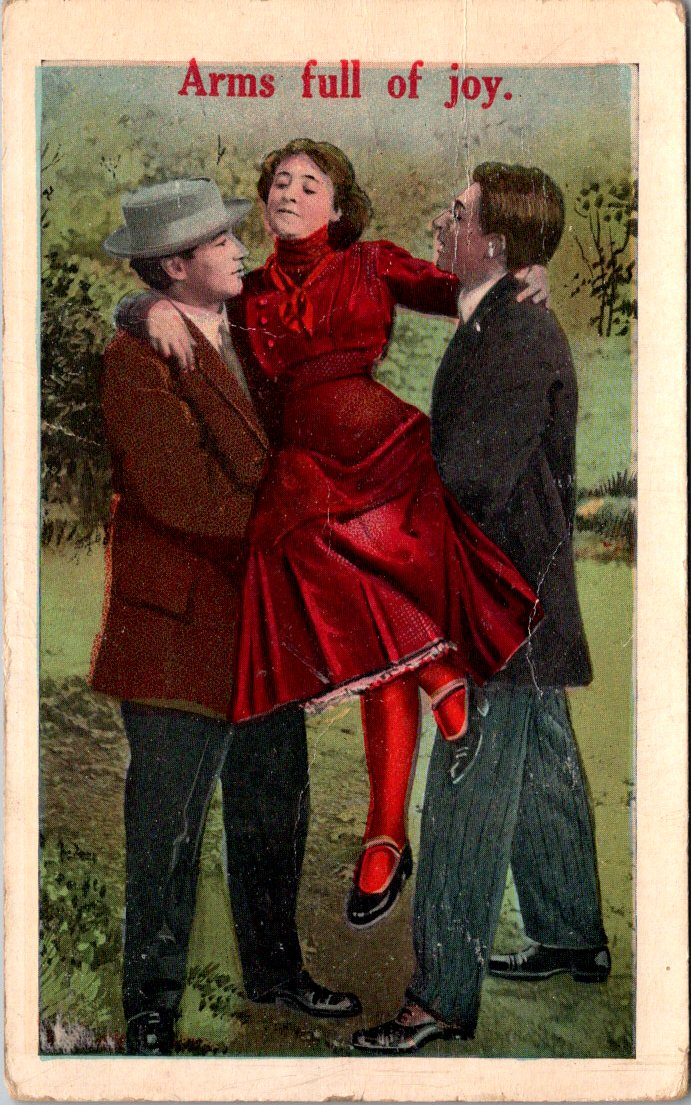
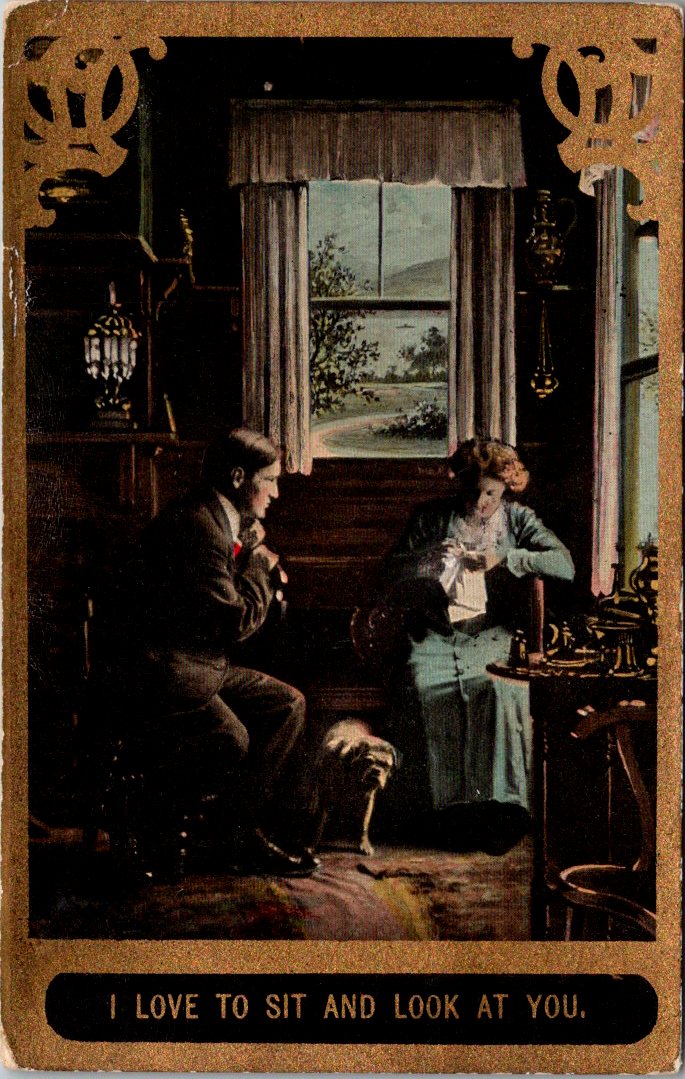
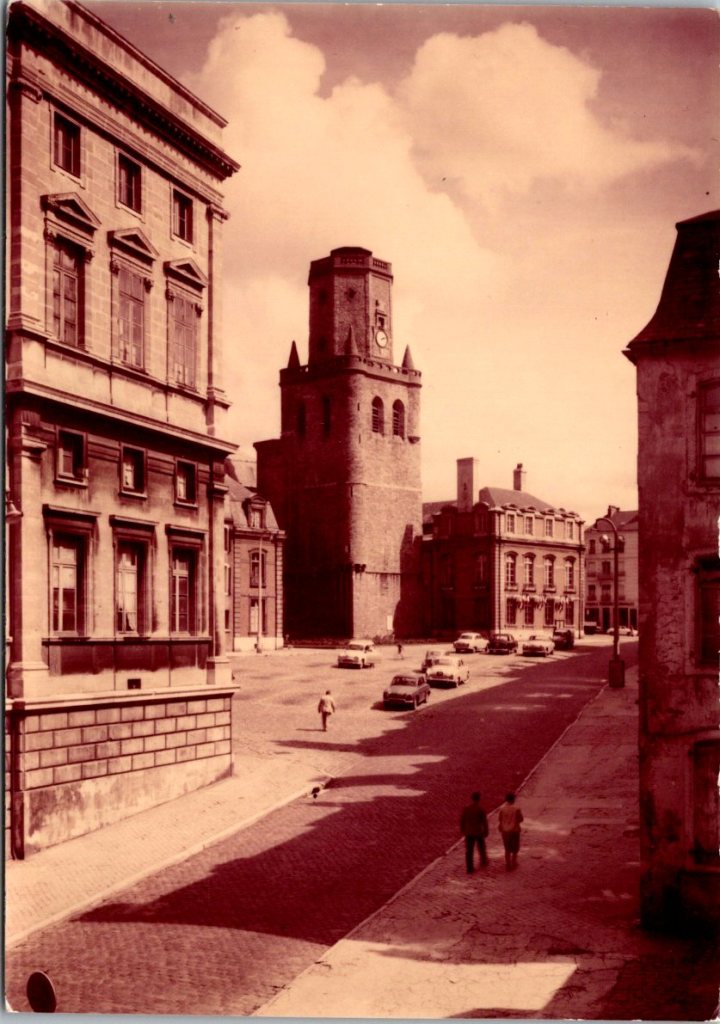
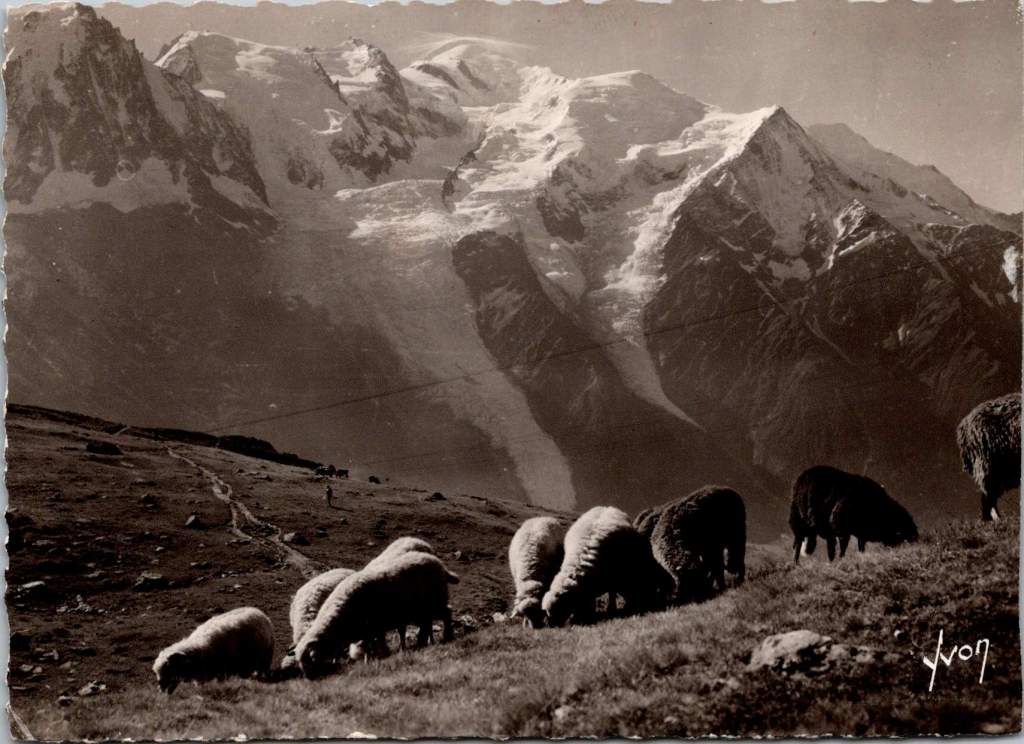
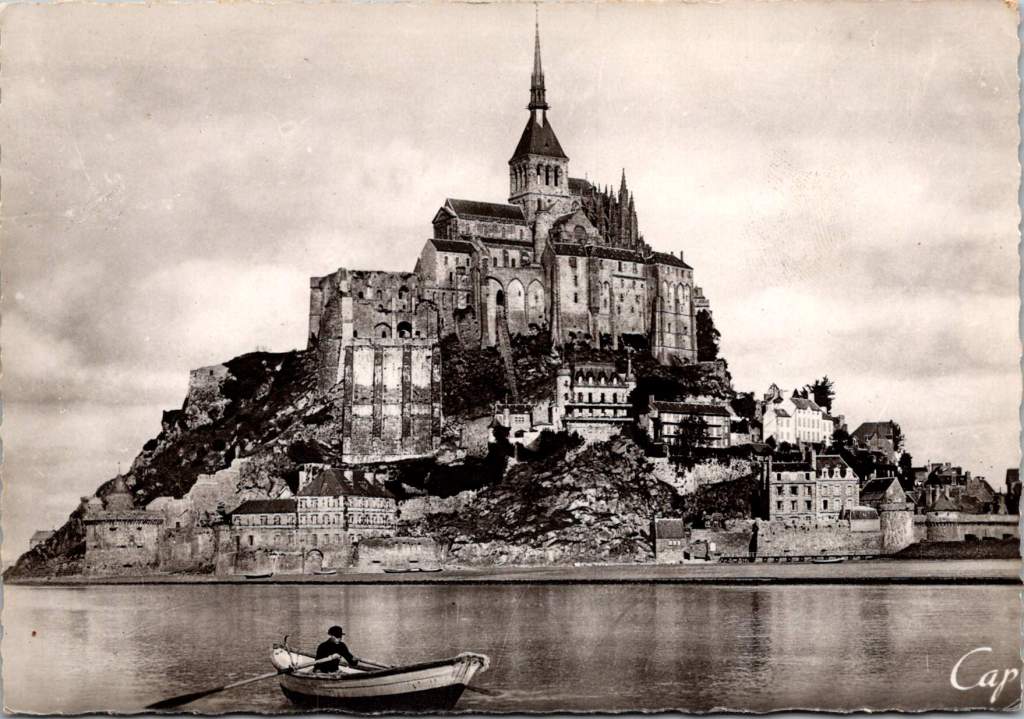
In postcards, we have to acknowledge the neck strain.
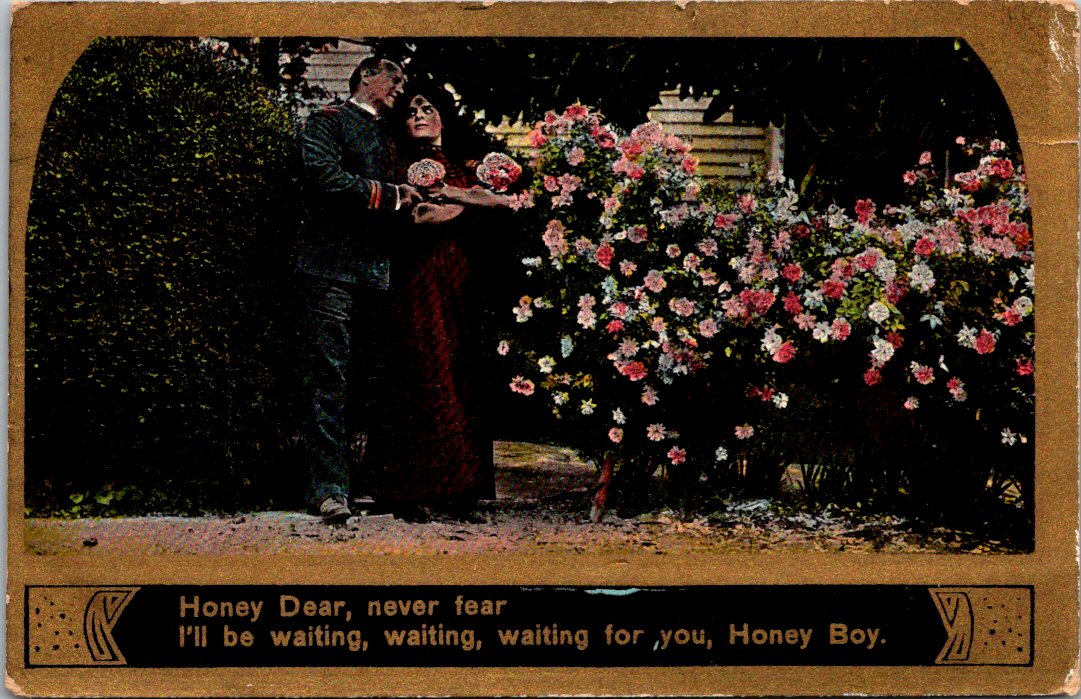
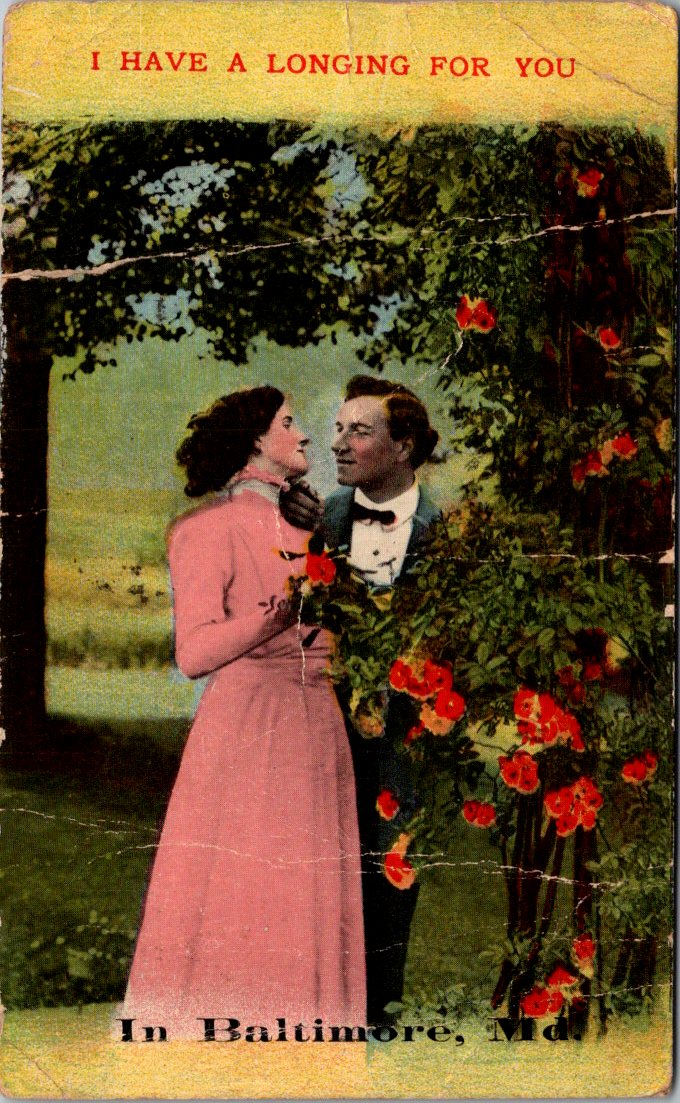
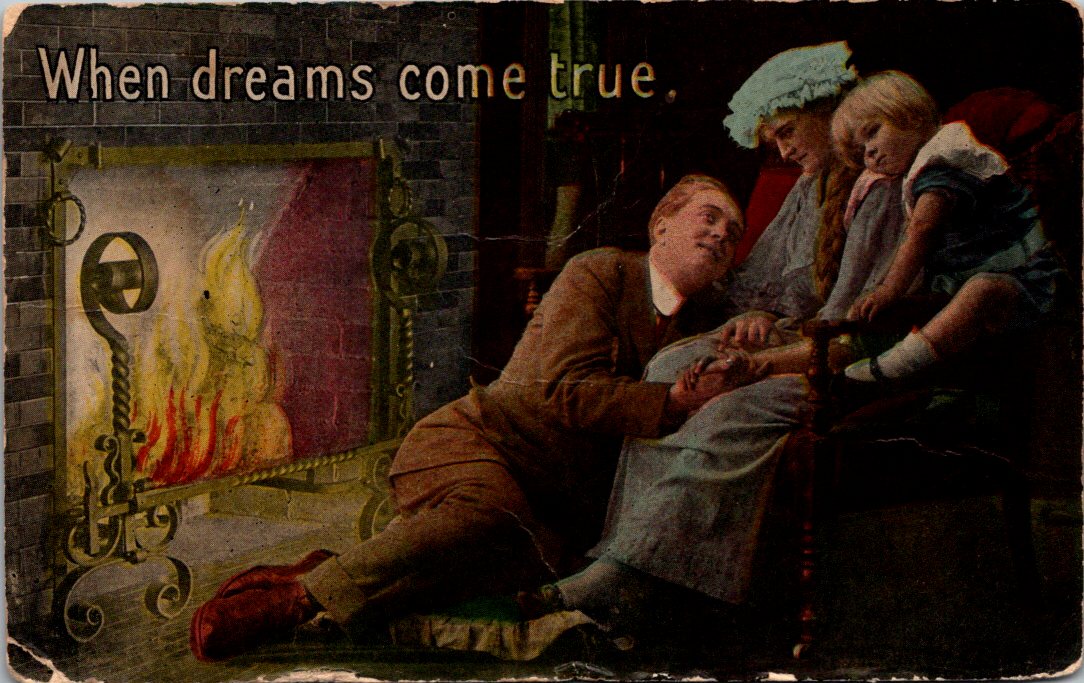
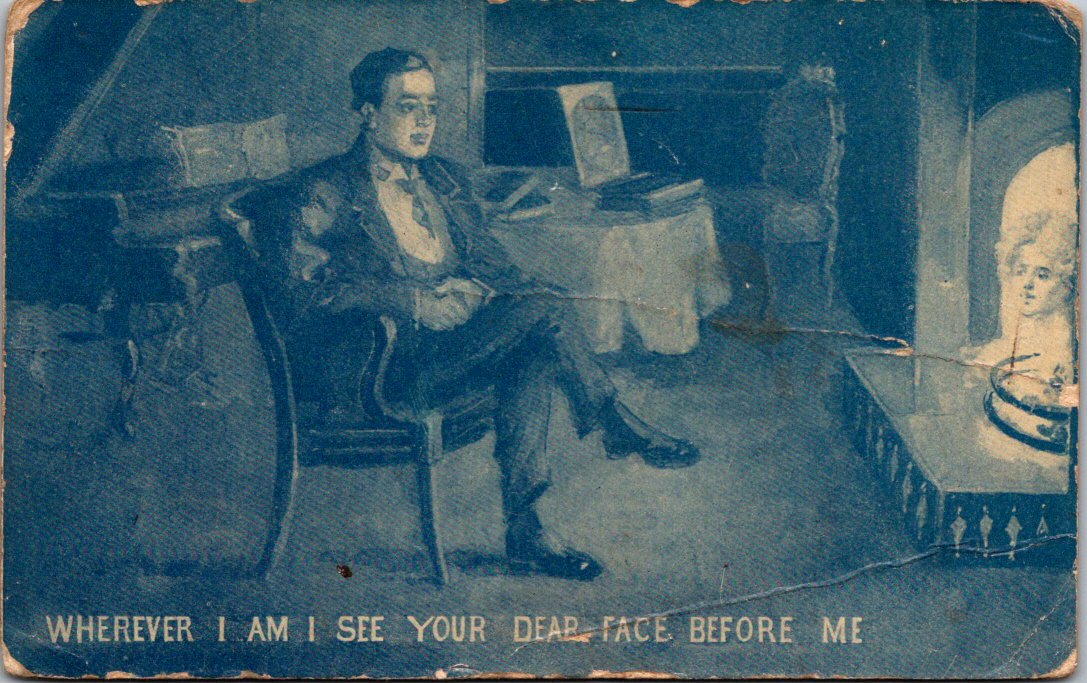
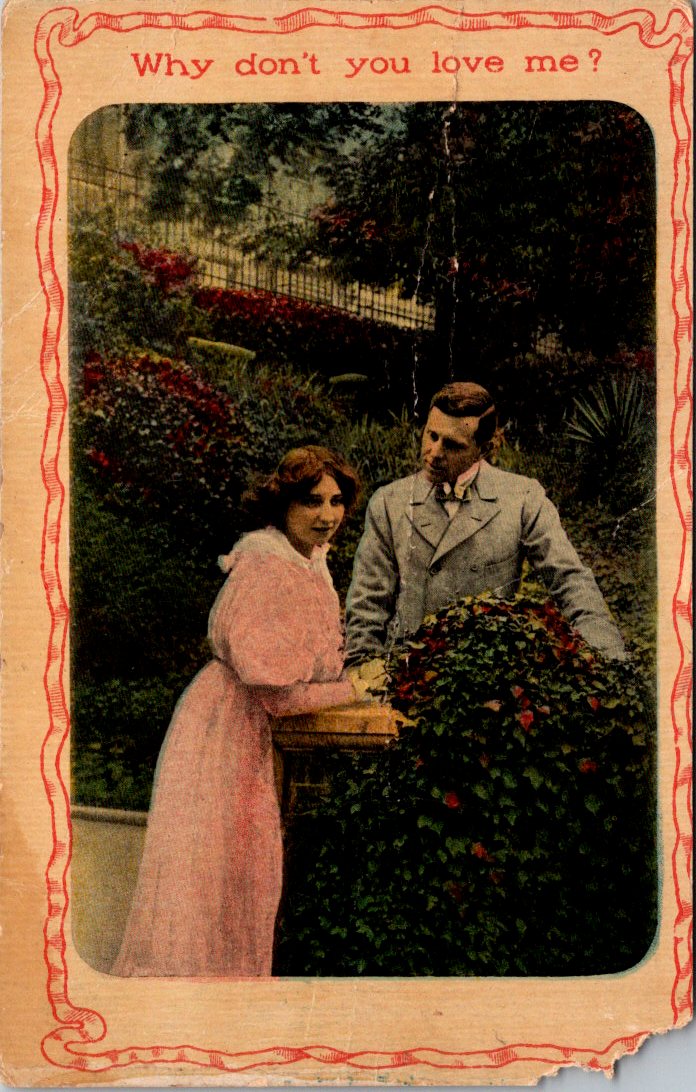
Also, captions that might have meant exactly what they suggest.
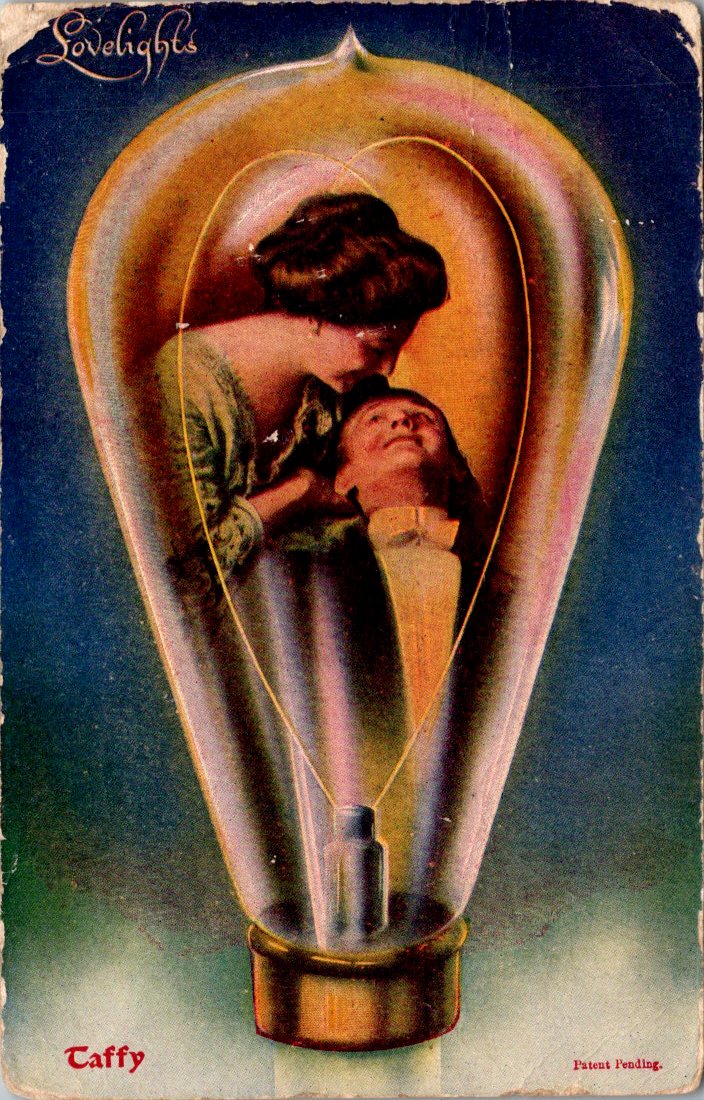
Lastly, those with an anti-Valentine vibe, a bad bargain, or even a threat!
We will return next week to the regular schedule of sweetness and light, heart and flowers, charm and chocolate, passion and promises. How… delightful!
Mai’s brothers check-in and George follows up. Nina and Tom find Delia’s postcard stash, and their way home. Nora knows her way around town now. Peace is in practice, not perfect circumstances, says Mrs. Hanabusa.
Careful block letters adorned the outside of a #10 envelope. George recognized Jack’s handwriting. Precise, old-fashioned, like an architect from a bygone era. Inside, George found a letter to addressed to him, and a long list of books Jack had read. Not just titles, but notes.
The Hidden Life of Trees – I like how roots connect underground.
The Mapmakers – Bird migrations mapped with ocean currents.
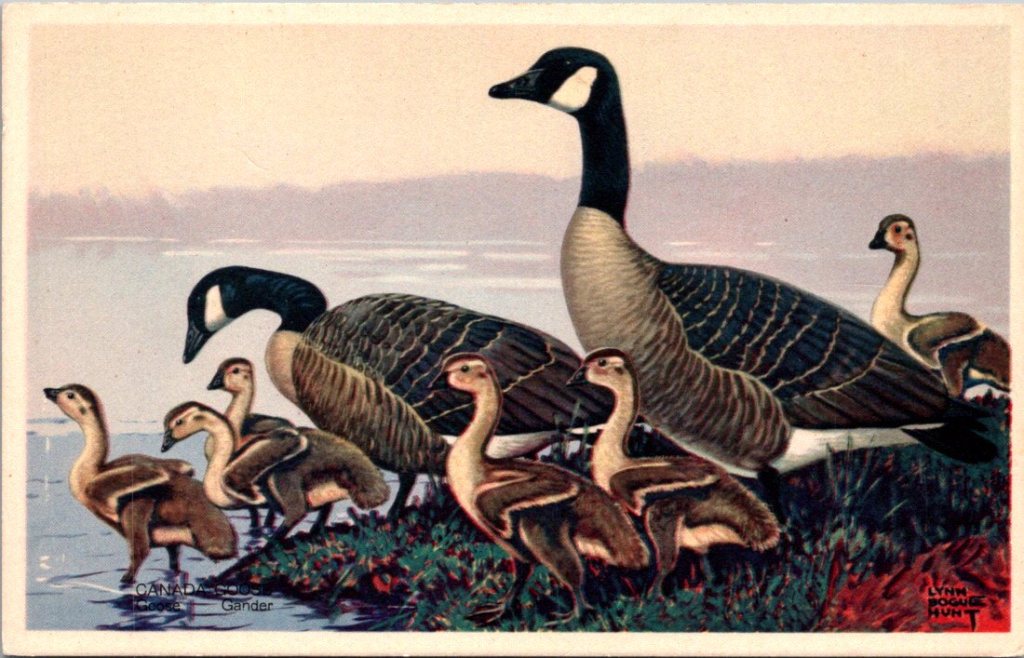
A Sand County Almanac – The geese made me cry.
George sat at his kitchen table, poured over the letter twice, then kept going back to it in mild wonder. The boy was thirteen. Reading natural philosophy at a level twice his age and writing elegant, matter-of-fact prose.
George now had a collection of postcards just for his grandson. He kept an eye out for anything inspired by books, libraries, explorers, architecture, and history. But today, he had a different one in mind.
Jack – Your list made my week! You remind me why books matter. Keep reading, all of life is in there. – Grandpa
George bundled up and trudged to the mailbox in the extremely cold and icy January morning. Stood there a moment, breath visible in the air, so proud of a thirteen-year-old boy who cried over geese.
The phone rang Saturday afternoon. It was Mai.
“Dad? You busy?”
“Never too busy. What’s up?”
“So—weird thing. I heard from both Derek and Marcus this week, within a day of each other.”
George set down his coffee. Mai’s brothers were also adopted from the chaos in Laos, but by different families. Mai didn’t know or remember much as a child. They’d reconnected as young adults as they discovered their shared histories. George had met Mai’s brothers only three times, at each of their weddings. Derek, the oldest, spent his early years in an orphanage before his adoption. He now runs a tech business in Palo Alto. Marcus, the youngest, grew up in a musical family and plays professional brass in traveling shows.
“That’s wonderful. Everything okay?”
“Yeah, they’re fine. Both texted out of the blue. Derek asked about the kids, Marcus asked about you. I think they’re feeling their age,” Mai chuckled.
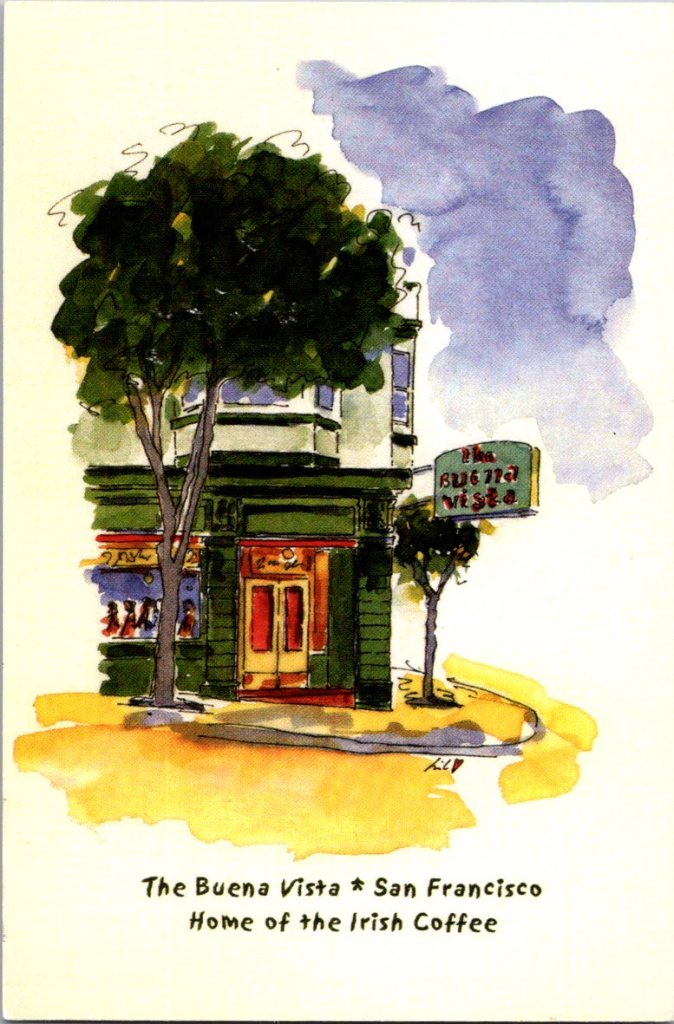
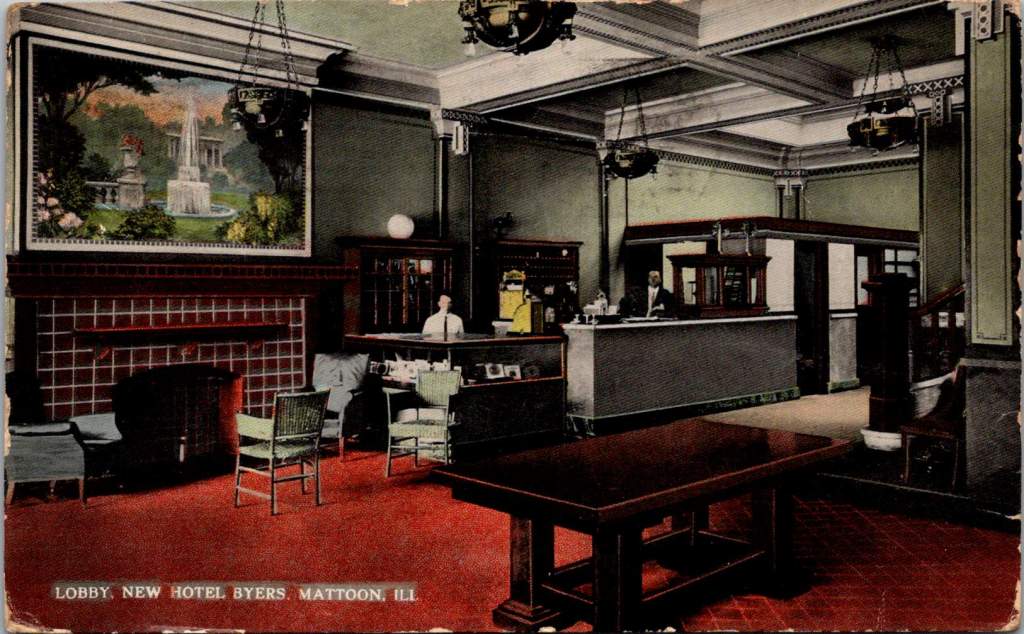
After they hung up, George sat at his table looking at his postcard stacks. He found a San Francisco classic for Derek, and an old club card from Illinois for Marcus. Relics from a jazzier time. Same short notes to both of them.
Mai says you’re doing well. Glad to hear it! – George
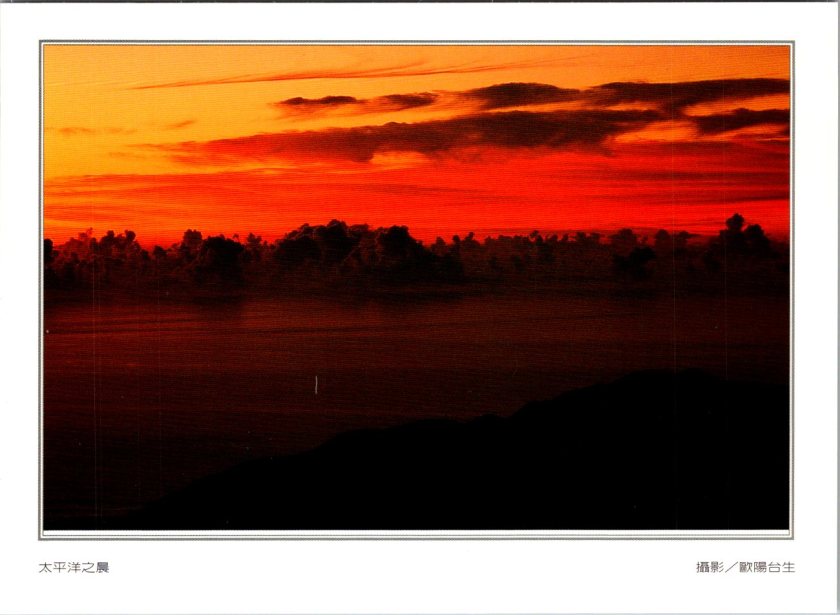
Nina loaded into her car early Sunday morning. Coffee in a thermos, bag full of stuff, and Mrs. Hanabusa’s advice in her head. Leave room. Her mind drifted for most of the drive, watching the sunrise over the desert and mountains to the East. She took the old road through Florence for just that reason.
Nina climbed the stairs in the worn, beige apartment complex, and knocked.
Tom opened the door looking nervous. “Hi. Come in.”
Nina noticed immediately, he was making an effort. Coffee brewing, store-bought pastries on a plate, magazines and mail in piles recently cleared from the couch. Seemed like he intended to inhabit the place, not just occupy space.
The talk was halted at first, then easier. Nina found it so strange that she grew up with the man and knew him not at all.
“I brought something,” Nina said. She pulled out all the postcards he’d sent over the years, a large batch that bulged at the seams of a padded envelope. Airport terminals, layover cities, all those airplanes. The last year had revealed so much, including the way her father had actually stayed connected in a quiet (and still insufficient) way.
“I kept them.”
“I didn’t know if you would. You weren’t always into them like we were.”
“I wasn’t. I didn’t even remember that I saved them. Found this stash looking through a bunch of old boxes, now that I know what to look for. Dad, I never made the connection before now.”
Tom smiled sheepishly, stood, went to his bedroom, came back with a shoebox full of postcards from Delia, dozens of them, saved over their entire marriage. Travel postcards from trips they’d taken together. Funny ones he’d sent her from far away places, anniversary cards.
“I couldn’t throw them away,” he said. “But I couldn’t look at them either.”
Nina picked up one after the other to read the backs. Her mother’s handwriting, cheerful, full of small news from home.
“She loved you.”
“I loved her, too, and I love you.”
They sat with the postcards spread out between them, talking about travel and their family trips together. Tom unearthed the ones Nina herself sent home from the summer she spent in France. Both were careful to keep his collection from Delia separate from the ones Nina brought. They were both still sorting through the imperfect evidence of what had been.
“Next time,” Nina promised as she left. They hugged briefly, and she hopped in the car for the drive home on the freeway with the sunset to her right.
Monday, Nina found Mrs. Hanabusa in her usual spot, the late afternoon light turning everything gold.
“How was your visit?” Mrs. Hanabusa asked without looking up.
“Good. Hard. Both.”
“That’s how it goes.”
Nina found herself marveling, again. Mrs. H’s daily practices, the flower arranging, carefully selecting which sentiments to include and which to set aside. She seemed to belong more to the glow than the room, now.
“How did you learn to be at peace in the world?”
Mrs. Hanabusa smiled slightly. “Well, I needed it and then I experienced it once or twice. It felt good, and now I have practiced enough. Every day. Some days better than others.”
Peace wasn’t a state achieved once and held static forever. It was active, chosen, renewed daily through small deliberate gestures.
“You’re practicing, too, but you don’t call it that yet. It’s nicer when you know.”
Nina thought about the drive to Tempe, the decision to keep the postcards, the inclination to let her father try, and the fear he’ll fly away again. It was not easy, definitely practice. Also, yes… nice.
Nora’s cards came less frequently through the spring. Nina recognized the sacred cycle of becoming and belonging. Nora had less to say about longing, more about the daily goings-on. She was living in Taiwan.
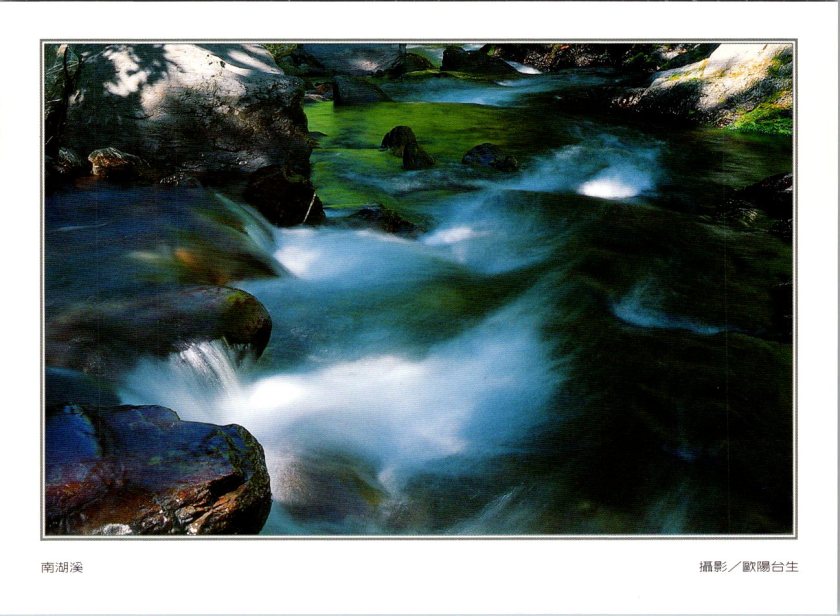
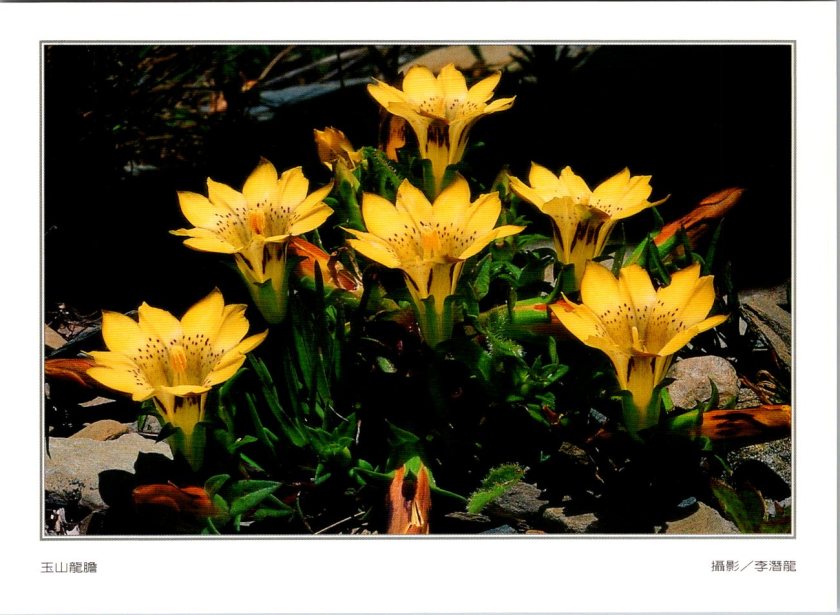
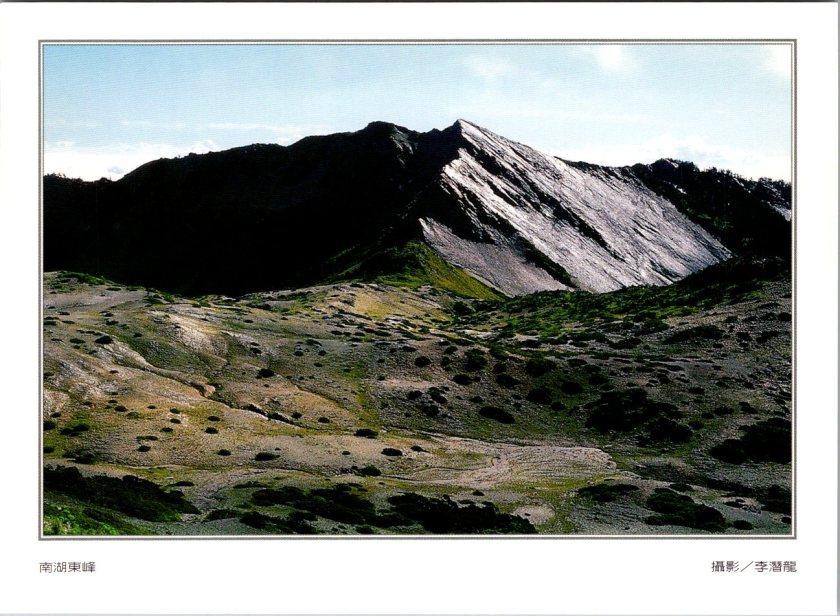
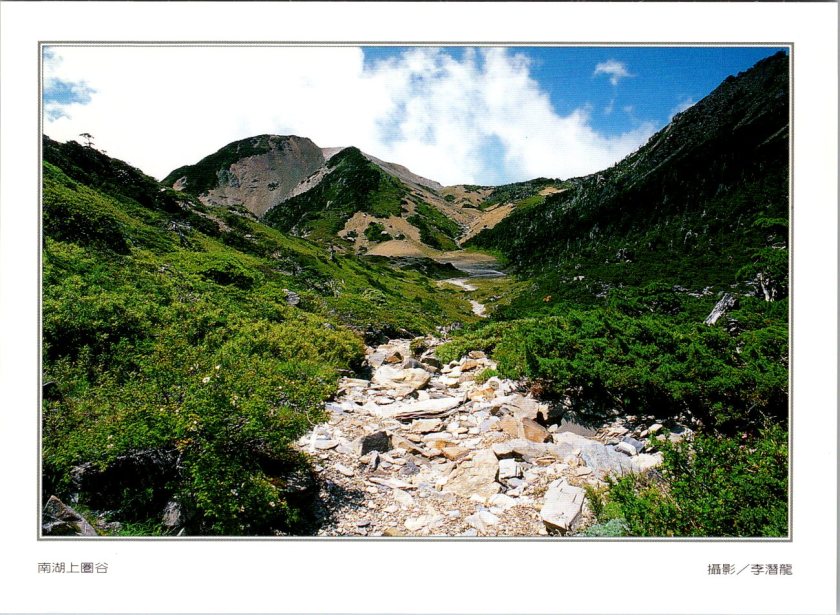
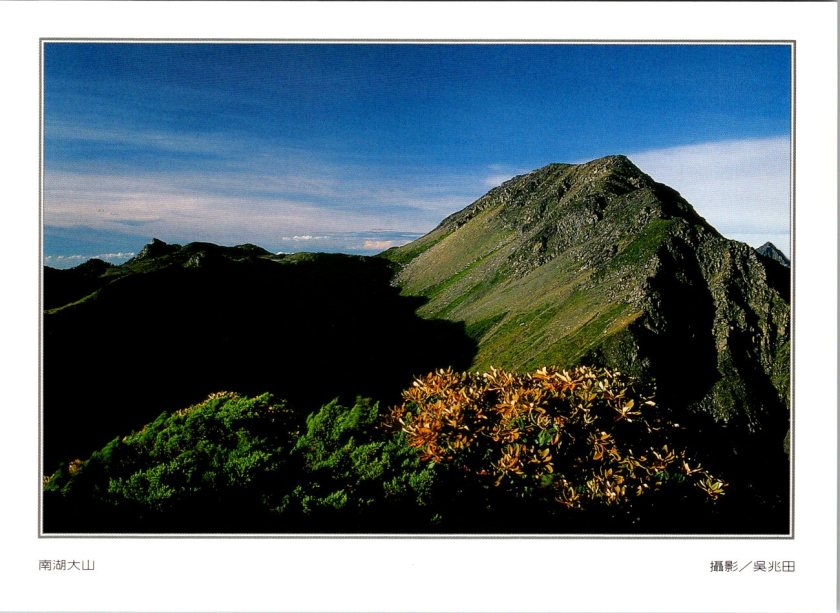
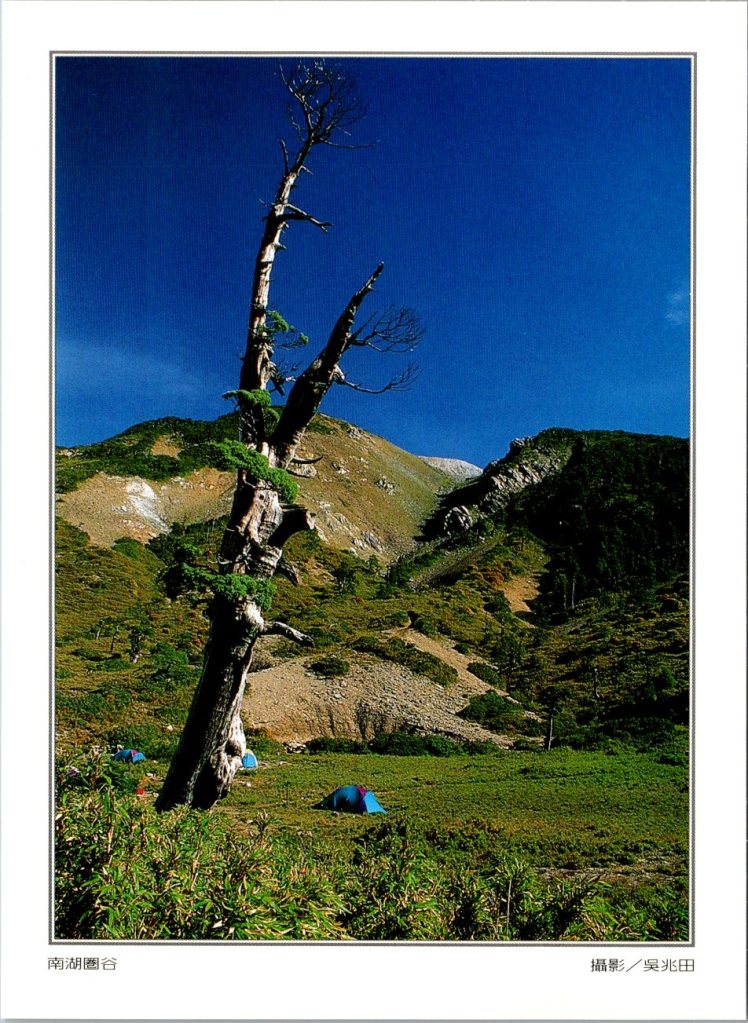
Hiked Taroko Gorge with work friends. Mountains are unreal—marble cliffs, jade rivers. Think of you, often. –N
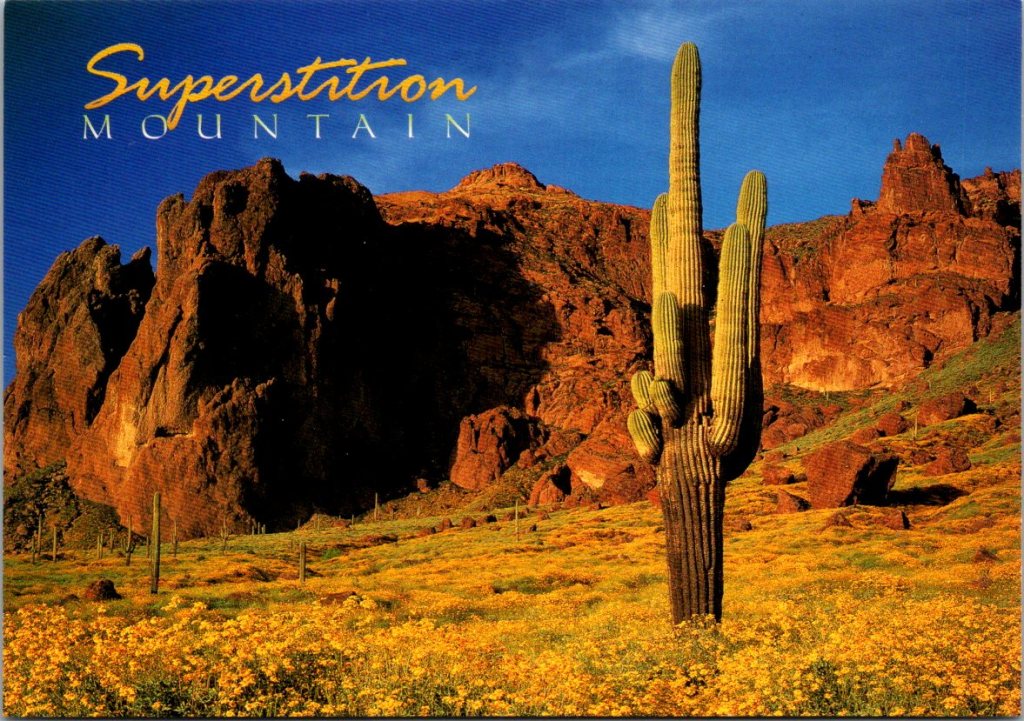
Nina pulled out a postcards of Saguaro at sunset awash with a super bloom of springtime flowers. She wrote her response, but didn’t rush it. Set it on her desk, next to the others ready to go out. There was time. Their lives would keep coming and going in a different rhythm now, and that was enough.
Though our holiday story series stops here, we hope you stay in touch! Subscribe to get a message about a postcard every Wednesday. Also, love is in the air! Next month rare embroideries.
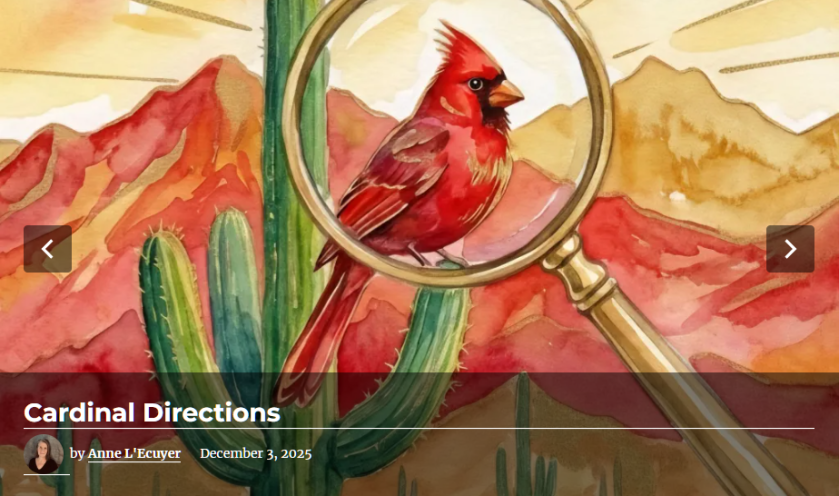
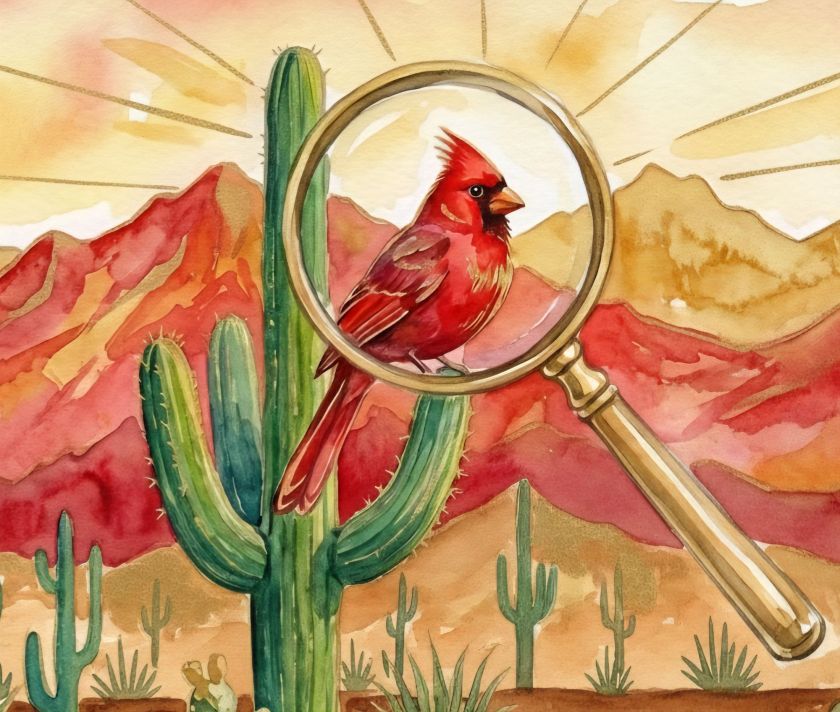
Limited edition Cardinal on a Cactus postcards available at Tempe Yarn & Fabric and online.
Each travel alone, except the air they share. Nora is happy going solo, and Tom is somewhere in between.
The teahouse was tucked next to a dumpling shop on a narrow lane in Da’an District. Nora walked past it three times before noticing the English sign: Tea by Appointment Only.
Inside, a woman near seventy arranged porcelain cups on a low table. She glanced up, assessed Nora with a single look, and gestured to the cushion.
“First time?”
“First time for tea ceremony,” Nora said. “Not first time feeling lost.”
The woman smiled. Poured water over the leaves. The scent rose—something green and grassy, nothing like the black tea Nora’s grandmother used to brew.
“Lost is good,” the woman said. “A reason to pay attention.”
Nora’s colleague Mei-Ling had taken pity after watching Nora eat lunch alone for the third week running. “You need to get out,” Mei-Ling had said. “Explore. Be alone in a place that’s not your apartment.”
So here she was. Alone. Not lonely.
Her phone buzzed. A text from Nina. Nora silenced it without reading.
The tea was bitter, then sweet. She drank slowly.
“You travel alone?” the woman asked.
“Always.”
Nora had spent years cultivating solitude—long drives through Arizona backcountry, dawn hikes in Sabino Canyon, evenings on her balcony with no one talking. She chose the Taipei assignment partly for the chance to be anonymous and untethered.
The woman poured another cup. “Tourists look for what they expect to see. Solo travelers find who is actually there, including themselves.”
Nora thought about the next postcard to Nina. She wanted to tell her about the teahouse, the silence, the strange comfort of being somewhere no one knew her name.
It’s lovely to be solo in a strange land. Watching without explaining. Moving without negotiating. I sometimes forget who I am at home.
She finished her tea, bowed to the woman, stepped back into the crowded street feeling lighter than she had in months.
Tom stood on the deck of a fishing charter near Catalina, watching the captain clean yellowtail in the afternoon sun. He worked the knife along the spine with practiced efficiency, lifting the skin and scattering ribbons of bronze scales across the wet deck.
Tom was at sea three days, paid in full. His time between flights was long enough, he could have gone to Phoenix to check on the empty apartment. Or driven the two hours to Tucson to talk to Nina. Instead, he’d gone straight from the airport to the marina.
The ocean felt safer to Tom. He knew what he was dealing with—wind, current, the pull of the moon. On land, everything felt unmoored and awash in silence. The apartment with no one else there. Nina’s careful, measured heartache. The desperate life he’d abandoned in favor of flight schedules and hotel rooms.
The captain looked up. “You alright, man?”
“Fine.”
“You don’t look fine. You thinking about jumping?”
Tom laughed, the gallows humor helped. “Not far enough down.”
The captain went back to his work. Tom watched the horizon. His daughter was not far away. Working at the hospice. Taking care of people the way she’d taken care of her mother. While he was gone somewhere over the Pacific.
Tom didn’t make it to Jennie’s funeral. Delia was still sick and he had a flight schedule to keep. George hadn’t said much.
When Delia died two months later, George drove from Minnesota. Stayed ten days. Made coffee, answered the phone, helped with plans, and stood beside Tom at the service. Then, George drove back alone. Tom couldn’t make himself useful like that to anybody. Couldn’t even make himself stay.
A raven landed on the railing, tilted its head.
“Where’d you come from?” Tom asked.
The raven looked at Tom, croaked once, deep in its throat.
Suddenly the words came to him. He didn’t have a pen or a postcard handy, but finally he had something to say.
Flying solo is for the birds.
The raven lifted off, circled once, flew toward shore. Tom watched until it disappeared, then looked at his phone. He could get out of LA tonight, and rework his schedule from Phoenix next week. Enough time to get to Tucson and back, and to try.
The envelope arrived among the usual stack. Tom’s cramped handwriting unmistakable on the address. George carried it inside, set it on the kitchen table, made coffee before opening it.
Inside, a single sheet torn from a legal pad, Tom’s words filling margin to margin. George read it twice.
George— Sorry it’s been so long. Don’t know how to say what needs to get out.
Been working more flights than I should. Phoenix to anywhere. Hotel rooms are easier. Nina barely talks to me. Can’t blame her.
You drove all the way to Delia’s funeral. Made everything possible. I should’ve done the same for you and Jennie. Told myself it was work. We both know better. You’ve always been better at this life.
Tom was a restless kid — climbing trees, running off, coming home with scraped knees. George stayed close, watched birds, kept track of his brother.
After Jennie died, Tom just wasn’t around. George wanted to be angry but didn’t have the strength. Grief made him numb for awhile. Now, he was just glad to have his brother back, or at least a longer letter.
Mrs. Hanabusa sat by her window in the common room, as she often did. Hands folded in her lap. Face turned toward the light. Eyes resting gently on the flowering hibiscus outside.
Nina paused in the hallway, watching.
How did she keep such a calm reserve? After the camps, after losing everything, seeing your family degraded. How did she maintain that peace?
She would probably credit her mother, her grandmothers, and their extended friends and family. All gone, except her sister. How does she do it, still?
Mrs. Hanabusa turned her head slightly and smiled.
Nina smiled back, and walked on.
The story above is fiction, but the new Postcard People feature is real life! Meet Christine N. from Switzerland, who posts about her grandmother’s collection.
A magic carpet takes us to a far away photo show, and a beach scene brings back old memories.
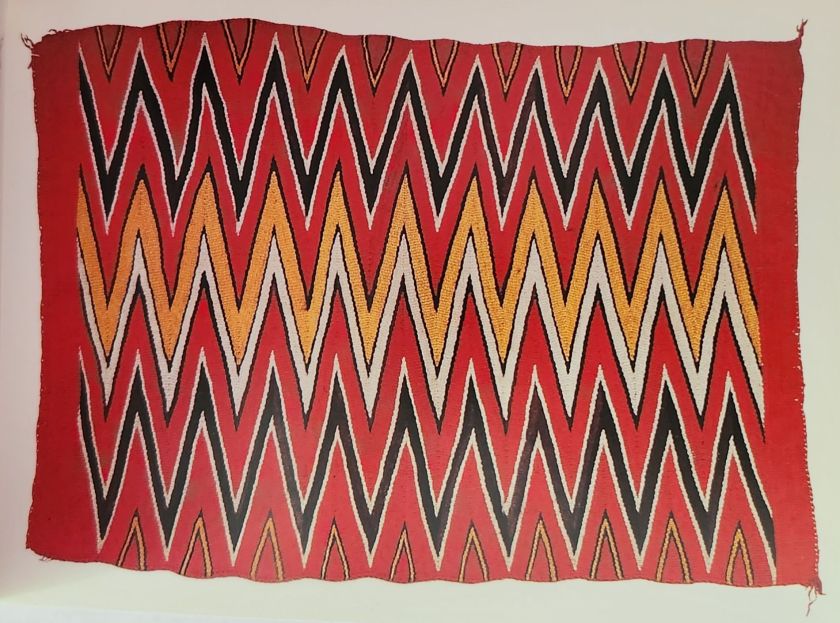
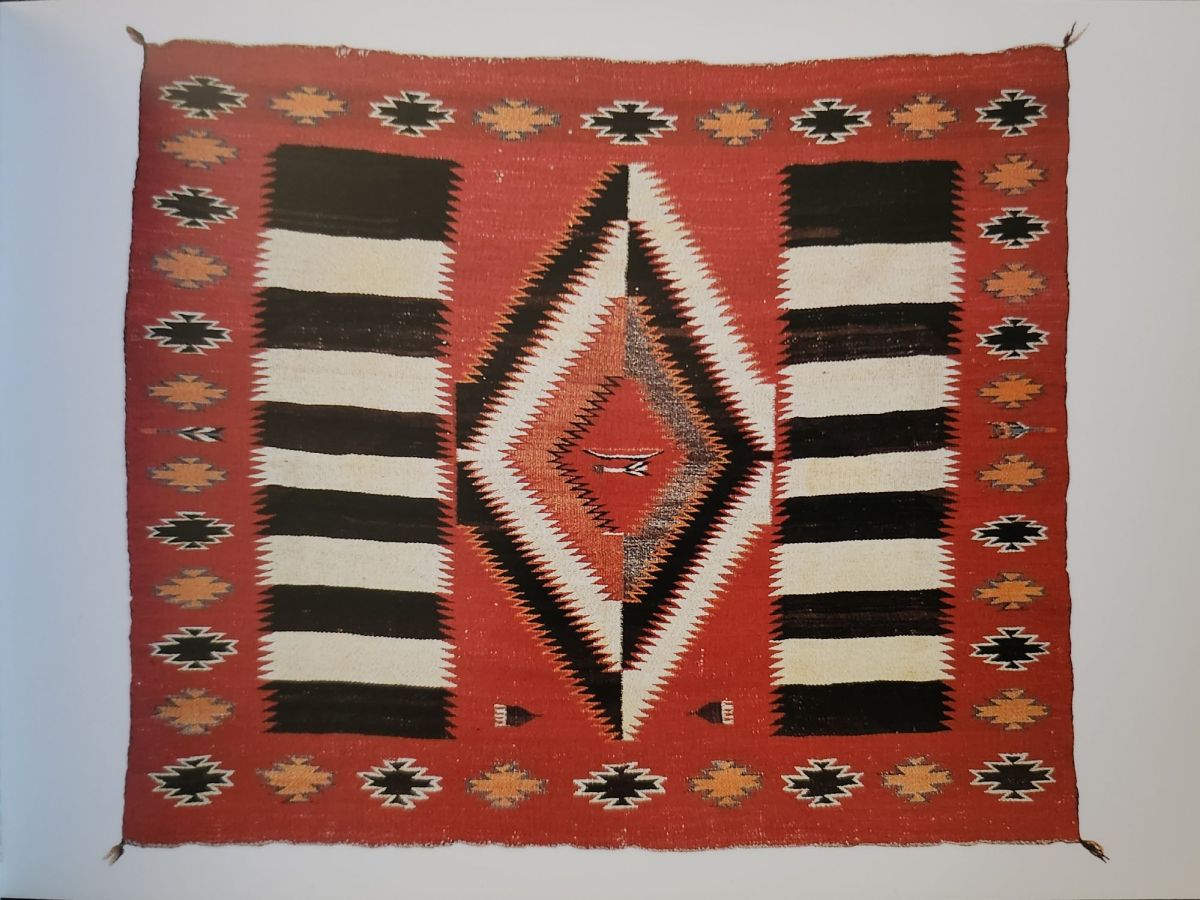
Nina found Mrs. Hanabusa in the common room sorting groceries into cloth bags. The postcard was still in Nina’s hand—a Navajo textile in geometric patterns, black and white against red wool.
“Let me help,” Nina said, taking two bags.
Mrs. Hanabusa glanced at the card. “From your friend? The one who went to Taipei?”
“She just arrived.” Nina turned the card over.
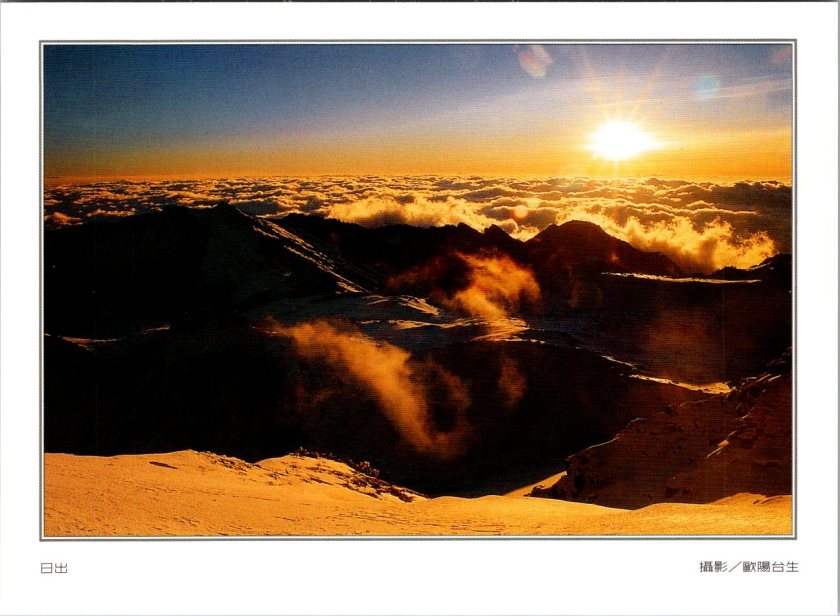
Made it. Everything moves faster here. First night was a photo exhibit on Mt Nunhu. Already miss the slow mornings. —N
Funny, Nina had received Nora’s text with images from the show that night, long before the postcard arrived in her mailbox here in Tucson.
They walked to Mrs. Hanabusa’s room. Nina set the bags on the small counter. Mrs. H studied the postcard, her finger tracing the pattern.
“My grandparents had one like this. Hung in their house on the flower farm.” She paused. “My grandmother found it at a trading post in the twenties. She said the geometry reminded her of Japanese family crests. Clean lines. She hung it in the room where they did arrangements.”
Mrs. H’s voice stayed quiet, remembering. “After the war, when we came back from the camps, the farm was gone. But a neighbor had saved some things. The rug was one of them. Grandmother cried when she saw it. I was small, maybe seven. I didn’t understand then what it meant to get something back.”
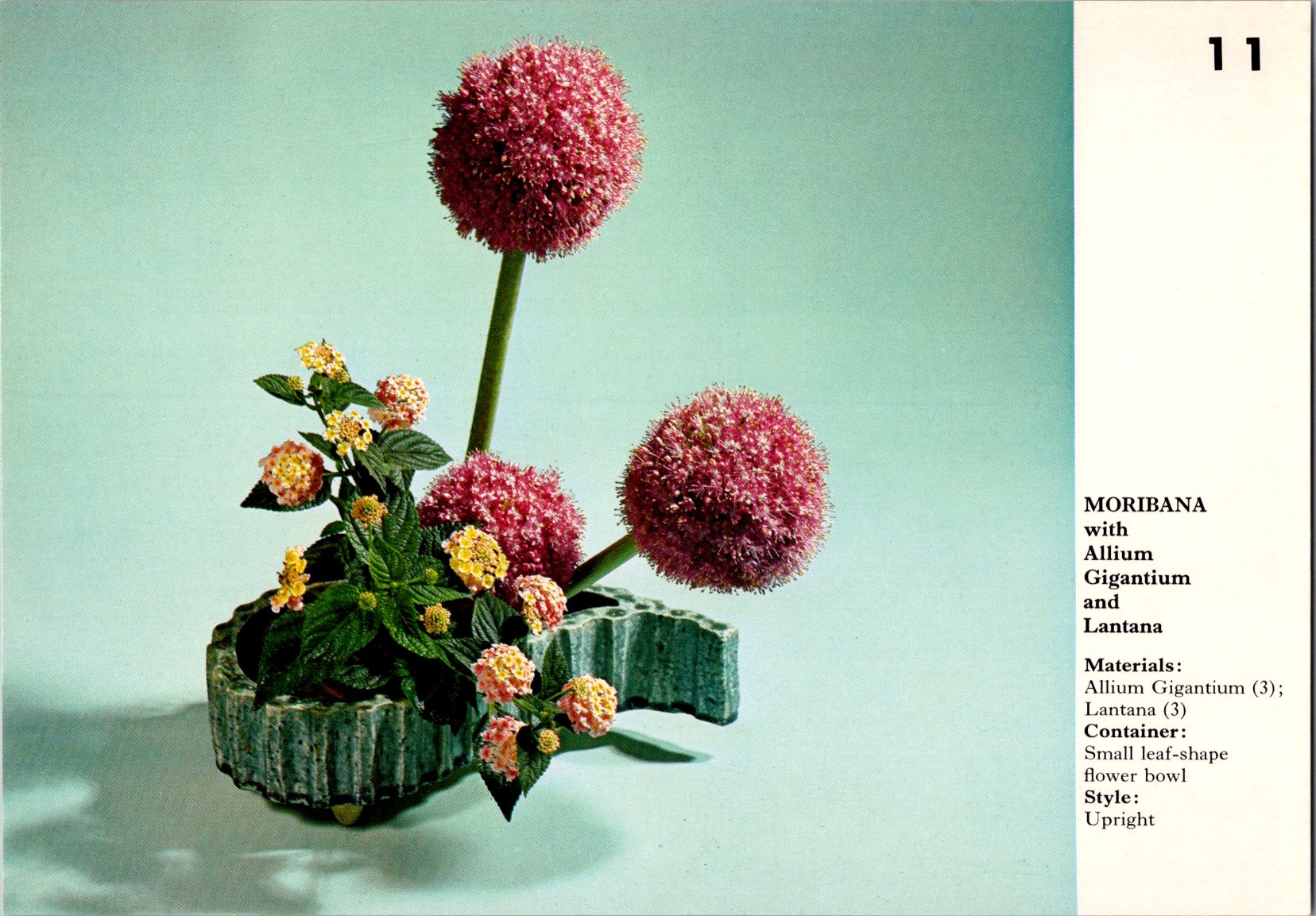
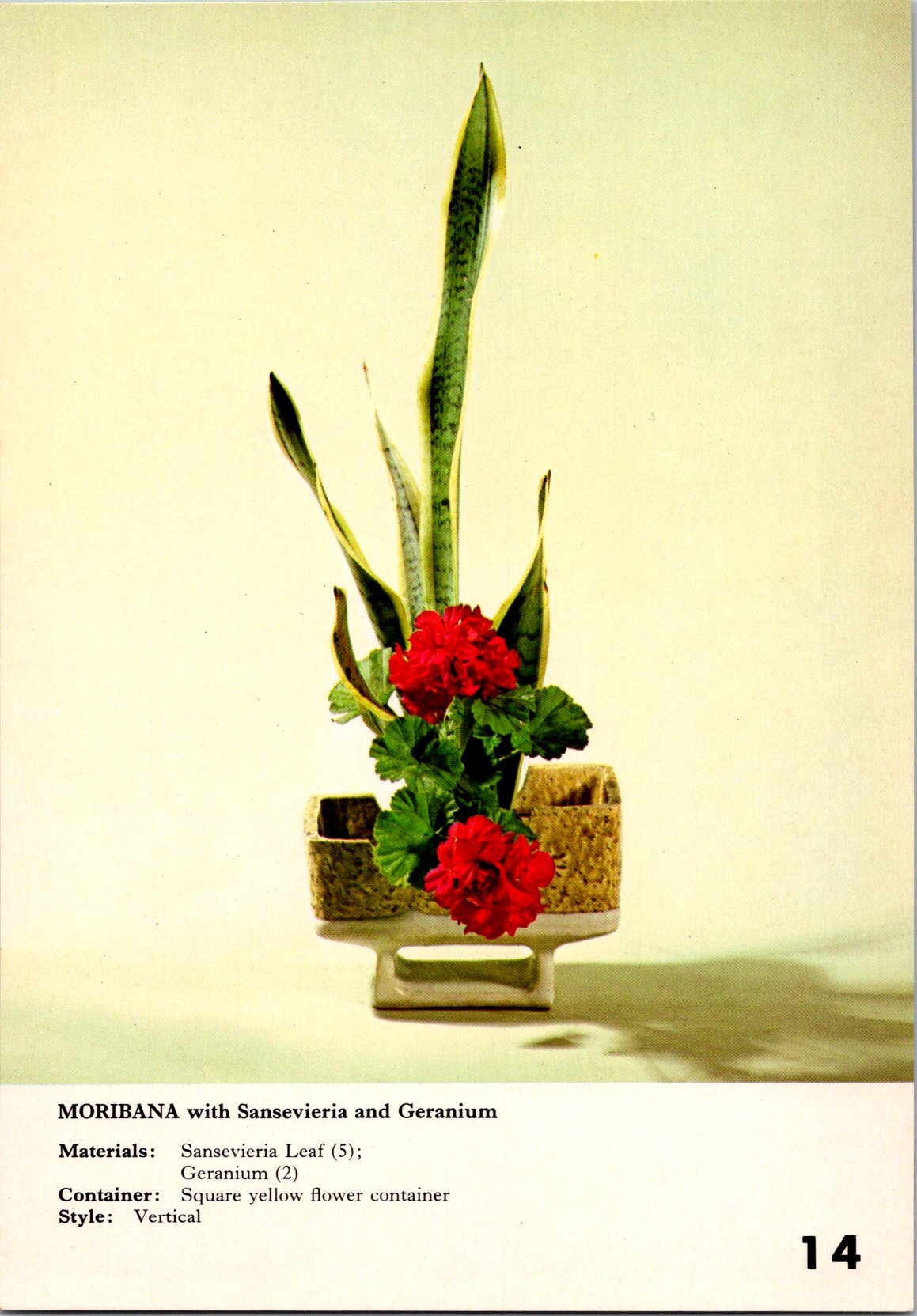
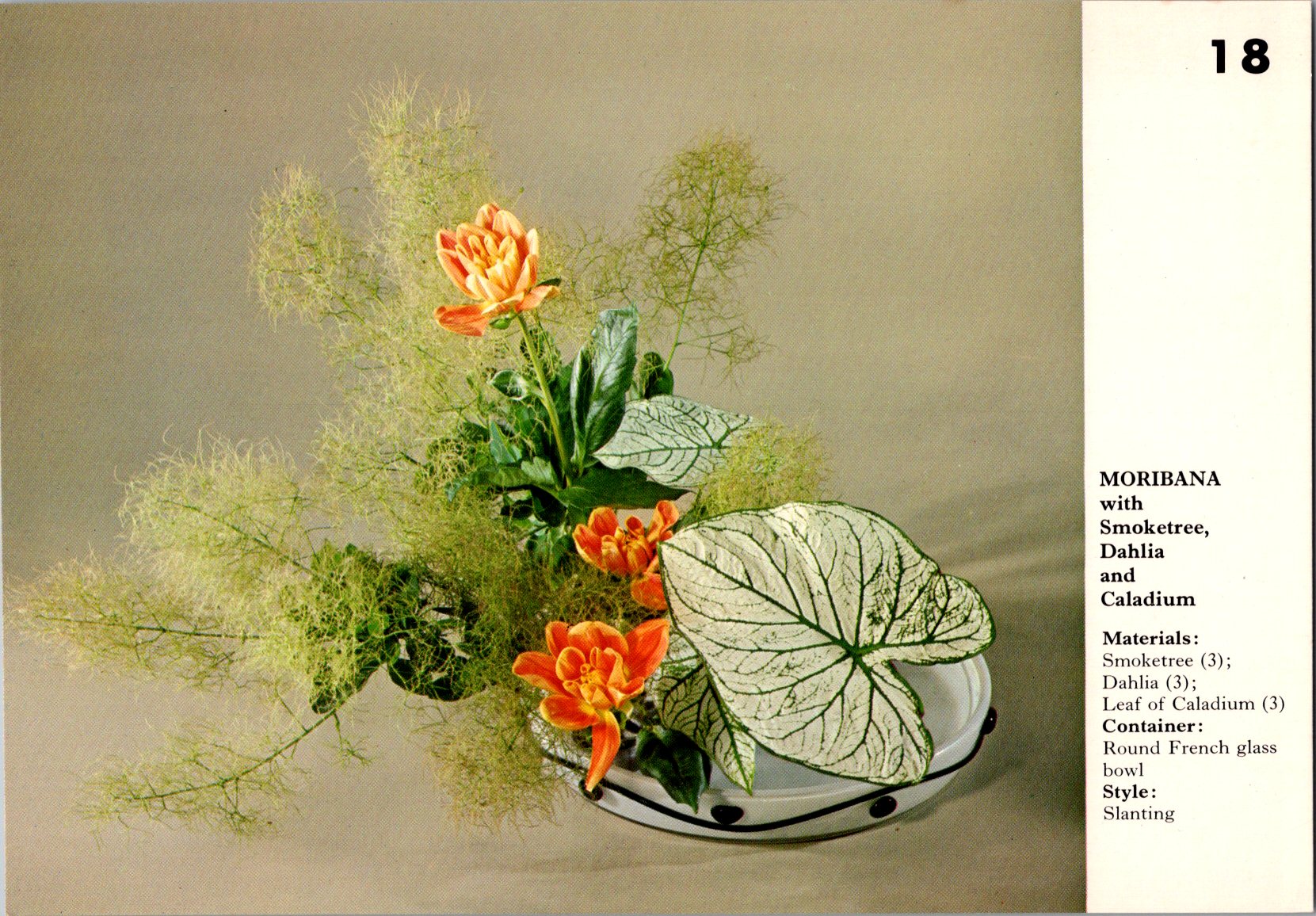
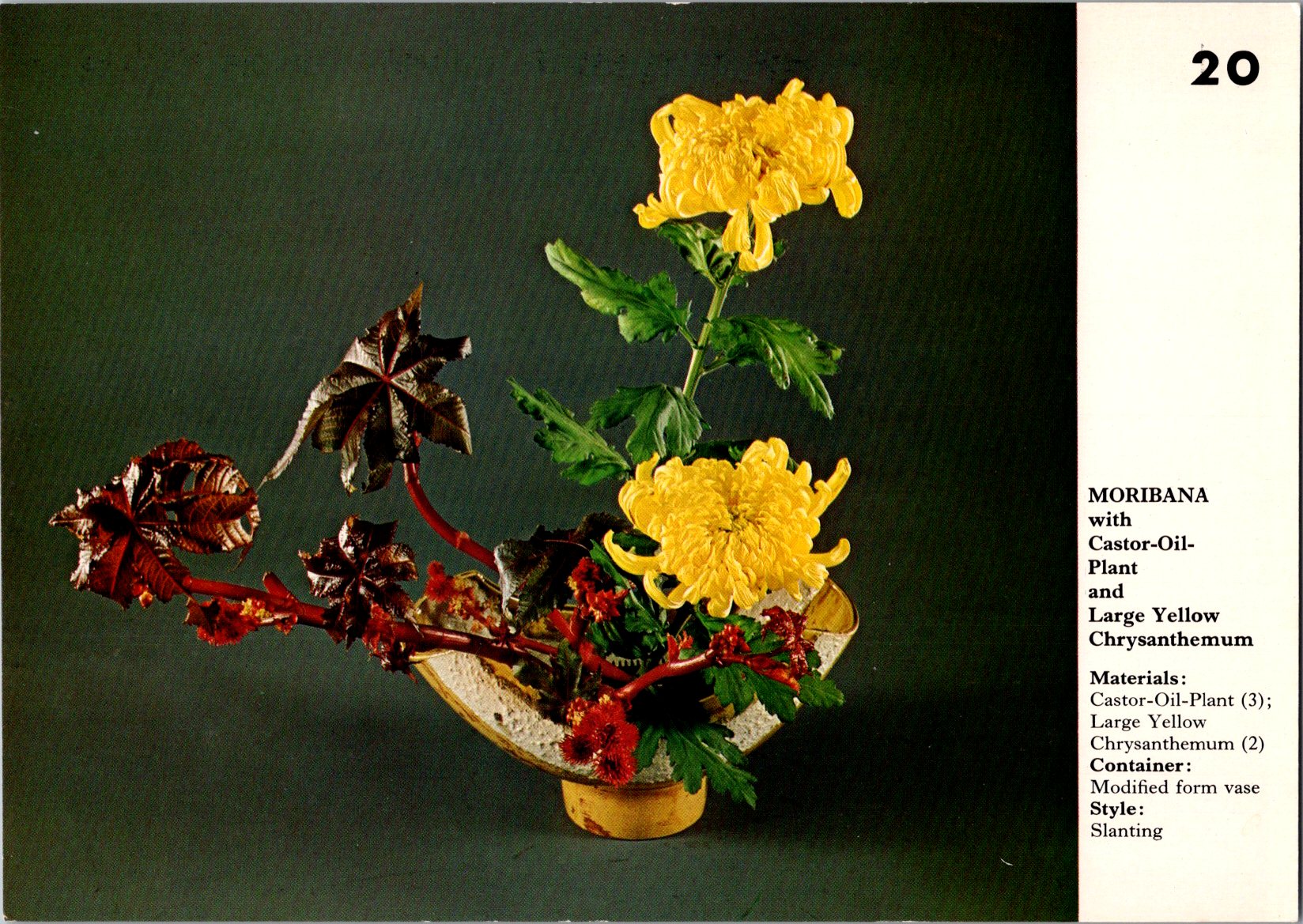
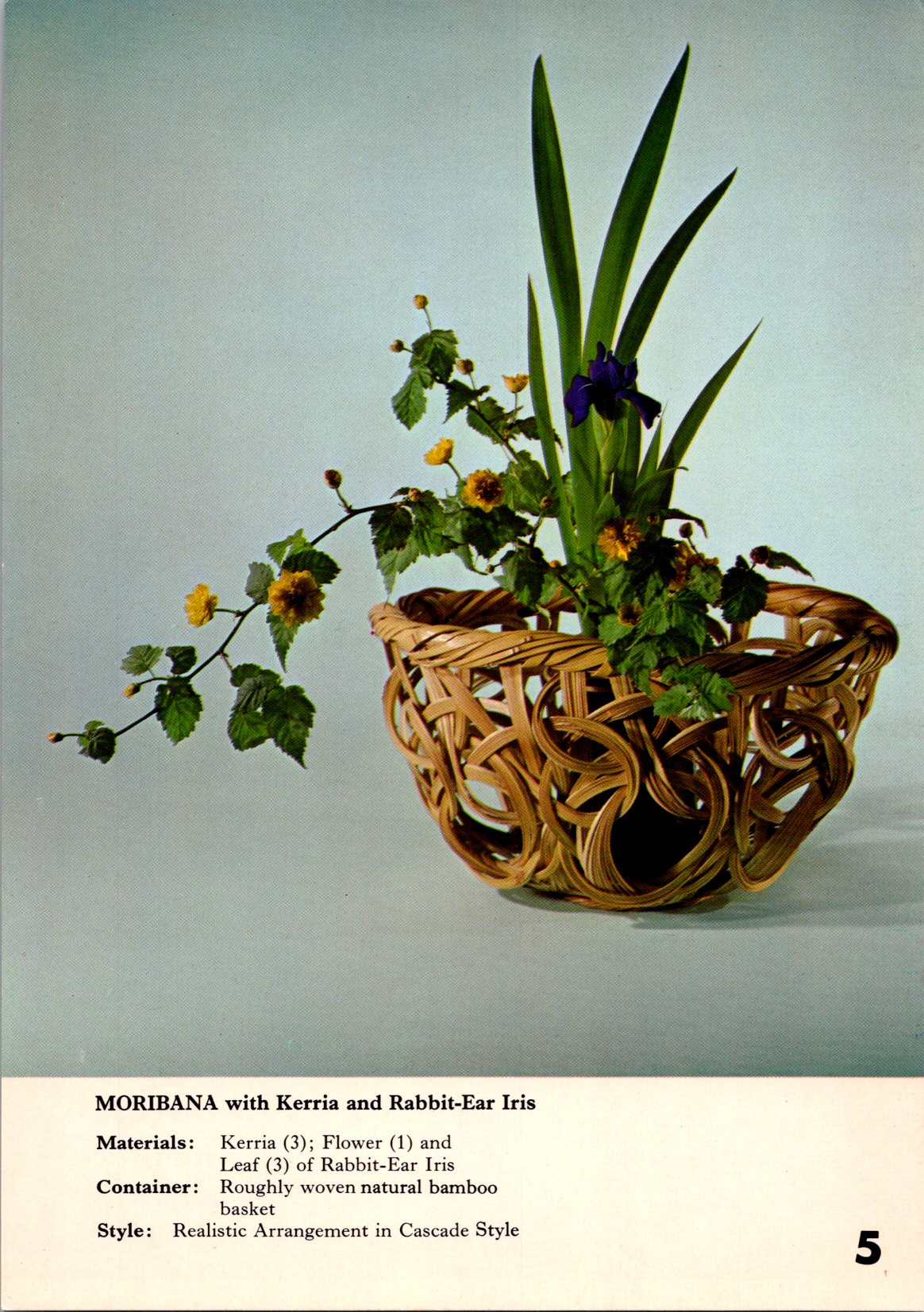
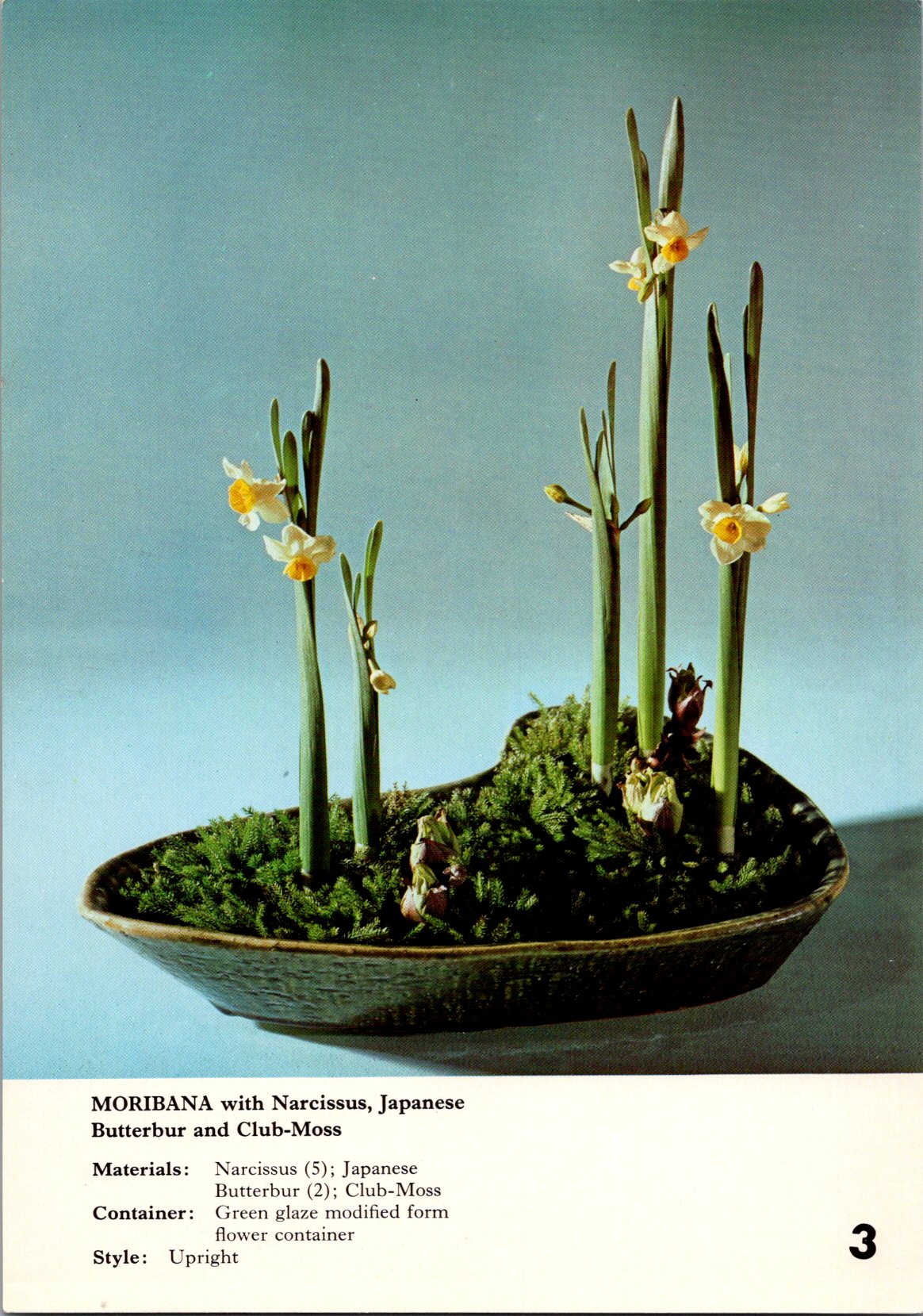
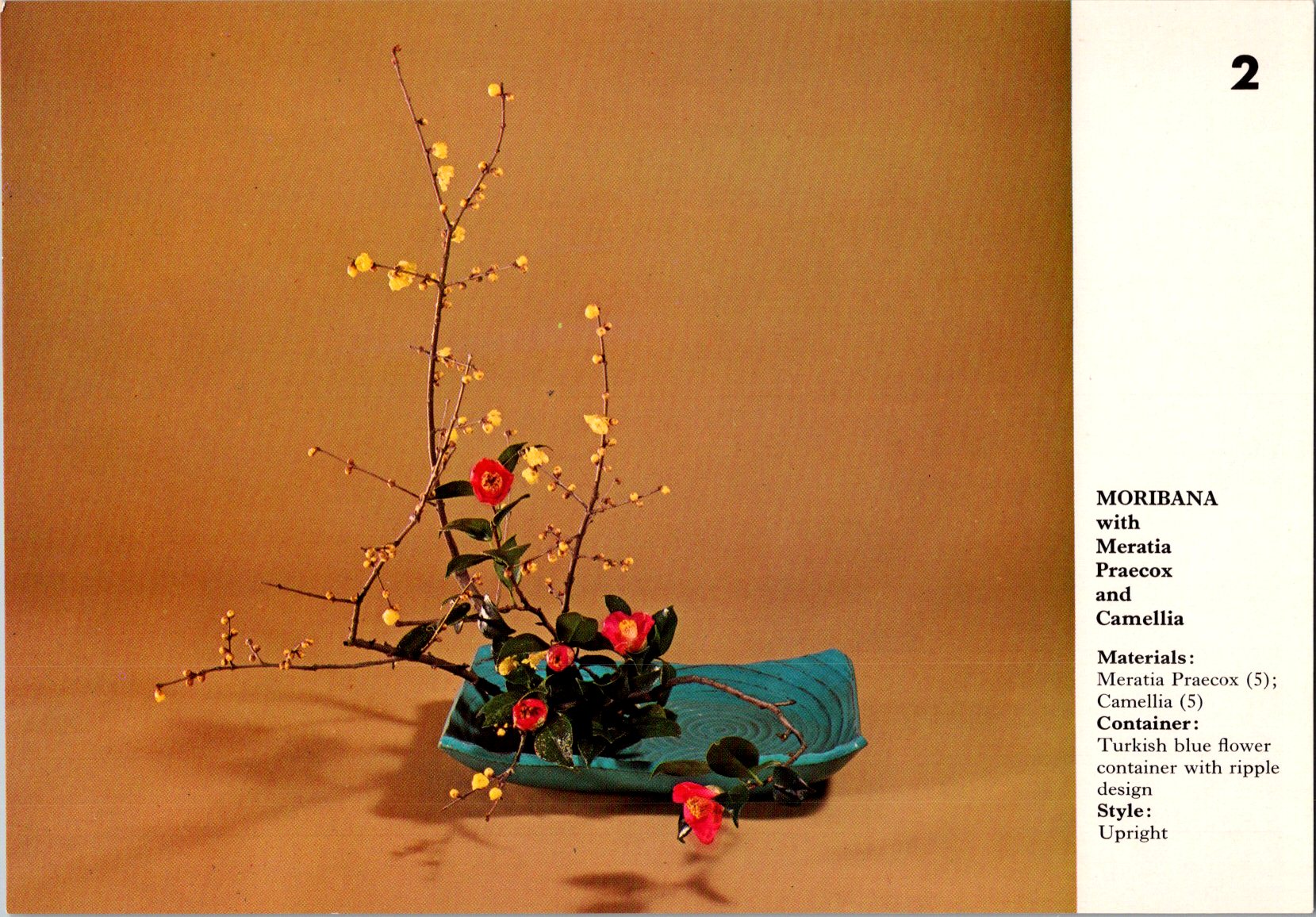
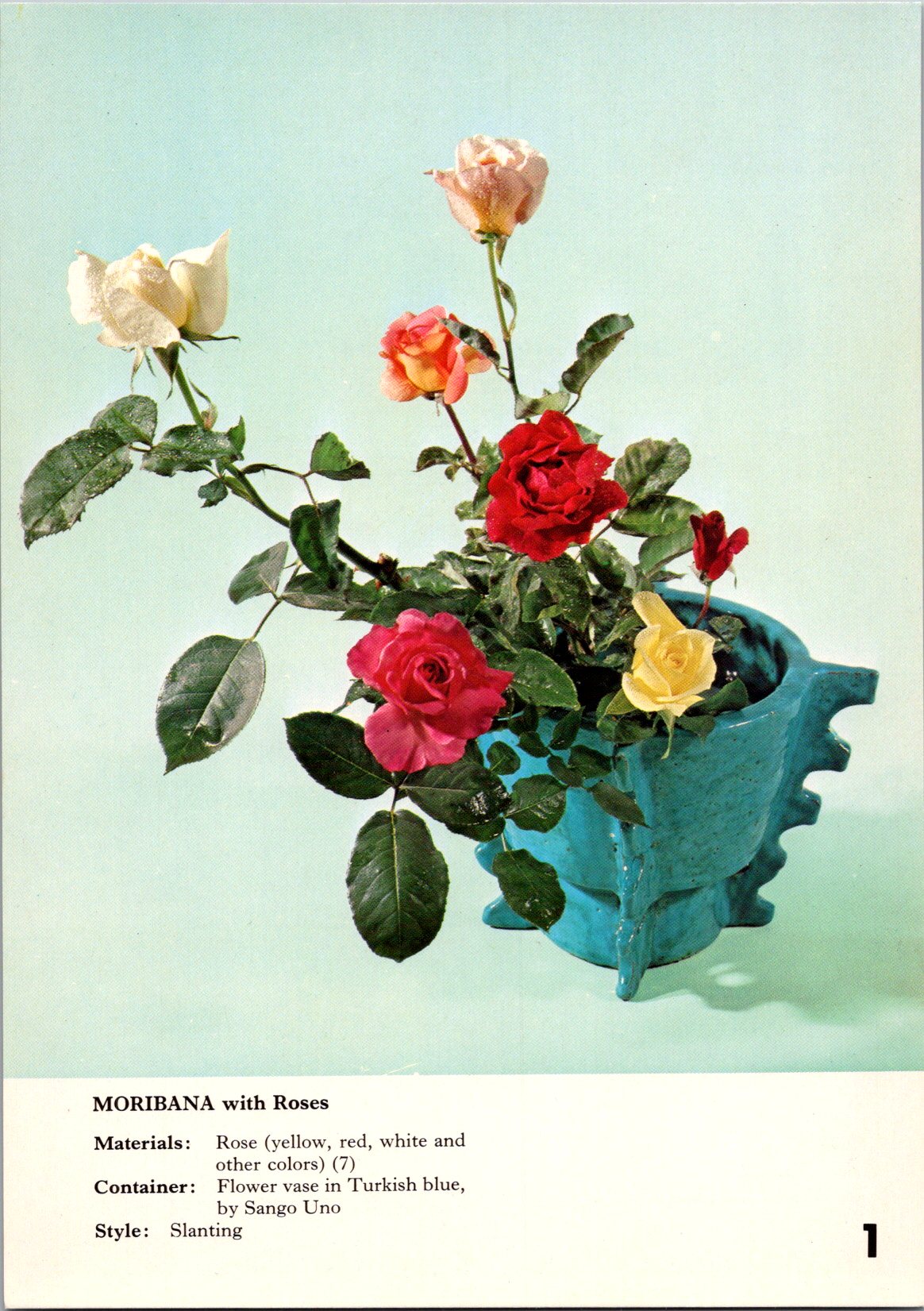
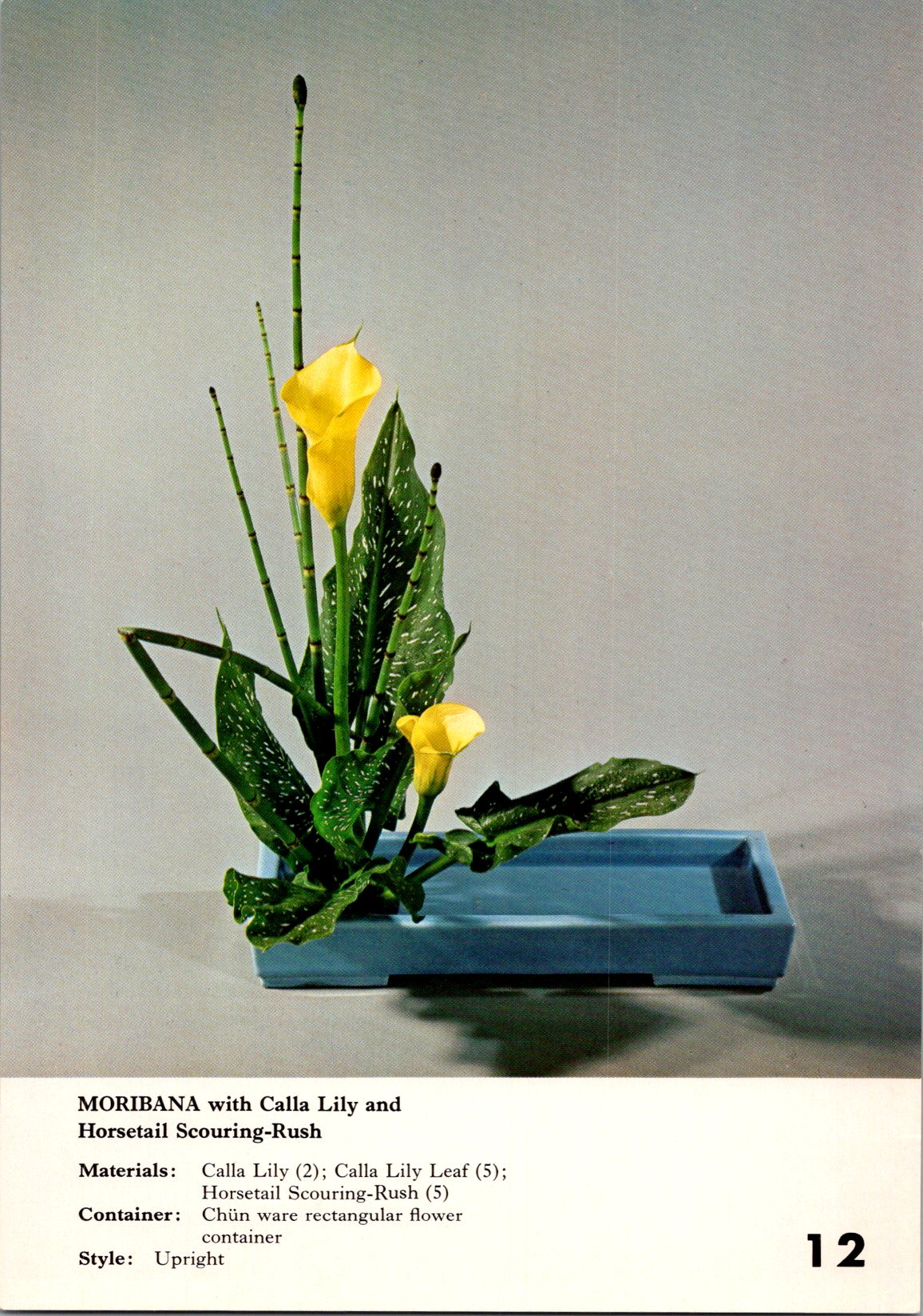
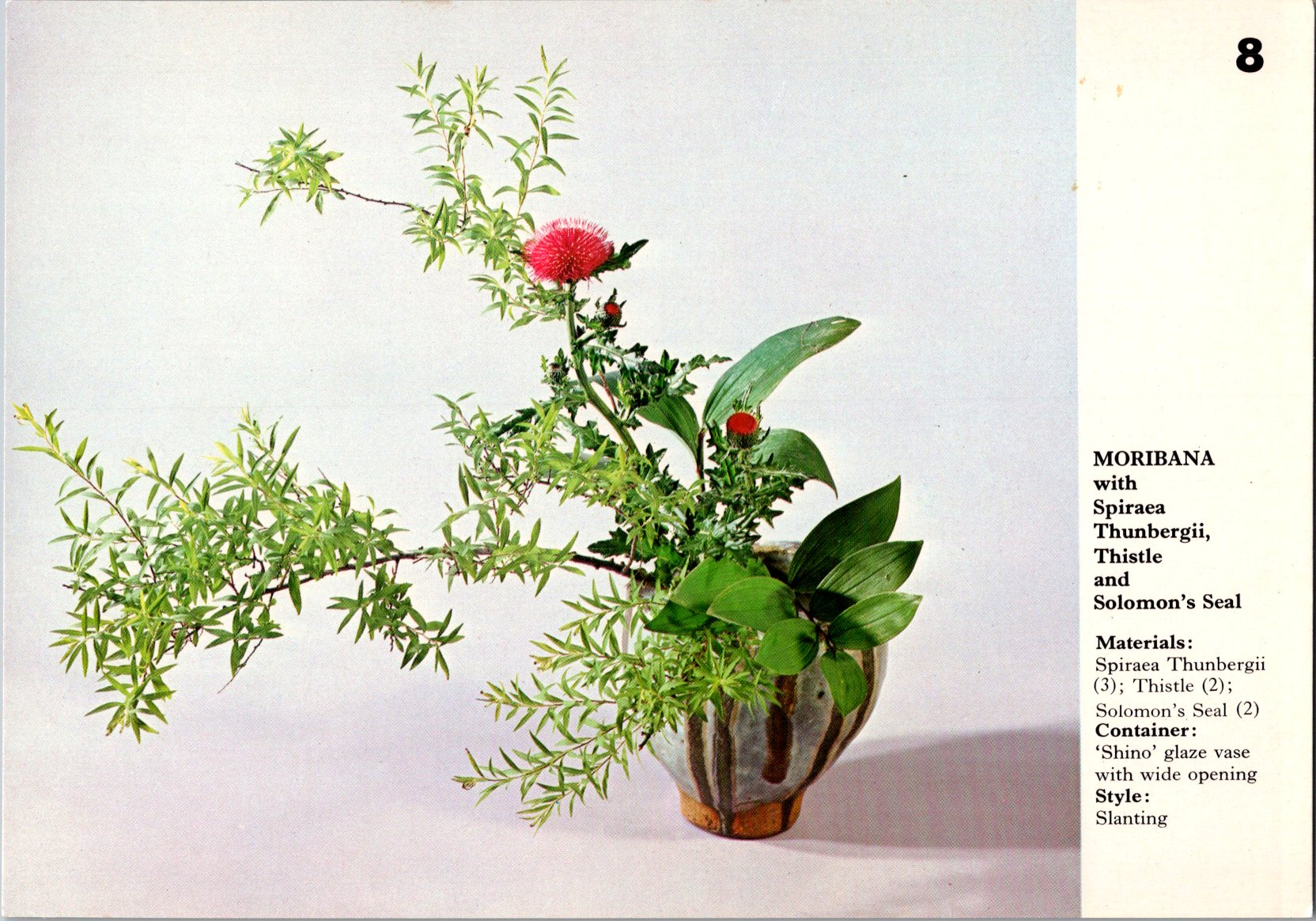
She opened a drawer, pulled out a small wooden box. Inside lay perhaps a dozen postcards, all showing Ikebana arrangements with low, horizontal compositions in shallow containers. Pink and red cosmos rising from a white porcelain vase. Allium gigantium’s perfect spheres balanced with small lantana blooms. A giant monstera leaf with a canna lily and a white chrysanthemum.
Mrs. Hanabusa handed Nina the stack of cards. She flipped through slowly, admiring each floral design.
“My sister sent these from Osaka. Our grandmother taught the traditional way. These are more like her arrangements, traditional but made new.”
Mrs. H pointed to the one with the iris. Nina looked closer. The composition was deliberate. Bold strokes against a spare background.
“Your friend will send you more postcards?”
“She promised,” Nina replied.
“Good,” Mrs. H smiled. “We get bored without friends.”
George had haunted thrift stores his whole life. Mostly he looked for tools—socket wrenches, levels, hand planes that still had their blades. Things he could use or restore.
Now he looked for postcards too.
The Goodwill in Red Wing had a basket of them near the register. Fifty cents each. He sorted through slowly. Tourist shots of the Badlands. A faded view of the State Capitol. Then he found a few good ones.
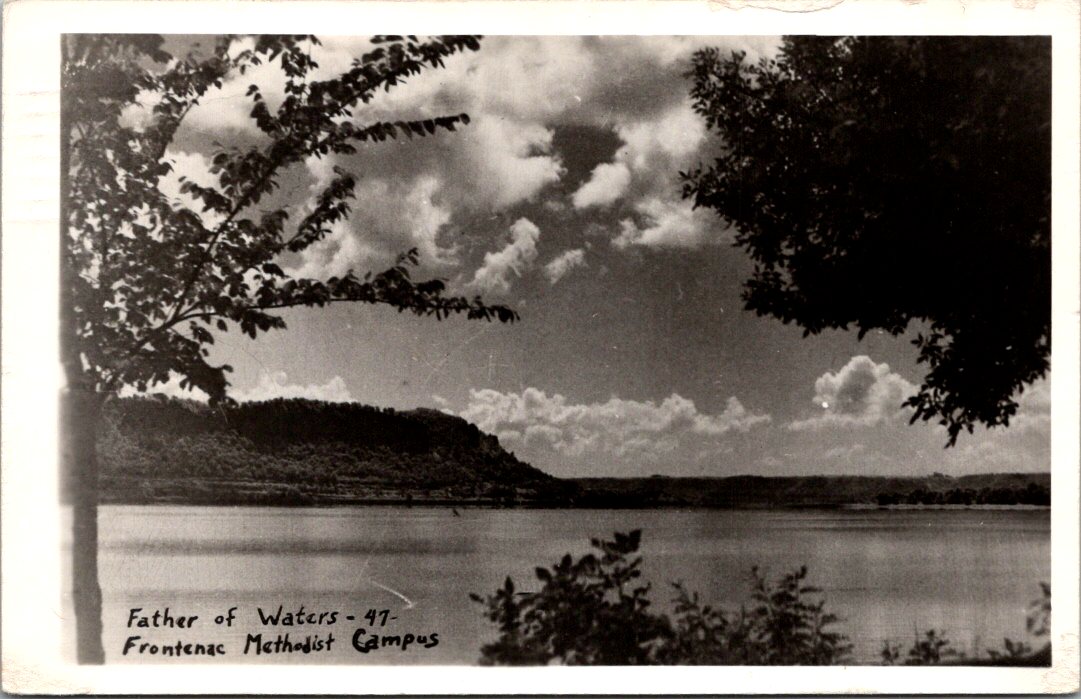
A real photo postcard showing Lake Pepin framed by trees, “Father of Waters” etched in careful script. The water stretched wide and calm, clouds massed above the bluffs.
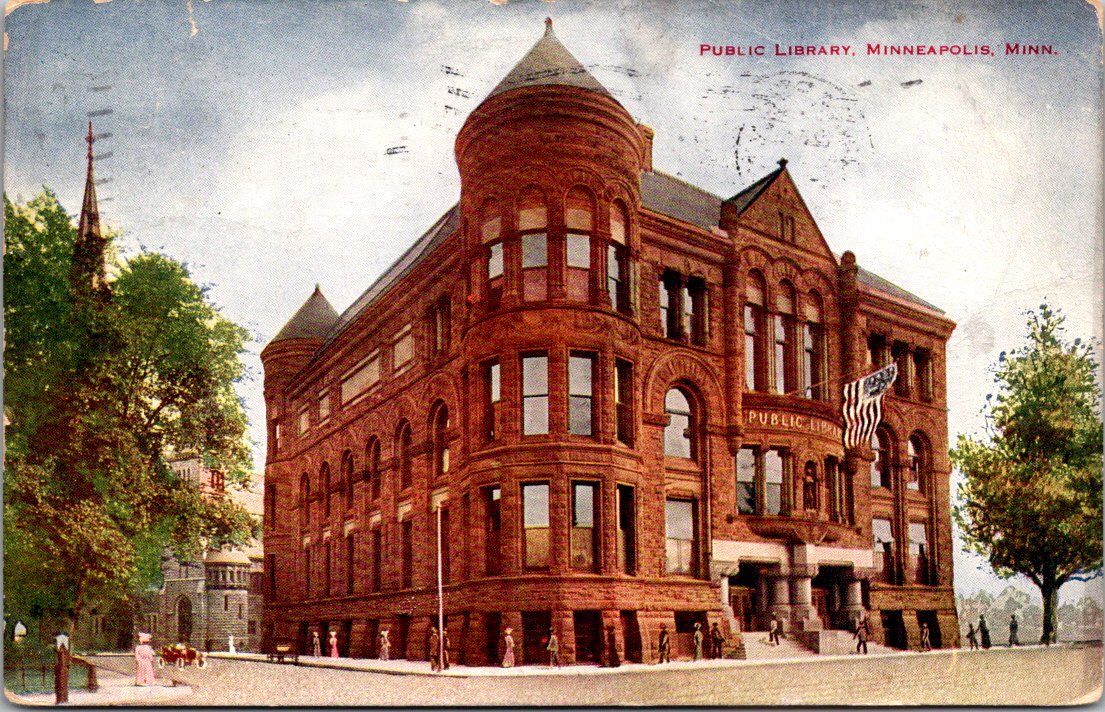
A color card of Minneapolis Public Library, the old red brick building with its round tower and arched windows. George remembered when they torn it down in 1951.
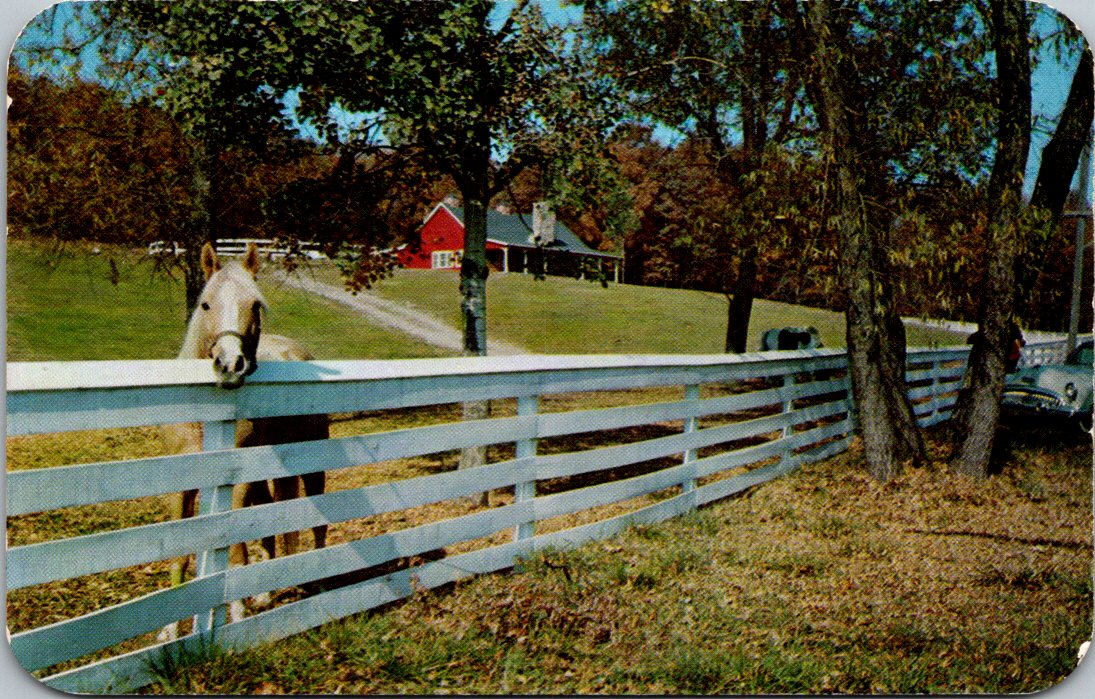
A chrome card showing a white horse leaning over a fence, red barn and farmhouse in the background.
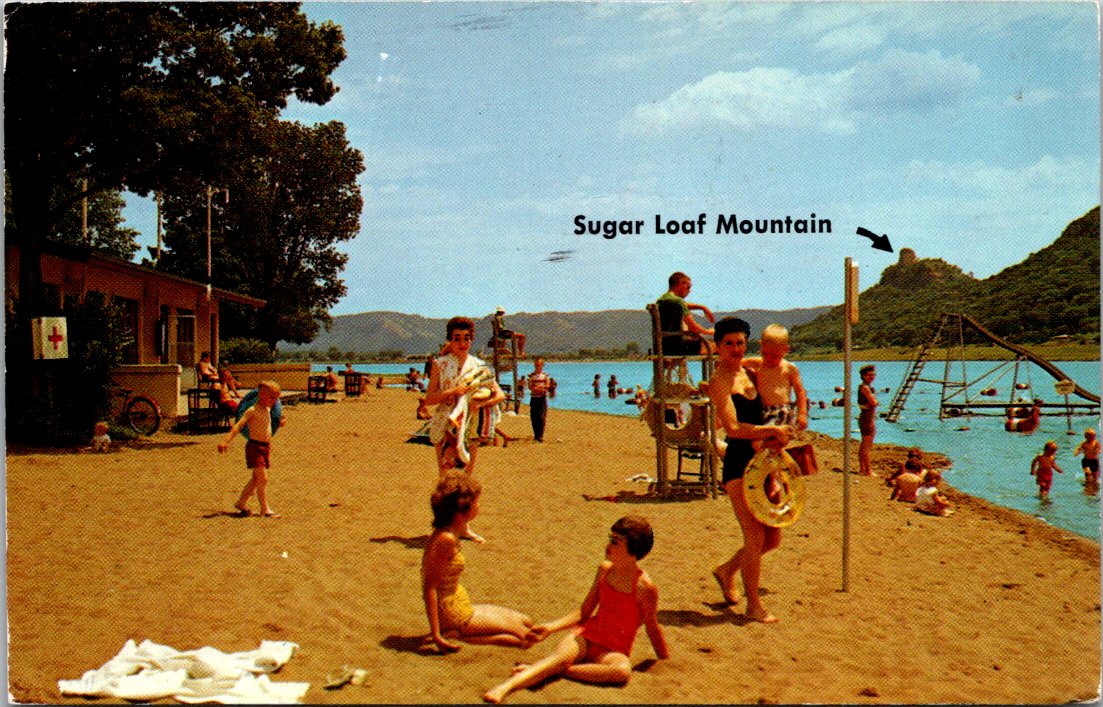
And then—George stopped. Sugar Loaf Mountain near Winona. A beach scene, families on the sand, kids on playground equipment, swimmers in the water. The mountain rising behind them.
He was transported to that very day. Their family had been right there, doing exactly that. The kids running between the beach and the playground. The particular blue of the water. How his wife had packed sandwiches that got sand in them and nobody cared.
George bought all four cards. Two dollars total. At home he examined them under the desk lamp before he got to thinking about each message.
He wrote to Emma:
Found this real photo from Lake Pepin. “Father of Waters” they called it. Your wanderlust comes honestly—this river goes all the way to the Gulf. Love, Grandpa
To Jack:
Get to the good old libraries while you can. This one is gone already! Love, Grandpa
To Lily:
See how the fence posts get smaller as they go back? That’s tricky to draw! Give it a try. Love, Grandpa
He paused at the fourth card, and let out a small sigh. Sugar Loaf Mountain, seems like another lifetime. Finally, he wrote:
This one is for you, kiddo. Reminds me of you and the guys and Mom. Fun times! Love, Dad
George added addresses and stamps. Put on his coat and walked to the mailbox, a short stretch of the legs that he now enjoyed. A chickadee called from the pine tree across the street—its clear two-note song cutting through the cold afternoon air.
Over the past few weeks, a rare photo postcard album has revealed places, property, and people, along with our own ideas about what we see. We’ve gone from unmarked wilderness, to building structures and social life, to faces and a few names.
We look back at them, and they return the gaze. Their stories blend with our own memories and imagination. They begin to feel like someone’s ancestors, though the particulars remain elusive.
Rochester in Rearview
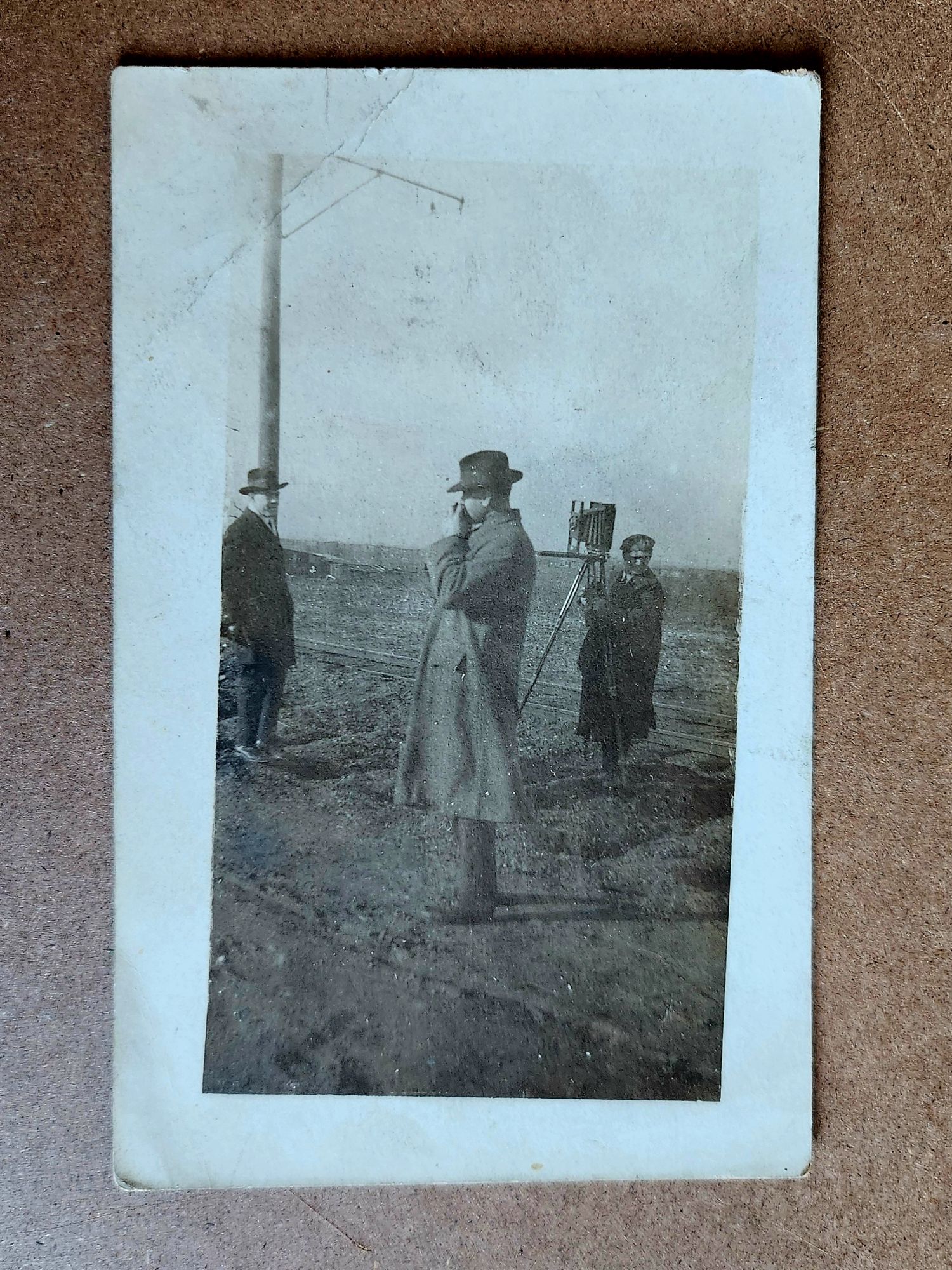
In 1877, photography required glass plates, wet chemicals, heavy equipment, and specialized knowledge. George Eastman, a frustrated bank clerk from a poor family in Rochester, taught himself the process in his mother’s kitchen.
A decade later, Eastman had invented a simple camera pre-loaded with film for 100 exposures. By 1903, the Eastman Kodak Company released the 3A Folding Pocket Camera with 3¼ × 5½ inch film—exactly postcard size and pre-printed on the reverse. Local photographers and home enthusiasts could contact-print the negative directly onto postcard paper. No enlarger needed, and simplified processing equipment and chemicals.
Rochester became an ecosystem. Bausch & Lomb made the lenses. Kodak manufactured the cameras, bought the film company, and controlled the processing. Customers shipped the entire camera unit back to the factory, and received prints and a pre-loaded camera in return. “You press the button, we do the rest.” Factory workers were the first to witness an era of American life, as images of farms, houses, banks, theatre, and towns and their inhabitants poured in.
A quiet man, Eastman watched this unfold from the center, as his invention changed history and rippled through culture. By 1920, millions of Americans owned cameras. Eastman left a simple note when he ended his own life at 77 and in degenerative pain, “To my friends: My work is done. Why wait? GE”.
What We See
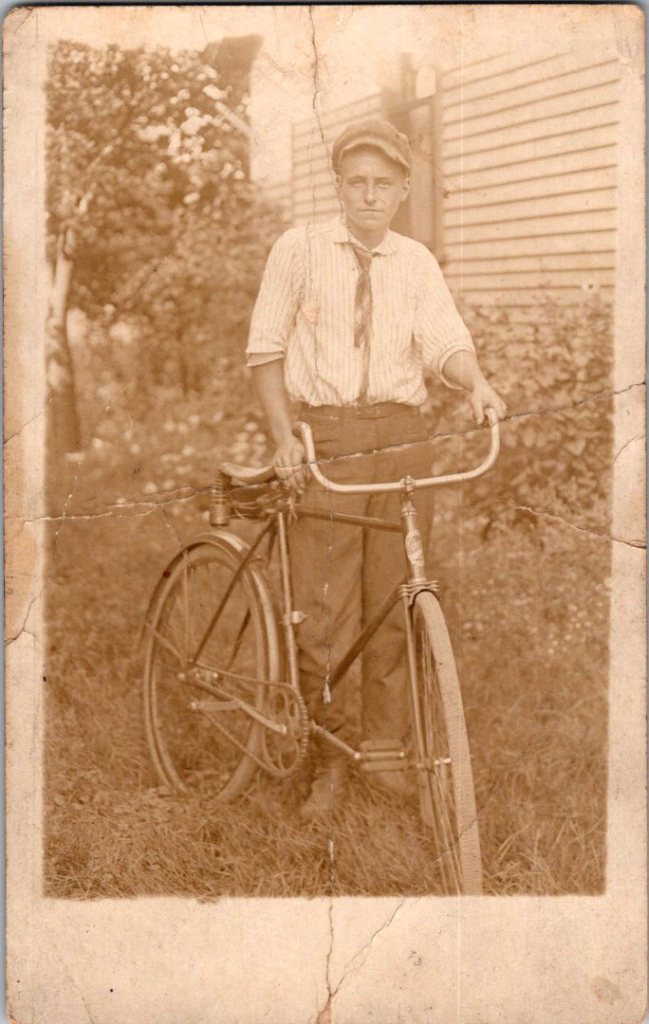
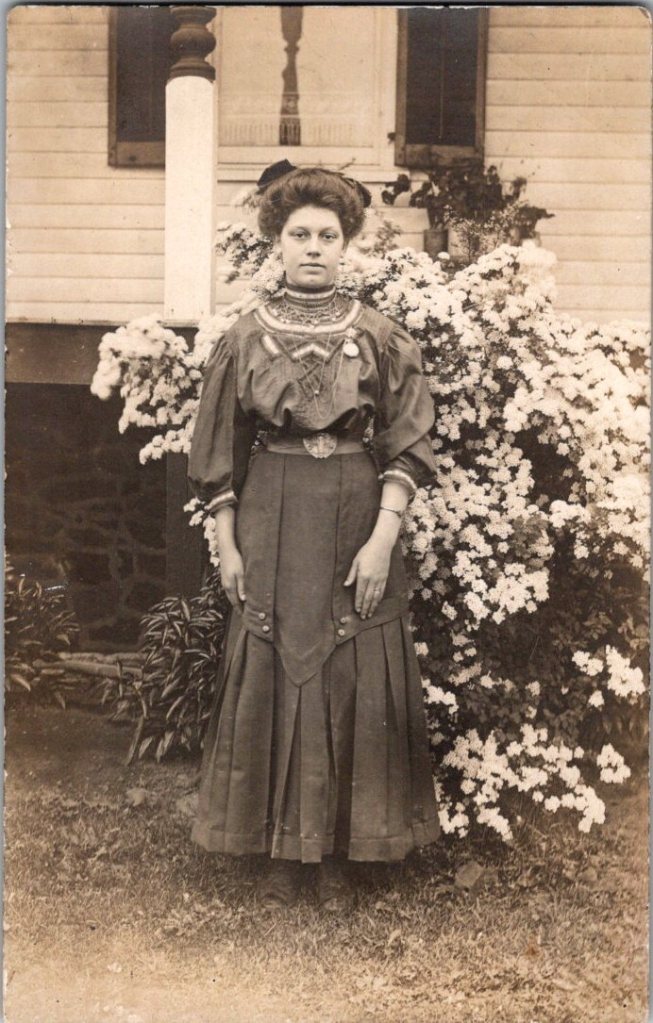
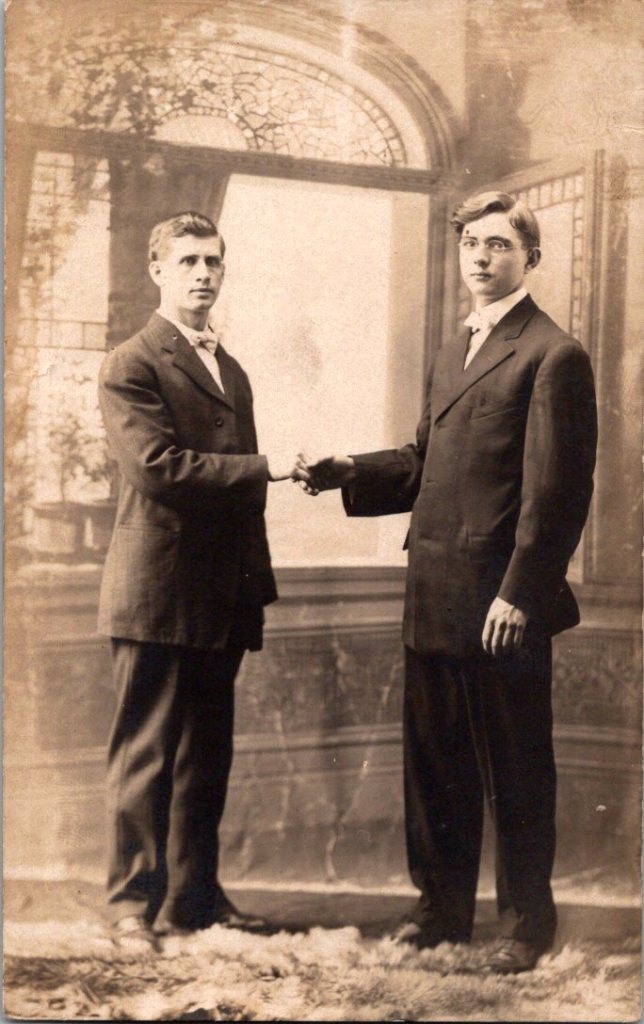
The studio portraits above show painted backdrops—ornamental arches, garden trellises. The lighting is controlled. Poses held steady. Technical quality consistent. These were made by professionals charging by the sitting.
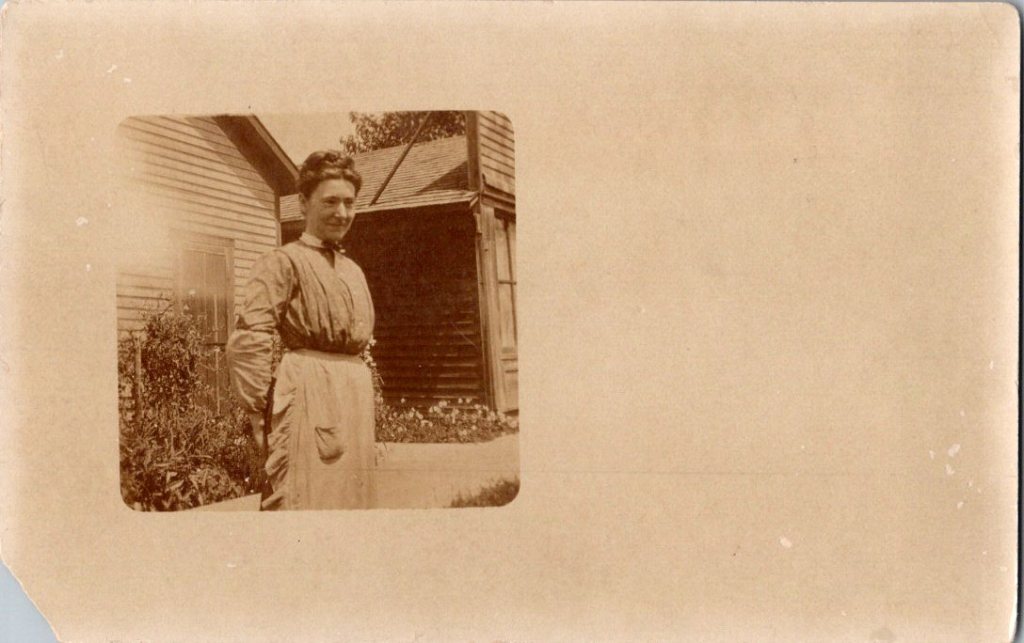
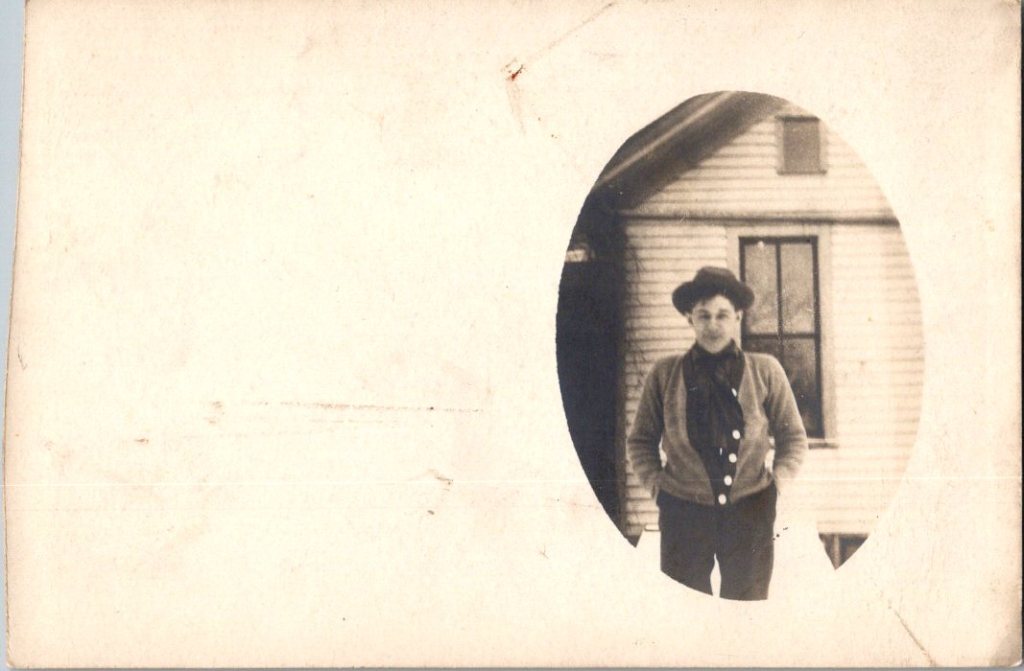
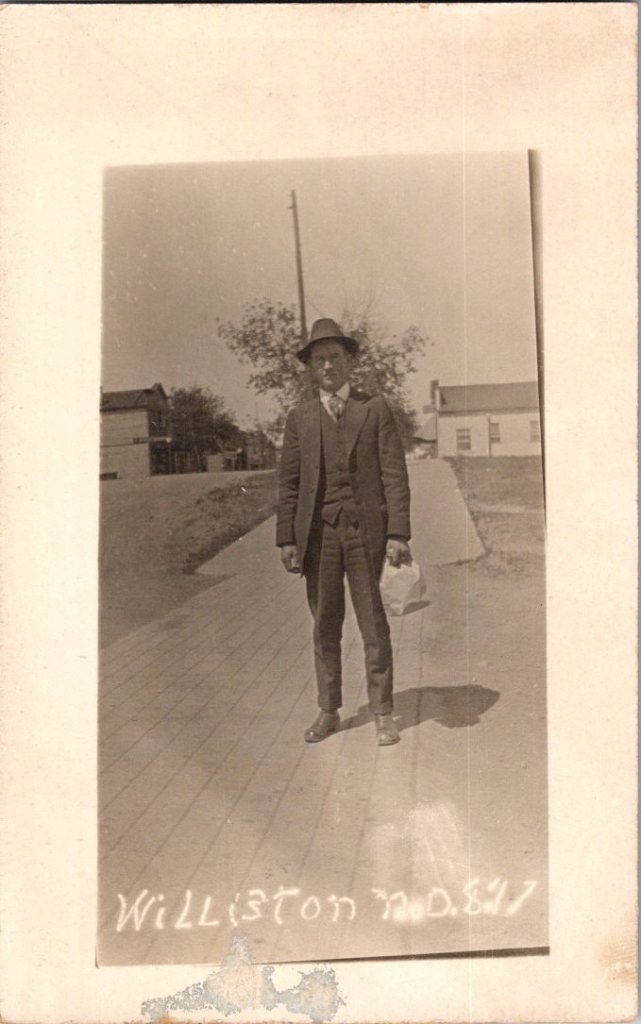
The outdoor snapshots show real places—porches, orchards, dirt roads. Natural lighting, sometimes harsh. Composition varies from confident to awkward. These came from camera owners of varying skill. The irregularities in frame and exposure suggest they were developed at home, too.
What We Don’t See
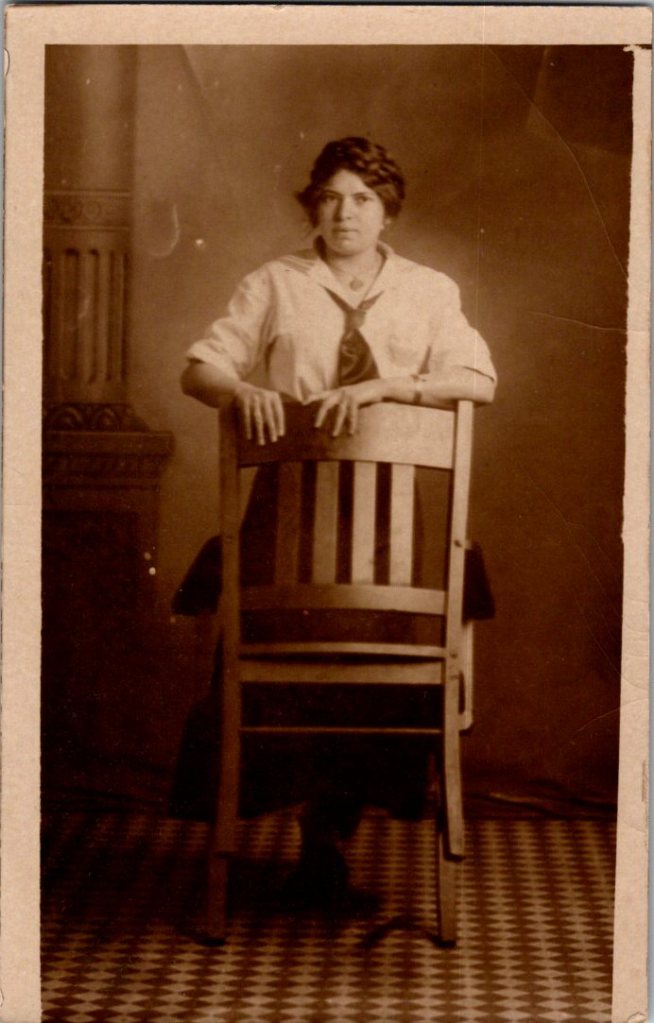
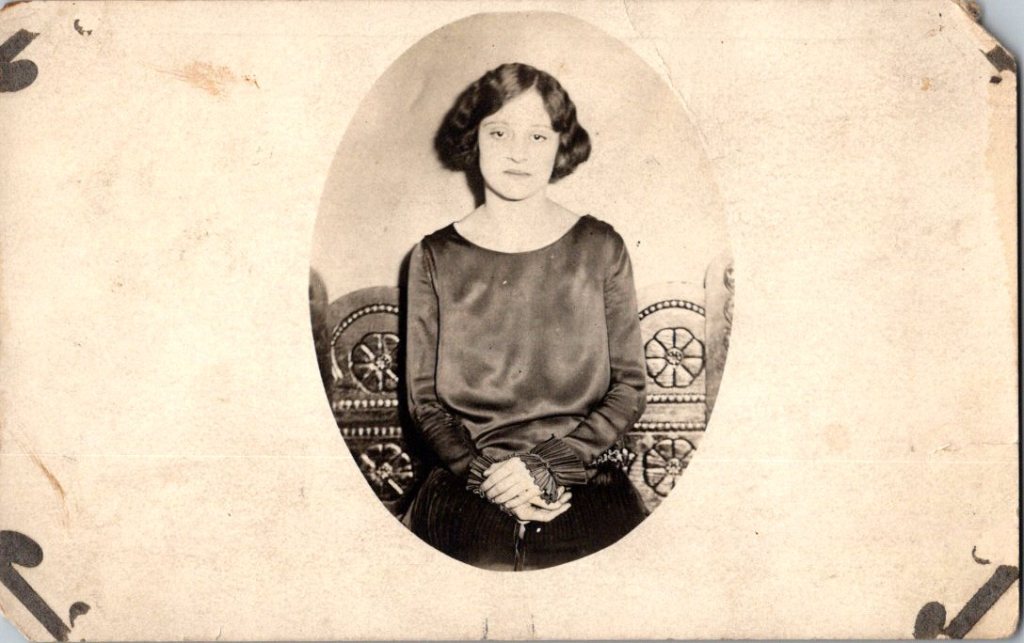
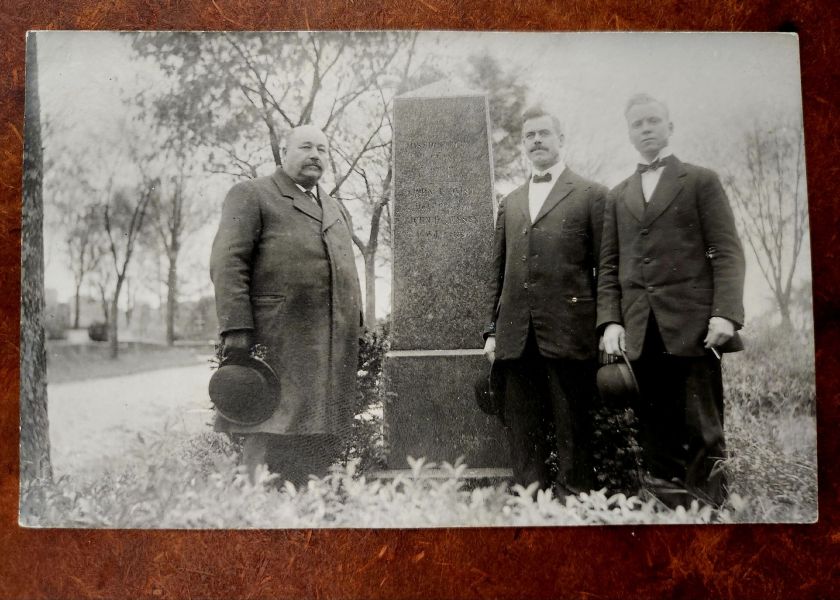
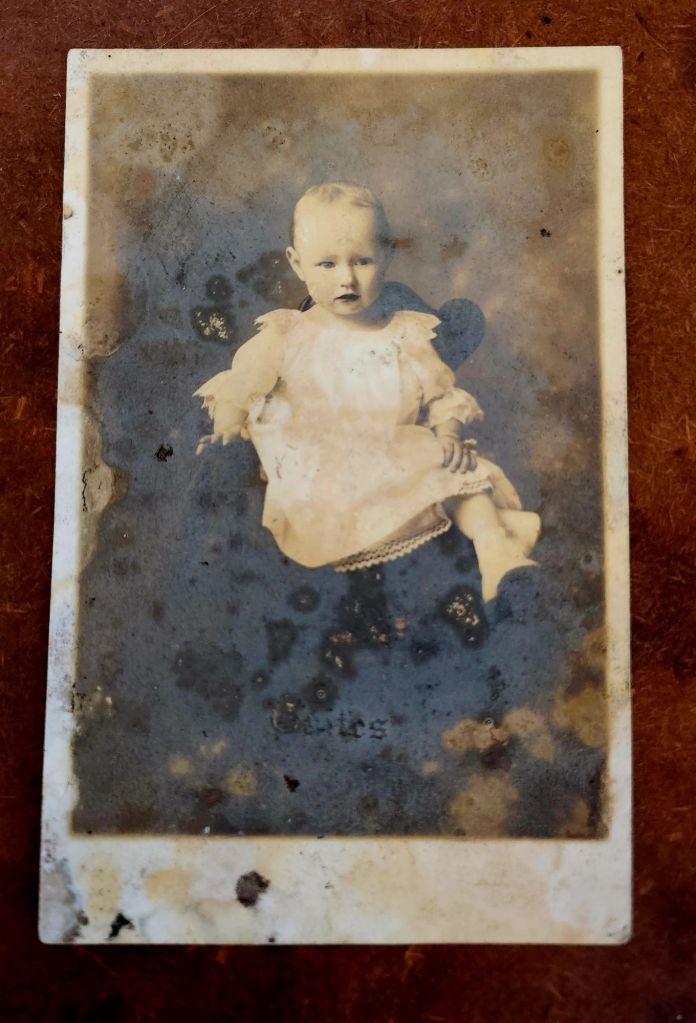
Despite the pre-printed paper and earnest intent, real photo postcards were rarely sent as such. A few have difficult script, cryptic addresses, faded cancellations, and worn stamps.
“Hello Fanni. Miss Fanni Moore, Panhuska, Okla.”
The remaining relics haven’t been labeled, addressed, or mailed. Most backs are blank, and they were often collected in photo albums. The manufacturing marks may have been quite incidental.
What’s missing from nearly all: names. Very few clues to subjects, locations, dates. The people who made these photographs knew who everyone was. They didn’t need labels. Or, perhaps they were accompanied by letters and mailed in envelopes for privacy and protection.
A century later, the faces remain potent but anonymous. We guess at relationships from physical similarity, from who stands near whom. Sometimes we’re right. Sometimes, we can’t believe our eyes.
Spaces in Between
The 3A Folding Pocket Kodak cost $20-30, equivalent to $600-900 today. An expensive hobby, but accessible to prosperous farmers, small business owners, middle-class families. Film cost about 50 cents per roll.
The investment meant something, whether it was the equipment or the studio session. People photographed what mattered—children, homes, gatherings. The images document their priorities, and their time passing.
Real People, Real Limits
These are real people who lived, worked, loved, died. Someone cared enough to preserve their images. They matter still, in part, because they mattered to someone before.
But our analysis stops here. We can describe what we see—the composition, the technical choices, the historical context. We can note patterns across the collection. We can explain how the technology worked and who had access.
The work of naming and placing, in particular, belongs to families searching their own histories, connecting faces to stories passed down, matching photographs to genealogical records. Those searches have their own purposes, their own meanings.
We are collectors examining patterns, not descendants reclaiming ancestors. Though, it is tempting.
Last week, buildings emerged and oil derricks erupted. Evidence accumulated, context implied. An unknown town takes shape and we surmise. Now, people stare across a century and time flies.
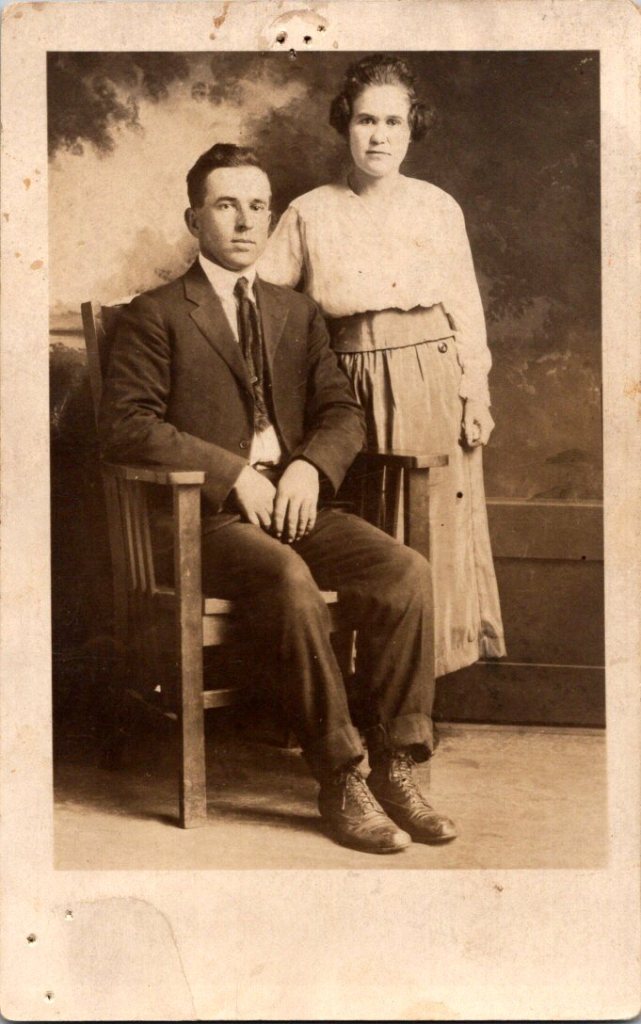
Seven adults carefully arranged on a rocky outcrop. Three men, four women. Two children in white dresses seated in front. Twins? Cousins? Someone operated the camera.
We see the composition and relational questions arise. Are they family? Kin? Friends on an outing? Do the poses suggest occasion, or documentation?
Evidence ends and story begins. We fill in by reading subtle cues in how they stand, who touches whom, which faces seem to fit together. Clues come quietly and mistakes, too. Always, we’re revealing ourselves.
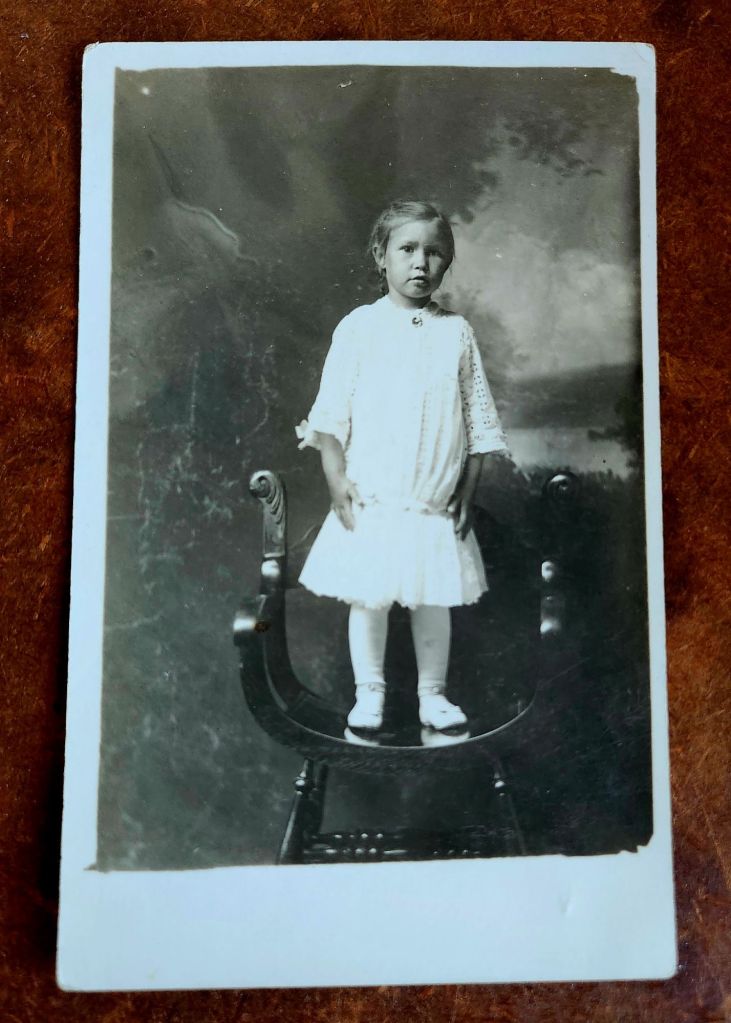
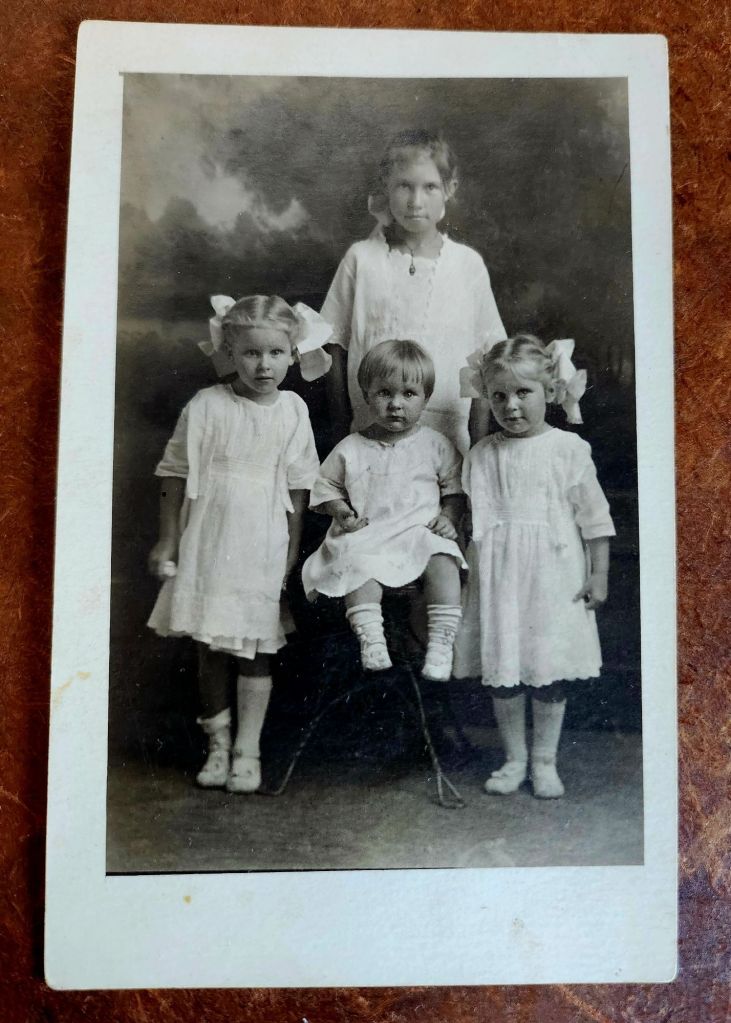
Here we see one girl, three moments, and years passing. The baby stares out with solemn intensity. Then she’s older, on a throne in white dress, commanding the frame. Finally she’s the eldest of four, and her protective gaze tells all.
The postcards show her time moving, roles shifting. She grows and gains presence. She becomes a big sister, then a bigger sister still.
The postcards show the sequence and the story intrudes. We can safely assume the scenario, the kinship, the birth order. But then we imagine her. She and her siblings stand as evidence. We provide the narrative.
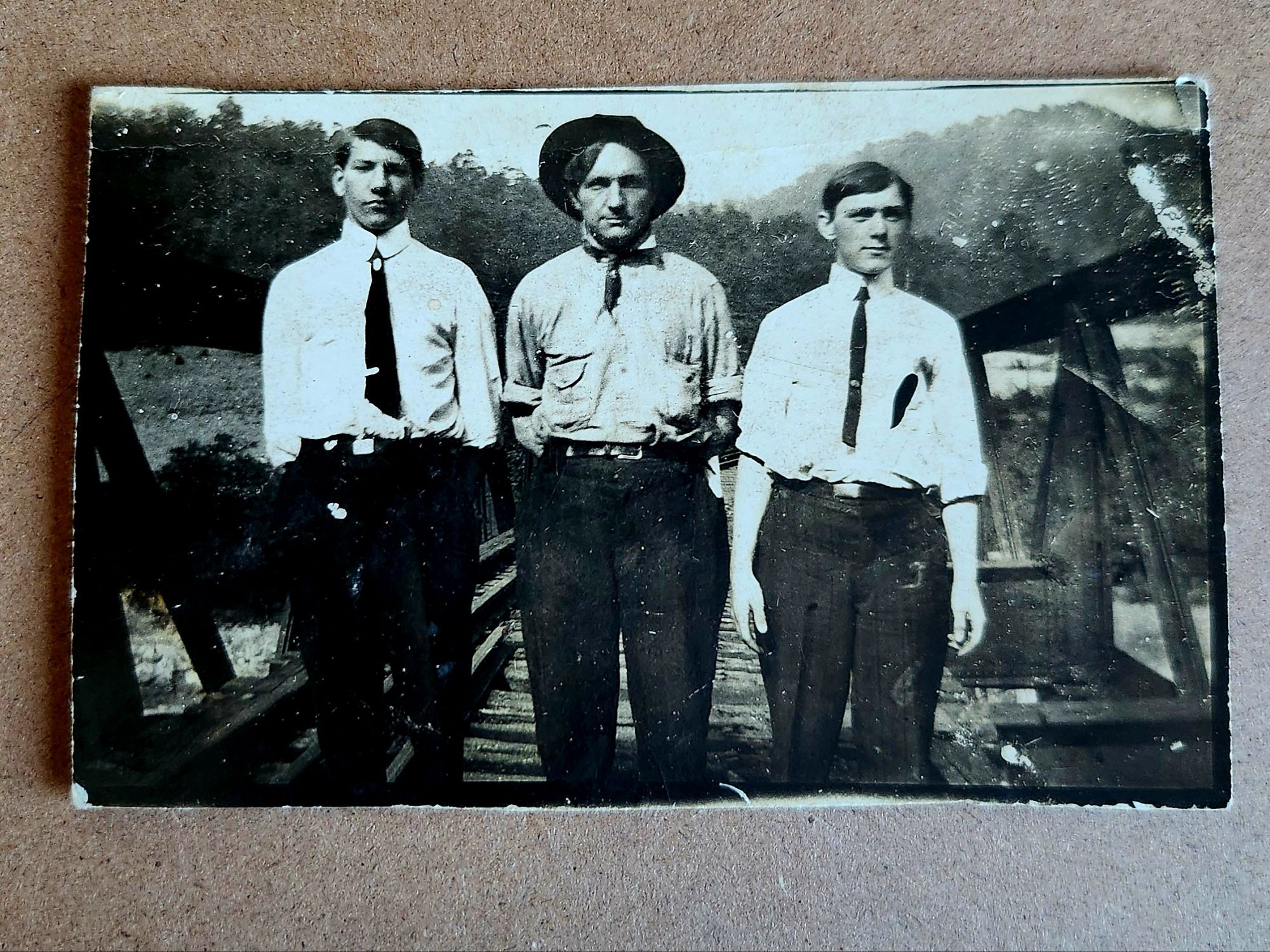
Now nine men, perched around a large rock on uneven ground in a forest, maybe a park. Hats, a variety of ties, white shirts in sunlight. Ages range. Some engage the camera. Others look away.
Compare this to the first photograph. Similar outdoor setting and careful arrangement. Same paper stock, same photographic quality. Do any faces repeat? That man in the center looking off to the distance—could he be the man on the back left of the family group?
We squint. The shape of a jaw, the set of shoulders, the tilt of a head. Errors lead us toward other observations. Misreads become clues. We’re searching, and trying out plausible connections.
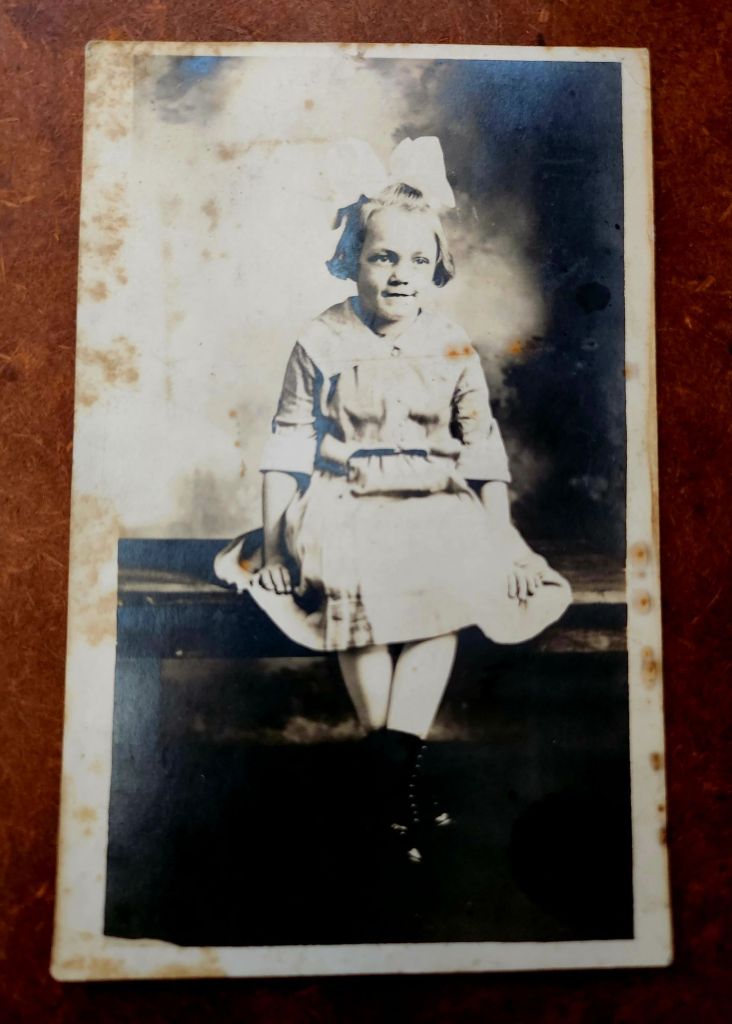
A different girl and a similar progression (maybe). The baby carriage can be dated within a range, 1915-1925. Fashions shift slowly in some places, rapidly in others, but period details do show. Those bows!
However, uncertainties hover. Is this the eldest girl growing up? Or, are we forcing connection where none exists? The bobbed hairstyles might give it away. Or they might mislead entirely.
A particular stare, a nose ridge, an anomaly at the jawline, and we are on the pursuit again. The faces echo. Three generations, or two. We assign roles: son, mother, daughter. Sisters?
The oval portrait shows four women arranged in a formal cluster. Elaborate hairstyles, high collars, cameo brooch visible on the seated figure. More prosperous, perhaps. Different family entirely, or different branch? Is she at the center the same as the older woman below? We cannot know.
In between the guesses, a different story emerges entirely. Our own families, and that we belonged. Or, that we confidently walked on. In either case, we are humming with history.
We’re deep in assumption now. Building genealogies from facial features, paper stock, and similar poses. The archives encourage it. These cards traveled together. Someone kept them together. The connections existed, however disassembled.
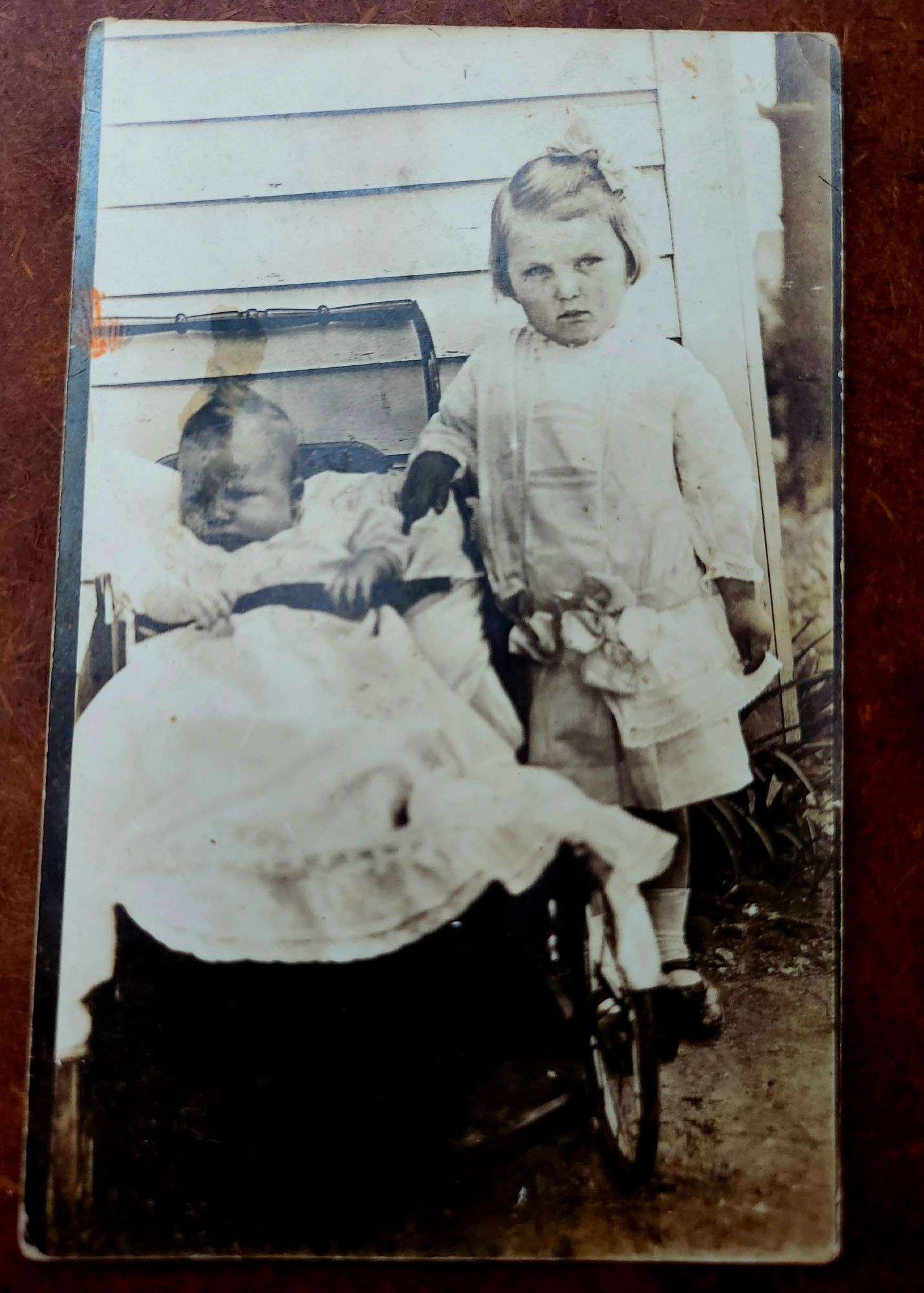
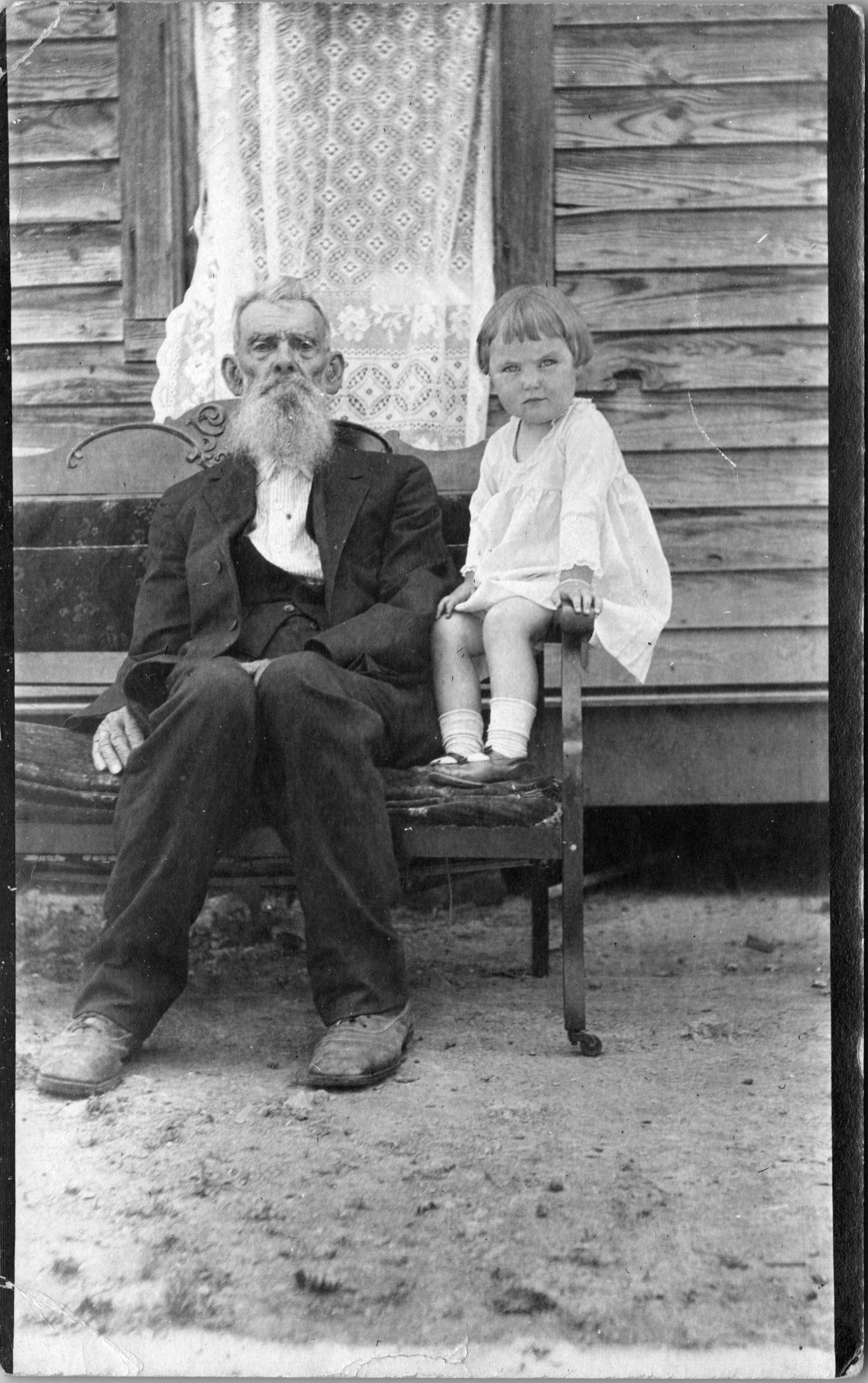
Another baby carriage, different from the first. And on the back of the card, handwriting: this is Irene with Willie’s baby, sent to Aunt Fannie. We know Irene from when she was four, seated with Uncle Rufus Dale, 84.
What satisfaction, when a storyline clings together. Names accumulate. Groups delineate. Relationships clarify. The archive speaks back, and the story begins to imitate fact.
The search becomes research. The archive rewards our attention and budding accuracy. But, who doesn’t love Aunt Fannie? Even if we’ve never seen her.
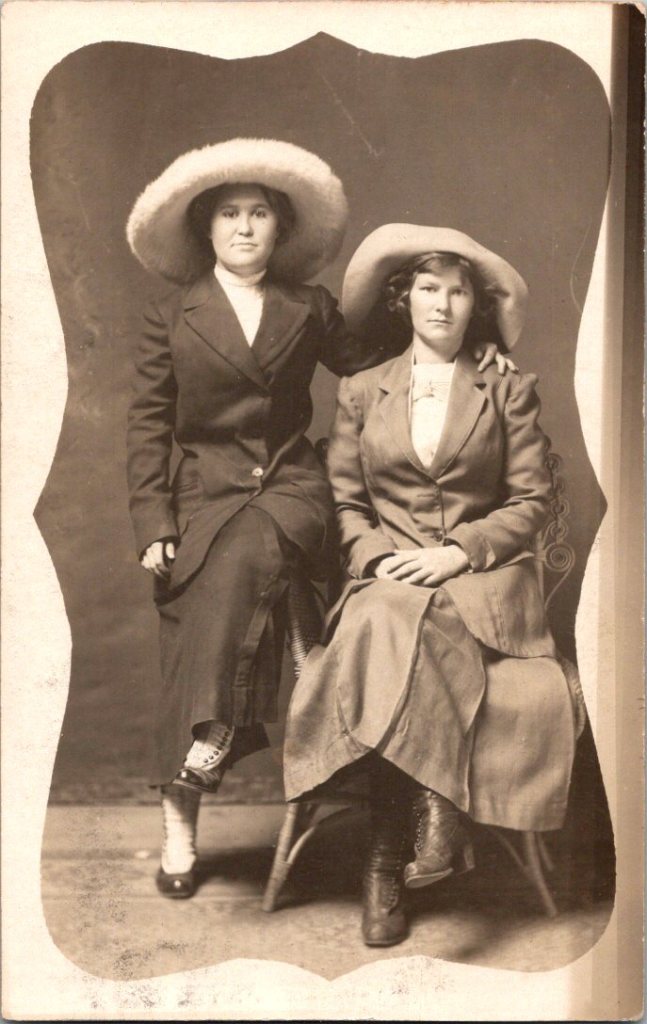
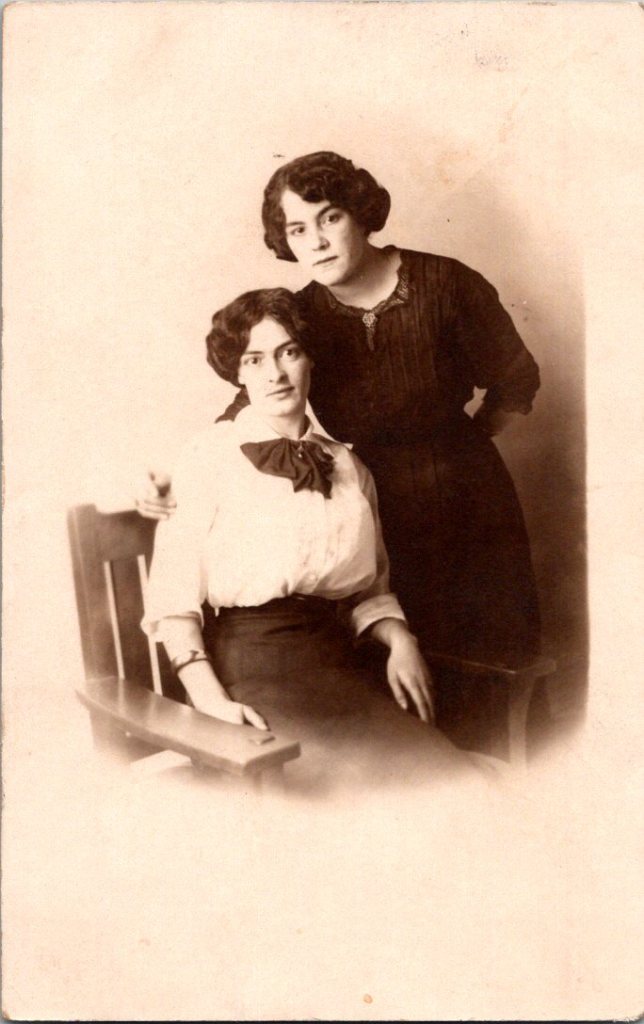
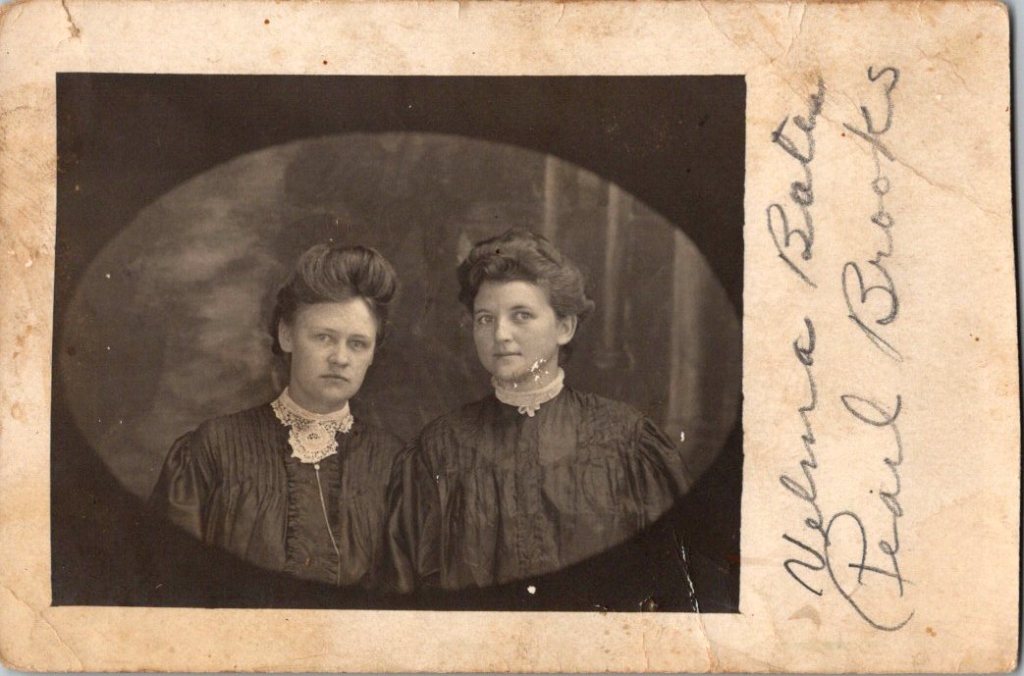
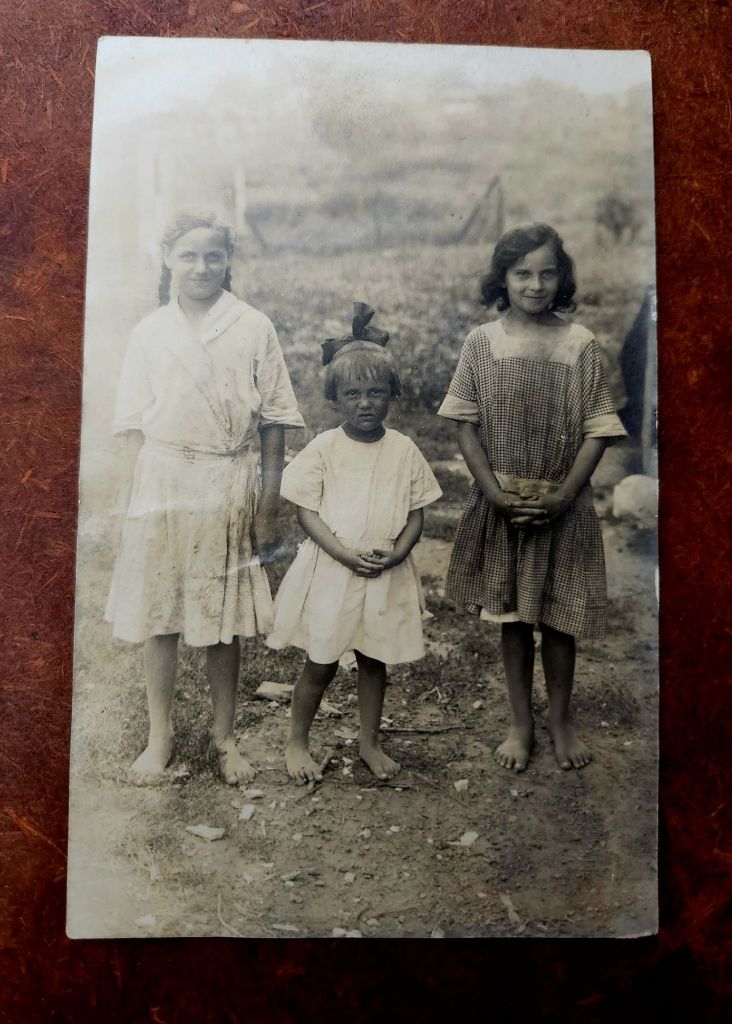
Now, here is Irene amid two new figures who appear to have a strong bond. Sisters? Friends?
As we might expect, there is more to reveal. Next week, we’ll look at pairings in quite a variety, and even more merry misleads. Then portraits, and finally, a grave.
Tricky, sticky stories arise at the sight of buildings in the landscape. Evidence (or absence) of us along the way.
As landscapes, last week’s real photo postcards (RPPC) asked for nothing. Trees, frozen roads, animals burrowing in snow—they floated free of context. We could easily appreciate them without knowing where they might be.
Buildings are different. A structure says someone decided, planned, risked, and accomplished. They hauled materials, drove nails, painted trim. Buildings demand explanation in ways that hills might easily demure.
Reading postcards slowly reveals patterns. The undivided back means pre-1907. The real photo process suggests a local photographer, or maybe an itinerant professional documenting a place too remote to the reach of commercial postcard companies. Paper stock, indicia, stamps and cancellation, faded handwriting and previous labeling, even image placement and crop—these technical details narrow the place possibilities.
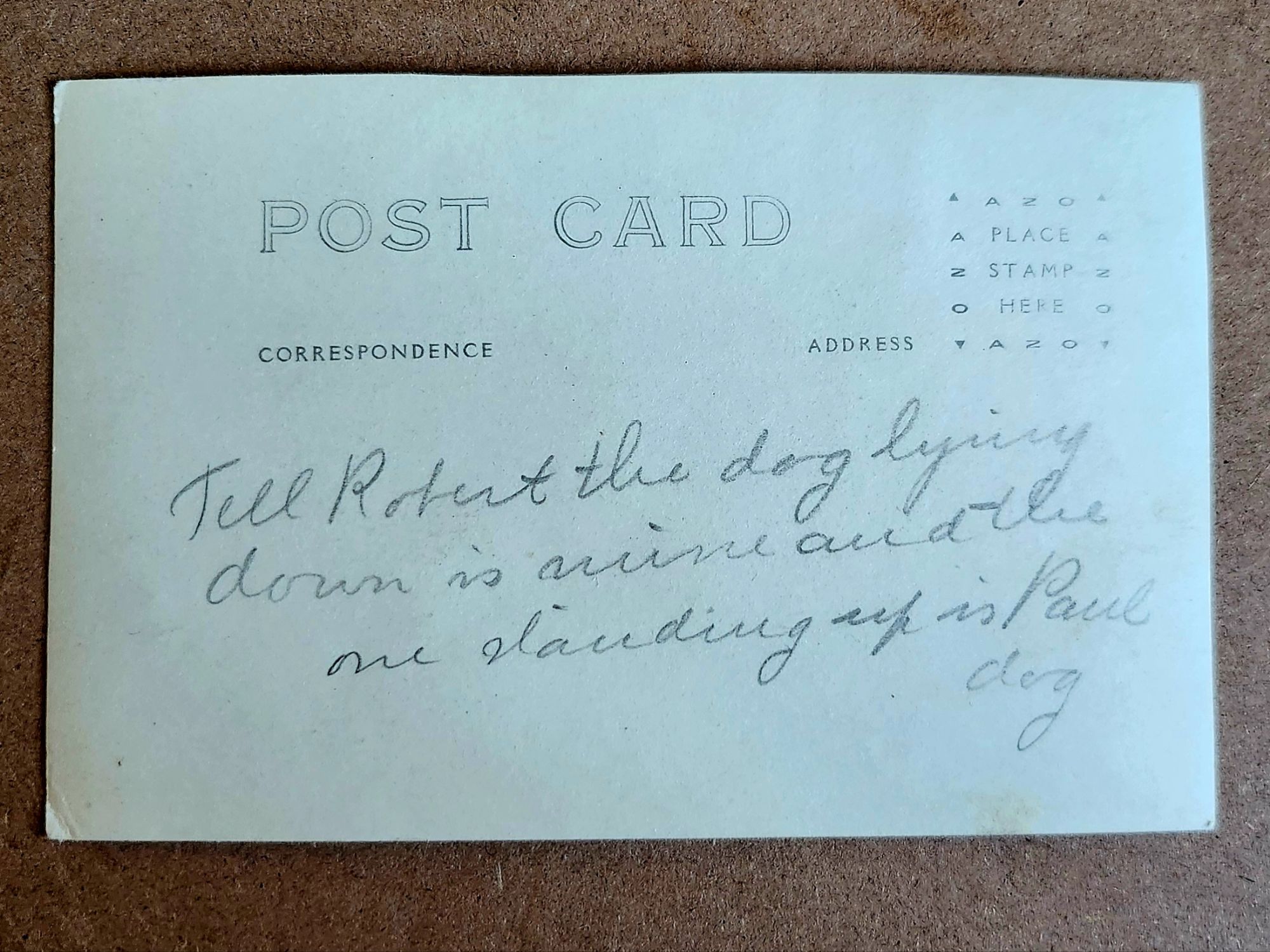
But they don’t yet answer another question: Who are Robert and Paul?
Tell Robert the dog lying down is mine and the one standing up is Paul dog
What We Might Know
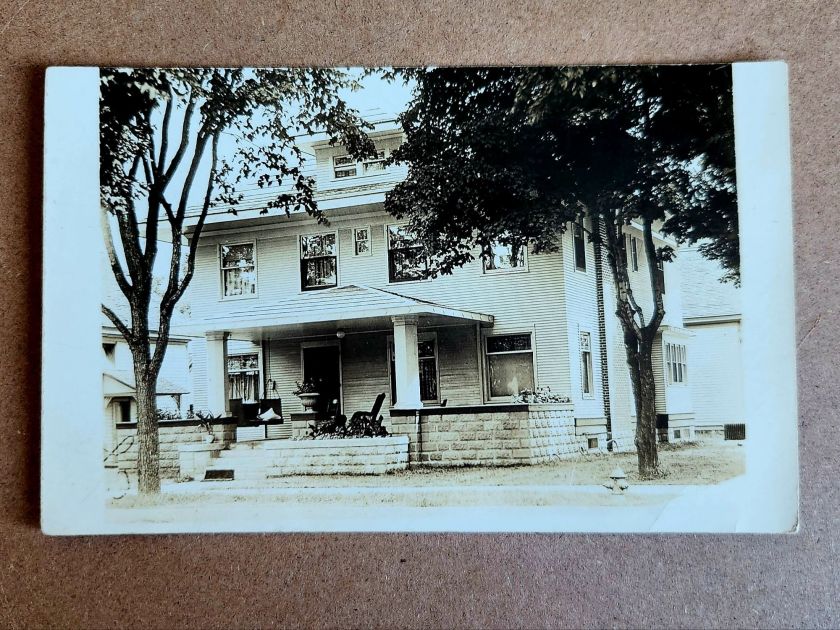
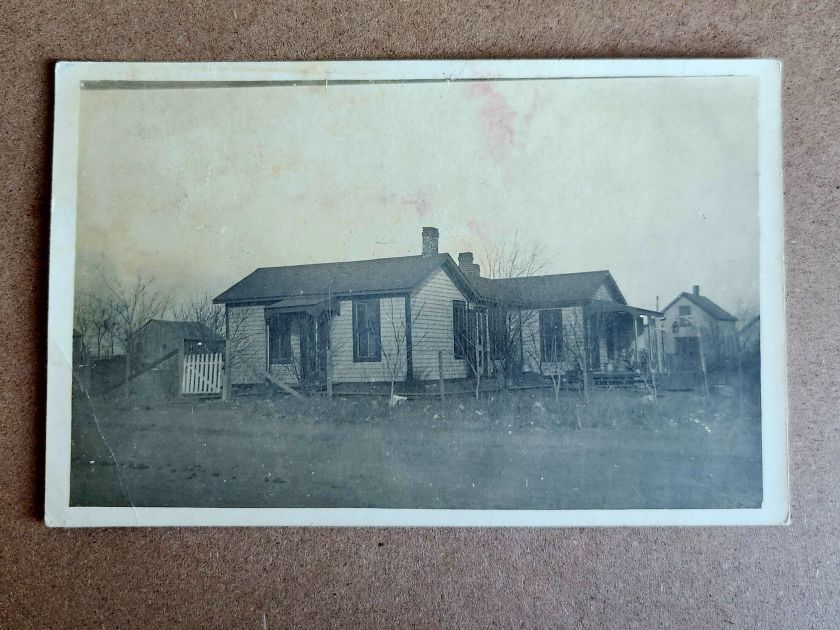
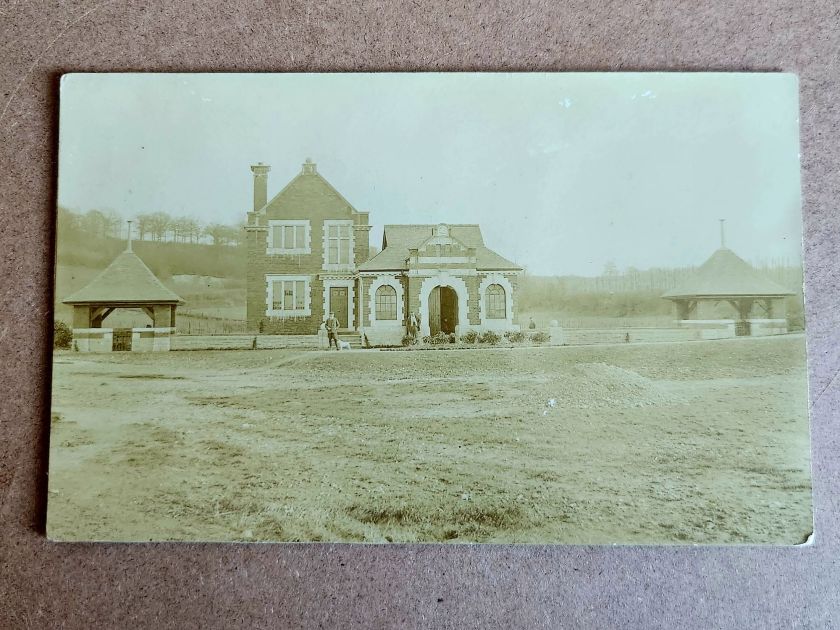
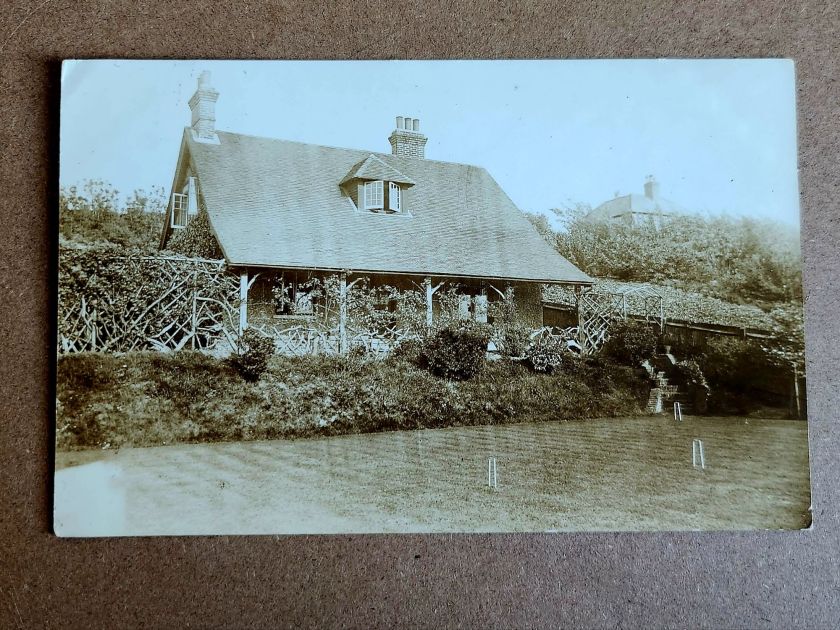
A two-story house with a generous porch is carefully centered in one photograph. Mature trees in the foreground. Curtains hang in the windows. Someone lived here and wanted to show their pride. Or, was it for sale?
The architectural details offer more clues. Clapboard siding, stone or brick foundation, decorative porch elements—not fancy, but intentional. It seems to be in a neighborhood with sidewalks. In an era between 1900-1920, somewhere in the Midwest or West judging by lot size. Also, a fire hydrant.
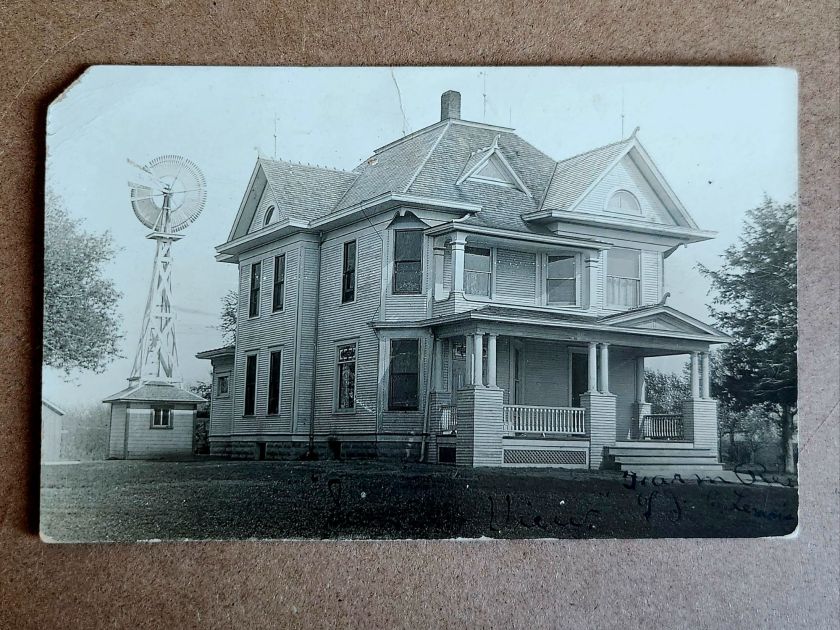
The windmill in another image dates itself. Windmills were an important utility and industry, and that style had a particular era. The house beneath it—elaborate Queen Anne with corner turret, ornamental shingles, and ornate columns—speaks to aspiration. Someone had big plans. This is visible evidence. When and where becomes roughly recognizable.
But, the people who stood on that porch remain absent and enigmatic. Who were they? What is happening here? A creative tension is mounting between the realm of evidence and the pull of story.
Sensing Stories
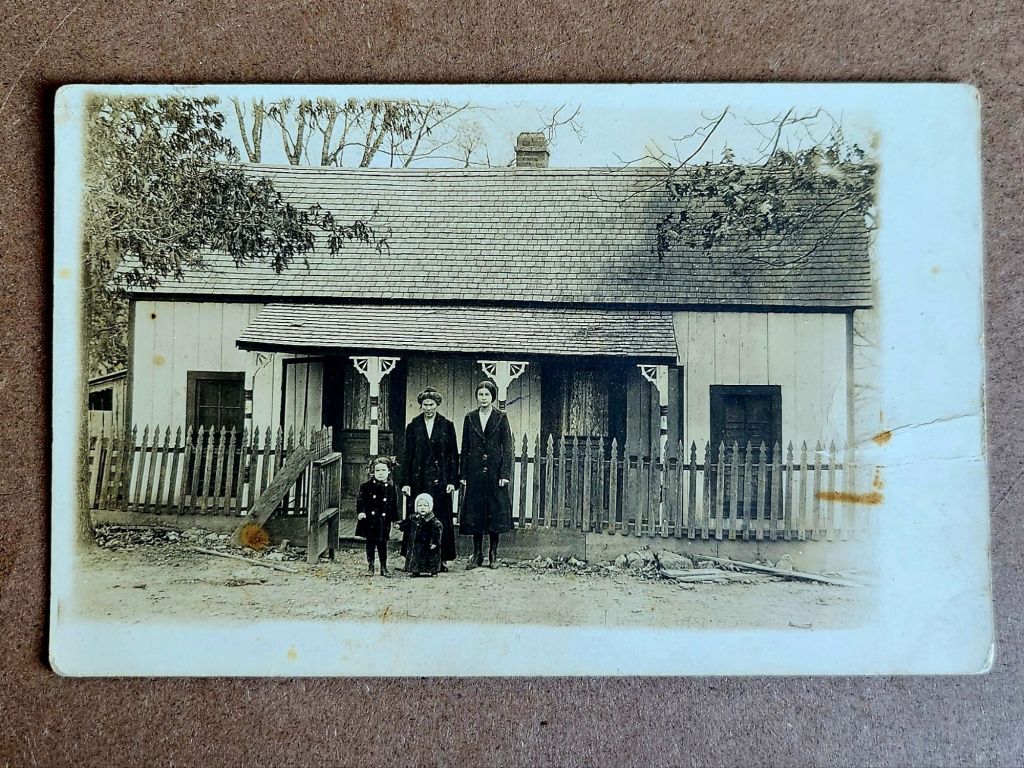
Two women stand in front of McMann Boarding House wearing identical striped dresses. The building is simple—board and batten, minimal trim, the kind of structure that goes up first and fast in a growing place.
The photograph has a vertical tear, the exposure is bad, and time has degraded it. But the sign remains legible: McMann Boarding House. Finally, a name.
Who was McMann? Who are these women? Employees? Vacationers? The photo is both casual and deliberately staged. What might the matching dresses mean? Pride? Subjugation?
Reading their faces, we fill in the narrative, almost immediately and sometimes inescapably. Relationships, motivations, futures take shape unbidden. This is exactly what we both invited and warned of last week—making it up. Always dangerous, sometimes worthwhile.
The impulse to story is nearly irresistible. A name on a building. Two women in matching dresses. The space around the postcard lights up. Are these their stories, or our own, or a magical projection that folds time?
When the Past Chats Back
Shuffling the stack, several cards in this collection start speaking to one another. Same photographic quality. Same paper stock. Similar landscape—flat, spare, newly broken. And most telling: similar structures in states of becoming.
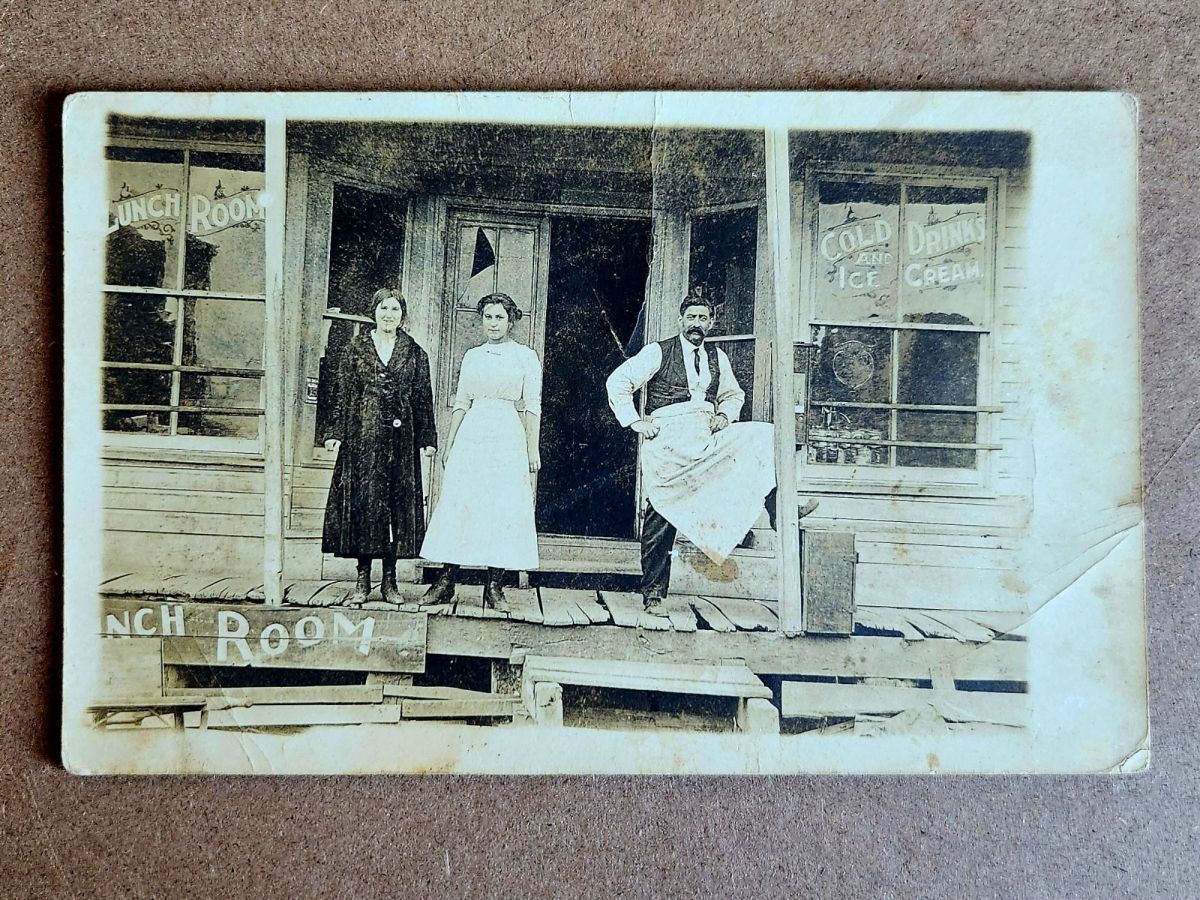
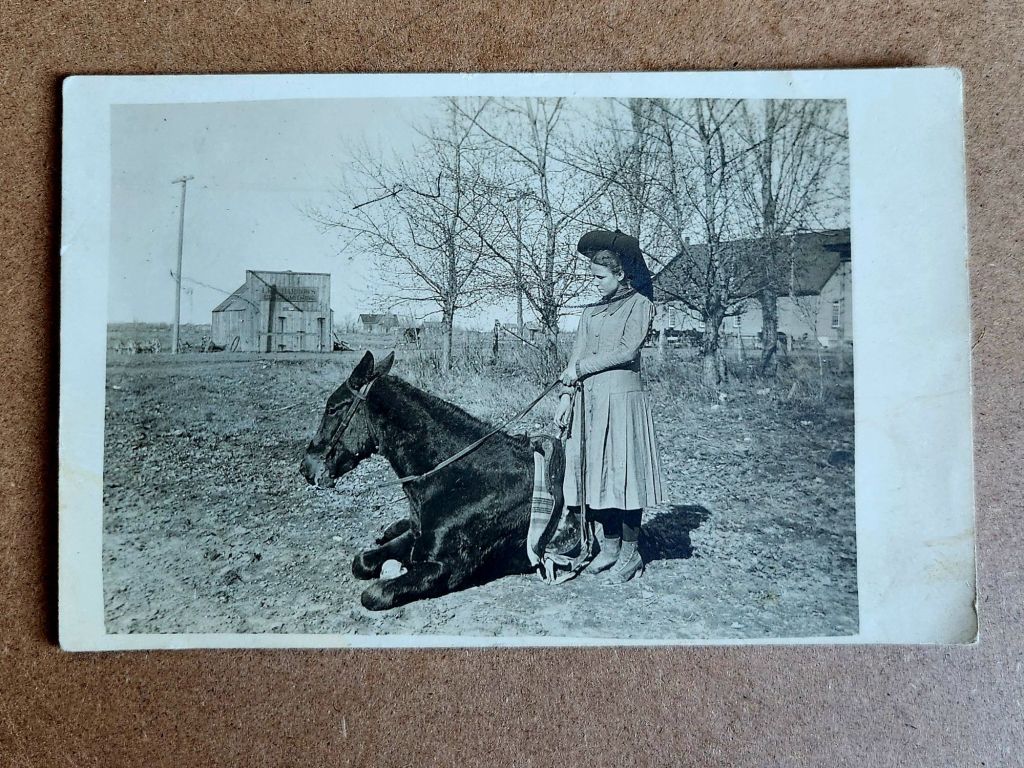
Laid out together, the pattern emerges. Houses with stone foundations and wraparound porches. An elaborate Queen Anne with a windmill. McMann Boarding House with its two women in matching stripes. A lunch room with an immaculately vernacular grand porch. Best-dressed proprietors standing proud. A girl and her horse, bare buildings behind her. A picnic under the canopy of a large tree.
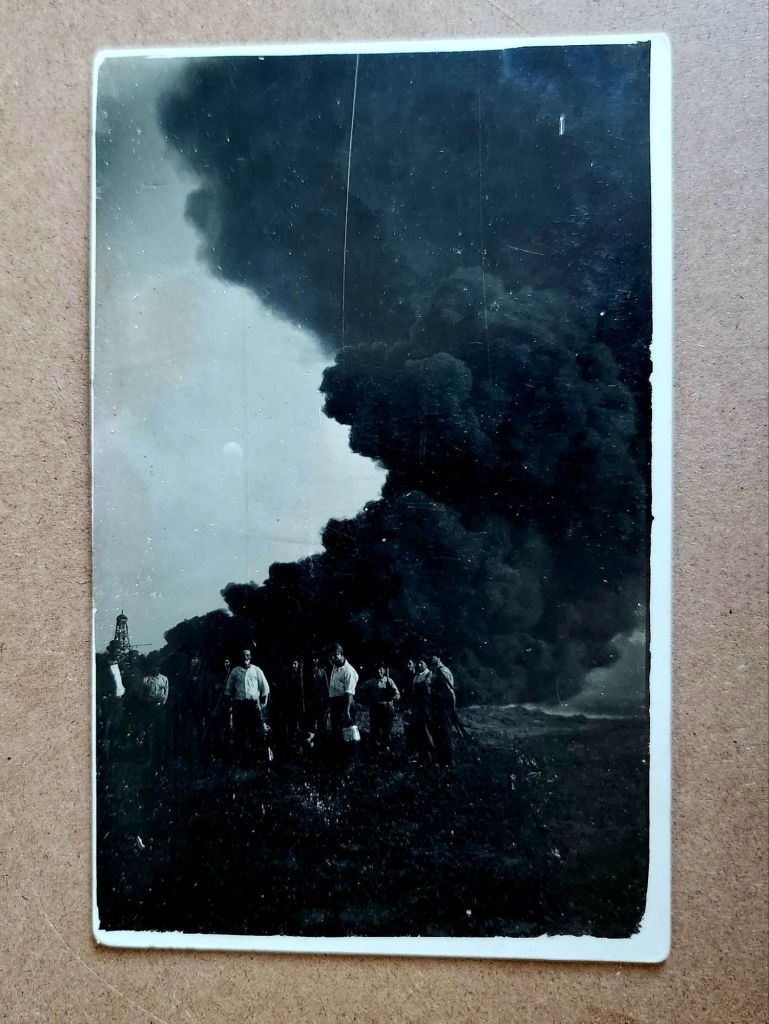
Also, a massive plume of black smoke billowing skyward, an oil derrick to the left, eight or nine men grinning toward the camera. The photograph stops everything cold. They struck liquid gold. A triumph worth documenting. Fine lines of the plumes etching through the darkest black.
These eleven images are a cluster from the same story—a town emerging around oil. Homesteaders and entrepreneurs arriving in a place that may have been open prairie five years earlier. Building homes, businesses, infrastructure for both industrial productivity and social life. Documenting the process with real photo postcards, for themselves or to send East. Their message: we have arrived safely and are in luck.
From Here to Now
This is a founding, the moment a place began and the stakes changed. These aren’t isolated buildings anymore and oddly they seem less like photos, too. We know there is a community taking shape and the evidentiary questions multiply. Who were they, by name? What brought them here? Did this place survive or vanish?
And harder, deeper, more consequential questions: Who lived here before? What animals and habitats were displaced? What did the derricks do? For them, and also to us.
Boom town logic. Extraction economy. Infrastructure dependencies and family injuries inherited. Cultural degradation, and environmental costs still being paid. This isn’t quaint history. This is the beginning of something we’re grappling with today.
Suddenly our imaginative stories contract and we now seek facts. The boarding house proprietor’s daily life can be imagined, but not separated from a place built on oil speculation. The architectural ambition of that Queen Anne deserves appreciation, but it went up in a town that might have lasted ten years or a hundred, depending on the wells. The buildings aren’t innocent, and we are implicated.
More in Store
Another stack of postcards might be related to this cluster—similar age, similar style, possibly the same region, likely at later dates. And then a few unrelated ones, probably European based on the architecture.
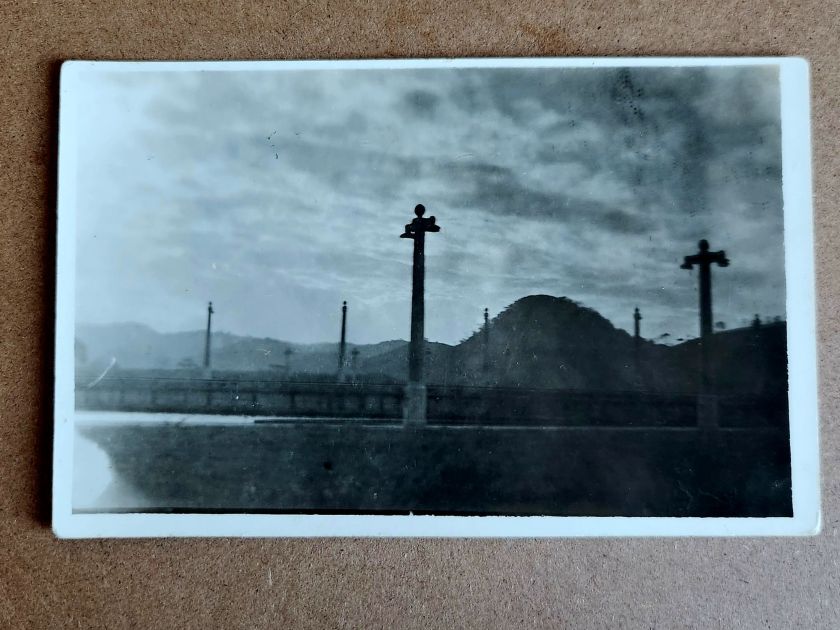
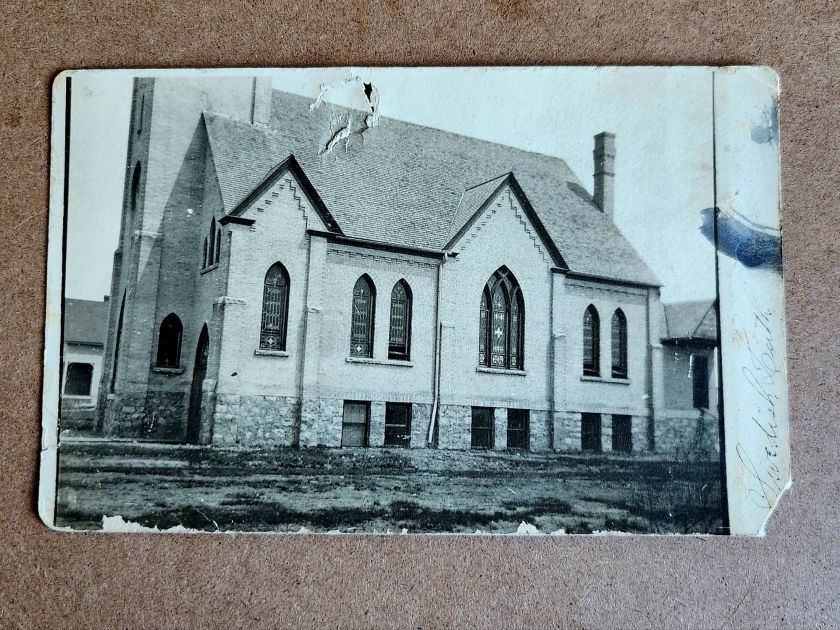
Not every fragment connects or resolves. Some buildings will remain singular, their stories unrecoverable. Churches and homes, beautiful structures, carefully photographed. Loved locally today as a memory or a ruin, perhaps.
Not everything needs a narrative. Some images can just be enigmatic. Evidence of care, of craftsmanship, of a moment someone thought worth preserving. These evocative details lead to fiction, which makes its own case for history and the preservation of minute detail.
But this cluster won’t let go. They connect to another stack, and soon we’ll know more. Next week we’ll meet the people themselves, looking back at us.
Room enough for all of us to go from here to there, and back again.
Featured Postcard~ New Orleans French Market A CENTURY AGO
An early 20th century scenic postcard showcases the iconic French Market in New Orleans’ French Quarter.
Front of the card: The photograph shows the vestibule of the historic French Market, featuring tall, weathered French/Creole Colonial columns supporting a slatted roof. Perspective draws the eye down the long corridor, emphasizing the market’s impressive scale. The covered walkway displays produce, baskets, and merchandise on tables and in crates. The image captures a rare moment when the hallway of vendors face the camera. Hand-colored rose tones reflect the market’s timeless atmosphere with pops of green and blue artfully applied. Caption: Vestibule, French Market, New Orleans, La.
Back details: The left panel explains the market’s history:
This card shows the interesting old columns erected, 1822. While the roof of the market has been repaired many times, the old columns have stood as originally put, without fire aid to the injured.
Published by Lipsher Specialty Co., 320 Magazine St., New Orleans. Standard divided back format with decorative script and postage rates listed: Domestic One Cent, Foreign Two Cents.
Historical significance: The postcard documents the French Market’s appearance in the early 20th century. Established in the 1790s, the market served as a vital commercial hub where vendors sold fresh produce and handcrafted goods. Instructions to “Take French Market car from Canal St.” reflects the streetcar system and emphasis on tourism. This postcard dates to 1922-1925, based on combined evidence of one-cent postage, the specific streetcar reference, and hybrid halftone-collotype printing (Aquatone process was patented in 1922).
Condition and Appeal: The card displays excellent color saturation, with clear and interesting details and minimal defects. Tiny nicks on two corners, with yellowing on the reverse typical of age. Image and text provide valuable historical context, appealing to collectors of New Orleans memorabilia, architectural history enthusiasts, and those interested in early 20th century American commerce. The French Market remains active today, making this postcard a fascinating glimpse into its enduring legacy as a cornerstone of New Orleans culture.
Today’s Art Card & Gallery
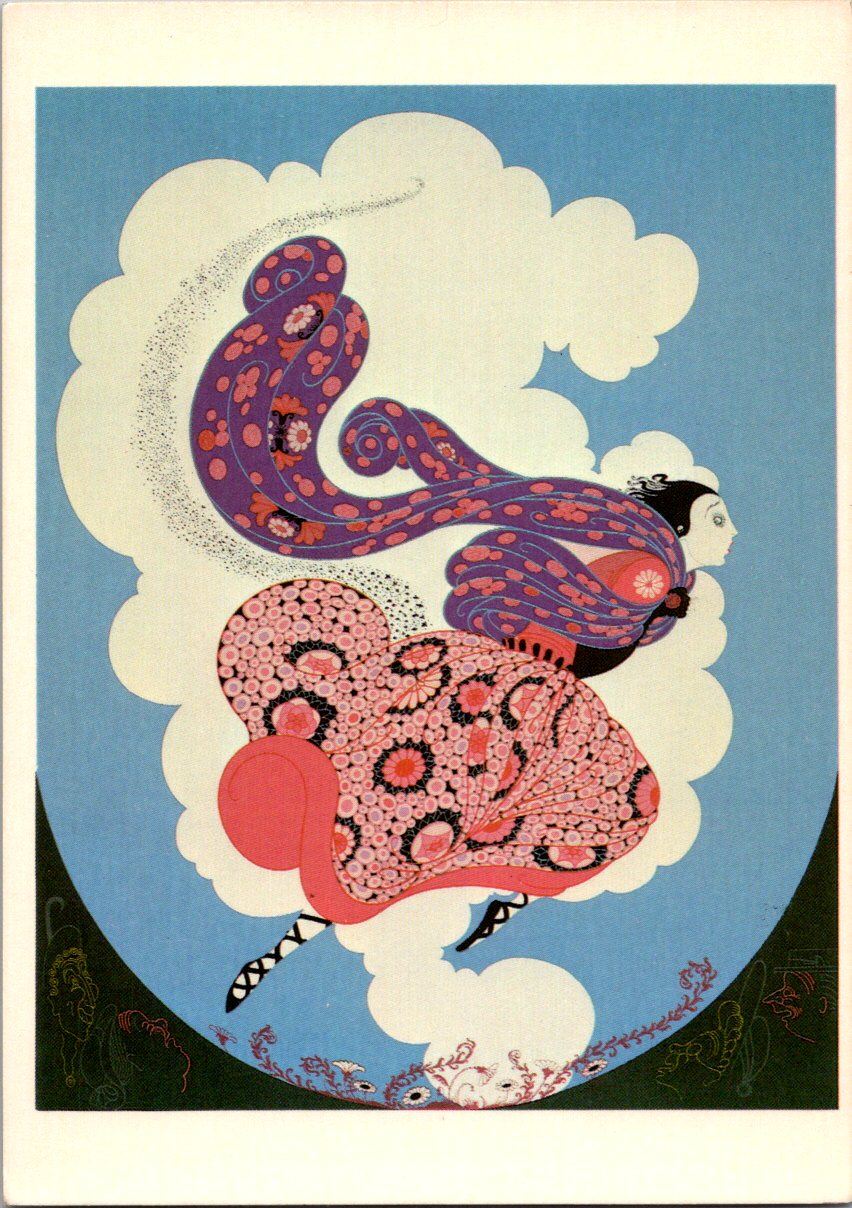
The gallery features Landscapes by Larry L’Ecuyer, and here is a fun art card from Anne this week. Winner, winner, chicken dinner!
open call for art cards!
The World’s Smallest Artist Retreat (our P.O. Box) is awaiting your art card submission. Details here!
Art card kits ~ gift or fun for you!
Our Art Card Kits are perfectly-packaged as a fun, creative activity for you and a friend to complete in as little as an hour or made into a lovely afternoon.
Here we go! The Posted Past heads into the fall season with rare cards, a new gallery, and a social mission to trade loneliness for connection.
featured postcard~ rare novelty card still holds a mystery
An early 20th century novelty postcard featuring humorous photography and personal correspondence from Missouri.
Front of the card: The photograph shows a young Black man in white shirt, suspenders, and dark trousers, grinning while holding a large broken umbrella overhead in a playful pose. Below reads the humorous caption “A little disfigured, but still in the ring”—typical novelty humor from the postcard craze era. A black border frames the photograph on cream cardstock.
Back details: The reverse bears “Carbon Photo Series No. 513” identifying the commercial publisher’s series. Addressed to Miss Grace Skillman in Pleasant Hill, Missouri, with a green 1-cent Franklin stamp and clear 1908 postmark. The handwritten message describes an exhausting early morning wait in Lee’s Summit for “Brother and Frank,” and promising a longer letter that evening.
“Still in L.S. haven’t slept but about ten minutes. My eyes looks like two burnt holes in a blanket. Brother and Frank hasn’t come yet. I will wait till 7.30 and then go home. Will write tonight. Just finished my breakfast. I will eat if not sleep. I got here ten till five.
Condition and Appeal: The sepia-toned image displays characteristic early photography with some age spots, and a nicked corner. The image and reverse side remain in good condition with clear photography and legible handwriting. The “Carbon Photo Series” indicates premium production using carbon-based printing methods prized for superior image quality and archival stability. Grace Andre Skillman was born in Pleasant Hill in 1889, making her nineteen when she received this card. The message and the lack of formal salutation and signature suggest this is casual ongoing family correspondence. As a result, the author of the postcard remains a mystery.
Vintage novelty postcards are increasingly collectible, especially numbered commercial series with documented recipients. Collectors of African-Americana may find the image appealing and relatively rare. The combination of carbon printing technology, humorous subject matter, and personal correspondence is of interest to collectors of vintage photography, postcard enthusiasts, genealogy researchers, and those focused on early 20th century American social history and communication.
Introducing~ The Posted Past Art Card Gallery
A selection of Larry L’Ecuyer’s watercolor landscapes are on display in our Online Art Card Gallery. Fitting as our first show. Enjoy!
Countdown to a Lakeside Getaway, 2025, Larry L’Ecuyer, watercolor on postcard
NEWS & UPDATES~ art card call for submissions is open
The World’s Smallest Artist Retreat (our P.O. Box) is awaiting your art card submission. Follow one rule to join the next open show. Details here!
Art card kits now in stock
Our Art Card Kits are perfectly-packaged as a fun, creative activity for you and a friend to complete in as little as an hour or made into a lovely afternoon.
The kit includes two postcard blanks, six vintage finds curated to the chosen theme, and a bundle of collage goodies for your whimsy. There is a free gift inside, too!
Once you’re done, surprise someone with an original art card in their mailbox. Or, send it back to us to include in the next online show. Either way, you’ll have cultivated a little joy in your garden.
Words to heed and repeat, and a life’s work to regard.
George Washington Carver Educational Postcard
This vintage educational postcard (likely printed in the mid-1960s) features quotations from agricultural scientist George Washington Carver (1864-1943), displayed on an exhibit at George Washington Carver National Monument. The card presents Carver’s thoughts on success, preparation, and nature alongside his portrait. Carver, born into slavery, became a prominent botanist and inventor who developed hundreds of uses for crops like peanuts and sweet potatoes while teaching at Tuskegee Institute for 47 years.
I love to think of nature as an unlimited broadcasting system, through which God speaks to us every hour, if we will only tune in. — George Washington Carver
The George Washington Carver National Monument, established in 1943 near Diamond, Missouri, was the first U.S. national monument dedicated to an African American. Located at Carver’s birthplace, it preserves his legacy and the 1881 Moses Carver house where he lived as a child. The National Park Service now manages the 240-acre nature preserve and historic site.
The summer slow-down is coming to a close, and The Posted Past is launching into a new phase as a social enterprise. On Wednesdays, you’ll still receive a weekly wander through postcard history, along with a new focus on rare cards, and a regular review of the art cards we receive at the World’s Smallest Artist Retreat (our P.O. Box). More inspiration as our circle expands. Wisdom, wisecracks, and butterfly wings. See you in September… next week!



























































 The Posted Past