Brutal Views

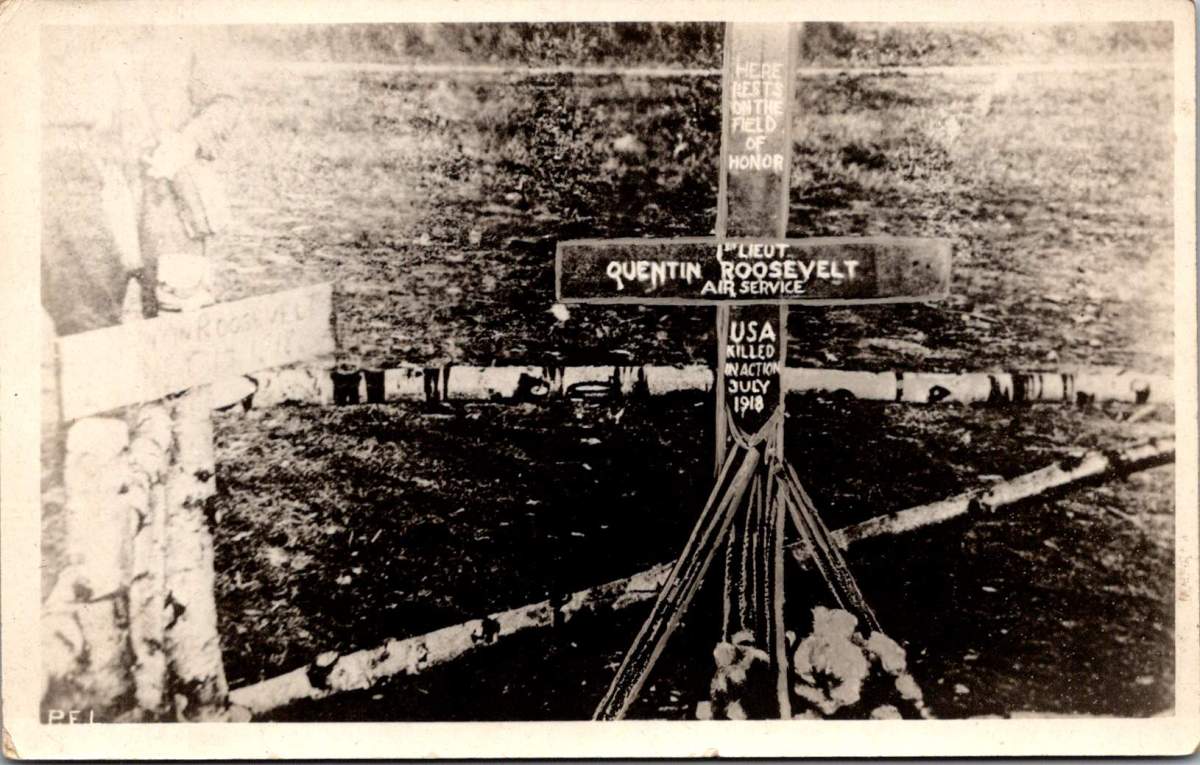
A wooden cross rises from churned earth, the inscription stark against weathered wood. A familiar image of a striking handmade monument to the son of a president who fell from the sky over France.

This photograph, captured by a U.S. Signal Corps photographer known only by the initials P.E.L., embodies the US vision of the first World War carefully curated by military officials. While this image evokes sacrifice, honor, and patriotism, the ones that follow emphasize air power and the ground fight.

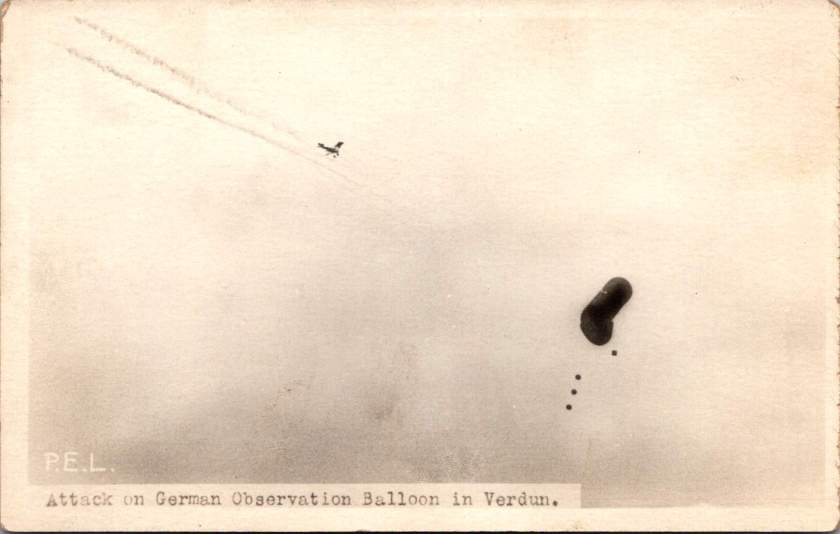
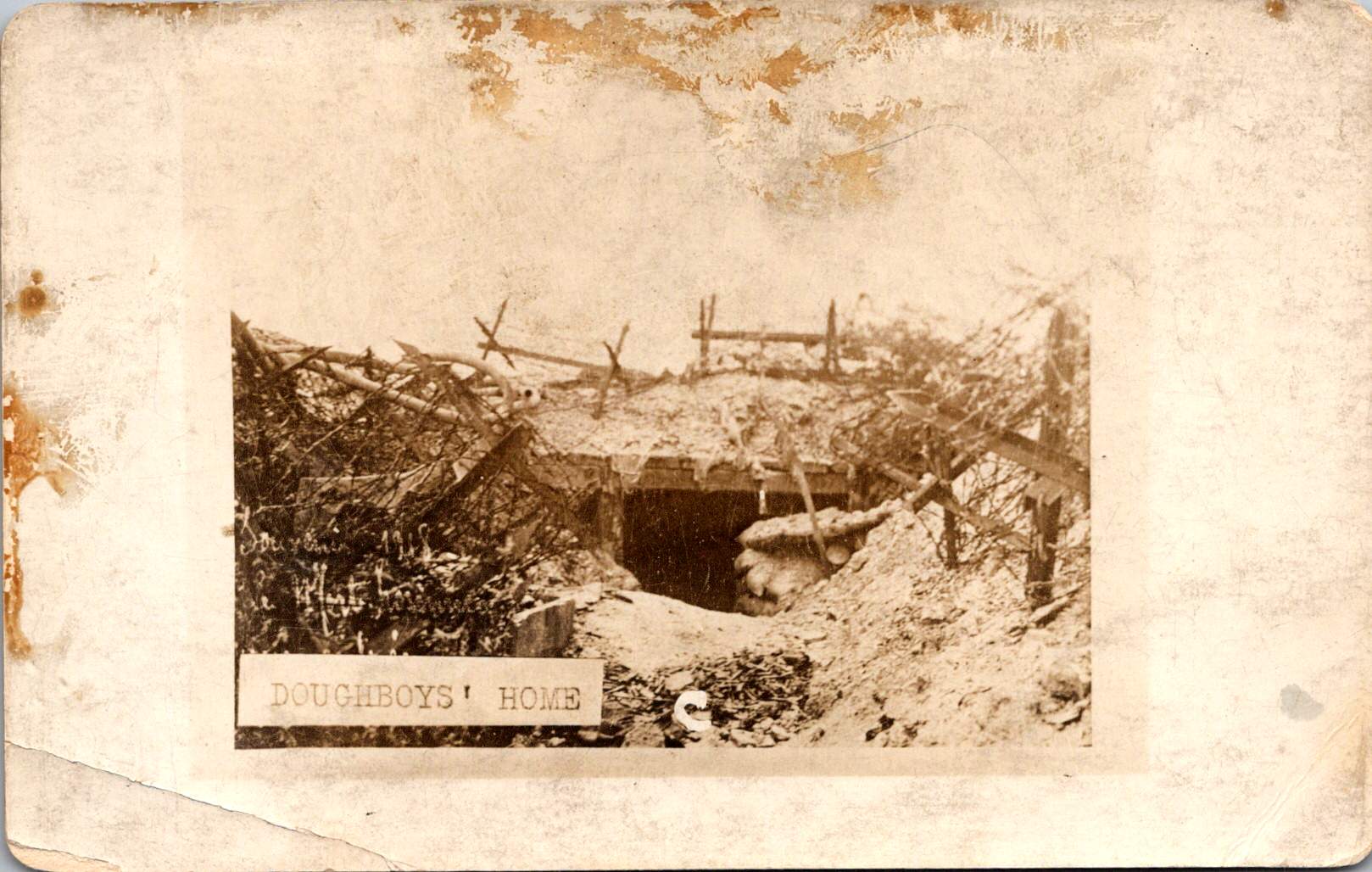
The Signal Corps photographers worked with clear directives. Their images showcased military capacity and impact: a German observation balloon in flames over Verdun, captured enemy aircraft, and troops dug into the battlefield. These photos celebrated American military achievements while maintaining a safe emotional distance from war’s realities. They framed the conflict as a grand, heroic endeavor of machines and strategy, and no bodies.

Soldier photography told different stories.
World War I marked a pivotal shift in war photography. The conflict erupted during the democratization of the camera, when Kodak’s marketing promise—You press the button, we do the rest—had placed photography in ordinary hands. For the first time, soldiers carried their own cameras to the front. They documented their experiences without oversight, censorship, or propaganda objectives.

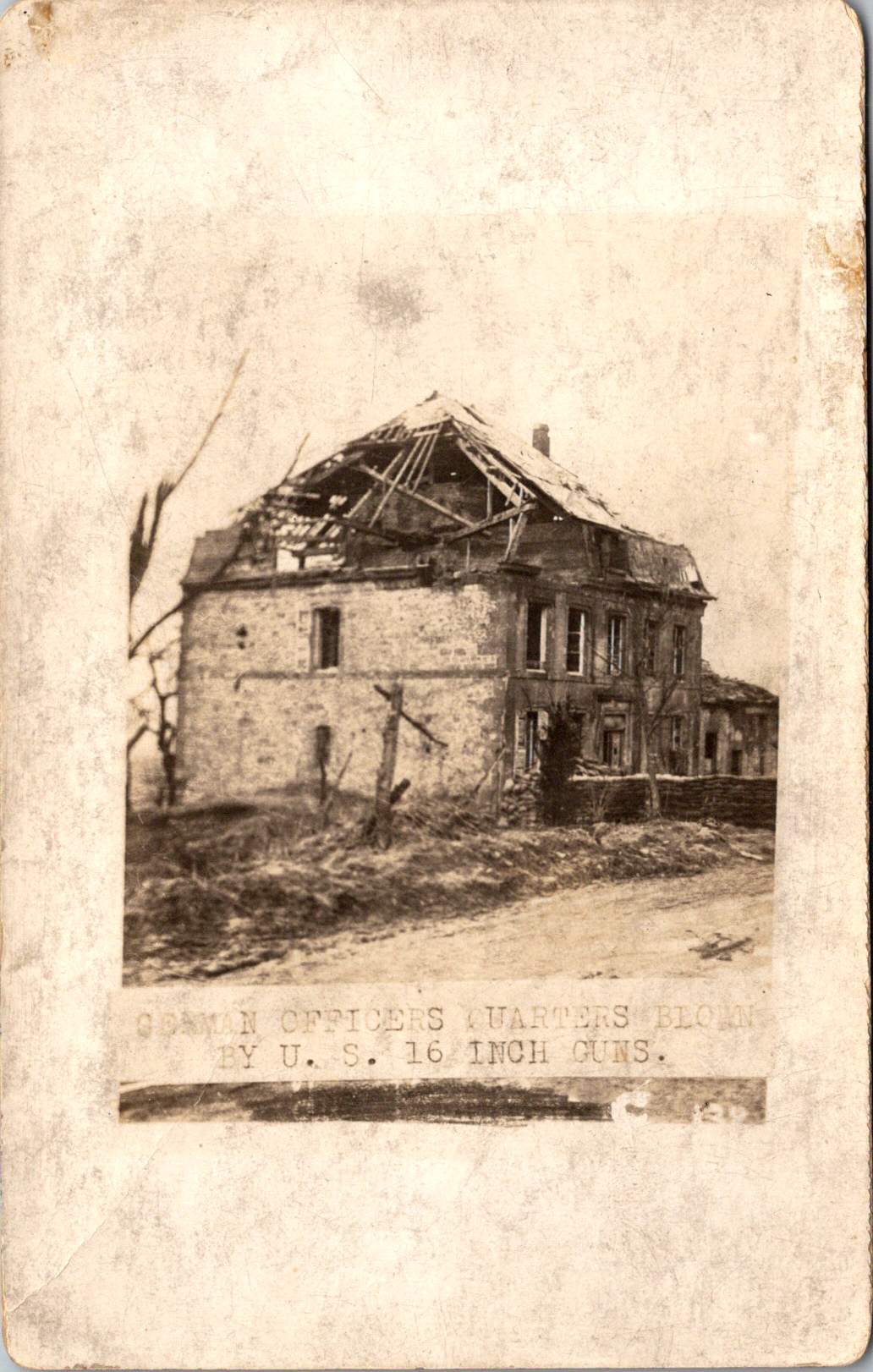
The images captured by troops and printed later at studios like Renfro & Jensen in Belmont, Arkansas reveal a more intimate perspective—the human cost of conflict. German officers’ quarters reduced to rubble by American artillery. The harsh conditions of a foxhole or a machine gun post.

These images weren’t composed for newspaper spreads or government reports. They were personal souvenirs, visual evidence of experiences too enormous to capture in words alone. They were captured on a new-fangled camera and carried home as silent witness.

Belmont, Arkansas transformed virtually overnight in 1917 from a quiet rural community into a bustling military training center. Soldiers flooded the region, bringing with them not just their uniforms and rifles, but their cameras. The town experienced a true boomtown effect as businesses sprang up to serve the influx of military personnel. Among these enterprises, the Renfro & Jensen photography studio established itself as a crucial link between soldiers’ experiences and their communication home.

Then, as demobilization began in 1918, returning soldiers sought ways to share or quietly remember what they had witnessed. Renfro & Jensen became unwitting archivists. They must have developed and printed thousands of soldier photographs—images far more frank and direct than anything appearing in newspapers or government publications. The studio workers were likely among the first civilians to confront warfare through this new technology. Each day, they processed images showing destruction, military achievements, and occasionally, the graphic aftermath of combat. Their commercial service inadvertently preserved a crucial alternative visual history of the conflict.

Two European-produced photographic postcards further document the war. These images, printed on distinctive European paper stock, emerged from a continent already numbed by years of destruction.
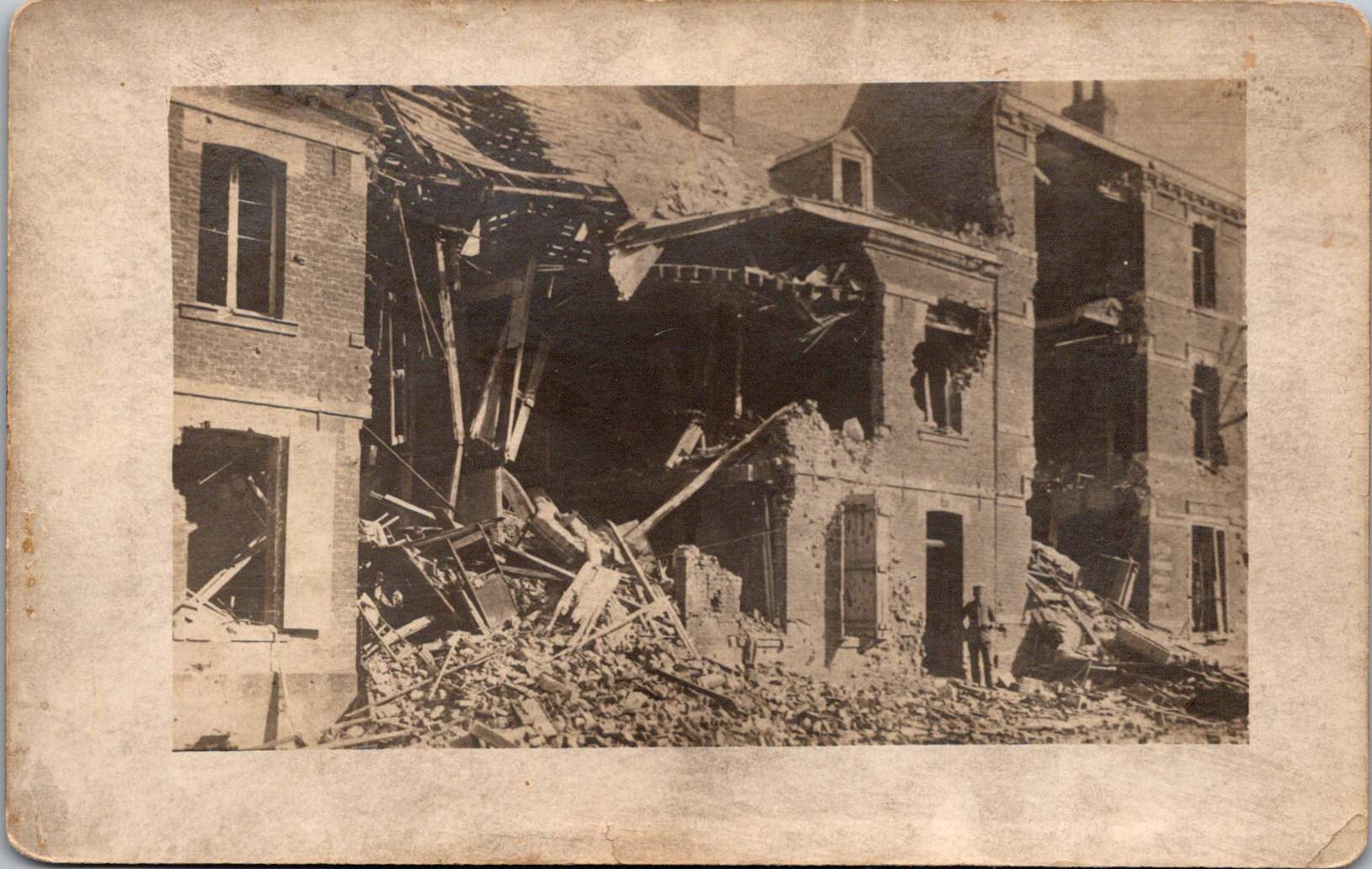
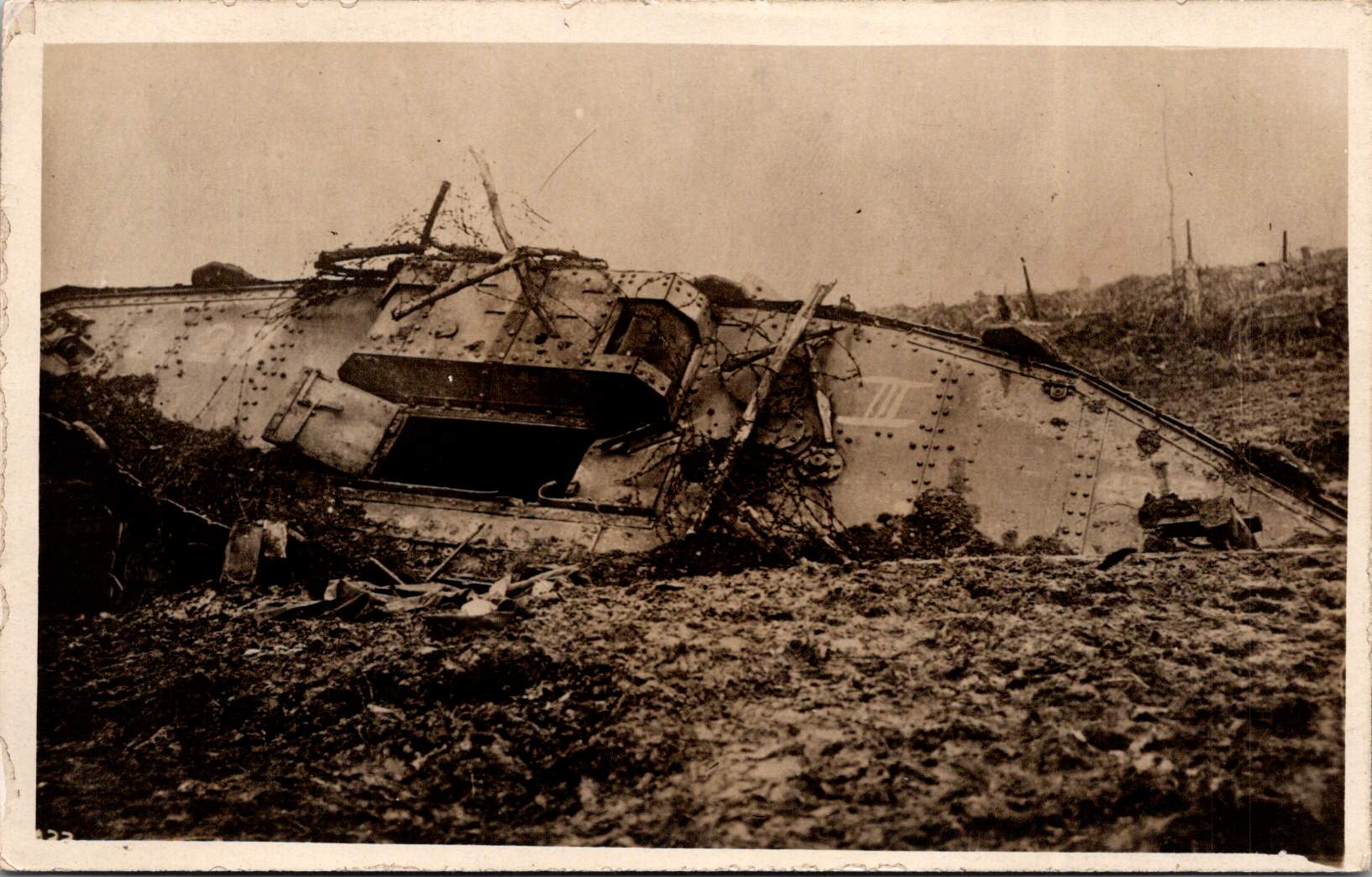
Another sixteen images — the most harrowing in the collection — can’t be shown here. The ethical boundaries of war photography persist today. What images should be shielded from casual viewing, and which realities deserve documentation regardless of their power to disturb?

Major institutional collections house millions of WWI photographs. The National Archives holds the largest repository of World War I material in the United States, with over 110,000 photographs digitized from two primary series: the American Unofficial Collection of World War I Photographs and the Photographs of American Military Activities. The Library of Congress maintains extensive collections, including the American National Red Cross Collection with over 18,000 digitized negatives showing wartime activities.

Beyond these institutional repositories exists a vibrant world of private collectors who often hold the most provocative and unfiltered images. These private collections sometimes reveal perspectives absent from official archives. Photographer Carl De Keyzer discovered approximately 10,000 archival glass plate and celluloid negatives from WWI scattered across Europe, many in private hands. From these, he selected 100 to reproduce in stunning detail, revealing aspects of the conflict previously unseen in such clarity. Some of the most compelling battlefield imagery exists in small personal collections—albums like this one that have been kept by families of veterans, passed down through generations, their contents rarely exhibited publicly.

The grave of Lieutenant Quentin Roosevelt is quite enough for many. It symbolizes loss while sparing us its visceral reality. But the full photographic record of the conflict includes truly heinous realities—corpses tangled in barbed wire, faces distorted by gas, bodies rendered unrecognizable by artillery.

While official photographers were tasked to frame narratives that supported war efforts, some soldier photographers refused to turn a blind eye. They captured what they witnessed, creating very personal views that continues to challenge our understanding of history. Their lenses documented what words alone could never convey—the irredeemable human cost of modern warfare.
Funny Facts: An Era When Bureaucracy was a Laughing Matter

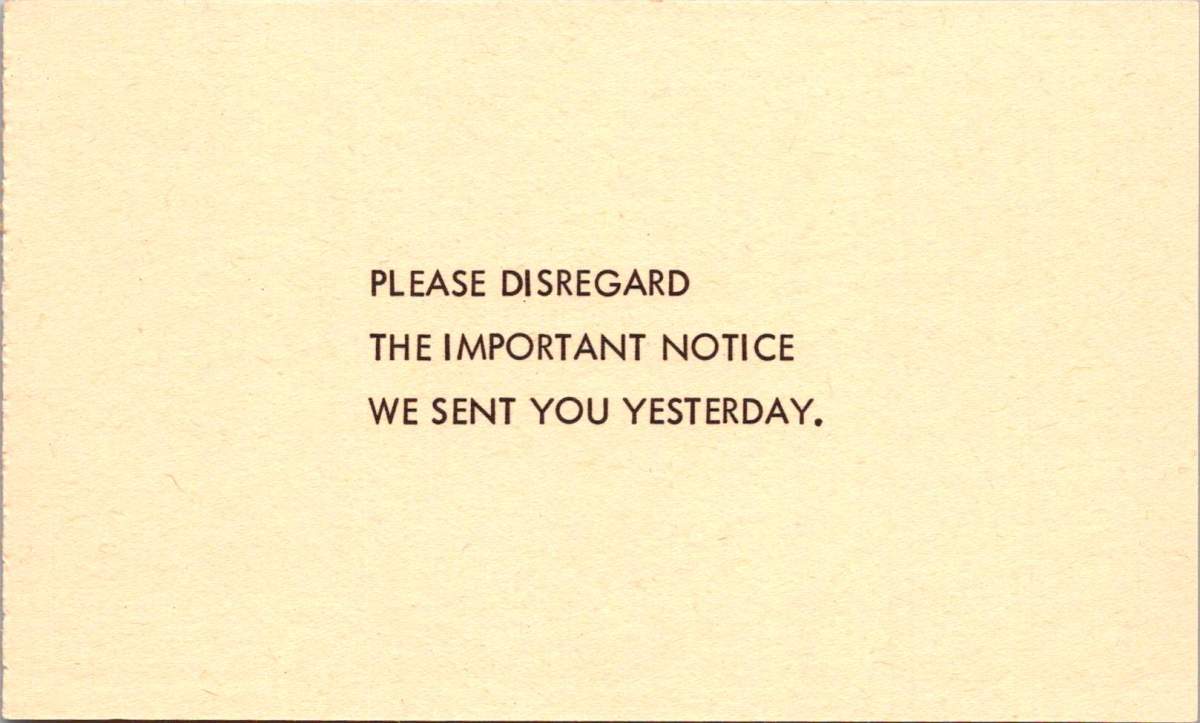
With just nine words, this 1964 parody postcard captures an era of bureaucratic absurdity. The genius lies in its perfect circularity: you can’t disregard a notice you never received. A logical paradox delivered in the stern capital letters of official communication.

This masterpiece of meta-humor was the centerpiece of “Nutty Notices,” a collection of satirical postcards published by Philadelphia’s GEM Publishing in 1964. The series went on to skewer everything from traffic enforcement to mattress tags, each card delivering bureaucratic absurdity like a stage clown wielding a rubber chicken.

Perfect for the spooky season, the next notice solemnly announces the recipient has won in an “Imminent Danger Sweepstakes” sponsored by a “Black Cat Society,” reassuring that previous recipients survived their subsequent accidents.

The collection unfolds like a greatest hits of paperwork problems. Another, from the stern-sounding “Bureau of Upholstery Tag Security,” threatens dawn raids over a removed mattress tag. A mock inheritance notice dangles a too-good-to-be-true fortune from a conveniently deceased fifth cousin, key details lost to a faulty typewriter.

These parodies emerged during a period of notable government expansion. The Great Society legislation of the Kennedy and Johnson administrations had launched numerous new agencies and programs, from the Peace Corps to Medicare. While many of these programs were popular, and have endured, they also generated unprecedented levels of paperwork and official communications in Americans’ daily lives.

The notices cleverly played on specific anxieties of the era: fear of government surveillance, concerns about traffic enforcement in the new Interstate era, and awareness of inheritance scams in an increasingly connected society.

The traffic violation notice, featuring President Lyndon B. Johnson, plays on LBJ’s notorious driving habits. The President was known for terrifying guests at his Texas ranch by driving his Amphicar (a German-made civilian amphibious vehicle) at high speeds toward the ranch’s lake, screaming about brake failure as his car plunged into the water. The vehicle was designed to float, but his unsuspecting passengers didn’t know that. This well-known presidential prank made the postcard’s joke particularly resonant with 1960s readers.

A good pun is still a kind of social capital, as all deadpanning dads know. The card below suggests an incredible win. The 1964 Plymouth Barracuda was a coveted car model, though overshadowed that year by the introduction of the Ford Mustang. The Barracuda featured a sloped fastback roofline and fold-down rear seats that created a large cargo area, making it both sporty and practical. The standard engine was a Slant-6, but buyers could opt for a more powerful V8 engine. Prices started at around $2,500 (approximately $22,000 in today’s dollars). By the end of the card, though, it’s all a bit fishy.

What makes these 1964 parodies fundamentally different from today’s deceptive communications is their clear satirical intent. The notices were obviously humorous, from their outlandish premises to their absurd escalations. They never attempted to deceive. The parodies didn’t seek to extract money, personal information, or action from recipients. The joke was the endpoint, and publishers and recipients understood these as entertainment, part of a broader tradition of bureaucratic satire.

Today’s deceptive communications often weaponize the same official-looking formats and bureaucratic language that these postcards once parodied. But modern scams aim to deceive rather than amuse, exploiting digital tools to create ever more convincing forgeries. Contemporary examples like phishing emails represent a darker evolution of institutional mimicry. While the 1964 notices laughed at authority’s pomposities, today’s deceptive communications abuse institutional authority for malicious purposes.

Long before memes spread political humor online, postcards served as a democratic medium for both serious political discourse and satirical commentary. During the Golden Age of postcards before World War I, suffragettes used them to promote women’s voting rights. The famous “Vinegar Valentines” of the Victorian era delivered stinging social critique through the mail. During World War II, patriotic postcards boosted morale while propaganda postcards spread messages both noble and nefarious.

These vintage parodies remind us that healthy skepticism toward official communications isn’t new—but the stakes have changed dramatically. In 1964, Americans could laugh at mock notices because real ones, while annoying, generally came through trusted channels with clear verification methods. Today’s digital landscape requires a more sophisticated type of visual and contextual literacy. We must balance healthy skepticism with the ability to recognize legitimate communications, while remaining alert to increasingly sophisticated forms of deception.

The “Nutty Notices” stand as charming artifacts of a time when bureaucratic busy-ness seemed worthy of laughter rather than alarm—when the worst thing a notice might do was create a paradox, not steal your identity. In an era of digital manipulation, we can look back nostalgically at a time when the most threatening official communication you might receive was a tongue-in-cheek warning about your mattress tags.