A path appears underfoot every year around this time, with a slight softening of the ground and a change in the light. The road is old, but the way is new again.
Spring equinox arrives in just a few days, another moment when day and night stand in perfect balance. Nowruz, one of the world’s oldest celebrations, falls on the equinox itself, marking the moment the earth turns toward renewal. Observed for at least three thousand years across Persia, Central Asia, the Caucasus, and the diaspora communities that carry it around the world, Nowruz means new day and it begins precisely at the moment of the spring equinox.
Preparations are meticulous. The house is cleaned from top to bottom in a practice called khane-tekani, shaking out the house, to release the accumulated weight of winter. A ceremonial table is set with sprouted wheat for rebirth, vinegar for patience, garlic for health, and a goldfish in a bowl for life against all odds.
In Chinese Lunar New Year, it is the year of the horse. All the teachings of Ramadan have been quietly observed this month. Christians are entering the heart of Lent, when liturgical colors shift from penitential purple to radiant rose, and the invitation is to rejoice. World traditions share this central wisdom. To walk forward, one must first prepare.
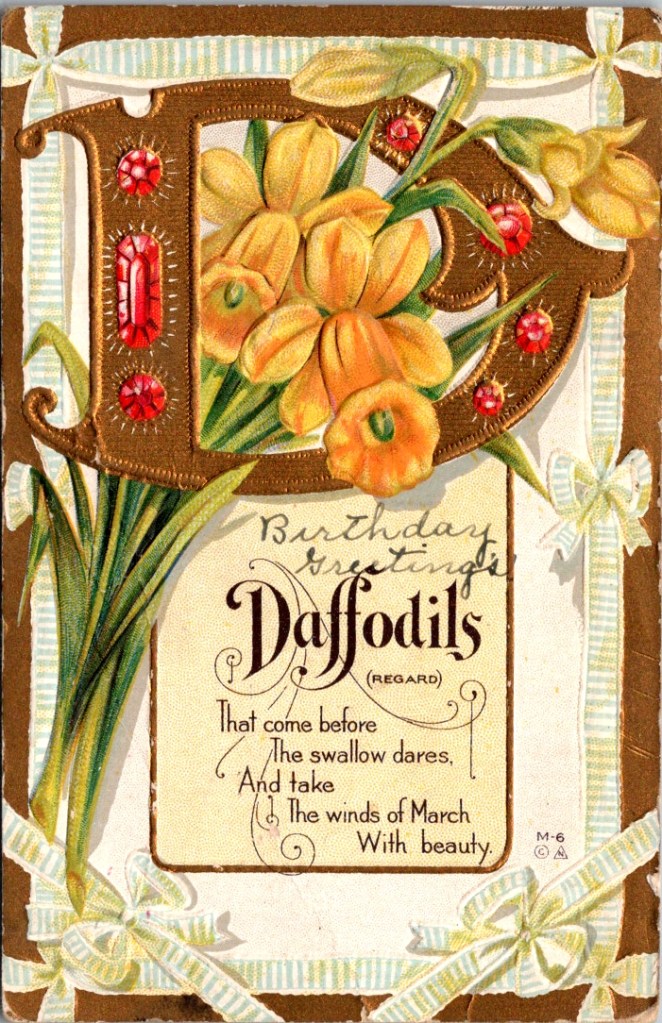
This morning my path runs along Sligo Creek near Washington DC, where the trail follows the water through an old urban forest. The snowdrops are done. Small and white and brave, they came and went in February. Crocuses are finishing now, purple and yellow scattered through the leaf litter. Daffodils line the path in both directions to proclaim the news of spring. Soon the cherry blossoms will arrive, carrying the Japanese mono no aware, bittersweet awareness as beautiful things pass.
For the next few weeks I’ll be traveling. Away from my desk and the collection. Being in motion feels at pace with the season. By early April I’ll be back in Arizona, where spring doesn’t linger the way it does in the East. The desert has its own brief, vivid version of the season. Sharp early light and cool mornings, palo verdes going yellow and the brittlebush blazing.
For me, it’s a time to toss off the heavy winter blankets, move furniture, dust out the corners, and feel all the motivations of the season. The Posted Past is making some new moves, too.
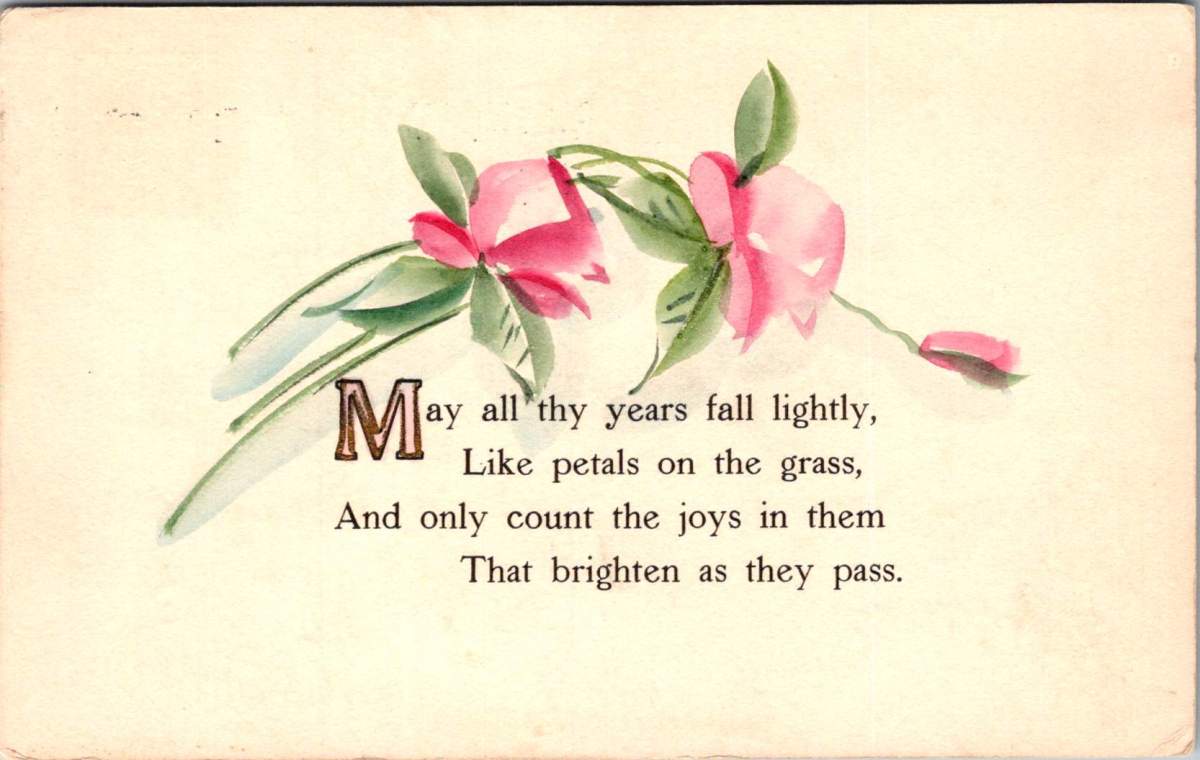
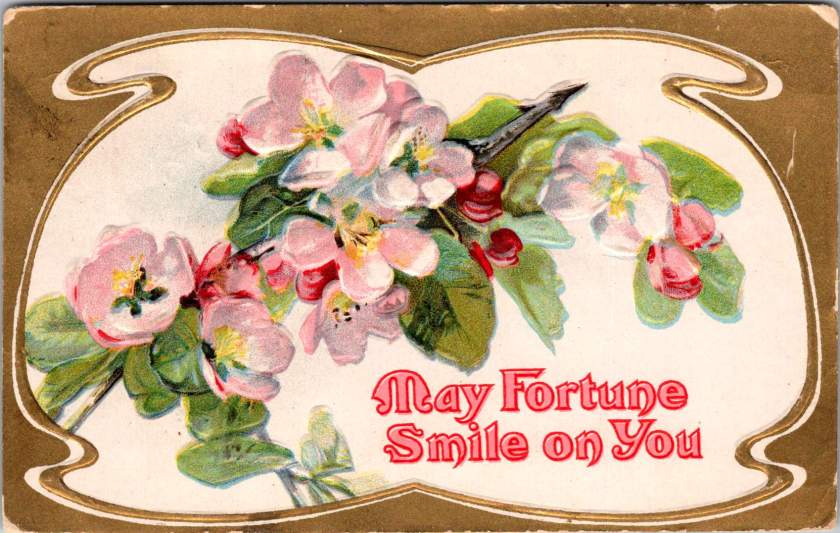
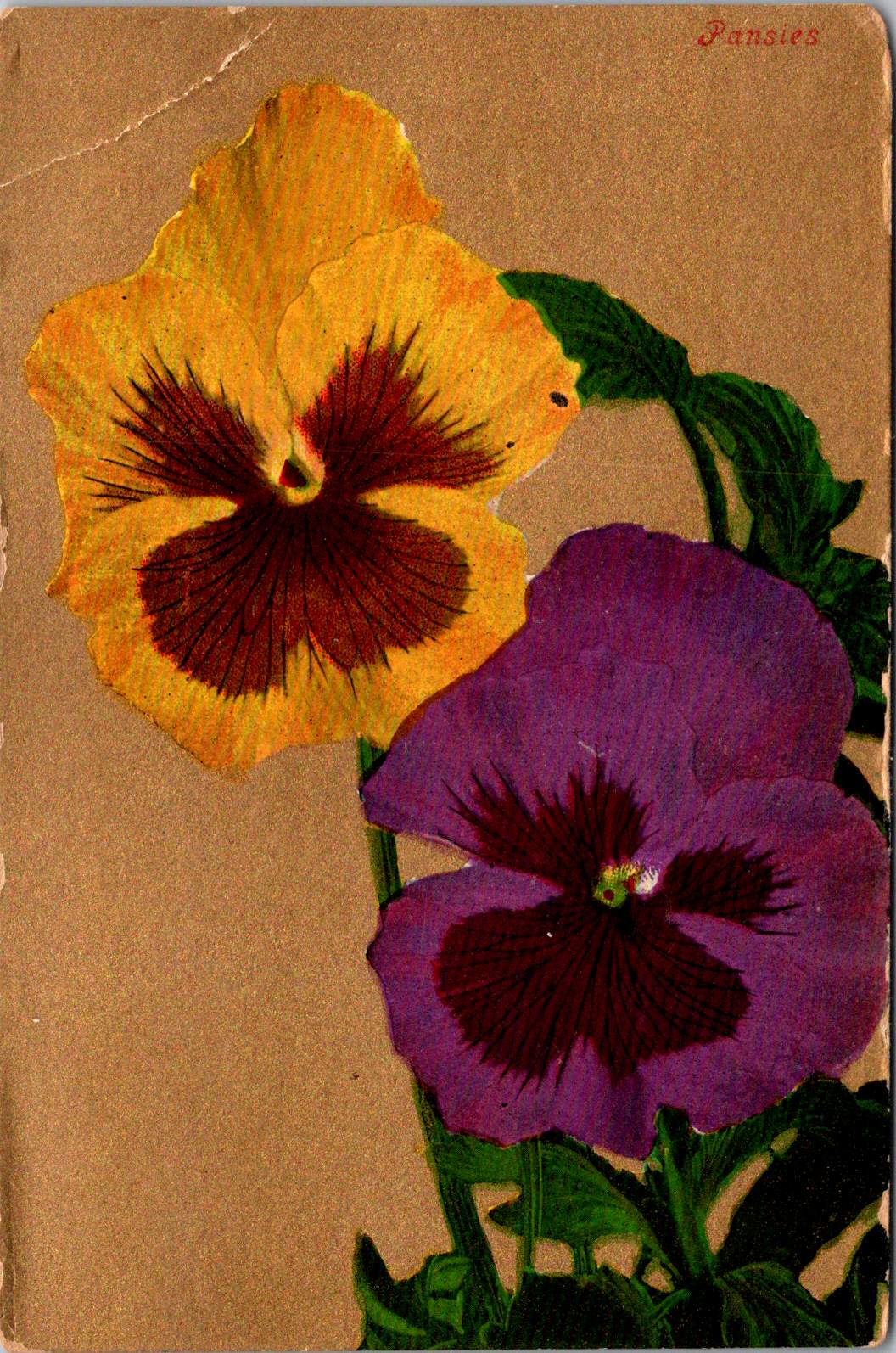
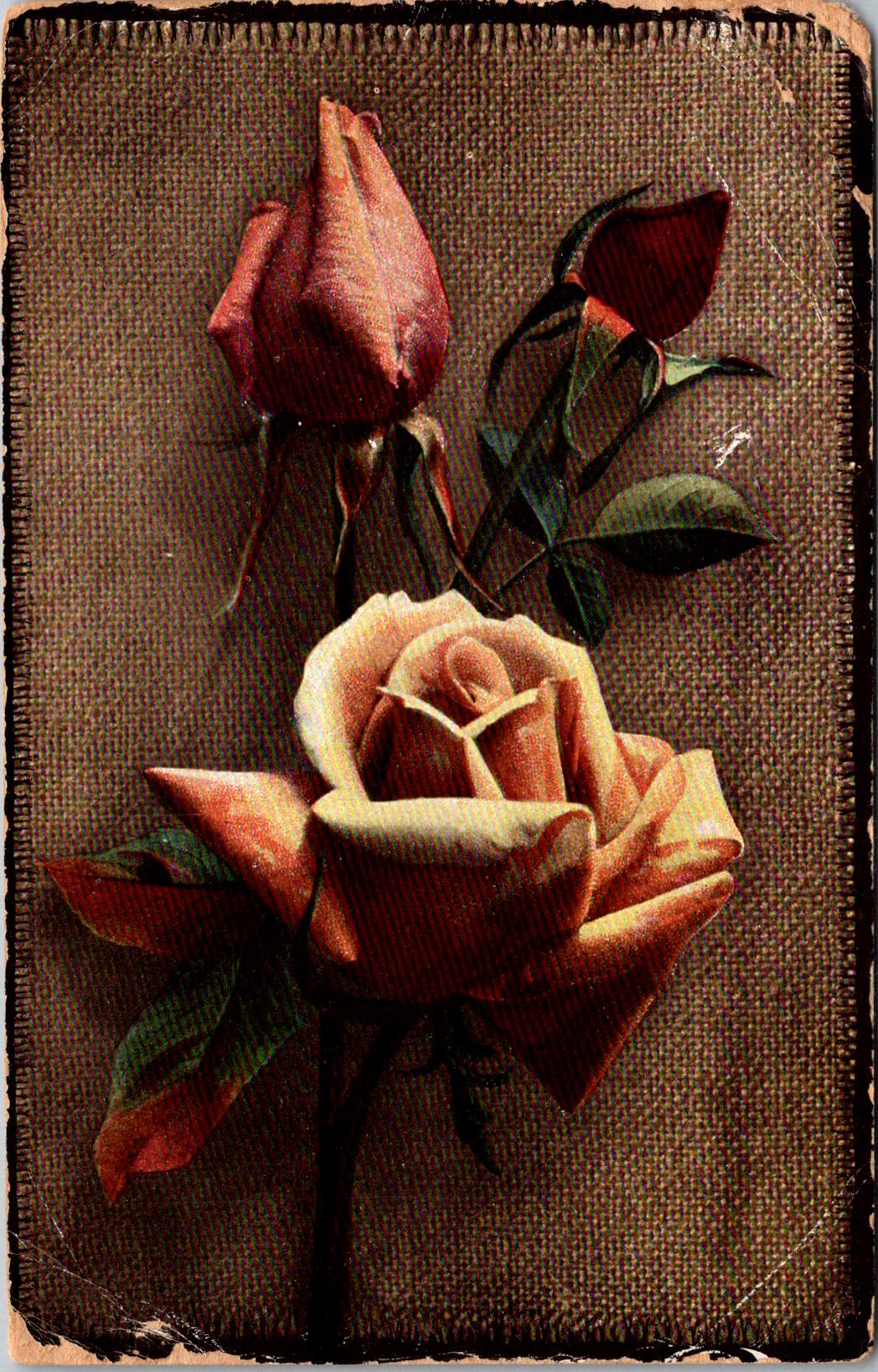
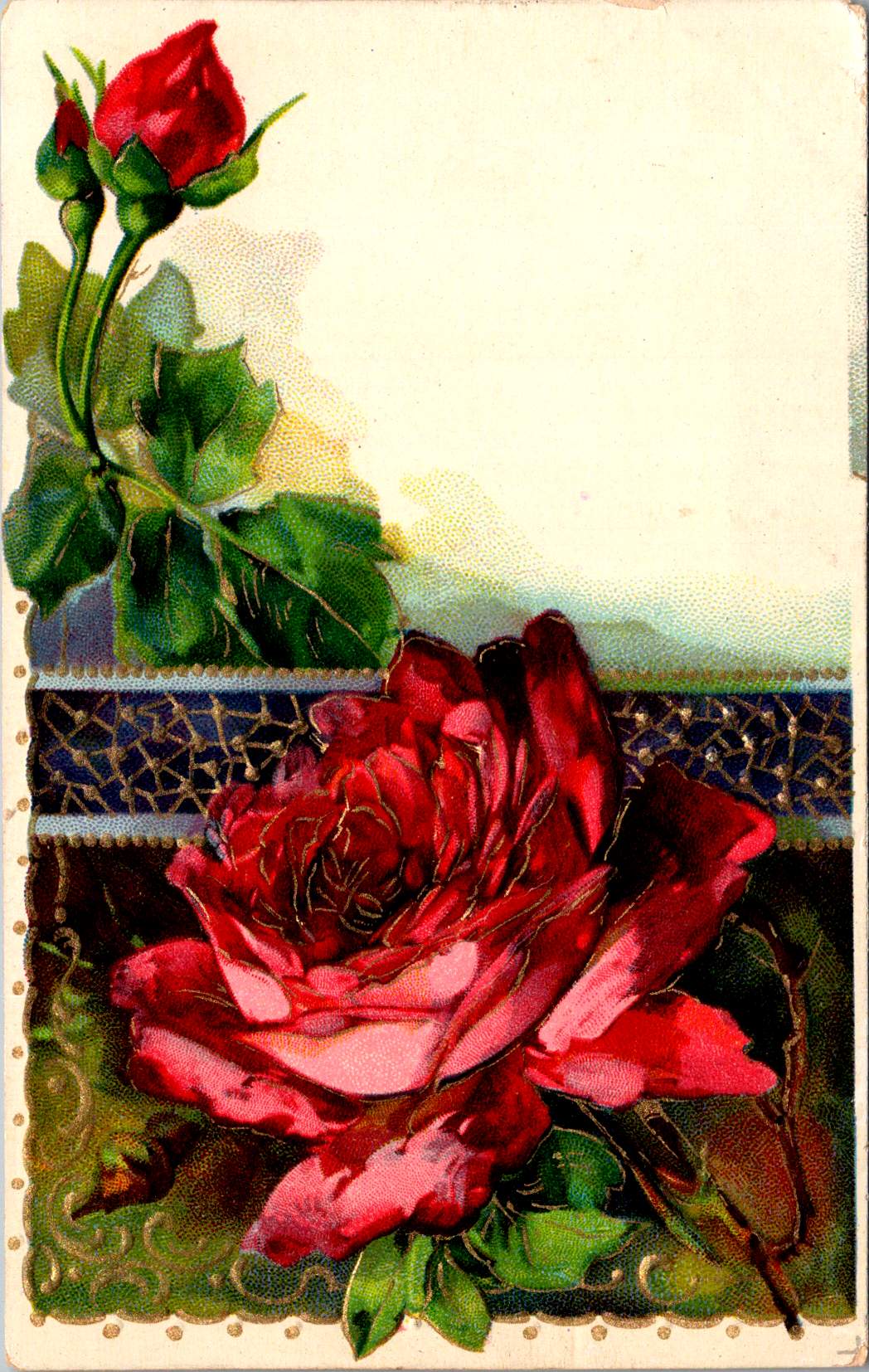
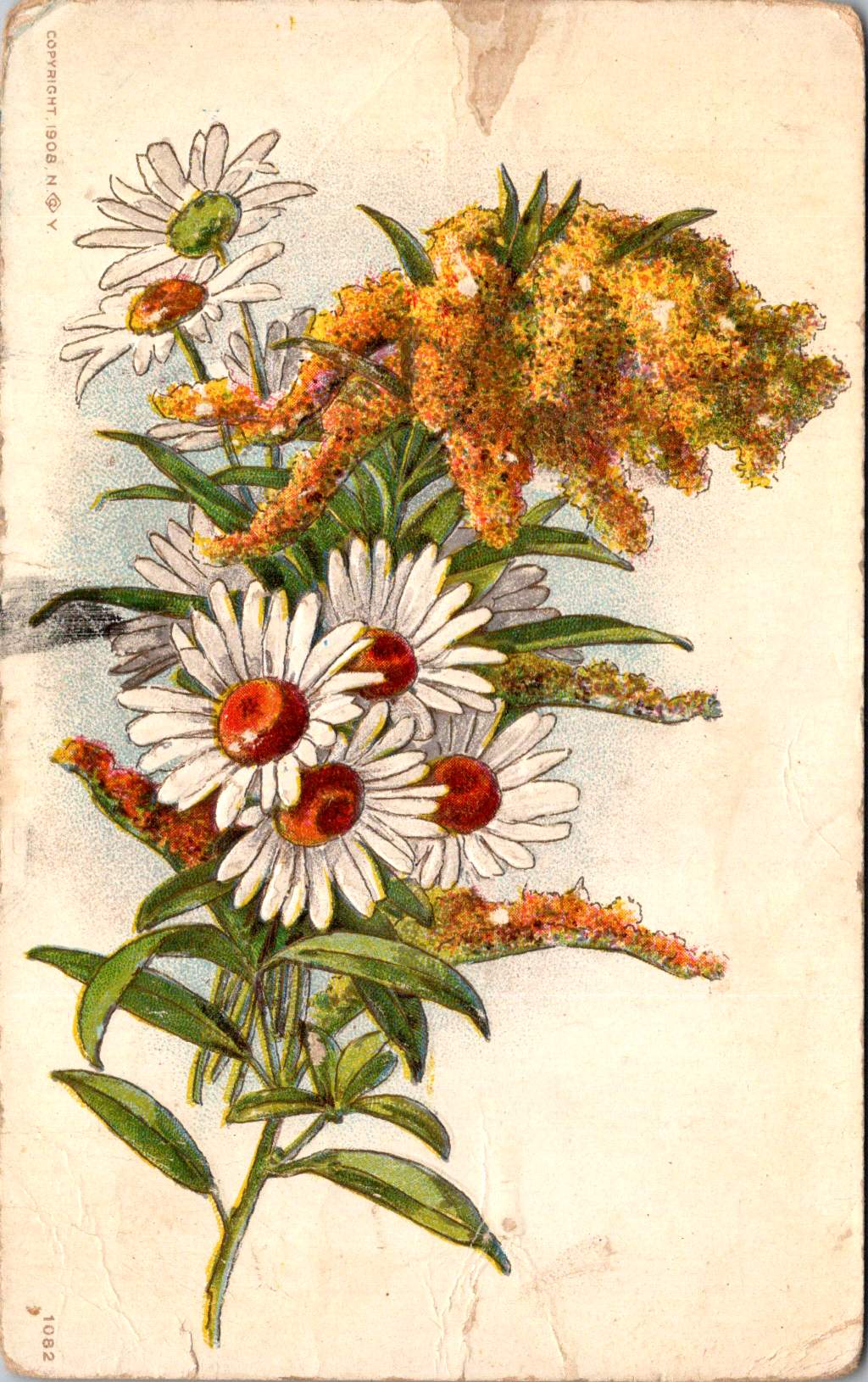
Spring greeting cards are full of flowers and fancy, and the messages give us gentle permission to start again. If you are grass-side up, count yourself among the living and the hopeful. Believe that what comes next might be better.
Take a walk this week, if you can. Clear an old task you’ve been putting off. Set the table. Notice what’s arising in your life. Greet the new day.
Vintage floral postcards—with golden backgrounds, symbolic flowers, and heartfelt messages—were a sophisticated social currency that connected people across distances.
At the intersection of the Victorian and Edwardian eras, the humble postcard emerged as a powerful medium for small aesthetic pleasures and meaningful social exchange. These postcards tell a story of artistic development and printing innovation, and how ordinary people wove beauty into the fabric of everyday communication.
Delicate Blooms
One card in this selection features pristine white lilies and fern fronds against a luminous gold background. The lilies—rendered in striking detail with their trumpet-shaped blooms and distinctive stamens—create dramatic contrast against the warm gold, the iridescent ink catching light as the recipient tilted the card in their hands. An elegant blessing accompanies the illustration.
“No thorn beset the path you tread, No shadows glance upon your way, But flowers spring beneath your feet, And sunshine crown your every day.”
These cards encapsulate a pivotal moment in design history—the transition from Victorian to Edwardian sensibilities. The Victorian era (1837-1901) embraced ornamentation, sentiment, and symbolic complexity. Every element carried meaning: white lilies represented purity and virtue; ferns symbolized sincerity and shelter; the gold background evoked trust and value. These layers of meaning reflected the Victorian preoccupation with moral improvement through beauty, a philosophy championed by influential figures like John Ruskin and William Morris.
As Queen Victoria’s reign ended and Edward VII took the throne (1901-1910), aesthetic preferences gradually shifted. The new Edwardian sensibility maintained Victorian symbolic richness but introduced more restrained layouts with increased white space and cleaner compositions. This particular card, with its strategic emptiness and focused arrangement, demonstrates this evolution. The gold field creates breathing room that earlier Victorian designs would have filled with additional decorative elements.
The technology behind these gold backgrounds represented industrial innovation. Using metallic powders and varnish printed in the desired pattern, these effects made previously elite decorative elements available to middle-class consumers. During the Industrial Revolution, technical advancements in printing had transformed what was once painstaking handwork into mechanized production. German printers in particular had mastered these techniques, producing cards with exceptional color registration and metallic effects that remained unmatched until their trade was disrupted by World War I.
Other sophisticated production methods like embossing—creating raised areas that added tactile pleasure to the visual experience—required specialized equipment and expertise. Metal dies created by skilled engravers would press the design into the card after printing was complete. The visual effect was enhanced by different dimensions, making these technically perfect cards a testament to industrial craftsmanship.
Gold’s association with luxury stemmed from both its intrinsic properties and historical significance. The aptly named Gilded Age celebrated opulence, with gold becoming a visual shorthand across design disciplines. International Expositions like the 1900 Paris Exposition showcased luxury goods incorporating gold elements, popularizing these aesthetics globally. Archaeological discoveries in Egypt renewed interest in gold in design, while the Ballets Russes featured costume and set designs by artists like Léon Bakst who used vibrant colors and gold accents.
Floral Features
A striking card in the next selection features white and red striped “peppermint” carnations against a gold background. The distinctive white petals dramatically streaked with vibrant red markings create bold visual contrast against the metallic wash. Three perfectly rendered blooms cluster together on dark stems, with bright green sword-like leaves framing the arrangement. The word “Carnations” appears in red script in the upper right corner, identifying the botanical subject with elegant simplicity.
This stark compositional approach—focusing entirely on the botanical subject against a uniform background—represents a more modern, stripped-down aesthetic that emerged in the early 1900s. While maintaining the Victorian fascination with floral symbolism, these designs eliminate extraneous decorative elements in favor of dramatic contrast and botanical precision. This shift toward simplification prefigured design trends that would gain momentum in the following decades, showing how postcard aesthetics tracked broader movements in visual culture.
The symbolism remained rich: striped carnations carried specific meaning in the Victorian language of flowers, often representing regret that a sentiment could not be shared or a refusal/inability to accept someone’s affection. This sophisticated “language of flowers” had become codified in popular Victorian publications like Kate Greenaway’s “Language of Flowers” (1884), ensuring that recipients would understand these botanical messages. The high contrast between the red-streaked white blooms and the gold background created a visual drama that emphasized the emotional complexity carnations represented.
During this period, social practices around correspondence were evolving. The penny post, established in Britain in 1840 and adopted with variations throughout Europe and America, had revolutionized communication by making it affordable across social classes. What was once an expensive privilege became commonplace, leading to a boom in correspondence. The “Golden Age of Postcards” (approximately 1898-1918) coincided with changing postal regulations that allowed privately printed cards and preceded the widespread adoption of telephones. During this period, billions of postcards circulated globally.
Rose to Crimson
The next group of cards represents another technological leap—an early photograph of light pink roses on a background of actual linen. The physical texture of the rough weave contrasts with the delicate subject matter—an open rose and two buds captured a new reality that only photography could provide. This mixed-media approach demonstrates how artists continued to experiment with both visual and tactile experiences.
The Victorian and Edwardian periods witnessed remarkable developments in image reproduction. Traditional chromolithography—where each color required a separate stone or plate—was being supplemented by photographic techniques. These innovations allowed the faithful reproduction of reality rather than artistic interpretation, though both approaches coexisted during this transitional period. The textures and images of this card created an interesting interplay between the natural subject and the material substrate, engaging multiple senses simultaneously.
Rose symbolism operated on a similarly subtle gradient. In Victorian floral language, the exact shade of a rose communicated specific intentions: light pink roses signified admiration and grace—appropriate for relationships in earlier stages or those requiring emotional restraint. Medium pink suggested appreciation, while deeper crimson conveyed self-conscious beauty and passionate love. This color gradient functioned as a sophisticated social shorthand, with increasing saturation indicating increasing emotional intensity.
This coding system proved particularly valuable in an era when direct expressions of emotion were constrained by elaborate social conventions. Etiquette books like those published by Emily Post outlined proper behavior in minute detail, including appropriate subjects for correspondence and proper forms of address. Against this background of social restriction, postcards offered a safe channel for emotional expression. The carefully chosen rose color allowed for communication that could either be acknowledged or tactfully ignored, providing a social safety mechanism for expressing feelings that might be improper to state directly.
For Victorian and Edwardian women especially, whose social freedom was often limited, postcard exchange offered acceptable connection. Young women could receive cards from admirers without compromising propriety, as the public nature of postcards (visible to postal workers and potentially family members) ensured messages remained discreet. This “public privacy” created a unique social space where relationships could develop within accepted boundaries.
Color Craft
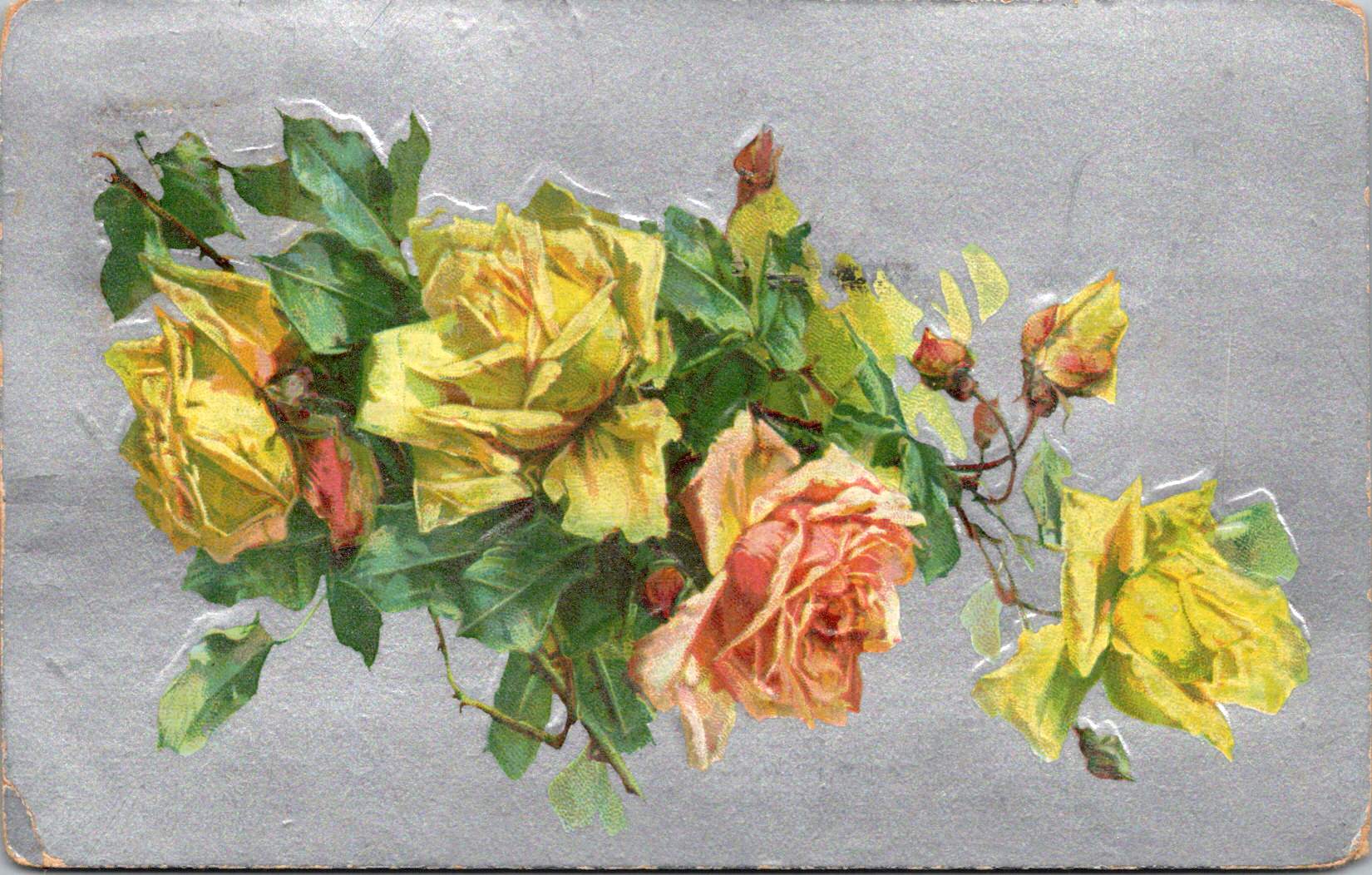
The final featured card offers yellow roses against a silver background, that creates a cooler, more modern luminosity. The yellow blooms—rendered with botanical precision—grow naturally on their stems, emphasizing an organic composition that represents changing sensibilities as the Edwardian era progressed toward what would become Art Deco and modernism.
While Victorian design had favored warm, rich gold tones suggestive of historical richness, the newer aesthetic embraced clarity, brightness, and forward-looking optimism. Yellow—the color of sunshine and vitality—symbolized friendship and joy rather than romantic love, expanding the emotional palette of postcard communication.
These changes in design paralleled broader social transformations. The early 20th century witnessed significant shifts in social mobility, women’s roles, and technological adoption. The rise of department stores democratized consumption of decorative goods, while increasing literacy rates expanded the audience for visual and textual communication. The suffragette movement gained momentum, challenging Victorian gender restrictions. These postcards, with their evolving aesthetics, tracked these social changes in material form.
Technology continued advancing as well. The integration of photography with traditional printing techniques created hybrid visual forms. German printers had pioneered many of these innovations before World War I. American and British printers subsequently developed their own techniques.
The social function of these postcards remained central to everyday life. In major cities, postal deliveries occurred multiple times daily—sometimes up to 12 deliveries in London—creating a communication rhythm somewhat like today’s text messages. This frequent exchange helped maintain connections across the increasing distances created by urbanization and industrialization. As families dispersed geographically, these tangible tokens of remembrance became increasingly important.
Recipients collected their postcards in specialized albums that became objects for social sharing in parlors. These albums—elaborately decorated themselves—transformed private communication into a form of social performance. Visitors could be shown new additions, creating occasions for storytelling about relationships and experiences. A well-filled album demonstrated one’s social connections and cultural participation, serving as a physical social network long before digital versions existed.
Simple Beauties
These postcards survive as artifacts of a time when beauty was considered essential rather than superficial. The Victorian belief that exposure to beautiful things could elevate character and promote virtue gave postcard exchange deeper purpose beyond mere communication. They offered sensory richness—tactile embossing, visual color, and the symbolic associations of flowers—that counterbalanced the sometimes harsh realities of industrial urban environments.
Unlike earlier periods when beautiful objects were primarily reserved for the wealthy, mass-produced postcards allowed people across social classes to exchange and possess small works of art. This democratization of aesthetic experience represented a significant shift in how beauty was distributed socially. The contrast between the expense suggested by the gold backgrounds and elaborate printing and the actual affordability of the postcards was part of their appeal—beauty without extravagance, pleasure without guilt.
These simple beauties represent a unique cultural moment when industrial technology enhanced rather than replaced artistic sensibility, when mass production made aesthetic pleasure more accessible rather than less meaningful.
Their legacy invites us to reconsider how we might integrate beauty into our own communication practices. While we have gained immediacy in our digital exchanges, how might we also retain the sensory richness these physical exchanges provided—the anticipation of delivery, the tactile pleasure of holding a beautiful object, the visual delight of color and form, and the knowledge that someone selected this specific image with you in mind.
The Victorian and Edwardian postcard tradition suggests that communication is enhanced, when wrapped in layers of beauty, symbolism, and care—tangible gestures that engage not just the mind but the senses and the heart.
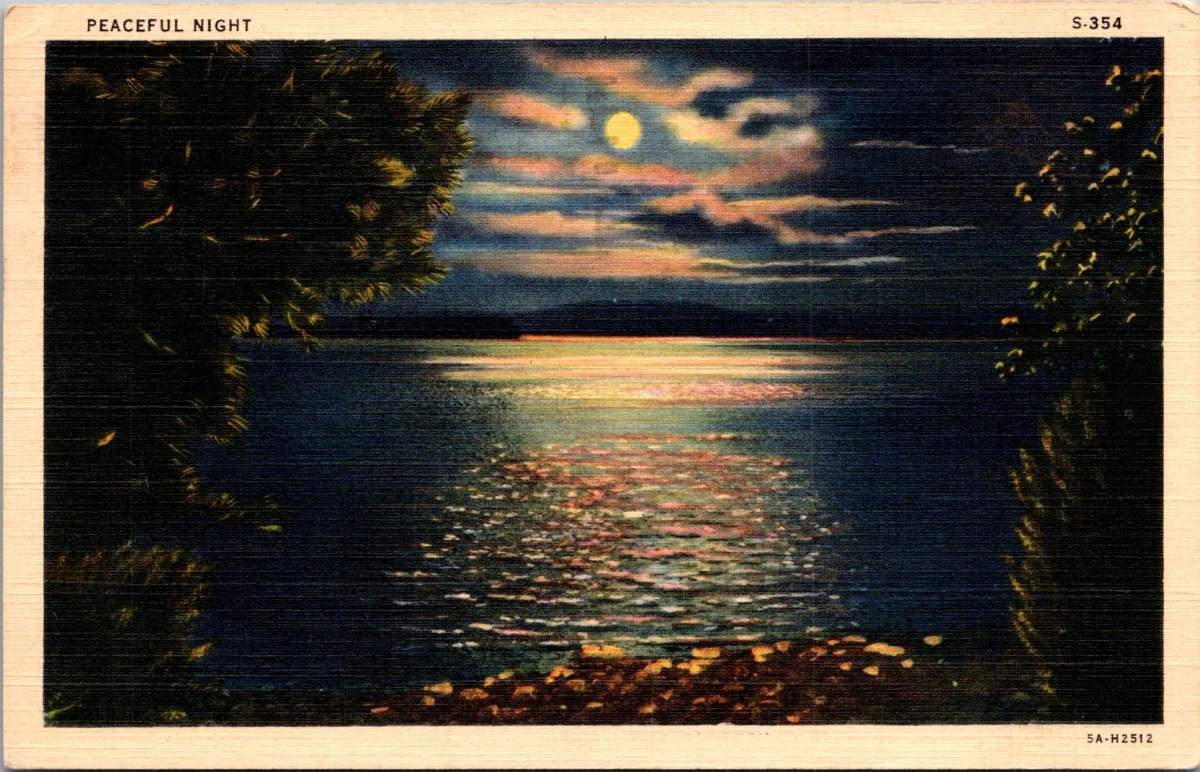
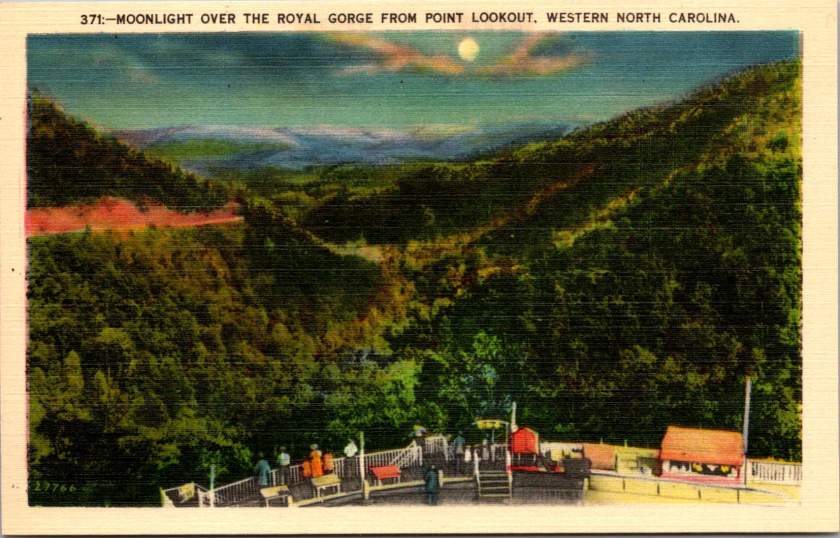
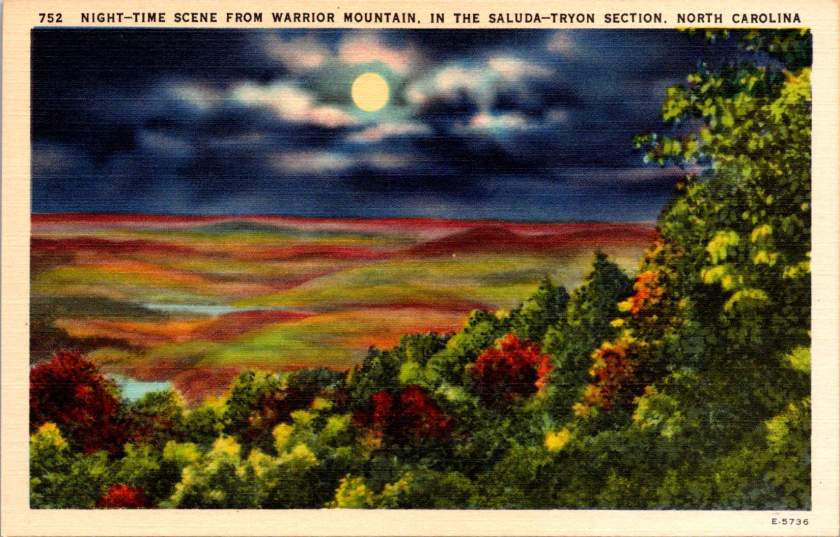
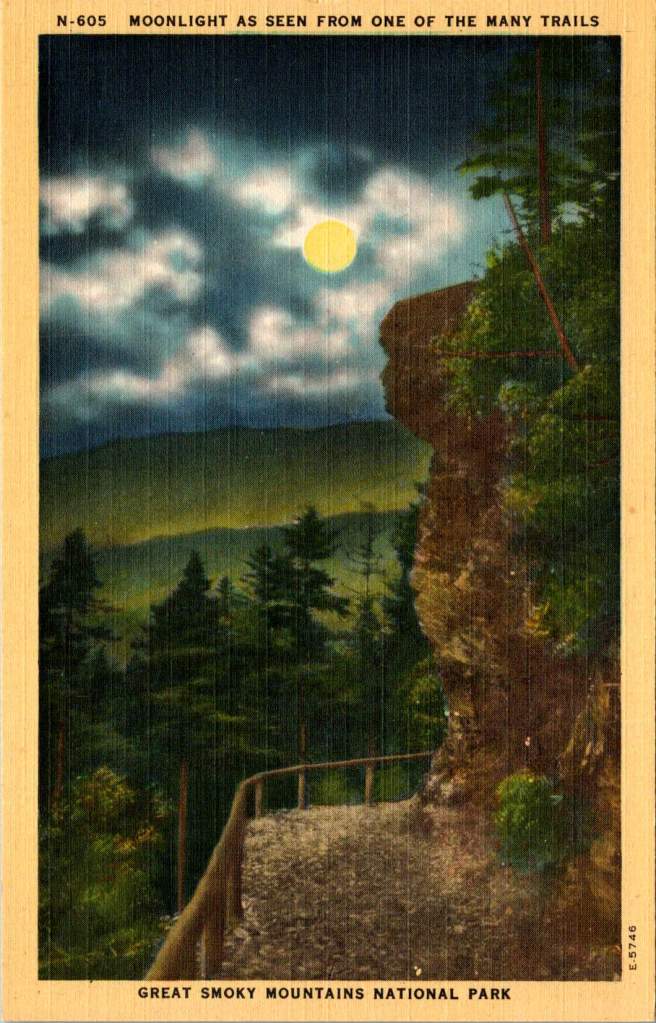
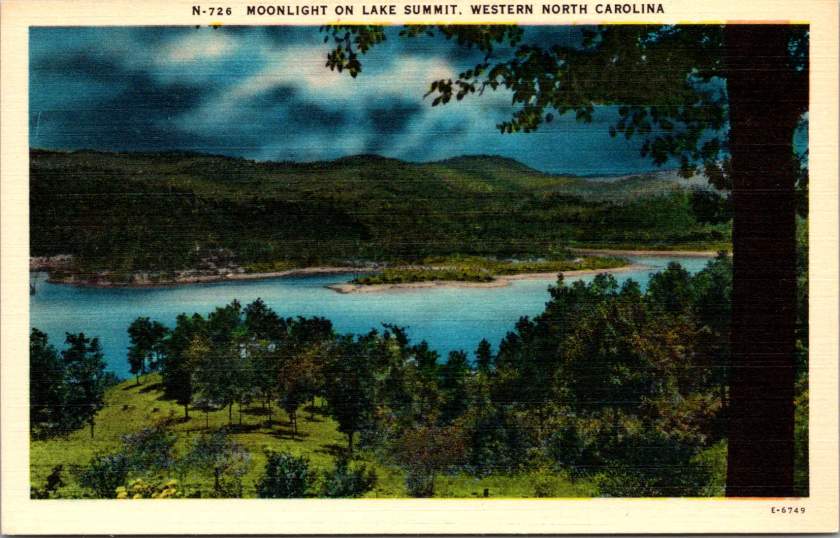
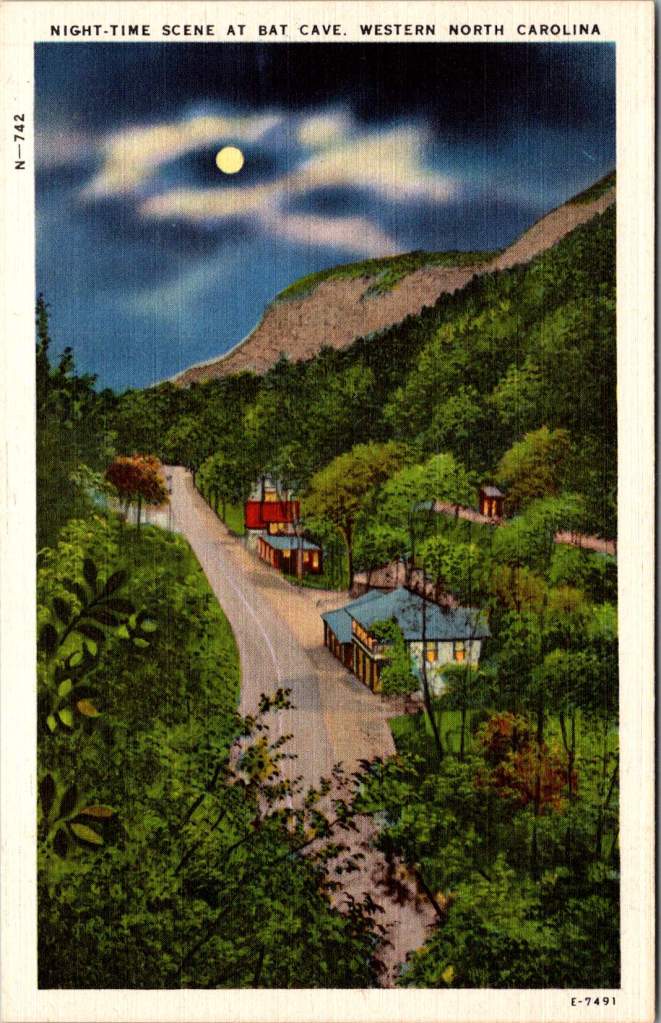
Moonlight dances across rippled water in a vintage postcard titled simply “Peaceful Night.” Nature lovers know that darkness transforms familiar landscapes into the mysterious and musical. The songs of the forest capture more than mere melody – they reveal the soul after sunset.
Lake Burton near Clayton, Georgia, mirrors the full moon in its still waters, surrounded by the dark masses of the mountains. As twilight deepens, the night chorus begins. Whip-poor-wills start their rhythmic chanting, a pulse that famous folklorist Alan Lomax once described as “nature’s metronome.”
In his 1959 field recordings from Georgia, Lomax captured not just the songs of mountain musicians, but also these ambient sounds – the chorus of frogs from the lake’s edge, the distant cry of a great horned owl, the rustling of wind through mountain laurel.
When Lomax made his landmark field recordings in the southern mountains, he often worked at night. The quality of sound was better then – less interference from human activity, and the natural acoustics of the mountains were more pronounced. In his field notes, he frequently commented on how the music emerged from the darkness itself, becoming part of the natural symphony of night sounds.
The ballad singers he recorded often chose songs that reflected this nocturnal environment. “The Night Visiting Song,” common in both Appalachian and Scottish tradition, captured the soundscape of a midnight journey through the mountains. “The False Knight Upon the Road,” with its mysterious midnight encounter, echoed with the very sounds these postcards capture visually – the rustle of wind through trees, the call of night birds, the subtle splash of water against shore.
The Royal Gorge in Western North Carolina, from Point Lookout, one can gaze into the shadowed valley below. The mountains themselves seemed to be singing. The acoustic properties of these gorges shaped the development of mountain music – the way certain notes would carry across valleys while others were swallowed by the night air influenced everything from the tuning of instruments to the patterns of call-and-response singing.
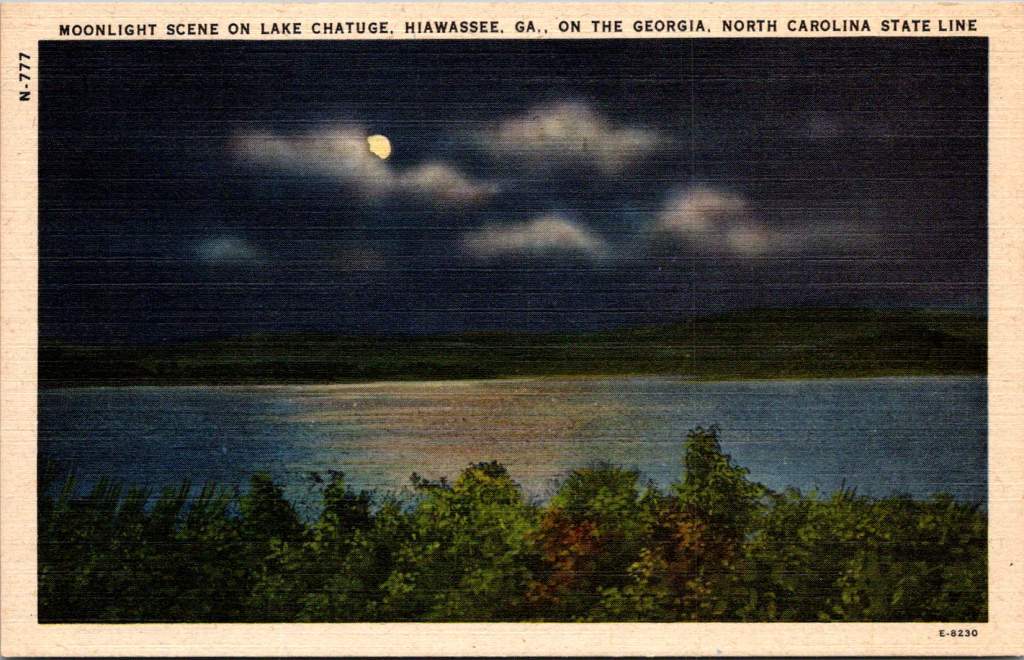
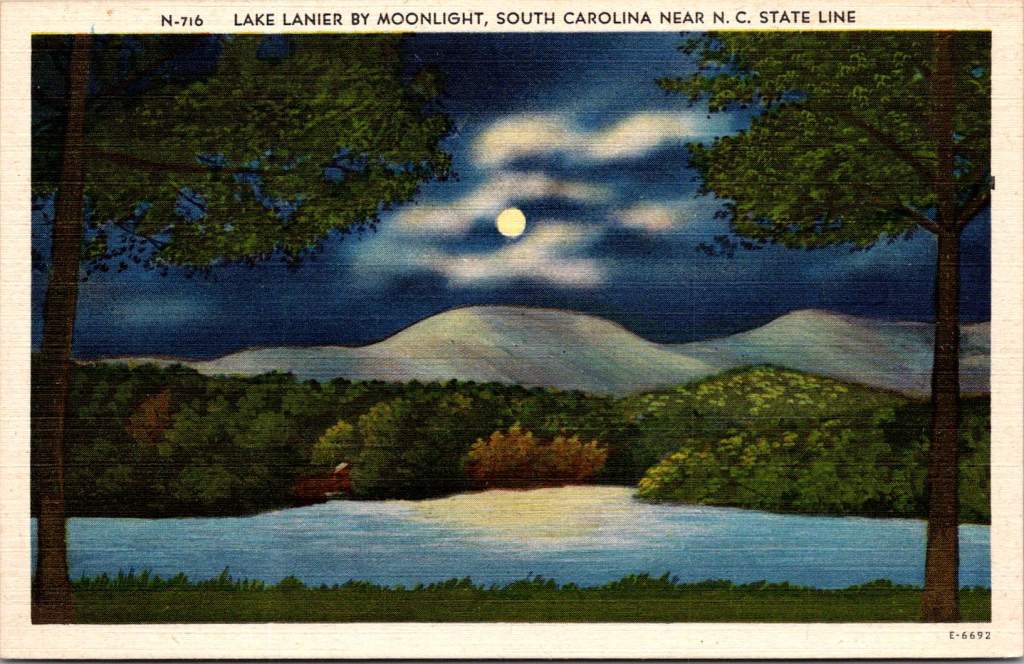
Lake Lanier, straddling the border between South Carolina and North Carolina, appears beneath a cloud-streaked moon. These mountain lakes created their own acoustics, too. Sound carries differently over water at night, when the air has settled and thermal currents have calmed. Mountain musicians knew this intuitively – lake shores became natural amphitheaters for evening gatherings, where ballads could drift across the water unimpeded.
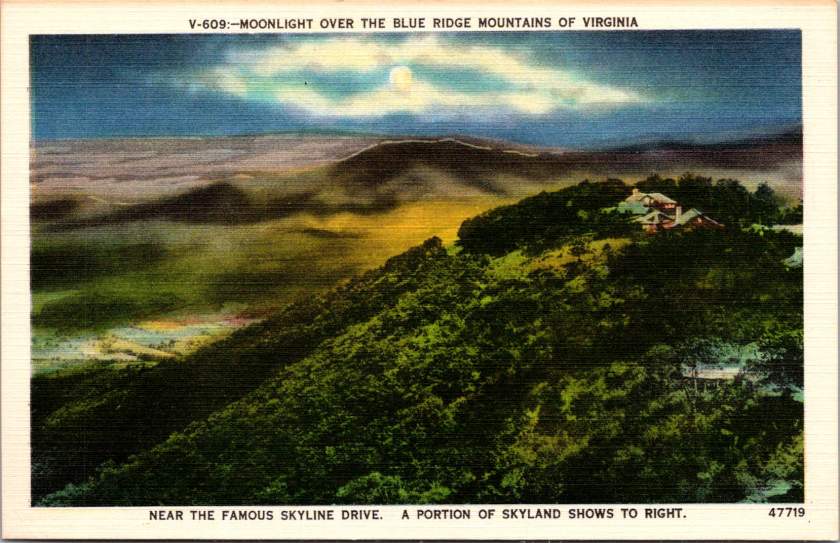
The high mountain lake near Pembroke, Virginia, at 4,000 feet above sea level, reminds us that elevation changes everything – both the quality of light and the character of sound. The thinner air at these altitudes creates distinct acoustic properties. It’s no coincidence that the high lonesome sound of Appalachian singing developed in these elevations, where the night air carries voices in unique ways.
The materials for traditional mountain instruments came from these same moonlit forests. Spruce for fiddle tops was harvested from high mountain slopes, often selected by ear – woodsmen would tap the living tree to judge its resonant qualities. White oak for banjo rims came from trees that had grown slowly in mountain soil, their dense grain providing the perfect material for shaping sound.
The night forest provided not just materials but inspiration for tuning. The modal tunings common in mountain music – often called “sawmill tunings” for the wind-like sound they produced – seemed to match the natural harmonies of the forest at night. A skilled player could make a fiddle sound like a bird call, or craft banjo runs that mimicked the cascade of mountain streams in darkness.
Today, these same landscapes are protected in various ways – as national forests, state parks, or nature preserves. The night sounds that inspired generations of musicians continue, though now sometimes competing with the intrusion of modern noise.
As darkness falls over these mountains tonight, some musician will likely sit on a porch or beside a lake, picking out tunes that have echoed through these valleys for generations. And in those tunes, if we listen carefully, we might hear what Lomax heard. The music of these mountains is inseparable from the chorus of the night forest itself.
Vintage postcards reveal America’s enduring love affair with wild spaces. Through war, depression, and social upheaval, we’ve preserved these sanctuaries of peace.
On an autumn morning in 1935, Eleanor Roosevelt walked alone through the woods at her personal retreat in Hyde Park, New York. The First Lady had just returned from touring poverty-stricken areas in West Virginia, where families struggled to survive the Great Depression.
These morning walks were her ritual for processing the weight of what she witnessed in her tireless work. The woods, she would later write, helped her find the clarity needed to transform empathy into action.
Decades earlier, John Muir had written to a friend. His words would become a rallying cry for the American conservation movement, adorning everything from park posters to backpack patches.
The mountains are calling and I must go.
But what exactly is this call we hear from nature? Why do we feel drawn to preserve wild spaces and to protect them for future generations? And what happens to us when we answer that call?
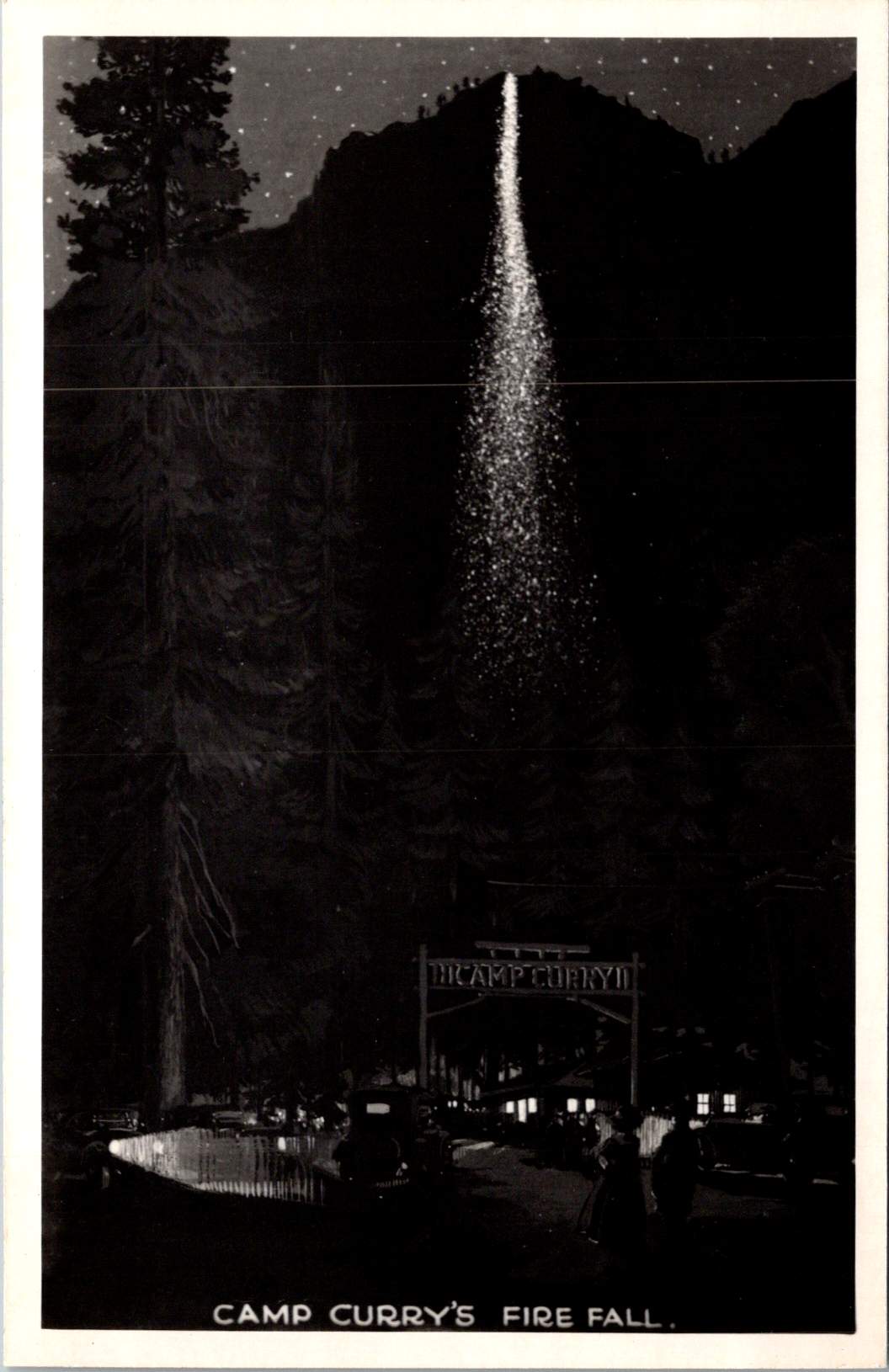
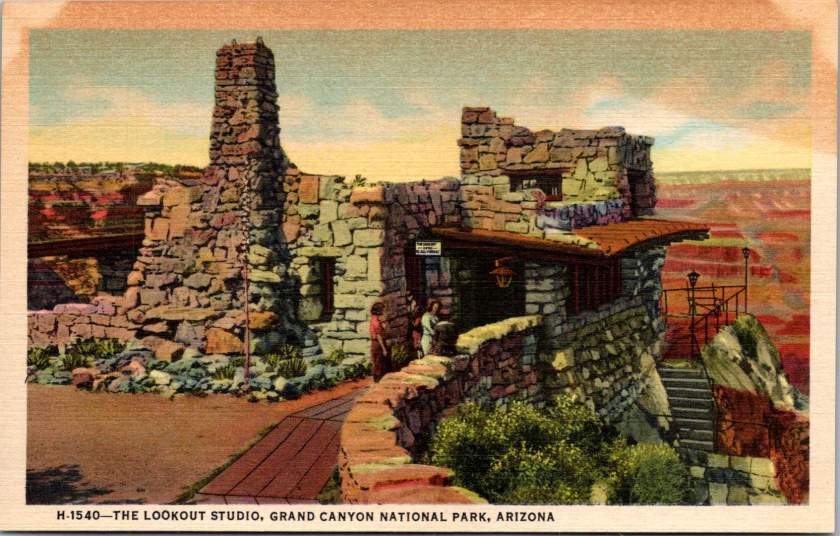
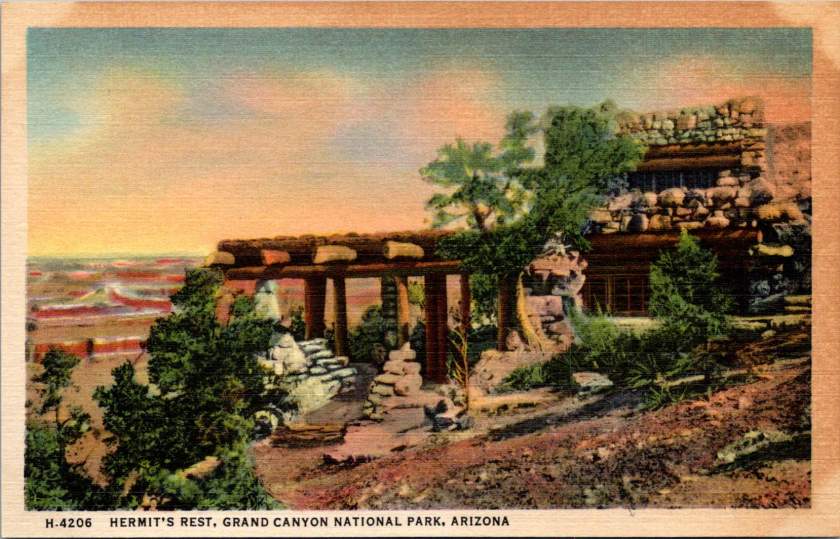
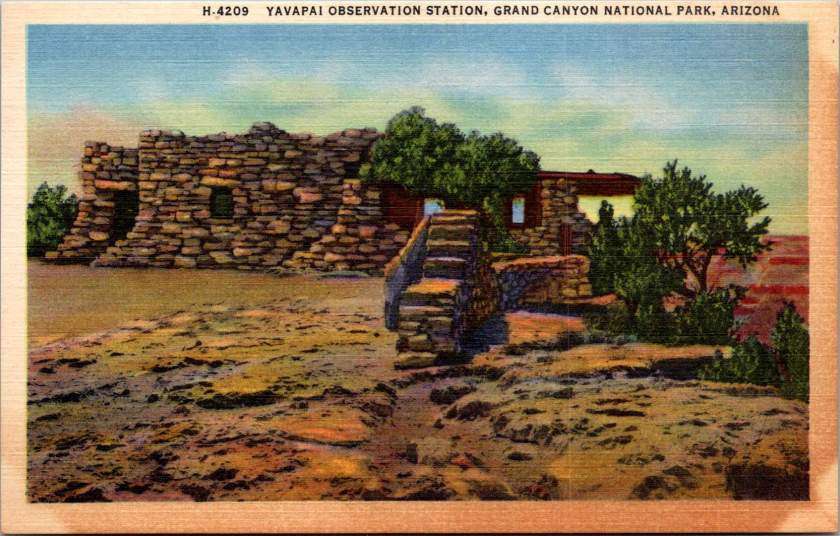
The ephemera spread across my desk capture America’s parks in saturated colors and earnest prose. Welcome to Yosemite and Camp Curry! The hope is that some special part of life is revealed.
These mass-produced mementos tell a story of democratic access to wilderness, of a shared heritage preserved through an unprecedented system of public lands. But they also hint at something deeper – our innate recognition that we need these spaces not just for recreation, but for restoration.
The same wisdom that guided Eleanor Roosevelt to seek solitude among the trees has been confirmed by modern science: nature calms us at a biological level.
Science of Serenity
When we step into a forest, our bodies respond immediately. Cortisol levels drop. Blood pressure decreases. Our parasympathetic nervous system – responsible for rest and recovery – becomes more active.
Even our visual processing changes: natural fractal patterns, like those found in tree branches and leaf veins, require less cognitive effort to process than the sharp angles and straight lines of human-made environments.
Trees release compounds called phytoncides that, when inhaled, enhance immune function and reduce stress hormones. Natural sounds – running water, rustling leaves, bird songs – engage our attention in a way that promotes neural restoration rather than fatigue.
Physiologically, exposure to diverse natural environments even affects our microbiome – the community of microorganisms living in and on our bodies. This microscopic ecosystem influences everything from mood regulation to stress response through the gut-brain axis. In a very literal sense, communion with nature changes who we are.
Preserving Peace
The story of how Americans came to preserve our wild spaces is, in many ways, a story about seeking peace – both personal and collective. The movement gained momentum after the Civil War, as a wounded nation looked westward not just for expansion, but for healing.
Frederick Law Olmsted, who fought depression throughout his life, designed public parks as democratic spaces where people of all classes could find restoration. His work on New York’s Central Park and other urban green spaces was guided by his belief that nature’s tranquility could help ease social tensions and promote civic harmony.
John Muir found his own peace in the Sierra Nevada after wandering the war-torn South as a young man. His passionate advocacy helped establish Yosemite National Park and inspired generations of conservationists.
But it was President Theodore Roosevelt, another seeker of nature’s consolation, who would transform individual inspiration into national policy. Roosevelt’s experience finding solace in the Dakota Territory after the deaths of his wife and mother shaped his approach to conservation. He understood viscerally that wilderness could heal, that it offered something essential to the human spirit.
During his presidency, he protected approximately 230 million acres of public land, establishing 150 national forests, 51 federal bird reservations, four national game preserves, five national parks, and 18 national monuments.
Women in the Woods
While Roosevelt’s dramatic expansion of public lands is well known, the role of women in American conservation deserves greater recognition.
Susan Fenimore Cooper, a student of her famous father, published Rural Hours in 1850 – a detailed natural history that influenced both Thoreau and the early conservation movement. Her careful observations helped Americans see local landscapes as worthy of preservation.
Marjory Stoneman Douglas fought to protect the Florida Everglades when most saw it as a worthless swamp. Her 1947 book The Everglades: River of Grass transformed public understanding of wetland ecosystems. She found that regular communion with nature sustained her through decades of advocacy work.
These leaders shared a practical approach to conservation, focusing on specific, achievable goals while maintaining remarkable equanimity in the face of opposition. Their work suggests that protecting nature and being protected by it can form a reciprocal relationship – the more we preserve wild spaces, the more they preserve something essential in us.
Dark Places
The path to peace often leads through our own shadows. While Americans preserve scenes of spectacular beauty, the relationship between nature and human resilience has been proven most powerfully in places of confinement and struggle. These dark places – prisons, exile, places of oppression – have paradoxically served as crucibles for some of humanity’s deepest insights about peace and connection to nature.
Nelson Mandela’s garden on Robben Island stands as a profound example. In the harsh environment of a maximum security prison, Mandela and his fellow prisoners created a garden in the courtyard where they crushed limestone. In his autobiography, he wrote: “A garden was one of the few things in prison that one could control. To plant a seed, watch it grow, to tend it and then harvest it, offered a simple but enduring satisfaction. The sense of being the custodian of this small patch of earth offered a small taste of freedom.”
This echoes the experience of Albie Sachs, who after surviving an assassination attempt that took his arm and the sight in one eye, found healing partly through his connection to the natural world. During his recovery, watching the ocean’s rhythms helped him develop the concept of his later book – Soft Vengeance – achieving justice through law rather than violence.
Martin Luther King Jr. often drew on natural imagery to maintain his equilibrium and express his vision during frequent detainment. From the Birmingham Jail, he wrote of the majestic heights of justice and used metaphors of storms and seasons to describe the civil rights struggle. His deep understanding of peace was shaped not just by moments of tranquility in nature, but by finding inner calm in places of confinement.
The Dalai Lama often speaks of how the Himalayas’ steady presence influenced Tibetan approaches to maintaining calm, even through decades of exile.
These experiences remind us that while we focus on America’s preserved wilderness spaces, the human need for connection to nature is universal. Peace is an American pursuit and a global birthright. When we protect natural spaces, we’re participating in something that transcends national boundaries – the preservation of humanity’s common sanctuary.
Paths to Peace
The leaders who shaped American conservation found different routes to and through nature. John Muir sought transcendent experiences, climbing trees in storms and walking thousands of miles in solitude. Gifford Pinchot, first chief of the U.S. Forest Service, took a more systematic approach, seeking balance between preservation and sustainable use. Rachel Carson combined meticulous scientific observation with poetic sensitivity to nature’s rhythms.
Their examples suggest there is no right way to find peace in nature. Some need solitude and silence. Others seek the raw tests of strengths and capacity, and find restoration in active engagement with the natural world. Some seek dramatic landscapes to ponder in awe, others find sufficient wonder in a city park or backyard garden.
Wild Wisdom
Ralph Waldo Emerson wrote in his essay on Nature, “…in the woods, we return to reason and faith.” His words point to something profound about nature’s effect on human consciousness – how it seems to restore us not just to calm, but to our truest selves.
Modern research into nature’s calming effects – the lowered cortisol, the enhanced immune function, the restored attention – helps explain the mechanisms behind what people have long intuited. For those who find great equanimity through connection with nature, there also seems to be an innate genius in each of us that emerges more fully in wild spaces.
We might experience this as artistic, spiritual, or intellectual – and perhaps even more fundamental – a capacity for presence, for wonder, for sensing our connection to something larger than ourselves. It’s what Eleanor Roosevelt accessed on her morning walks, what John Muir celebrated in his rhapsodic nature writing, what Jane Goodall tapped into during her patient observations of primates in Gombe.
The preservation of wild spaces represents more than conservation of natural resources or recreational opportunities. It preserves access to this deeper part of ourselves – the part that knows how to find peace, that remembers how to wonder, that recognizes our belonging in the larger community of life.
These vintage postcards capture more than just scenic views. They record moments when people felt called to share their experience of wonder, to say to friends and family that the experience mattered. The fact that we’ve preserved and share these places, despite constant pressure to exploit them, suggests we recognize they offer something essential to human flourishing.
Why the woods? Because something in us comes alive there. Because in preserving wild spaces, we preserve the possibility of encountering our own wild wisdom, and these revelations are too precious not to protect for future generations.
Each time we step into nature – whether it’s a national park or a neighborhood green space – we participate in this legacy of preservation. We join a long line of people who recognized that human flourishing depends on maintaining connection to places where we might find peace and that help us face whatever challenges await when we return.
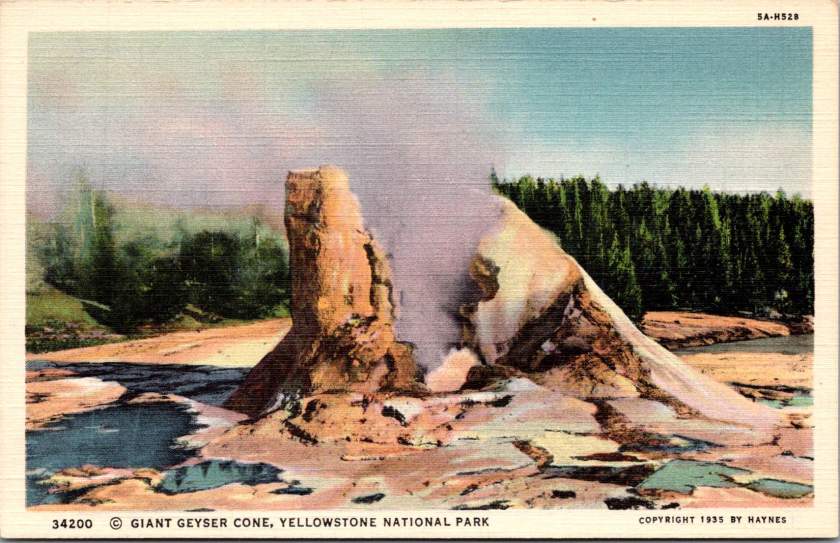
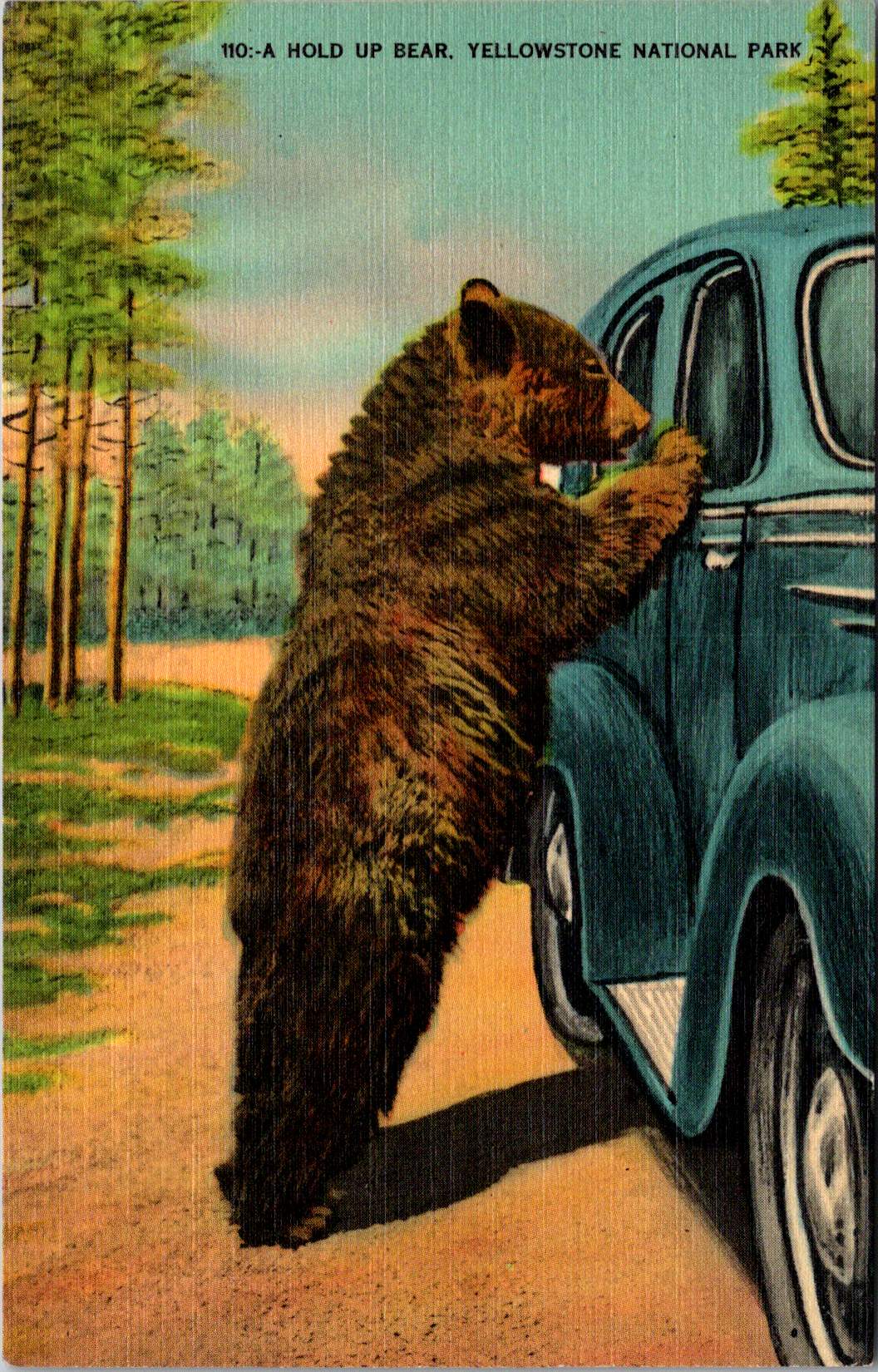
Old Faithful Inn stretches across the Yellowstone landscape, its distinctive roofline echoing the forested hills in a vintage linen postcard. Steam rises from the nearby geyser basin. The Civilian Conservation Corps built Yellowstone for their time and for future generations. In New York, a sister program blazed trails, too.
The story of our national parks is also a remarkable story of resilience and collaboration in hard times. Just as the national parks were becoming popular, the Depression brought unprecedented unemployment and bare scarcities at home, on the farm, and in cities. Leaders with optimistic vision were challenged to engage an illiterate and unskilled workforce or face severe cultural, social, and economic consequences.
The Civilian Conservation Corps’ work in Yellowstone exemplified an unprecedented partnership between federal agencies, orchestrated by a remarkable team. Robert Fechner, the program’s first director, brought his labor union experience to balance competing interests that might have limited the program. Harold Ickes, as Secretary of the Interior, ensured high standards for conservation work. The Department of Labor selected the men for service in the corps. The Army constructed and operated the camps. The National Park Service and Forest Service supervised the technical and construction work. This complex dance of bureaucracy somehow produced remarkable efficiency, with the CCC completing projects that had languished on drawing boards for decades.
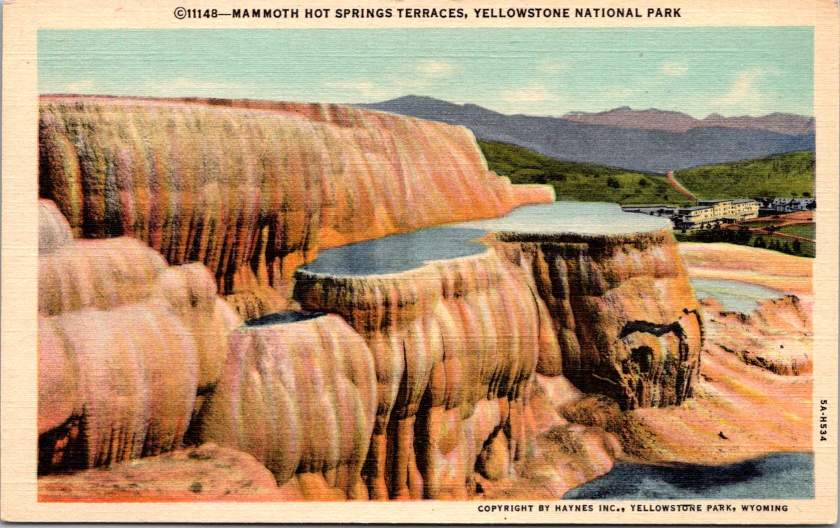
Take the terraced formations of Mammoth Hot Springs, for example, their delicate travertine steps descending the hillside in nature’s own architecture. CCC workers constructed the stone steps and walkways that would allow visitors to safely view these natural wonders. The careful integration of human infrastructure with natural features became a hallmark of CCC work. Now known as ‘parkitecture’, the philosophy would influence park design for generations.
Long before the federal programs, Frances Perkins coordinated closely with Roosevelt during his New York state governorship to protect workers and grow the workforce. She had witnessed the Triangle Shirtwaist Factory fire in 1911, an experience that drove her lifelong commitment to worker safety and labor reform. As New York’s Industrial Commissioner from 1929 to 1933, Perkins pioneered unemployment relief programs and worker protections that would later shape New Deal policies. When Roosevelt became president, he named her Secretary of Labor – the first woman to serve in a presidential cabinet – and she brought her New York experiences to Washington just in time.
Perkins understood the value of both job creation and job training, having seen their impact in New York. She helped shape the CCC, carefully navigating the political tensions around women’s employment programs. Her influence helped ensure that CCC and other programs included educational components, reflecting her belief that economic relief should build long-term capabilities, not just provide temporary aid. She also made sure the federal programs benefited her home state, and piloted important new programs there.
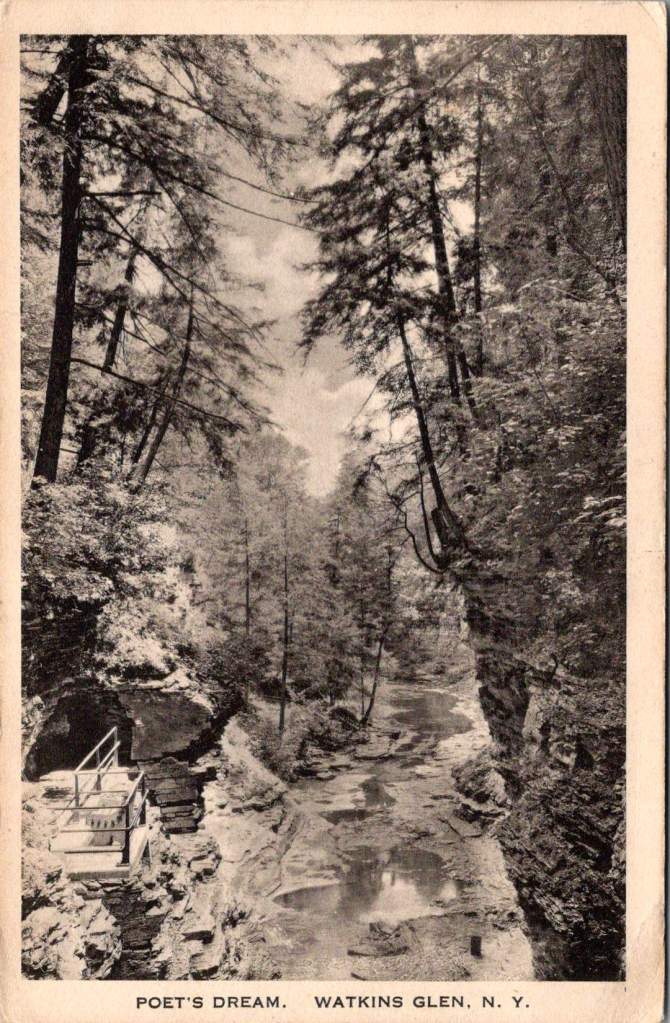
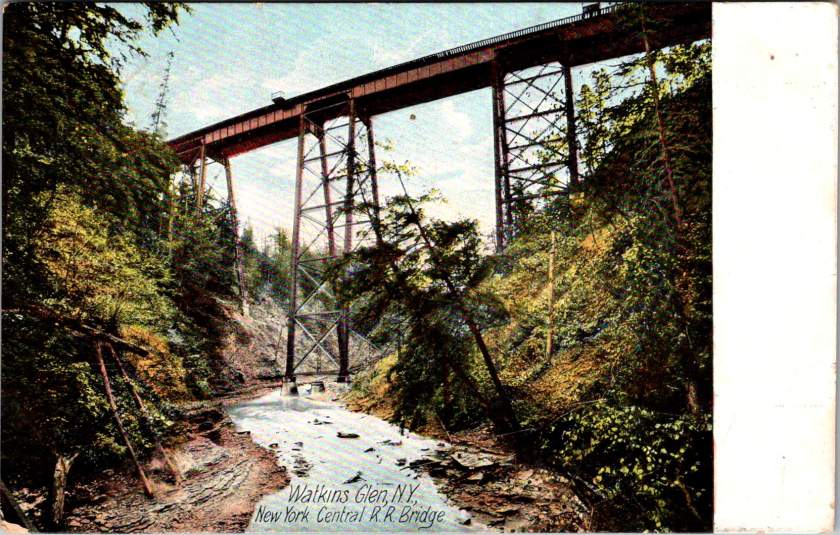
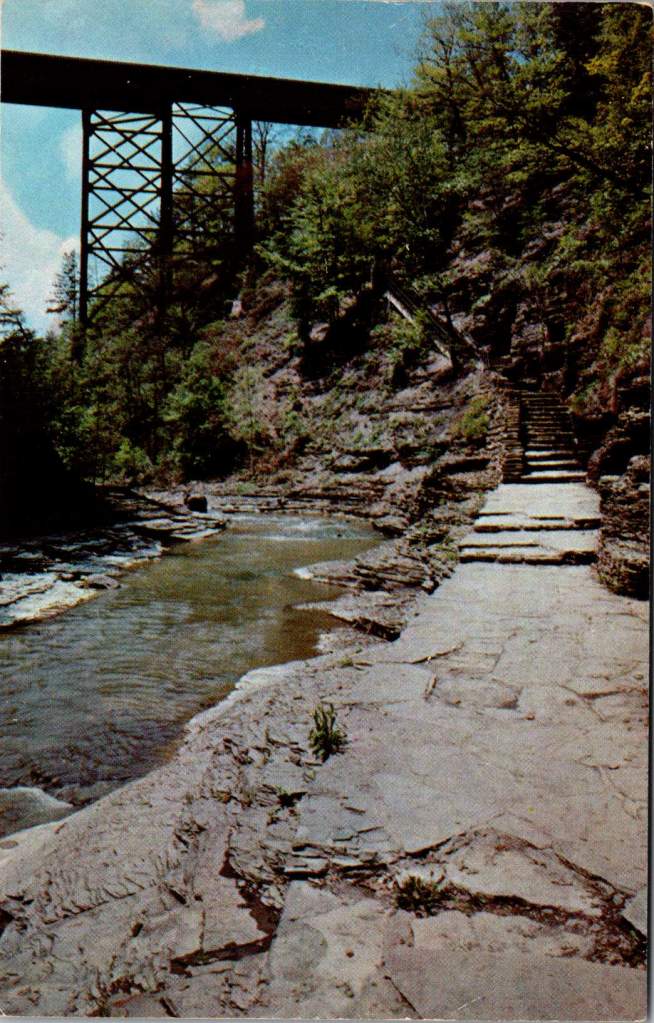
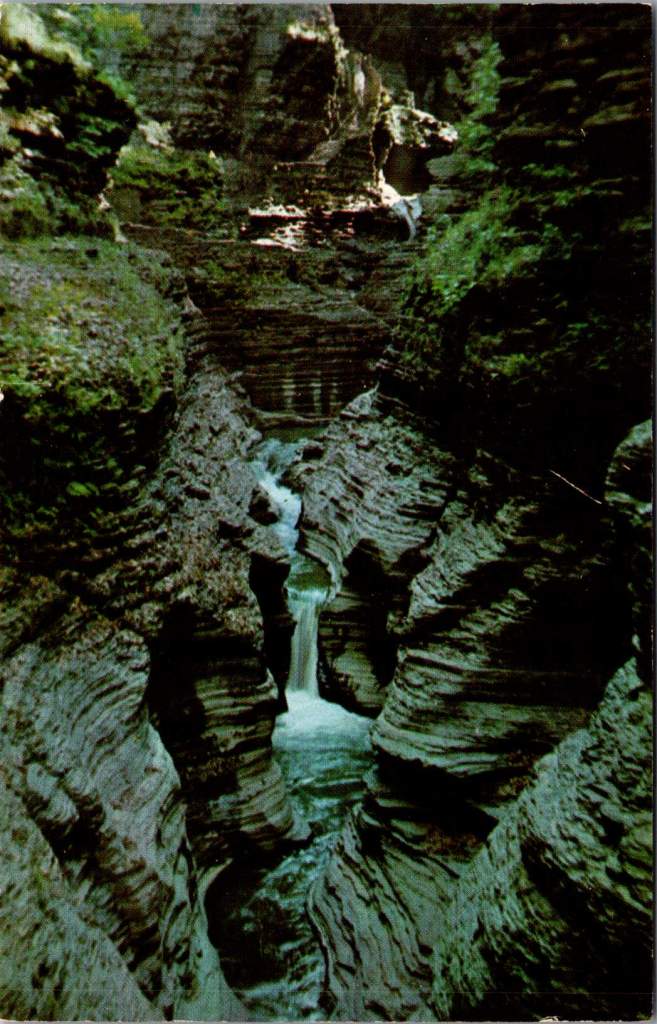
A 1905 hand-colored postcard of Watkins Glen in New York state shows Diamond Falls in the distance, framed by the narrow gorge’s layered rock walls. When the CCC arrived here in the 1930s, they found a park already famous for its natural beauty but in need of significant infrastructure. The Corps constructed the stone walkways that still guide visitors through the glen today, built overlooks at strategic points, and created a trail system that made the park’s dramatic features accessible while preserving their natural character.
The CCC’s work at Watkins Glen was particularly challenging given the varied landscape and unique natural formations. Jacob’s Ladder, a daunting stone staircase ascending the gorge wall, required precise engineering to integrate it naturally into the rock face. The Corps workers quarried stone and shaped the ascent, creating a path that appear to emerge organically from the cliff itself.
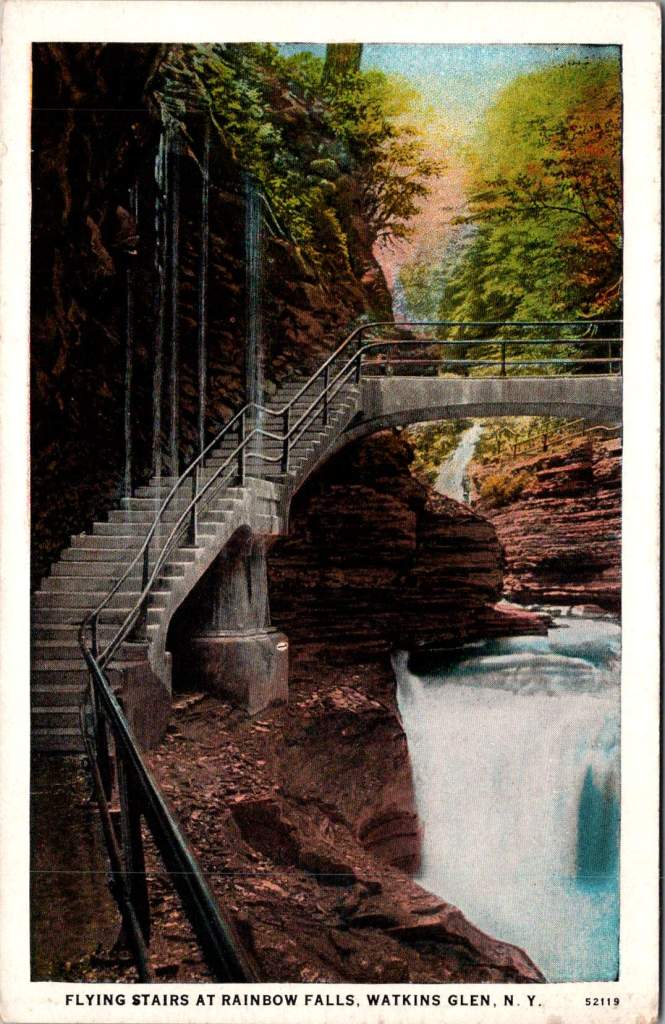
At Rainbow Falls, they constructed the “flying stairs” – suspended pathways that seem to float alongside the cascading water. This required not just skilled stonework but innovative engineering to ensure the structures could withstand the gorge’s frequent flooding and harsh winters. The Stairway to Lover’s Lane presented similar challenges, with workers having to carefully cut into the gorge wall while preserving its natural beauty.
The Corps also built the park’s amphitheater, transforming a natural hollow into a gathering space that would host generations of visitors for educational programs. Throughout these projects, workers had to move tons of stone while working in the confined space of the gorge. They developed specialized techniques for working in the narrow spaces, often suspended above the creek as they built pathways that had to withstand both regular flooding and freezing temperatures. The project showcased the Corps’ ability to combine heavy construction with delicate environmental consideration – skills that would prove valuable throughout the park system.
Yet while young men were building parks across America, another story was unfolding at Bear Mountain, New York. A smaller program called the Temporary Emergency Relief Administration (TERA) – nicknamed the She-She-She camps – was offering women their own opportunity for training and education. Eleanor Roosevelt championed this effort, collaborating closely with progressive educator Hilda Worthington Smith to create a program that emphasized both practical skills and broader education.
At Camp TERA, women learned furniture refinishing, bookbinding, typing, and business skills. They studied literature, current events, and public speaking. The curriculum reflected both practical needs and progressive educational ideals, emphasizing peer learning and leadership development. The camps created a college-like atmosphere, quite different from the military structure of CCC camps.
The economics of these programs tell their own story. Spending roughly $1,000 per enrollee annually (about $25,000 in today’s dollars) the CCC cost $3 billion over nine years – equivalent to about $60 billion today. In its time, the program returned an estimated $2.50 in measurable public benefits for every dollar spent. Each CCC enrollee earned $30 monthly, with $25 sent home to their families – enough to keep many families fed during the Depression’s darkest days. The TERA budget was much less and never achieved the scale that made the CCC so cost-effective, yet for some of the women who participated, the return on investment was significant in improving their health, caregiving capacities, and professional skill sets – many went on to careers in business, education, and public service.
The CCC employed three million men over nine years. TERA participants numbered just 8,500 women. Despite Eleanor Roosevelt’s advocacy and Frances Perkins’ support from the Labor Department, the women’s program expanded only briefly and never really got off the ground. The reasons echo familiar themes: limited funding, resistance to women working outside the home, and debates about appropriate roles for women in society.
These limitations weren’t unique to TERA. The CCC itself reflected America’s racial divisions, with segregated camps and discriminatory selection. Some local communities opposed Black CCC camps in their areas. The program’s focus on young, single men also excluded many who needed help.
Yet for all their limitations, the New Deal’s public works programs transformed America’s public spaces. Beyond the CCC and TERA, the Works Progress Administration built parks, schools, and community centers nationwide. WPA artists created murals that still enliven post offices and courthouses today. Collectively, WPA workers built communities, developed national infrastructure, and documented American life through photography and collected folk songs and stories that might otherwise have been lost.
The human legacy of these programs extends far beyond their physical achievements. Chuck Yeager, the pilot who would later break the sound barrier, learned mechanics in the CCC. Stan Musial developed his work ethic in a Pennsylvania CCC camp before becoming a baseball legend. Robert Mitchum and Raymond Burr worked in CCC camps before their Hollywood careers. From the TERA camps emerged teachers, business leaders, and community organizers who shaped their communities for decades to come.
Looking at these vintage postcards today, we can measure the value of these programs not just in the enduring infrastructure they created, but in the generational impact of providing education and opportunity to millions of Americans of modest means. Think of the families fed by CCC wages, the skills learned, the confidence built. Consider the children and grandchildren who grew up hearing stories of carving out Yellowstone’s trails or getting the chance to study at Bear Mountain, who inherited not just the physical legacy of these programs but their spirit of public service and possibility. Think of all of us today, who still climb the steps and set our sights on this same legacy.
The trails around Old Faithful, the stone steps at Watkins Glen, the walkways at Mammoth Hot Springs – all have weathered nearly ninety years now, crossed by millions of visitors. They stand as monuments not just to American craftsmanship, collaboration, and ingenuity but to the transformative power of public investment in both our spaces and our people. They give us examples of leadership and also remind us of the great many unknown men and women who preserved and protected the places we love. Their endurance challenges us to imagine what might be achieved in this generation if we again dared to think so boldly about developing our natural resources and our human potential together.
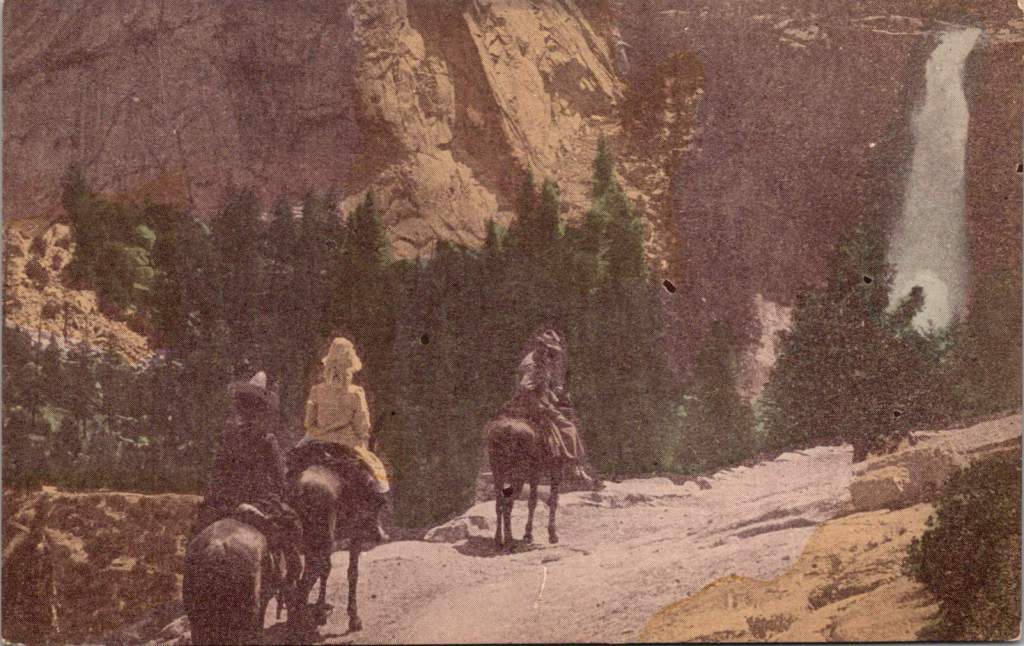
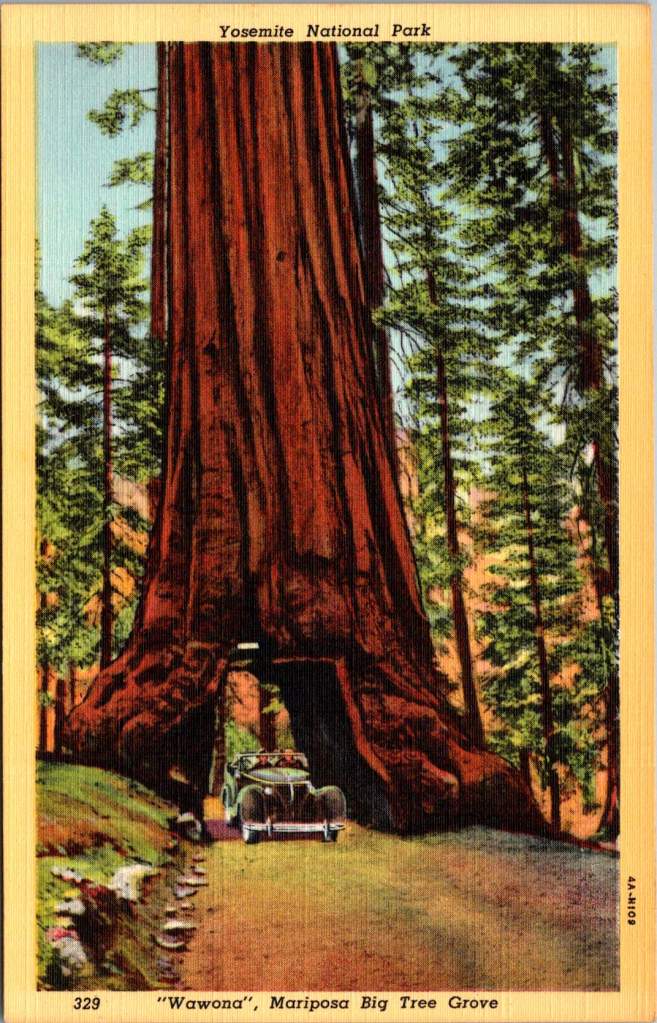
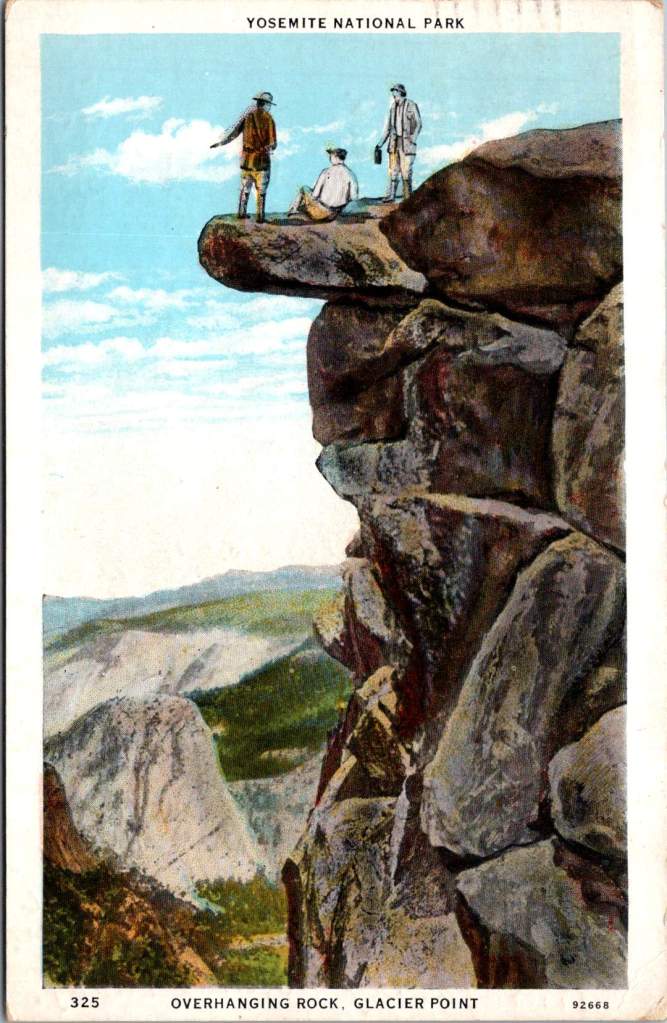
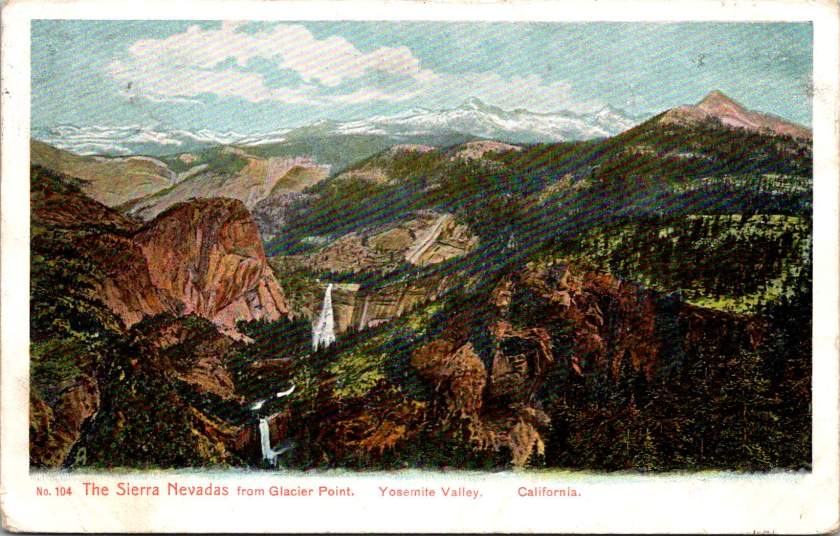
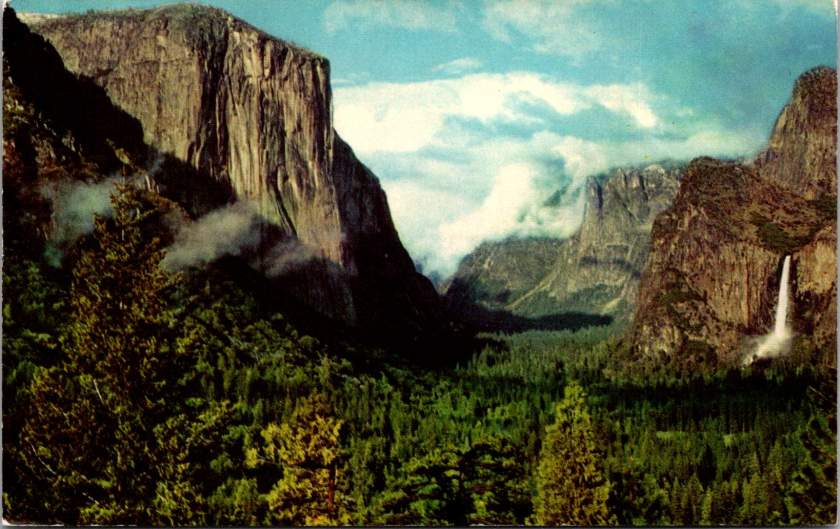
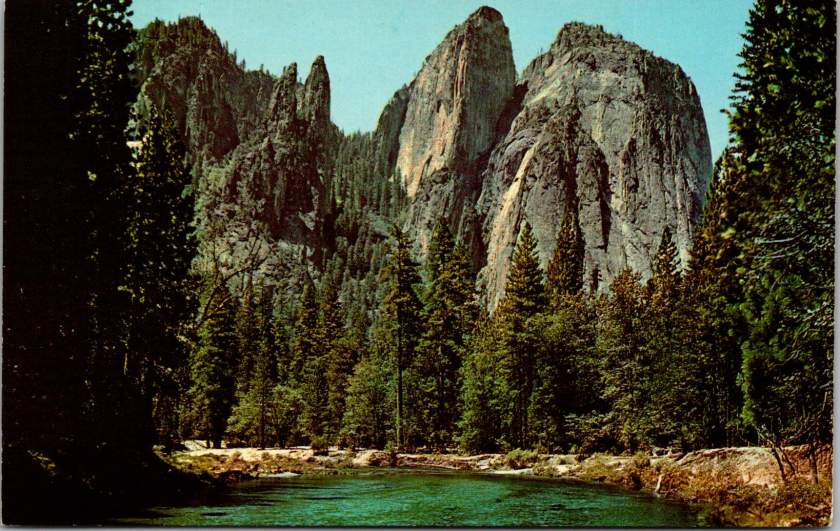
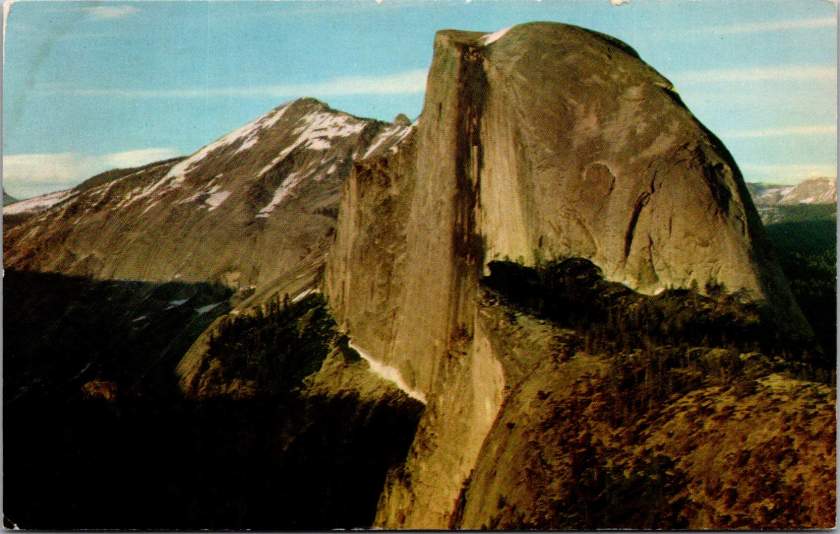
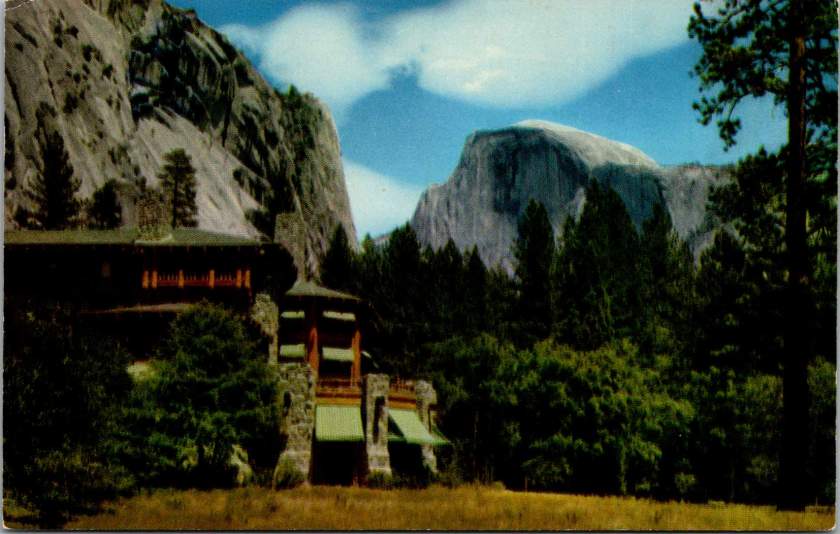
Three figures stand atop Glacier Point in Yosemite Valley, silhouetted against the sky. Horseback riders on a steep mountain trail glimpse a waterfall through the pines. A tunnel carved into a massive sequoia is big enough for a car to pass through. These postcards images tell the story of how Americans fell in love with their national parks.
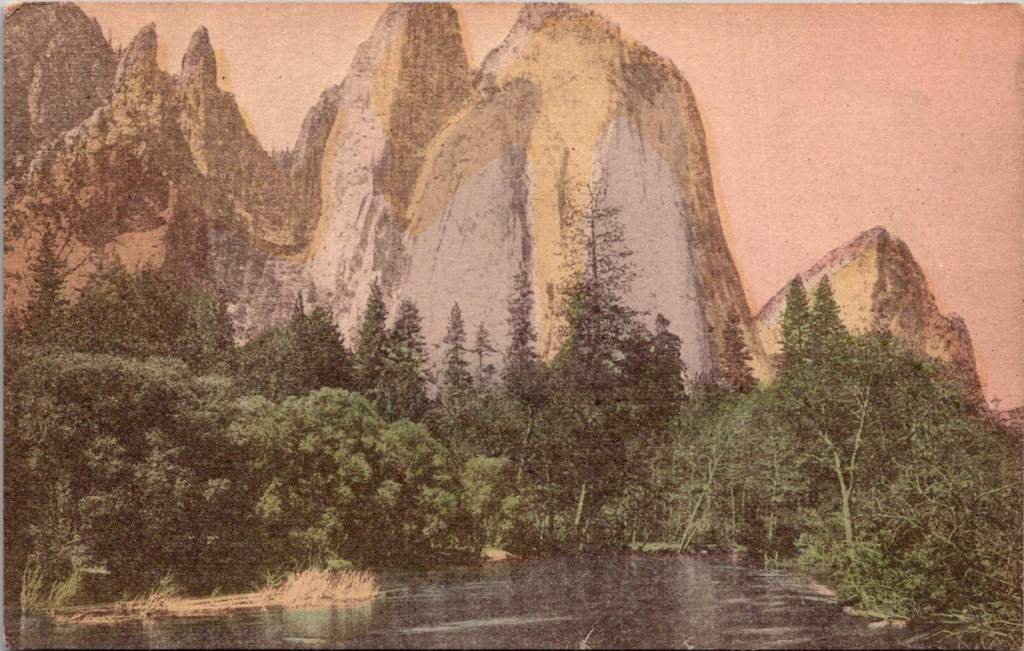
When Abraham Lincoln signed legislation in 1864 protecting Yosemite Valley, few Americans had seen its wonders firsthand. The journey was arduous, expensive, and often dangerous. But photographs and artistic renderings began circulating, capturing public imagination. Carleton Watkins’ mammoth plate photographs of Yosemite’s towering cliffs and Albert Bierstadt’s luminous paintings suggested something almost mythical: a uniquely American paradise, waiting to be experienced.
By the 1880s, the Southern Pacific Railroad had begun marketing Yosemite as a must-see destination. Their promotional materials featured romantic images of pristine wilderness alongside luxury dining cars and comfortable accommodations. The message was clear: you could experience the sublime while maintaining the comforts of civilization. The railroad’s campaign to “See America First” tapped into both patriotic sentiment and growing concern about wealthy Americans choosing European vacations over domestic travel.
Stephen Mather, who would become the first director of the National Park Service in 1916, understood the power of imagery. A self-made millionaire from the borax industry, he approached park promotion with a marketer’s eye. Mather encouraged photographers to set up studios in Yosemite and actively supported the production of high-quality postcards, which he called his “little missionaries.” These cards, purchased for pennies and mailed across the country, did more than any official campaign to make Yosemite a part of the American imagination.
The postcards reveal changing patterns in how Americans experienced their parks. Early images show well-dressed visitors on guided tours, often on horseback. By the 1920s, automobiles appear, marking a democratic shift in park access. The famous Wawona Tree tunnel, carved through a giant sequoia in 1881, became a must-have photo opportunity. Each car passing through represented a family making their own way through the park, free to explore at their own pace.
The National Park Service itself emerged from a uniquely American compromise. Progressive Era conservationists like John Muir had argued for pure preservation, while others saw the parks as natural resources to be utilized. The 1916 Organic Act that created the NPS threaded this needle by mandating both conservation and public access – the parks would be preserved unimpaired, but explicitly for the enjoyment of the people.
This dual mandate shaped how Americans came to view their relationship with nature. The parks weren’t distant wilderness to be admired from afar, but rather public spaces to be actively experienced. In the 1930s Civilian Conservation Corps workers built trails and facilities, making the parks more accessible while maintaining their natural character. The message was clear: these were the people’s parks, and the people would help maintain them.
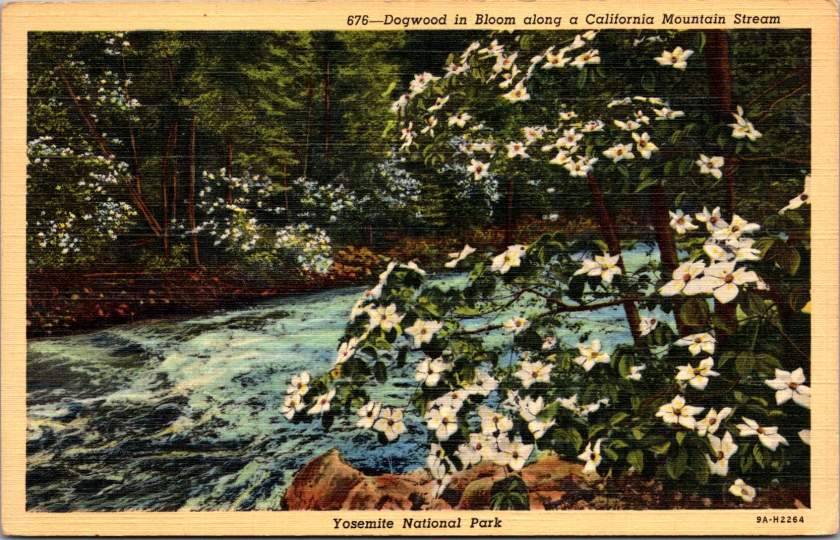
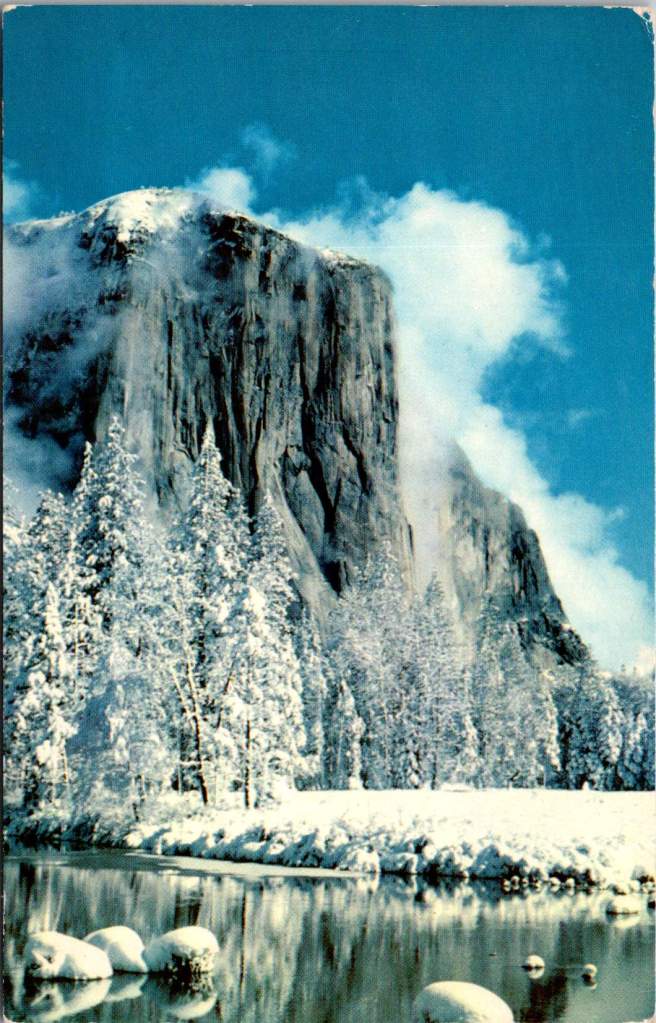
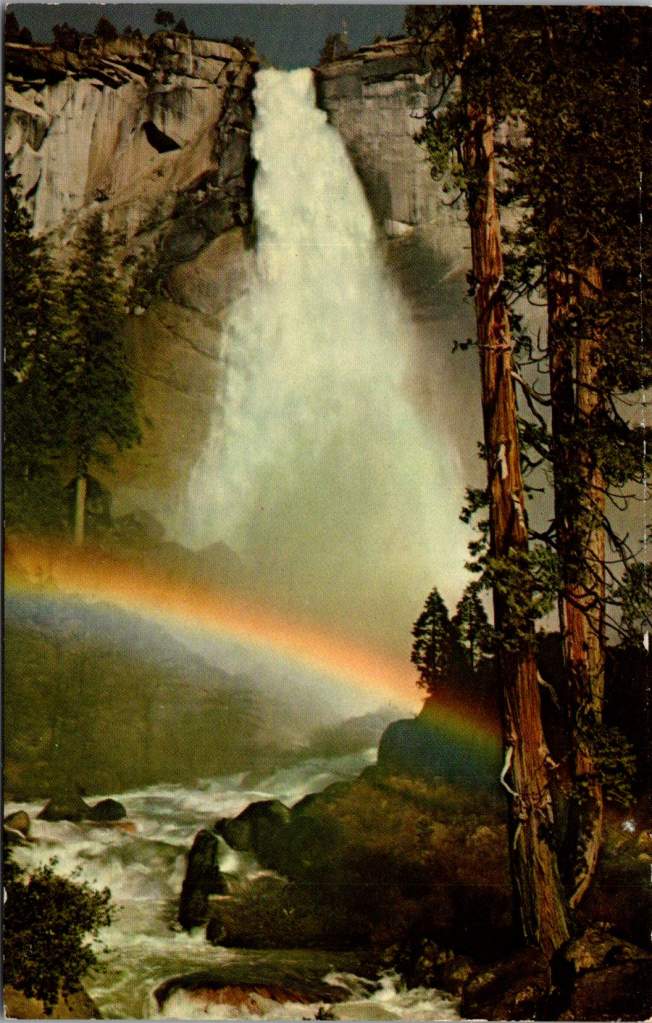
The advent of color photography in the 1940s and 50s brought new vibrancy to park imagery. Postcards from this era capture the brilliant white of dogwood blooms along mountain streams, the deep red of sequoia bark, and the rainbow mist of Yosemite Falls. The images suggested that black and white photography, no matter how artistic, had never quite captured the true glory of these places.
By the mid-20th century, the success of the national parks as tourist destinations began creating new challenges. Bumper-to-bumper traffic in Yosemite Valley became an ironic commentary on Americans’ enthusiasm for their natural heritage. The park service faced growing tension between access and preservation, leading to innovations like shuttle systems and visitor quotas.
Yet the fundamental appeal of the parks remained unchanged. Whether arriving by horse, train, automobile, or tour bus, visitors came seeking what Frederick Law Olmsted had described in his 1865 report on Yosemite, “The union of the deepest sublimity with the deepest beauty of nature.” The parks offered not just scenic views but a connection to something larger than themselves – a uniquely American inheritance.
Today’s visitors to Yosemite might share their experiences through Instagram rather than postcards, but they’re participating in the same tradition of witnessing and sharing America’s natural wonders. The early promoters of the national parks understood something fundamental: seeing these places wasn’t enough. The experience had to be shared to become part of our collective identity.
Those early postcards, with their hand-tinted colors and earnest captions, did more than advertise scenic views. They helped Americans understand these distant wonders as their own inheritance – places that belonged to everyone and therefore needed everyone’s protection. When we look at them today, we’re seeing how Americans fell in love with their national parks, and how that love affair helped define our relationship with the natural world.
The history of Yosemite and the National Park Service reminds us that conservation isn’t just about preserving scenic views. It’s about maintaining spaces where each generation can discover their own connection to the natural world. This fundamental mission remains as relevant as ever. The parks still offer what those early postcards promised: a chance to see the natural wonders of the United States, and to share the experience with friends and family miles away.
In late May 1908, the Republican River forgot its modest nature. After days of relentless spring rains, the usually manageable waterway transformed into a destructive force that reshaped both the landscape and lives of north-central Kansas.
A collection of real photo postcards from this period captures these moments of crisis. One image shows the mill with its flooded surroundings, another the threatened railroad bridge. These weren’t just documentary photographs – they were messages sent between family members grappling with decisions about land and livelihood in the flood’s aftermath.
The Republican River, which meanders through Republic County past the iconic Table Rock formation, swelled beyond its banks, swallowing farmland, threatening towns, and severing the rail lines that served as lifelines for agricultural communities.
Concordia, the largest town along this stretch of the Republican River, watched as the waters rose. The town of 4,500 residents had built itself on agricultural promise, its grain elevators standing sentinel along the railroad tracks, its mill processing the bounty of surrounding farms. But the 1908 flood challenged this careful progress. Water lapped at the foundations of the mill, its twin smokestacks rising above the flood.
Railroad bridges proved vulnerable to the 1908 flood, too. The Chicago, Rock Island and Pacific Railroad, which had helped birth towns like Concordia and Republic City, found its tracks suspended over angry waters. Train service halted, leaving farmers isolated with their crops rotting and fields under water. The flood arrived at a particularly cruel time – late spring, when winter wheat was heavy with promise and corn was just reaching hopefully toward the Kansas sky.
The handwriting on one postcard tells of a man named Basil looking at land near Table Rock, that distinctive natural formation that had guided settlers for generations. What kind of optimism – or desperation – would drive someone to consider investing in farmland so soon after such devastating floods? Yet records suggest he wasn’t alone. Land transactions continued in Republic County through 1908 and 1909, some at distressed prices from farmers ready to seek fortune elsewhere, others at premium prices for higher ground.
The flood’s waters eventually receded, leaving behind debris and difficult deliberations. Farmers have always had to gamble with nature. The rich soils of river valleys are worth the risk of occasional flooding – until they’re not.
These brothers – the postcard photographers – couldn’t know that the 1908 flood was merely a prelude. The Republican River would prove its power again and again, most catastrophically in 1935, when a flood of biblical proportions would transform the valley once more. Families who chose to stay after 1908, who rebuilt and reinvested, would face nature’s judgment again.
Looking at these century-old images, we see more than just disaster photography. We see evidence of critical decisions made in the aftermath of catastrophe. Someone was behind that camera, documenting not just the destruction but the dilemma – to stay or go, to rebuild or retreat, to trust in the river’s bounty or fear its fury. The unknown photographer used the latest technology – AZO photo paper, a Kodak camera – to capture and distribute these images of nature’s disruption of human endeavor.
We don’t know if Basil bought that land near Table Rock. The brothers’ identities and their immediate choices are lost to history. But we know that farming continued and that people kept living along the Republican River despite all they had seen. Each generation seems to make its own peace with nature’s risks, balancing the promise of fertile valleys against a river’s wrath.






























































 The Posted Past