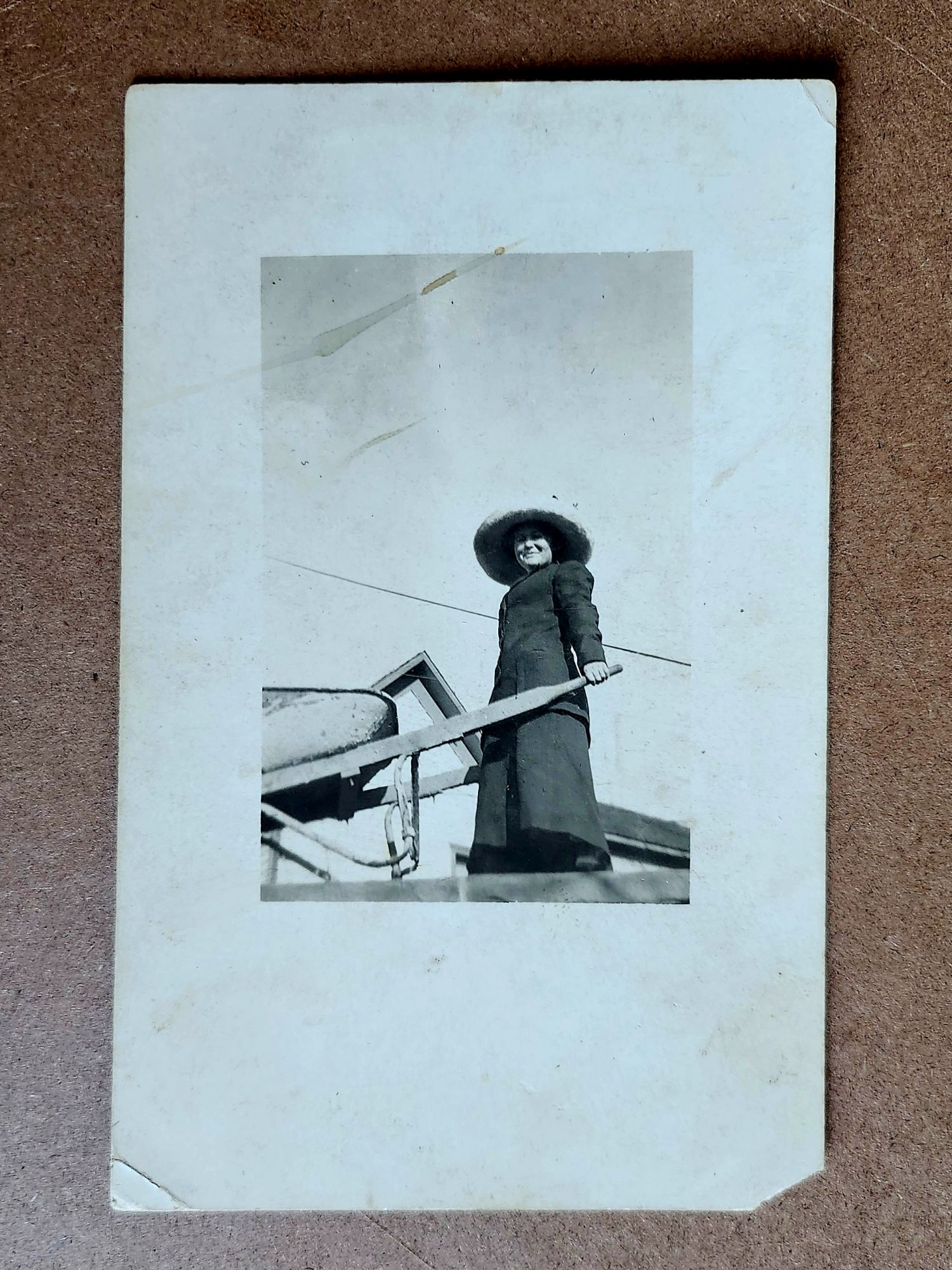
People Past

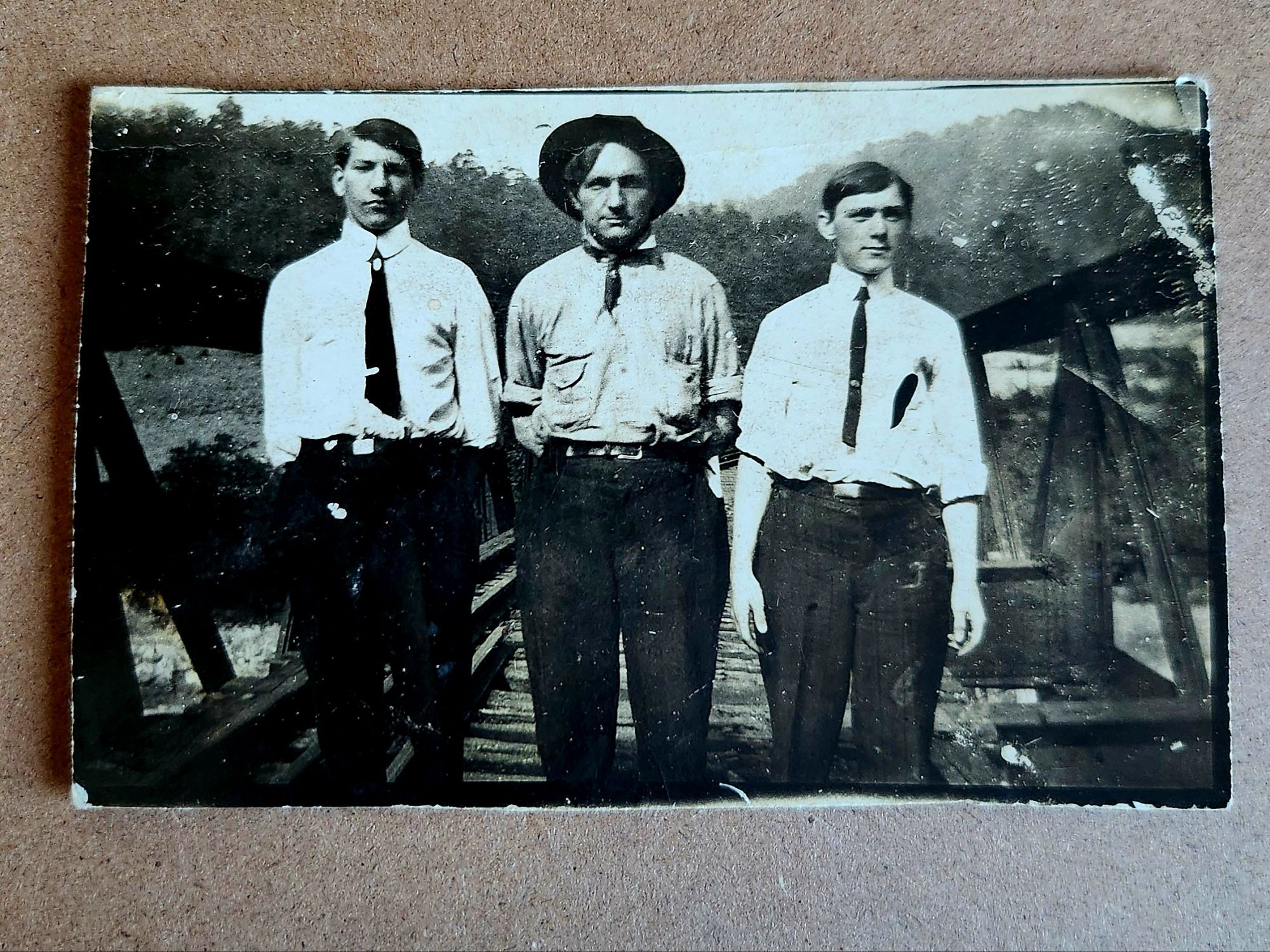
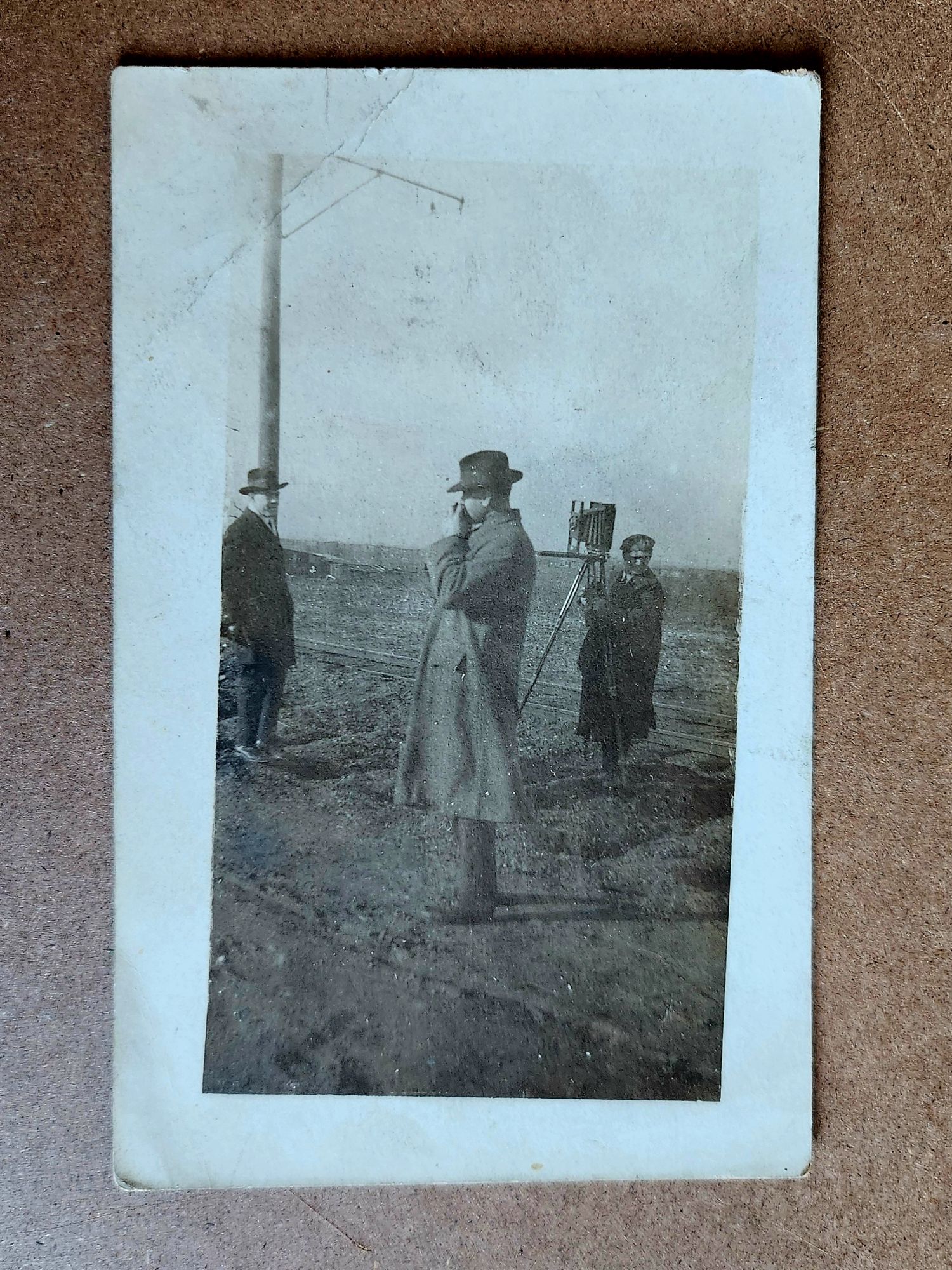
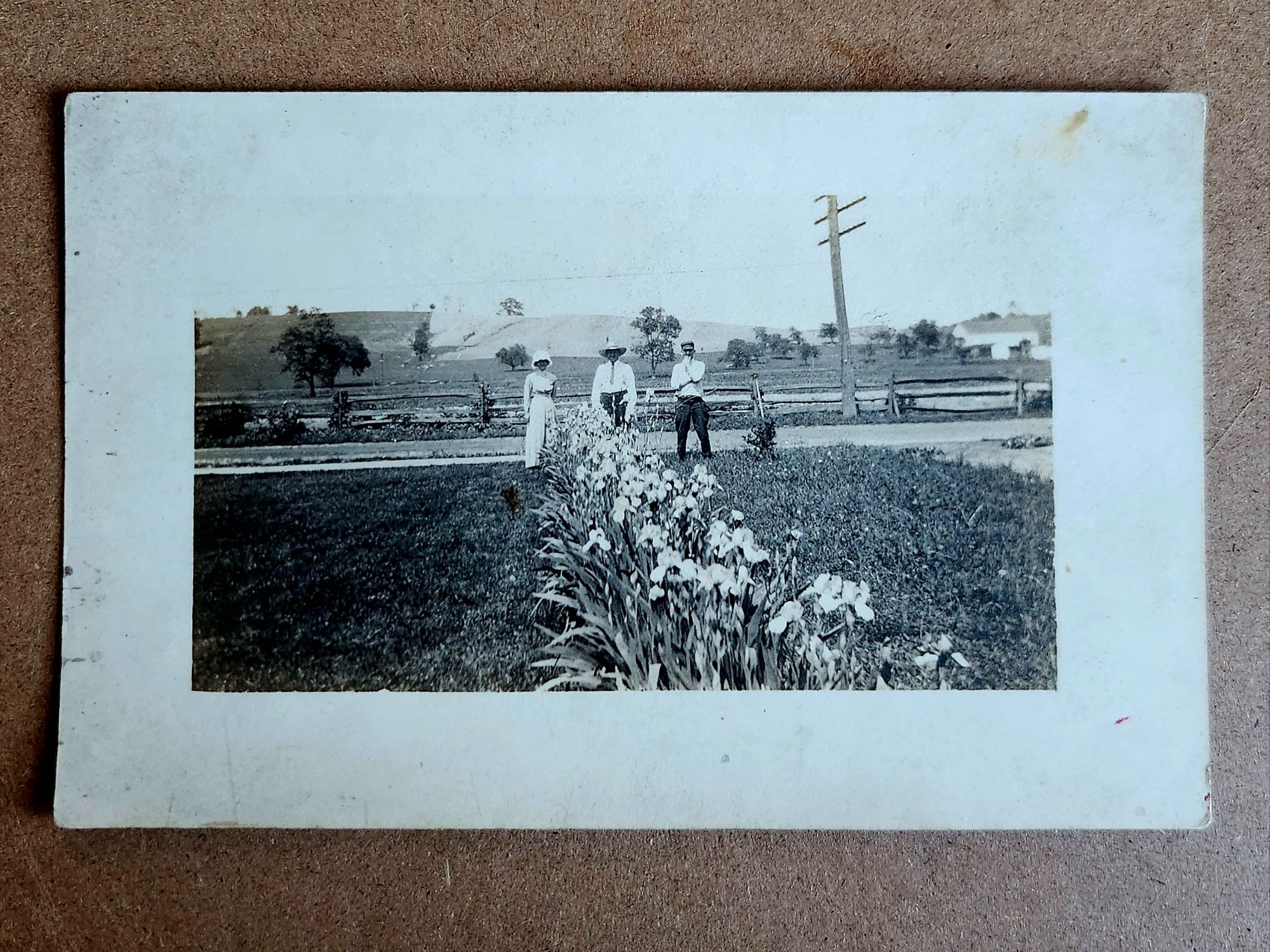
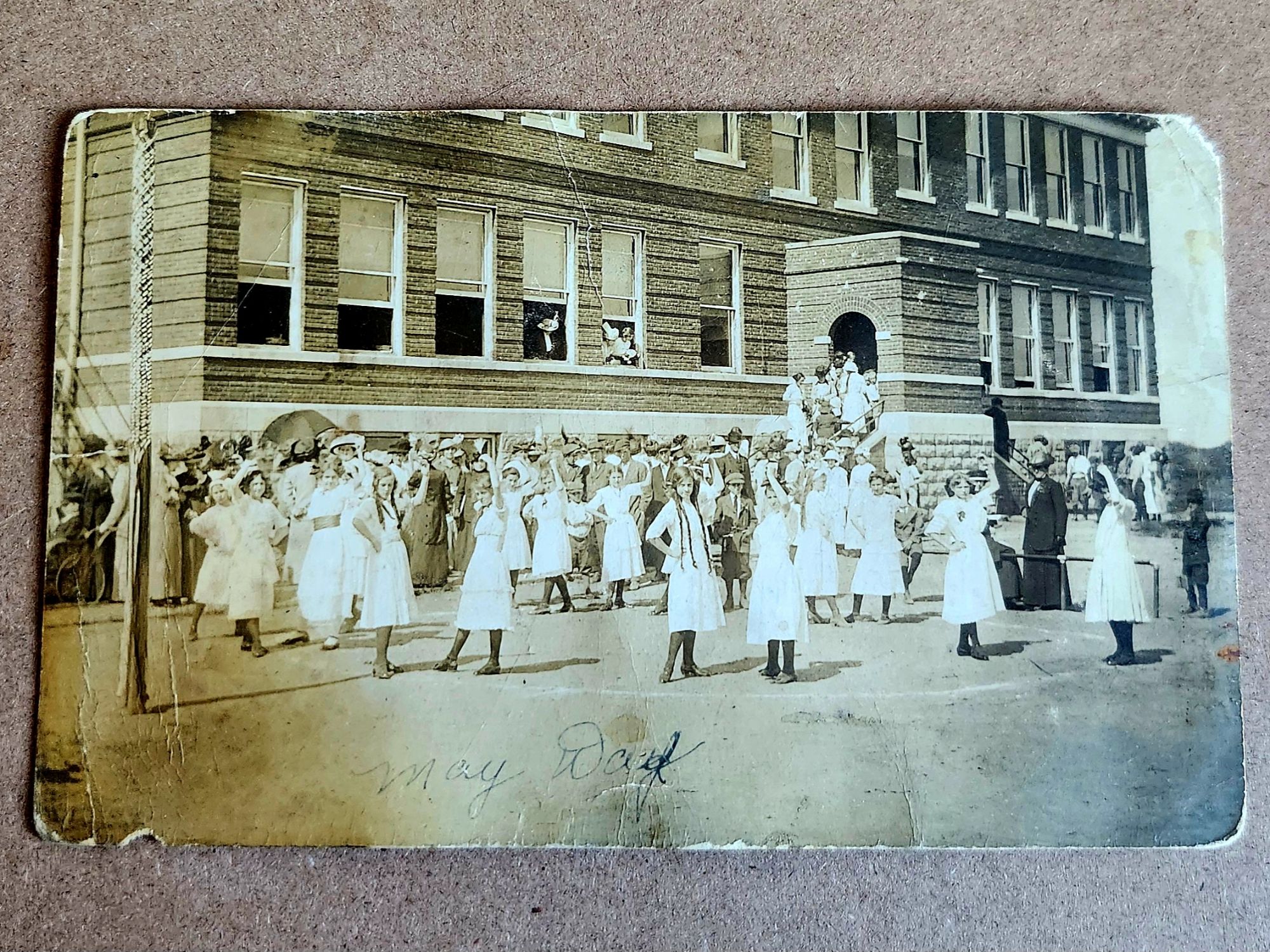
Last week, buildings emerged and oil derricks erupted. Evidence accumulated, context implied. An unknown town takes shape and we surmise. Now, people stare across a century and time flies.

Seven adults carefully arranged on a rocky outcrop. Three men, four women. Two children in white dresses seated in front. Twins? Cousins? Someone operated the camera.

We see the composition and relational questions arise. Are they family? Kin? Friends on an outing? Do the poses suggest occasion, or documentation?

Evidence ends and story begins. We fill in by reading subtle cues in how they stand, who touches whom, which faces seem to fit together. Clues come quietly and mistakes, too. Always, we’re revealing ourselves.
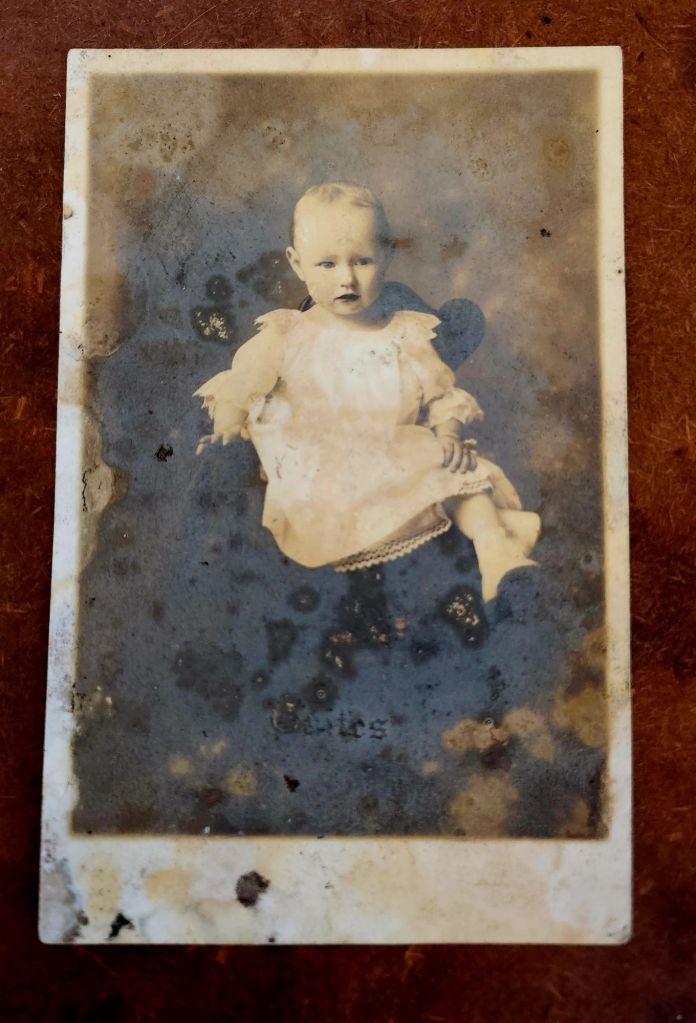
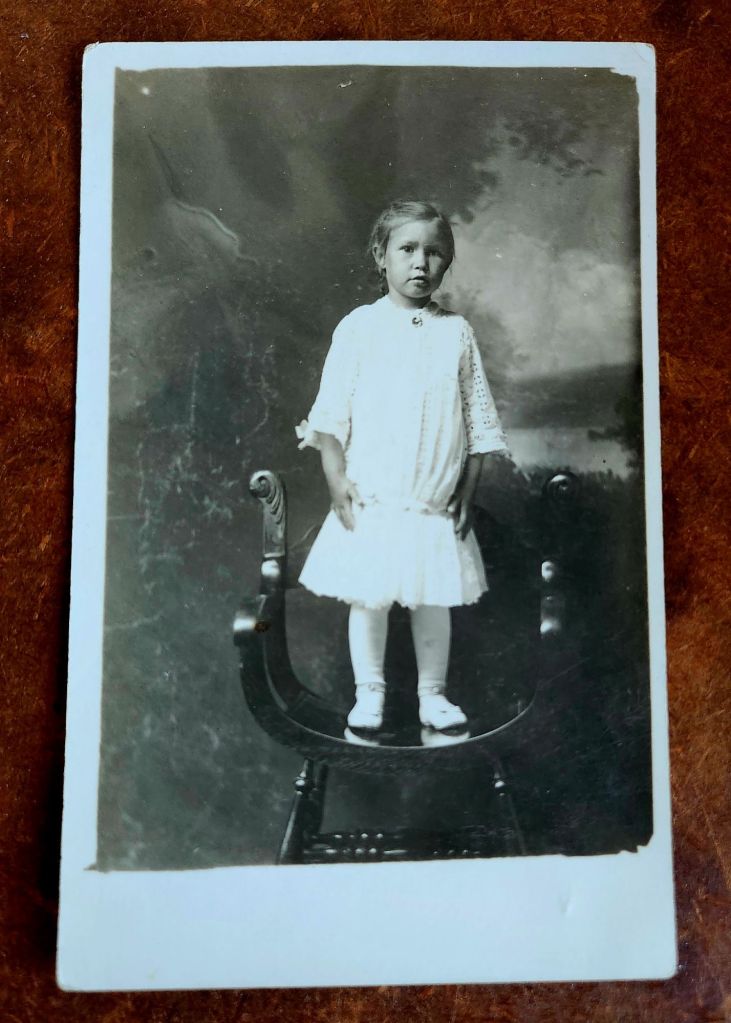
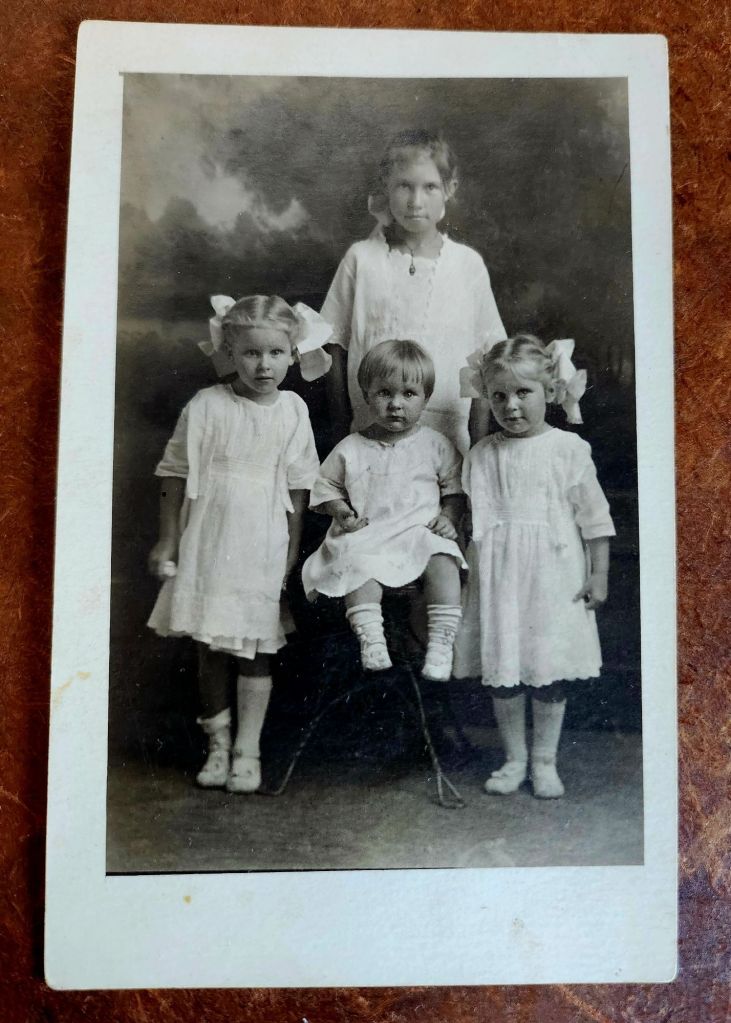
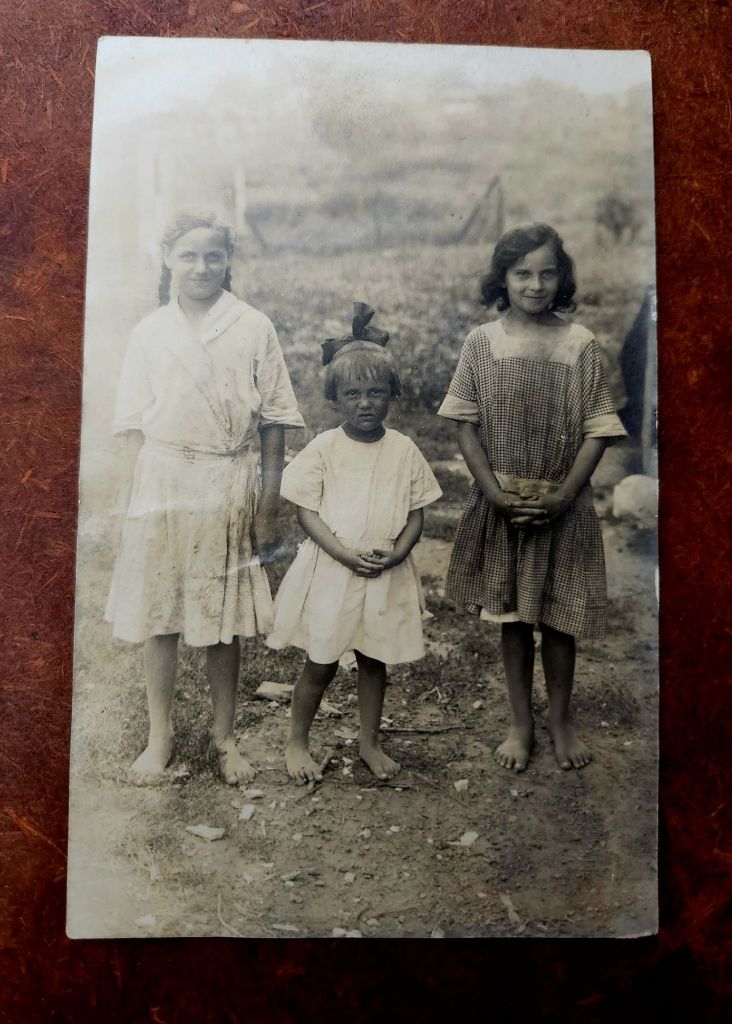
Here we see one girl, three moments, and years passing. The baby stares out with solemn intensity. Then she’s older, on a throne in white dress, commanding the frame. Finally she’s the eldest of four, and her protective gaze tells all.

The postcards show her time moving, roles shifting. She grows and gains presence. She becomes a big sister, then a bigger sister still.

The postcards show the sequence and the story intrudes. We can safely assume the scenario, the kinship, the birth order. But then we imagine her. She and her siblings stand as evidence. We provide the narrative.

Now nine men, perched around a large rock on uneven ground in a forest, maybe a park. Hats, a variety of ties, white shirts in sunlight. Ages range. Some engage the camera. Others look away.

Compare this to the first photograph. Similar outdoor setting and careful arrangement. Same paper stock, same photographic quality. Do any faces repeat? That man in the center looking off to the distance—could he be the man on the back left of the family group?

We squint. The shape of a jaw, the set of shoulders, the tilt of a head. Errors lead us toward other observations. Misreads become clues. We’re searching, and trying out plausible connections.

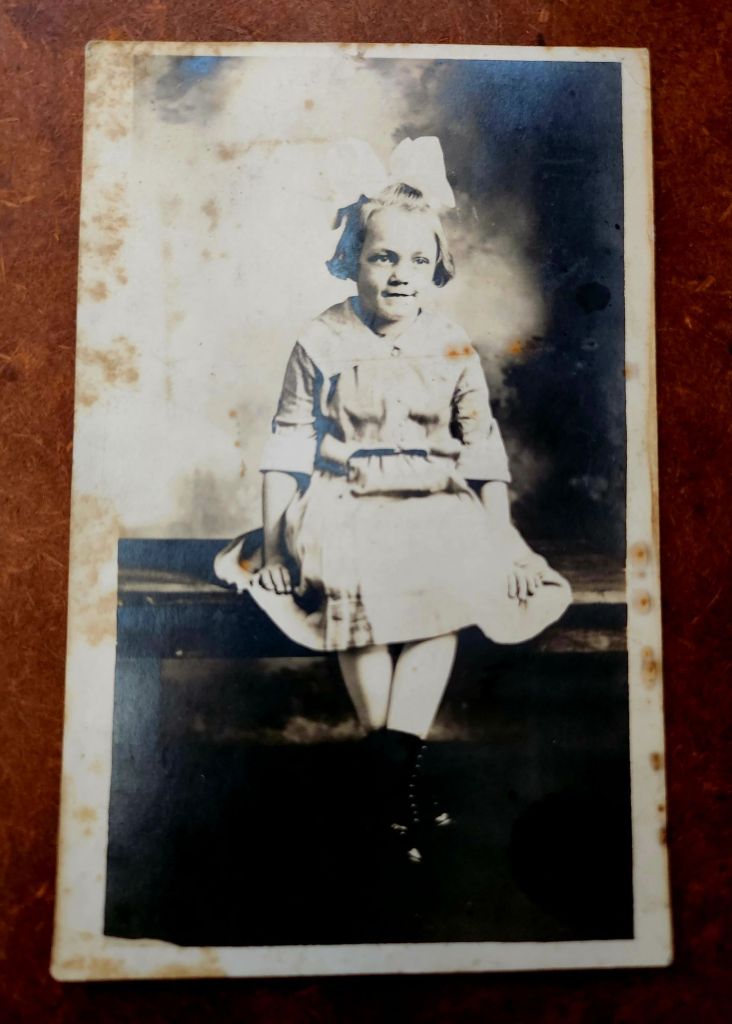
A different girl and a similar progression (maybe). The baby carriage can be dated within a range, 1915-1925. Fashions shift slowly in some places, rapidly in others, but period details do show. Those bows!

However, uncertainties hover. Is this the eldest girl growing up? Or, are we forcing connection where none exists? The bobbed hairstyles might give it away. Or they might mislead entirely.

A particular stare, a nose ridge, an anomaly at the jawline, and we are on the pursuit again. The faces echo. Three generations, or two. We assign roles: son, mother, daughter. Sisters?

The oval portrait shows four women arranged in a formal cluster. Elaborate hairstyles, high collars, cameo brooch visible on the seated figure. More prosperous, perhaps. Different family entirely, or different branch? Is she at the center the same as the older woman below? We cannot know.

In between the guesses, a different story emerges entirely. Our own families, and that we belonged. Or, that we confidently walked on. In either case, we are humming with history.

We’re deep in assumption now. Building genealogies from facial features, paper stock, and similar poses. The archives encourage it. These cards traveled together. Someone kept them together. The connections existed, however disassembled.
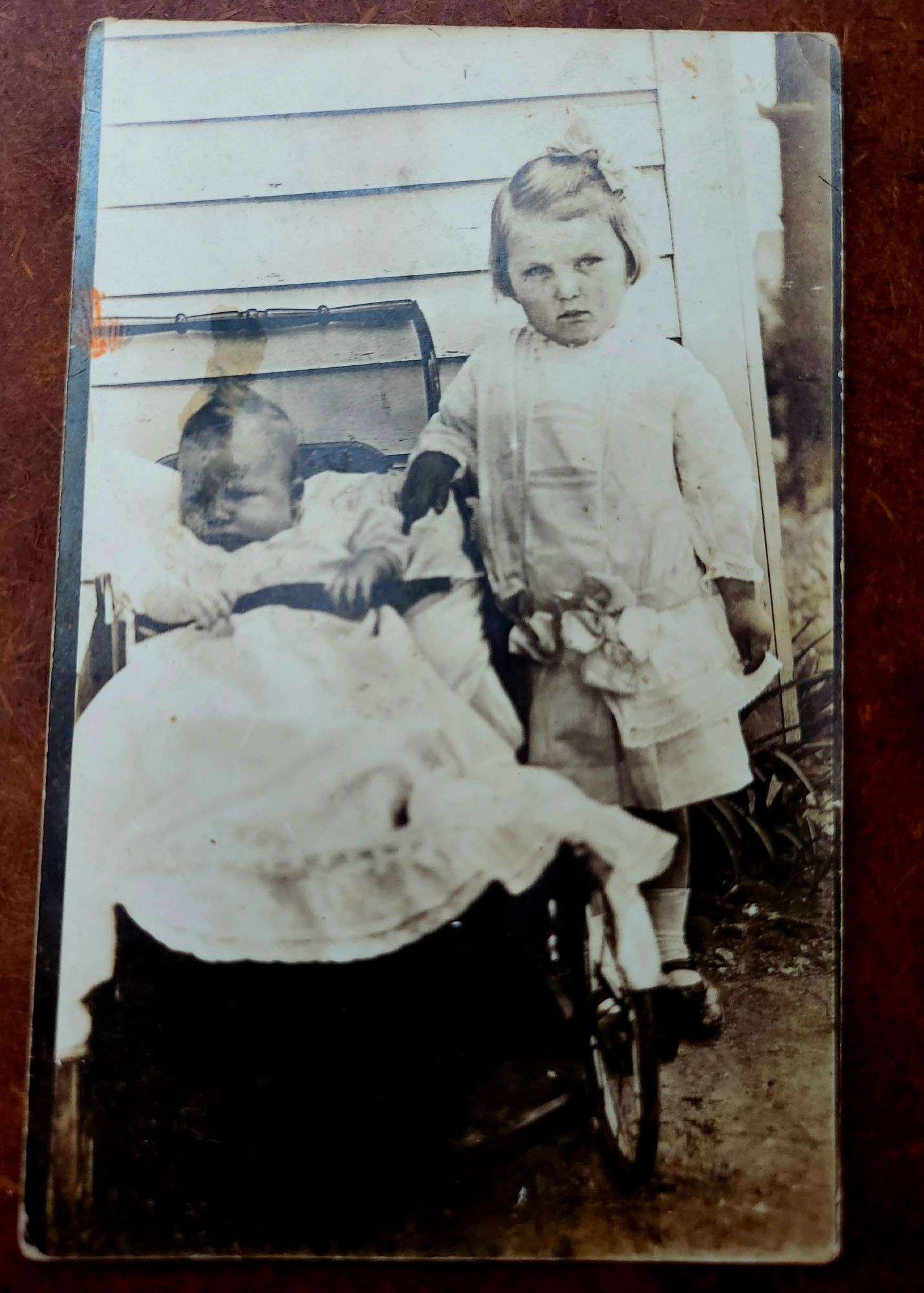
Another baby carriage, different from the first. And on the back of the card, handwriting: this is Irene with Willie’s baby, sent to Aunt Fannie. We know Irene from when she was four, seated with Uncle Rufus Dale, 84.
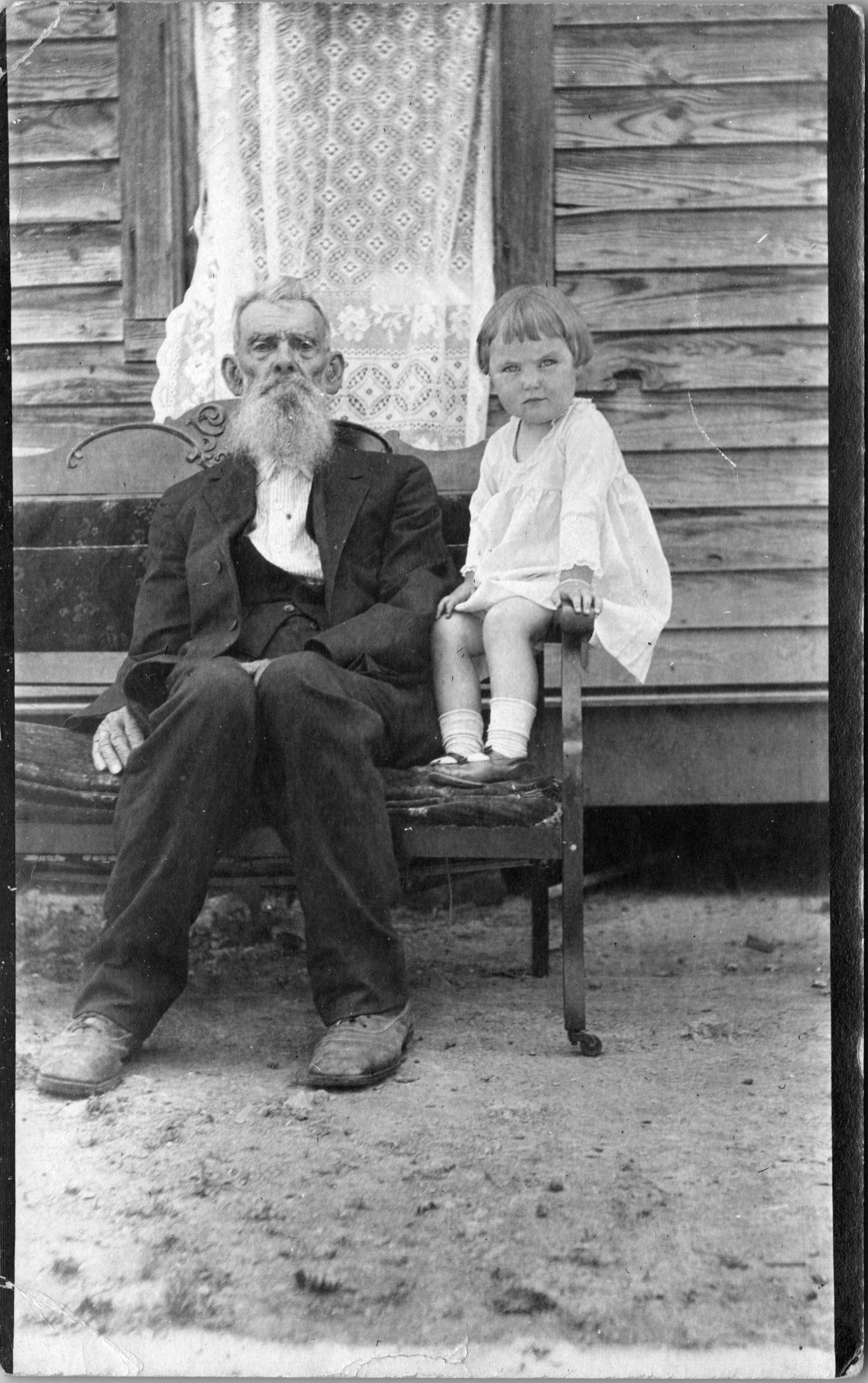
What satisfaction, when a storyline clings together. Names accumulate. Groups delineate. Relationships clarify. The archive speaks back, and the story begins to imitate fact.

The search becomes research. The archive rewards our attention and budding accuracy. But, who doesn’t love Aunt Fannie? Even if we’ve never seen her.

Now, here is Irene amid two new figures who appear to have a strong bond. Sisters? Friends?
As we might expect, there is more to reveal. Next week, we’ll look at pairings in quite a variety, and even more merry misleads. Then portraits, and finally, a grave.
Property Past

Tricky, sticky stories arise at the sight of buildings in the landscape. Evidence (or absence) of us along the way.

As landscapes, last week’s real photo postcards (RPPC) asked for nothing. Trees, frozen roads, animals burrowing in snow—they floated free of context. We could easily appreciate them without knowing where they might be.

Buildings are different. A structure says someone decided, planned, risked, and accomplished. They hauled materials, drove nails, painted trim. Buildings demand explanation in ways that hills might easily demure.

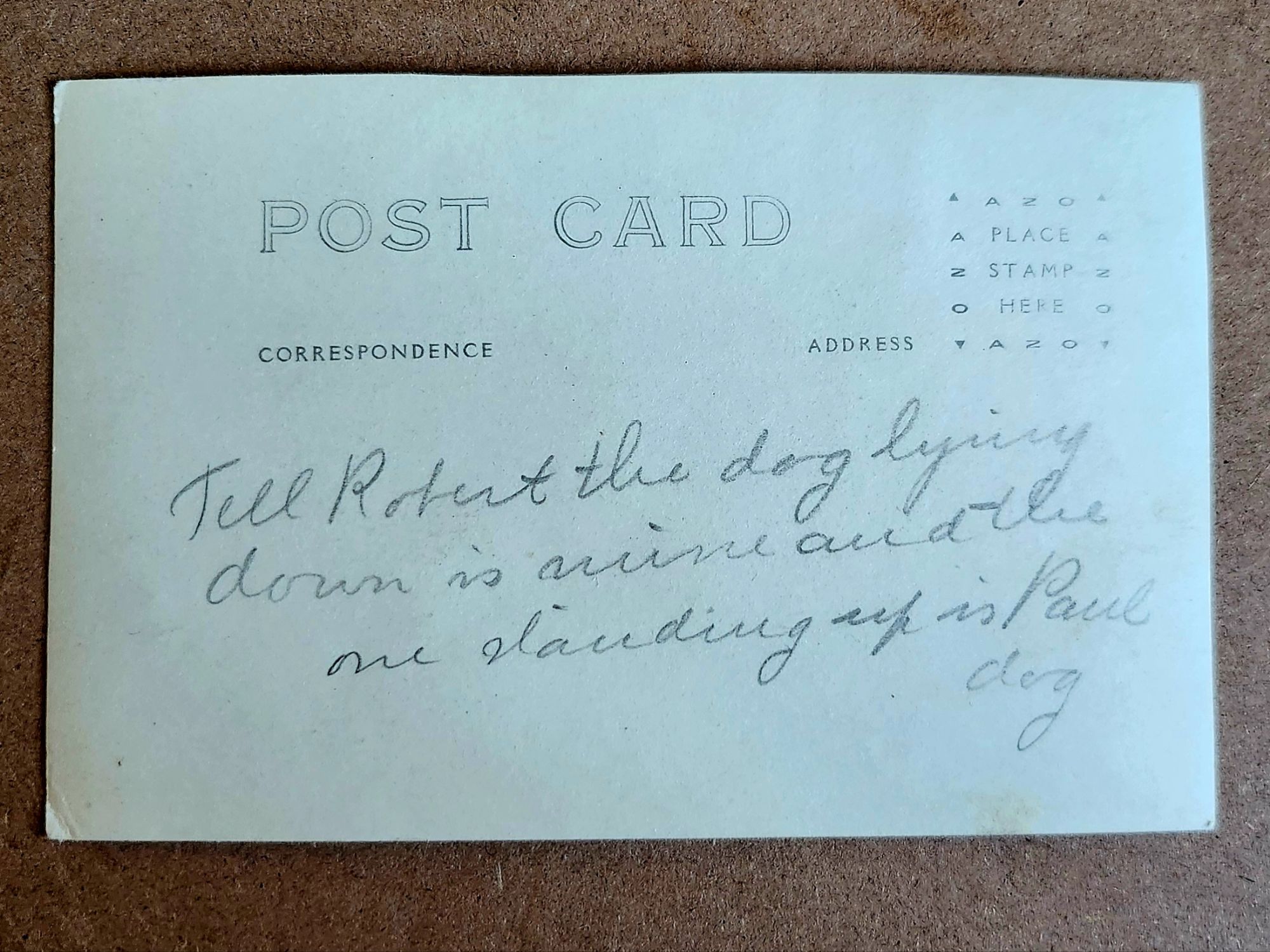
Reading postcards slowly reveals patterns. The undivided back means pre-1907. The real photo process suggests a local photographer, or maybe an itinerant professional documenting a place too remote to the reach of commercial postcard companies. Paper stock, indicia, stamps and cancellation, faded handwriting and previous labeling, even image placement and crop—these technical details narrow the place possibilities.

But they don’t yet answer another question: Who are Robert and Paul?

Tell Robert the dog lying down is mine and the one standing up is Paul dog

What We Might Know

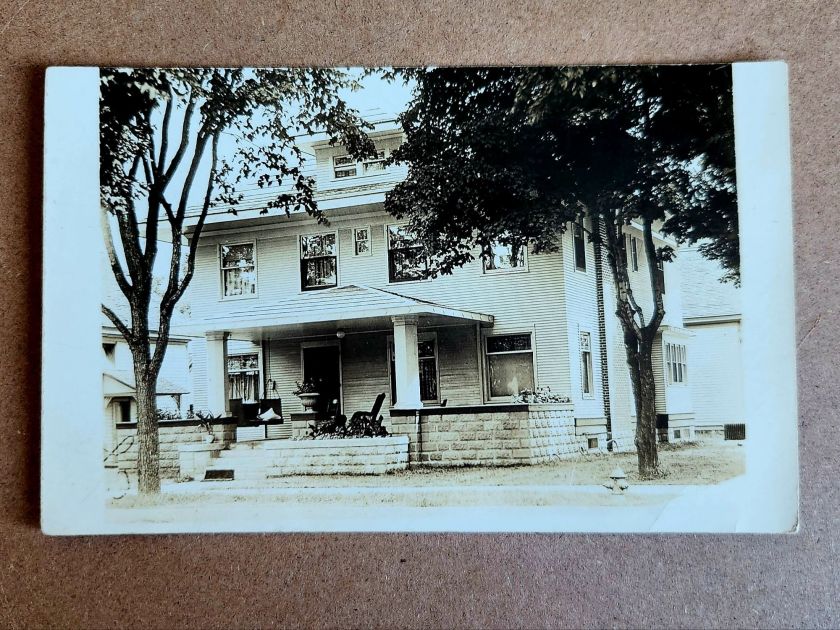
A two-story house with a generous porch is carefully centered in one photograph. Mature trees in the foreground. Curtains hang in the windows. Someone lived here and wanted to show their pride. Or, was it for sale?

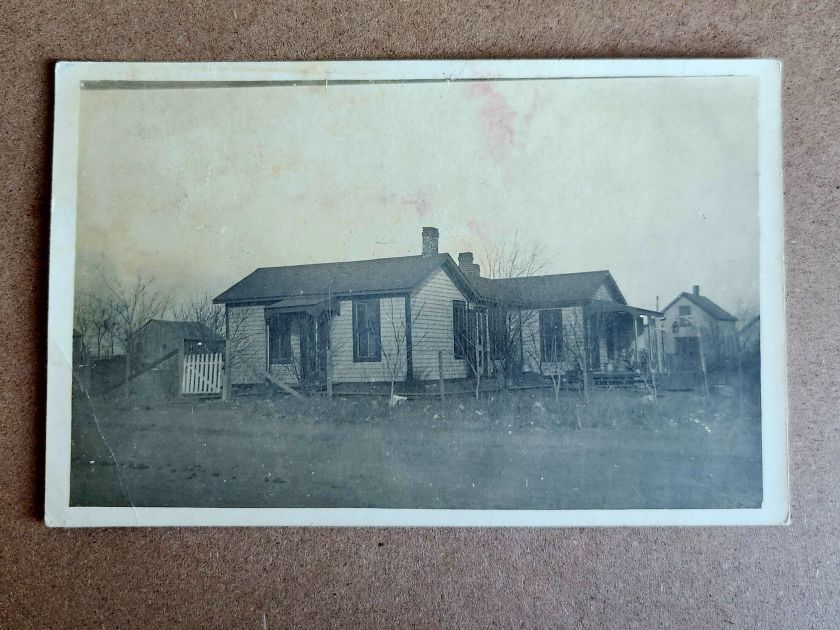
The architectural details offer more clues. Clapboard siding, stone or brick foundation, decorative porch elements—not fancy, but intentional. It seems to be in a neighborhood with sidewalks. In an era between 1900-1920, somewhere in the Midwest or West judging by lot size. Also, a fire hydrant.

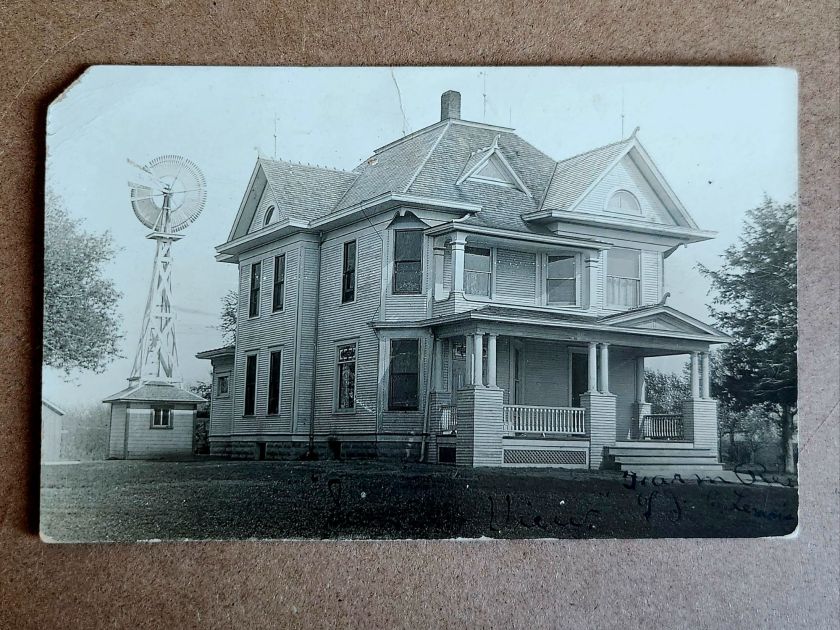
The windmill in another image dates itself. Windmills were an important utility and industry, and that style had a particular era. The house beneath it—elaborate Queen Anne with corner turret, ornamental shingles, and ornate columns—speaks to aspiration. Someone had big plans. This is visible evidence. When and where becomes roughly recognizable.

But, the people who stood on that porch remain absent and enigmatic. Who were they? What is happening here? A creative tension is mounting between the realm of evidence and the pull of story.

Sensing Stories

Two women stand in front of McMann Boarding House wearing identical striped dresses. The building is simple—board and batten, minimal trim, the kind of structure that goes up first and fast in a growing place.

The photograph has a vertical tear, the exposure is bad, and time has degraded it. But the sign remains legible: McMann Boarding House. Finally, a name.

Who was McMann? Who are these women? Employees? Vacationers? The photo is both casual and deliberately staged. What might the matching dresses mean? Pride? Subjugation?

Reading their faces, we fill in the narrative, almost immediately and sometimes inescapably. Relationships, motivations, futures take shape unbidden. This is exactly what we both invited and warned of last week—making it up. Always dangerous, sometimes worthwhile.

The impulse to story is nearly irresistible. A name on a building. Two women in matching dresses. The space around the postcard lights up. Are these their stories, or our own, or a magical projection that folds time?

When the Past Chats Back

Shuffling the stack, several cards in this collection start speaking to one another. Same photographic quality. Same paper stock. Similar landscape—flat, spare, newly broken. And most telling: similar structures in states of becoming.

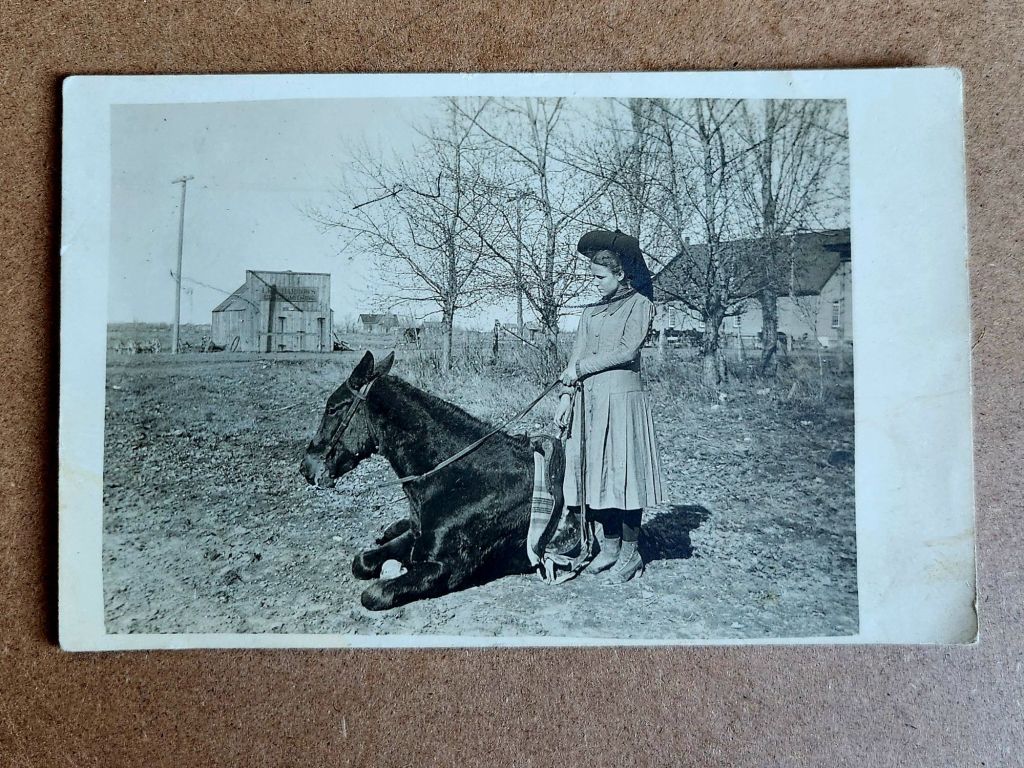
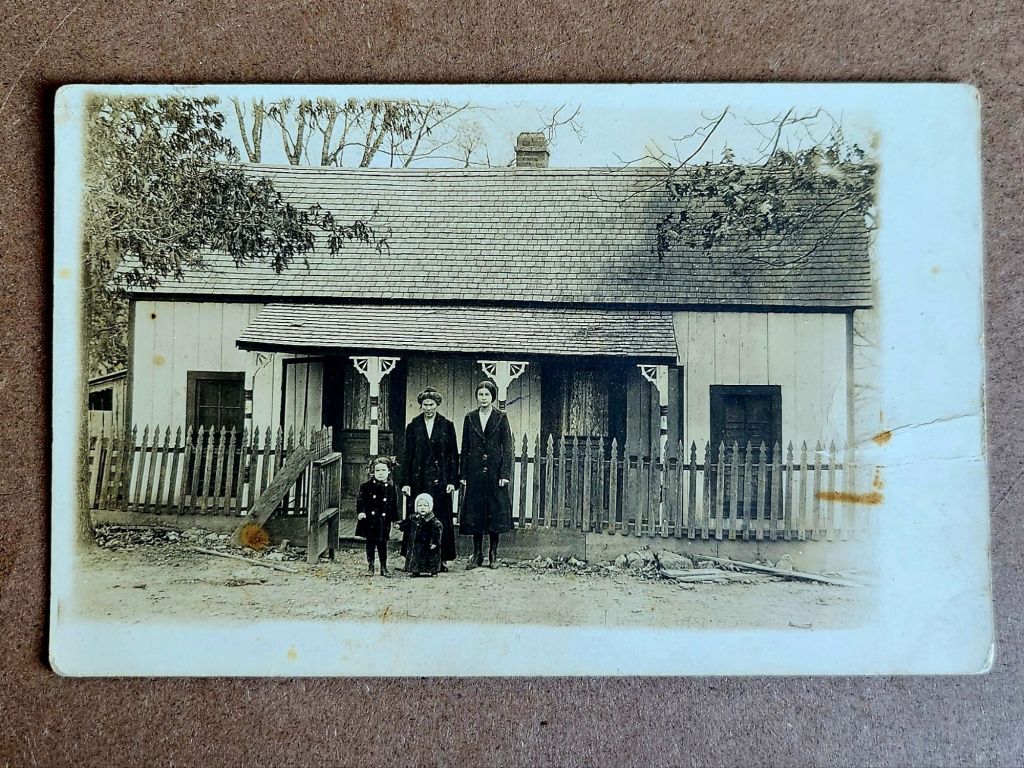
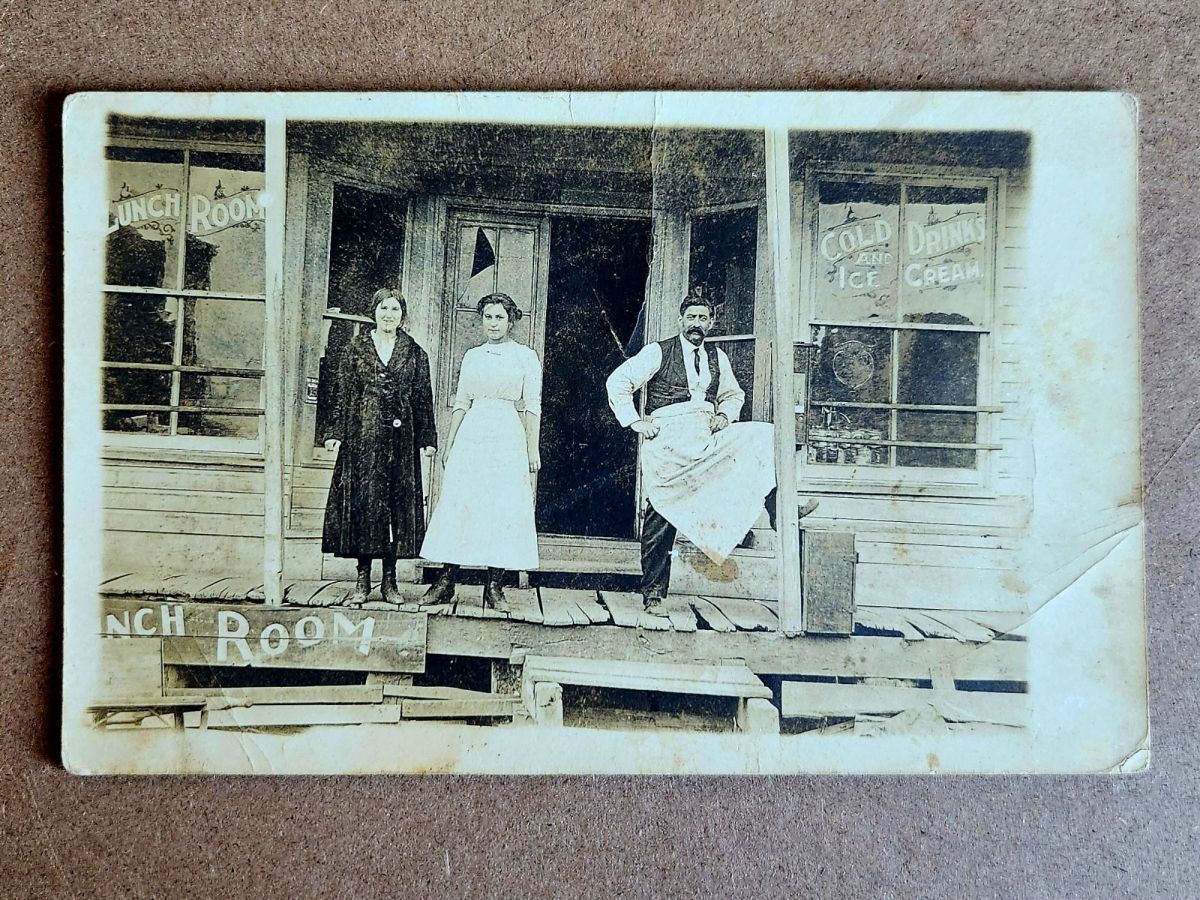
Laid out together, the pattern emerges. Houses with stone foundations and wraparound porches. An elaborate Queen Anne with a windmill. McMann Boarding House with its two women in matching stripes. A lunch room with an immaculately vernacular grand porch. Best-dressed proprietors standing proud. A girl and her horse, bare buildings behind her. A picnic under the canopy of a large tree.

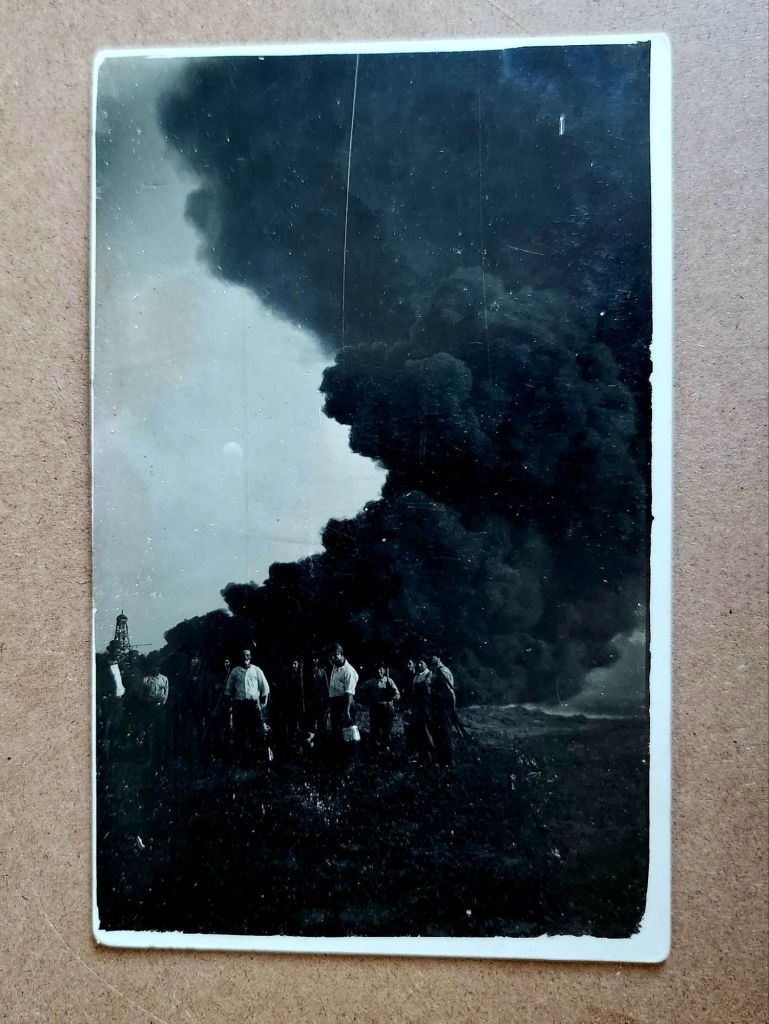
Also, a massive plume of black smoke billowing skyward, an oil derrick to the left, eight or nine men grinning toward the camera. The photograph stops everything cold. They struck liquid gold. A triumph worth documenting. Fine lines of the plumes etching through the darkest black.

These eleven images are a cluster from the same story—a town emerging around oil. Homesteaders and entrepreneurs arriving in a place that may have been open prairie five years earlier. Building homes, businesses, infrastructure for both industrial productivity and social life. Documenting the process with real photo postcards, for themselves or to send East. Their message: we have arrived safely and are in luck.

From Here to Now

This is a founding, the moment a place began and the stakes changed. These aren’t isolated buildings anymore and oddly they seem less like photos, too. We know there is a community taking shape and the evidentiary questions multiply. Who were they, by name? What brought them here? Did this place survive or vanish?

And harder, deeper, more consequential questions: Who lived here before? What animals and habitats were displaced? What did the derricks do? For them, and also to us.

Boom town logic. Extraction economy. Infrastructure dependencies and family injuries inherited. Cultural degradation, and environmental costs still being paid. This isn’t quaint history. This is the beginning of something we’re grappling with today.

Suddenly our imaginative stories contract and we now seek facts. The boarding house proprietor’s daily life can be imagined, but not separated from a place built on oil speculation. The architectural ambition of that Queen Anne deserves appreciation, but it went up in a town that might have lasted ten years or a hundred, depending on the wells. The buildings aren’t innocent, and we are implicated.

More in Store

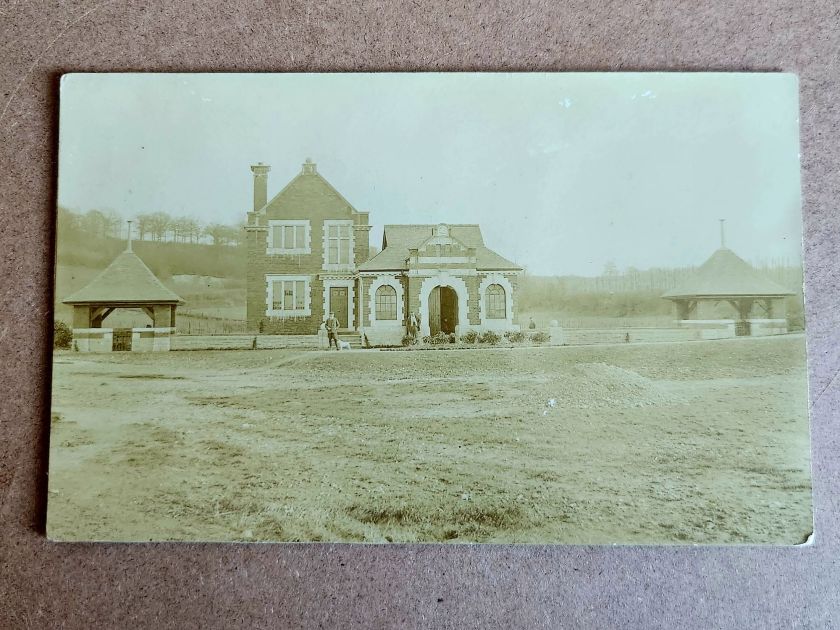
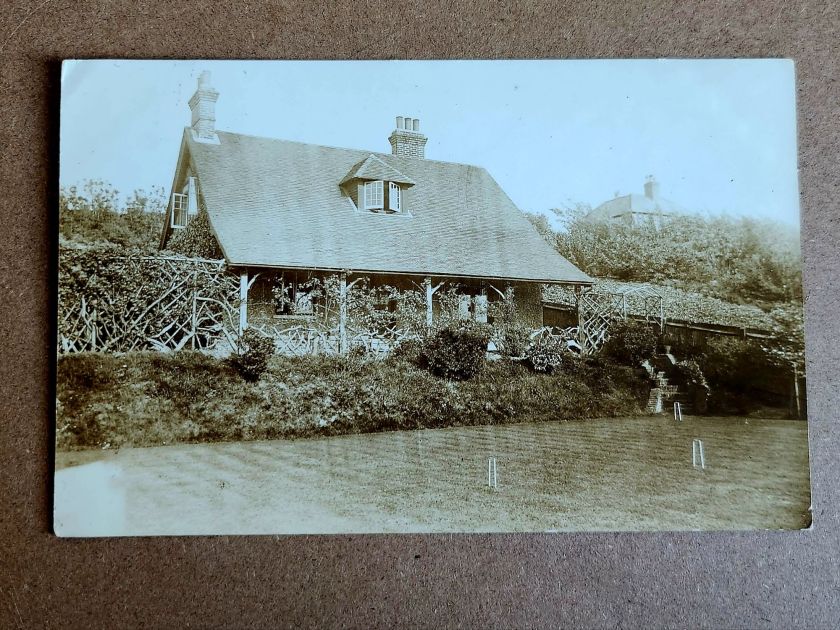
Another stack of postcards might be related to this cluster—similar age, similar style, possibly the same region, likely at later dates. And then a few unrelated ones, probably European based on the architecture.

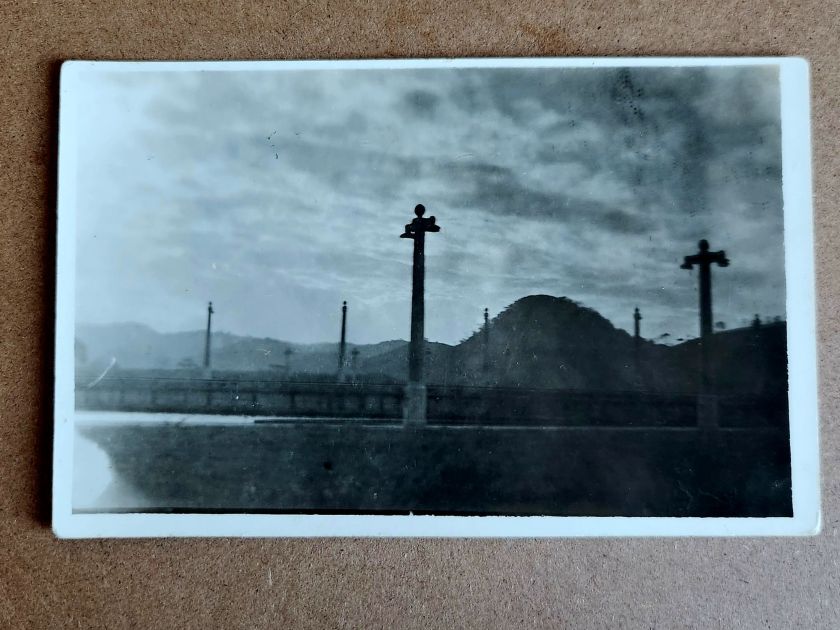
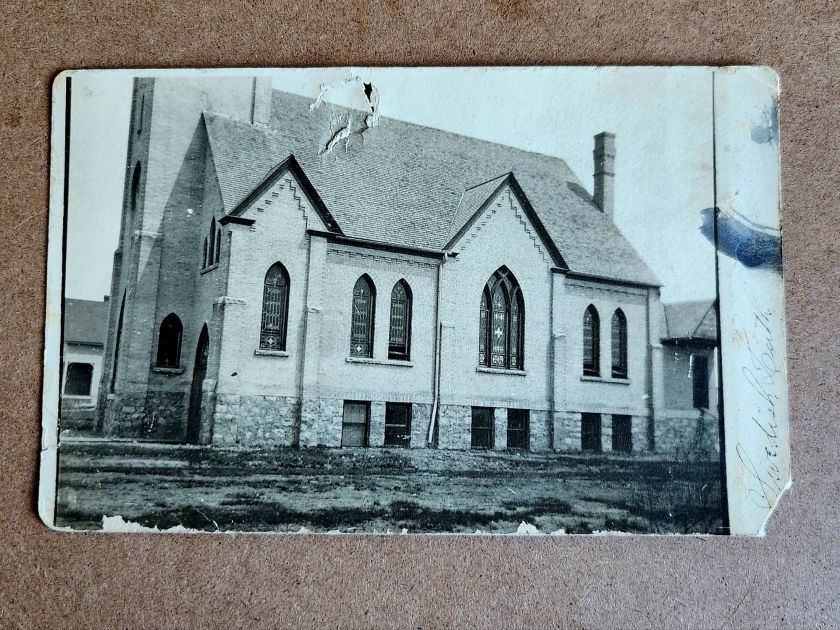
Not every fragment connects or resolves. Some buildings will remain singular, their stories unrecoverable. Churches and homes, beautiful structures, carefully photographed. Loved locally today as a memory or a ruin, perhaps.

Not everything needs a narrative. Some images can just be enigmatic. Evidence of care, of craftsmanship, of a moment someone thought worth preserving. These evocative details lead to fiction, which makes its own case for history and the preservation of minute detail.

But this cluster won’t let go. They connect to another stack, and soon we’ll know more. Next week we’ll meet the people themselves, looking back at us.

A Buffalo Soldier Mystery

A lone Buffalo Soldier on horseback captures a moment of dignity in African American military history.

Real Photo Postcards (RPPCs) offer tangible connections to history, yet they often emerge from a family photo album or shoebox collection entirely without context. Piecing together their stories requires careful observation and historical research, picking up valuable clues along the way.

Today’s case is an image of a lone Buffalo Soldier on horseback, printed sometime between 1904 and 1918. This postcard captures a moment of dignity in African American military history. The soldier sits tall in the saddle, wearing a formal military dress cap (rather than the campaign hat often associated with frontier service) and a meticulously maintained uniform. The setting—featuring a substantial brick building and cement sidewalk—suggests an established military installation rather than a frontier outpost.

The man is likely from the 9th or 10th Cavalry, and two military posts stand out: Fort Robinson in Nebraska and Fort Myer in Virginia, both important locations in Buffalo Soldier history.

Western Bastion

From 1887 to 1898, Fort Robinson served as Regimental Headquarters for Buffalo Soldier cavalry and infantry units. The 9th Cavalry Regiment made its headquarters there beginning in 1887, serving with distinction and boasting ten Medal of Honor winners from the Indian Wars. The Buffalo Soldiers at Fort Robinson earned a reputation for discipline and effectiveness that would later influence their assignments to more prestigious postings.

The 10th Cavalry Regiment maintained a significant presence at Fort Robinson during the early 1900s. The substantial brick buildings and newly constructed cement sidewalks visible in the photograph align with Fort Robinson’s infrastructure during this period, as the fort underwent significant modernization around this time. The formal dress uniform and cap in the photograph suggest this might have been a commissioned officer or a non-commissioned officer in a ceremonial or garrison role at the fort.

Nation’s Capital

Troop K of the 9th Cavalry served at Fort Myer in Virginia from May 25, 1891, to October 3, 1894, under the command of Major Guy Henry, a Medal of Honor recipient. This prestigious assignment bears a direct link to Fort Robinson. The selection of Troop K for this assignment was a recognition of the outstanding performance at Fort Robinson and other western posts.

The post at Fort Myer was the first time after the Civil War that an African American unit was stationed east of the Mississippi River near a major metropolitan area. The dignified formal pose and military dress cap would be consistent with a soldier stationed at this prestigious posting adjacent to Arlington Cemetery and Washington D.C., where ceremonial duties would have been part of their responsibilities. Both geographic and symbolic, the lauded post demonstrates how the Buffalo Soldiers earned respect through excellence despite pervasive racial prejudice.

While the AZO markings suggest a 1904-1918 printing date for this postcard, it’s possible the photograph itself was taken earlier. Many soldiers had formal portrait photographs taken to commemorate their service, which were later reproduced as postcards. If this soldier served at Fort Myer with Troop K (1891-1894), the image could have been reproduced on AZO stock years later. Alternatively, if the image dates to the 1904-1907 period, it likely shows a 10th Cavalry soldier at Fort Robinson. Without identifying marks or annotations, we can only speculate.

In either case, the photograph reveals a poignant moment during a complex era of American history. The soldier’s strong gaze suggest a person aware of his place in this important legacy. The Buffalo Soldiers’ contributions to American military history invite deeper study, recognition, and remembrance.

To Explore More

Buffalo Soldiers National Museum – https://buffalosoldiersmuseum.org/the-buffalo-soldiers/

The Proud Legacy of the Buffalo Soldiers – National Museum of African American History and Culture – https://nmaahc.si.edu/explore/stories/proud-legacy-buffalo-soldiers

National Archives: Exploring the Life and History of the “Buffalo Soldiers” – https://www.archives.gov/publications/record/1998/03/buffalo-soldiers.html

Buffalo Soldiers at Fort Myer Historical Marker – https://www.hmdb.org/m.asp?m=41108

Washington DC Chapter, 9th & 10th (Horse) Cavalry Association – http://www.buffalosoldiers-washington.com/Fort%20Myer.html