Did you know? October 1 is World Postcard Day! The celebration started in 2019, based on the grand old global pastime of simply staying in touch.
World Postcard Day was designated by Postcrossing as the first of October starting in 2019, including a new postcard design each year. We share a simple mission to keep postcards circulating, and their way of doing it is elegant and efficient. A wonderful illustrated history of the postcard is available to enjoy, as well. To celebrate the day, I’ll be requesting my first address and then happily duty-bound to get a postcard in the mail quickly. Maybe you will, too!
Featured Postcard~ MatToon Memories
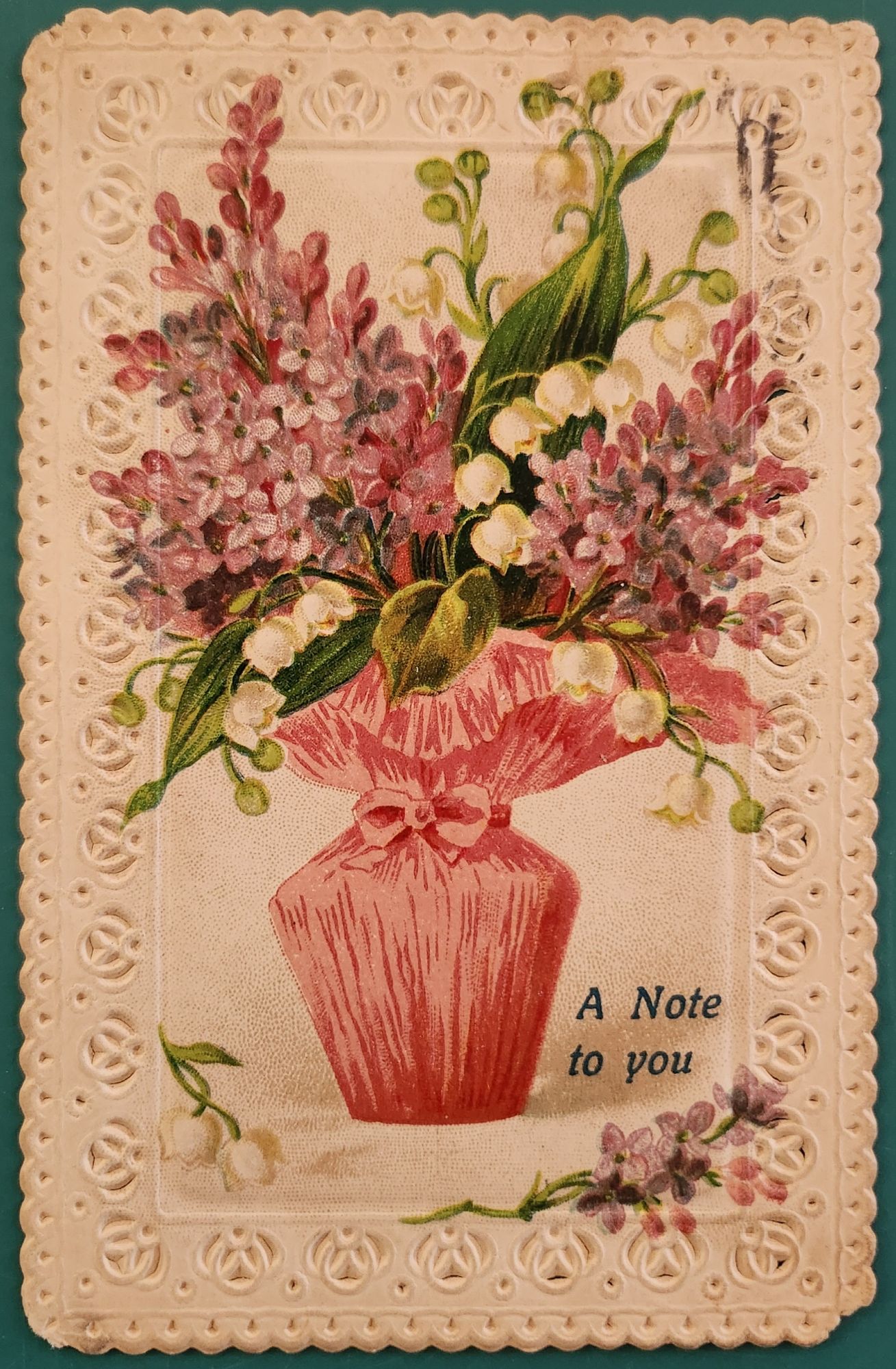
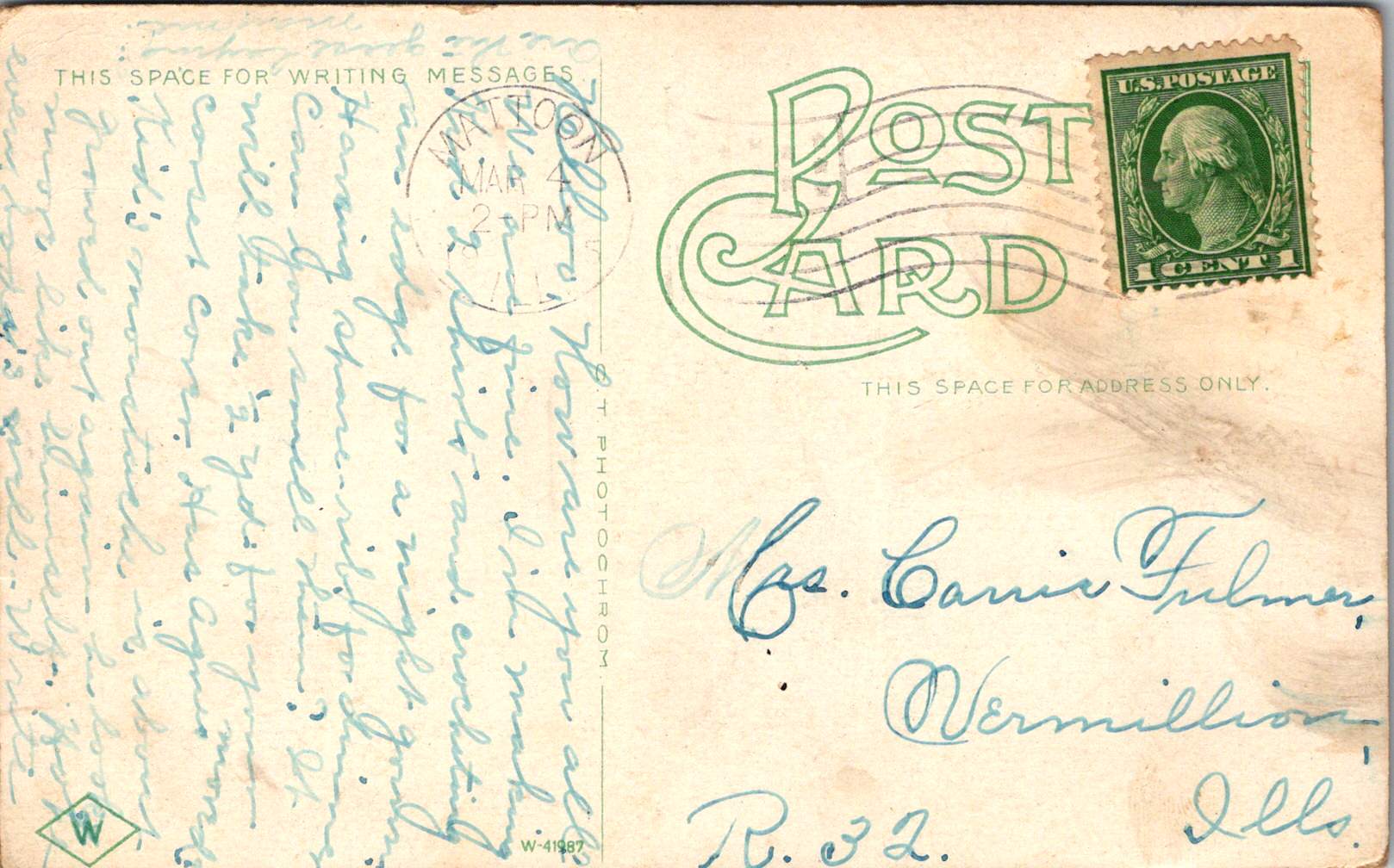
Another mention of Mattoon, Illinois. This time, it is 1912, with a typical friendly update, winter weather commiserations, and gifts exchanged.
Dear Carrie, How is this for winter? I’m good and tired of it. Tell the folks I got a basket last Wed that tickled me mightily. Tell Stella, I will redeem my promise this week if this weather continues. I’ll look them up this P.M. & send at once. I’ve been too busy to do anything extra. Hope U are better. I weigh 154 and you will have to hurry or I’ll be way ahead of U. Mayme, March 11.
Front of the card: A delicate bouquet bursts from a pink gathered vase. Pink hyacinths and white lily of the valley dominate the arrangement. The flowers cascade naturally, their stems tied with fabric and matching bow. The text “A Note to you” appears in a blue decorative font at bottom right. Embossed rosettes frame the card in an ornate lace-like border.
Back details: Handwritten script fills the left side. A one-cent green Benjamin Franklin stamp sits in the upper right corner. The postmark reads “Mattoon, IL” with partial date visible, March 11, 1912, and a flag cancellation. The address shows “Mrs. Carrie Fulmer, St. Mary’s, Ind.”
Condition: The card shows minimal wear—crisp embossing, slight foxing, faded cancellation marks, minor corner softening. Colors remain vibrant. No tears or creases mar either side, though there is a minor cancellation mark on the front upper right. Very good condition for its age.
Rarity: This embossed, die-cut postcard represents German lithography’s golden age. Publishers used chromolithography to achieve the rich colors. The deep embossing required specialized presses. Early 1900s embossed postcards survive in quantity, but this example’s condition elevates its value. The Mattoon, IL postmark and readable message add historical context. Not museum-rare, but better than average.
Appeal: Collectors of Victorian and Edwardian ephemera may treasure this piece. Design enthusiasts might enjoy the embossed example. Genealogists ought to enjoy our meanderings through Mattoon and Mayme and Carrie’s perspectives. Botanical art lovers appreciate the detailed floral illustration and coded meanings. Stamp collectors note the Franklin one-cent issue and period-specific cancellations. Vintage greeting card dealers would display this prominently.
Would anyone cut it up to make an art card? Oh, the creative tension between past and future!
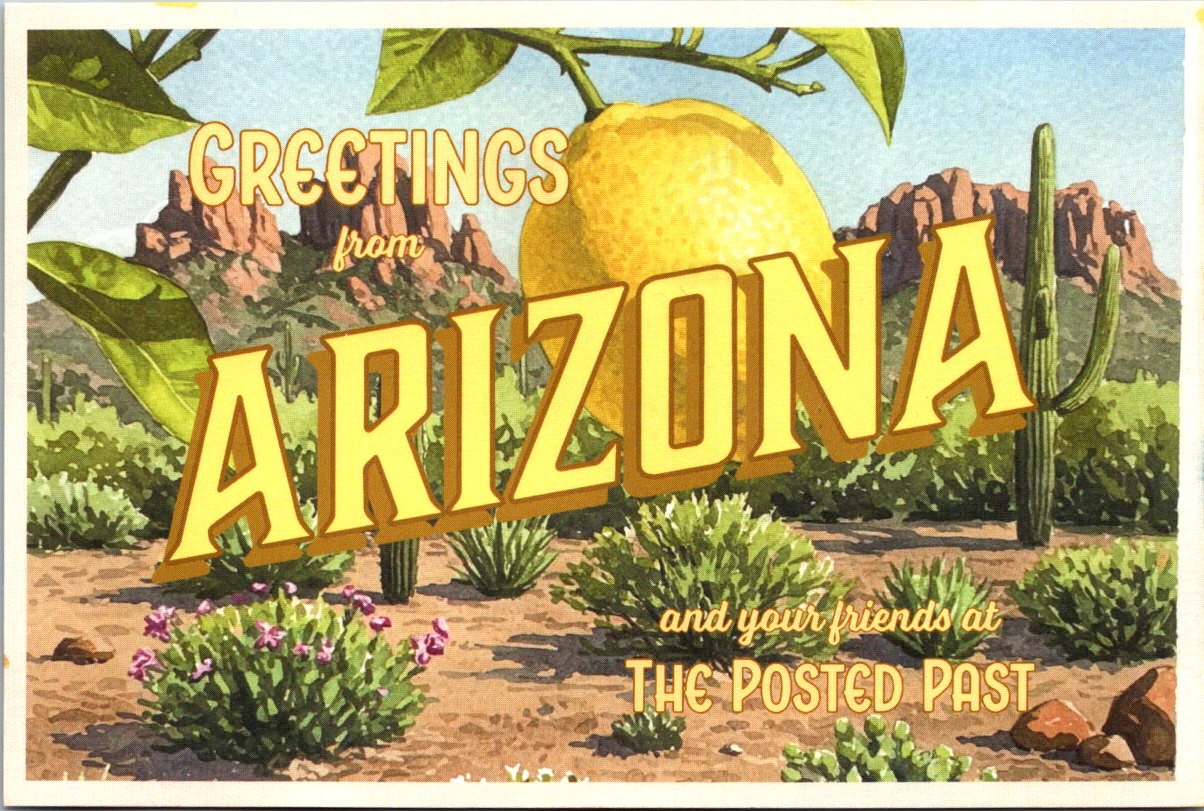
If you are nearby, come visit our very first postcard display at Tempe Yarn & Fiber. Grateful for the chance to get them out in the world. New designs and online sales coming soon!
Sisters Mayme and Carrie stay in touch as Mattoon IL grows from a creek-side town to a modern crossroads before the war, 1910-1918.
Between 1910 and 1918, a series of postcards traveled between Mattoon, Illinois, and St. Mary’s, Indiana. On one end was Mayme, the author, who had made her home in the bustling railroad town of Mattoon. Her sister Carrie, who remained in St. Mary’s, received and kept the cards, now more than a century old. These correspondence cards—adorned with images of Mattoon’s infrastructure and landmarks—captured more than just personal exchanges between siblings. They documented a profound moment in America’s transformation from a rural society to an industrialized nation, with small Midwestern cities like Mattoon serving as microcosms of this national metamorphosis.
Nature and Community
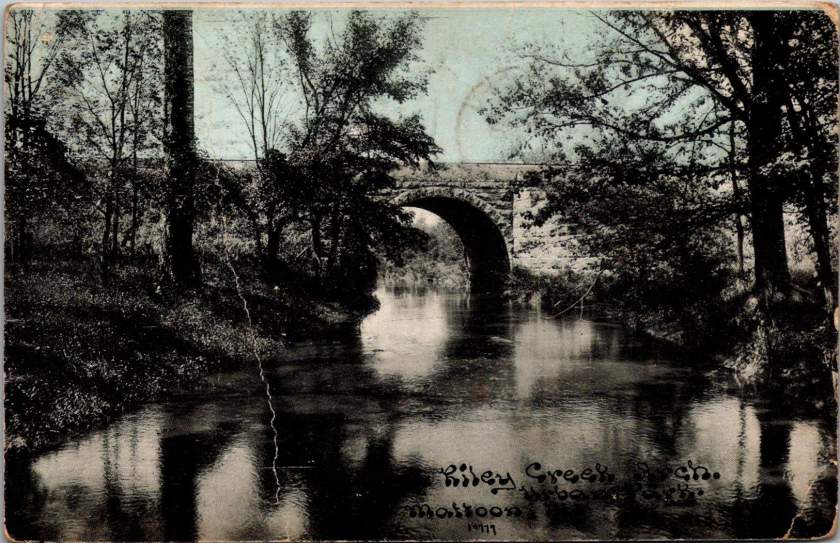
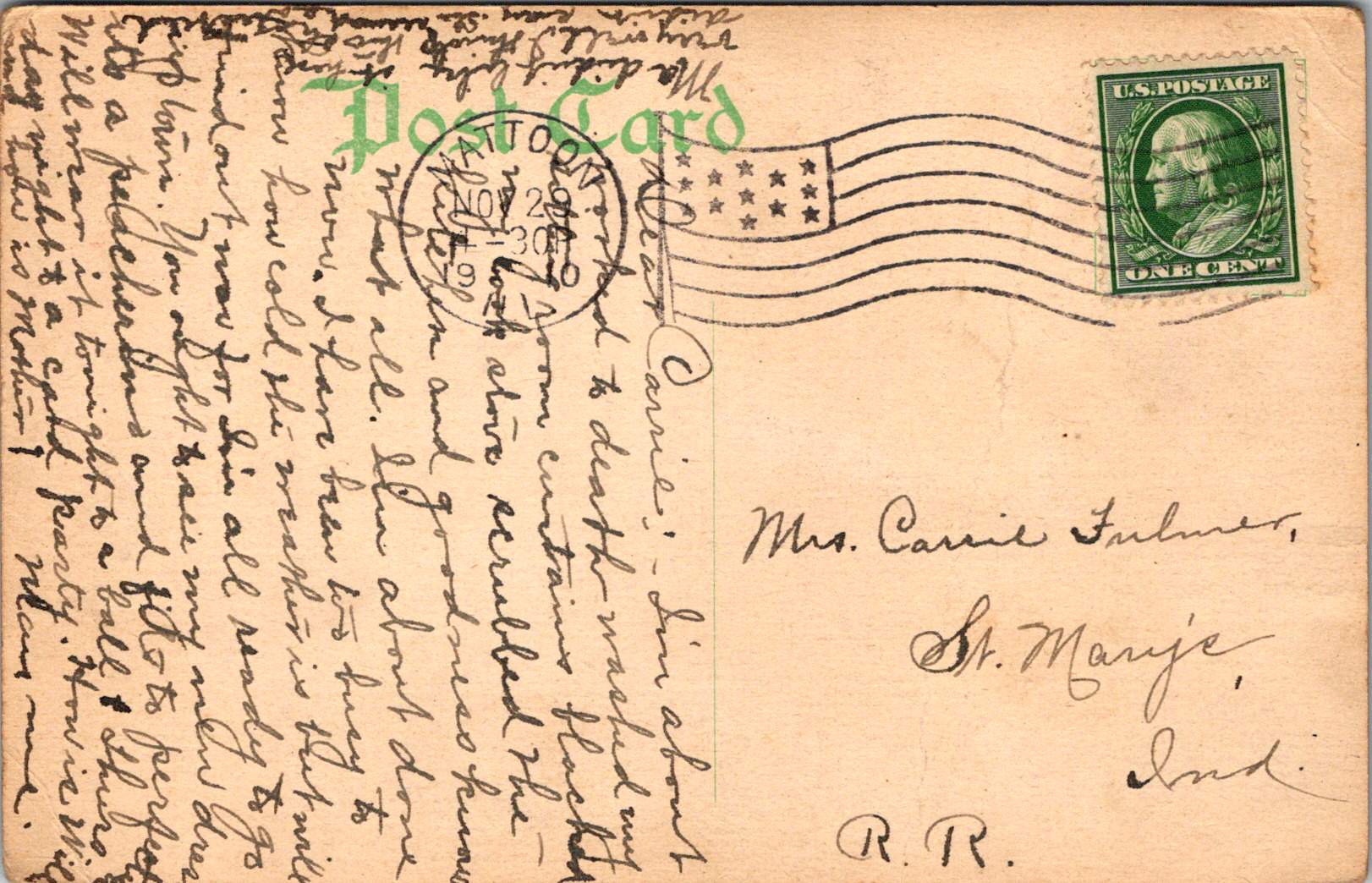
Mayme sent the first postcard on November 29, 1910, bearing an image of Riley Creek with its stone bridge arch—a glimpse of the natural landscape that surrounded the growing town of Mattoon. This serene view of the creek precedes the increasingly industrialized town that Mattoon was becoming. Founded in 1855 and named after William B. Mattoon, a partner in the construction firm that built the Illinois Central Railroad, the town served as a critical junction between the Illinois Central and the Terre Haute & Alton railroads.
The stone bridge spanning Riley Creek represents essential infrastructure that connected different parts of the community and facilitated transportation within and beyond the town. Such bridges were vital elements in expanding road networks that would eventually complement the railroad’s dominance in transportation.
Mayme wrote about burdensome domestic chores and a new dress for an upcoming ball that she would wear again to a Thursday card party. She was participating in the social life of a community that was growing from its natural surroundings into a prosperous small city.
I’m about worked to death, washed my sitting room curtains, blackened my cook stove, scrubbed the kitchen and goodness knows what all…
Industry and Infrastructure
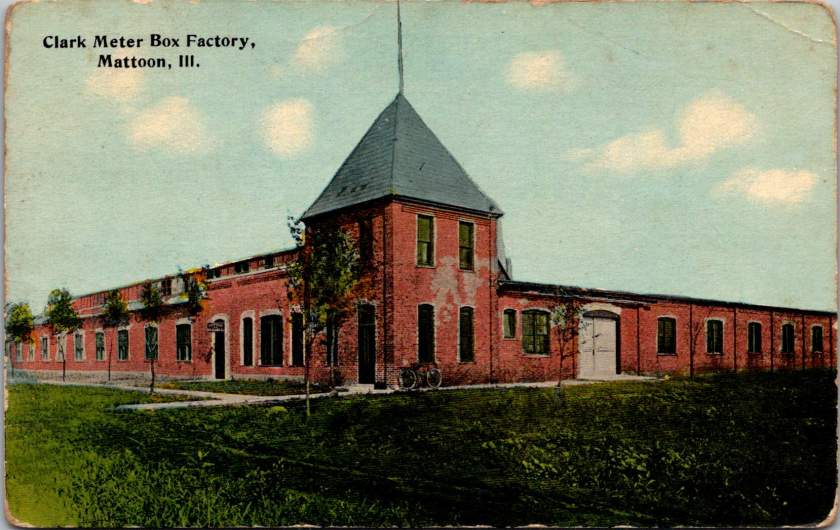
By 1914, Mayme was sending postcards that highlighted Mattoon’s industrial development. One image showcased the substantial Clark Meter Box Factory, with its distinctive tower and solid brick construction. America’s industrial expansion was moving beyond major manufacturing centers into smaller towns and cities. The factory produced meter boxes for utilities—products essential to the electrification and modernization sweeping across America in the early 20th century.
While Mayme reported her handiwork at home like knitting, crocheting, and gardening, the meter box factory represented the industrial world that was transforming the American economy. Manufacturing facilities like this provided jobs that attracted workers and their families to communities like Mattoon, contributing to urban growth and economic diversification beyond traditional agricultural and railroad employment.
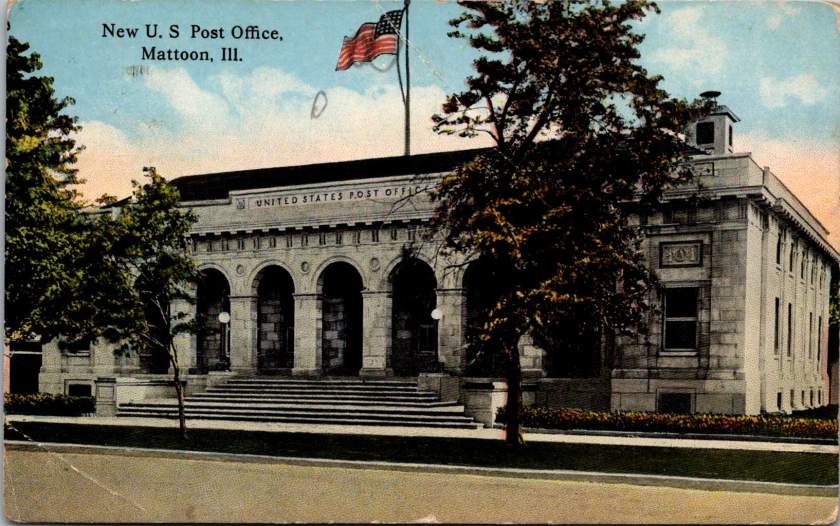
Also in 1914, Mayme sent a postcard showcasing Mattoon’s “New U.S. Post Office,” a stately neoclassical building with grand arches and an American flag prominently displayed. This wasn’t merely a functional building but a statement of federal presence and civic achievement. During this period, post offices in American towns weren’t just mail facilities—they were symbols of connection to the national government and markers of a community’s importance.
The grandeur of Mattoon’s post office reflected the federal government’s expanding role in American life—a time when postal services were being standardized and rural free delivery was connecting previously isolated communities. The building is a physical manifestation of the communication network that allowed Mayme’s postcards to travel to Carrie with such regularity.
Hospitality and Social Life
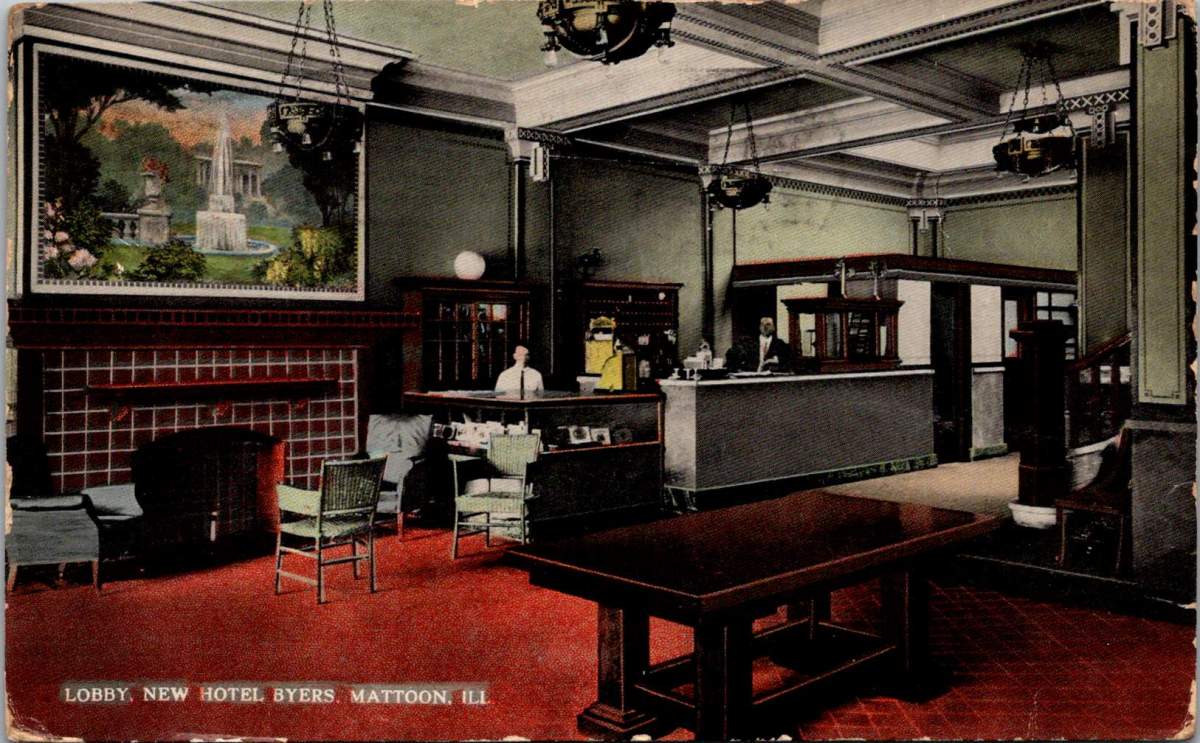
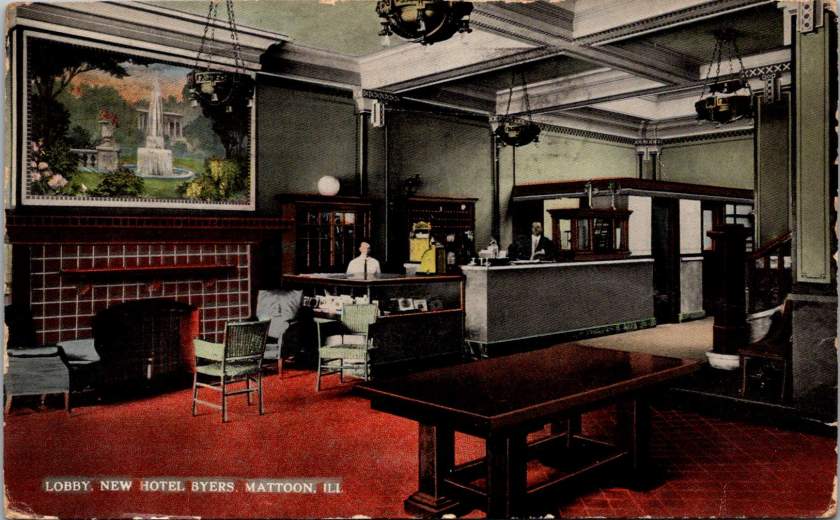
In 1915, Mayme’s postcard featured the lobby of the Hotel Byers, offering a glimpse into the social aspirations of Mattoon during this era. The elegant interior, with its decorative fireplace, ornate hanging lamps, and comfortable seating area, represented the town’s desire to provide metropolitan amenities. Hotels like the Byers served not just as lodging for travelers but as social centers for the community.
For Mayme, the hotel offered refined experiences and social mobility. The hotel’s ballroom would have served as the venue for the dances she mentioned, while its dining room hosted the card parties that figured prominently in middle-class social life. These gatherings provided opportunities for networking across class lines, connecting domestic and railroad workers’ families with merchants, professionals, and industry owners.
The “new” Hotel Byers replaced an older establishment of the same name that had served Mattoon since the late 19th century. This newer iteration, constructed around 1914, was a modern hotel that served as crucial infrastructure for a growing city with ambitions to attract business and industry. The hotel’s construction coincided with a period of economic optimism in Midwestern towns before America’s entry into World War I, when many similar communities were upgrading their commercial buildings as part of the broader Progressive Era emphasis on civic improvement.
Railroad Town
The last postcard featured the “Illinois Central Subway” in Mattoon, which wasn’t an underground transit system but a distinctive sunken railway passage that bisected the town. This engineering feature allowed trains to pass through without disrupting street-level traffic, a forward-thinking design that embodied the marriage of infrastructure and everyday life. The buildings lining the upper level of the postcard show Mattoon’s commercial district that grew directly alongside the railroad—their proximity a testament to the symbiotic relationship between commerce and transportation.
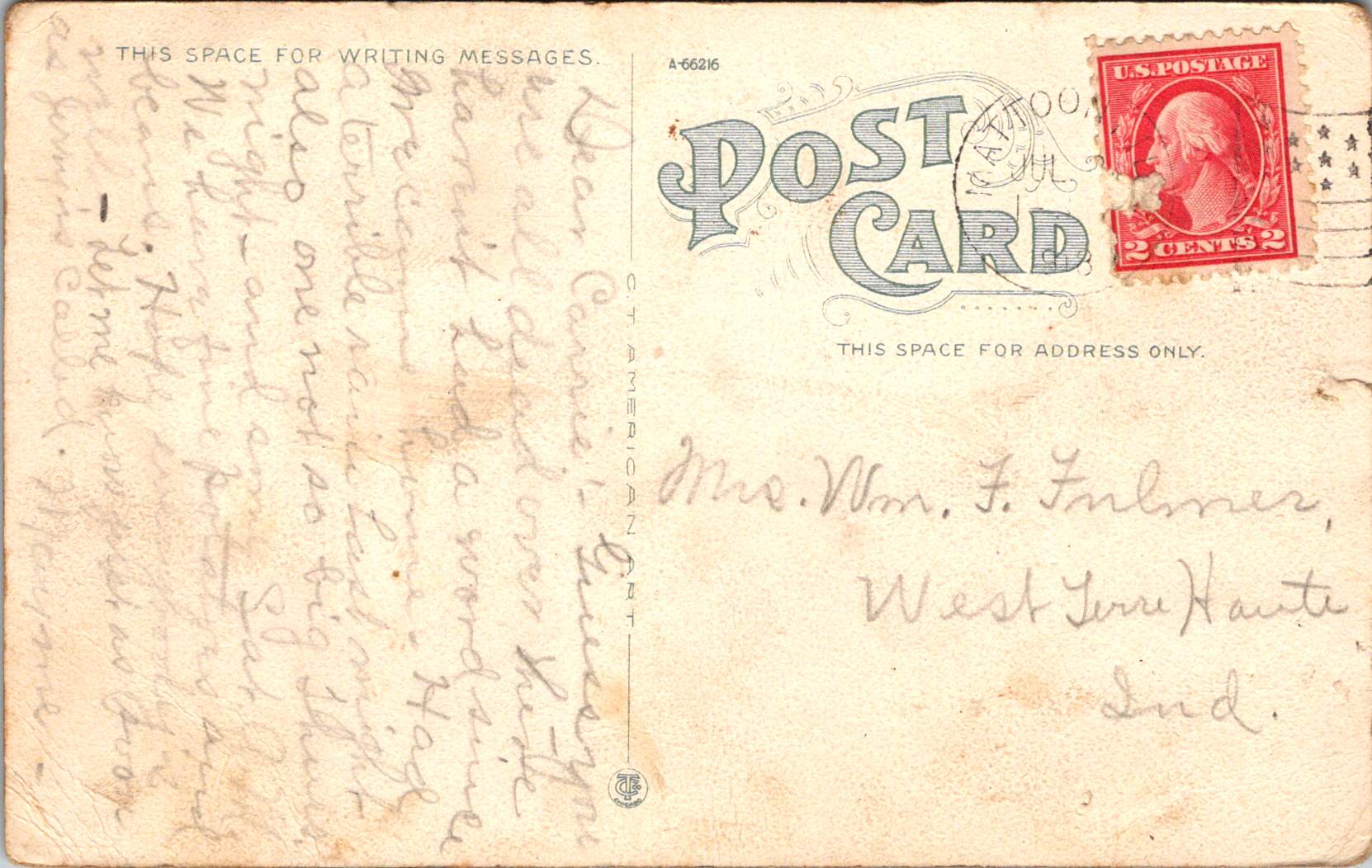
Hope everybody’s well. Let me know just as soon as Jerry is called…
War Shadows
By July 1918, Mayme’s tone had shifted. Her ominous request to let her know “as soon as Jerry is called” reveals the long shadow cast by World War I over these Midwestern communities. The United States had entered the war in April 1917, and the military draft was touching families across the nation.
The war accelerated many of the industrial and social changes already underway in towns like Mattoon. Labor shortages created by military service opened new employment opportunities, particularly for women. The focus on wartime production reshuffled economic priorities. And the specter of loss hung over families, even as daily life continued.
While Mattoon’s industrial capacity may have contributed to the war effort through manufacturing, the human cost was felt intensely in personal correspondence like this.
Two Sisters
Throughout these exchanges, we see two different life trajectories embodied by the sisters. Mayme chose life in a developing industrial town, participating in its social events and domestic economy while witnessing its physical transformation. Her postcards—featuring Mattoon’s architectural achievements and industrial facilities—suggest a certain pride in her adopted community.
Carrie eventually married a man named Earl, and they moved around a bit. Both sisters maintained domestic skills—knitting, crocheting, sewing, and food production—that connected them in conversation even as the world around them changed. Their correspondence across state lines preserved family bonds—a common experience as increased mobility dispersed American families. The railroad and postal service made this ongoing connection possible.








 The Posted Past