In the late 1960s, a set of postcards made its way from Tokyo to Hawaii, and then onto the American mainland. At first glance, these look like simple instructional cards about flower arranging. But a deeper dive reveals a fascinating story of cultural exchange, artistic tradition, and a pivotal moment in post-war Japanese history.
A Window into Cultural Exchange
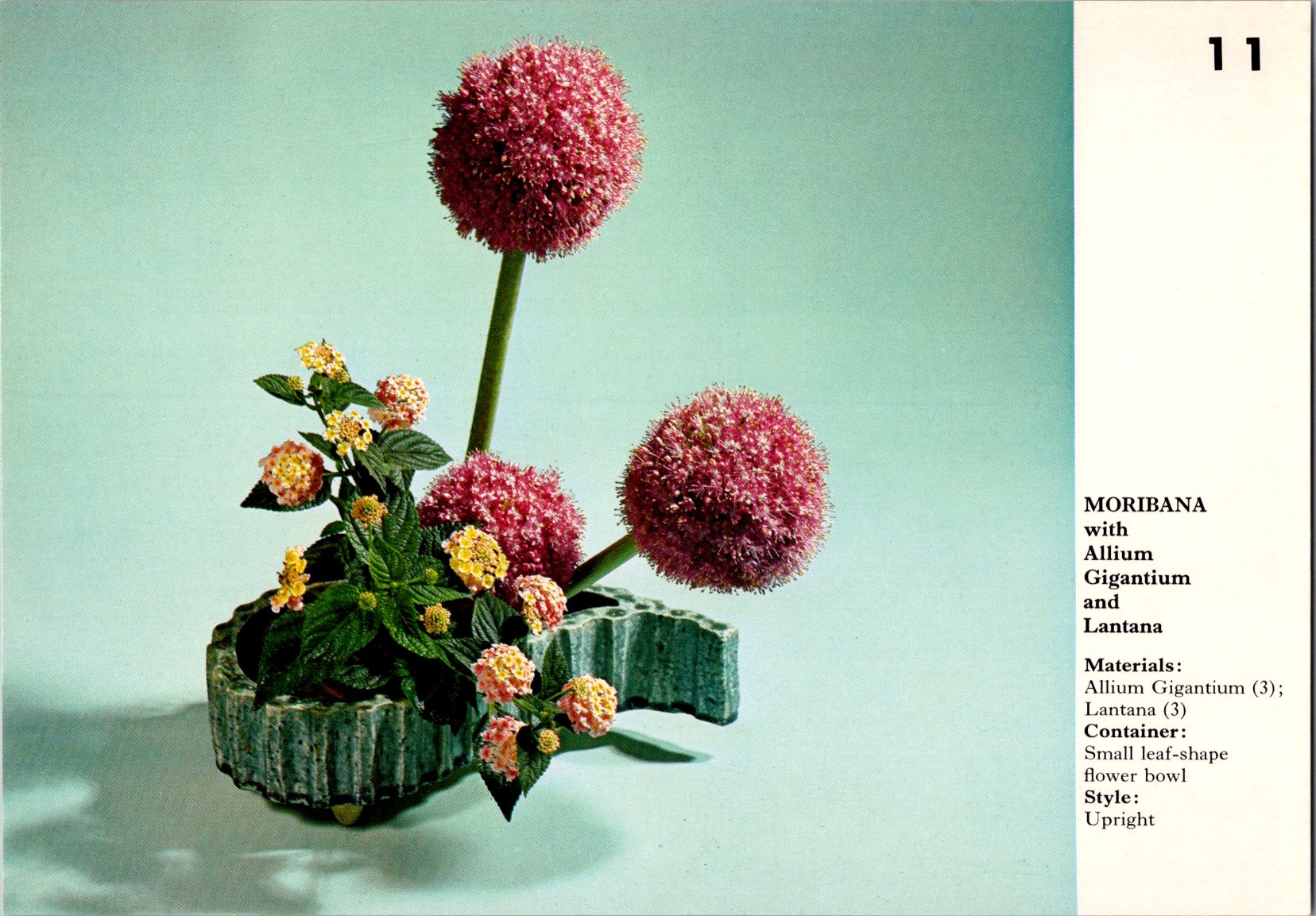
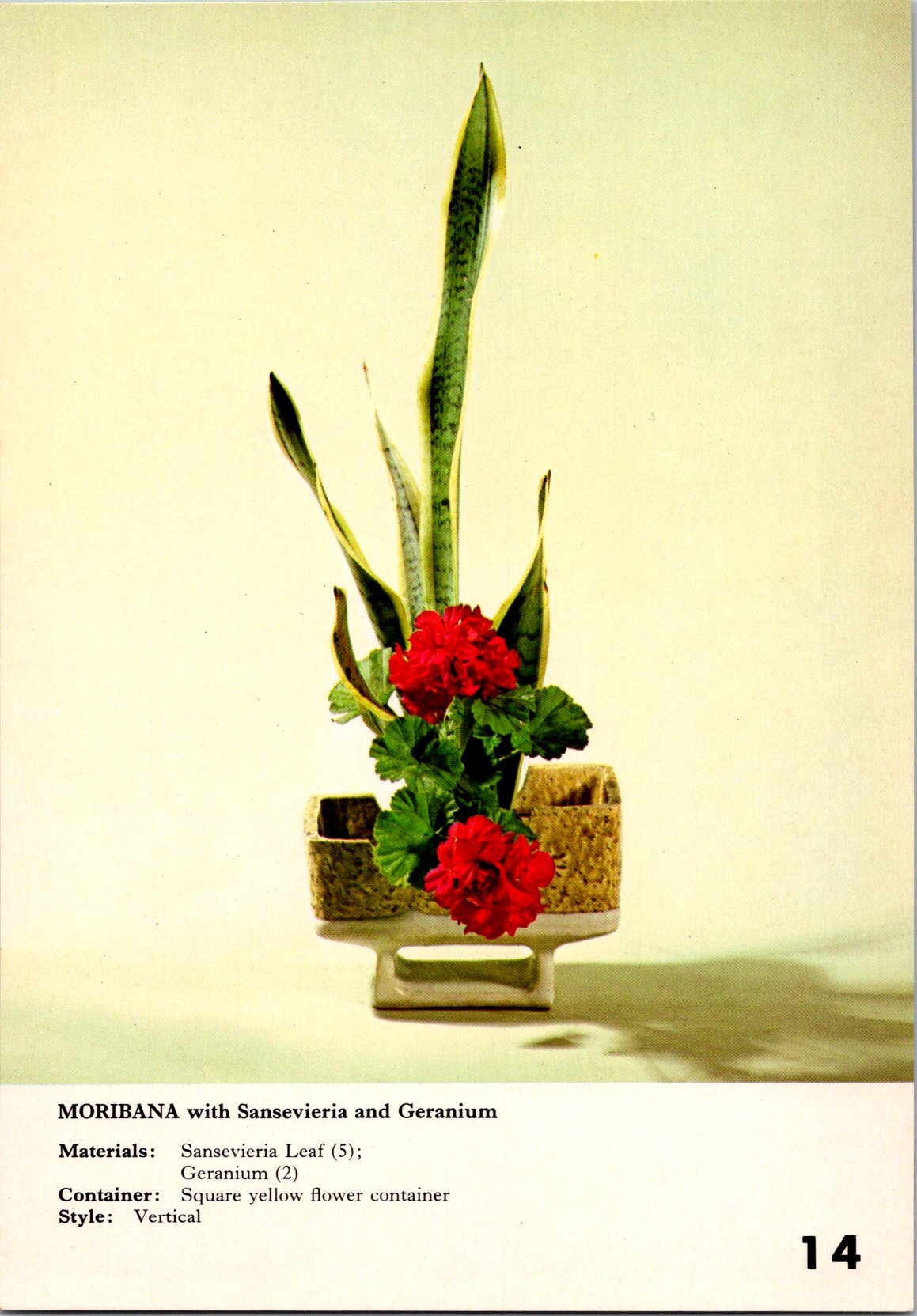
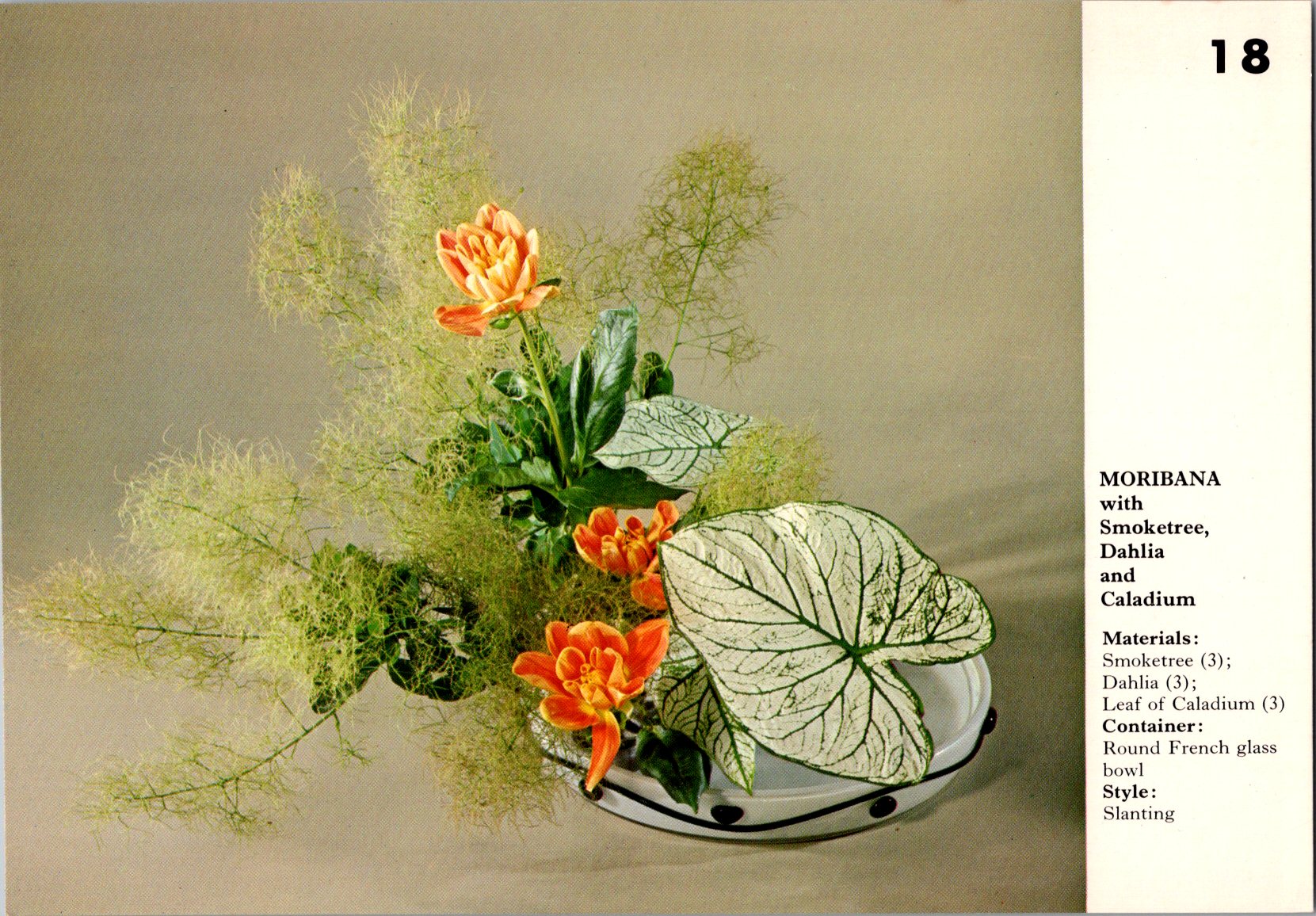
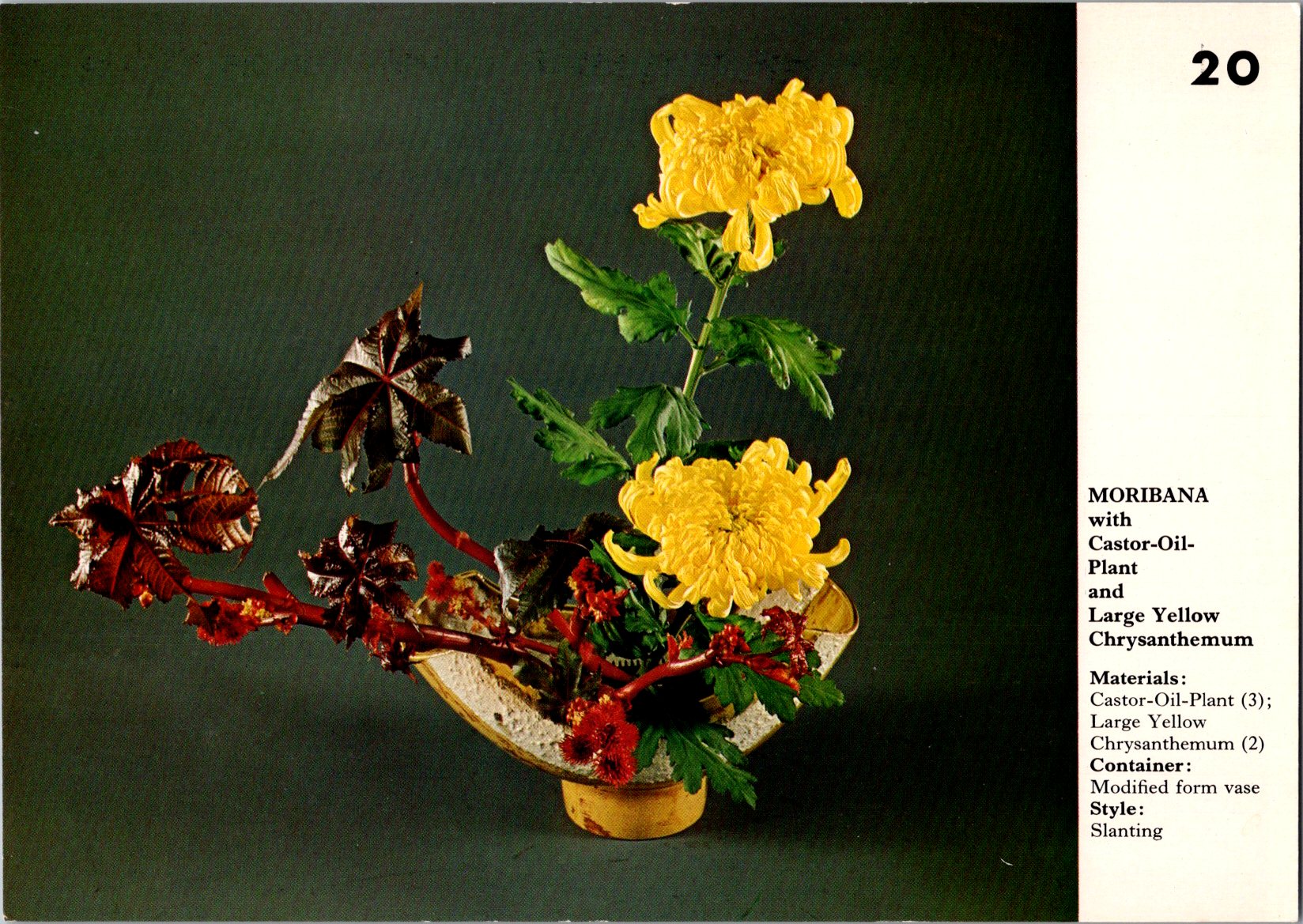
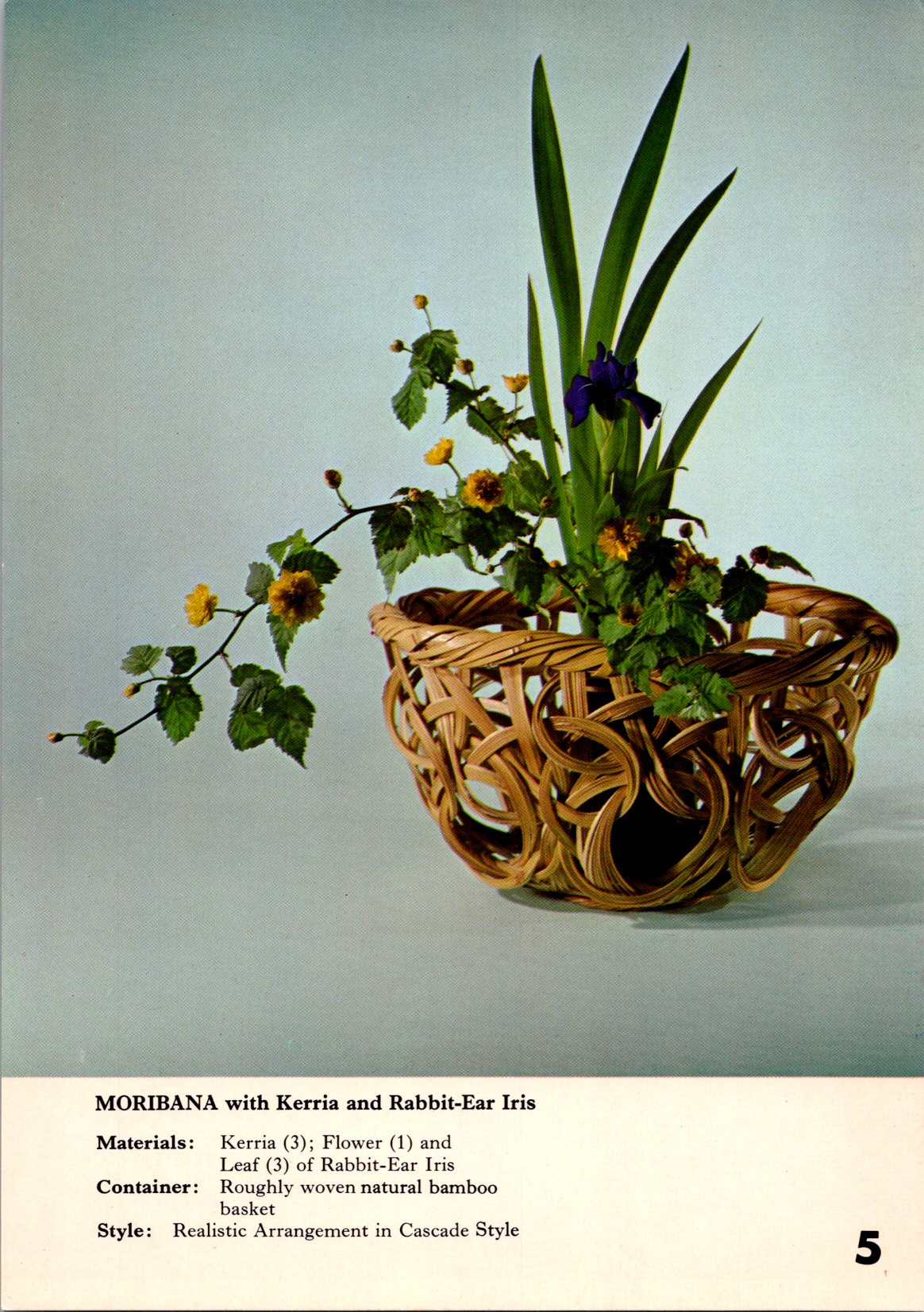
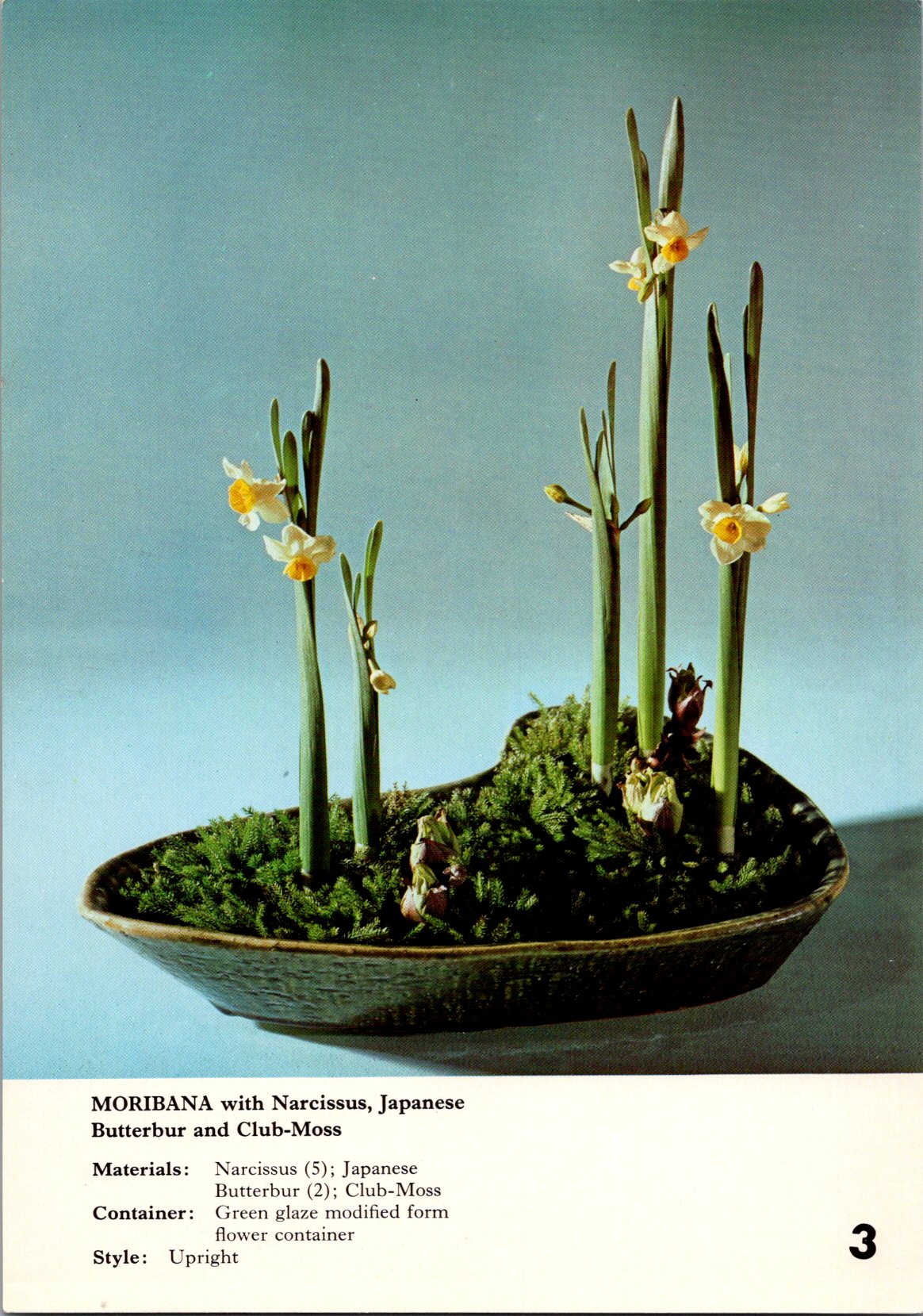
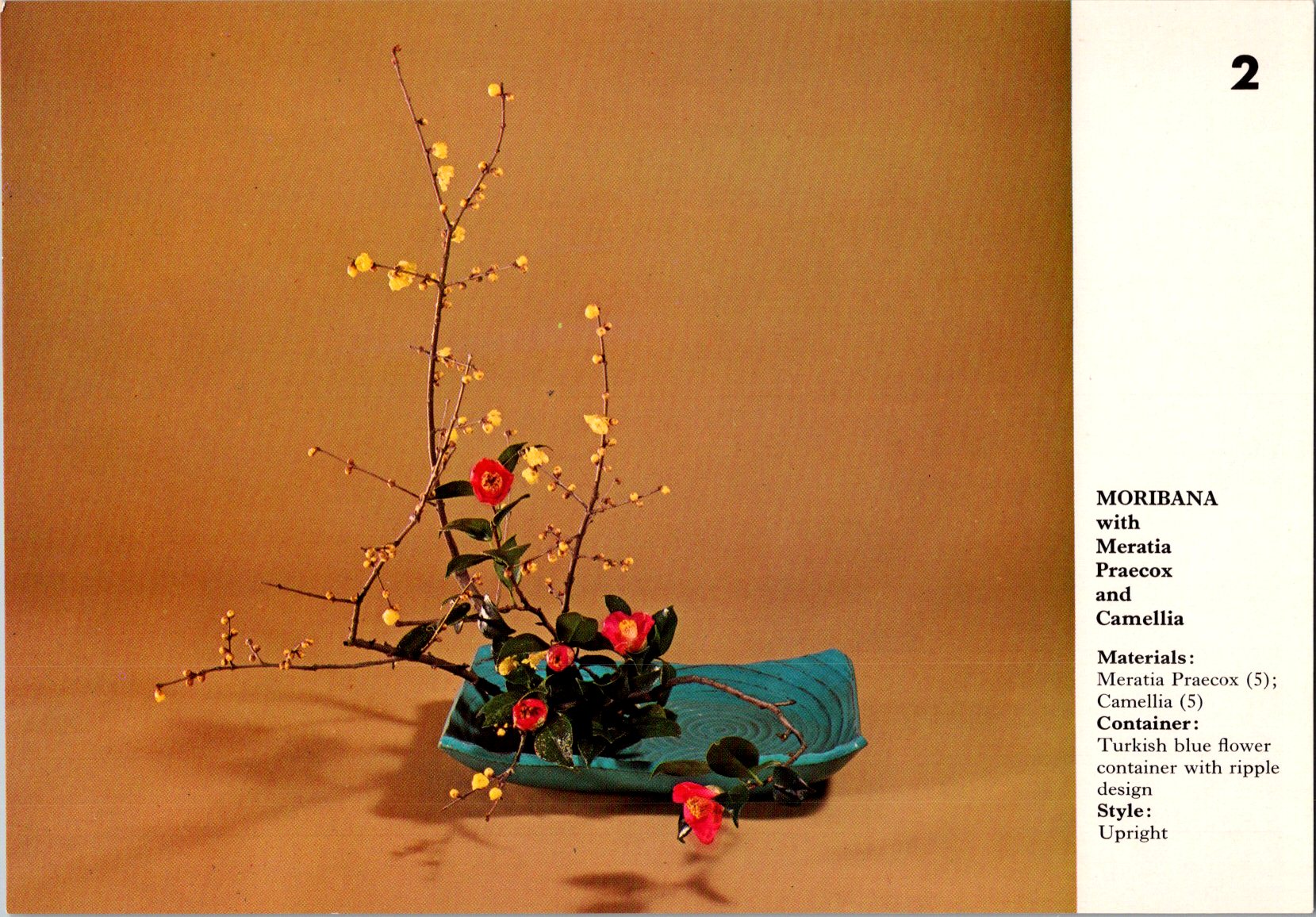
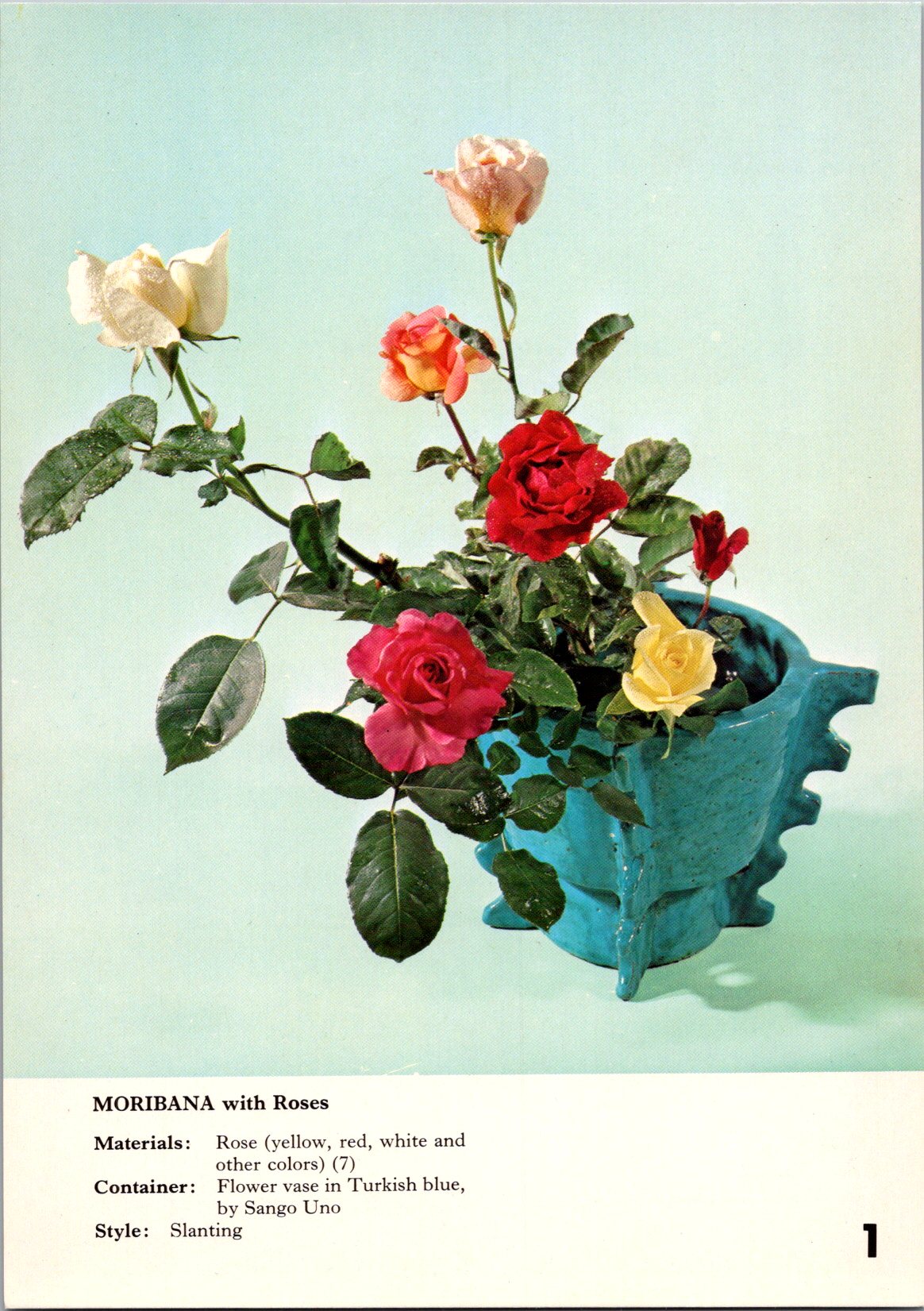
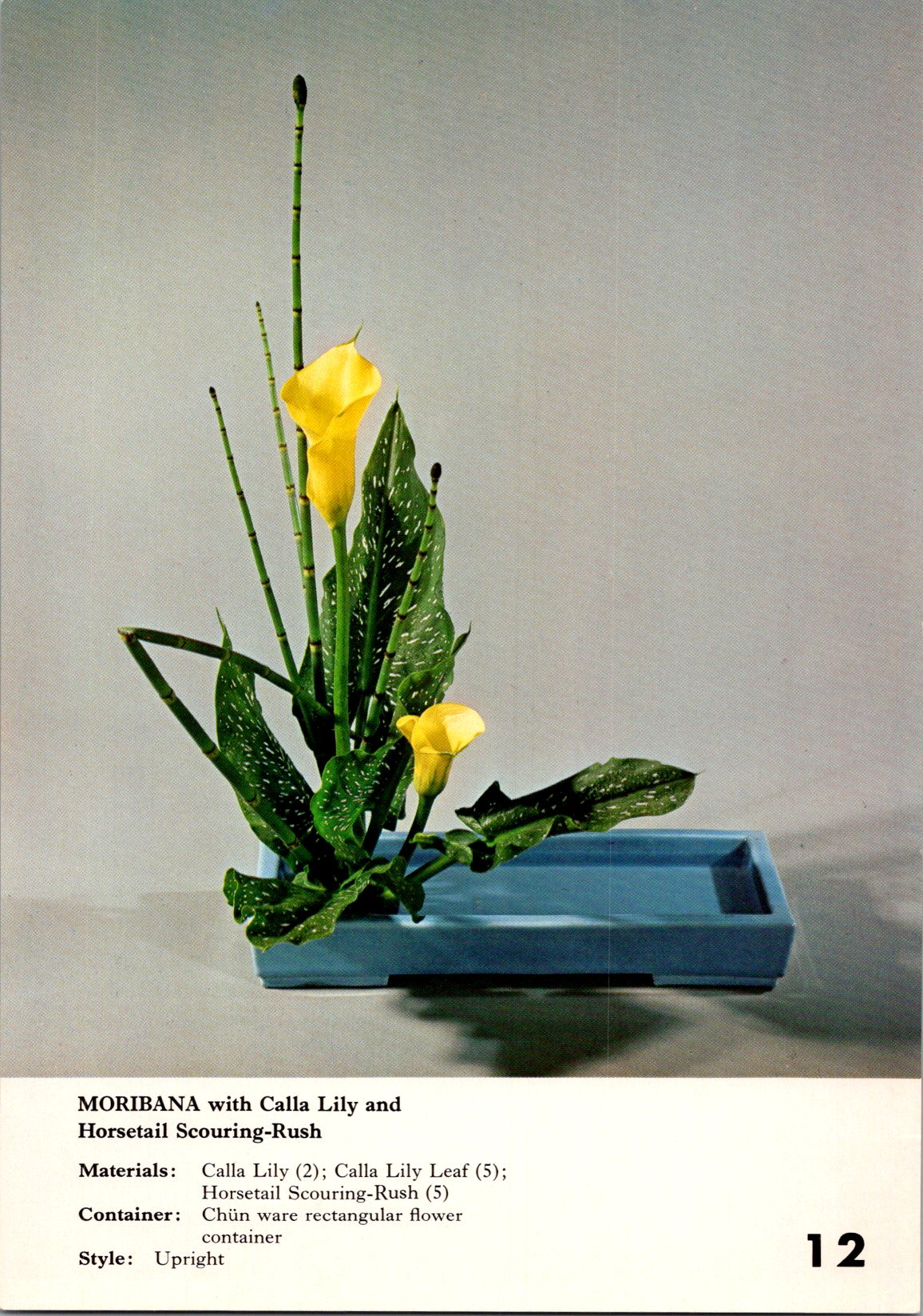
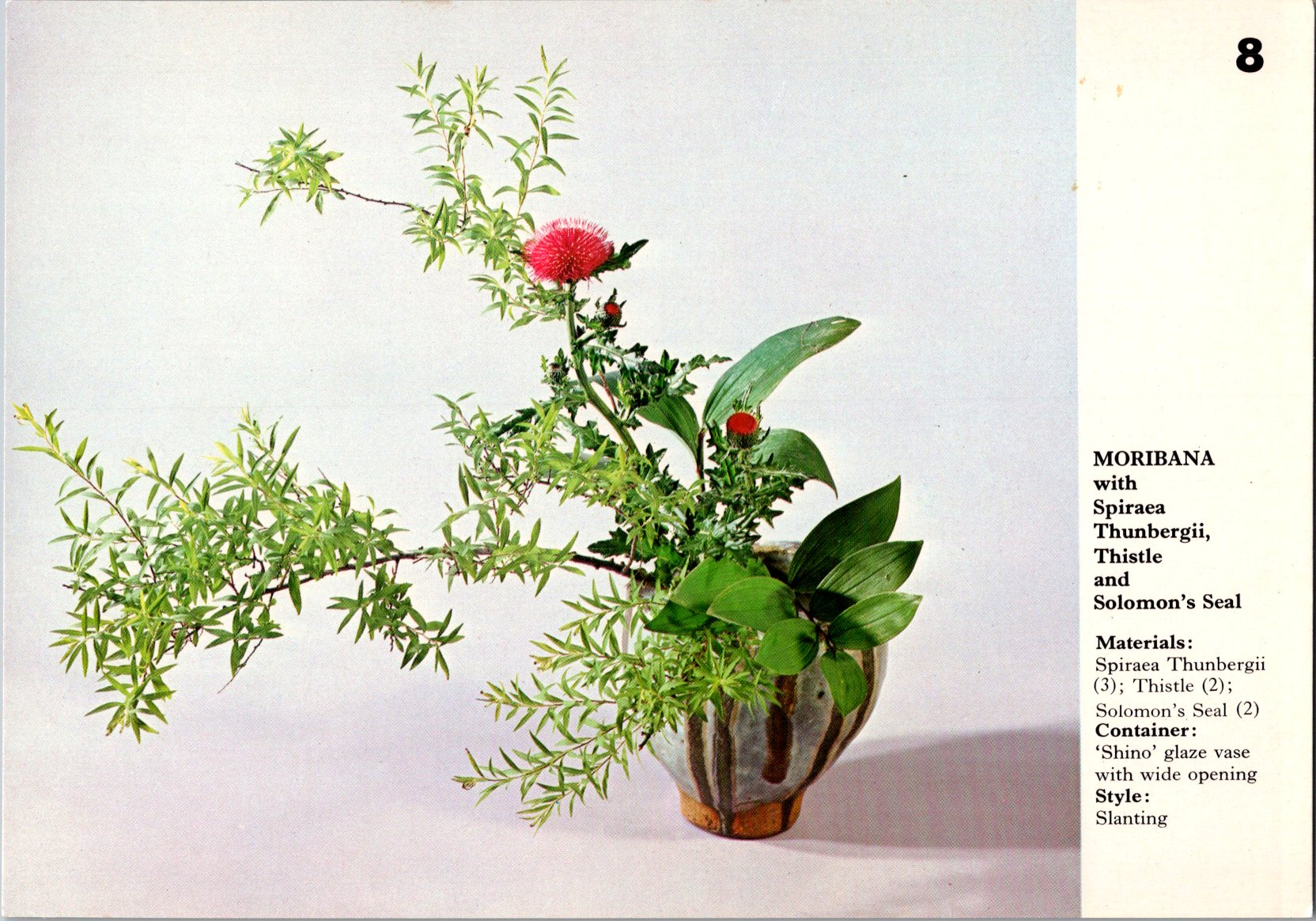
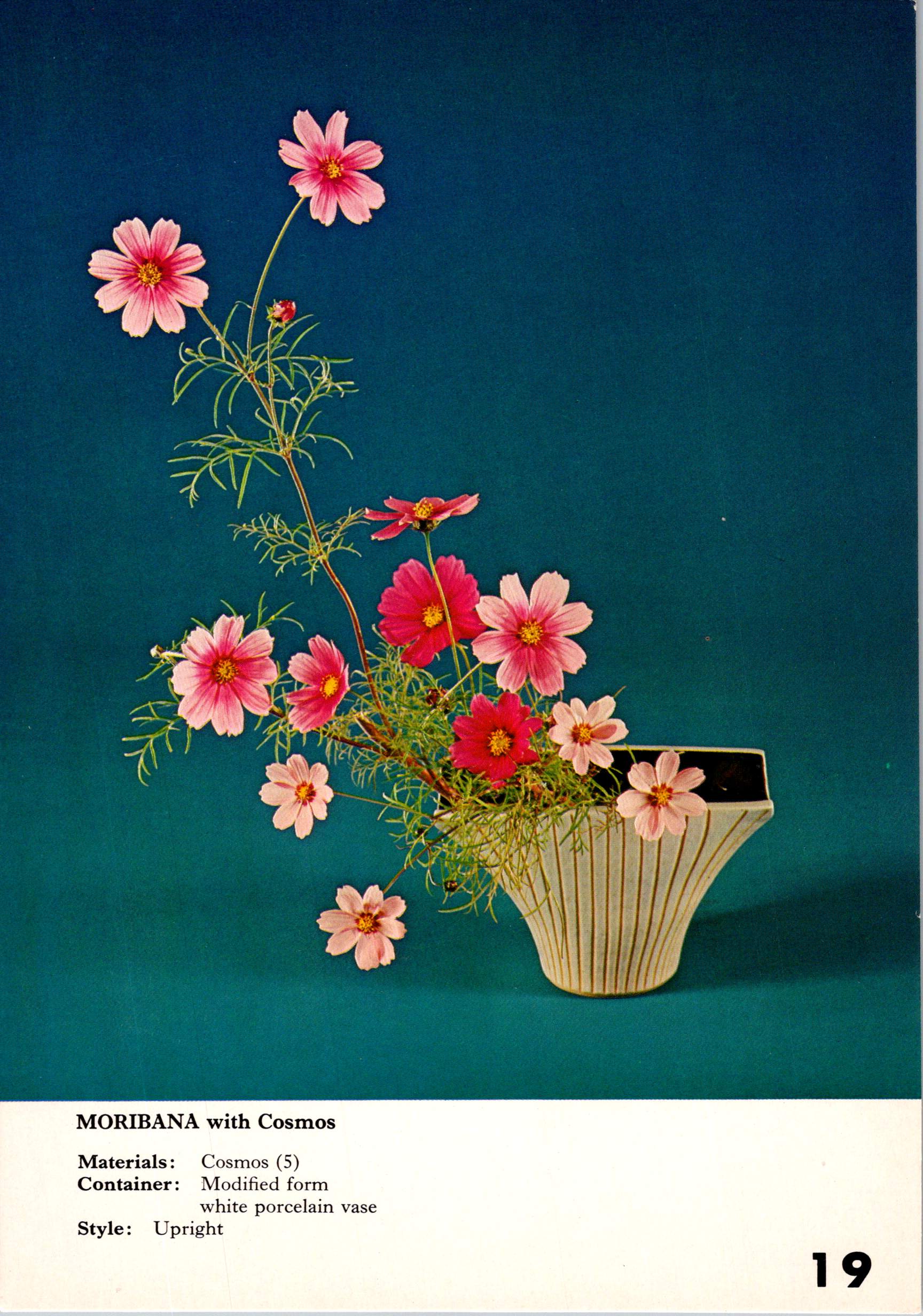
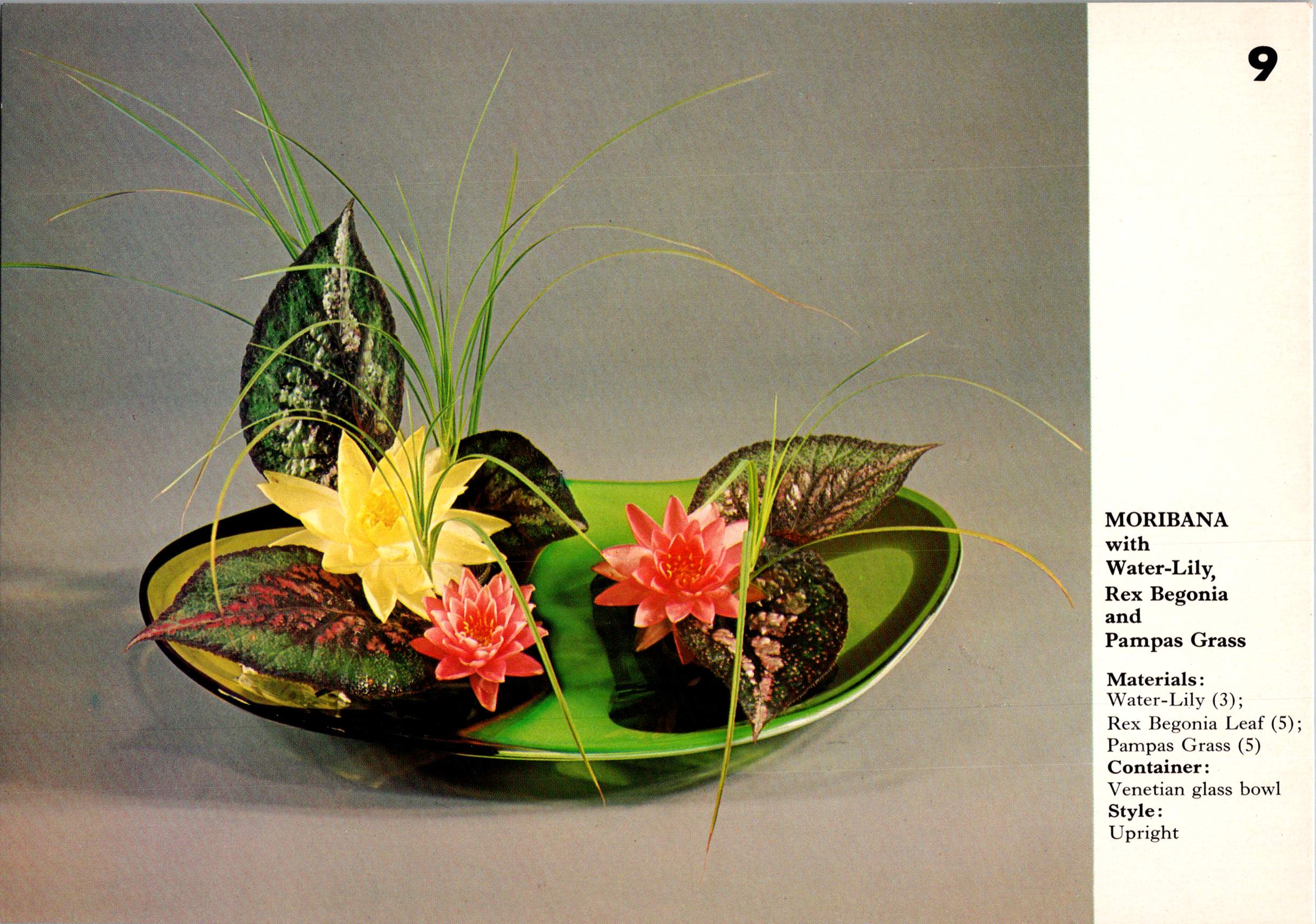
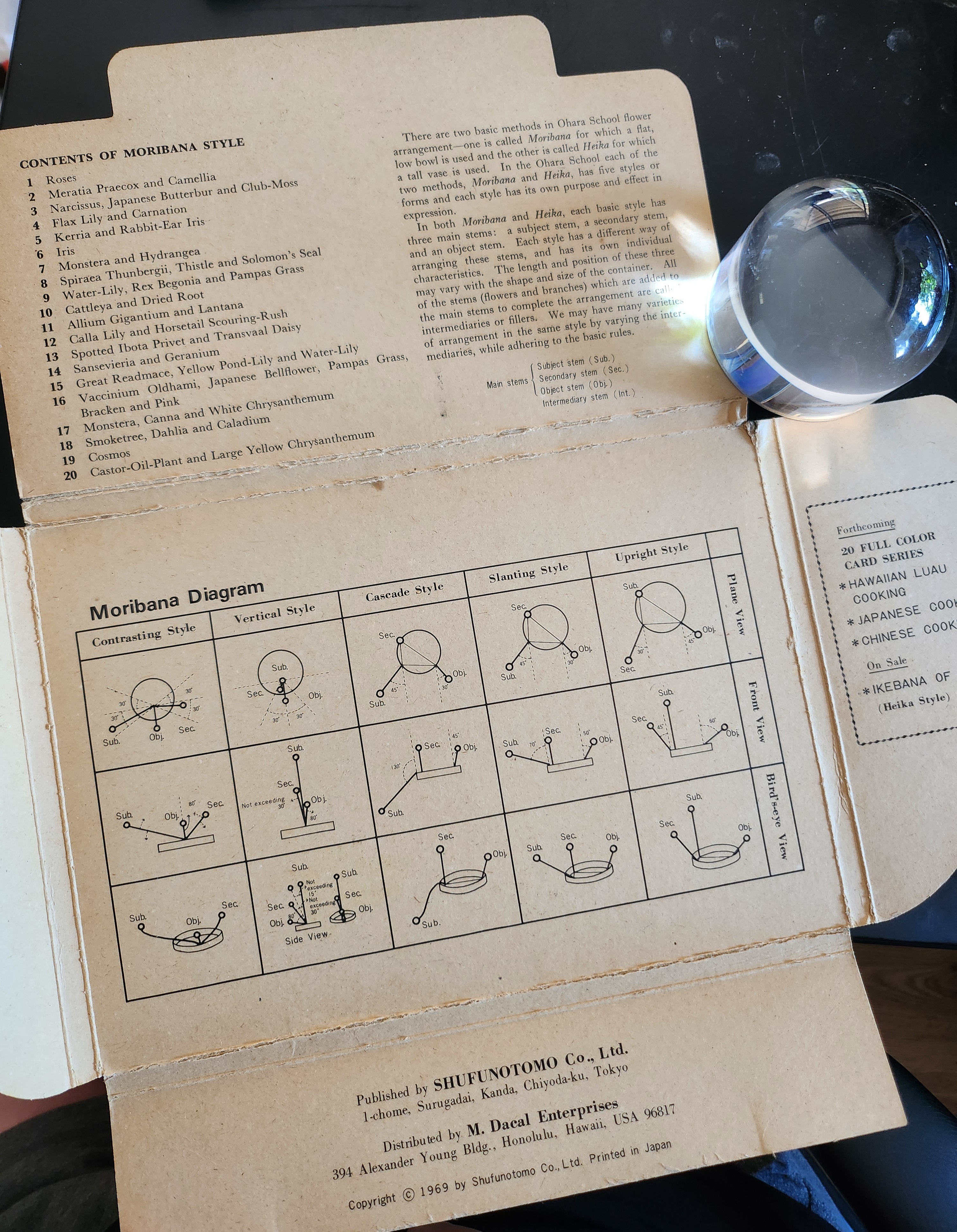
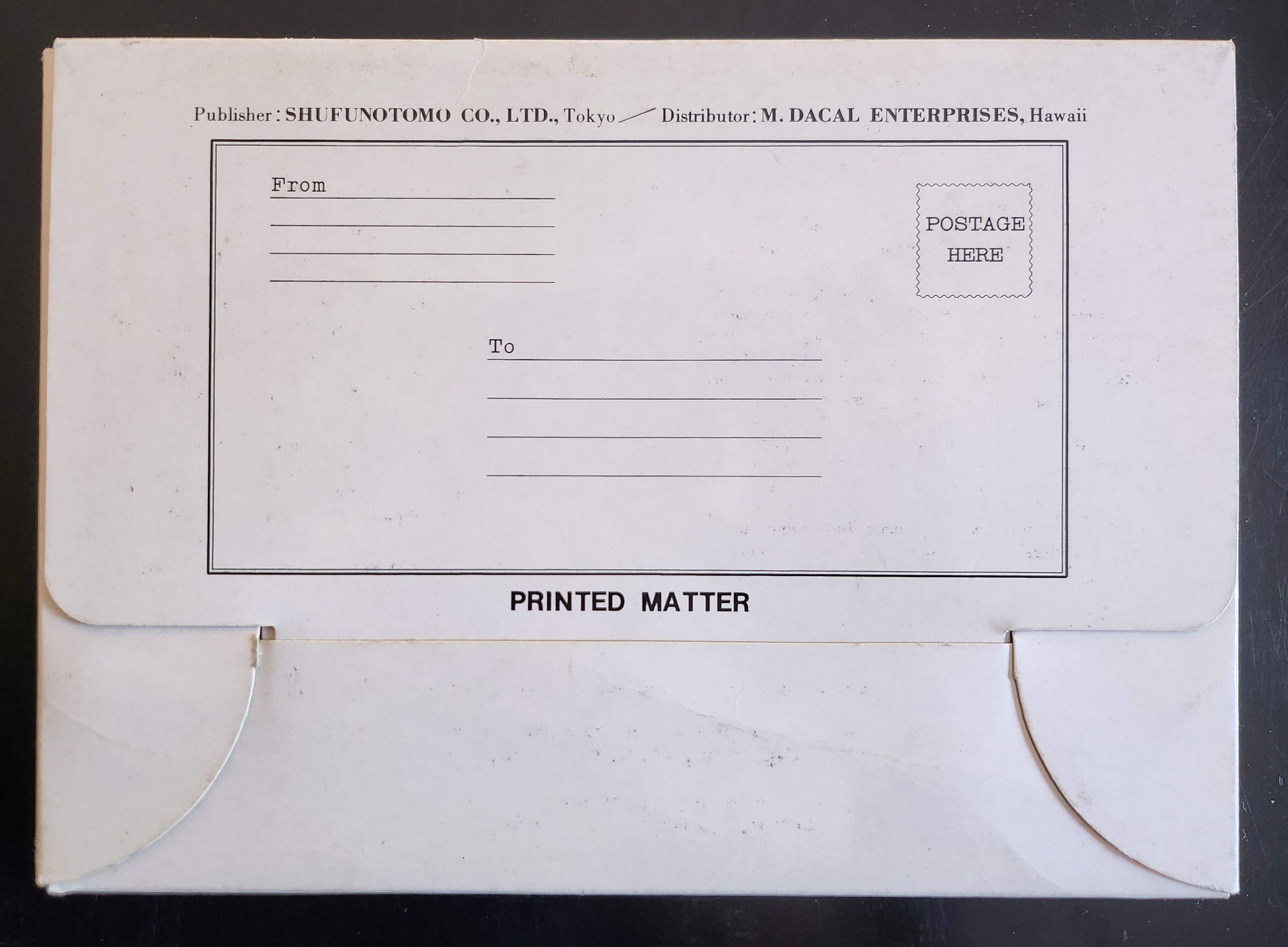
Our story begins with a set of twenty postcards, published in 1969 by Shufunotomo Co., Ltd. in Tokyo and distributed by M. Dacal Enterprises in Hawaii. Titled in bold IKEBANA OF JAPAN, these cards weren’t only pretty pictures. They were a practical guide to Moribana, a style of Ikebana (Japanese flower arranging) developed by the Ohara School. Each card provided detailed instructions and diagrams, allowing anyone to try their hand at this ancient Japanese art form.
The very existence of these postcards tells us much about the cultural climate of the time. That a Japanese publisher would create such a set, and an American company would distribute it, speaks volumes about the growing Western fascination with Japanese culture in the post-war era. But why was this happening, and why then?
Post-War Cultural Curiosity
Let’s step back and look at the broader picture of US-Japan relations in the decades after World War II. The war had left deep scars on both sides, but the post-war years saw a remarkable transformation in the relationship between these former enemies.
As Japan rebuilt and its economy began to grow at an astounding rate (the so-called “Japanese economic miracle”), Americans became increasingly curious about this nation that was rapidly becoming an economic powerhouse. This curiosity extended beyond economics to encompass Japanese culture, arts, and traditions.
Rise of Japanese Cultural Influence
By the 1960s, various aspects of Japanese culture were gaining traction in the United States. The first anime series broadcast in the US, “Astro Boy,” aired in 1963, marking the beginning of what would become a major cultural import. Traditional Japanese arts like Ikebana, the tea ceremony, and martial arts were also gaining popularity among Americans interested in Eastern philosophy and aesthetics.
This interest was part of a broader trend. The counterculture movement of the 1960s often looked to Eastern philosophies and practices as alternatives to mainstream Western culture. Zen Buddhism, in particular, captured the imagination of many Americans, bringing with it an appreciation for Japanese aesthetics and art forms.
In academia, American universities were expanding their Asian Studies programs, fostering scholarly exchange and increased understanding of Japanese culture. This academic interest helped to deepen and contextualize the growing popular fascination with Japan.
Ikebana: More Than Just Flower Arranging
At the heart of our postcard set is Ikebana, an art form that encapsulates much of what attracted Westerners to Japanese culture. Ikebana is not merely decorative; it’s a profound artistic practice deeply rooted in Japanese aesthetics and philosophy.
Originating in the 6th century as a Buddhist ritual of offering flowers to the spirits of the dead, Ikebana evolved over centuries into a highly refined art form. It emphasizes the beauty of simplicity, the importance of space and form, and a deep appreciation for the impermanence of nature.
The Moribana style featured in our postcard set is particularly significant. Developed in the late 19th century by Unshin Ohara, founder of the Ohara School, Moribana represented a significant departure from more rigid traditional styles. The name “Moribana” translates to “piled-up flowers,” referring to its more naturalistic, abundant appearance compared to earlier styles.
Moribana was a response to the introduction of Western flowers to Japan and the influence of Western floral arrangement concepts. It uses a shallow, flat container called a suiban, which allows for more freedom in the arrangement and can include water as a visible element. This style aims to recreate natural landscapes or garden scenes in miniature, allowing for a wider variety of materials and a three-dimensional approach that can be viewed from all angles.
The development of Moribana reflects the broader changes happening in Japan during the Meiji era (1868-1912), a time of rapid modernization and Western influence. Just as Japan was finding ways to blend traditional culture with Western influences in politics, economics, and social structures, Moribana represented a similar synthesis in the world of art.
1970 Osaka Expo: Japan’s Global Coming Out Party
As our postcards were making their way across the Pacific, Japan was preparing for an event that would mark its definitive re-emergence on the global stage: the 1970 World Expo in Osaka.
The choice of Japan as the host for the 1970 World Expo was significant. It was the first World Expo to be held in Asia, symbolizing Japan’s reintegration into the international community and its new status as an economic powerhouse. The theme of the Expo, “Progress and Harmony for Mankind,” reflected an optimistic vision of technology and international cooperation that resonated in the post-war era.
The Osaka Expo was a massive undertaking and a resounding success. It attracted over 64 million visitors, making it the most attended expo in history at that time. The event showcased Japan’s technological advancements and cultural heritage side-by-side, presenting a vision of a country that had successfully modernized while maintaining its unique cultural identity.
It would take more research to learn about Ikebana displays at the Expo, but it’s highly likely that this traditional art form was featured prominently. The Expo was, after all, Japan’s opportunity to show its best face to the world, and traditional arts like Ikebana would have been important in representing Japan’s cultural heritage alongside its technological achievements.
The Expo is known for its architectural marvels, including Kenzo Tange’s Festival Plaza and the iconic Tower of the Sun by Taro Okamoto. These structures embodied the futuristic optimism of the event while also incorporating elements of traditional Japanese aesthetics. In this context, traditional arts like Ikebana would have provided a counterpoint to the futuristic exhibits, demonstrating the continuity of Japanese culture amidst rapid change.
Legacy of the Osaka Expo
The 1970 Osaka Expo left a lasting impact on Japan and its relationship with the world. It cemented Japan’s image as a technologically advanced nation while also showcasing its rich cultural heritage. The event contributed to the growing global interest in Japanese culture, arts, and design philosophy.
In the years after the Expo, Japan’s cultural exports increased dramatically. Japanese electronics became synonymous with high quality and cutting-edge technology. Japanese management practices were studied and emulated around the world. And Japanese popular culture, from anime and manga to fashion and cuisine, began to exert a growing influence globally.
This was the context in which our Ikebana postcards were circulating. They were part of a larger wave of Japanese cultural influence that was washing over the Western world, particularly the United States. The postcards represented more than just a guide to flower arranging; they were a tangible connection to a culture that was increasingly capturing the American imagination.
Ikebana in the Modern World
Today, Ikebana continues to be practiced both in Japan and around the world, though like many traditional arts, it faces challenges in the modern era.
In Japan, Ikebana remains an important part of cultural education. Many schools and universities offer Ikebana courses, and other schools like Ikenobo, Ohara, and Sogetsu have headquarters and branches throughout the country. Regular exhibitions showcase both traditional and contemporary Ikebana, and the art form is often featured in cultural festivals and events.
Internationally, organizations like Ikebana International, which has many chapters in the U.S., play a crucial role in promoting and preserving the art form. These groups organize exhibitions, workshops, and lectures, helping to keep the tradition alive and introduce it to new audiences.
Many cities with significant Japanese-American populations have cultural centers that offer Ikebana classes. Botanical gardens and art museums occasionally host Ikebana exhibitions, providing broader exposure to the art form. Some cities have local Ikebana clubs or study groups, creating communities of practitioners and enthusiasts.
The COVID-19 pandemic accelerated the trend of online Ikebana classes and virtual exhibitions, making the art form more accessible to people around the world. Social media platforms like Instagram have also provided new ways for Ikebana practitioners to share their work and connect with others, helping to popularize the art form among younger generations.
Challenges and Evolutions
Despite its enduring appeal, Ikebana faces challenges in the modern world. In both Japan and internationally, there’s concern about attracting younger generations to the art. The meditative, time-consuming nature of Ikebana can be at odds with the fast-paced, digital-first lifestyles of many young people.
There’s also an ongoing discussion within the Ikebana community about how to balance tradition and innovation. While some practitioners strictly adhere to traditional forms and rules, others are exploring new approaches, blending Ikebana with contemporary art concepts or fusing it with other cultural flower-arranging traditions.
Environmental concerns are also influencing the practice of Ikebana. There’s a growing emphasis on sustainable practices, with some practitioners focusing on using local, seasonal materials or incorporating found objects and recycled materials into their arrangements.
Enduring Appeal of Ikebana
Despite these challenges, the core principles of Ikebana continue to resonate with many people around the world. In an era of constant digital stimulation and environmental anxiety, the practice offers a way to slow down, connect with nature, and create beauty with one’s own hands.
The philosophy behind Ikebana – with its emphasis on simplicity, asymmetry, and the appreciation of natural forms – aligns well with contemporary interests in mindfulness and sustainability. As a meditative practice, Ikebana offers a form of stress relief and a way to cultivate presence and attention to detail.
Moreover, as our lives become increasingly virtual, there’s a growing appreciation for tangible, physical arts like Ikebana. The act of carefully selecting and arranging natural materials provides a tactile, sensory experience that many find grounding and rejuvenating.
From Postcards to the Present
Our journey began with a set of postcards – a modest gesture to bridge cultures through careful examples and explanations of the art of flower arranging. These cards, with their detailed instructions and diagrams, were more than just a guide to Ikebana. They were ambassadors of Japanese culture, part of a broader wave of cultural exchange that helped reshape the relationship between Japan and the West in the post-war era. It’s a story of how art can transcend cultural boundaries, fostering understanding and appreciation between formerly adversarial nations.
Today, as we face global challenges that need international cooperation and mutual understanding, the lessons of this cultural exchange are still relevant. The practice of Ikebana, with its focus on harmony, balance, and the appreciation of nature, offers not just aesthetic pleasure but a philosophy that resonates with contemporary concerns.
From those mid-century postcards to today’s Instagram posts, Ikebana continues to evolve while remaining true to its core principles. It stands as a testament to the enduring power of art to connect people across cultures and generations, inviting us all to pause, observe, and create beauty in our own corners of the world.
As we look to the future, the story of Ikebana reminds us of the importance of preserving traditional arts while remaining open to innovation and cross-cultural exchange. In a world that often seems chaotic and divided, perhaps we can all learn something from the thoughtful, harmonious approach of Ikebana – arranging the elements of our lives and our global community with care, respect, and an eye for beauty.
























 The Posted Past