Our Love Affair with National Parks

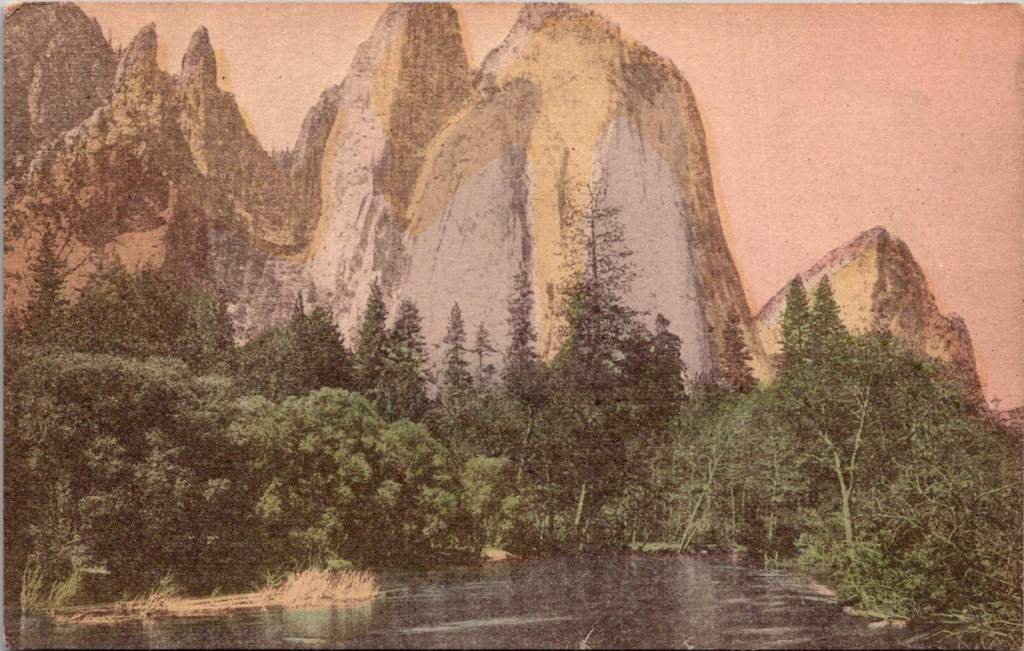
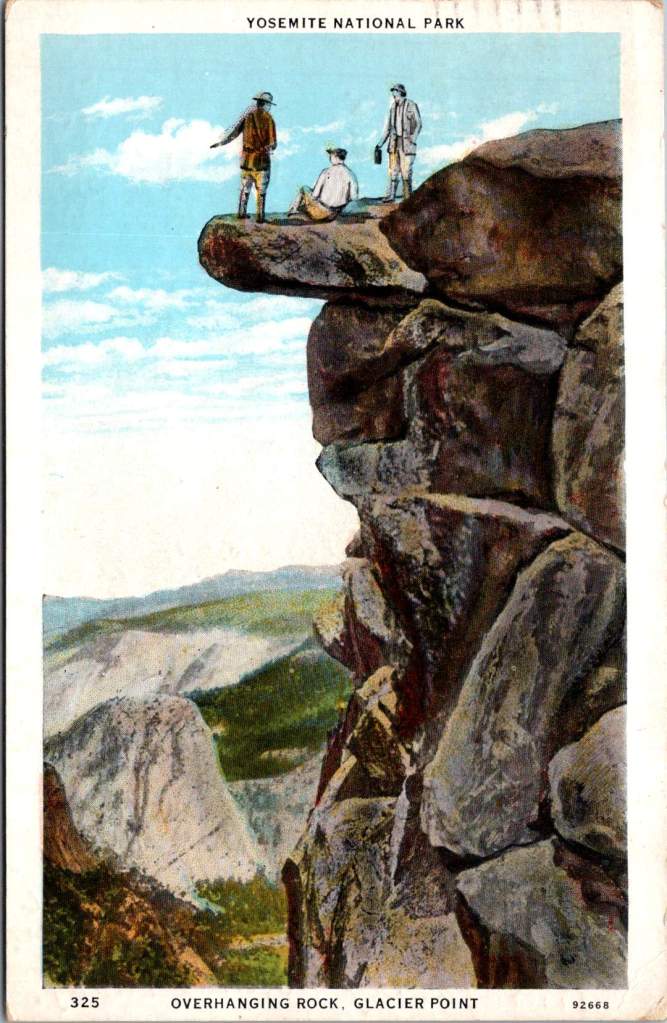
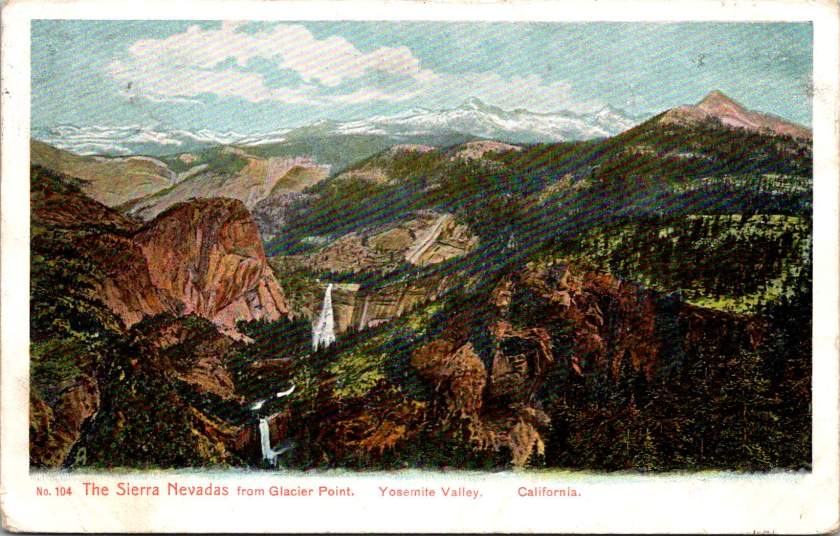
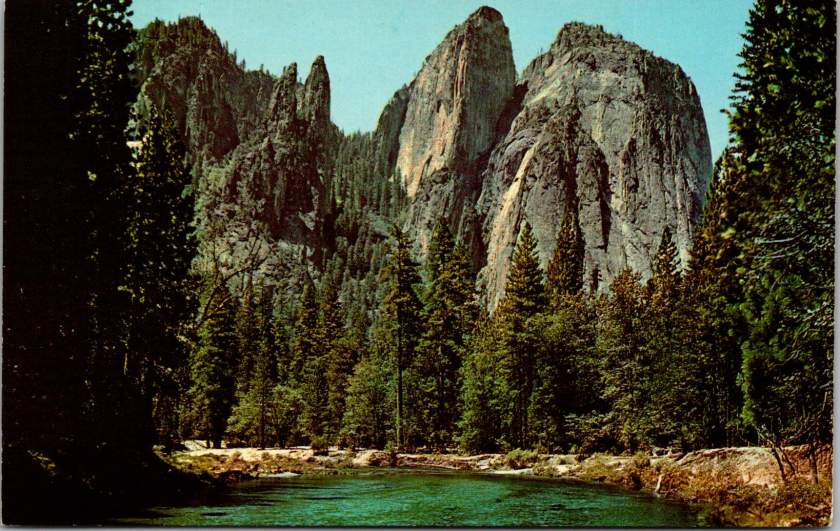
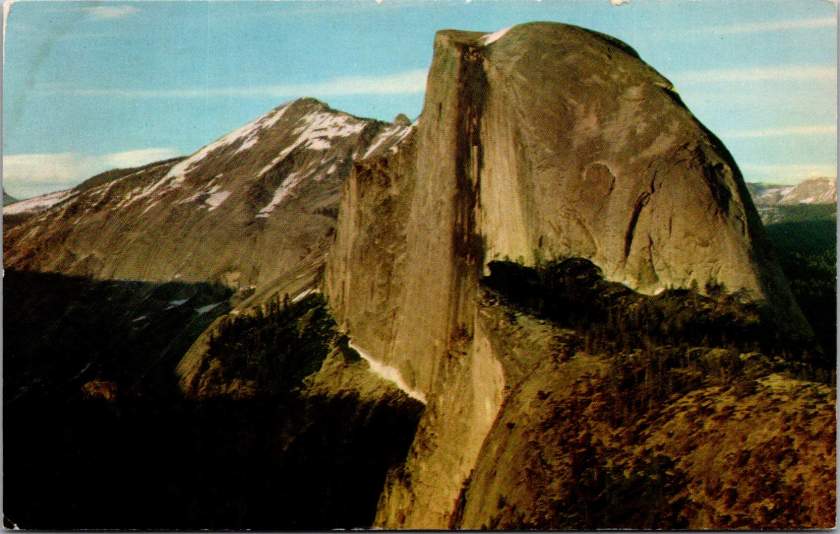
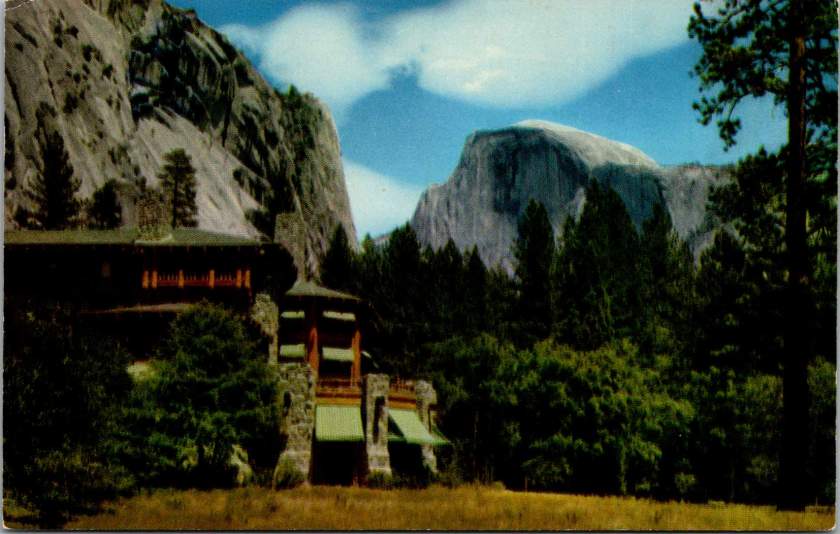
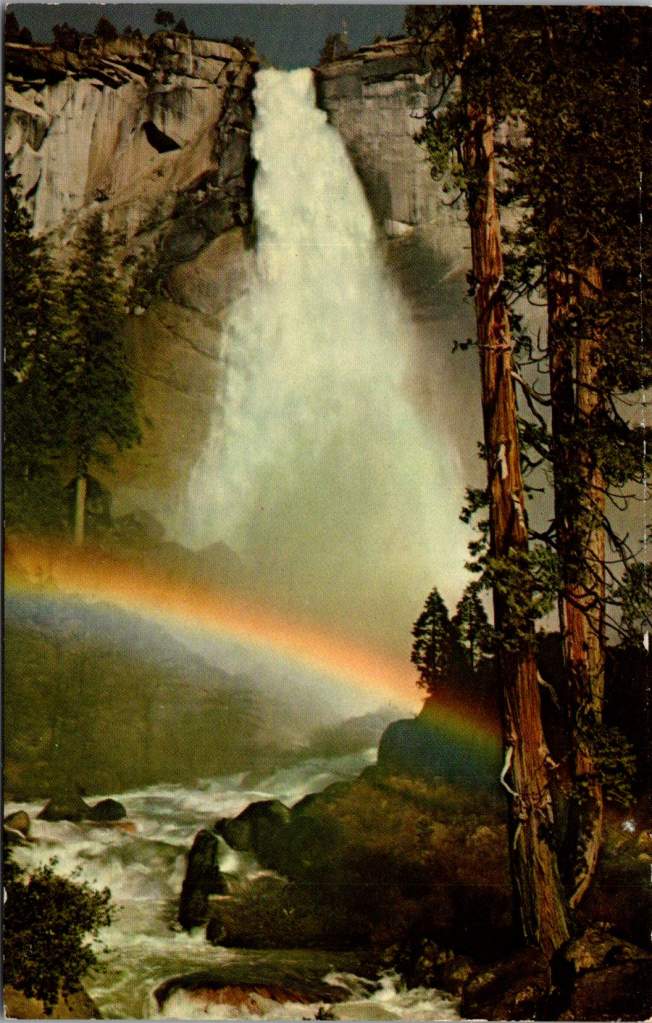
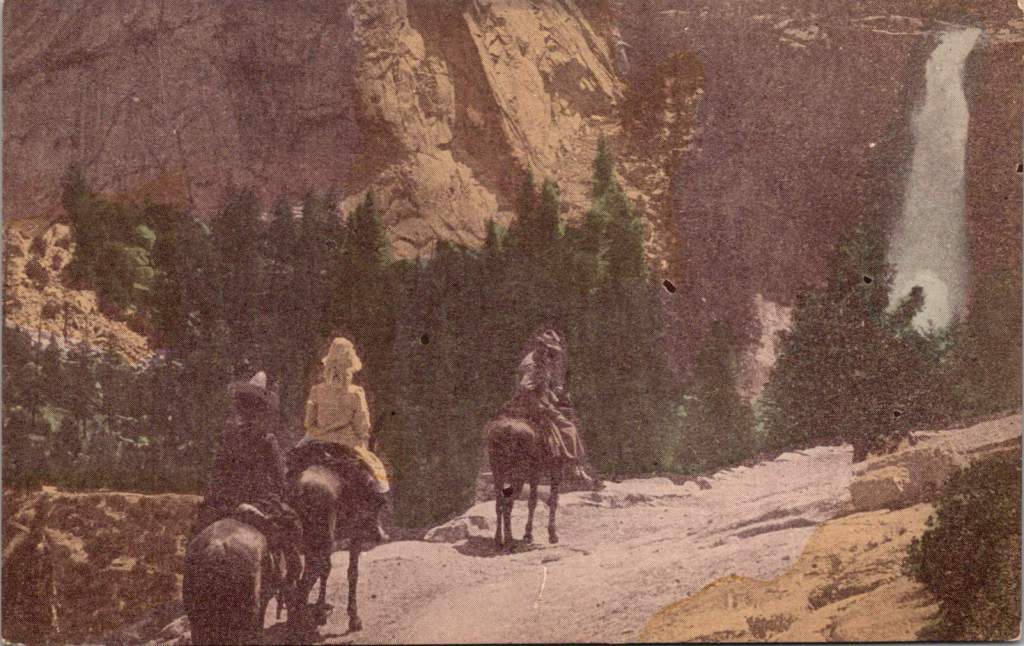
Three figures stand atop Glacier Point in Yosemite Valley, silhouetted against the sky. Horseback riders on a steep mountain trail glimpse a waterfall through the pines. A tunnel carved into a massive sequoia is big enough for a car to pass through. These postcards images tell the story of how Americans fell in love with their national parks.

When Abraham Lincoln signed legislation in 1864 protecting Yosemite Valley, few Americans had seen its wonders firsthand. The journey was arduous, expensive, and often dangerous. But photographs and artistic renderings began circulating, capturing public imagination. Carleton Watkins’ mammoth plate photographs of Yosemite’s towering cliffs and Albert Bierstadt’s luminous paintings suggested something almost mythical: a uniquely American paradise, waiting to be experienced.

By the 1880s, the Southern Pacific Railroad had begun marketing Yosemite as a must-see destination. Their promotional materials featured romantic images of pristine wilderness alongside luxury dining cars and comfortable accommodations. The message was clear: you could experience the sublime while maintaining the comforts of civilization. The railroad’s campaign to “See America First” tapped into both patriotic sentiment and growing concern about wealthy Americans choosing European vacations over domestic travel.

Stephen Mather, who would become the first director of the National Park Service in 1916, understood the power of imagery. A self-made millionaire from the borax industry, he approached park promotion with a marketer’s eye. Mather encouraged photographers to set up studios in Yosemite and actively supported the production of high-quality postcards, which he called his “little missionaries.” These cards, purchased for pennies and mailed across the country, did more than any official campaign to make Yosemite a part of the American imagination.
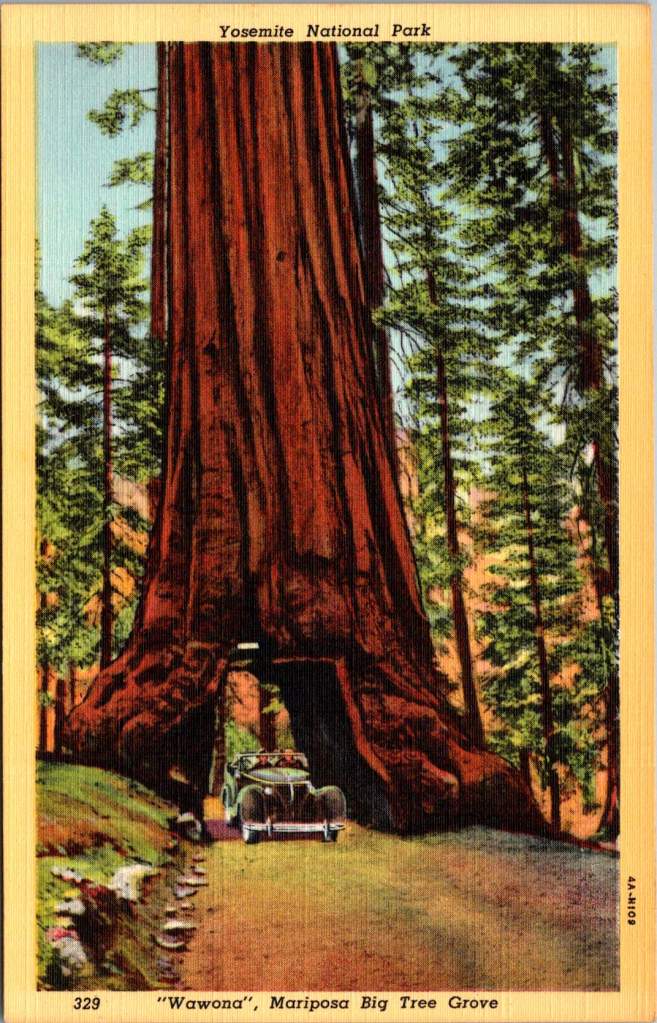
The postcards reveal changing patterns in how Americans experienced their parks. Early images show well-dressed visitors on guided tours, often on horseback. By the 1920s, automobiles appear, marking a democratic shift in park access. The famous Wawona Tree tunnel, carved through a giant sequoia in 1881, became a must-have photo opportunity. Each car passing through represented a family making their own way through the park, free to explore at their own pace.

The National Park Service itself emerged from a uniquely American compromise. Progressive Era conservationists like John Muir had argued for pure preservation, while others saw the parks as natural resources to be utilized. The 1916 Organic Act that created the NPS threaded this needle by mandating both conservation and public access – the parks would be preserved unimpaired, but explicitly for the enjoyment of the people.

This dual mandate shaped how Americans came to view their relationship with nature. The parks weren’t distant wilderness to be admired from afar, but rather public spaces to be actively experienced. In the 1930s Civilian Conservation Corps workers built trails and facilities, making the parks more accessible while maintaining their natural character. The message was clear: these were the people’s parks, and the people would help maintain them.

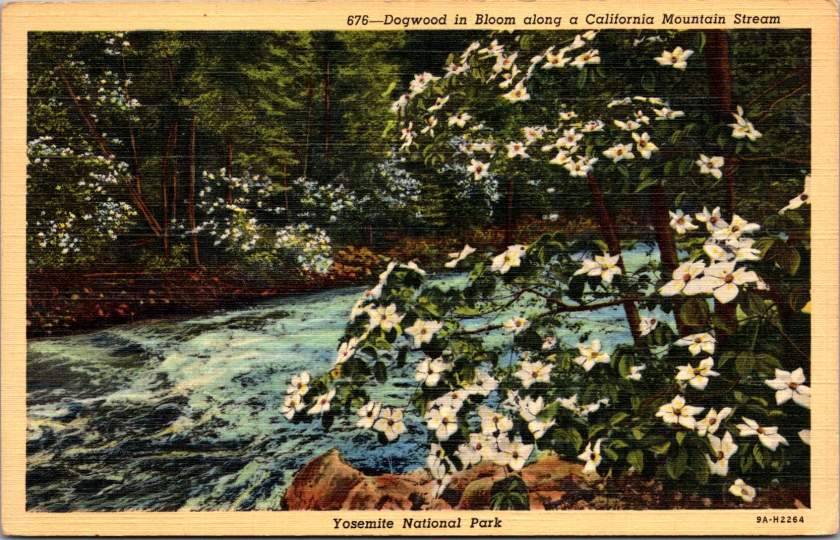
The advent of color photography in the 1940s and 50s brought new vibrancy to park imagery. Postcards from this era capture the brilliant white of dogwood blooms along mountain streams, the deep red of sequoia bark, and the rainbow mist of Yosemite Falls. The images suggested that black and white photography, no matter how artistic, had never quite captured the true glory of these places.
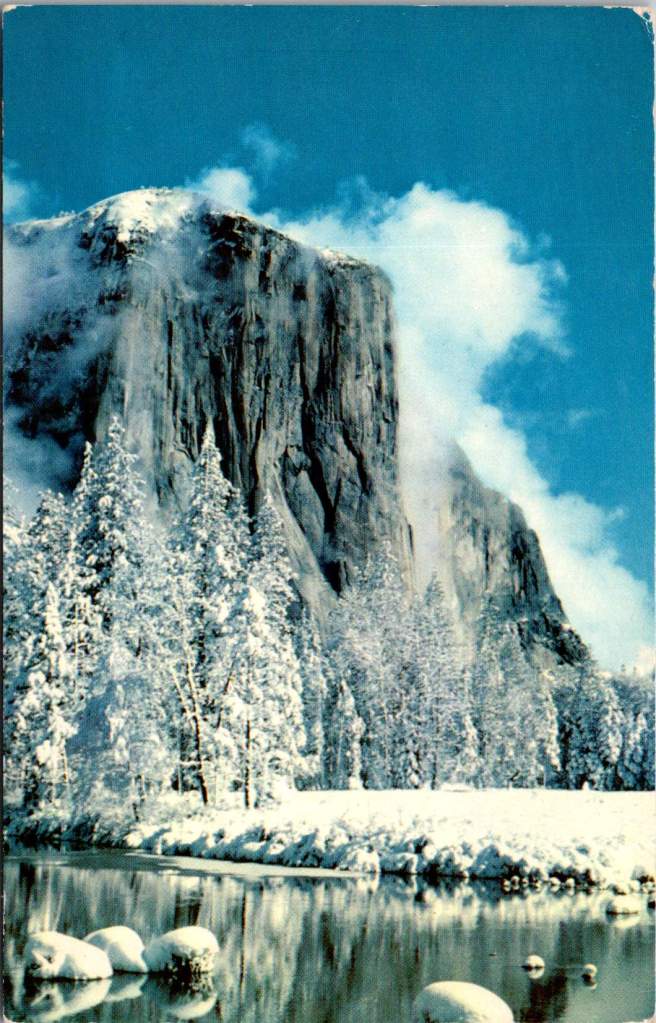
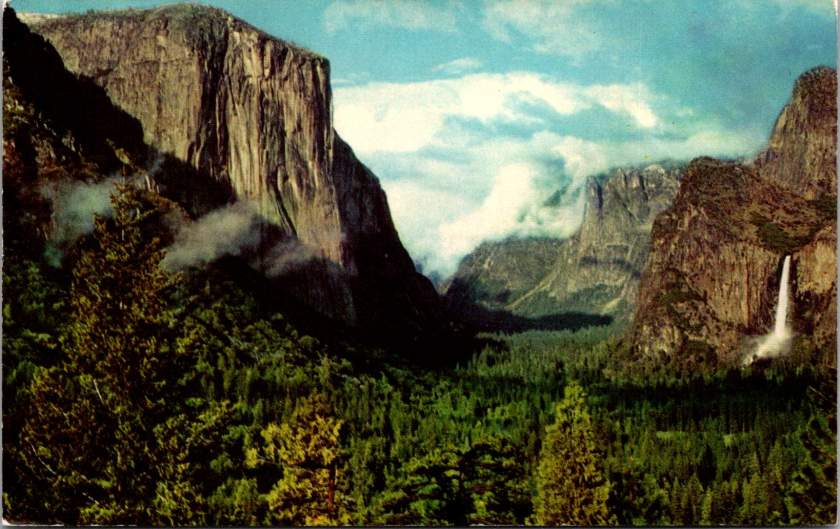
By the mid-20th century, the success of the national parks as tourist destinations began creating new challenges. Bumper-to-bumper traffic in Yosemite Valley became an ironic commentary on Americans’ enthusiasm for their natural heritage. The park service faced growing tension between access and preservation, leading to innovations like shuttle systems and visitor quotas.

Yet the fundamental appeal of the parks remained unchanged. Whether arriving by horse, train, automobile, or tour bus, visitors came seeking what Frederick Law Olmsted had described in his 1865 report on Yosemite, “The union of the deepest sublimity with the deepest beauty of nature.” The parks offered not just scenic views but a connection to something larger than themselves – a uniquely American inheritance.

Today’s visitors to Yosemite might share their experiences through Instagram rather than postcards, but they’re participating in the same tradition of witnessing and sharing America’s natural wonders. The early promoters of the national parks understood something fundamental: seeing these places wasn’t enough. The experience had to be shared to become part of our collective identity.

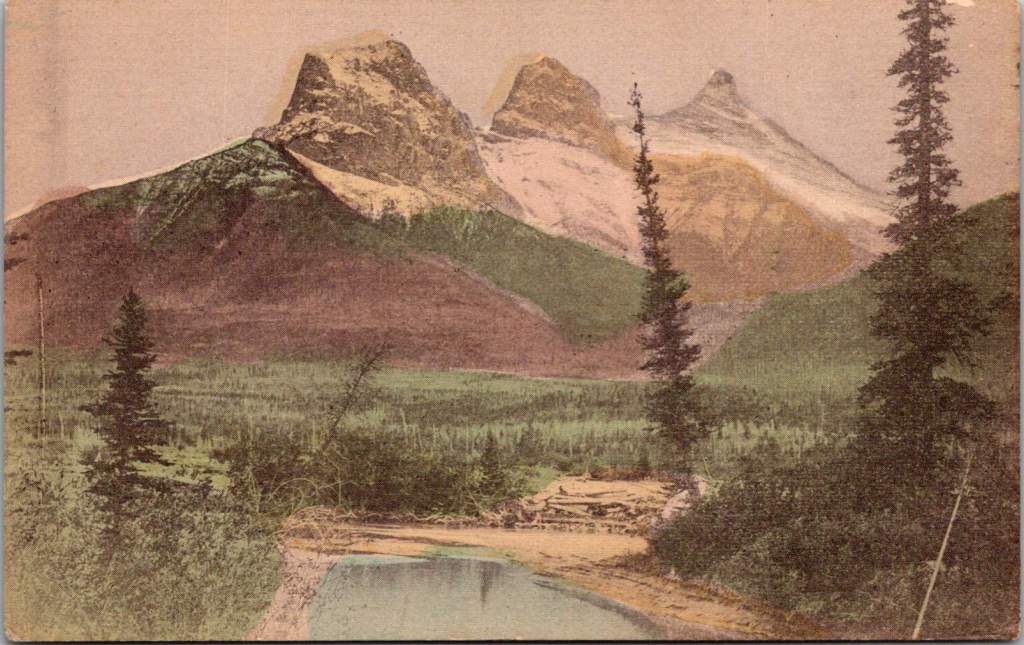
Those early postcards, with their hand-tinted colors and earnest captions, did more than advertise scenic views. They helped Americans understand these distant wonders as their own inheritance – places that belonged to everyone and therefore needed everyone’s protection. When we look at them today, we’re seeing how Americans fell in love with their national parks, and how that love affair helped define our relationship with the natural world.

The history of Yosemite and the National Park Service reminds us that conservation isn’t just about preserving scenic views. It’s about maintaining spaces where each generation can discover their own connection to the natural world. This fundamental mission remains as relevant as ever. The parks still offer what those early postcards promised: a chance to see the natural wonders of the United States, and to share the experience with friends and family miles away.
Life in Large Letter Postcards

Among all our favorite postcard styles, large letter postcards stand out as evocative artifacts of memory, place, and time. What drives us to collect these small works of design, and what do they reveal about the places we’ve been—or dream of going?

In an age of digital communication and instant photo sharing, there’s something uniquely captivating about large letter postcards. These brightly colored, design-driven place markers have been carrying snippets of the world from person to person – and into collections – for over a century.

Postcard collecting, or deltiology, has been a popular hobby since the late 19th century. What makes postcards so appealing to collectors? For one, they’re relatively affordable and easy to store, making them accessible to collectors of all ages and means. But more than that, postcards offer a unique blend of visual appeal, historical significance, and personal connection.

To Collect is Human

Humans have been collectors for as long as we know. From prehistoric shells and stones to modern stamps and coins, the act of gathering and preserving token objects is a constant across cultures and eras. But why do we collect?

For collectors of large letter postcards one might choose to focus on cards from a particular state or region, tracing how the depiction of that place changed over time. It’s an exploration of how places have marketed themselves to tourists, of changing aesthetic tastes, and of the evolution of printing technology. Each card is a time capsule, preserving a particular vision of a place at a specific moment in history.

Alternatively, a collector might concentrate on the output of a specific publisher, such as Curt Teich & Co. or Tichnor Brothers, each of which had its own distinctive style. Serious collectors have checklists and databases, and keenly search for highly-prized cards that are known but still not found.

One part of collecting is about finding a comforting order in a sometimes chaotic world. By curating a set of objects, we apply our own structures and meanings onto a small corner of the universe. It’s a way of making sense of the world around us, and also of understanding, exploring, and appreciating our experiences.

Moreover, collections often serve as tangible links to our memories and experiences. Each item in a collection can evoke a specific moment in time, a particular place, or a cherished memory. In this way, our collections become autobiographies of sorts, telling the story of our lives through carefully curated objects.

Collecting also taps into our innate desire for completion. There’s a profound satisfaction in filling gaps in a collection, in finding that elusive item that will make our set whole. This pursuit in itself can become a lifelong passion, providing a sense of purpose and achievement.

Vicarious Views

Large letter postcards are miniature ambassadors from distant lands, carrying with them not just images but also the tangible evidence of their journey—postmarks, stamps, and handwritten messages.

The hunt for these postcards take collectors to antique shops, flea markets, and specialized postcard shows. Online marketplaces have made it easier to find specific cards, but for many collectors, the thrill of the hunt remains an important part of the hobby.

Each postcard is a snapshot of a particular place at a specific moment, and a unique chance to travel in time. From architecture and fashion to social customs and technological advancements, postcards provide valuable insights into the evolution of society.

The messages scrawled on their backs offer intimate glimpses into personal histories. A hurried “Wish you were here!” or a detailed account of a traveler’s adventures can be just as fascinating as the picture on the front.

Personal Place Holders

At the heart of collecting large letter postcards is our connections to place. Whether we’re collecting postcards from places we’ve visited or from far-flung locales we hope to see someday, each card in our collection represents a connection to a specific geographical location.

This connection to place is a fundamental aspect of human psychology. We are, by nature, territorial creatures, and we form strong emotional bonds with the places that are significant to us. These bonds can be with our hometowns, favorite vacation spots, or even places we’ve only ever dreamed of visiting.

Postcards allow us to carry a piece of these places with us. They serve as physical reminders of our travels, tangible links to the memories we’ve made in different corners of the world. For places we haven’t yet visited, postcards can fuel our wanderlust, providing glimpses of distant lands and cultures.

But our relationship with place isn’t always straightforward. In our increasingly globalized world, many of us find ourselves with multiple place affinities. We might have roots in one city, work in another, and care for family in a third. Postcards offer a way to express and explore these multiple connections to place. A collection might include cards from one’s birthplace, current home, ancestral homeland, and favorite travel destinations, reflecting the complex geography of one’s life and identity.

Design Dazzle

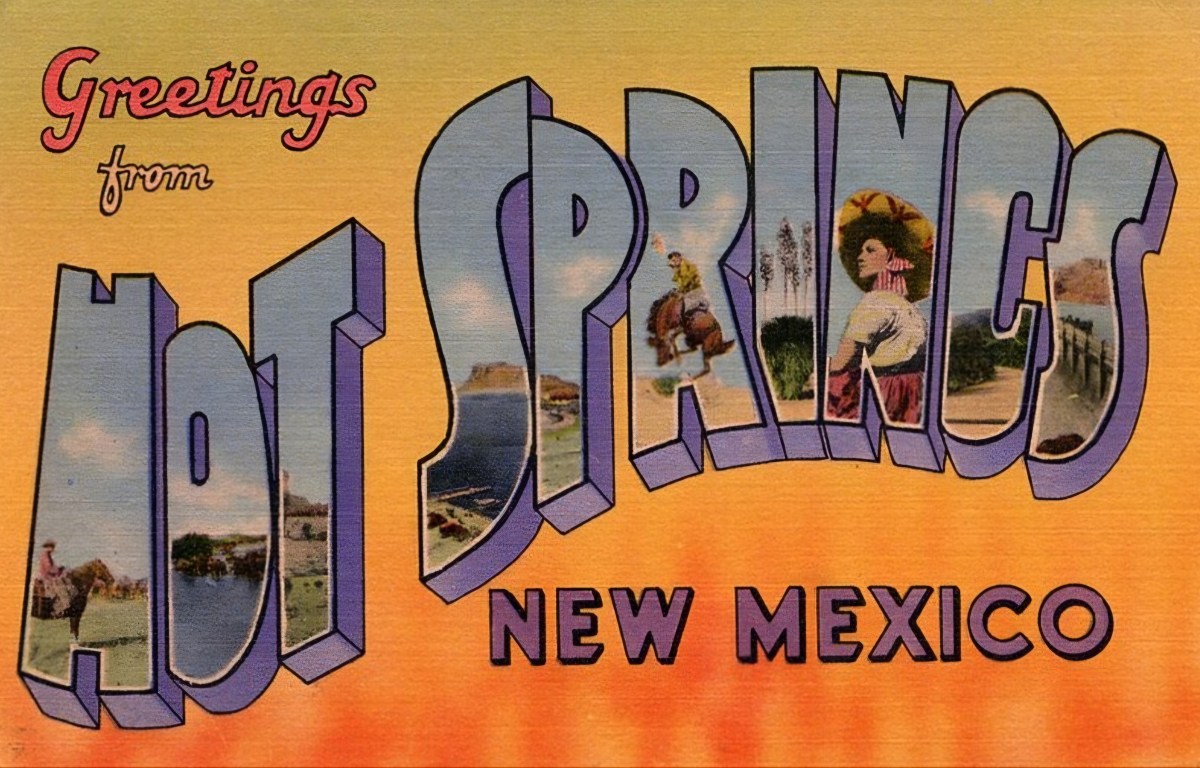
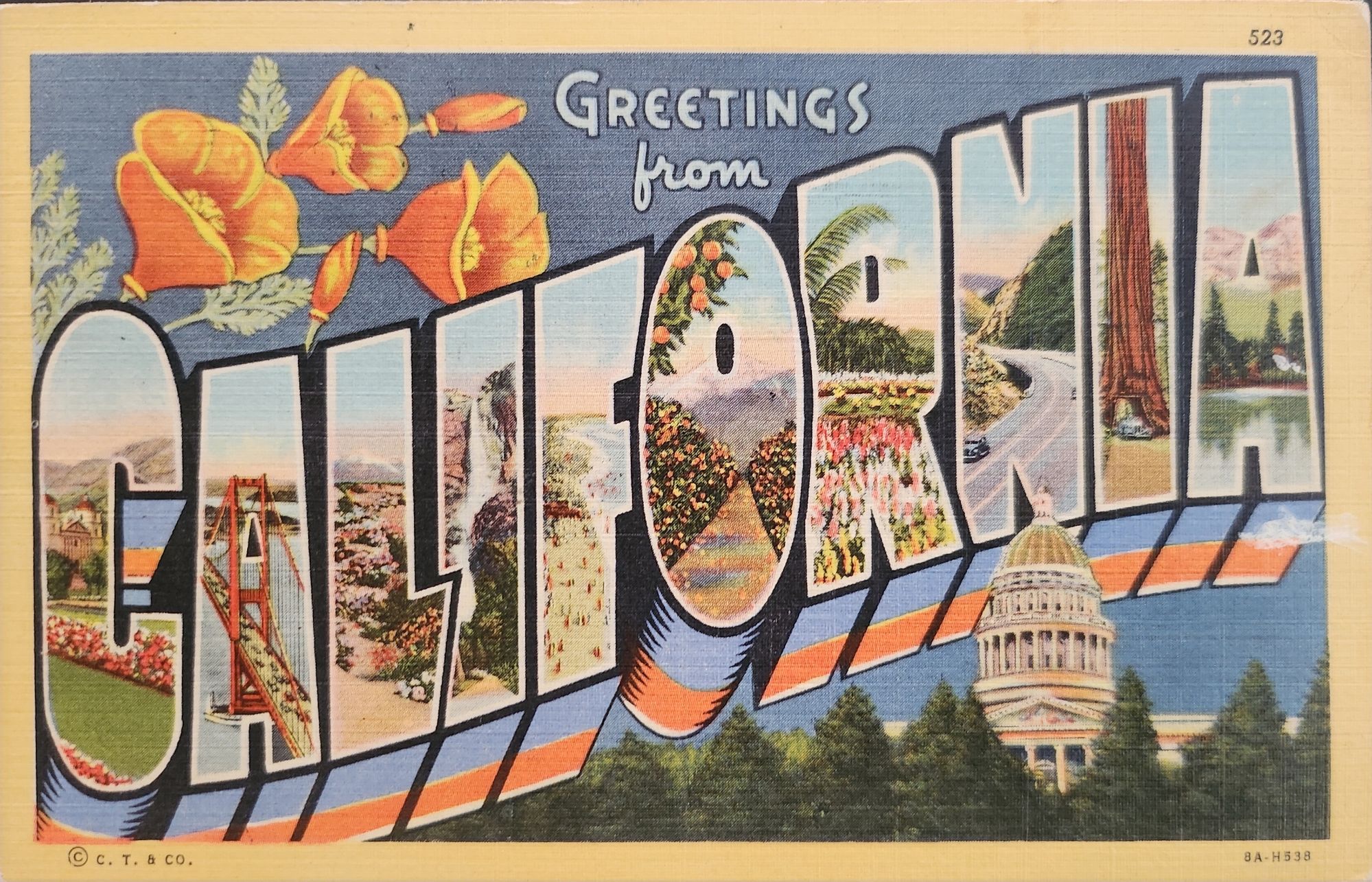
Large letter postcards hold a special place in the hearts of many collectors. These distinctive cards, which feature the name of a place spelled out in oversized letters filled with local scenes, represent a perfect marriage of place celebration and graphic design.

The heyday of large letter postcards was the mid-20th century, particularly in the United States. This was the era of automobile tourism, when families would pile into their cars for cross-country road trips. Large letter postcards became popular souvenirs, offering a bold, eye-catching way to say “I was here!”

What makes large letter postcards so appealing is their clever integration of text and image. The large letters dominate the card, immediately identifying the location. But within these letters, we find a series of miniature scenes—local landmarks, natural wonders, or typical activities associated with the place. It’s like a visual summary of a destination, condensed into a single, striking image.

From a design perspective, large letter postcards are a triumph of commercial art. They required considerable skill to create, with artists needing to balance the demands of legibility (the place name had to be easily readable) with the desire to include as many local scenes as possible. The result was often a masterpiece of composition and color, with every inch of the card put to effective use.

The style of these postcards evolved over time. Early examples from the 1930s often featured more space between the letters, with scenes depicted in a realistic style. By the 1950s, the letters had typically grown to fill the entire card, with more stylized, graphic representations of local scenes. This evolution reflects broader trends in graphic design and commercial art of the period.

Postcards in the Digital Age

In our era of smartphones and social media, one might expect the appeal of postcards to have diminished. Yet postcards, including modern versions of large letter designs, continue to be produced and collected. Why do these physical artifacts still resonate in a digital world?

Part of the answer lies in their tangibility. In a world where so much of our communication is ephemeral—tweets and status updates that scroll away into oblivion—there’s something deeply satisfying about holding a physical object that has traveled across distance to reach us.

Moreover, the very characteristics that might make postcards seem outdated—their slowness, their limitations—can be seen as virtues. In a world of information overload, the postcard’s constrained format can be refreshing.

For collectors, physical postcards offer a connection to history that digital images can’t quite match. The ability to hold a card that was printed decades ago, to see the handwriting of someone long gone, provides a visceral link to the past that resonates deeply with many people.

Passionate Postal Pursuits

Whether we’re talking about vintage large letter postcards or their modern equivalents, these small rectangular pieces of card stock are far more than just souvenirs. They are repositories of memory, snapshots of place, and artifacts of design history.

For collectors, each postcard is a thread in a complex tapestry of place, time, and personal experience. A large letter postcard from Miami might evoke memories of a childhood vacation, appreciation for mid-century graphic design, and curiosity about how the city has changed since the card was printed.

In a world where our connections to place are increasingly complex and multi-layered, postcard collections allow us to map our personal geographies. They give tangible form to our memories, our travels, and our dreams of future journeys.

Moreover, in their celebration of specific places, postcards—and large letter postcards in particular—remind us of the rich diversity of the world. In an era of globalization, where many fear a homogenization of culture, these cards stand as colorful testimony to the unique character of different locations.

So the next time you come across a rack of postcards in a gift shop, or spot a vintage large letter card in an antique store, take a moment to appreciate these small works of design. They are more than just pretty pictures or quaint relics. In their own small way, they help us make sense of our place in the world—and isn’t that, after all, what collecting is all about?