Our Love Affair with National Parks

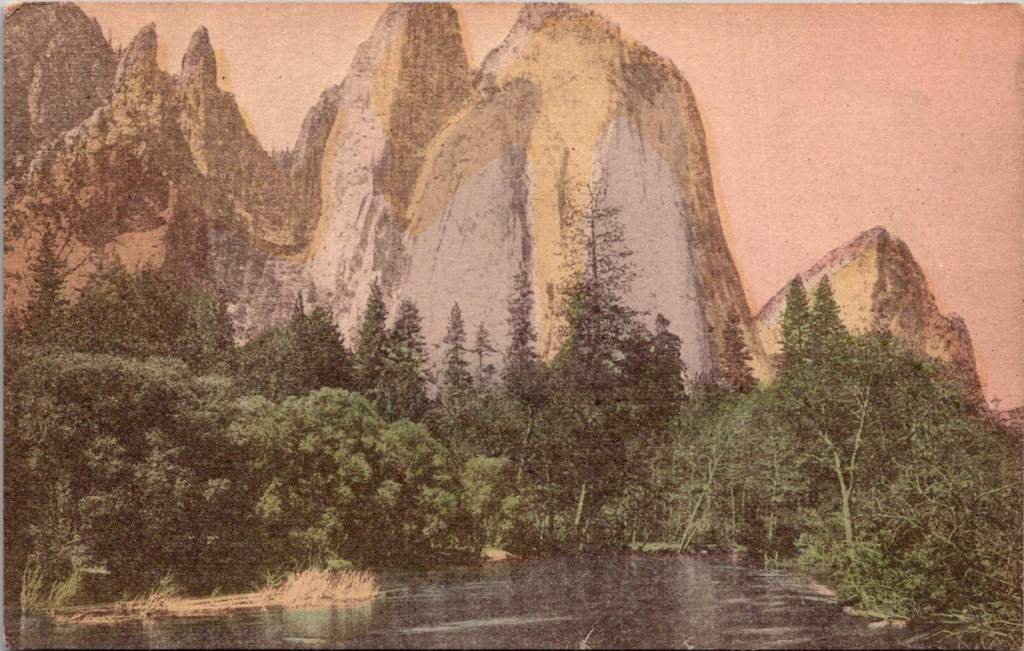
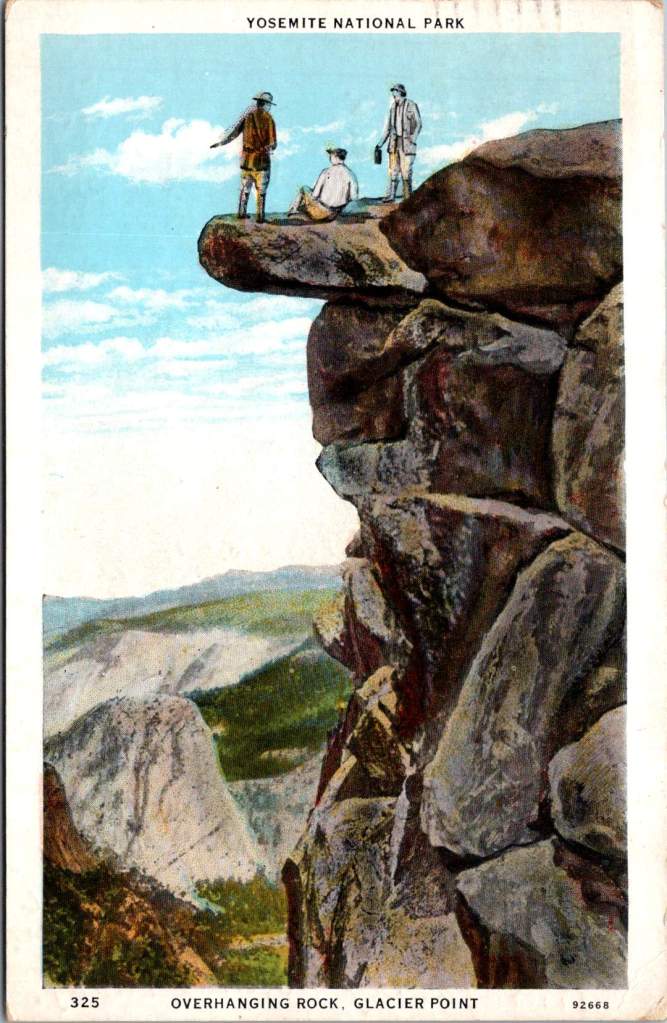
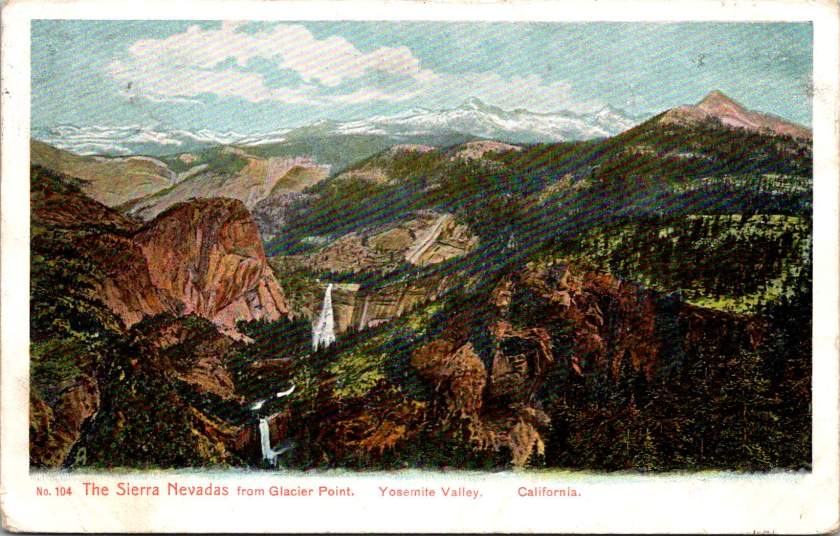
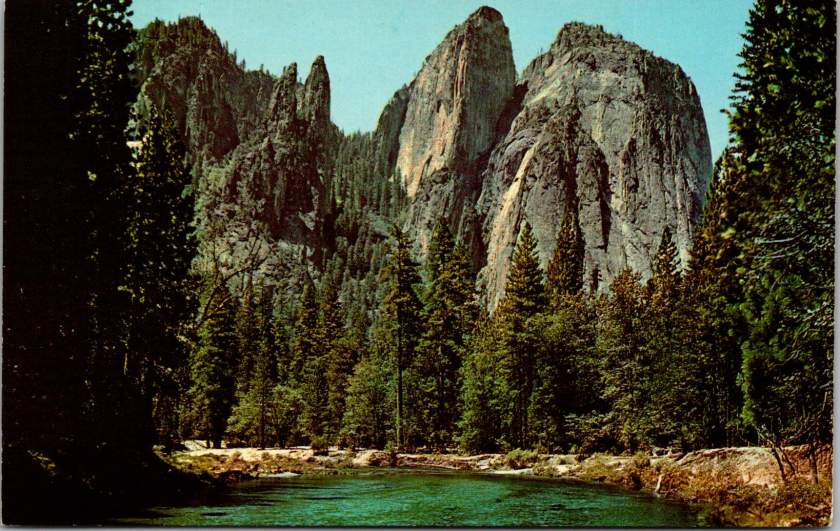
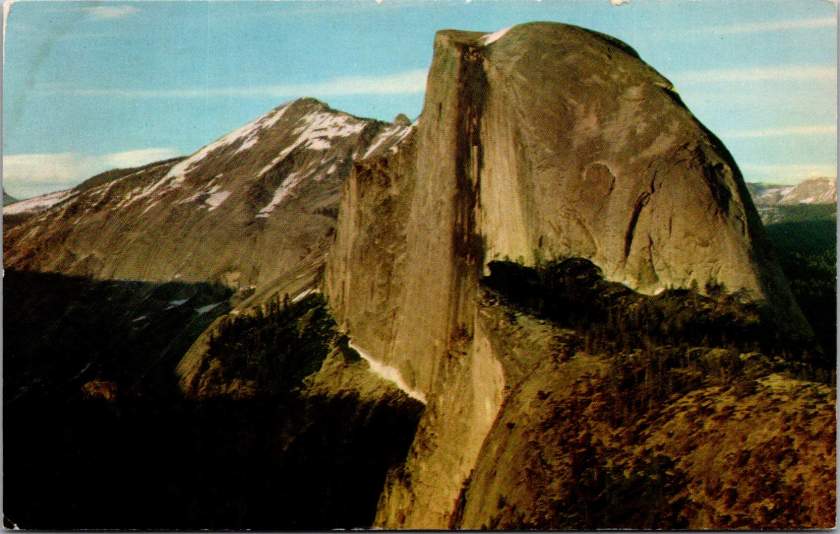
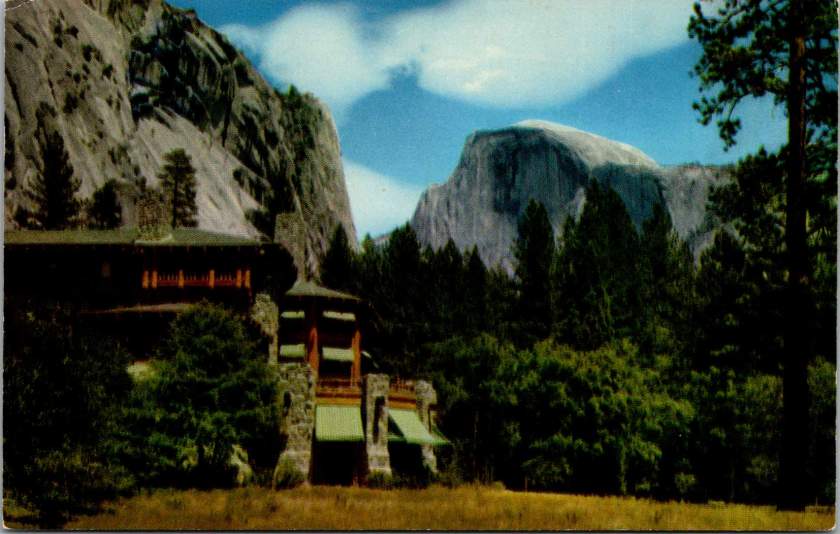
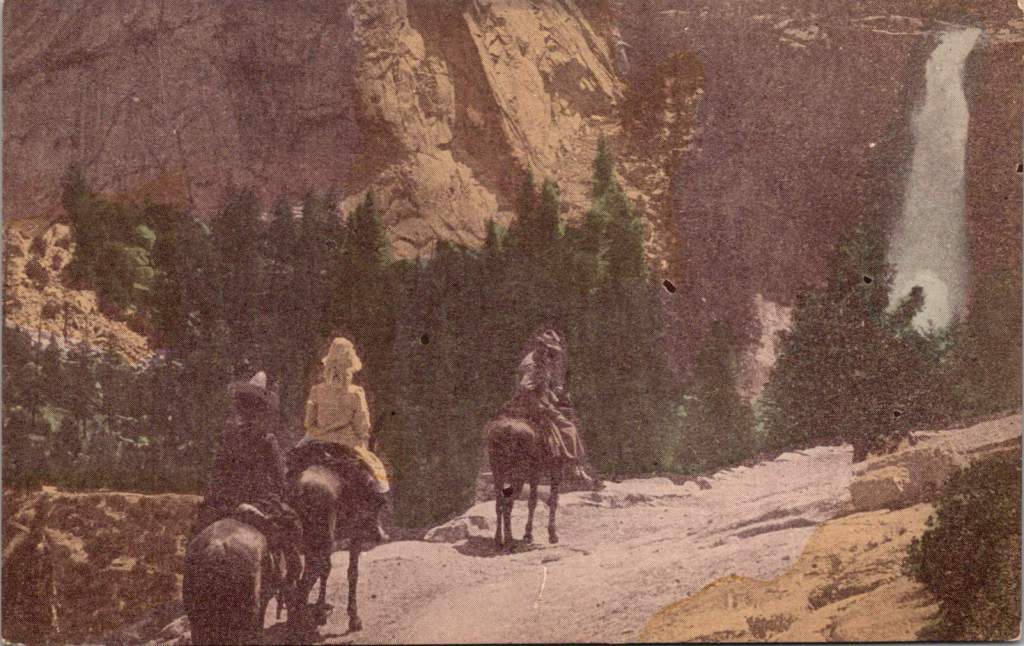
Three figures stand atop Glacier Point in Yosemite Valley, silhouetted against the sky. Horseback riders on a steep mountain trail glimpse a waterfall through the pines. A tunnel carved into a massive sequoia is big enough for a car to pass through. These postcards images tell the story of how Americans fell in love with their national parks.

When Abraham Lincoln signed legislation in 1864 protecting Yosemite Valley, few Americans had seen its wonders firsthand. The journey was arduous, expensive, and often dangerous. But photographs and artistic renderings began circulating, capturing public imagination. Carleton Watkins’ mammoth plate photographs of Yosemite’s towering cliffs and Albert Bierstadt’s luminous paintings suggested something almost mythical: a uniquely American paradise, waiting to be experienced.

By the 1880s, the Southern Pacific Railroad had begun marketing Yosemite as a must-see destination. Their promotional materials featured romantic images of pristine wilderness alongside luxury dining cars and comfortable accommodations. The message was clear: you could experience the sublime while maintaining the comforts of civilization. The railroad’s campaign to “See America First” tapped into both patriotic sentiment and growing concern about wealthy Americans choosing European vacations over domestic travel.

Stephen Mather, who would become the first director of the National Park Service in 1916, understood the power of imagery. A self-made millionaire from the borax industry, he approached park promotion with a marketer’s eye. Mather encouraged photographers to set up studios in Yosemite and actively supported the production of high-quality postcards, which he called his “little missionaries.” These cards, purchased for pennies and mailed across the country, did more than any official campaign to make Yosemite a part of the American imagination.
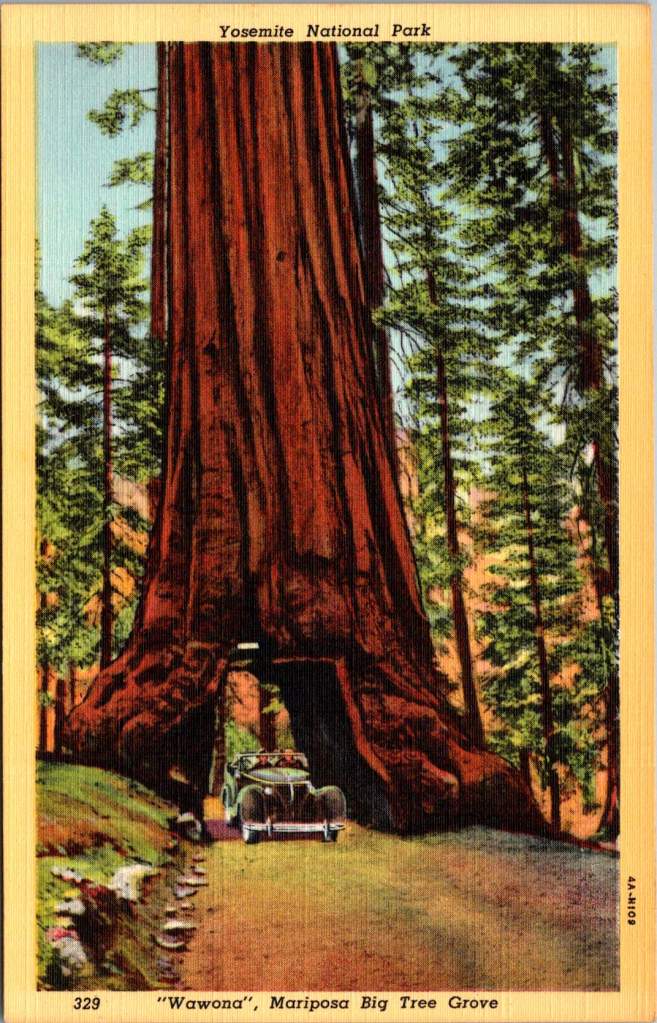
The postcards reveal changing patterns in how Americans experienced their parks. Early images show well-dressed visitors on guided tours, often on horseback. By the 1920s, automobiles appear, marking a democratic shift in park access. The famous Wawona Tree tunnel, carved through a giant sequoia in 1881, became a must-have photo opportunity. Each car passing through represented a family making their own way through the park, free to explore at their own pace.

The National Park Service itself emerged from a uniquely American compromise. Progressive Era conservationists like John Muir had argued for pure preservation, while others saw the parks as natural resources to be utilized. The 1916 Organic Act that created the NPS threaded this needle by mandating both conservation and public access – the parks would be preserved unimpaired, but explicitly for the enjoyment of the people.

This dual mandate shaped how Americans came to view their relationship with nature. The parks weren’t distant wilderness to be admired from afar, but rather public spaces to be actively experienced. In the 1930s Civilian Conservation Corps workers built trails and facilities, making the parks more accessible while maintaining their natural character. The message was clear: these were the people’s parks, and the people would help maintain them.

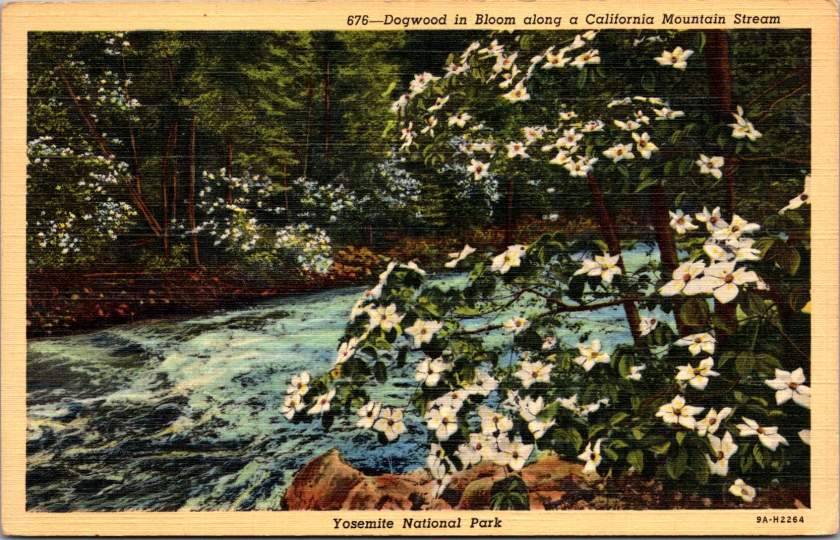
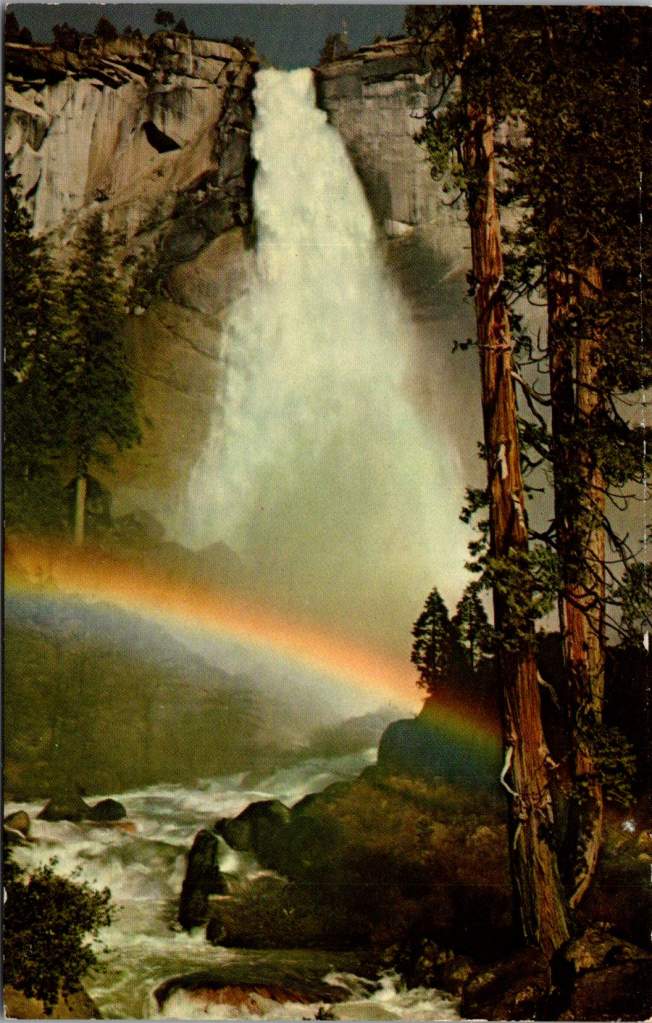
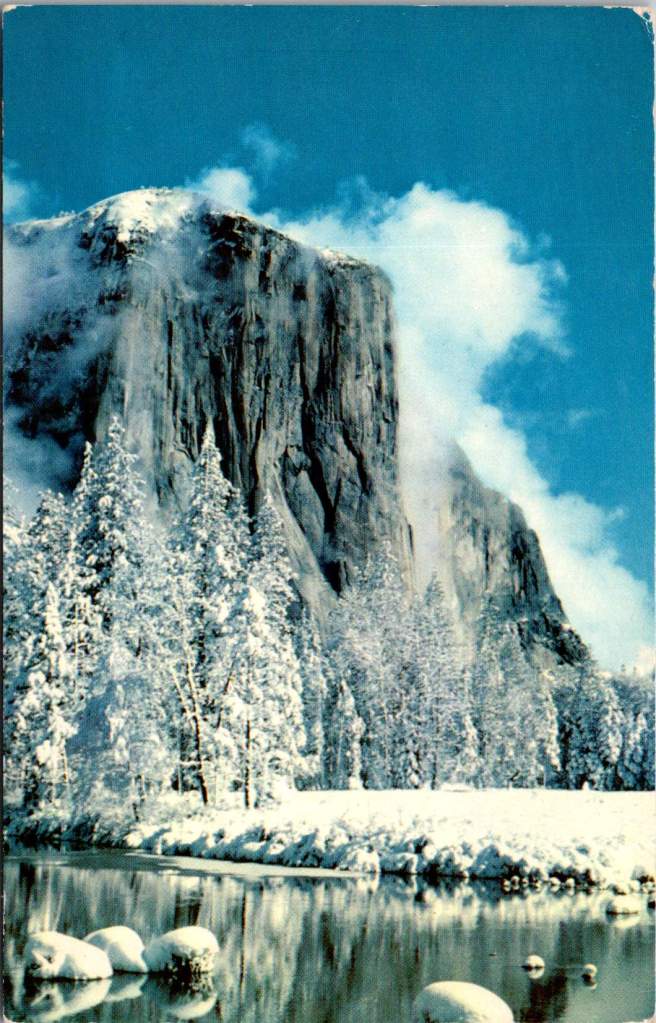
The advent of color photography in the 1940s and 50s brought new vibrancy to park imagery. Postcards from this era capture the brilliant white of dogwood blooms along mountain streams, the deep red of sequoia bark, and the rainbow mist of Yosemite Falls. The images suggested that black and white photography, no matter how artistic, had never quite captured the true glory of these places.
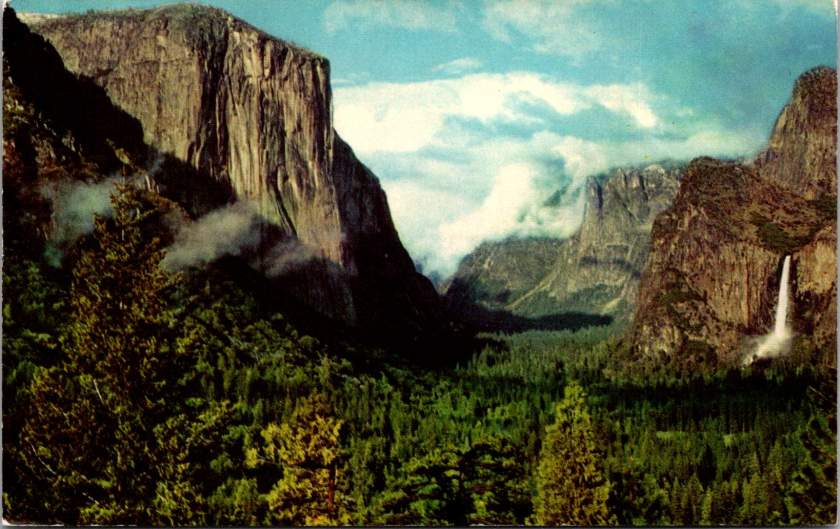
By the mid-20th century, the success of the national parks as tourist destinations began creating new challenges. Bumper-to-bumper traffic in Yosemite Valley became an ironic commentary on Americans’ enthusiasm for their natural heritage. The park service faced growing tension between access and preservation, leading to innovations like shuttle systems and visitor quotas.

Yet the fundamental appeal of the parks remained unchanged. Whether arriving by horse, train, automobile, or tour bus, visitors came seeking what Frederick Law Olmsted had described in his 1865 report on Yosemite, “The union of the deepest sublimity with the deepest beauty of nature.” The parks offered not just scenic views but a connection to something larger than themselves – a uniquely American inheritance.

Today’s visitors to Yosemite might share their experiences through Instagram rather than postcards, but they’re participating in the same tradition of witnessing and sharing America’s natural wonders. The early promoters of the national parks understood something fundamental: seeing these places wasn’t enough. The experience had to be shared to become part of our collective identity.

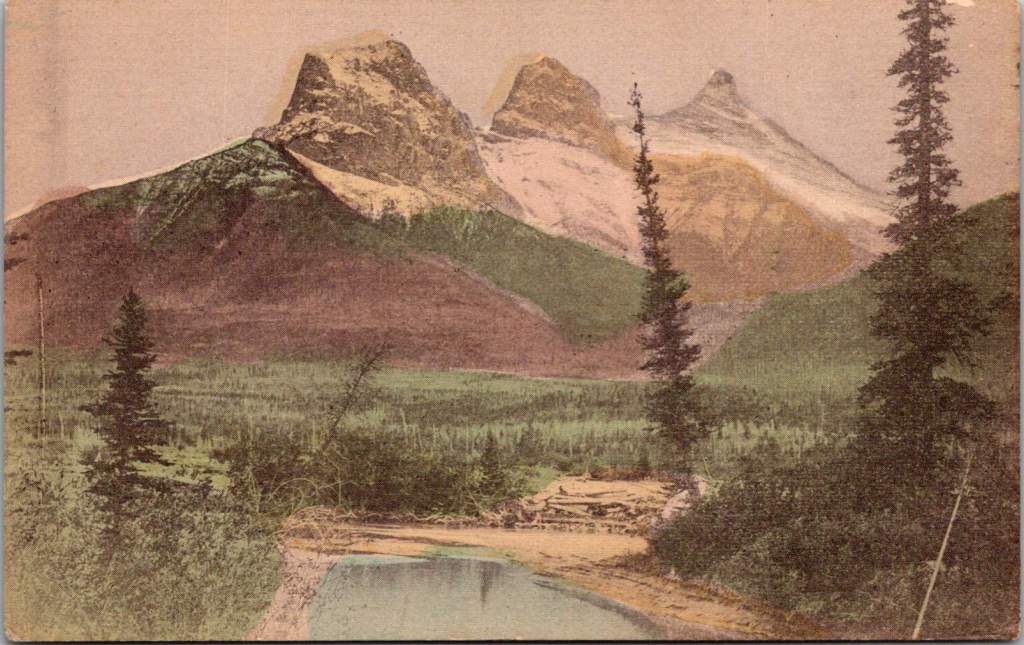
Those early postcards, with their hand-tinted colors and earnest captions, did more than advertise scenic views. They helped Americans understand these distant wonders as their own inheritance – places that belonged to everyone and therefore needed everyone’s protection. When we look at them today, we’re seeing how Americans fell in love with their national parks, and how that love affair helped define our relationship with the natural world.

The history of Yosemite and the National Park Service reminds us that conservation isn’t just about preserving scenic views. It’s about maintaining spaces where each generation can discover their own connection to the natural world. This fundamental mission remains as relevant as ever. The parks still offer what those early postcards promised: a chance to see the natural wonders of the United States, and to share the experience with friends and family miles away.

Floods, Farms, and Fate in 1908

In late May 1908, the Republican River forgot its modest nature. After days of relentless spring rains, the usually manageable waterway transformed into a destructive force that reshaped both the landscape and lives of north-central Kansas.

A collection of real photo postcards from this period captures these moments of crisis. One image shows the mill with its flooded surroundings, another the threatened railroad bridge. These weren’t just documentary photographs – they were messages sent between family members grappling with decisions about land and livelihood in the flood’s aftermath.

The Republican River, which meanders through Republic County past the iconic Table Rock formation, swelled beyond its banks, swallowing farmland, threatening towns, and severing the rail lines that served as lifelines for agricultural communities.

Concordia, the largest town along this stretch of the Republican River, watched as the waters rose. The town of 4,500 residents had built itself on agricultural promise, its grain elevators standing sentinel along the railroad tracks, its mill processing the bounty of surrounding farms. But the 1908 flood challenged this careful progress. Water lapped at the foundations of the mill, its twin smokestacks rising above the flood.

Railroad bridges proved vulnerable to the 1908 flood, too. The Chicago, Rock Island and Pacific Railroad, which had helped birth towns like Concordia and Republic City, found its tracks suspended over angry waters. Train service halted, leaving farmers isolated with their crops rotting and fields under water. The flood arrived at a particularly cruel time – late spring, when winter wheat was heavy with promise and corn was just reaching hopefully toward the Kansas sky.

The handwriting on one postcard tells of a man named Basil looking at land near Table Rock, that distinctive natural formation that had guided settlers for generations. What kind of optimism – or desperation – would drive someone to consider investing in farmland so soon after such devastating floods? Yet records suggest he wasn’t alone. Land transactions continued in Republic County through 1908 and 1909, some at distressed prices from farmers ready to seek fortune elsewhere, others at premium prices for higher ground.

The flood’s waters eventually receded, leaving behind debris and difficult deliberations. Farmers have always had to gamble with nature. The rich soils of river valleys are worth the risk of occasional flooding – until they’re not.

These brothers – the postcard photographers – couldn’t know that the 1908 flood was merely a prelude. The Republican River would prove its power again and again, most catastrophically in 1935, when a flood of biblical proportions would transform the valley once more. Families who chose to stay after 1908, who rebuilt and reinvested, would face nature’s judgment again.

Looking at these century-old images, we see more than just disaster photography. We see evidence of critical decisions made in the aftermath of catastrophe. Someone was behind that camera, documenting not just the destruction but the dilemma – to stay or go, to rebuild or retreat, to trust in the river’s bounty or fear its fury. The unknown photographer used the latest technology – AZO photo paper, a Kodak camera – to capture and distribute these images of nature’s disruption of human endeavor.

We don’t know if Basil bought that land near Table Rock. The brothers’ identities and their immediate choices are lost to history. But we know that farming continued and that people kept living along the Republican River despite all they had seen. Each generation seems to make its own peace with nature’s risks, balancing the promise of fertile valleys against a river’s wrath.

Art, Food, Nature, and History in Arizona’s Verde Valley

Arizona’s Verde Valley has inspired generations. Journey through this dramatic landscape where red cliffs greet green river valleys, and where an old mining railway now carries visitors through one of the Southwest’s most stunning canyons.

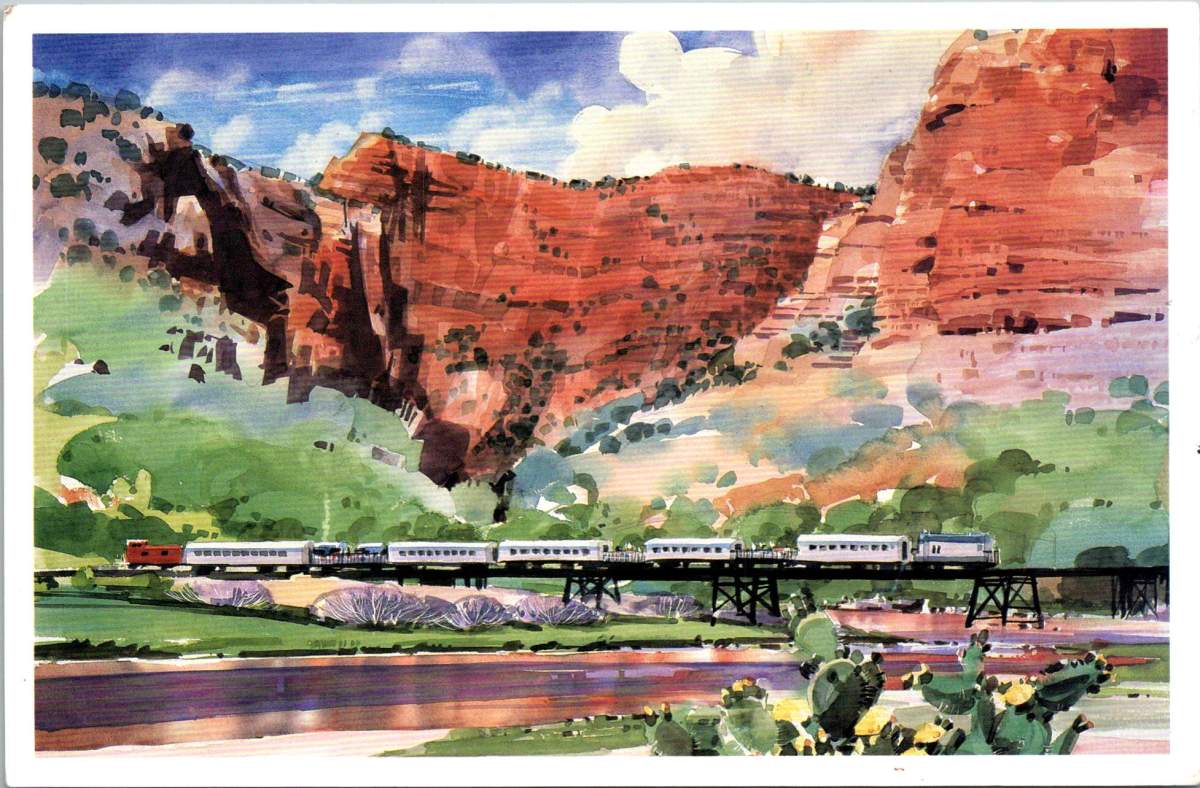
A striking watercolor dominates the front of a vintage postcard. The scene captures the essence of Arizona’s high desert: massive red rock canyon walls rise dramatically against a blue sky dotted with billowing clouds, while a silver passenger train glides across a trestle bridge below. The unknown artist’s watercolor brushwork renders the desert vegetation in soft greens, with prickly pear cactus dotting the foreground. The painting masterfully conveys both the monumental scale of the landscape and the delicate play of light across the rocky surfaces.

When the Verde Canyon Railroad winds through the high desert country of central Arizona, it follows ancient pathways. The Verde River carved this dramatic landscape over millennia, creating a riparian corridor that has attracted humans for thousands of years. Today’s passengers on the scenic railway see much the same view as the Sinagua people who built cliff dwellings here between 600 and 1400 CE, though the comfortable rail cars are a far cry from the precarious edges those early inhabitants deftly defied.

The river remains one of Arizona’s few perennial waterways, sustaining a complex ecosystem where desert meets riverbank. Towering cottonwoods and velvet ash trees create a canopy over the water, while sycamores and willows cluster along the banks. Native grape vines twist through the understory, and prickly pear cactus dot the rising canyon walls. This environment supports a rich variety of wildlife, from yellow-billed cuckoos and great blue herons to river otters and mule deer. Native fish species like the razorback sucker still navigate the waters their ancestors swam for millennia.

The human history of the valley reflects waves of settlement and industry. After the Sinagua, Yavapai and Apache peoples made their homes here. Spanish explorers gave the river its name – “verde” meaning green – marking the stark contrast between the river corridor and the surrounding desert. The late 1800s brought miners seeking copper, gold, and silver, transforming places like Jerome into boom towns. The railroad itself was built in 1912 to service the United Verde Copper Company’s mining operations, an engineering feat that mirrors our ancient ancestors.

Notable Arizona artists have interpreted this landscape. Ed Mell’s geometric, modernist approach emphasizes the monumental character of the canyon walls. Early pioneer Kate Cory combined artistic and ethnographic interests, documenting both landscape and culture during her years living among the Hopi. Merrill Mahaffey mastered the challenging medium of watercolor to capture the desert’s subtle light and atmosphere, teaching and inspiring so many along the way.

The artistic legacy of the region is inextricably linked to its unique quality of light. The clear, dry air creates what painters describe as crystalline clarity, especially during the “golden hours” of early morning and late afternoon. Artists employ various techniques to capture these effects: watercolorists leave areas of white paper untouched to suggest intense sunlight on rock faces, while building up transparent layers to show subtle color variations in shadowed canyon walls. The phrase ‘purple mountain majesties’ from Katharine Lee Bates’s “America the Beautiful” finds visual truth here, where the red rocks shift to deep purple at dawn and dusk, challenging artists to capture these dramatic transformations.

These artistic traditions remain vibrant today through institutions like the Sedona Arts Center, which hosts workshops, exhibitions, and the annual Sedona Plein Air Festival. These events draw artists from around the country to paint the red rock landscapes, continuing a legacy of artistic response to this unique environment.

The Verde Canyon Railroad itself represents a remarkable transformation from industrial resource to cultural attraction. When mining operations declined in the 1950s, the railroad continued operating for freight until the late 1980s. Its reinvention as a scenic railway in 1990 preserved both the industrial heritage and access to the canyon’s natural beauty, offering new generations a chance to experience this remarkable landscape where nature, history, and art converge.

In recent decades, the Verde Valley has emerged as a significant wine and food-producing region, adding another layer to its cultural landscape. The same mineral-rich soil that once yielded copper now nurtures vineyards, while ancient irrigation techniques inform modern water management practices. Local wineries have revived the area’s agricultural traditions, some of which reflect Spanish and Mexican heritage. The region’s restaurants increasingly reflect Native American heritage, too, combining indigenous ingredients with contemporary techniques. Native foods like prickly pear, mesquite, and local herbs appear on menus alongside wines produced from vineyards visible from the train’s windows.

Tourism in Arizona has evolved beyond simple sightseeing to embrace the complex tapestry of the region’s heritage. Visitors to the Verde Valley today might start their morning at an art gallery in Jerome, taste wines produced from hillside vineyards at lunch, and end their day watching the sunset paint the canyon walls from a vintage train car. This integration of historical preservation, artistic tradition, and culinary innovation exemplifies how the creative spirit that first drew people to these dramatic landscapes continues to evolve. The Verde Valley is home to each generation, who find new ways to interpret and celebrate the enduring connections between people and place.

Precipice of Peace: Postcards from 1920 Antwerp Olympics

Sometimes a single image can capture the essence of an era. Such is the case with an extraordinary postcard, one of 18 rare images from the 1920 Antwerp Olympics. 

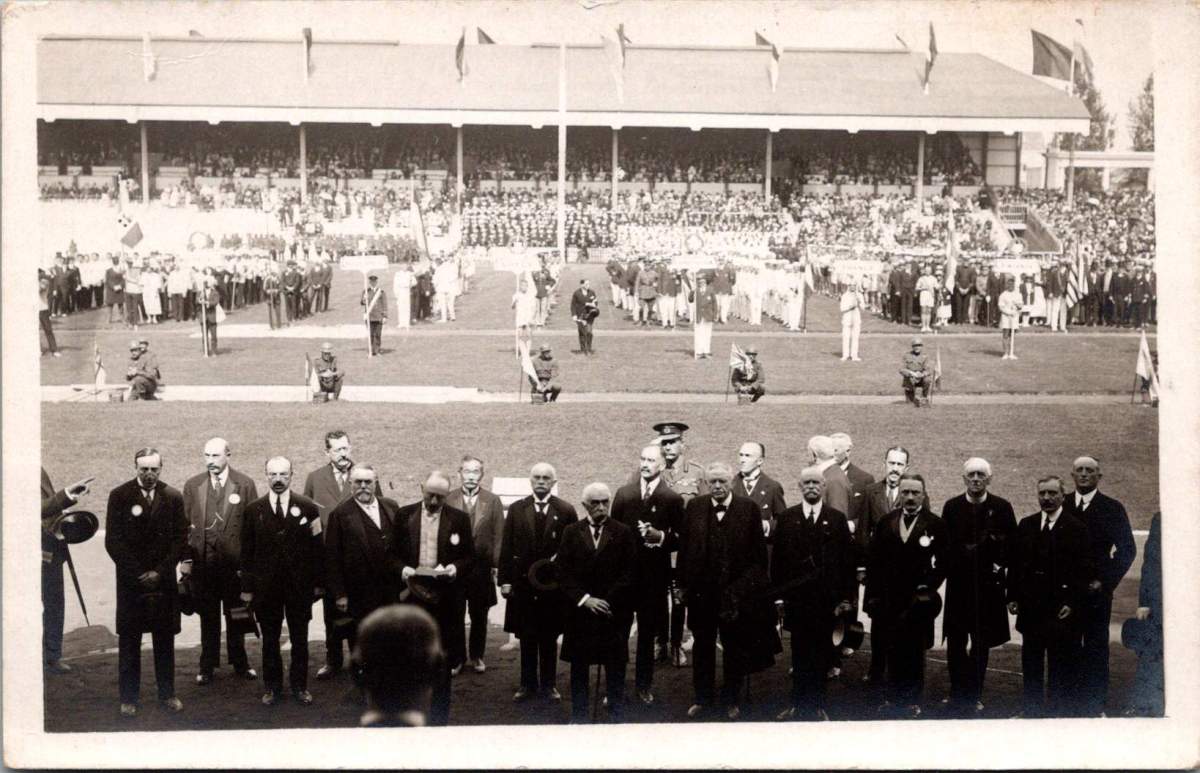
At first glance, it might seem like just another black-and-white snapshot of a bygone event. But look closer, and you’ll find yourself face to face with influential figures of the early 20th century. General John J. Pershing, commander of the American Expeditionary Forces during World War I, is captured in a crisp military salute. Baron Pierre de Coubertin, the father of the modern Olympic movement, instantly recognizable by his distinctive mustache.

This single frame tells a story far greater than the sum of its parts. Shot by an unknown photographer and made into a real photo postcard by Thomas Illingworth & Co., it shows a world emerging from the shadows of war and pandemic. 

A week earlier, US women won the vote and swimmer Ethelda Bleibtrey was about to bring home gold. The greats of the era – Duke Kahanamoku, Suzanne Lenglen, Paavo Nurmi, Frank Foss, and 72-year old Oscar Swahn – embodied the world’s tenuous progress through their excellence and effort in sport.

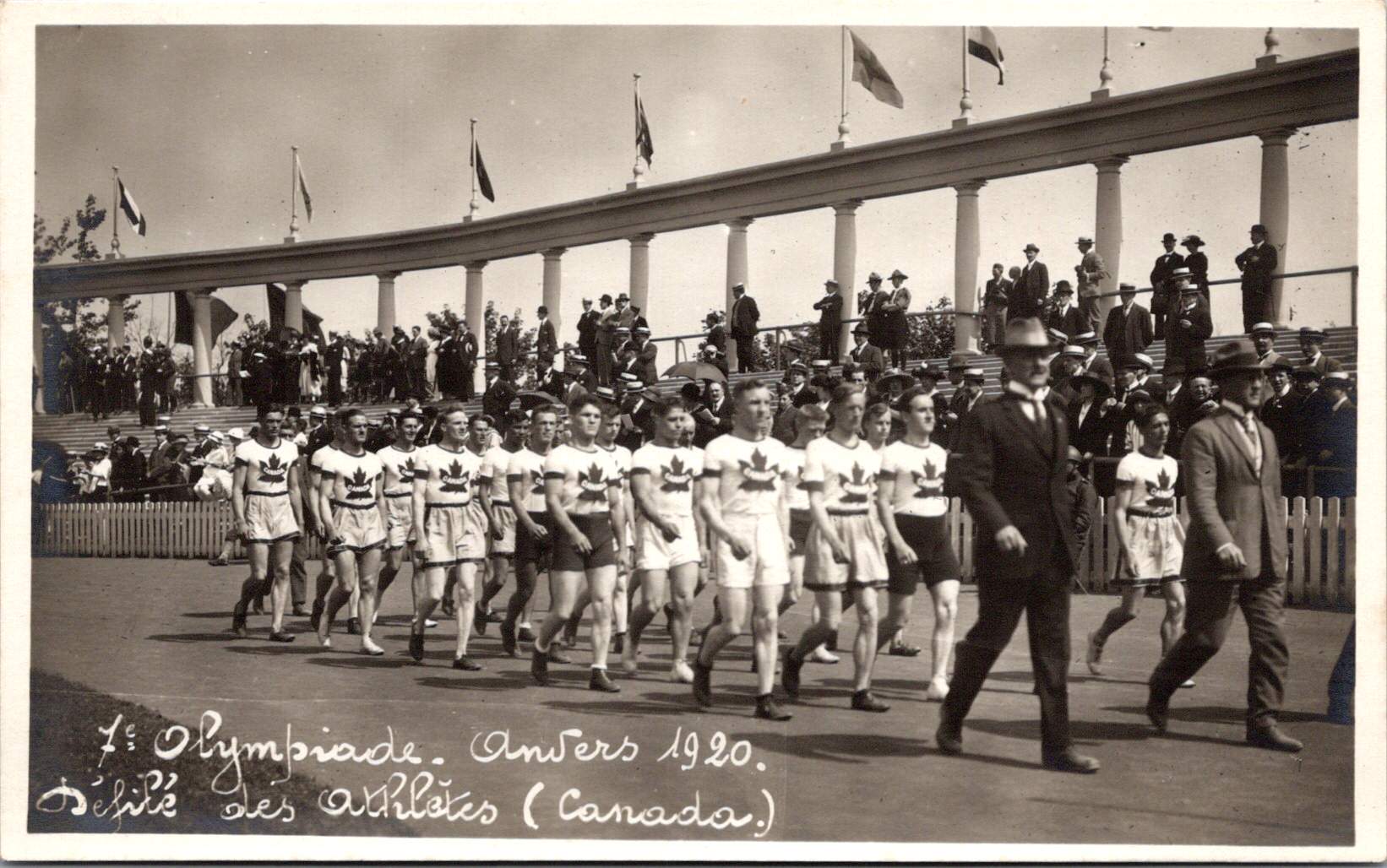
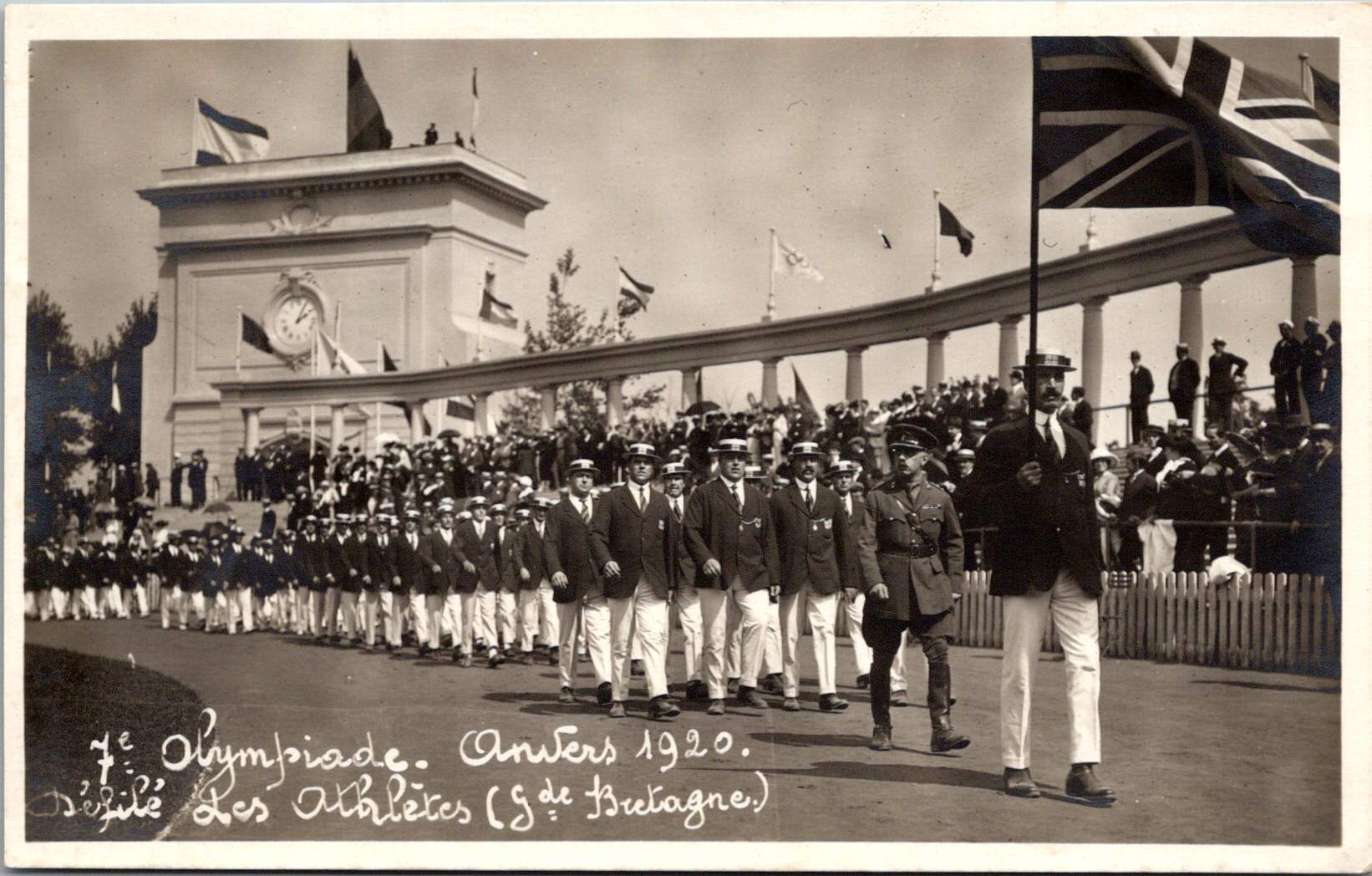
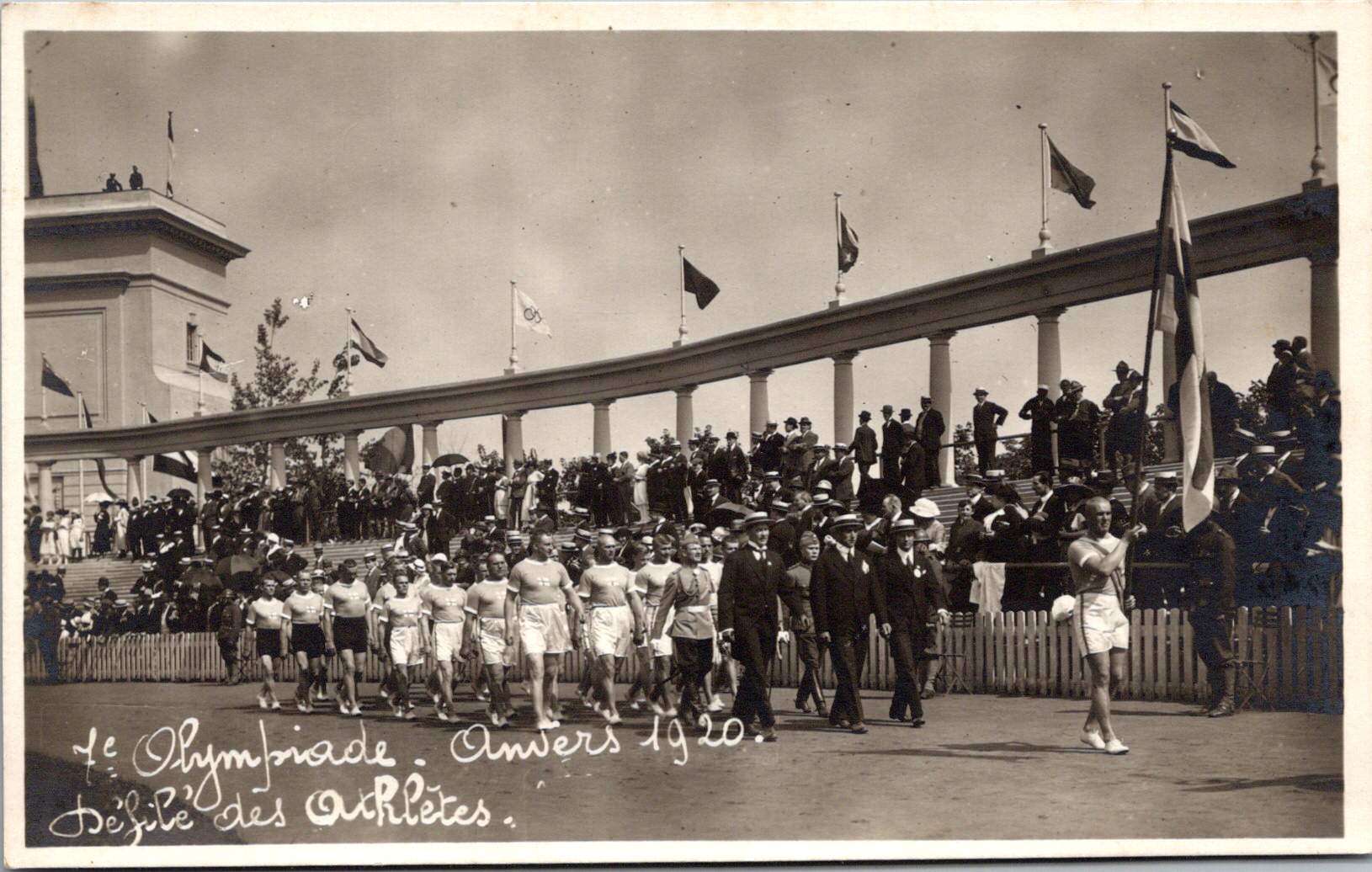
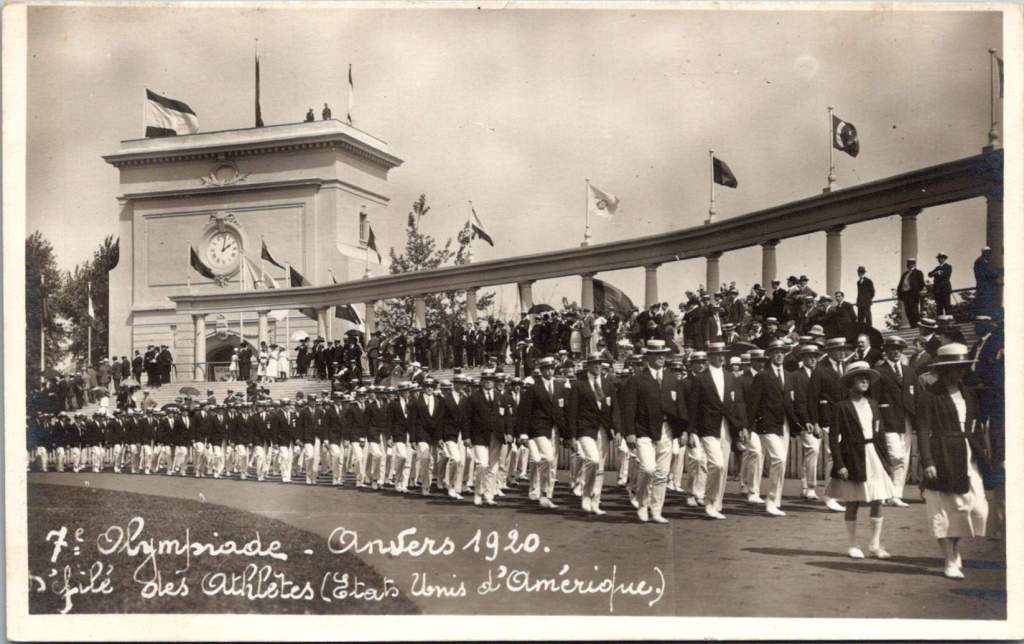
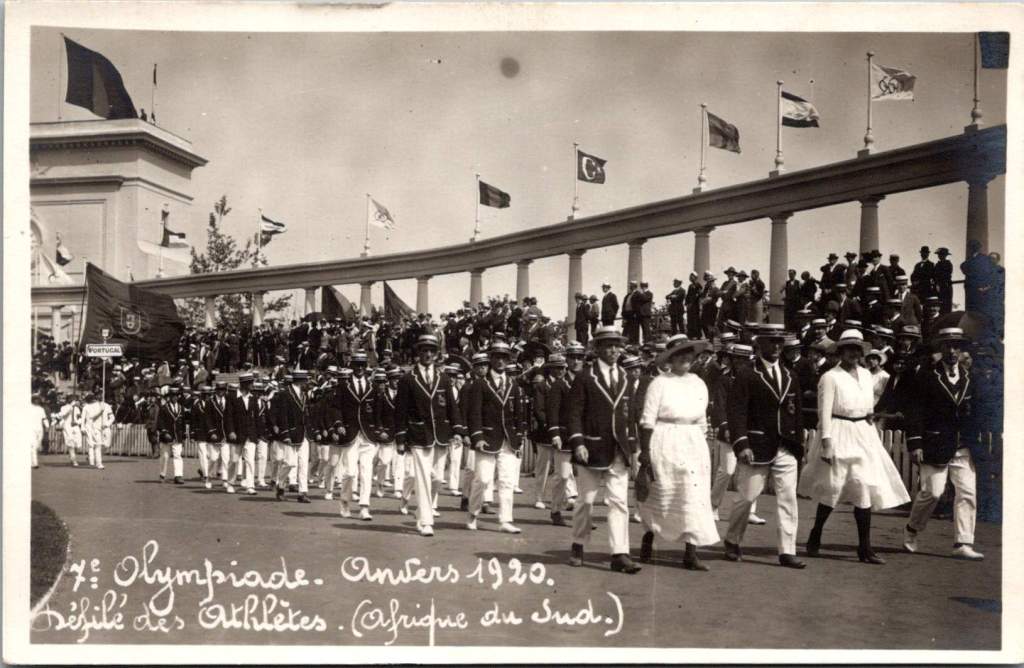
The accompanying 17 photos show the Parade of Athletes, including Australia, Belgium, Canada, Denmark, Egypt, France, Greece, Italy, Japan, Norway, South Africa, Spain, Sweden, Switzerland, and USA. Each delegation presented themselves to the Belgian King, sometimes with a wave or salute.

Window into 1920

Before we dive into the significance of the individuals captured in this image, let’s consider the medium itself. In 1920, the postcard was more than just a souvenir; it was a vital means of communication and a bearer of visual stories in a pre-digital age.

The postcards we’re examining used light-sensitive paper, a recently available technology in the marketplace. In this case, the Horse Shoe Brand from Thomas Illingworth & Co. – tells us exactly who produced the photographic prints directly from negatives. Each card, despite being a reproduction, was essentially a unique photograph, carrying subtle variations in exposure and tone that mass-printed cards could never match.

The quality of these postcards was remarkable for their time. The ability to clearly discern General Pershing’s salute and the details of de Coubertin’s mustache over a century later is a testament to the craftsmanship involved in their production. It’s also a stroke of luck for historians, providing us with invaluable visual evidence of this pivotal moment in Olympic history.

A General’s Salute: More Than a Gesture

The presence of General John J. Pershing at the 1920 Antwerp Olympics, captured mid-salute, is laden with symbolism. Just two years earlier, Pershing had been commanding millions of troops in the bloody fields of Europe. Now, here he was, saluting not to the drums of war, but to the peaceful competition of nations. The crowd was thrilled when Belgian soldiers released doves of peace to open the ceremonies.

Pershing’s salute was a powerful endorsement of the Olympic movement’s ideals, and a gesture of solidarity to the King of Belgium, who he is facing in the stands. It’s a military man’s acknowledgement that the battlefield is not the only place where nations can meet. The attendance of the two military commanders lent gravitas to the event, underlining the Games’ importance in post-war international relations.

Moreover, Pershing’s attendance highlighted the changing role of the United States on the world stage. The U.S. had emerged from World War I as a major global power, and Pershing’s presence at the Olympics signified America’s commitment to engaging with the international community not just through politics and economics, but through culture and sport as well.

Man Behind the Mustache: Pierre de Coubertin

Baron Pierre de Coubertin is easily identified in the front row by his long and gray mustache. The visionary behind the revival of the Olympic Games must have felt pride and vindication at this moment. For de Coubertin, whose Olympic ideal centered on promoting international understanding and peace through sport, the successful staging of the Antwerp Games was nothing short of a triumph.

The 1920 Antwerp Olympics were the first Games held after the cancellation of the 1916 Olympics due to World War I. The year prior, the Inter-Allied Games were hosted in France, mostly to keep WWI troops occupied in the sudden transition out of war. The fact that de Coubertin stands alongside Pershing, a military leader, in this peaceful setting, perfectly encapsulates the Olympic dream of turning swords into javelins, conflict into friendly competition.

De Coubertin’s presence also connects the ancient Olympic tradition with the modern era. Under his direction, the iconic Olympic rings and flag were introduced in 1920, along with other modernizations in sport, gear, and rules of the games. There were limitations, too, especially related to the post-war economy. Top athletes went unchallenged in some categories when other countries could not afford to compete. 

The choice of Antwerp as the host city was deeply significant. Belgium had suffered tremendously during World War I, with much of the country occupied and its people enduring great hardships. Hosting the Olympics was a statement of Belgium’s resilience and the international community’s support for its recovery. The stadium was more than just a sporting venue; it was a symbol of reconstruction and hope. Repurposed from the city’s hometown venue, it was transformed on short notice into the Olympisch Stadion.

The selection of Antwerp as host was not just a gesture of respect for the Olympic movement, but also an acknowledgment of Belgium’s sacrifices and its determination to rebuild. In the end, though, the city lost money on the Games due to low attendance.

Photo Paper to Digital Pixels: The Evolution of Olympic Memories

As we examine this postcard set today, we’re struck by how much has changed in the way we capture and share moments of global significance. The photographer who snapped this image must have thought carefully about each shot, knowing that film and processing were expensive and opportunities fleeting.

Today, a similar scene would be captured by thousands of smartphone cameras, instantly shared across the globe. The modern Olympic Games are documented in minute detail, with high-definition video capturing every bead of sweat and every emotional reaction.

Yet, there’s something special about this centenarian postcard. Its physical nature, the silver halide crystals that hold the image fast, give it a permanence that our digital memories often lack. It’s a tangible connection to a pivotal moment in history, one that we can hold and examine closely. It’s also remarkably detailed, given the age and technology at hand.

In our era of information overload, where countless images flood our screens daily, the rarity of this postcard becomes even more significant. While we don’t know exactly how many of these postcards were produced – estimates range from several hundred to a few thousand – we know that most have been lost to time.

Each surviving postcard is now a valuable historical artifact. They appear occasionally at auctions, eagerly sought after by collectors who understand their significance. But beyond their monetary value, these postcards are treasure troves of historical information.

The T.I.C. logo and the small ‘x’ between POST and CARD on the back, for instance, tell us not just who made the paper, but in what year. This level of detail allows historians to verify the authenticity of Olympic memorabilia and build a more detailed understanding of how the games were documented.

Finding Our Photographer

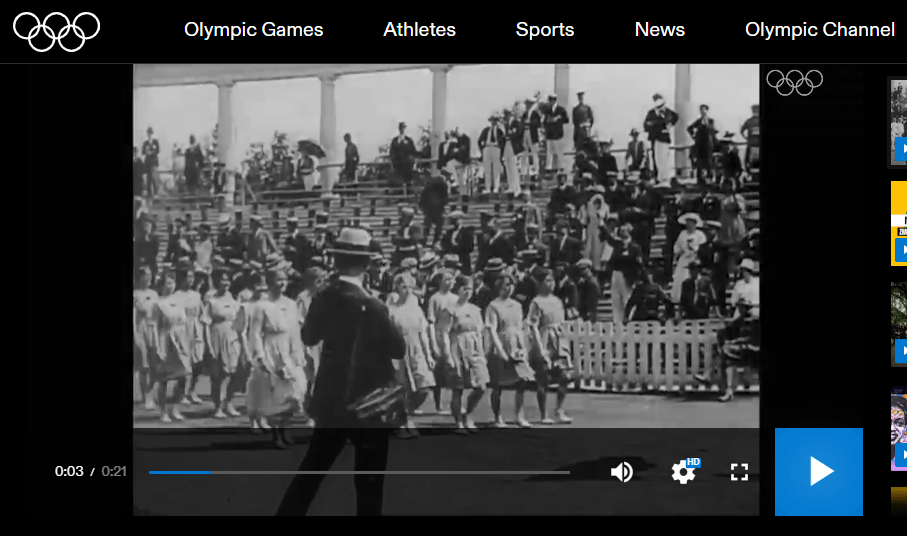
Who was the photographer? The mystery unraveled makes these rare images all the more interesting. Our research landed at the website for the official Olympic history, and a brief snippet of film from the 1920 opening ceremonies. In it we see a gaggle of photographers covering the proceedings. As the camera focuses, a sole figure breaks from the crowd and raises his camera for the perfect shot. The Denmark delegation is rounding the oval path and heading toward the risers. It’s the exact image we see in the postcard collection. Thrilling to have the photographic evidence, and travel through time to witness the moment!

Echoes Across Time

Seeing these images today, we can’t help but draw parallels between their time and ours. The world of 1920 was recovering from a pandemic and rebuilding after a major global conflict. The push for civil liberties was gaining strength in the U.S. and around the world. Today, we too are emerging from a global health crisis, facing international tensions, grappling with rapid technological change, and defending democracy.

The image of Pershing and de Coubertin, saluting the host country in an Olympic stadium, reminds us of the power of sport to bring people together. It shows us a world recovering after unimaginable hardship, finding unity in athletic achievement.

The Olympic Games continue to serve as a symbol of international cooperation and human achievement. As we look to the Olympics today, we might wonder: what form will our memories take? Will our digital images have the staying power of these centenarian postcards?

In an age where our memories are increasingly digital and ephemeral, these physical postcards serve as a poignant reminder of the value of tangible history. They urge us to consider how we document our own pivotal moments, and what legacy we will leave for future generations to discover. As we look to the future, may we carry forward the spirit of resilience, unity, and hope that these extraordinary images so powerfully illustrate.