Pandemic Post, 1918

During the 1918 pandemic, daily postcards were lifelines between farm and hospital for the Moss clan in Missouri. Their words remind us that love weaves a way between two worlds.

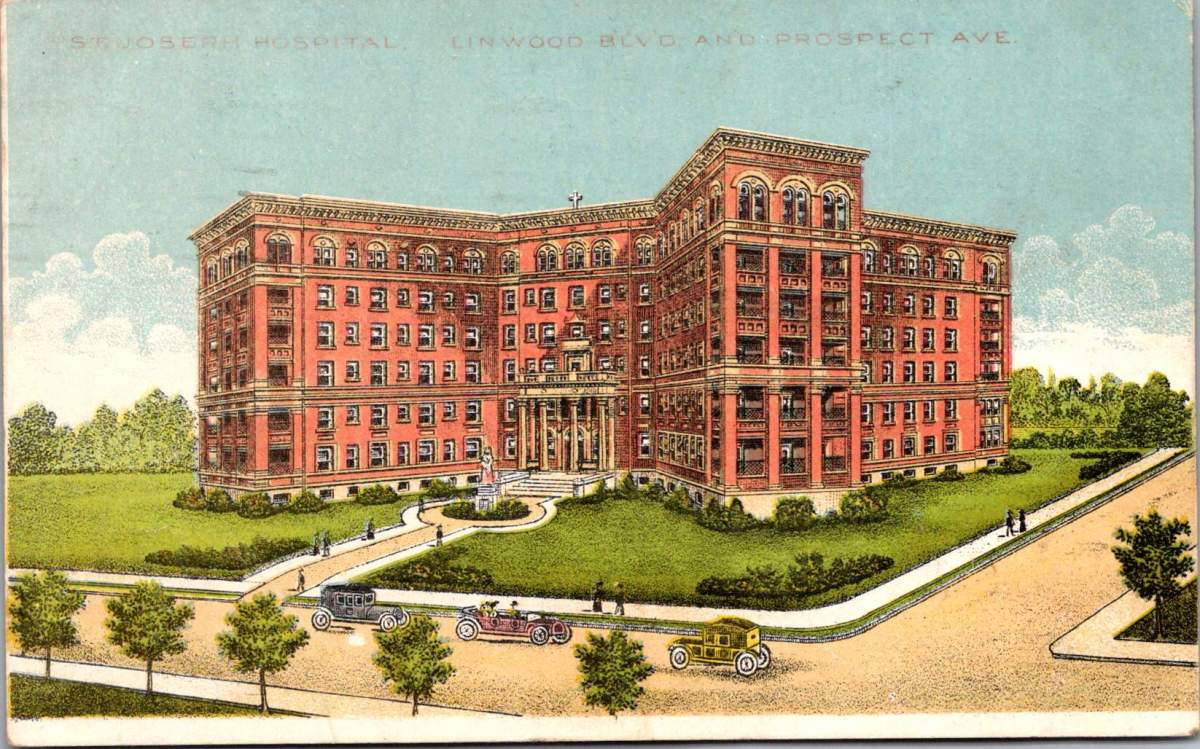
A postcard trembles in worried hands. On the front, St Joseph Hospital, Linwood & Prospect Streets in Kansas City, Missouri. Victorian landscaping, tree-shaded boulevards, a large, new hospital. It is a world of progress and prosperity frozen in glossy perfection.

Turn the card over. Faded ink bleeds across cream paper. “Dear Verda Marie, Mama threw up all night and does not feel well this morning… only drank a cup of tea for breakfast.”

Two worlds exist on a single postcard. The front celebrates America’s gleaming cities and grand institutions. The back reveals a family torn apart by pandemic and war, working together and staying in touch every day.
The Spanish flu arrived in Missouri like a thief. It followed railroad lines and river valleys, spreading from military camps across the heartland. By September, Kansas City reported its first cases. By October, the city’s hospitals overflowed with the gravely sick and dying.

Mama Moss checked into University Hospital on Campbell Street, one of several small places on Hospital Hill, where Kansas City built its first medical facility in 1870. Now every building overflowed with sick and strapped families seeking any treatment that promised relief or protection.

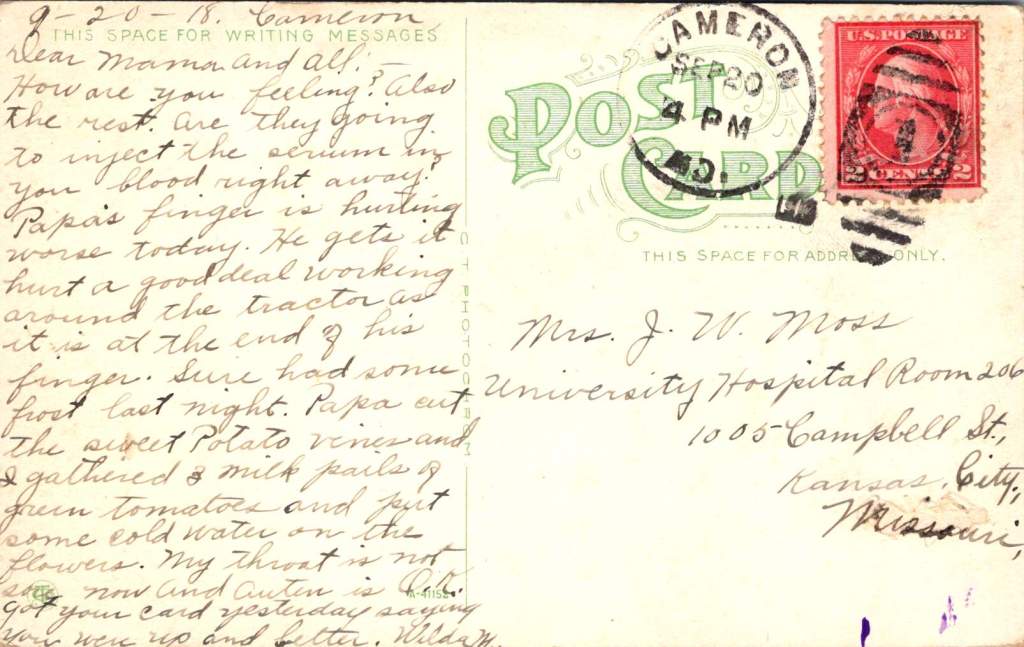
The postcards begin their daily journey between Cameron and Kansas City. Fifty miles of prairie separate farm from hospital, family from mother, routine from crisis. September 20th,Verda Marie writes from Cameron:

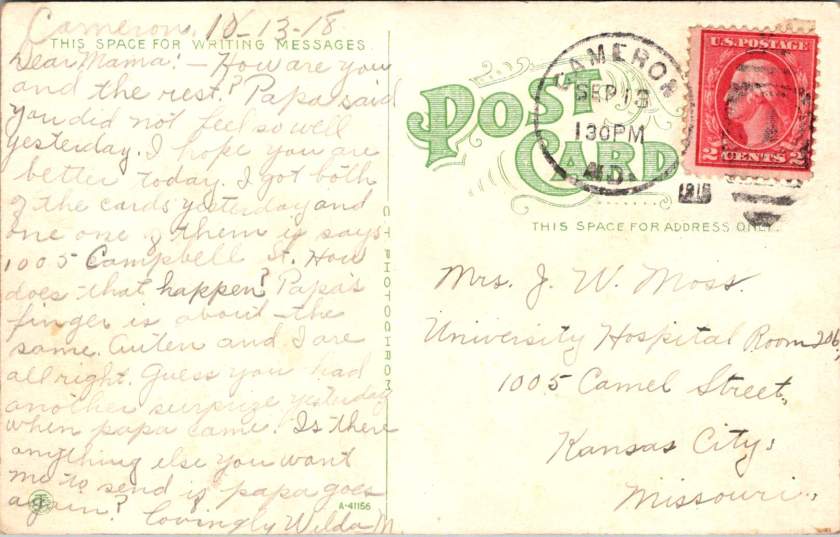
Dear Mama, and all. How are you feeling? And the rest. Are they going to inject the serum by your blood right away? Papa’s finger is hurting worse today. He gets it hurt a good deal working around the tractor.

The serum treatments represented medicine’s desperate gamble. Doctors extracted blood from recovered patients, believing their antibodies might save others. Transfusion methods were primitive—donor to patient through crude tubes, with minimal understanding of blood compatibility.

The front of her postcard shows Fourth Street looking west in Cameron—tree-lined and peaceful, houses with wraparound porches and manicured lawns. No hint of pandemic. No suggestion of families split between farm work and hospital vigils.

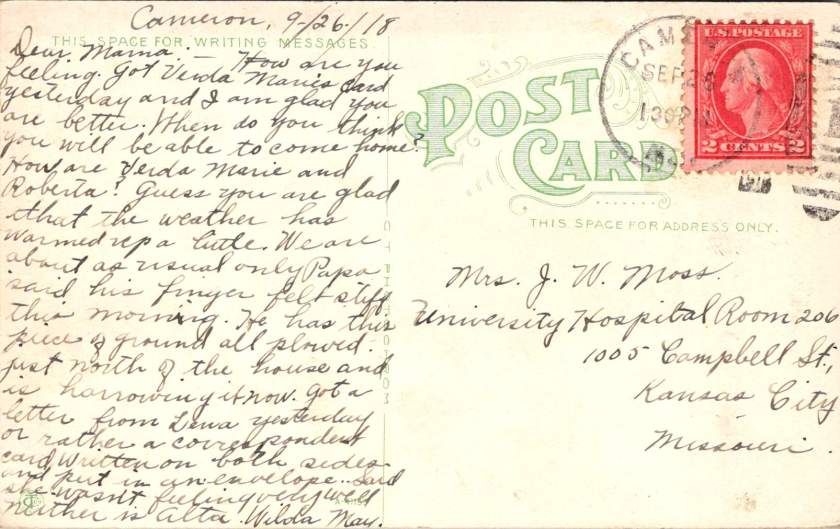
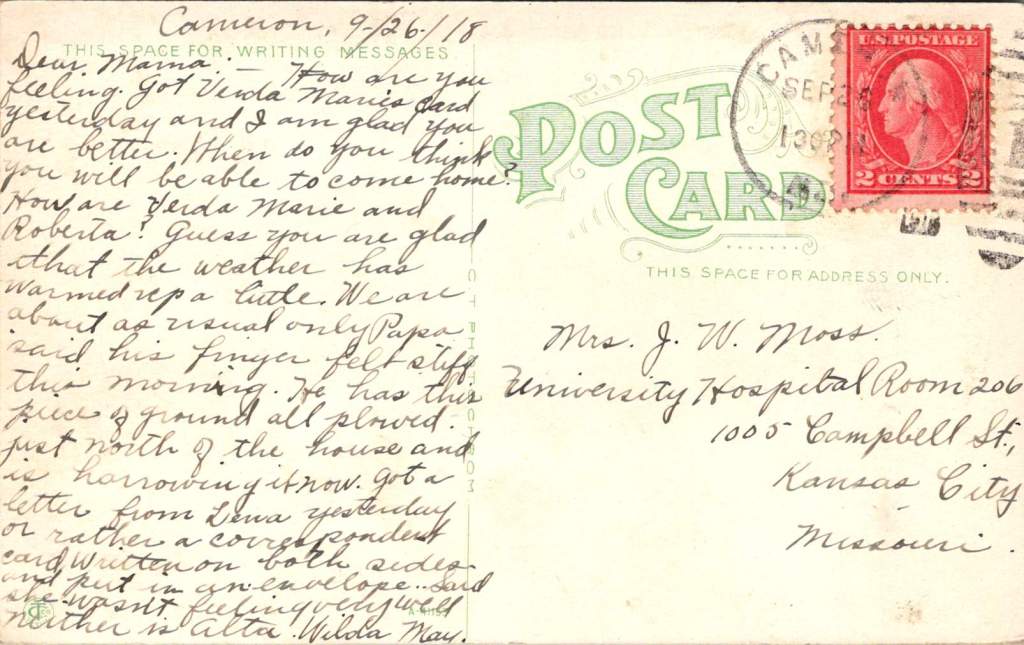
September 26, another postcard from daughter Wilda May in Cameron. Papa keeps working despite his damaged fingers. Farming cannot stop, even during plague, while war production and domestic demands for food are high. Families managed alone while the virus spread through communities like wildfire.

Dear Mama, got Verda Marie’s card yesterday. I am glad you are better. When do you think you will be able to come home? … Papa said his finger felt stiff this morning. He has this piece of ground plowed north of the house and is harrowing it now.

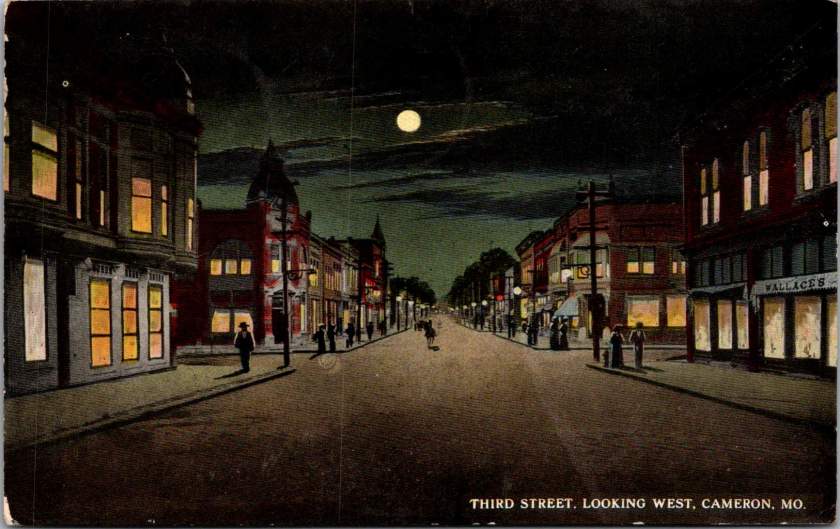
This card displays the Third Street business district looking East. The image suggests normalcy, prosperity, urban activity. The message tells a different story—injury, illness, fragmented family life.

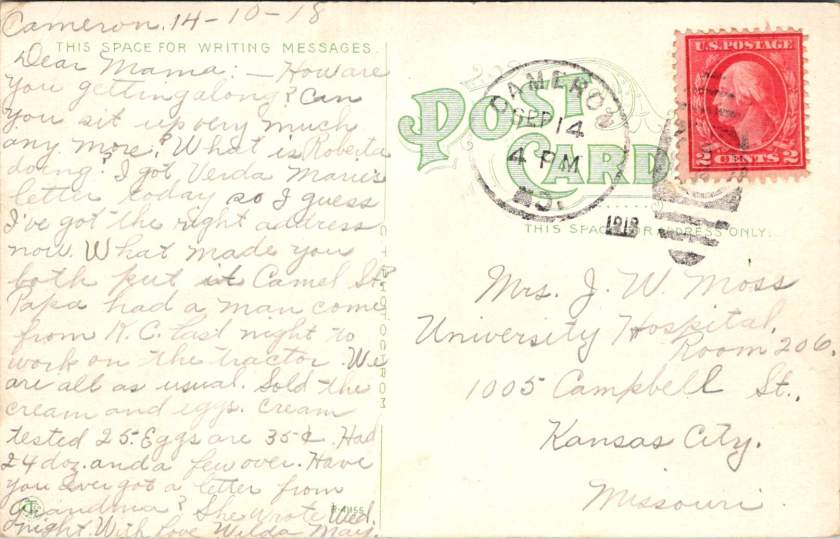
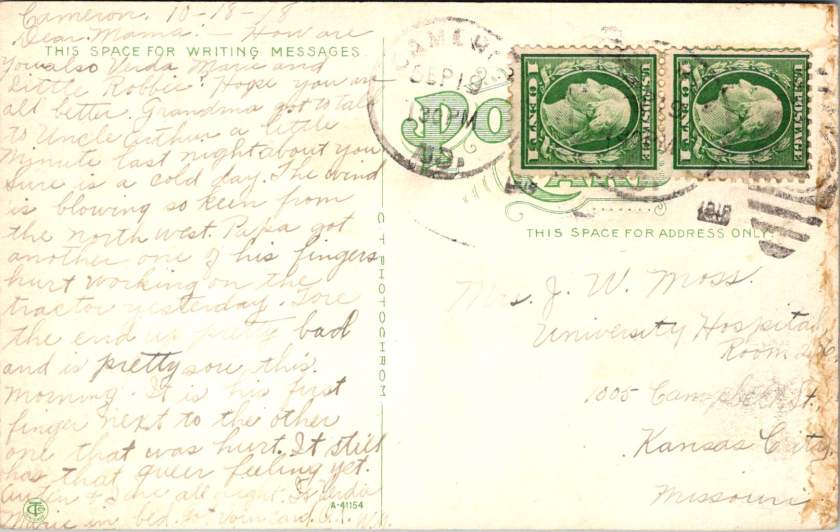
October 14th, from Cameron, Wilda May is writing to check in on Mama, Verda Marie, and little Roberta.

How are you getting along? Can you sit up very much any more? Papa had a man come from K.C. last night to work on the tractor. Sold the cream. Eggs are 35 cents. Had 24 dozen and a few left over.

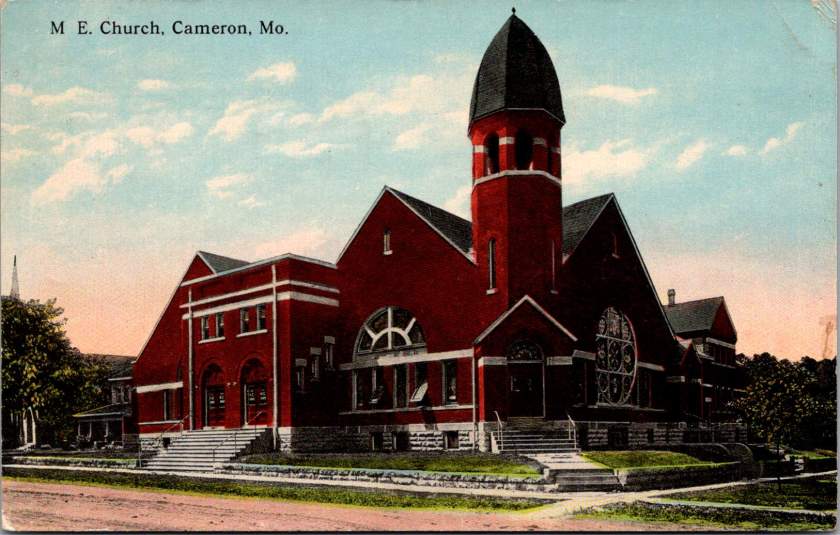
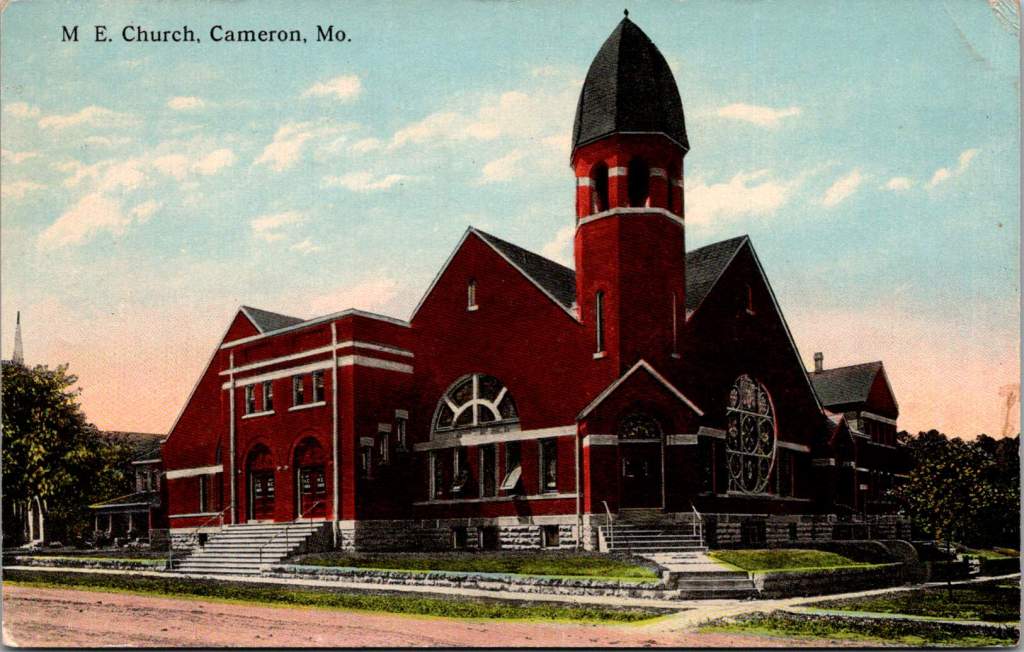
The dramatic red brick architecture of the M.E. Church is featured on the front. The bell tower, archways, and stained glass, no doubt concealing a community in a moment of great challenge.
November arrives with mixed signals. The Great War ends with armistice celebrations flooding city streets. Victory parades march through Kansas City while Hospital Hill counts mounting dead.

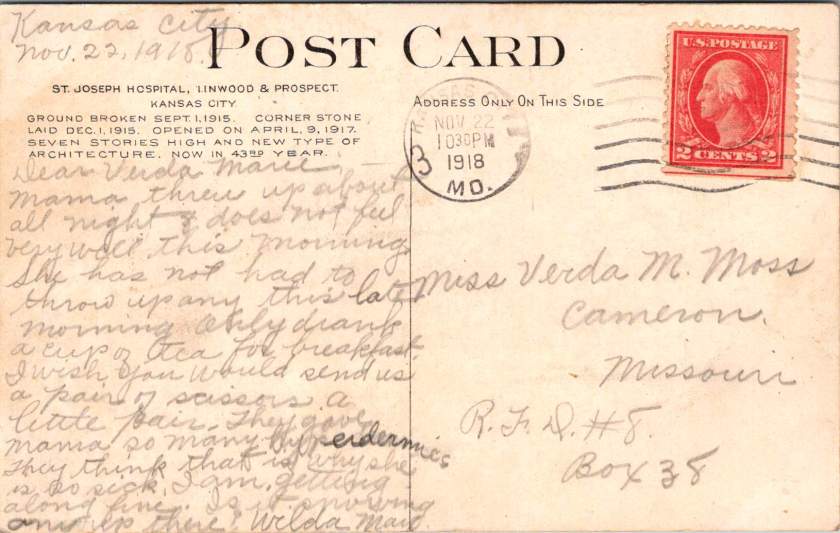
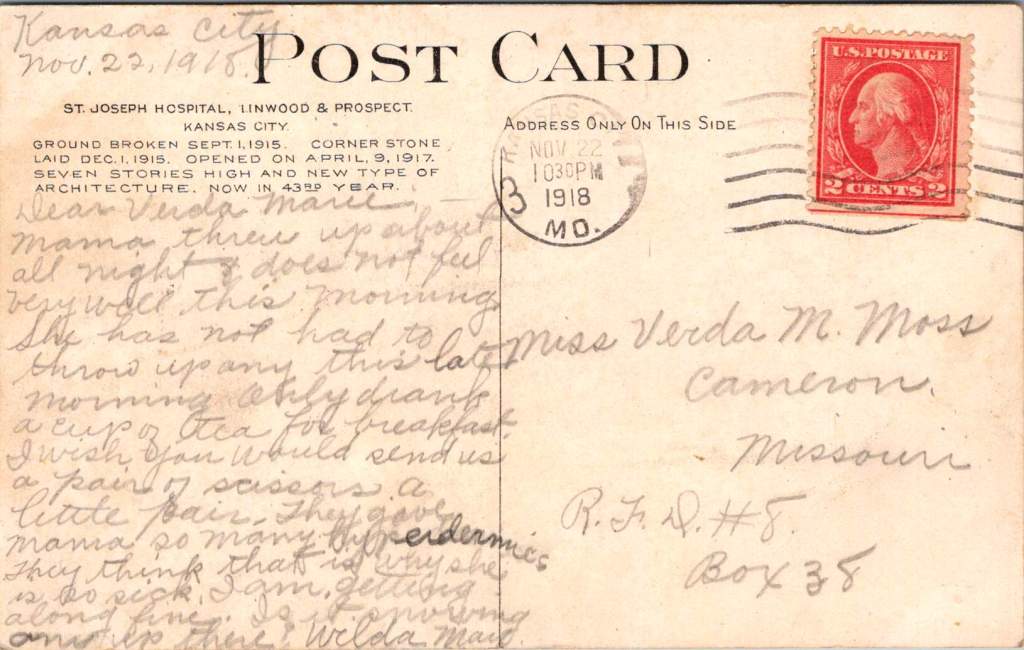
November 22nd, Wilda May is now in Kansas City and Verda Marie is back in Cameron. This is the card with St Joseph Hospital on the front and a report of Mama’s worsening condition on the back. Poignantly, a plea for simple materials.

I wish you would send us a pair of scissors, a little pair. They gave Mama so many hyperdermics (sic). They think that is why she is so sick.

The front shows St. Joseph Hospital—imposing, institutional, representing medical progress. The message reveals the grinding reality inside: nausea, sleepless nights, requests for basic supplies.

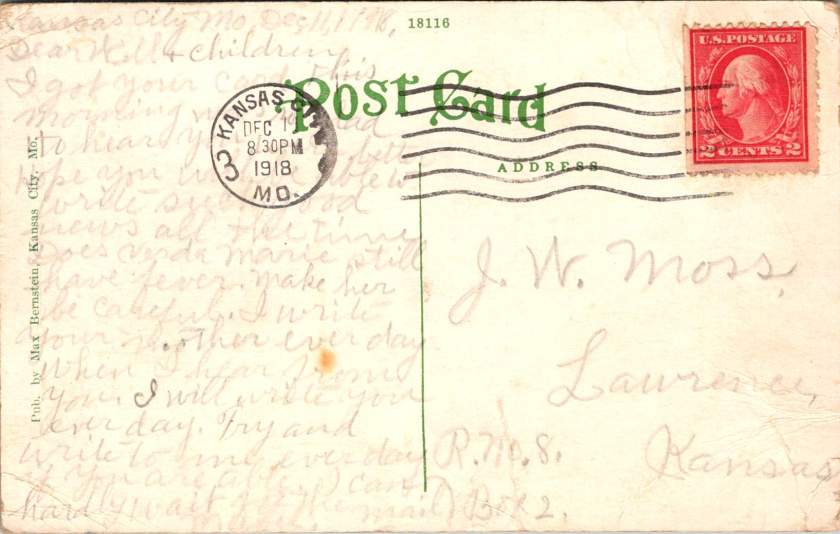
December 11, 1918. The last postcard in this series leaves Kansas City at 8:30 PM. Mabel Moss writes with exhaustion and desperate love.

Does Verda Marie still have a fever? Make her be careful. Write to your mother every day. I will write to you each day, too.

She repeats herself. Write every day. Every day, I will write to you.

These postcards have become more than communication. They serve as proof of life, wellness checks, emotional anchors in a world gone mad. Each delivery confirms another day fought forward, another family member still breathing.

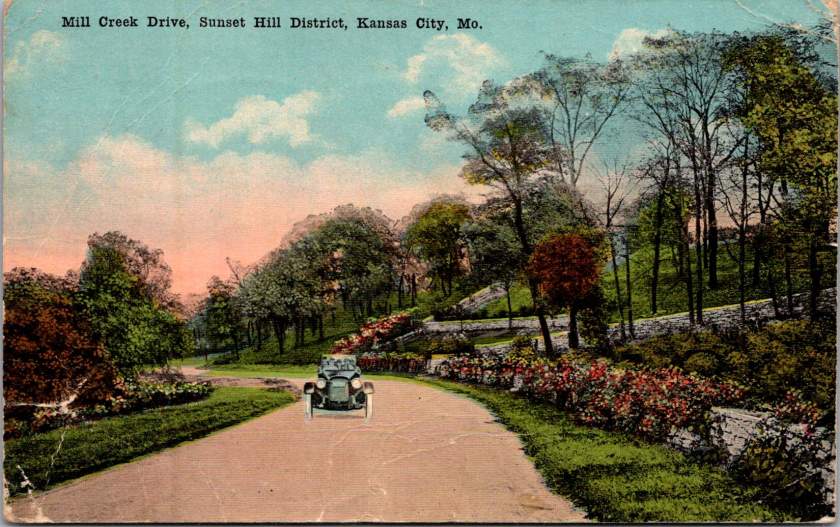
The front of the card features a swank soft top automobile on Mill Creek Drive, in the Sunset Hill district of Kansas City, Missouri. Lush foliage suggests it is a wonderful day to take in the fresh air.

Armistice brought celebration but not peace. Fighting continued in distant lands. The temporary ceasefire required renewal every thirty-six days. Victory was fragile, conditional, threatened by forces beyond control.

Also, influenza had no respect for borders. While diplomats negotiated peace terms, the 1918 pandemic waged its own relentless war. Families learned that health status changes cruelly and without warning. People woke well and died by nightfall.

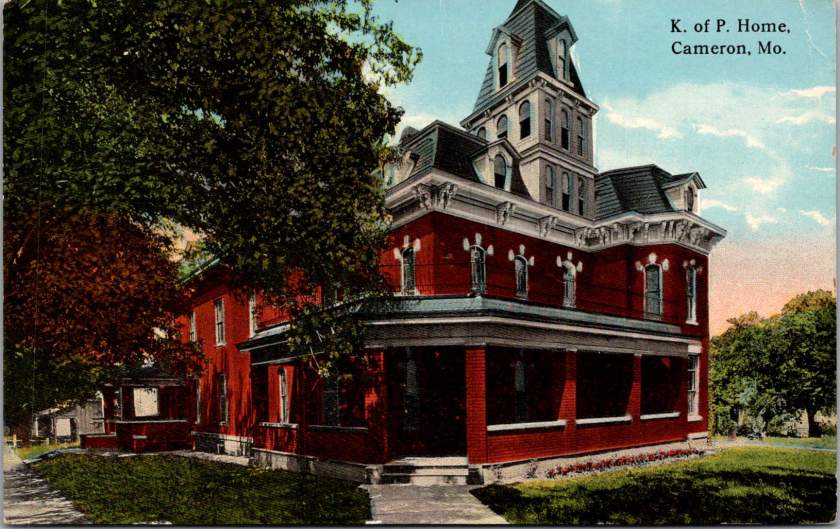
These postcards preserve this tension between public aspiration and private desperation, helping us journey back to history as it happened. The fronts of the postcards celebrate civic pride—hospitals, colleges, tree-lined streets, architectural monuments. Their backs tell different stories. Experimental medical treatments. Daily fears about fever and death. Constant threat of injury from dangerous farm equipment. The grinding reality of families separated by crisis, held together by handwritten words.

This contrast defines the American experience during a period of dual catastrophes. Communities built beautiful institutions while individuals struggled for survival and missed hard earned opportunities. Cities planned grand boulevards while families split between hospital rooms and farm chores. America as it aspired to be, and as it actually existed for the Moss clan.

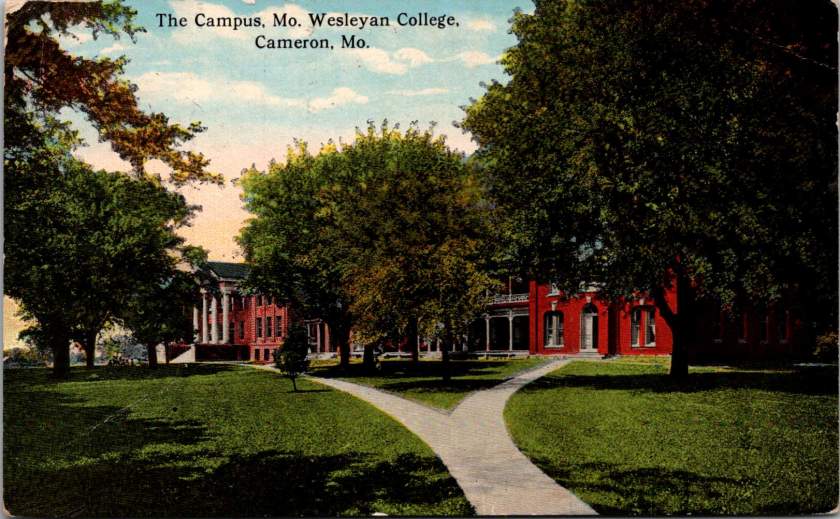
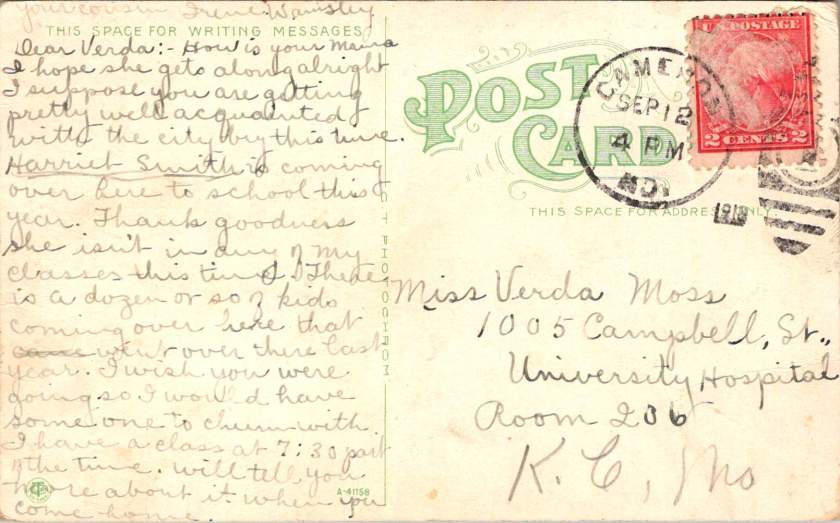
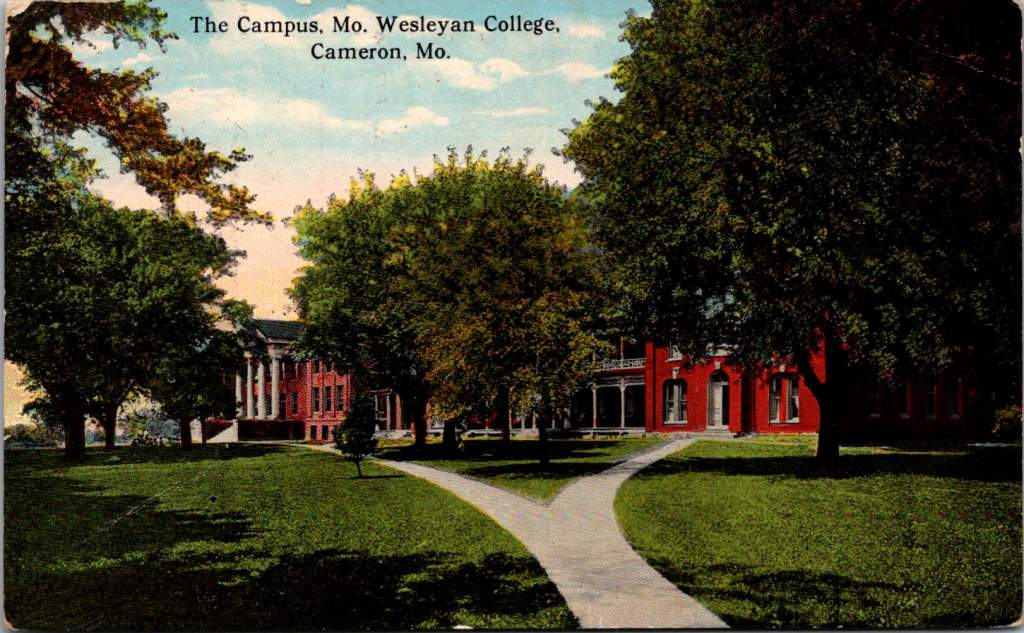
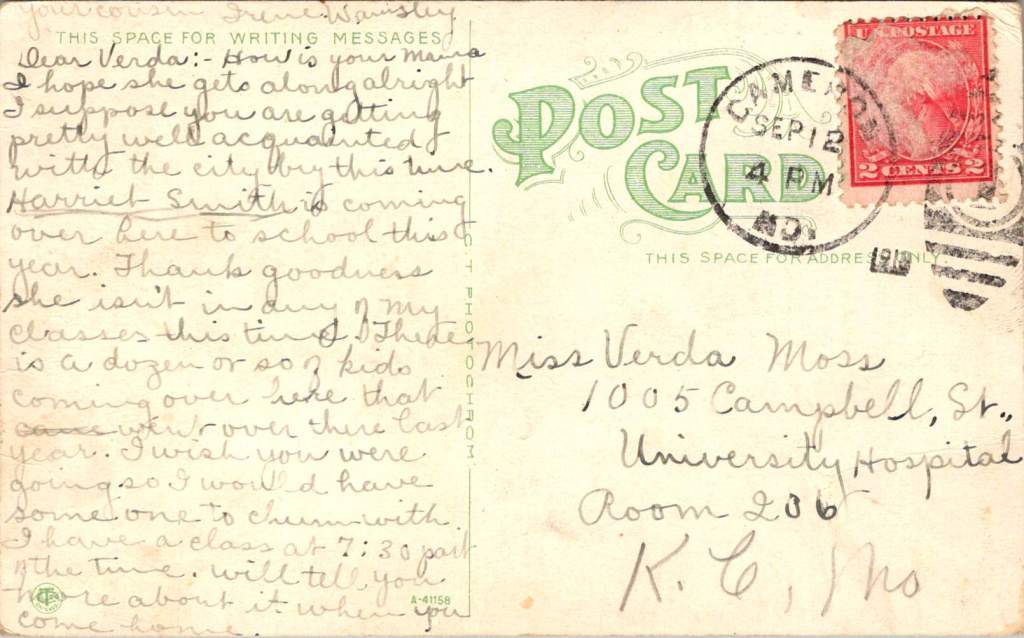
Just as her mother was getting sick, Verda Marie received a cheery postcard from a classmate with some gossip to share.

Harriet Smith is coming over here to school this year. Thank goodness she isn’t in any of my classes … I wish you were going so I would have someone to chum with…

The postcard front featured Missouri Wesleyan College campus—red brick buildings set among autumn trees. The front speaks to knowledge, tradition, the future of young minds. We can read between the lines on the back. Verda Marie would not be in class that semester, sadly.
Like Lazarus rising from his tomb, the world emerged from pandemic death to discover life transformed. The 1920s roared with celebration and renewal, and time went on. Hospital Hill expanded into Kansas City’s premier medical district. The red brick buildings where Mama received her serum treatments evolved into modern towers serving new generations. A century later, technological and medical innovations advance but essential human needs persist, too: connection, communication, proof that loved ones survive another day.

These particular postcards survived in a family archive. Stories of courage, love, determination tucked away to find a century later. Each card represents a day won against the odds, a family bond that transcended distance and disease.

The Moss family’s story continues in everyone separated by illness, every community battling invisible enemies, every healthcare worker risking their life to save others. The beautiful facades combined with harrowing messages remind us that hope and suffering coexist, flipped back and forth in our hands, repeated in every generation.
Postcards of Perseverance: Boom and Bust in Middle Missouri

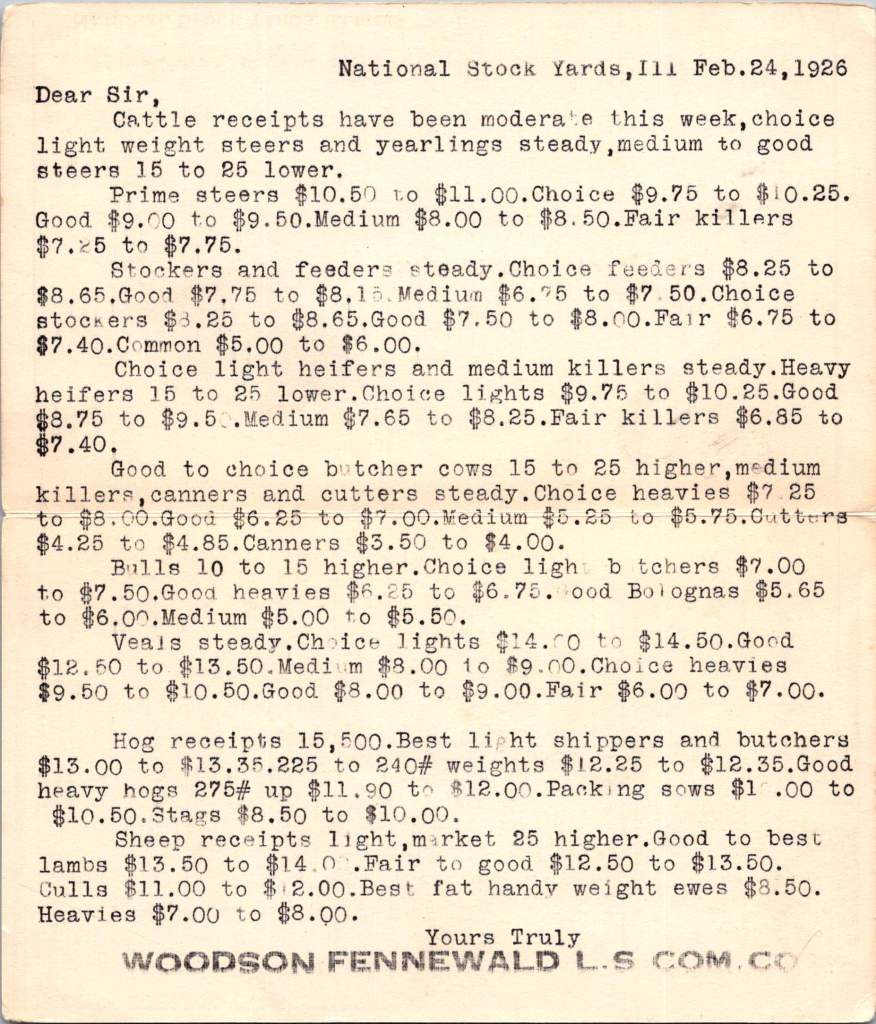
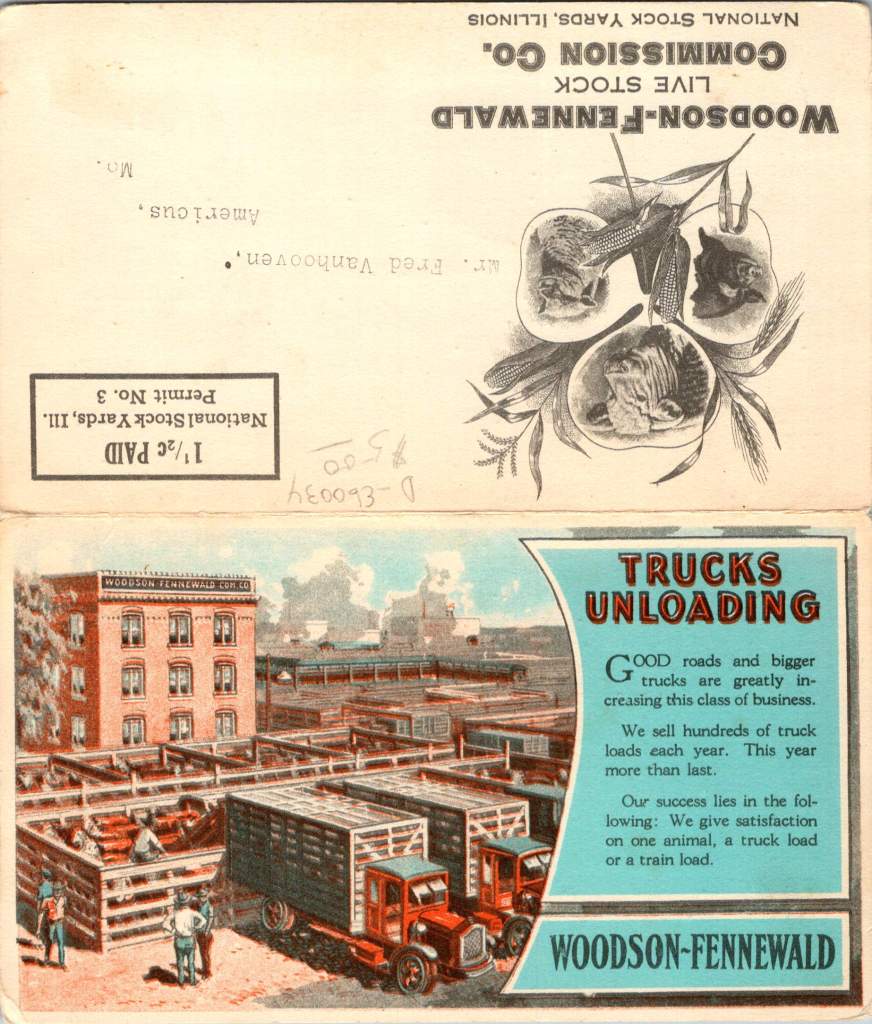
On a crisp February morning in 1926, Fred Van Hooven of Americus, Missouri, reached into his mailbox to find a postcard. His calloused hands grasp the card, his eyes lit up at the news: “Prime steers $10.50 to $11.00. Choice $9.75 to $10.25.”

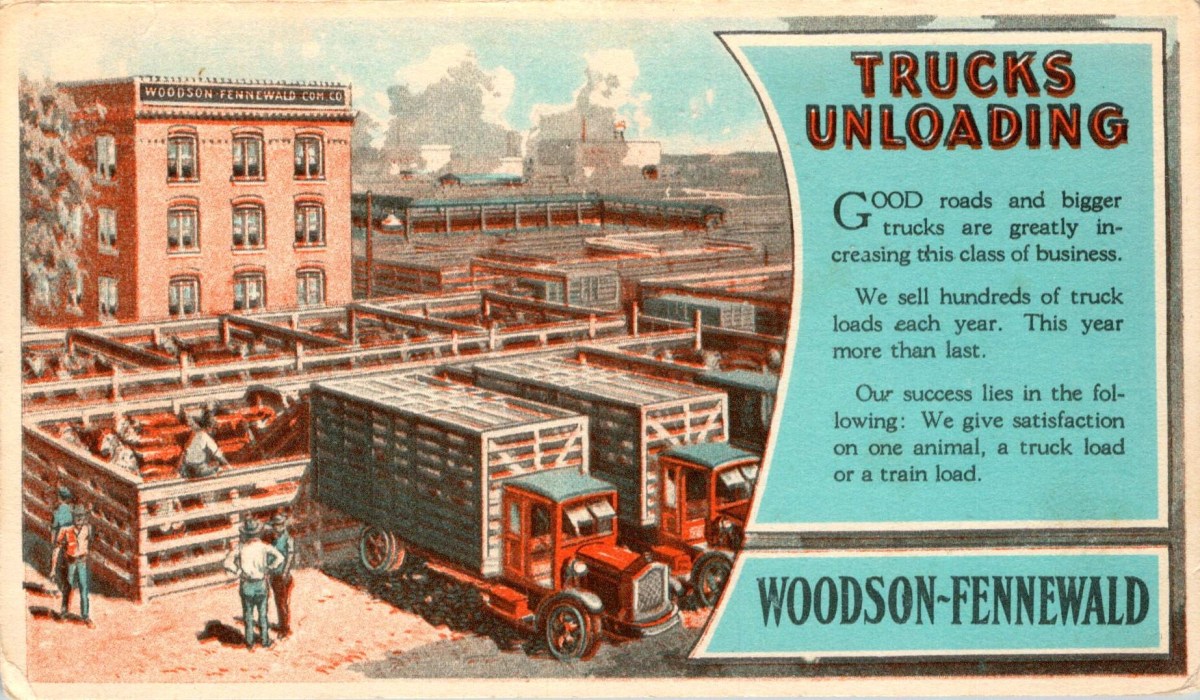
The postcard is colorful, smartly-designed and professionally printed, but it’s not a scenic view or a greeting from a distant relative. It’s a fold-over commercial mailer. Inside is a detailed cattle market report from Woodson-Fennewald Company at the National Stock Yards in Illinois.

For rural farmers and ranchers like Van Hooven, this small mailed card represented opportunity and prosperity. Today, it’s a window into a complex economic ecosystem that stretches from a small ranch in eastern central Missouri to the bustling stockyards of Chicago and beyond. This postcard and another one received a decade later bookend a period of dramatic change in rural America.

Van Hooven’s address in Americus draws us to a small community in in the eastern central part of Missouri. Founded in the 1860s Americus grew from a pre-Civil War settlement into a bustling village. By 1884, it boasted a dry goods store, a drug store, two blacksmith shops, a wagon shop, and a steam-powered saw and grist mill.

The town’s very existence was cemented when it gained its own post office, initially called Dry Fork Mills before town residents objected. The nobly-named Americus post office was a vital link to the outside world, enabling the flow of information that savvy rural ranchers relied on.

Van Hooven’s property likely sat in a landscape perfectly suited for a variety of livestock and farming operations. Nestled in the rolling hills near the Loutre River, his land would have been a patchwork of forests, streams, and fertile valleys. In this varied terrain, he may have run a sizable cattle herd while also providing habitat for a variety of wildlife – a fact that will prove crucial in the years to come.

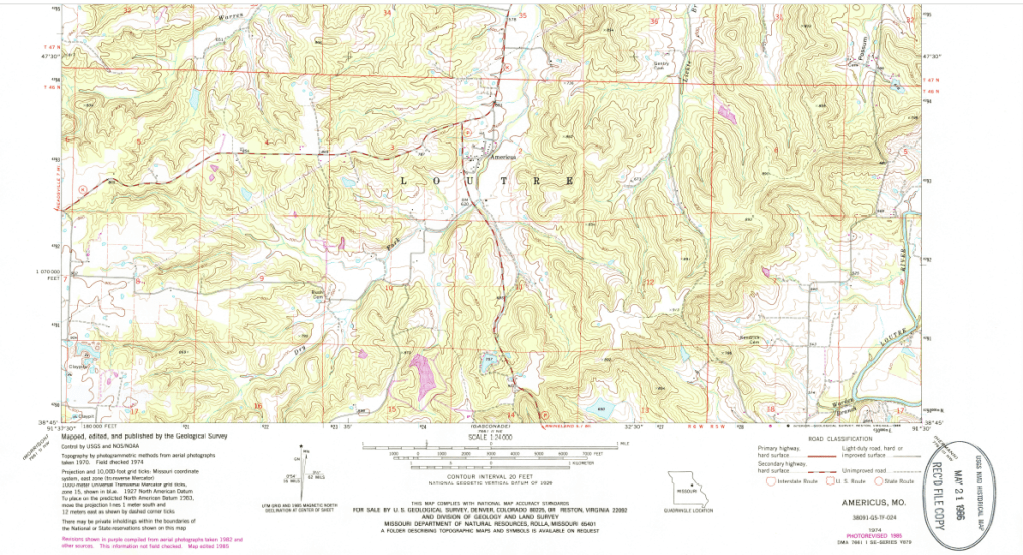
A topographic map from 1974 shows this diverse landscape. Americus sits in a relatively flat area surrounded by hills, with numerous streams creating a dendritic pattern, like branching trees across the region. It’s easy to imagine cattle grazing in the lush river bottoms, while the forested hills provide shelter and resources.

Roaring Twenties on the Ranch

As Van Hooven studied the 1926 cattle prices, perhaps he was feeling his good fortune. The Roaring Twenties were in full swing, and the prosperity had reached even small towns like Americus. If he had invested in quality breeding stock, those “choice light weight steers and yearlings” were commanding premium prices. If he also had hogs and sheep, the the Woodson-Fennewald report would have mattered even more.

The postcard hints at the changing nature of transportation: “Good roads and bigger trucks” are increasing business. Maybe he should buy a truck? Despite the postcard’s offer, he could bypass middlemen and transport his cattle directly to the stockyards, increasing his profits.

This era of prosperity had allowed rural entrepreneurs to expand operations, explore new sources of revenue, and adopt new trades. Van Hooven and those like him were in a rapidly changing economic climate, keenly attuned to market forces. Subscribing to agricultural journals and almanacs, attending county fairs, and experimenting with new breeds of cattle would improve herd quality and potentially one’s livelihood.

As the 1920s progress, many rural farms and ranches began to feel the pinch of falling agricultural prices. The postwar boom that had inflated crop and livestock prices was ending, and rural people struggled with debt taken on during the good years.

Then came the stock market crash of 1929, sending shockwaves through the American economy. Rural communities like Americus were hit hard. Cattle prices plummet, and many farmers found themselves unable to make mortgage payments on land and equipment.

A conservative approach and diverse operations may have insulated ranching operations somewhat. But if not himself, Fred Van Hooven certainly would have seen his neighbors begin to struggle.

Rural Adaptation and Survival

Fast forward to a frosty January morning in 1936. Van Hooven, now a decade older and wiser, shuffled through his mail. Another postcard caught his eye, this one from David Blustein & Bro. in New York City. It’s a detailed price list for animal furs. Wolf pelts were fetching $8 for large, prime specimens, while muskrats, abundant in the streams around Americus, are listed at $1.40 for the best quality.

As the Great Depression deepens, Van Hooven’s adaptability must come to the fore. Years of reports and price lists have taught him to read the markets. While his cattle operation suffered, he must have looked for other opportunities.

The forests and streams around Americus, once seen mainly as grazing land, now represent a different kind of potential. Farmers and ranchers could supplement their income through trapping, a grueling work that involves checking traplines in the freezing pre-dawn hours. Van Hooven may have learned from older members of the community, who remembered the days when fur trading was a major part of Missouri’s economy.

For everyone in Americus, successful adaptation to the harsh realities of the Depression was required in one way or another. Expert trappers built upon older trapping techniques and learned how to properly prepare and grade furs to fetch the best prices. Chilled railcars brought the trade back for a while and made way for greater livestock shipping, too. The Blustein postcard listed nine different animal furs, each with three grade levels. Mink, marten, and beaver commanded the highest prices, but even the humble muskrat and possum contributed to the bottom line.

Changing Economic Ecosystems

Both postcards – the 1926 cattle report and the 1936 fur price list – highlight the surprisingly global nature of rural commerce in early 20th century America. From his small farm in central Missouri, Van Hooven was connected to markets in Chicago, New York, and beyond. The prices he received for his cattle or furs were influenced by national and international demand, linking the economy of Americus to the broader world.

This interconnectedness was facilitated by a complex communications network. Regular market reports and price lists delivered by mail kept rural entrepreneurs informed of distant market conditions. The level of detail in these reports – from specific cattle grades to fur sizes – shows the sophistication expected of ranchers, farmers and trappers.

The story behind these postcards is more than just a tale of one farmer’s adaptability woven out of the clues we have here. It’s a testament to the resilience and entrepreneurial spirit that has long characterized rural America. We would have to do more genealogical research to truly understand Fred Van Hooven’s story. For us, his name and address is just a place to start.

But we can assume that Van Hooven faced some of the same challenges confronting rural communities today. He would have had to navigate the boom of the 1920s and the bust of the 1930s. Van Hooven’s move from solely cattle ranching to include fur trapping highlights the ongoing need for rural businesses to diversify and adapt to changing markets. The shift from rail to road transport in Van Hooven’s time echoes the digital revolution of today, presenting both challenges and opportunities for rural businesses.

The postcards show how even in the 1920s and 1930s, rural businesses were connected to global markets. Today’s rural entrepreneurs face a rapidly changing economic landscape, from globalized markets to the impacts of climate change.

    Enduring Spirit in Rural America

    Today, Americus still appears on maps, a testament to the enduring spirit of rural communities. While fur trading and lone cattle drives have largely faded into history, the legacy of adaptability and connection to broader markets lives on. Modern farmers and rural entrepreneurs face their own set of challenges, but they approach these obstacles with the same resilience and ingenuity that characterized prior generations.

    The humble business postcards that once delivered vital market information have been replaced by smartphones and real-time digital updates. Yet the essential skills they represent – market awareness, adaptability, and entrepreneurial spirit – remain as crucial as ever for rural success.

    As we face the economic uncertainties ahead, let’s remember the lessons embodied in these postal relics. Rural America has always been a place of innovation and resilience where hard work and adaptability can turn challenges into opportunities. Next time you pass through a small Midwestern town, remember the papers and pricing that was once news traveling from the nation’s bustling cities to quiet rural routes – and consider how those connections continue to evolve and shape rural life today.