Postcard Road Trip

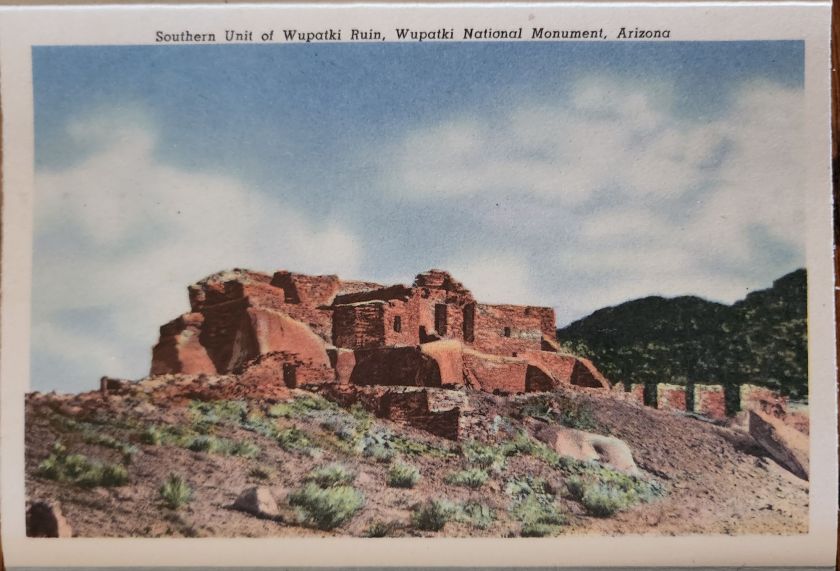
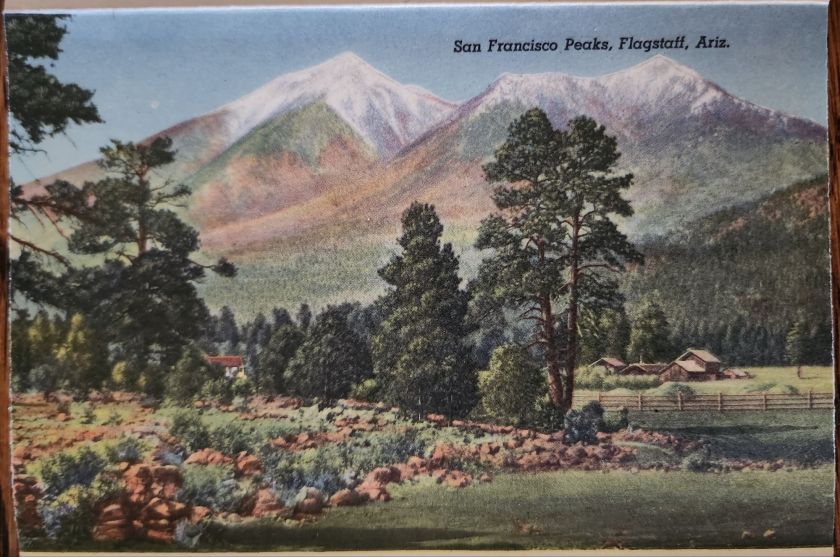
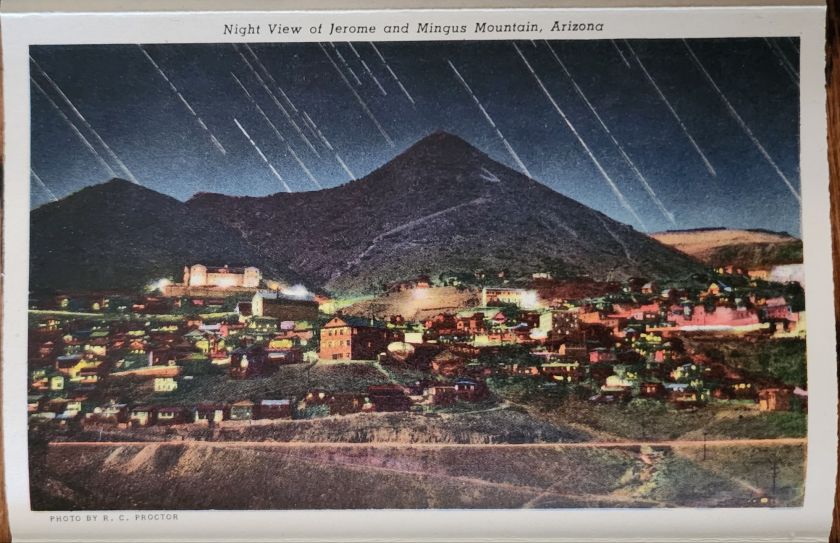
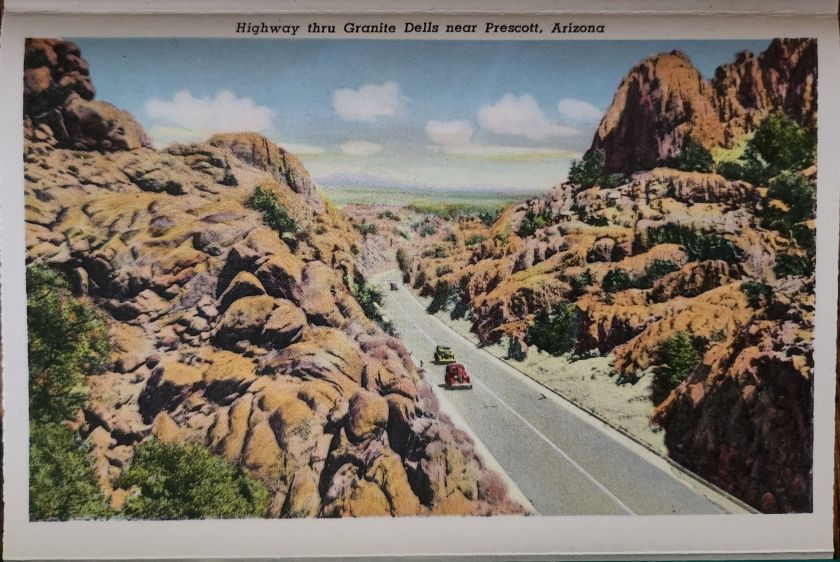
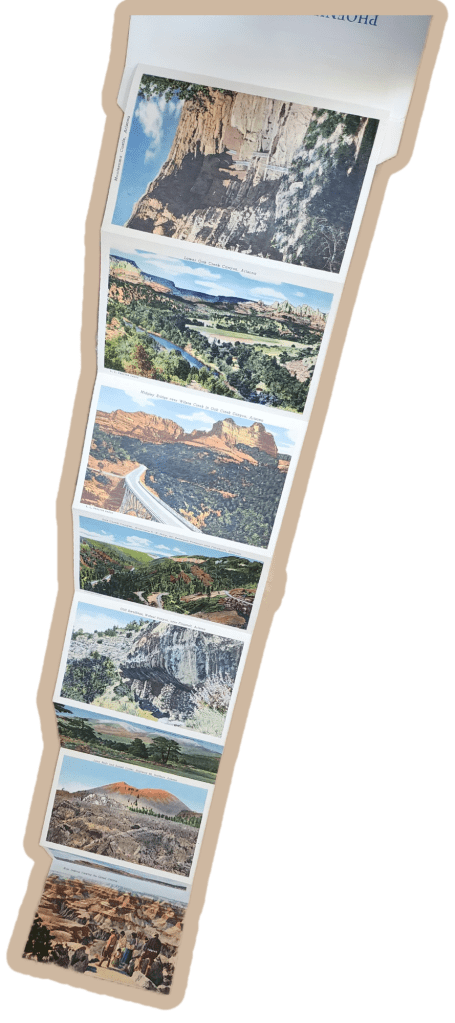
Mid-century postcards captured the wonder of American road trips in vivid color. This Phoenix to Grand Canyon collection reveals the story of car trips, roadside shops, and the natural landscape of Arizona.

Rural Route Arizona

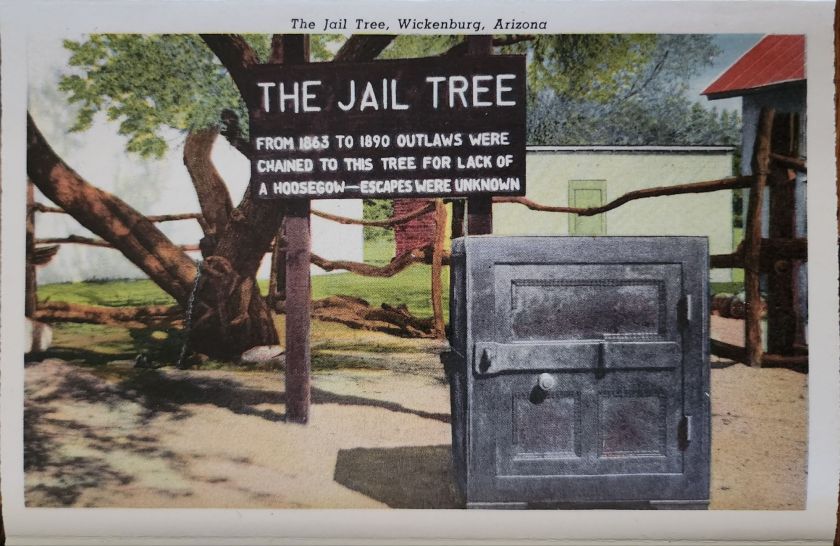
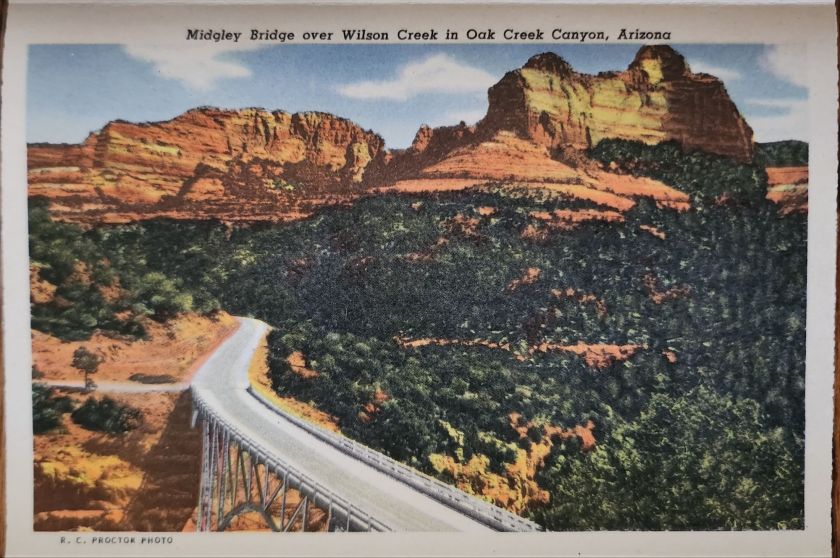
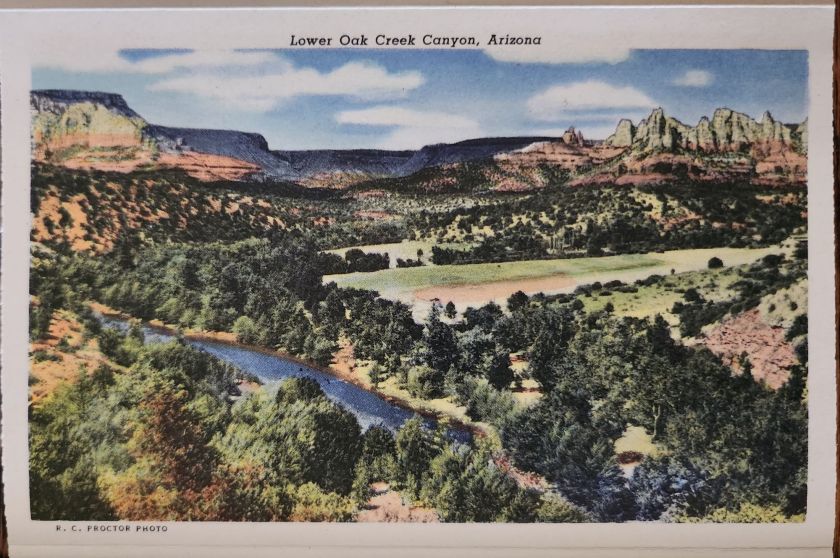
The Phoenix to Grand Canyon route via Oak Creek Canyon carved through America’s most scenic territory. In the 1940s and 1950s, this remained wild, undeveloped country. Starting in Phoenix, travelers navigated winding two-lane roads through Wickenburg, Yarnell, Prescott, Jerome, Clarkdale, Cottonwood, Flagstaff, and Williams.

Each stop pulsed with its own character. Jerome clung to mountainsides, mining copper. Prescott sprawled as a ranching center and former territorial capital. Wickenburg lured visitors with dude ranch culture. Williams crowned itself “Gateway to the Grand Canyon.” These weren’t pit stops but destinations, each welcoming tourist dollars from America’s growing car culture.

Postcard Economy

These postcards bear the stamp of Curt Teich & Co., a Chicago printing giant that drove America’s postcard industry from the 1930s through 1960s. German immigrant Curt Teich founded the company in 1898 and revolutionized postcard production. His linen postcards introduced soft textures and blazing colors.

Teich built an industrial empire through local connections. Photographers roamed America, documenting main streets and natural wonders. In Chicago, artists hand-colored black and white photographs, enhancing reality to seduce buyers and ultimately define a social aesthetic.

Behind every postcard rack stood a web of relationships, too. Hotel owners, gas station attendants, and gift shop operators ordered cards from Teich’s catalog or commissioned custom designs featuring their establishments. Postcards advertised businesses, provided affordable souvenirs, and satisfied the social duty to send word home.

Long-distance calls cost fortunes. Letter-writing devoured time. Postcards offered quick connection and proof of adventure. They were quick and easy evidence that the sender had escaped ordinary life for landscapes of impossible beauty. For travelers, buying and mailing postcards proved both pretty and practical.
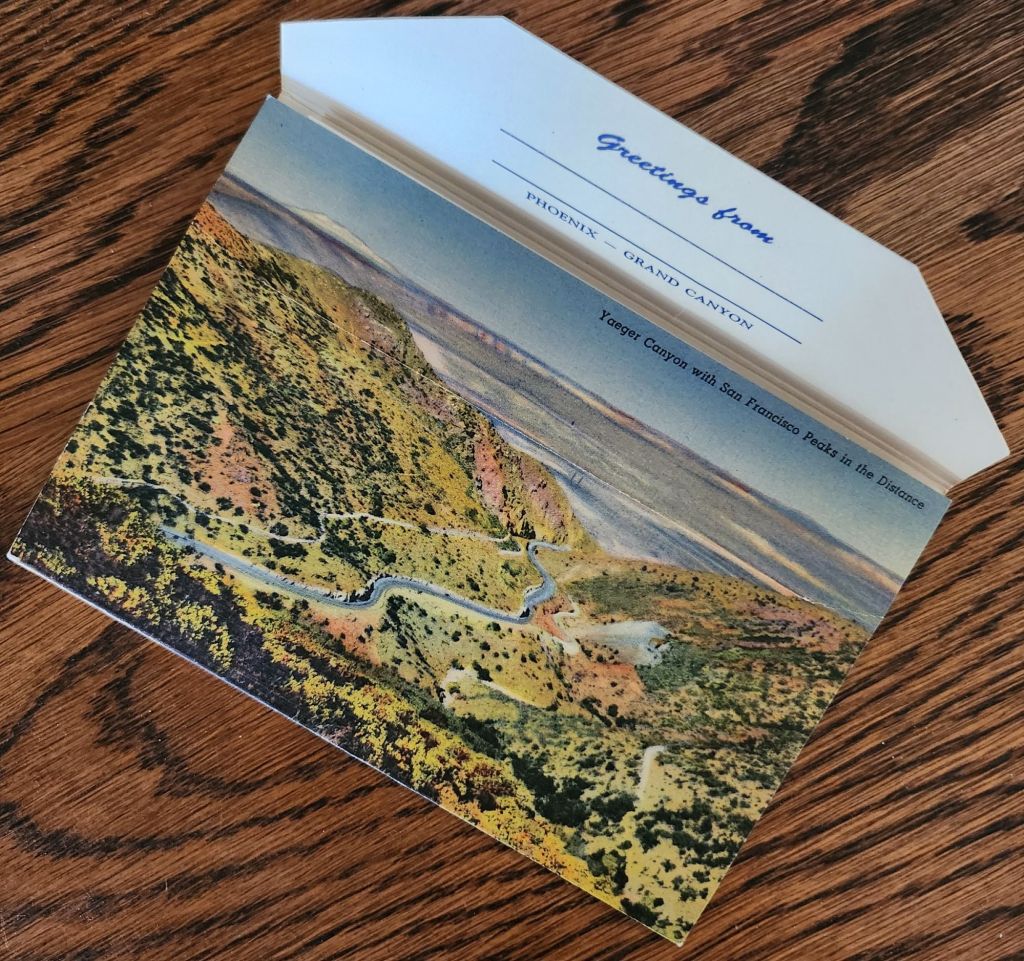
The typical buyer belonged to America’s emerging middle class, newly mobile through car ownership and paid vacations. Families drove from California to see the Grand Canyon. Retirees took first cross-country trips. Young couples honeymooned across the Southwest. Many experienced the American West for the first time. Postcards helped them process and share encounters with the sublime.

Selecting, writing, and mailing postcards became part of American vacation ritual. Weather beautiful, wish you were here—heartfelt sentiments that bridge extraordinary experience and ordinary communication.

These postcards transcend tourist kitsch. They document a pivotal moment when the West was packaged and sold as leisure destination. Enhanced colors and idealized compositions reflect not just Arizona’s appearance, but how Americans wanted to see it—as endless possibility, natural wonder, and escape from urban routine.

Shoveling Sh!t

The beauty in gallows humor is how it strips away pretense. On days when everything feels like a steaming pile anyway, there’s dark comfort in knowing that at least we’re all finally honest about what’s being shoveled around.

This vintage postcard, simply titled “Training for Politics,” captures a brutal honesty that resonates well on days when the world stinks. A lone cowboy, shovel in hand, flinging horse manure (the raw material for politics). Of course we see the effort, but it’s also hard to miss the explosive spray of debris frozen mid-flight.

There’s something uniquely comforting about humor that doesn’t try to brighten our mood but instead acknowledges the absurdity of our circumstances. When we’re struggling, the last thing most of us want is forced positivity or silver linings. We want recognition that yes, this is indeed a pile, and yes, someone is actively shoveling more of it.

On the surface, it’s a simple visual gag – politics is bullsh*t. But dig deeper (pardon the pun), and you’ll find a more nuanced observation about the nature of political discourse and human coping mechanisms.

Dark humor serves as a pressure release valve for the soul. It’s the linguistic equivalent of opening a window in a foul-smelling room. It doesn’t solve the problem, but it makes it more bearable. When we can laugh at the darkness, we’re not surrendering to it – we’re claiming it, owning it, transforming it into something we can manage.

Someone looked at a man shoveling manure and saw not just the physical act but its perfect metaphorical parallel to politics. They recognized that sometimes the most profound truths come wrapped in the most pungent packages. That’s what gallows humor does – it finds the universal in the awful, the communal in the catastrophic.

This postcard’s enduring relevance speaks to another truth about dark humor: it ages well. While more wholesome jokes may grow stale, gallows humor often becomes more poignant with time. Perhaps because human suffering, like political maneuvering, remains remarkably consistent across generations. The tools may change, but the essential nature of the job remains the same.

In our current era of carefully curated social media positivity and inspirational quote overdose, there’s something refreshingly honest about this image. It doesn’t try to inspire or uplift. It simply says, “Here’s what’s happening, and it stinks.” Sometimes, that acknowledgment is more comforting than a thousand motivational posters.

For those of us having one of those days – when the pile is knee deep – this anonymous cowboy becomes an unlikely patron saint of perseverance. Not because he’s rising above his circumstances or transforming them into something beautiful, but because he’s right there in the muck, doing what needs to be done, probably muttering colorful commentary under his breath.

The image reminds us that sometimes the healthiest response to life’s challenges isn’t to seek the bright side but to acknowledge the darkness with a wry smile and a few choice words. There’s solidarity in shared cynicism, comfort in the collective cry. It’s the silent nod between people who recognize that while we can’t always clean up the mess, we can at least make a postcard about it. If nothing else, it gives future generations something to laugh darkly about while dealing with their own problems.

It’s no good to make light of serious situations, but it helps to find the light-heartedness within them. Even if it’s just the glint of sun off a well-worn shovel.